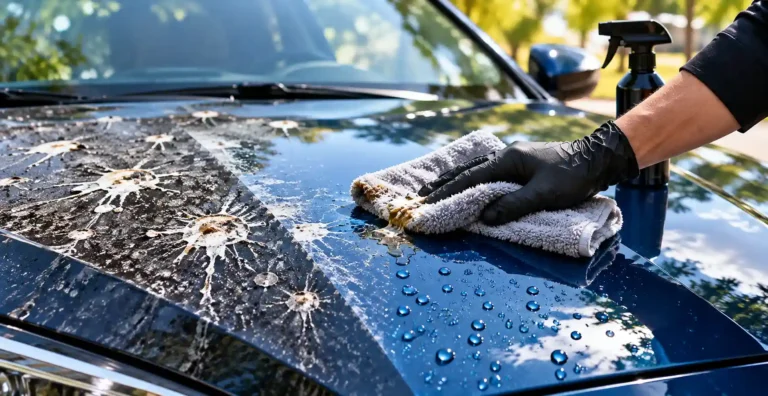
Bird droppings and acid rain can damage your car’s paint, reduce its gloss, and leave stubborn marks that ordinary washing cannot always remove. These environmental contaminants are particularly troublesome when they remain on the vehicle for extended periods, dry under direct sunlight, or repeatedly accumulate on exposed body panels.
Learning how to protect your car from bird droppings and acid rain can help you maintain the clear coat, preserve the vehicle’s appearance, and reduce the need for expensive paint correction. With the right parking habits, regular washing, prompt contaminant removal, and suitable paint protection, you can reduce the risk of permanent paint damage.
This guide explains why bird droppings and acid rain affect automotive paint, how to remove these contaminants safely, which paint protection products are worth considering, and how to maintain your vehicle in hot, humid, rainy, and polluted environments.
Why Bird Droppings and Acid Rain Damage Car Paint
Understanding how environmental contaminants affect automotive paint is the first step toward preventing damage. Bird droppings and acid rain create different types of contamination, so protecting your car requires both regular maintenance and the correct cleaning techniques.
How Bird Droppings Affect Automotive Paint
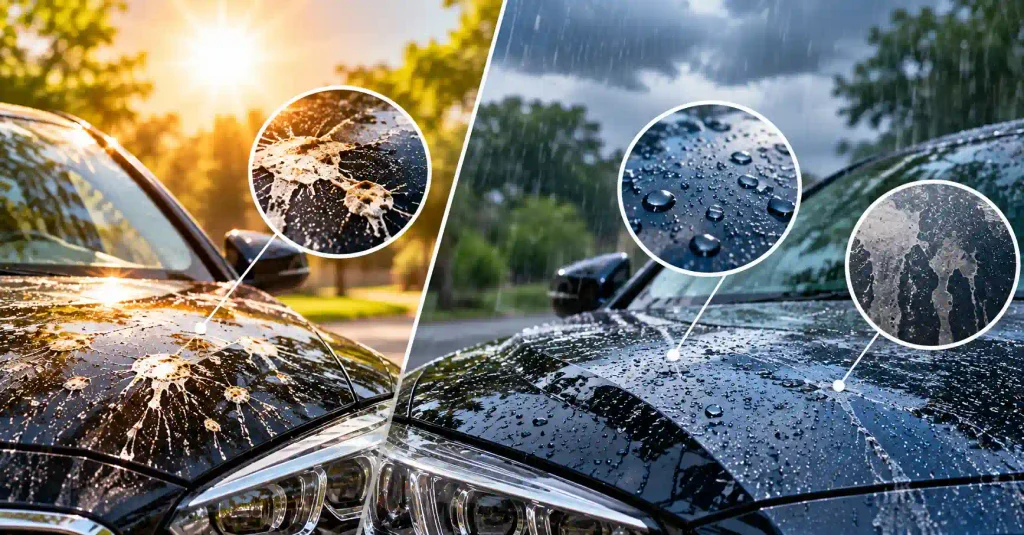
Bird droppings can damage your vehicle’s clear coat, the transparent outer layer that protects the colored paint beneath it. Their composition, gritty texture, drying behavior, and exposure to heat can contribute to visible surface marks.
Research discussed by Autoglym indicates that heat and the texture of bird droppings can play important roles in the damage process. As the paint heats and cools, it can temporarily soften and conform to the texture of dried contamination, creating a dull or distorted appearance.
Bird droppings may cause several problems:
- Dull patches or cloudy outlines on the clear coat.
- Surface etching that remains after the contamination is removed.
- Scratches caused by rubbing gritty, dried droppings across the paint.
- Additional cleaning difficulty when deposits harden in direct sunlight.
Dark-colored vehicles can make these defects especially noticeable because changes in gloss and surface reflection stand out against the surrounding paint.
The safest approach is to remove bird droppings as soon as practical without scraping or rubbing them while dry.
How Acid Rain Damages Car Paint
Acid rain refers to precipitation made more acidic by pollutants in the atmosphere. When contaminated moisture remains on automotive paint, it can contribute to discoloration, gloss reduction, water spotting, and surface etching.
According to PPG’s automotive refinishing guidance on acid rain, contamination can affect the pigments and transparency of a painted finish. Time and higher temperatures can accelerate certain types of paint damage.
The risk is not limited to precipitation that is technically classified as acid rain. Rainwater can collect airborne pollutants and leave deposits when it evaporates. Hard water, industrial fallout, and other environmental contaminants can also produce spots or marks that resemble acid rain damage.
Areas that deserve particular attention include the hood, roof, trunk lid, and other horizontal panels. Water and contaminants can remain on these surfaces long enough to concentrate as moisture evaporates.
The longer problematic deposits remain on the finish, the more difficult some resulting marks may be to correct.
Why Heat, Sunlight, and Humidity Matter
Weather conditions influence how long contaminants remain wet, how quickly moisture evaporates, and how easily deposits become difficult to remove.
Direct sunlight can heat automotive paint and accelerate the drying of bird droppings and contaminated water. High temperatures can also make cleaning products and rinse water dry before you can remove them properly.
In humid or rainy environments, frequent precipitation can expose your vehicle to repeated cycles of wetting and drying. Water trapped around trim, mirrors, and panel edges can also leave residue.
For this reason, car paint protection requires more than applying wax or ceramic coating occasionally. Regular inspections, careful washing, and prompt cleaning are essential parts of long-term maintenance.
How to Protect Your Car From Bird Droppings
Preventing bird droppings from contacting automotive paint is easier than correcting the damage they can cause. Choosing better parking locations, inspecting exposed panels, and keeping suitable cleaning supplies nearby can significantly improve your routine paint care.
1. Park Under Covered Protection
Covered parking is one of the most practical ways to reduce exposure to bird droppings.
Whenever possible, park inside a garage or beneath a suitable carport. A covered parking space also limits direct sunlight and reduces the amount of rain and airborne contamination reaching the vehicle.
If covered parking is unavailable, avoid locations directly beneath trees, overhead wires, building ledges, and other places where birds regularly gather.
Before choosing a parking space, consider the surrounding environment. A shaded position is not always the best option if it places your vehicle directly beneath a bird roost or a tree that releases sap and other debris.
2. Use a Car Cover When Appropriate
A properly fitted car cover can provide an additional barrier against bird droppings, rain, dust, pollen, and other environmental contaminants.
Choose a cover designed for automotive use, with a soft inner surface and a fit appropriate for your vehicle. If the car is exposed to frequent rain, verify that the cover is suitable for those conditions and can be managed according to its manufacturer’s instructions.
Before covering the vehicle, make sure the paint is reasonably clean and the cover is dry and free of trapped grit. Moving a contaminated cover across the bodywork can create scratches.
Remove or reposition the cover when necessary to inspect the vehicle, and allow moisture to escape as recommended by the cover manufacturer.
A cover should complement regular cleaning rather than replace it.
3. Inspect Your Car Regularly for Bird Droppings
Make a quick inspection part of your daily driving routine, particularly after parking outdoors.
Pay attention to the hood, roof, trunk lid, side mirrors, windows, and upper doors. Check the areas around the windshield and rear glass, where contamination can collect near trim.
If you find a fresh dropping, remove it safely before it dries and becomes harder to clean. If you cannot wash the entire vehicle immediately, spot cleaning may be sufficient when the contamination is limited and the appropriate products are available.
Never wipe dried droppings with a dry cloth. Their texture may contain abrasive particles that can mark the clear coat.
4. Keep a Bird Dropping Removal Kit in Your Car
Keeping a small car care kit available makes it easier to respond when bird droppings appear while you are away from home.
Consider carrying the following items:
- A paint-safe automotive quick detailer or dedicated bird dropping remover.
- Several clean, soft microfiber towels.
- A small bottle of clean water for appropriate preliminary rinsing.
- A clean storage bag for used towels.
Choose products labeled as safe for your vehicle’s paint or existing coating, and follow their application instructions.
Replace or wash contaminated towels before using them on another section of paint. A towel that has collected grit can scratch the surface even when its fibers initially feel soft.
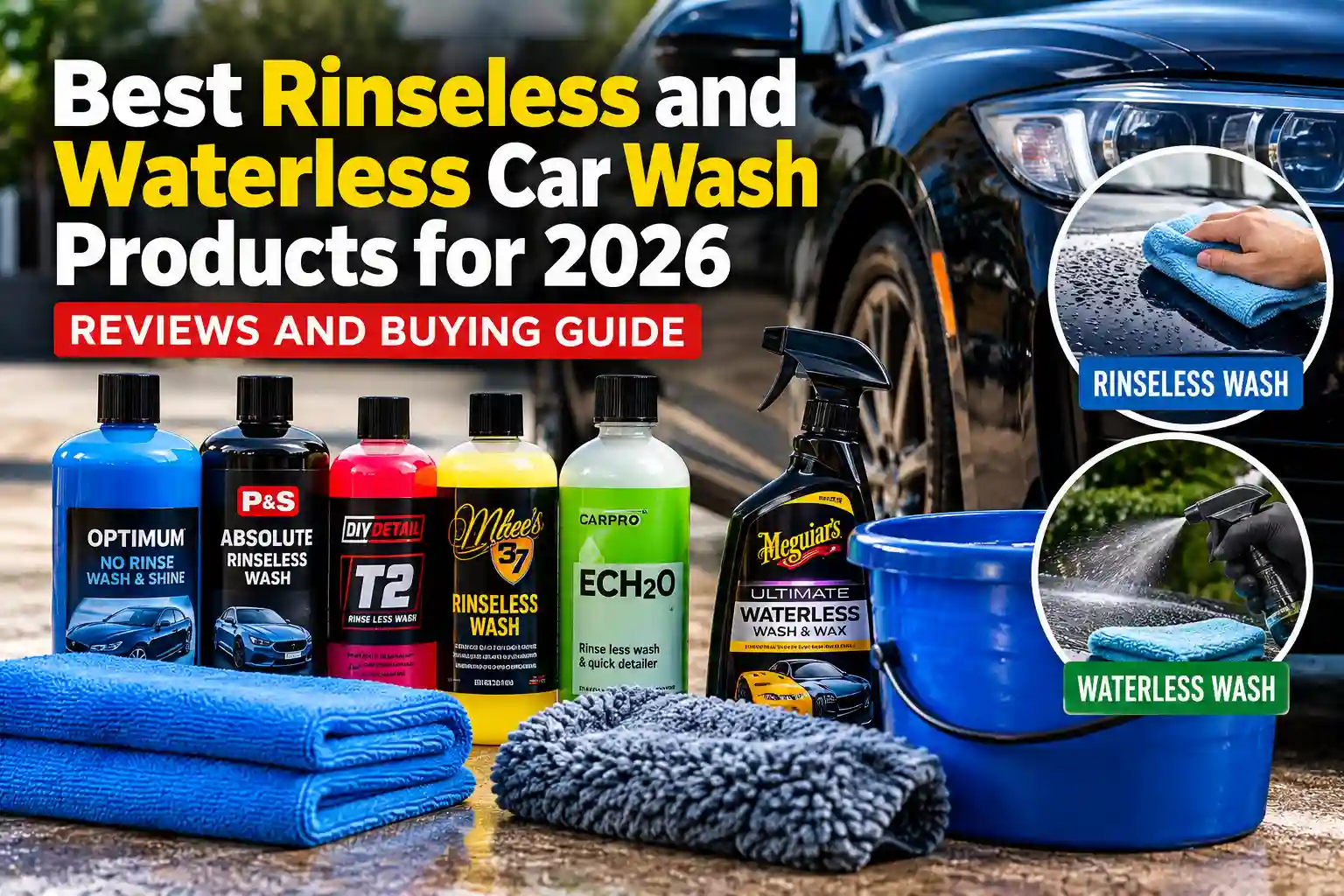
If the vehicle is heavily covered in dust, sand, or road grime, use a conventional wash rather than attempting to clean the entire surface with a quick detailer.
5. Apply Suitable Paint Protection
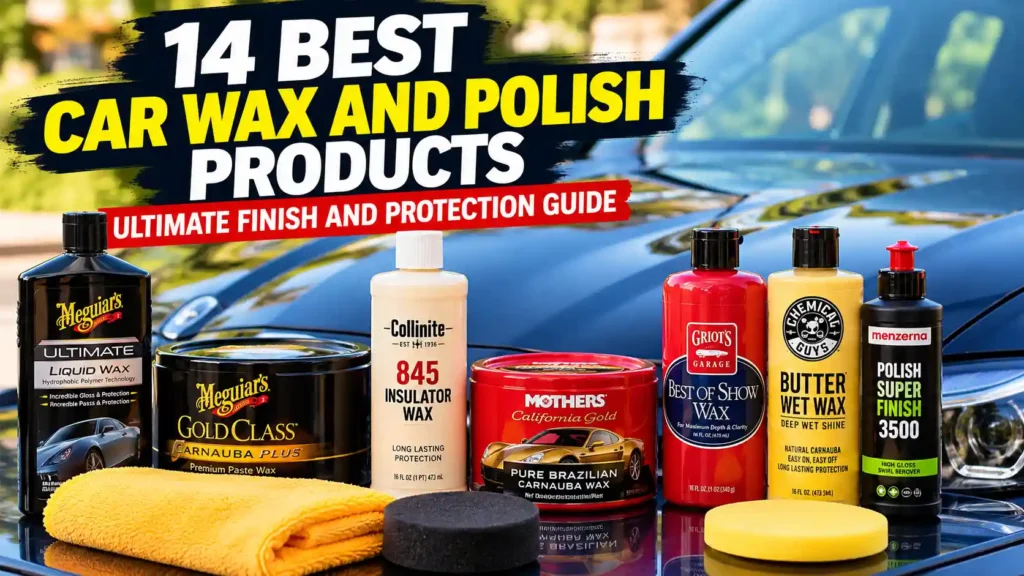
Automotive wax, synthetic paint sealants, ceramic coatings, and paint protection film can provide different forms of protection depending on their design and application.
Wax and sealants create a protective layer over the paint. Ceramic coatings can provide a more durable protective surface when correctly installed and maintained. Paint protection film adds a physical film over selected painted panels.
These products can make routine cleaning easier, but none should be treated as permission to leave bird droppings on the vehicle.
Choose a protection system that suits your budget, maintenance habits, and driving conditions. For a detailed comparison, see Wax vs. Sealant vs. Ceramic Coating.
How to Remove Bird Droppings Without Damaging Car Paint
Safe bird dropping removal depends on softening the contamination before lifting it away. Using excessive pressure, abrasive materials, or unsuitable chemicals can cause additional damage even when the original deposit is relatively easy to remove.
Step 1: Move the Vehicle Into the Shade
Whenever possible, clean the affected area when the paint is cool.
Direct sunlight can cause water and cleaning products to evaporate rapidly, making the job more difficult. A cool surface also gives you more time to apply the product and remove the contamination carefully.
If the vehicle cannot be moved, wait until the panel is cool enough for safe cleaning.
Step 2: Loosen the Bird Droppings
For fresh contamination, use an appropriate automotive cleaner or clean water where suitable.
If the deposit has dried, place a clean microfiber towel dampened with water or a compatible cleaning product over the affected area. Allow the deposit to soften instead of immediately rubbing it.
The required soaking time depends on how dry the contamination has become. Check periodically and reapply the appropriate liquid if needed.
Do not scrape the deposit with your fingernail, a plastic card, or another tool. Even a seemingly soft deposit can contain particles that mark the paint.
Step 3: Lift the Contamination Gently
Once the deposit has softened, lift it away with minimal pressure using a clean microfiber towel.
Use a clean portion of the towel for each pass. Avoid dragging loosened material across the surrounding paint.
If some residue remains, repeat the softening process rather than scrubbing harder. Stop if the deposit does not release easily.
For a detailed explanation of safe cleaning technique, read How to Wash Your Car Without Scratching Paint.
Step 4: Clean the Area and Rinse as Needed
After removing the deposit, clean the affected section using a compatible automotive shampoo or detailing product, following its instructions.
Rinse the area thoroughly when the product requires rinsing. Remove remaining residue without allowing the cleaning solution to dry on the paint.
Use a separate clean microfiber towel for drying. Do not reuse a towel that contains grit from the bird droppings.
Step 5: Inspect the Paint for Remaining Damage
After cleaning and drying the area, inspect the finish under good lighting.
If the paint looks smooth and consistent with the surrounding panel, additional correction may not be necessary.
If a cloudy outline or dull ring remains, the deposit may have caused surface etching. More cleaning will not necessarily remove a defect that extends into the clear coat.
Avoid immediately applying an abrasive compound or polishing the area repeatedly. If the mark is persistent or pronounced, have a qualified detailer assess the paint and determine whether polishing is appropriate.
How to Protect Your Car From Acid Rain
Protecting automotive paint against acid rain involves minimizing contamination, washing the vehicle correctly, and reducing the amount of water and residue left on the surface to dry.
1. Wash Your Car After Significant Rain Exposure
Rain does not automatically mean your vehicle has been exposed to damaging acid rain. However, when rain leaves visible residue, or your vehicle has been exposed to polluted moisture, washing the surface promptly is a sensible precaution.
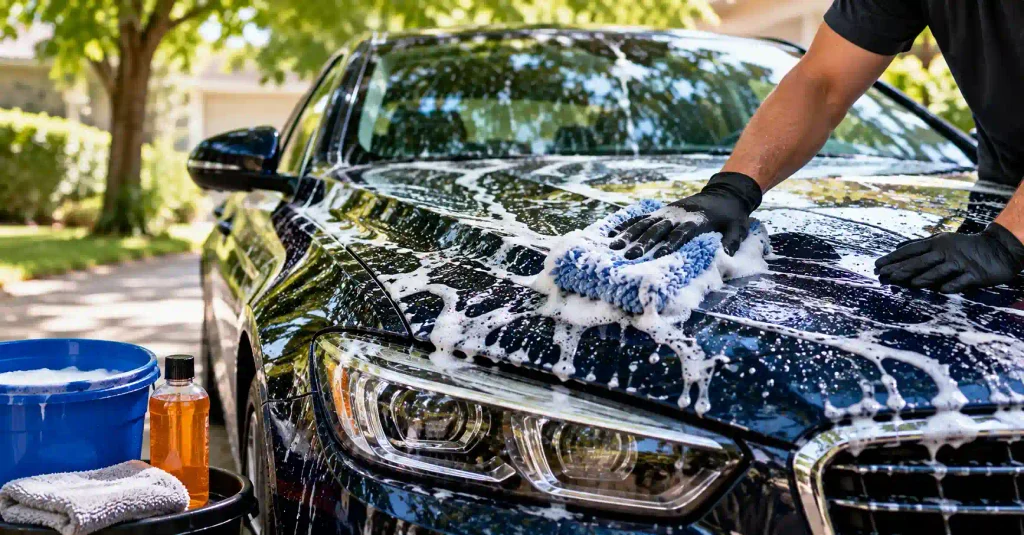
Use a paint-safe automotive shampoo and clean water to remove accumulated contamination.
If the car has been exposed to industrial fallout, heavy road grime, or other stubborn deposits, use a compatible cleaning method designed for that type of contamination.
Do not assume that a simple rain rinse has cleaned the vehicle. Rainwater can leave mineral deposits and environmental residue after evaporation.
2. Wash in the Shade on Cool Paint
Whenever possible, wash your vehicle in a shaded location during cooler conditions.
Work on one section at a time so you can rinse away the shampoo before it dries. Use a suitable automotive wash shampoo, a clean wash mitt, and a safe washing method that minimizes dirt being dragged across the paint.
Avoid household detergents that are not intended for automotive paint maintenance. Choose a product compatible with your vehicle’s existing wax, sealant, or coating.
For more guidance, see What Is Exterior Car Care? and the best time of day to wash your car.
3. Rinse Thoroughly to Remove Contaminants
Thorough rinsing helps remove loosened dirt, cleaning solution, and surface contamination.
Pay particular attention to the hood, roof, trunk, window edges, and areas around exterior trim. These surfaces can retain water or cleaning residue if rinsing is rushed.
If your vehicle has significant road grime, begin by removing loose dirt with water before using a wash mitt.
Do not use strong household chemicals or concentrated acidic cleaners in an attempt to neutralize suspected acid rain damage. The safer approach is to remove contamination with a suitable automotive cleaning method and assess the finish afterward.
4. Dry Your Car Before Water Evaporates
Drying is an important step in preventing water spots and reducing the amount of residue left on painted surfaces.
Use a clean, absorbent microfiber drying towel and work gently across the vehicle. Start with the roof and other upper panels before moving to lower areas.
Pay attention to mirrors, panel gaps, door handles, and other locations where water tends to collect and drip after the main body panels have dried.
If your local water supply leaves heavy mineral spotting, a suitable filtered or deionized final rinse may help reduce residue. Drying remains useful even when the vehicle has a protective coating.
5. Maintain a Regular Car Washing Routine
A consistent washing routine prevents dirt, pollutants, and other deposits from accumulating on the paint.
The appropriate schedule depends on your driving conditions, parking environment, rainfall, dust levels, and exposure to industrial or roadside contamination.
A vehicle parked outdoors near heavy traffic may require more frequent cleaning than a vehicle kept in covered parking and driven occasionally.
Inspect the finish regularly and wash the vehicle when contamination becomes noticeable. After unusual exposure to pollutants, bird droppings, or persistent rainwater residue, consider cleaning the affected areas sooner rather than waiting for the next scheduled wash.
Which Paint Protection Products Help Prevent Bird Droppings and Acid Rain Damage?
Choosing the right paint protection product can make routine maintenance easier and help preserve your vehicle’s appearance. However, different products provide different benefits, and no ordinary protection layer makes paint completely immune to environmental damage.
Car Wax
Car wax provides a surface layer that can improve gloss and make washing easier. Depending on the formula and conditions, it can also help reduce direct contact between the paint and some contaminants.
Wax is useful for drivers who want straightforward maintenance and are comfortable reapplying protection periodically.
Its limitations are important. Wax can wear away, and bird droppings or contaminated water can still damage the finish if left in place.
Synthetic Paint Sealant
Paint sealants are designed to provide surface protection and may last longer than some traditional wax products, depending on the formula and maintenance routine.
They can help repel water and simplify cleaning. Regular inspections and safe washing are still necessary because sealants do not eliminate the risk of staining or etching.
Ceramic Coating
A ceramic coating can create a durable, water-repellent surface that makes dirt and some contaminants easier to remove.
The actual performance depends on the coating, paint preparation, application quality, and maintenance. Water beading does not prove that the paint is safe from bird droppings or acid rain.
Remove contamination promptly and use cleaning products compatible with the coating.
Paint Protection Film
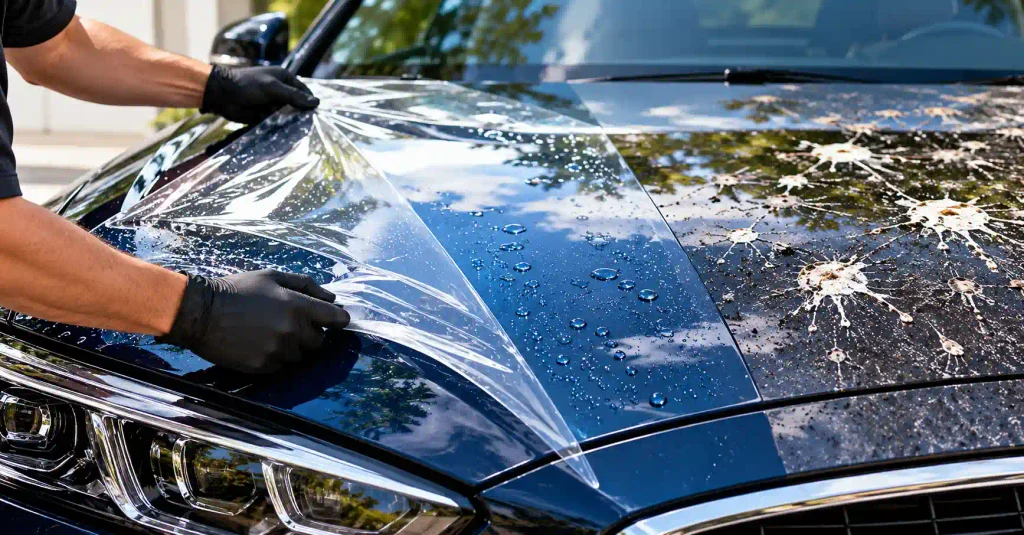
Paint protection film provides a physical barrier over the painted panels it covers. Depending on the film and installation, it may help shield the underlying paint from several types of environmental and physical exposure.
It can be useful for owners who want added protection on selected areas, such as the hood or front body panels.
However, film itself can become stained or damaged, and its performance against specific contaminants depends on the material and manufacturer’s guidance. Maintain the film according to its care instructions.
For most owners, the best protection strategy combines appropriate surface protection with regular cleaning, careful parking, and prompt contaminant removal.
Common Mistakes That Can Damage Car Paint
Many paint problems become worse because of the cleaning method rather than the original contamination. Avoiding these mistakes helps preserve both the clear coat and any existing protection.
Wiping Bird Droppings While They Are Dry
Dry wiping can drag grit and other particles across the surface. Always soften the deposit first and lift it away gently.
Using Abrasive Sponges or Household Scrubbers
Scouring pads, rough brushes, and abrasive household materials can scratch automotive paint. Use appropriate automotive cleaning tools and clean microfiber towels.
Leaving Cleaning Products on Hot Paint
Some products can dry quickly on a hot panel and leave residue. Work in the shade whenever possible, keep within the manufacturer’s recommended application conditions, and never let a product dry on the surface if its instructions prohibit it.
Using Strong Household Chemicals
Bleach, concentrated acids, harsh solvents, and other unsuitable household chemicals can damage paint, trim, protective coatings, or nearby components.
Use products intended for the affected automotive surface and follow their labels.
Assuming Ceramic Coating Prevents All Paint Damage
Ceramic coatings can improve maintenance, but they do not make a vehicle immune to chemical contamination, staining, scratches, or etching.
Continue to inspect and clean the paint even when it has been professionally coated.
Polishing Every Mark Aggressively
A mark that remains after cleaning may be an etched defect rather than removable dirt. Abrasive polishing removes some clear coat, so repeated correction can unnecessarily reduce the remaining protective layer.
Determine the type of defect before choosing a more aggressive treatment.
What Should You Do If Bird Droppings or Acid Rain Have Already Damaged the Paint?
If a mark remains after careful cleaning, identify whether it is surface residue, a mineral deposit, staining, or clear-coat damage.
Begin with a suitable wash and inspect the affected panel under good lighting. Surface contamination may respond to an appropriate automotive cleaner, while more serious etching may require professional paint correction.
Do not assume that every cloudy ring can be removed with ordinary shampoo. Once a mark has altered the clear coat, additional cleaning alone may not restore the original appearance.
A professional detailer can evaluate the depth and condition of the paint and recommend a suitable correction method. Deep damage may require refinishing rather than polishing.
For water-related marks, read How to Remove Water Spots Etched Into Paint. Keep in mind that mineral deposits and acid-related etching are not necessarily the same defect, so the treatment should match the actual problem.
Vehicles with matte paint or a special factory finish require additional care. Avoid general polishing methods on these finishes unless the manufacturer specifically approves them, as polishing can change their appearance permanently.
A Simple Car Paint Protection Checklist
Use this checklist to make bird dropping and acid rain prevention part of your regular car care routine.
- Park in a garage or suitable covered space whenever possible.
- Avoid parking beneath trees or known bird roosts.
- Inspect the paint regularly for bird droppings and environmental deposits.
- Keep a compatible cleaner and clean microfiber towels available.
- Soften dried bird droppings before removing them.
- Wash polluted or visibly contaminated surfaces promptly.
- Use automotive shampoo and safe washing tools.
- Wash the vehicle on cool paint whenever possible.
- Dry the vehicle with a clean microfiber towel.
- Maintain wax, sealant, ceramic coating, or paint protection film according to its instructions.
- Have persistent etching or unusual paint discoloration inspected before attempting aggressive correction.
These habits help minimize the amount of time harmful contamination remains on the surface and reduce the risk of preventable paint damage.
Frequently Asked Questions About Protecting Car Paint From Bird Droppings and Acid Rain
How Quickly Can Bird Droppings Damage Car Paint?
Bird droppings can damage car paint faster in hot, sunny conditions. Remove them as soon as possible by softening the deposit and gently wiping it with a clean microfiber towel.
Does Car Wax Protect Against Bird Droppings and Acid Rain?
Yes, car wax adds a protective layer and makes cleaning easier. However, it cannot completely prevent stains or paint damage, so remove contaminants promptly.
Is Ceramic Coating Enough to Prevent Bird Dropping Damage?
No, ceramic coating does not make paint damage-proof. It makes cleaning easier, but bird droppings should still be removed as soon as possible.
Should I Wash My Car After Every Rainstorm?
Not necessarily. Wash your car when rain leaves visible dirt, mineral spots, or pollution residue. Dry it properly to help prevent water spots.
Can I Use Vinegar to Remove Acid Rain Marks From Car Paint?
Vinegar may help remove some mineral deposits, but it cannot repair paint etching. Use a compatible automotive cleaner and seek professional advice if the mark remains.
Can Bird Dropping Stains Be Removed Without Repainting?
Yes, some stains and shallow etching can be corrected with suitable paint polishing. Deeper damage may require repainting, depending on the condition of the clear coat.
Does a Car Cover Prevent Acid Rain Damage?
A suitable car cover can reduce exposure to rain and bird droppings. Keep it clean and use it correctly to avoid trapping dirt that could scratch the paint.
What Is the Best Way to Protect Car Paint During the Rainy Season?
Park under cover when possible, maintain suitable paint protection, and remove bird droppings promptly. Wash away visible contamination and dry the car properly.
Final Thoughts
Protecting your car from bird droppings and acid rain is primarily about consistent maintenance rather than relying on one expensive product. Covered parking, frequent inspections, safe washing, prompt contaminant removal, and suitable paint protection work together to preserve the appearance of automotive paint.
Remember that bird droppings should be softened before removal, and suspected acid rain deposits should be cleaned without harsh household chemicals or unnecessary abrasion. If a dull mark remains after cleaning, identify the type of damage before attempting paint correction.
By following these car paint protection practices, you can reduce preventable environmental damage, make routine detailing easier, and keep your vehicle’s finish looking its best for longer.