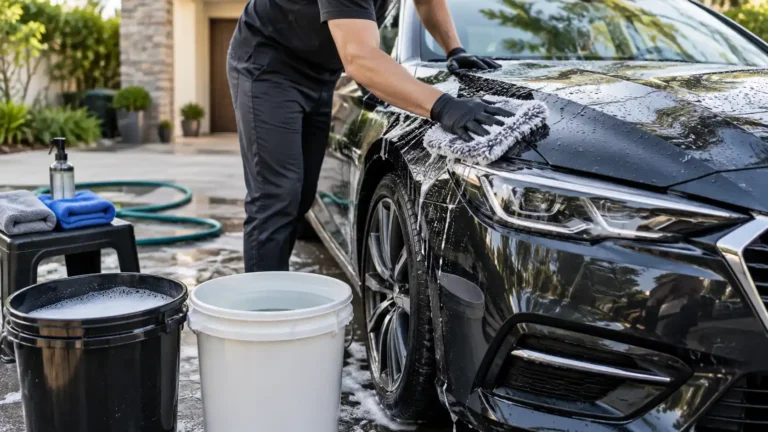
Washing your car without scratching the paint means reducing the amount of dirt and grit that comes into contact with the paint, using a clean wash mitt, rinsing that mitt frequently, and drying the vehicle with clean microfiber towels. A practical routine is to work in the shade, rinse the vehicle before contact washing, use separate wash and rinse water, wash from the top down with light pressure, and dry without grinding contaminants across the surface.
This guide explains how to wash a car safely from start to finish, why the two-bucket method helps reduce wash-induced swirls, which tools matter most, and what mistakes to avoid.
Why Do Scratches and Swirl Marks Happen During Car Washing?
Fine scratches and swirl marks can develop when abrasive dirt or debris is dragged across the paint during washing. The risk increases when a dirty wash mitt is reused without rinsing, excessive pressure is applied, or unsuitable towels and washing tools are used.
A thorough pre-rinse helps remove loose contamination before the wash mitt touches the paint. During the contact wash, rinsing the mitt frequently helps remove dirt before it is returned to the vehicle. Detailing guidance from Meguiar’s and Autogeek specifically recommends microfiber wash mitts, thorough pre-rinsing, and a separate rinse bucket to reduce the chance of wash-induced swirls and scratches.
The goal is not to eliminate every possibility of paint wear. Instead, the goal is to minimize unnecessary friction and prevent loose abrasive material from being repeatedly dragged across the finish.
What’s the Correct Order to Wash a Car From Start to Finish?
A consistent washing sequence helps keep the dirtiest tools and areas away from freshly cleaned paint.
- Park in the shade or wash when the vehicle’s surfaces are cool enough that water and soap will not dry quickly.
- Rinse the entire vehicle thoroughly to remove loose dirt and heavier surface contamination before contact washing.
- Clean the wheels and tires first with dedicated tools that will not later be used on painted surfaces.
- Prepare separate wash and rinse buckets, using a clean wash mitt and fresh car-wash solution.
- Wash the body from the top down, working in small sections with light pressure and straight passes.
- Rinse the mitt after each section before returning it to the wash solution.
- Rinse the vehicle thoroughly so no soap residue remains on the paint.
- Dry the vehicle promptly with clean, dedicated microfiber drying towels using gentle passes or a blotting technique.
Starting at the roof and working downward helps keep dirtier lower sections from contaminating areas that have already been washed. Dedicated wheel tools are also important because wheels and tires can carry substantially more brake dust and road contamination than painted body panels.
Why Does the Two-Bucket Method Help Prevent Scratches?
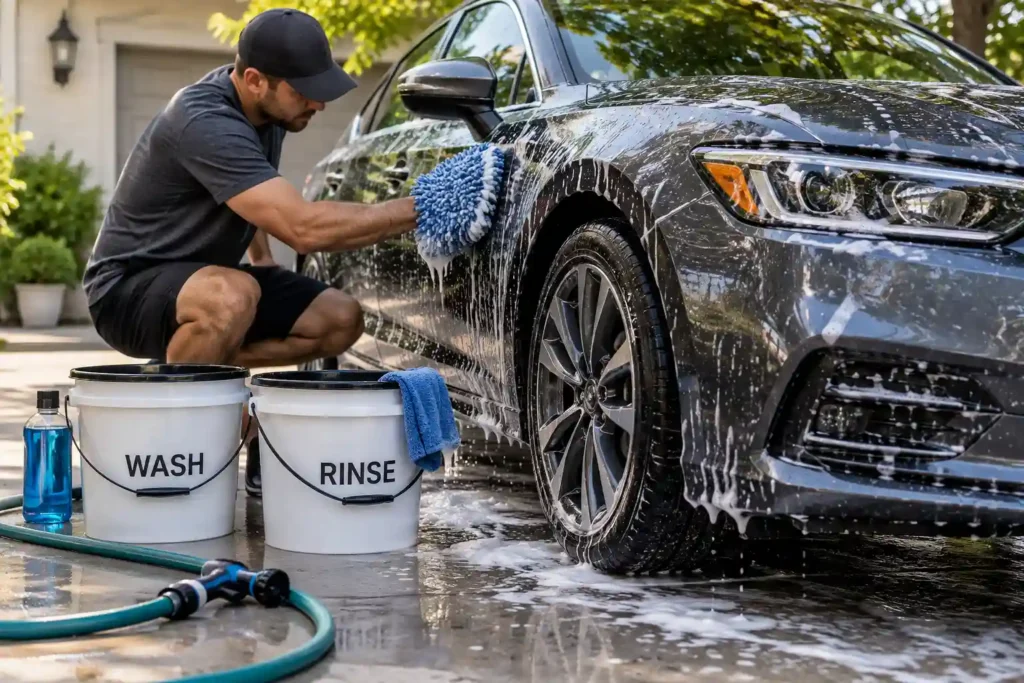
The two-bucket method separates the soapy wash solution from the clean water used to rinse the wash mitt. After washing one section, you rinse and agitate the mitt in the rinse bucket before putting it back into the soap bucket.
This matters because the mitt can pick up abrasive dirt while cleaning the vehicle. If you rinse the same mitt only in the soap bucket, some of that contamination can remain in the wash solution and on the mitt. A separate rinse bucket reduces the amount of dirt returned to the paint. A grit guard can further help by allowing loosened debris to settle toward the bottom of the bucket instead of remaining on the mitt.
A simple setup is:
| Bucket | Purpose |
|---|---|
| Wash bucket | Holds clean water and car-wash soap |
| Rinse bucket | Holds clean water for rinsing the wash mitt |
| Grit guard | Helps separate loosened dirt from the mitt |
The two-bucket method is not a guarantee against scratches, but it is a practical way to reduce contamination during a traditional hand wash.
Does the Wash Mitt or Sponge Material Affect Scratch Risk?
Yes. The wash tool affects how dirt is carried across the paint.
A quality microfiber wash mitt is designed to hold wash solution and trap or lift loose dirt within its fibers rather than relying on hard pressure against the paint. Meguiar’s describes its microfiber wash mitt as lifting and trapping dirt during washing, while other detailing guidance similarly recommends microfiber or other paint-safe wash media for contact washing.
The important point is not that every sponge automatically scratches paint or that every microfiber mitt is safe. The condition of the wash media, the amount of contamination, the lubrication provided by the wash solution, and the pressure used all matter.
Whichever wash media you choose, inspect it before use. If it contains embedded grit or has been used on heavily contaminated areas, clean it or replace it rather than putting it back onto delicate paint.
How Much Pressure Should You Use When Washing a Car?
Use light pressure and let the wash solution and wash media do most of the work.
Heavy scrubbing is usually a poor response to stubborn contamination because additional force increases friction between the wash media and the paint. If dirt does not come away with gentle washing, rinse the area again or use an appropriate pre-treatment rather than repeatedly pressing harder.
A good contact-washing technique is:
- Saturate the mitt with wash solution.
- Place it gently on the paint.
- Make light, straight passes.
- Avoid repeatedly scrubbing the same area.
- Rinse the mitt frequently.
- Move to the next section with a clean mitt surface.
If contamination remains after a normal wash, the vehicle may need a separate decontamination process rather than more aggressive pressure during the wash.
What’s the Safest Way to Dry a Car After Washing?
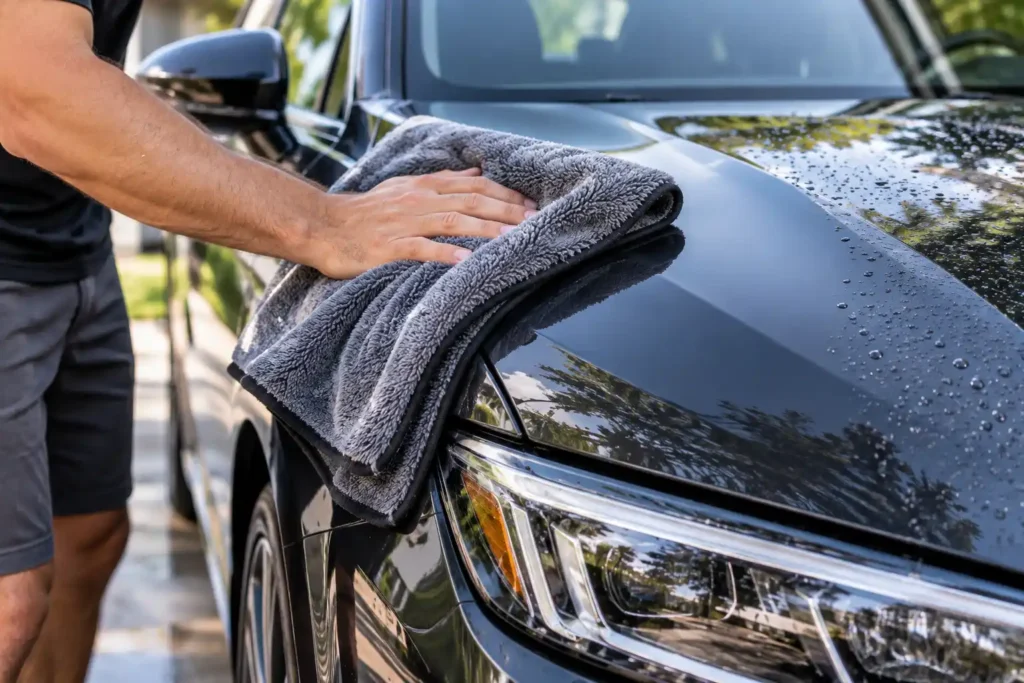
Dry the vehicle with a clean, dedicated microfiber drying towel and use gentle contact rather than pressing hard against the paint.
You can either gently glide a high-quality drying towel across the surface or use a blotting/patting motion, depending on the towel and amount of water remaining. The important point is to avoid dragging a dirty or contaminated towel across the paint with significant pressure.
A useful drying routine is:
- Rinse all remaining soap from the vehicle.
- Allow excess water to drain naturally.
- Use a clean, dedicated microfiber drying towel.
- Work from the cleaner upper surfaces toward the lower areas.
- Refold or replace the towel when it becomes saturated or contaminated.
- Pay attention to mirrors, trim, door jambs, and other areas where water collects.
Griot’s Garage and Meguiar’s both recommend microfiber drying towels as part of the drying process, while Meguiar’s specifically recommends premium drying towels designed to remove bulk water efficiently.
The towel’s cleanliness matters just as much as its softness. A towel that has picked up grit from wheels or a dirty lower body panel should not be used on the upper paint.
How Does Water Quality Affect a Scratch-Free Car Wash?
Water quality mainly affects water spotting and mineral deposits, rather than directly creating the same type of damage as a swirl mark.
When hard water dries on a vehicle, dissolved minerals can remain behind as visible spots or deposits. These deposits can become more difficult to remove if they are left on the surface repeatedly. Environmental contaminants can also cause staining or etching when they remain on automotive paint for extended periods.
If your local water leaves heavy mineral spotting, you can reduce the problem by:
- Washing in the shade.
- Keeping the surface wet while washing.
- Rinsing thoroughly.
- Drying the vehicle before water evaporates completely.
- Using filtered or deionized water when appropriate.
A filtered or deionized final rinse can be useful in areas with particularly hard water, but it is not required for every car owner. Proper washing and prompt drying are usually the first improvements to make.
Does the Condition of Your Paint Change How Carefully You Should Wash?
Yes, but the basic washing process does not need to change.
Paint that already has scratches, swirl marks, oxidation, or other surface defects deserves careful washing because additional defects can make the finish look worse over time. Previous polishing or paint correction can also affect the amount of clear-coat material remaining, so unnecessary abrasion should always be avoided.
The safest approach is to use the same fundamentals regardless of vehicle age:
- Remove loose dirt before contact washing.
- Use clean wash media.
- Separate wash and rinse water.
- Use light pressure.
- Keep wheels and their tools separate from paint-care tools.
- Dry with clean microfiber towels.
There is no reliable basis for assuming that an older vehicle automatically has a dangerously thin clear coat simply because of its age. Paint condition and previous correction history matter more than age alone.
Should You Wash a Car in Direct Sunlight?
It is better to wash when the paint and exterior surfaces are cool and when soap and rinse water will not dry rapidly.
Direct sunlight does not itself create a swirl mark, but rapid drying can leave soap residue or mineral deposits on the surface and can make it harder to maintain an even wash process. Automotive product instructions commonly warn against allowing wash products to dry on the surface, and 3M’s automotive instructions also specify avoiding direct sunlight or hot surfaces for certain paint-care products.
If shade is unavailable, choose a cooler time of day and work in smaller sections so you can rinse each area before the product dries.
What Car-Washing Common Car-Washing Mistakes to Avoid Can Cause Scratches?
The most common car-washing mistakes that can cause scratches are skipping the pre-rinse, using dirty wash tools, applying too much pressure, sharing tools between wheels and paint, letting soap dry, and using contaminated drying towels. Avoiding these mistakes helps reduce unnecessary friction and the risk of wash-induced scratches and swirl marks.
Common Car-Washing Mistakes to Avoid
Scrubbing the Paint With Circular Motions
Avoid aggressive circular scrubbing, particularly when contamination is present. Use light, controlled passes and keep the wash media clean to reduce unnecessary friction against the paint.
Using the Same Tools on Wheels and Paint
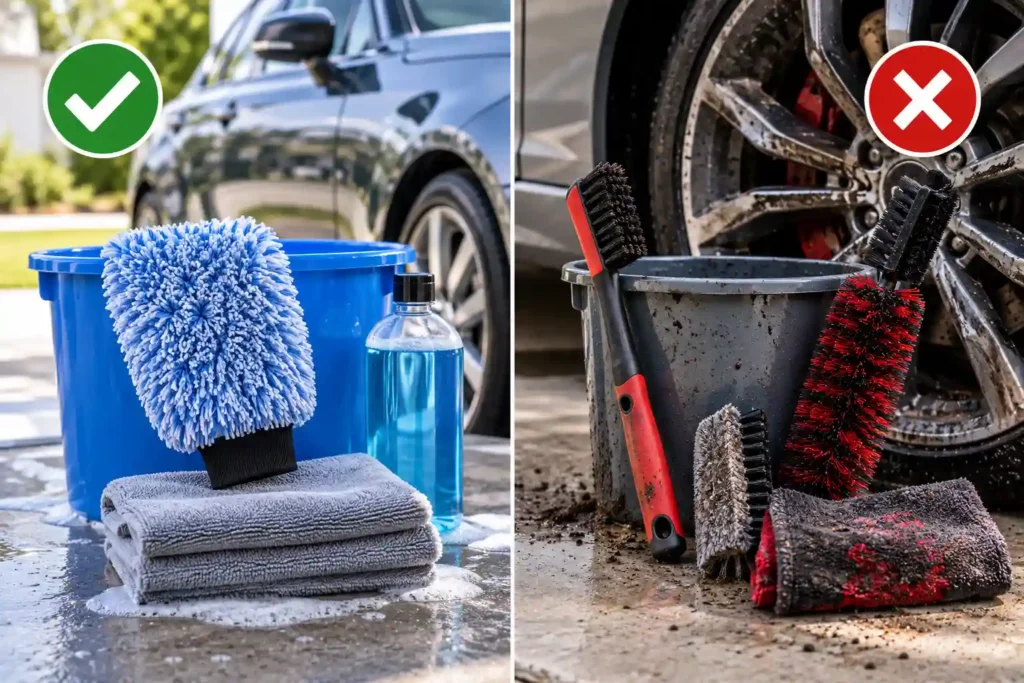
Keep separate wash mitts, brushes, and towels for wheels and painted surfaces. Wheels and tires can carry brake dust and heavy road contamination that you do not want to transfer onto the paint.
Skipping the Pre-Rinse
Rinse the vehicle thoroughly before touching the paint with a wash mitt. This helps remove loose dirt and surface contamination that could otherwise be dragged across the clear coat.
Using Too Much Pressure
Wash with light pressure rather than aggressively scrubbing the paint. If stubborn dirt remains, rinse the area again or use an appropriate cleaning or decontamination method instead of increasing pressure.
Reusing a Dirty Wash Mitt
Rinse the wash mitt frequently as you move around the vehicle. If the mitt contains embedded grit that does not rinse away, replace it rather than continuing to use it on the paint.
Letting Car-Wash Soap Dry on the Paint
Work in manageable sections and rinse before the soap solution dries. Washing in the shade and keeping the surface wet can help prevent soap residue and mineral deposits.
Using Dirty or Contaminated Drying Towels
Use clean, dedicated microfiber towels for painted surfaces. Never use a towel that has picked up brake dust, grit, or heavy contamination from wheels and tires.
Conclusion
Washing your car without scratching the paint is mainly about controlling dirt, friction, and contamination throughout the process. Start with a thorough pre-rinse, use separate tools for wheels and paint, and follow the two-bucket method to keep your wash mitt cleaner. Work from the top of the vehicle downward with light pressure, rinsing the mitt frequently rather than scrubbing stubborn dirt harder. Keep the vehicle and wash solution from drying during the process, especially in warm or sunny conditions. Finally, use clean, dedicated microfiber towels to dry the paint gently. These habits do not guarantee a completely scratch-free finish, but they significantly reduce unnecessary contact with abrasive contamination and help preserve the appearance of your vehicle’s paint over time.
Frequently Asked Questions
Can I Wash My Car Safely Without Expensive Detailing Tools?
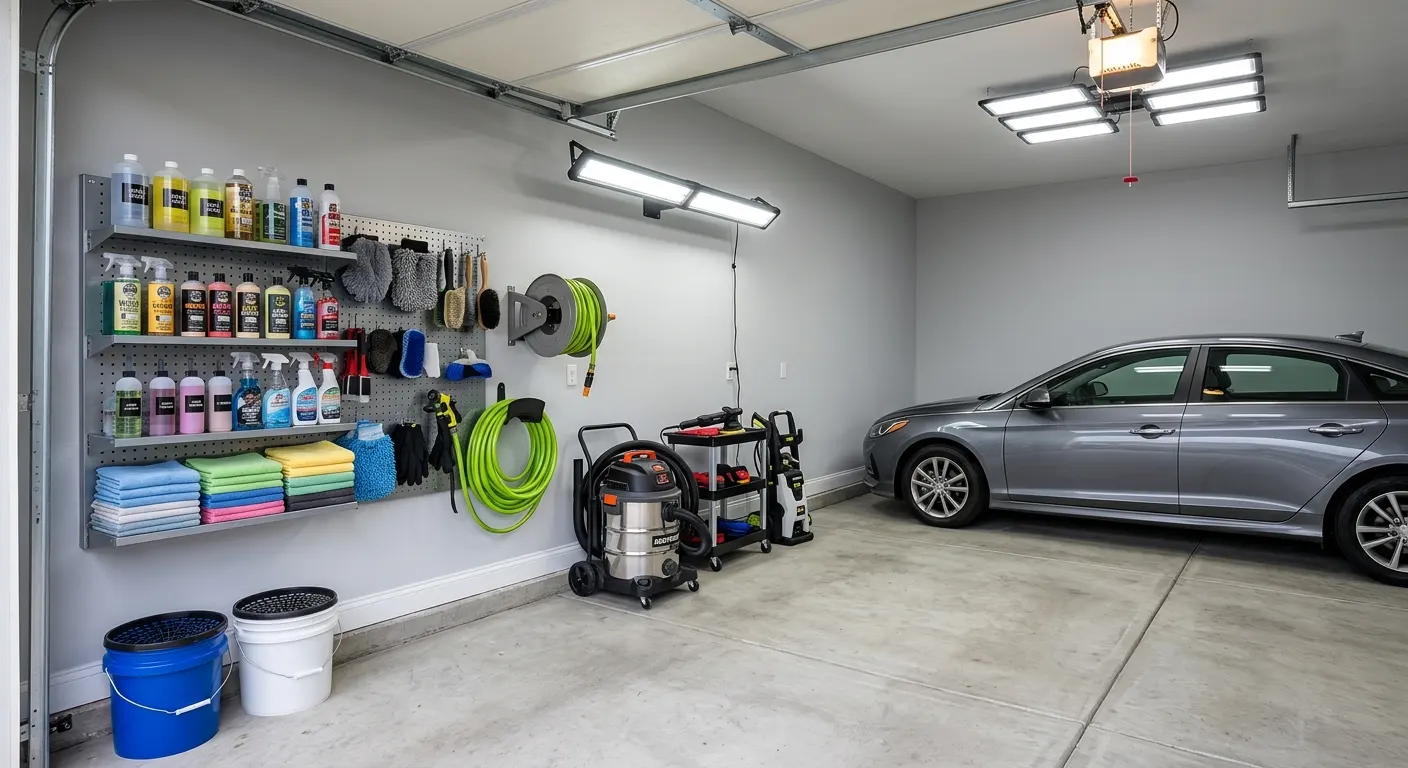
Yes. You do not need an extensive detailing setup to reduce scratching risk. A dedicated car-wash soap, clean microfiber wash mitt, two buckets, clean drying towels, and separate wheel-cleaning tools are enough for a basic hand-washing routine.
The technique matters more than owning a large collection of specialized products.
Does Washing My Car More Often Increase Scratch Risk?
Washing frequency itself does not determine scratch risk. The way the vehicle is washed matters more.
Regular maintenance washing can also prevent heavy contamination from building up, which may reduce the amount of aggressive cleaning needed later. Meguiar’s recommends regular washing as part of routine paint care.
Can I Wash My Car With a Hose Without Using a Bucket?
A hose-only rinse can remove loose dust and light surface contamination without physical contact, but it generally will not remove bonded dirt and grime completely.
For a full wash, some form of contact cleaning is normally required. When you use a mitt, reducing contamination and friction becomes the priority.
How Can I Tell Whether My Car Has Swirl Marks?
Swirl marks and fine scratches are often easier to see under a strong light or direct sunlight at an angle to the paint.
Look for fine, interconnected or circular-looking lines that become more visible as the light reflects across the surface. If the vehicle looks glossy in ordinary lighting but shows fine lines under stronger directional light, the finish may already have wash-induced or other surface defects.
Can Proper Washing Prevent Existing Swirl Marks From Getting Worse?
Proper washing can help prevent additional wash-induced scratches, but it cannot remove swirl marks that are already present.
Existing defects generally require a separate paint-correction or polishing process if you want to reduce their appearance. 3M and Meguiar’s both describe polishing or correction products for removing or reducing fine scratches and swirl marks, depending on their severity.
Do I Need a Grit Guard in Both Buckets?
A grit guard is particularly useful in the rinse bucket because that is where the dirty mitt is agitated. Some detailing systems use inserts in both buckets, but the important principle is keeping loosened dirt from being returned to the wash media and paint. Meguiar’s states that its grit guard is designed to remove dirt and debris from the wash mitt and isolate that contamination at the bottom of the bucket.