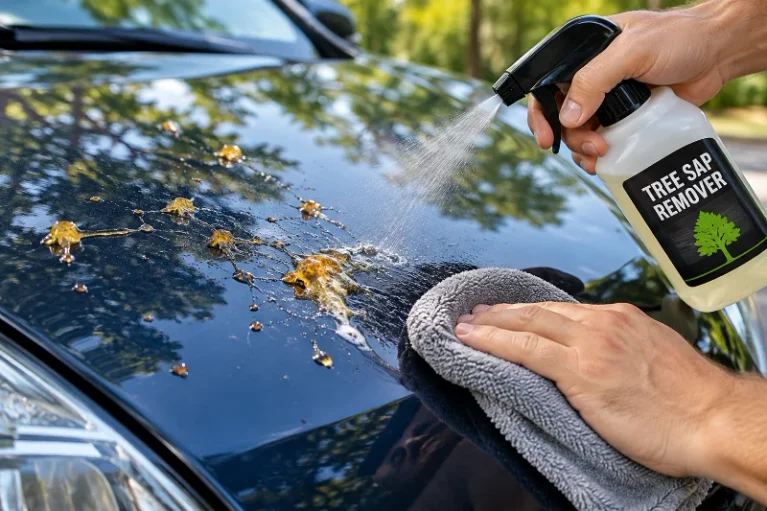
Tree sap can stick to your car’s paint, harden under sunlight, and become difficult to remove with an ordinary car wash. If you’re wondering how to remove tree sap from car paint without scratching the clear coat, the safest approach is to soften the sap with a compatible automotive sap remover before gently wiping it away with a clean microfiber towel.
Fresh sap is generally easier to remove than hardened resin that has been exposed to heat and sunlight for several days. Using the right cleaner, allowing sufficient dwell time, and avoiding scraping are the keys to removing sap without damaging your vehicle’s finish.
This guide explains how to remove fresh and dried tree sap, which products work, what household remedies to avoid, and how to prevent recurring sap buildup when parking under trees.
Why Is Tree Sap So Difficult to Remove From Car Paint?
Tree sap contains sticky organic compounds, including resins in many coniferous trees. When sap lands on automotive paint, it can adhere to the clear coat and become increasingly difficult to remove as it dries.
Heat and sunlight can accelerate the hardening process. Over time, hardened sap may resist ordinary car wash soap and require a compatible solvent-based cleaner to loosen it.
There are two main concerns when sap remains on a vehicle:
- Physical bonding: Dried sap can adhere firmly to the clear coat, making aggressive wiping or scraping more likely to cause scratches.
- Paint etching: Prolonged exposure to certain tree deposits, heat, and environmental conditions can contribute to staining or damage to the clear coat. The severity depends on the deposit, paint condition, and exposure time.
Tree sap does not damage every vehicle at the same rate. However, removing visible deposits promptly is generally easier and safer than waiting until they have hardened.
How to Remove Tree Sap From Car Paint: Step-by-Step Guide
The safest removal process involves softening the sap first, gently lifting the residue, and washing the treated area afterward. Avoid trying to force hardened sap off with pressure or sharp tools.
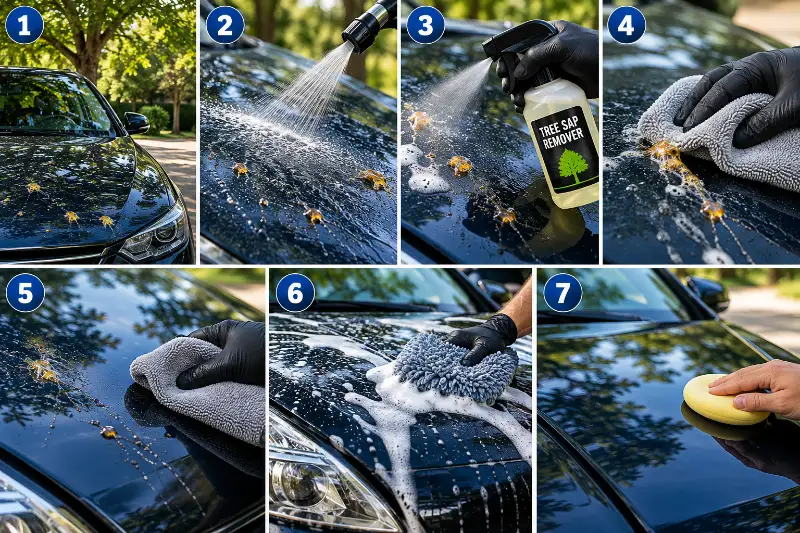
Step 1: Park in the Shade and Let the Paint Cool
Park the vehicle in a shaded area and allow the affected panels to cool before applying any cleaning product.
Hot paint can cause solvents and other cleaners to evaporate quickly, which may leave residue behind or increase the risk of product staining.
Do not apply a sap remover to hot paint or allow it to dry on the surface. Follow the product label for temperature and application requirements.
Step 2: Rinse the Affected Area
Rinse the affected panel with clean water to remove loose dust, grit, and road debris.
This step is particularly useful when sap is located on the hood, roof, windshield, or front bumper, where dirt may accumulate around the deposit.
Removing loose debris first helps reduce the risk of dragging abrasive particles across the paint during the cleaning process.
Step 3: Apply a Dedicated Tree Sap Remover
Apply an automotive tree sap remover that is specifically labeled as safe for your vehicle’s paint or clear coat.
Use the product according to its instructions, including the recommended application method and dwell time. Allow the cleaner to soften the sap before wiping.
A dedicated sap remover is generally the most predictable option for hardened deposits because it is formulated for this type of contamination.
If you are using a bug and tar remover instead, check the label to confirm that it is suitable for tree sap and compatible with your paint protection.
Never allow the cleaner to dry on the vehicle. If the product begins to dry before the recommended dwell time is complete, rinse it as directed.
Step 4: Gently Wipe Away the Softened Sap
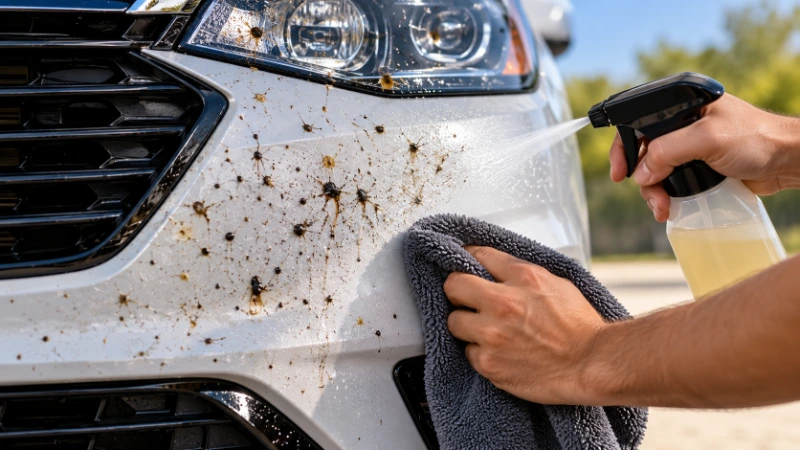
Use a clean, soft microfiber towel to gently lift the softened sap from the surface.
Work on one deposit at a time and use light pressure. Avoid rubbing aggressively, even if the sap appears to be nearly removed.
If the residue does not lift easily, stop wiping and apply another treatment according to the cleaner’s instructions.
Repeated softening is generally safer than increasing pressure or scraping the deposit off the clear coat.
Step 5: Repeat the Treatment if Necessary
Heavily hardened sap may require more than one application.
Reapply the compatible remover as directed and allow it to work before gently wiping again. Use a fresh section of microfiber towel to avoid spreading dissolved sap or trapped debris across the paint.
If the deposit remains after several careful treatments, do not continue escalating the pressure or using increasingly aggressive chemicals.
The remaining mark may be staining or clear-coat etching rather than sap residue. More advanced paint correction may be needed to address that type of damage.
Step 6: Wash and Rinse the Treated Area
After the sap has been removed, wash the affected panel with automotive car wash soap and clean water.
This removes remaining cleaner and loosened contamination. Rinse thoroughly and dry the surface with a clean microfiber drying towel.
For general exterior washing techniques, see the Exterior Car Care Complete Guide.
Step 7: Restore Paint Protection if Needed
Some sap removers and solvents can weaken or remove wax, sealant, or other surface protection from the treated area.
Once the surface is clean and dry, inspect it to determine whether additional protection is needed.
If the remover has affected the existing protection, apply a compatible wax or paint sealant according to its instructions. You generally do not need to reapply protection to the entire vehicle after treating one small spot.
What Products Work Best for Tree Sap Removal?
The right product depends on how fresh or hardened the sap is, the surface being cleaned, and the condition of the vehicle’s paint.
| Product type | Best use | Important limitation |
|---|---|---|
| Dedicated tree sap remover | Fresh and hardened sap on compatible automotive paint | Must be used according to the label and surface compatibility instructions. |
| Automotive bug and tar remover | Sap deposits when the product specifically permits sap removal | Not every bug and tar remover is formulated for tree resin. |
| Diluted isopropyl alcohol | Small, fresh deposits when compatible with the paint and existing protection | Can affect wax, sealants, or certain coatings and may be less effective on hardened resin. |
| Automotive detailing clay | Certain remaining bonded contaminants after chemical cleaning | Can cause paint marring and requires suitable lubricant and proper technique. |
For most car owners, a dedicated automotive sap remover is the practical starting point for stubborn deposits.
A clay bar should not be the first tool used on thick, hardened sap. Remove the bulk of the deposit chemically before considering mechanical decontamination.
For more information about removing bonded contamination and maintaining the finish, see the Finishing in Car Care Complete Guide.
Can Household Products Like Hand Sanitizer or Peanut Butter Remove Sap?
Household remedies such as hand sanitizer, peanut butter, and mayonnaise are sometimes suggested for removing tree sap. However, their effectiveness and compatibility with automotive finishes can vary considerably.
Hand sanitizer may contain alcohol that can soften certain fresh deposits, but its additional ingredients, including fragrances, thickeners, or moisturizers, may leave residue. It is not a universal substitute for an automotive sap remover.
Peanut butter and mayonnaise contain oils that may help loosen some sticky material, but neither is formulated specifically for automotive paint. They can leave oily residue and may require additional cleaning.
For these reasons, a dedicated automotive sap remover is generally the more predictable choice.
Is Rubbing Alcohol Safe for Car Paint?
Isopropyl alcohol can help dissolve certain sap deposits, but it should be used cautiously on automotive finishes.
If considering this method:
- Confirm that the vehicle’s paint, coating, and protective products are compatible with isopropyl alcohol.
- Use a diluted solution rather than assuming concentrated rubbing alcohol is appropriate.
- Test the solution on a small, inconspicuous area first.
- Apply it to a microfiber towel or use the method specified by the product manufacturer.
- Keep the application localized and brief, and rinse or wash the area afterward.
Avoid leaving alcohol on the surface for extended periods. It can remove or weaken existing wax and sealant, and some coatings or sensitive finishes may be affected.
For valuable, freshly corrected, or specially coated paint, use a cleaner approved by the coating or vehicle manufacturer instead.
How Can You Prevent Tree Sap Problems When Parking Under Trees?
If you regularly park under trees, a few preventive measures can reduce the amount of sap that accumulates on your vehicle.
Park Away From Sap-Producing Trees When Possible
The most direct way to reduce sap deposits is to avoid parking beneath trees that are actively dripping sap or resin.
Pine and other coniferous trees can produce sticky resin, while other tree species may release sap or sugary deposits during particular seasons.
If your parking location is fixed, identify which trees are responsible and observe when deposits are most common.
Use a Suitable Car Cover
A properly fitted car cover can help keep sap from contacting the paint when the vehicle is parked for extended periods.
Choose a cover designed for automotive use and follow the manufacturer’s instructions for installation and removal.
The vehicle should be clean before covering it. A cover placed over dusty or contaminated paint can trap particles and create friction that may scratch the finish.
Avoid placing a cover over wet, dirty, or heavily contaminated surfaces.
Maintain Wax, Sealant, or Ceramic Protection
A compatible wax, paint sealant, or ceramic coating can make routine cleaning easier by providing a protective surface layer.
However, paint protection does not make the vehicle immune to sap. Hardened resin can still adhere to protected paint, and prolonged exposure can still cause staining or other damage.
Maintain the protection according to the manufacturer’s instructions and remove visible sap promptly.
Inspect the Vehicle Regularly
If your vehicle is parked under trees every day, inspect the hood, roof, trunk, and windshield regularly.
Treating small, fresh deposits is usually easier than removing numerous hardened spots during a later wash.
You do not need to perform a full exterior detail every time sap appears. Prompt spot cleaning with an appropriate product is often sufficient.
Does the Tree Species Matter for Sap Removal?
Yes. Different tree species produce deposits with different compositions, which can affect how sticky the material is and how easily it responds to cleaning.
Pine and other coniferous trees produce resin that can be especially sticky and persistent. Some deciduous trees may leave watery sap or sugary deposits that behave differently from resin.
The source of the deposit can also be difficult to identify because not every sticky mark on a parked car is tree sap. Honeydew from insects, road tar, and other environmental contaminants can resemble sap.
For recurring problems, identifying the tree species can help you anticipate periods of heavier deposits and adjust your parking or cleaning routine.
However, you do not need to identify the exact tree before treating an ordinary sap spot. Start with a paint-safe automotive cleaner labeled for the type of contamination and follow its instructions.
Should You Treat Sap Differently on a Freshly Waxed or Ceramic-Coated Vehicle?
A freshly waxed or sealed vehicle may release sap more easily because the protective layer changes how contaminants interact with the surface.
A ceramic coating may also make routine cleaning easier, but neither wax nor ceramic protection guarantees that sap will not stick or cause damage.
For a freshly protected vehicle, begin with a gentle wash if the deposit is fresh and comes off easily. If it remains, use a remover specifically approved for the coating or protection product.
Avoid assuming that a stronger solvent is safe simply because the vehicle has ceramic coating. Some chemicals can affect the coating, and compatibility varies by formulation.
After removing sap, inspect the treated area. If the removal process has weakened or stripped the protection, apply a compatible maintenance product or reapply protection as directed by the manufacturer.
Spot treatment is usually sufficient for isolated deposits. A full reapplication is not automatically necessary after every cleaning.
Frequently Asked Questions
Can tree sap permanently damage car paint if left too long?
Yes. Tree sap can contribute to staining or clear-coat etching when it remains on automotive paint for an extended period, especially under hot or sunny conditions.
The extent of damage depends on the type of deposit, exposure, and condition of the paint. Prompt removal reduces the risk, but severe etching may require polishing or professional paint correction.
Is it safe to use a plastic scraper on hardened tree sap?
It is best to avoid scraping hardened sap from painted surfaces with plastic or metal tools.
Even a plastic scraper can drag hardened resin and trapped debris across the clear coat, creating scratches. Softening the sap with an appropriate cleaner and gently wiping it away is the safer approach.
Tools approved for automotive glass may be suitable for certain glass-cleaning applications, but they should not be transferred to painted surfaces.
Does tree sap affect windshields and windows the same way it affects paint?
Tree sap can stick to glass and reduce visibility, but automotive glass is generally more resistant to scratching than automotive clear coat.
Start by softening the deposit with a glass-compatible cleaner or sap remover. A scraper specifically designed and approved for automotive glass may be appropriate for certain glass surfaces when used according to its instructions.
Do not use a glass scraper on paint, plastic headlight lenses, window tint film, or other surfaces unless the manufacturer explicitly approves that application.
How quickly does tree sap harden after landing on a car?
Tree sap can begin to dry and become more difficult to remove within hours, particularly in warm, sunny conditions.
The exact timing depends on the tree species, deposit thickness, temperature, and exposure. There is no universal number of hours after which sap becomes permanently bonded.
Inspecting the vehicle after parking beneath trees and treating visible deposits promptly can make removal easier.
Will a brush-style automatic car wash remove tree sap?
A brush-style automatic car wash may remove loose dirt and some fresh deposits, but it is not a reliable solution for hardened tree sap.
The brushes are not designed to provide the targeted chemical treatment and dwell time needed to loosen bonded resin. Attempting to wash hardened sap away can also create unnecessary friction against the paint.
Spot-treat the deposit with a compatible sap remover before a normal wash.
Can I use a clay bar to remove hardened tree sap?
A clay bar can help remove certain bonded contaminants that remain after washing, but it is not the preferred first step for thick or hardened sap.
Use a compatible chemical remover to soften and remove the bulk of the deposit first. If residue remains, a suitable detailing clay may help, provided the paint and product instructions allow it.
Use sufficient clay lubricant and light pressure. Claying can cause marring and may require polishing to restore the finish.
Do I need to wax my entire car after removing tree sap?
No. Removing a small sap deposit does not automatically mean the entire vehicle needs to be waxed again.
Some removers can weaken existing protection on the treated spot. After cleaning, inspect the area and reapply a compatible wax or sealant if necessary.
Follow the protection product’s preparation and application instructions.
Final Thoughts
Removing tree sap safely comes down to softening the deposit before wiping it away. A compatible automotive sap remover, a clean microfiber towel, and a patient approach can handle many fresh and hardened deposits without aggressive scrubbing.
Avoid scraping painted surfaces, using unapproved household chemicals, or applying excessive pressure to stubborn spots. If a mark remains after the sap is gone, it may be staining or clear-coat damage rather than leftover residue.
For vehicles parked beneath trees regularly, prompt spot cleaning and suitable paint protection can make ongoing maintenance easier and reduce the risk of lasting damage.