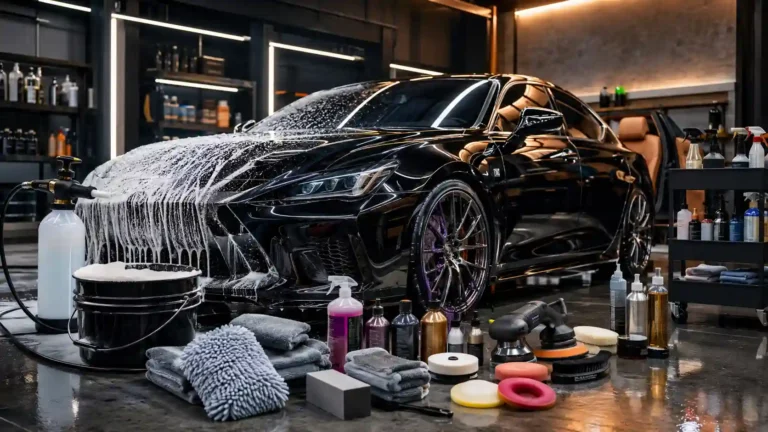
Car owners are taking detailing into their own hands more than ever. Among Gen Z drivers, 86% say they work on their own vehicles in some capacity, compared with 79% of Millennials, 73% of Gen X, and 46% of Boomers, according to industry survey data on automotive DIY habits.
That shift is pushing demand for products that used to live only in professional detailing bays. This guide breaks down 15 professional-grade products across washing, decontamination, paint correction, protection, and interior care, organized the way a detailer would actually use them, plus how to choose, how often to use them, and which mistakes to avoid.
What Makes a Detailing Product “Professional Grade”?
A professional-grade product is built to correct or protect paint and surfaces, not just to make them look temporarily clean. That distinction shows up in the formula, the concentration, and how the product is meant to be used.
Most consumer-aisle products are designed for convenience: spray, wipe, done. Professional-grade products are designed around a process. A clay bar removes contamination a wash can’t touch. A dual-action polisher corrects swirl marks and light scratches rather than masking them. A ceramic coating bonds to the clear coat instead of sitting on top of it like wax.
Three traits separate professional-grade products from everyday ones:
- They’re concentrated, so they’re diluted or applied in small amounts rather than used at full strength straight from the bottle.
- They’re built for a specific stage of the process (decontamination, correction, or protection) instead of trying to do everything at once.
- They require more technique, like working in sections, controlling dwell time, or using a machine polisher, which is why detailers and serious DIYers favor them over one-step sprays.
None of that makes them harder to use safely. It just means they reward a bit of patience with results that last months instead of days.
How We Chose These 15 Products
Every product on this list had to meet a few non-negotiables: it’s actually used in professional detailing, not just marketed with the word “pro” on the label; it has a defined role in the wash-to-protection workflow; it’s compatible with the wide range of vehicles American drivers own, from daily sedans to trucks and SUVs; and it holds up under real-world testing and long-standing reputation in the detailing community, not just recent marketing buzz.
We also weighed ease of use for a home garage setup, value relative to professional detailing costs, and how well each product fits into a complete system rather than working in isolation.
The 15 Best Professional Car Detailing Products
These products are organized in the order a professional detail actually happens: wash, decontaminate, correct, protect, then finish the interior and wheels. Following this order matters almost as much as the products themselves.
| Serial | Product | Category | Buy on Amazon |
| 1 | Chemical Guys Arsenal Builder Kit | Detailing Kit | Check Price on Amazon |
| 2 | Chemical Guys Mr. Pink Super Suds | Car Wash Soap | Check Price on Amazon |
| 3 | Chemical Guys TORQ Foam Cannon | Foam Cannon | Check Price on Amazon |
| 4 | Chemical Guys Medium Clay Bar and Luber Kit | Clay Bar | Check Price on Amazon |
| 5 | CarPro IronX | Iron Fallout Remover | Check Price on Amazon |
| 6 | Chemical Guys TORQX Random Orbital Polisher | Dual-Action Polisher | Check Price on Amazon |
| 7 | Meguiar’s Ultimate Compound | Cutting Compound | Check Price on Amazon |
| 8 | Gtechniq Crystal Serum Light | Ceramic Coating | Check Price on Amazon |
| 9 | Adam’s Detail Spray | Spray Sealant / Quick Detailer | Check Price on Amazon |
| 10 | The Rag Company Eagle Edgeless 500 | Microfiber Towels | Check Price on Amazon |
| 11 | Chemical Guys Leather Cleaner and Conditioner | Interior / Leather Cleaner | Check Price on Amazon |
| 12 | Stoner Invisible Glass | Glass Cleaner | Check Price on Amazon |
| 13 | Meguiar’s Endurance Tire Gel | Tire and Trim Dressing | Check Price on Amazon |
| 14 | Chemical Guys Diablo Wheel Gel | Wheel and Brake Dust Cleaner | Check Price on Amazon |
| 15 | Chemical Guys Interior Detailing Brush Set | Detailing Brush Set | Check Price on Amazon |
1. Best Overall Detailing Kit: Chemical Guys Arsenal Builder Kit
Best for: drivers who want a complete starting system instead of buying products one at a time.
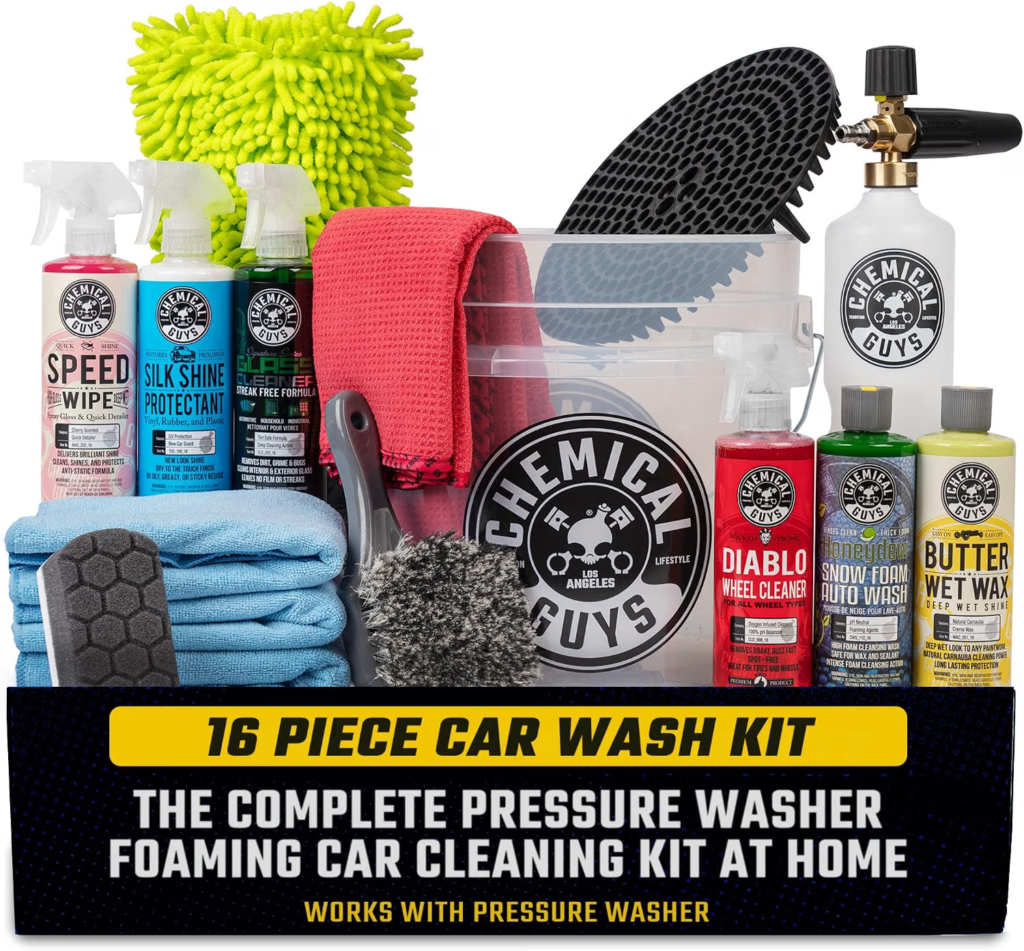
This kit bundles wash, wheel, interior, and protection products into one set, which solves the most common beginner mistake: buying a single great product and nothing to support it. The included SiO2-based spray protection adds a hydrophobic layer that typically holds up for several weeks between full details.
Key features:
- Covers exterior wash, wheels, tires, and interior in one purchase
- SiO2 spray sealant included for quick protection between washes
- Sized for one to two full vehicle details before needing refills
2. Best pH-Neutral Car Wash Soap: Chemical Guys Mr. Pink Super Suds
Best for: maintaining a wax, sealant, or ceramic coating without stripping it.
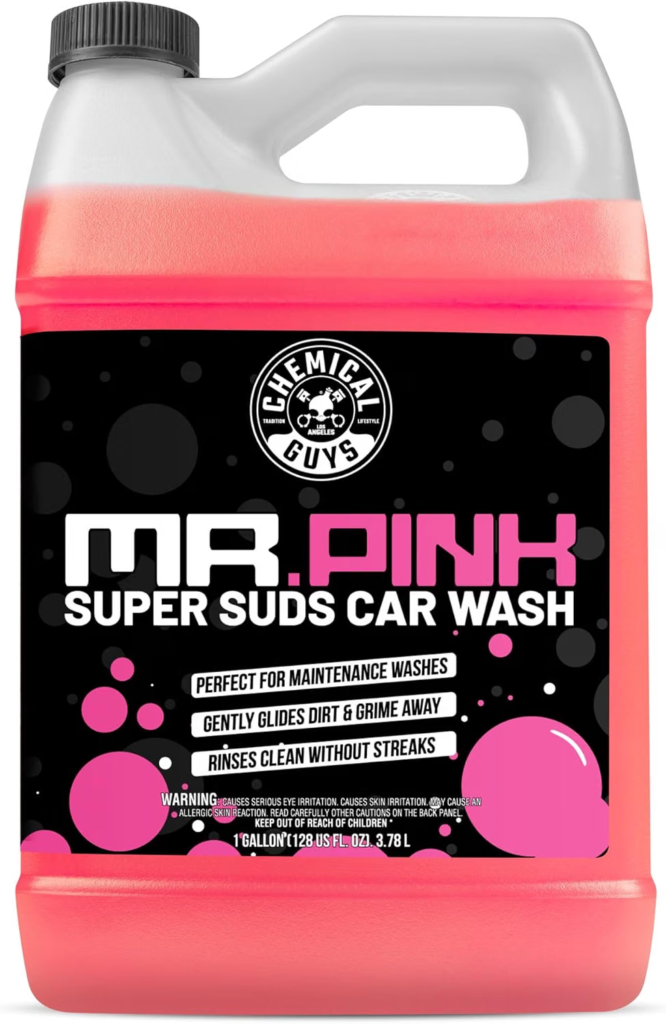
Regular dish soap and many off-the-shelf car shampoos are alkaline, which slowly breaks down wax and sealant layers. A pH-neutral formula like this one cleans without degrading whatever protection is already on the paint, which is why it’s a staple in professional maintenance washes.
Key features:
- pH-balanced formula safe for waxed, sealed, and coated paint
- Rinses clean without leaving residue or water spots
- Gentle enough for weekly use without dulling gloss over time
3. Best Foam Cannon for Pre-Wash Decontamination: Chemical Guys TORQ Foam Cannon
Best for: loosening dirt before it ever touches a wash mitt.
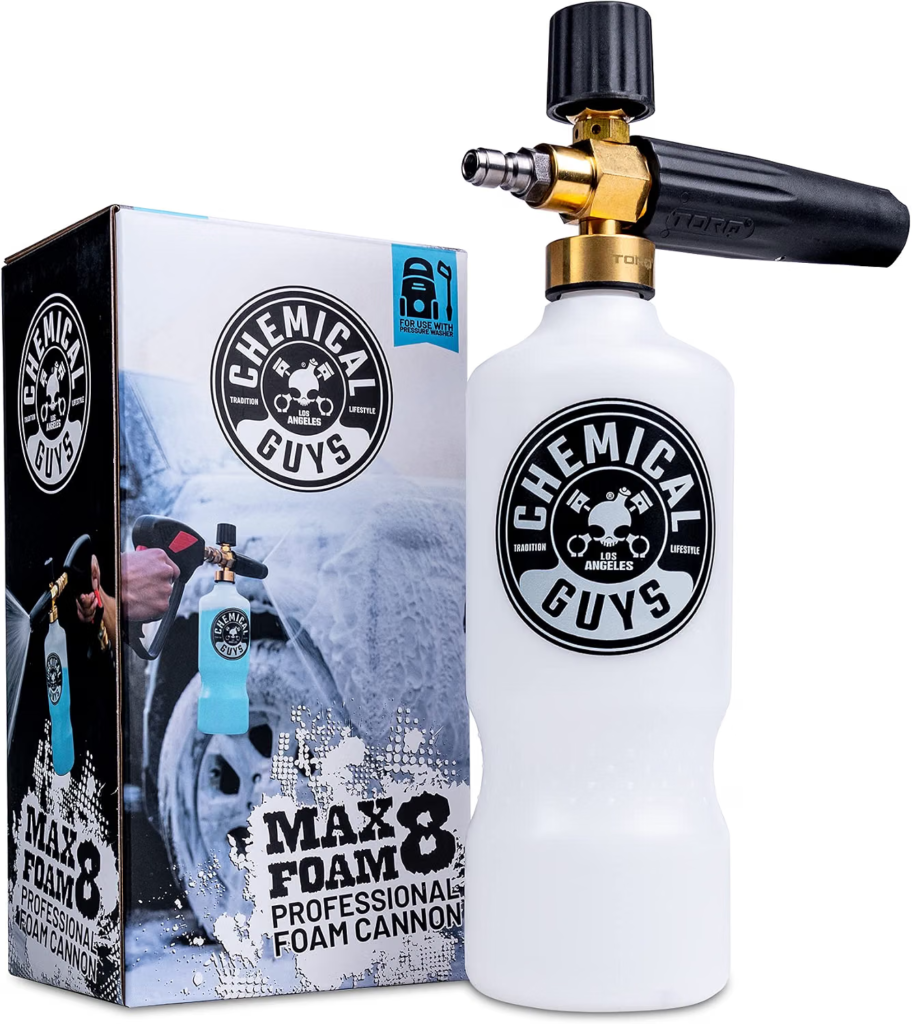
The biggest cause of swirl marks is dragging grit across paint with a towel or mitt. A foam cannon attaches to a pressure washer and blankets the car in thick soap foam that breaks down road film and loose dirt before contact washing even starts, cutting down on the abrasion that causes fine scratches.
Key features:
- Adjustable dilution ratio for thicker or thinner foam
- Works with most standard pressure washers
- Significantly reduces contact-wash friction on the paint
4. Best Clay Bar for Paint Decontamination: Chemical Guys Medium Clay Bar and Luber Kit
Best for: removing embedded contaminants a wash alone can’t lift.
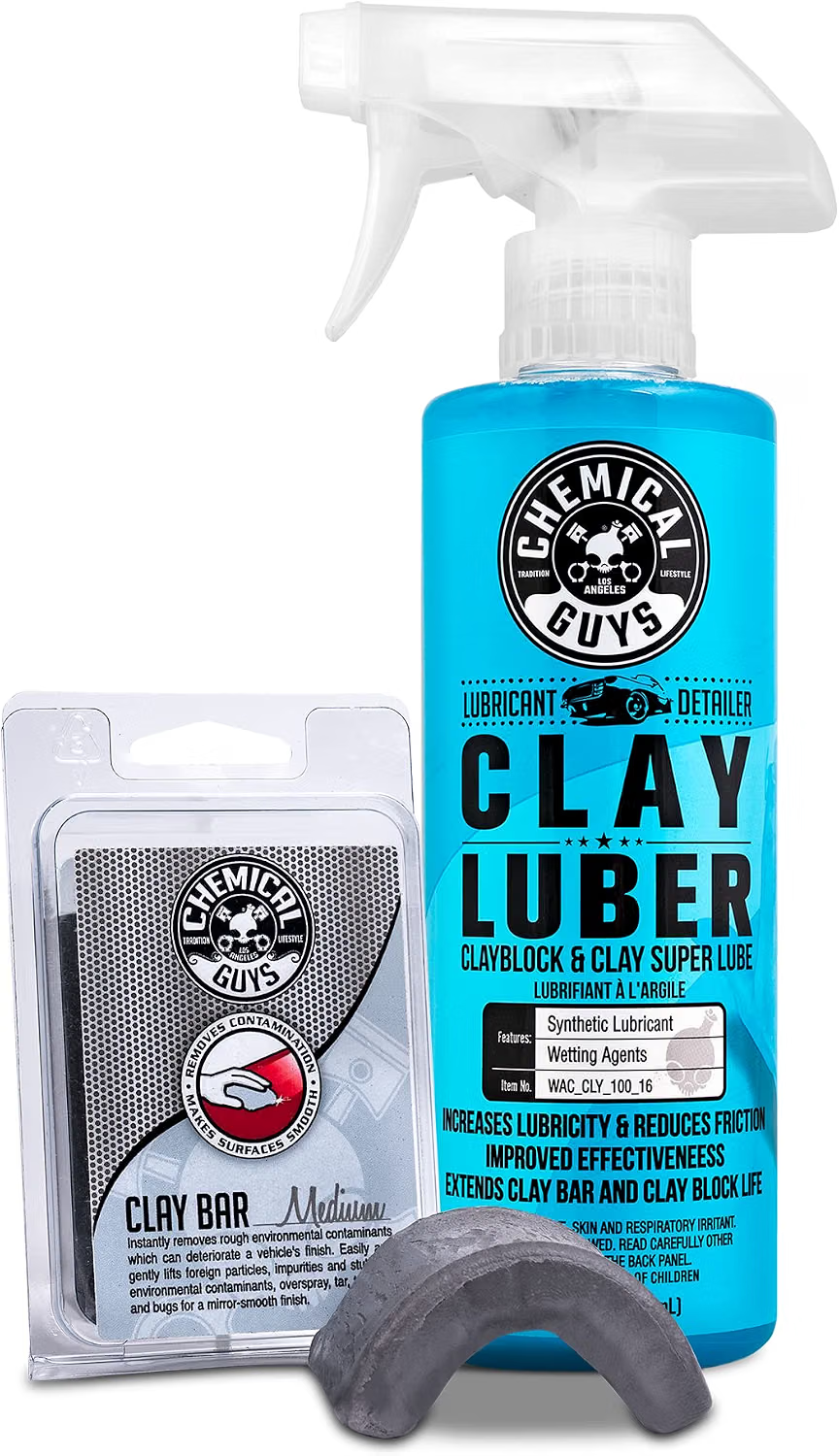
Run a hand over freshly washed paint and it often still feels gritty. That texture is bonded contamination, overspray, tree sap, or industrial fallout sitting on top of the clear coat. A clay bar physically lifts that residue, leaving a glass-smooth surface that wax and sealants bond to far more effectively. Chemical Guys offers light, medium, and heavy grades, with medium being the right starting point for most daily drivers.
Key features:
- Removes bonded contaminants invisible to the eye but felt by hand
- Non-abrasive on paint, chrome, and fiberglass when used with lubricant
- Improves how well wax, sealant, or ceramic coating bonds afterward
5. Best Iron Fallout Remover: CarPro IronX
Best for: dissolving embedded brake dust and rail dust before paint correction.
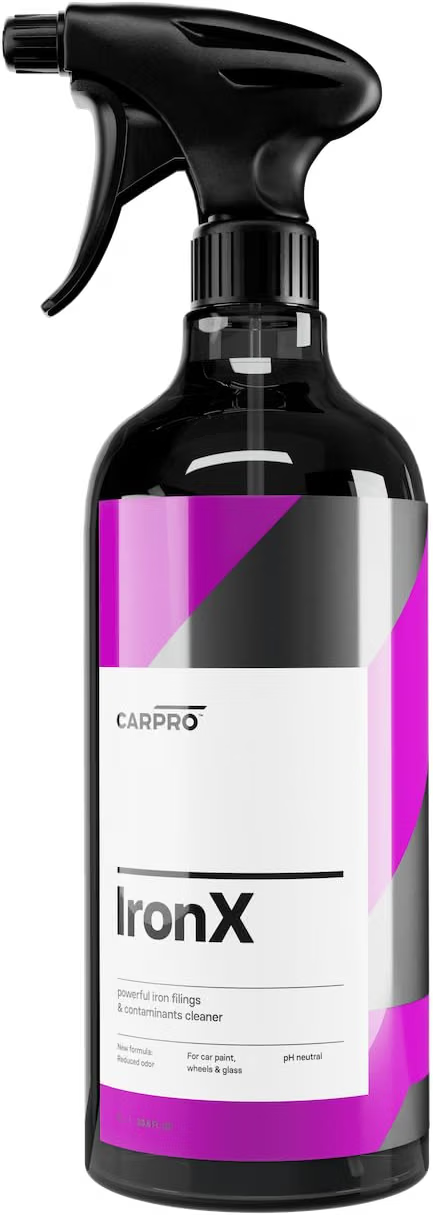
Brake dust contains tiny iron particles that embed into paint and clear coat, especially near the wheel wells. IronX reacts chemically with these particles, turning purple or red as it dissolves them, which gives a visual confirmation that it’s actually working rather than just rinsing surface dirt. It’s a step most home detailers skip, and it’s one of the easiest ways to get closer to professional-level paint clarity.
Key features:
- Color-change reaction shows exactly where iron contamination exists
- Safe for paint, wheels, glass, and most exterior trim
- Should be used before clay or polishing for best results
6. Best Dual-Action Polisher for Paint Correction: Chemical Guys TORQX Random Orbital Polisher
Best for: correcting swirl marks and light scratches without the risk of burning through clear coat.
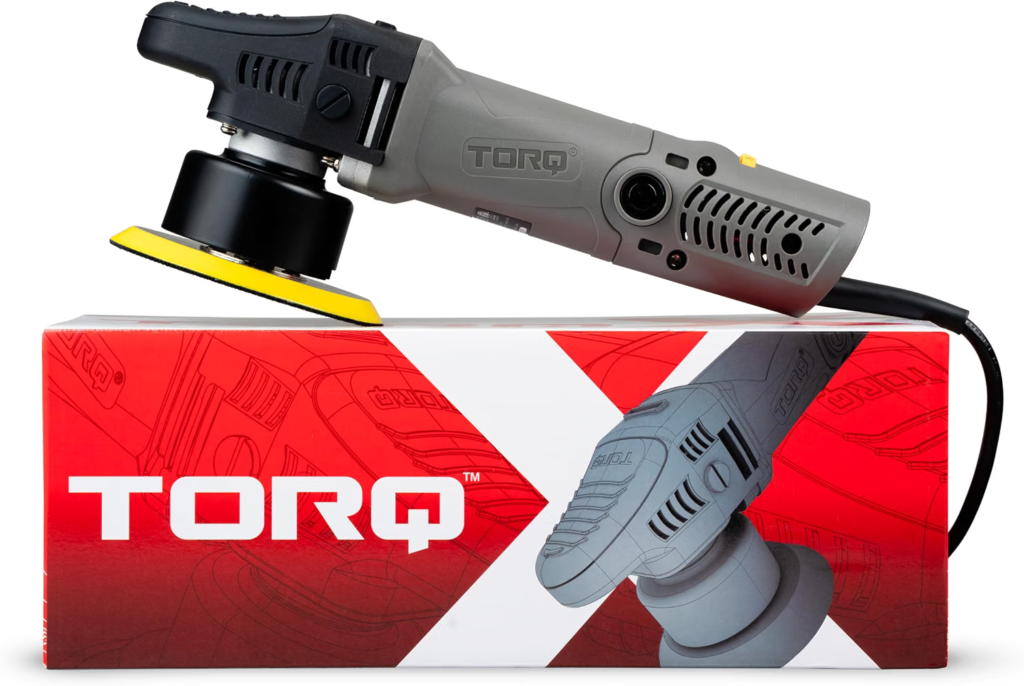
A dual-action (DA) polisher oscillates and rotates at the same time, which spreads heat and friction more evenly than a rotary buffer. That makes it far more forgiving for home use while still delivering correction results close to what a detailing shop produces. It’s the single biggest jump in result quality on this entire list, going from hiding imperfections to actually removing them.
Key features:
- Random orbital action reduces risk of paint burn compared to rotary tools
- Works with a range of pad and compound combinations
- Suitable for beginners with practice, and capable enough for advanced correction
7. Best Cutting Compound for Defect Removal: Meguiar’s Ultimate Compound
Best for: removing moderate swirl marks, oxidation, and light scratches before polishing.
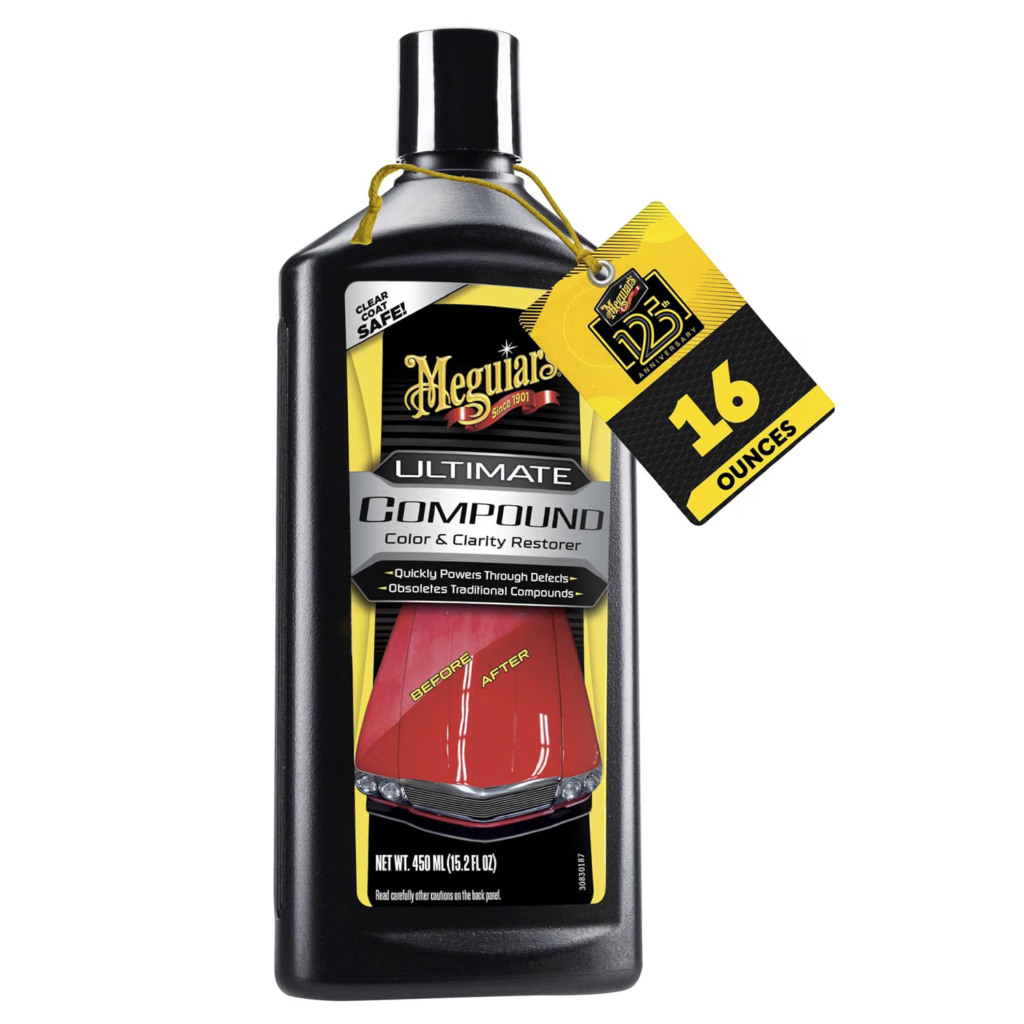
Cutting compounds contain more aggressive abrasives than polish, designed to physically level the clear coat around a defect rather than just filling it in temporarily. Meguiar’s Ultimate Compound is formulated to break down as it’s worked, so the abrasive particles get finer the longer it’s buffed, reducing the risk of leaving compound haze behind.
Key features:
- Diminishing abrasive technology reduces leftover haze
- Pairs well with a DA polisher and foam cutting pad
- Best used before a finishing polish, not as a final step
8. Best Professional-Grade Ceramic Coating: Gtechniq Crystal Serum Light
Best for: long-term, high-gloss paint protection that outlasts wax by years, not weeks.
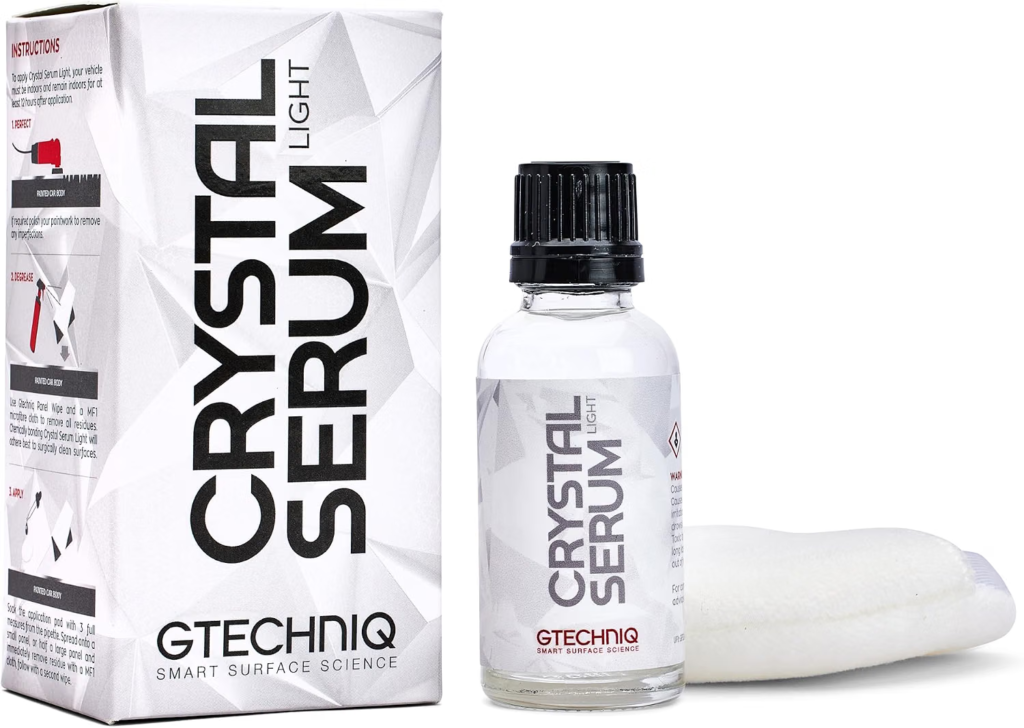
Ceramic coatings have shifted from a luxury add-on to close to a standard expectation among detailers, because they chemically bond to the clear coat instead of sitting on top of it. Gtechniq Crystal Serum Light is used in professional detailing shops and is one of the few consumer-available coatings that mirrors true professional-grade chemistry, offering strong scratch resistance and multi-year durability when applied correctly to properly prepped paint.
Key features:
- Chemical bond to clear coat, unlike topical wax or sealant
- Multi-year durability with proper surface prep and aftercare
- Requires decontamination and, ideally, paint correction before application
9. Best Spray Sealant and Quick Detailer: Adam’s Detail Spray
Best for: extending protection and adding gloss between full details.
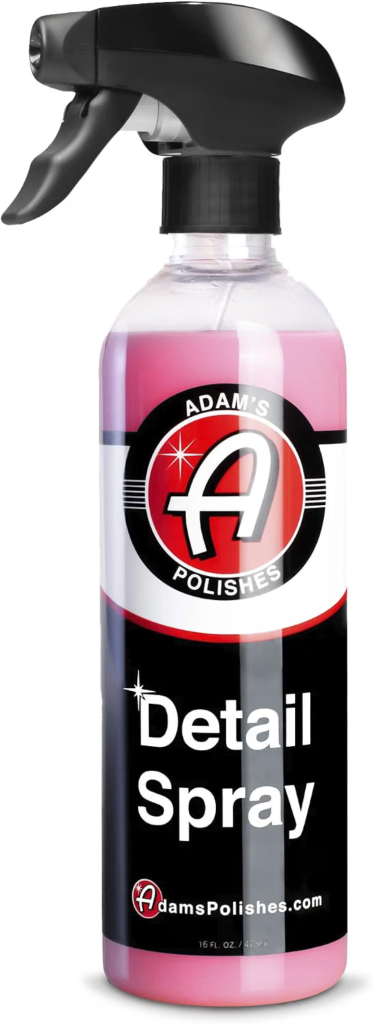
A quick detailer spray isn’t a replacement for wax, sealant, or ceramic coating. It’s a maintenance layer that boosts existing protection, adds shine, and safely removes light dust without a full wash. Adam’s Detail Spray is widely used by both professionals and enthusiasts because it’s compatible with coated, waxed, and sealed paint alike.
Key features:
- Safe for use between washes to remove dust and fingerprints
- Boosts gloss and water beading on existing wax or sealant
- Compatible with clay bar and polisher workflows
10. Best Microfiber Towels for Detailing: The Rag Company Eagle Edgeless 500
Best for: drying and buffing without introducing new scratches.
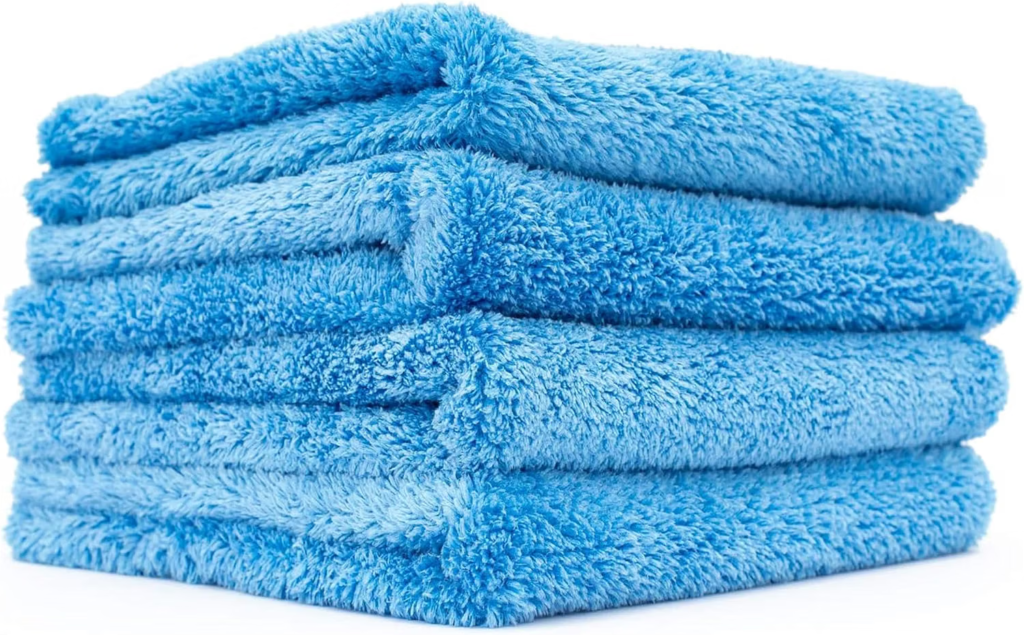
The towel matters more than most people assume. Low-quality or worn towels are a leading cause of fine swirl marks during drying and buffing. Edgeless microfiber towels remove the stitched border that can scratch paint, and a denser pile holds more liquid and dust per pass, which means fewer wipes and less friction overall.
Key features:
- Edgeless design eliminates a common source of micro-scratches
- High pile density absorbs more liquid per pass
- Machine washable and reusable for hundreds of details
11. Best Interior and Leather Cleaner: Chemical Guys Leather Cleaner and Conditioner
Best for: cleaning and conditioning leather and vinyl without drying it out.
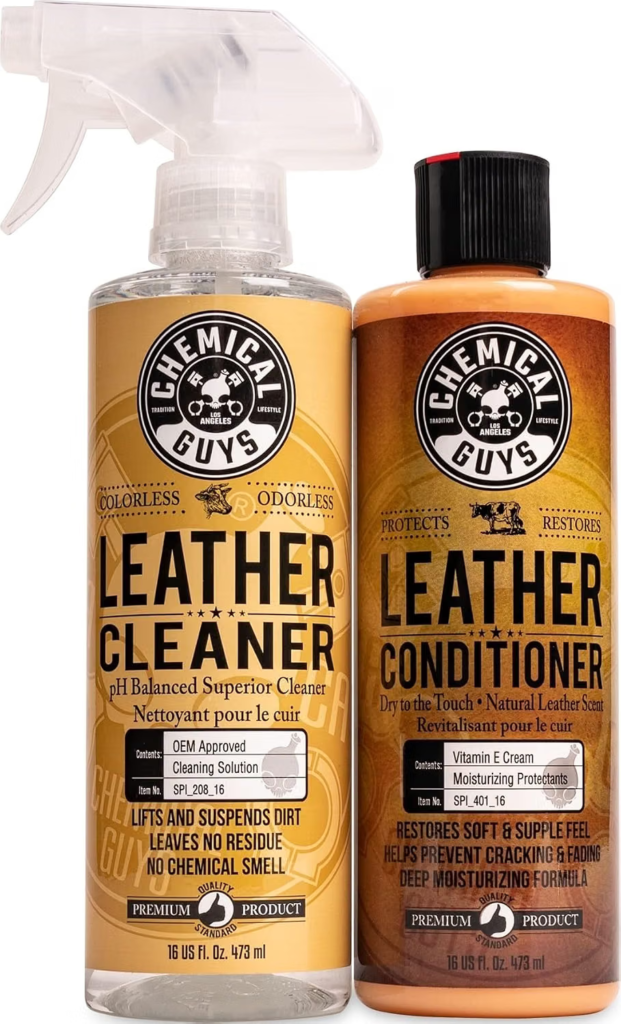
Leather seats crack and fade mainly because of UV exposure and cleaners that strip natural oils. A dedicated leather cleaner and conditioner combination cleans without that stripping effect, then replenishes the surface to keep it supple. This matters for resale value as much as comfort, since cracked or faded leather is one of the fastest ways a used car looks neglected.
Key features:
- Cleans without stripping natural oils from leather and vinyl
- Conditions to prevent cracking and UV fading over time
- Safe for use on most factory and aftermarket leather seating
12. Best Ammonia-Free Glass Cleaner: Stoner Invisible Glass
Best for: streak-free visibility without damaging tinted windows.
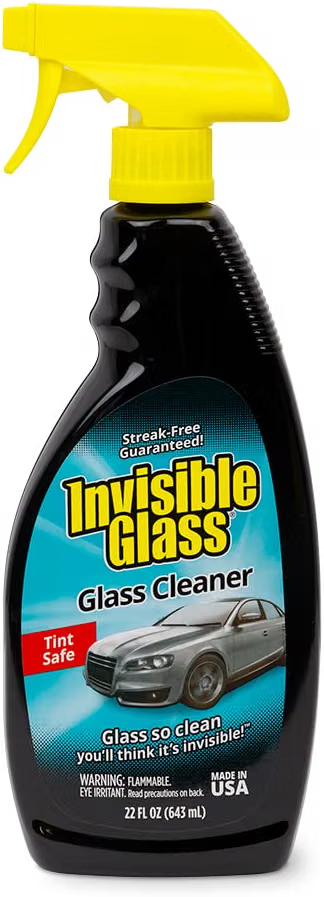
Ammonia-based glass cleaners can degrade window tint film over time, which is a real risk for the large share of US drivers with tinted windows. An ammonia-free formula avoids that issue while still cutting through road film, smoke residue, and the haze that builds up on the inside of a windshield.
Key features:
- Ammonia-free formula safe for tinted windows
- Streak-free finish even in direct sunlight
- Effective on both interior haze and exterior road film
13. Best Tire and Trim Dressing: Meguiar’s Endurance Tire Gel
Best for: long-lasting tire shine that resists flinging onto paint.
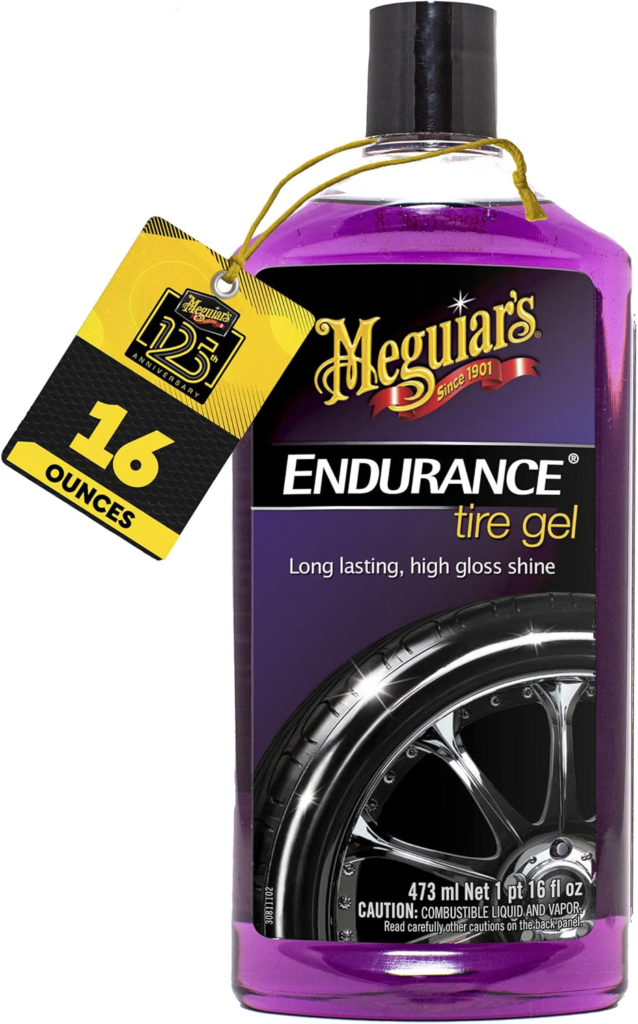
Tire dressing is one of the most visible finishing touches in detailing, and gel formulas tend to outperform sprays because they cling to the tire’s sidewall instead of running or flinging off at highway speed. Meguiar’s Endurance Tire Gel also includes UV protection, which slows the cracking and graying that tires develop from sun exposure over time.
Key features:
- Gel formula resists fling-off better than spray dressings
- UV protection helps prevent tire cracking and fading
- Adjustable shine level depending on amount applied
14. Best Wheel and Brake Dust Cleaner: Chemical Guys Diablo Wheel Gel
Best for: breaking down baked-on brake dust without damaging wheel finishes.
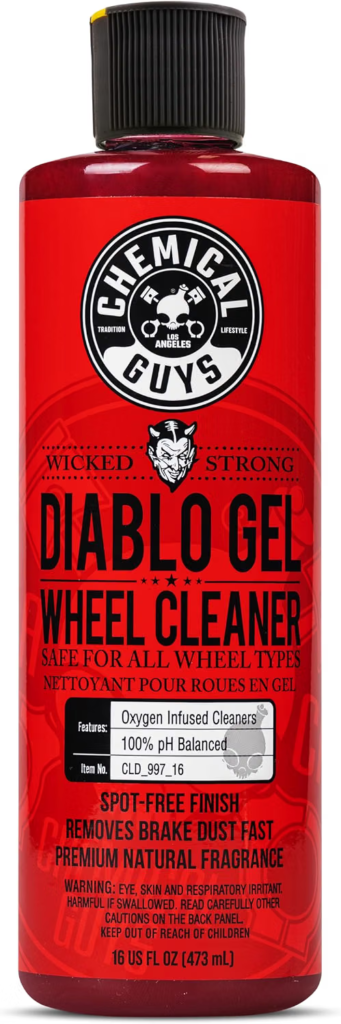
Brake dust is acidic and, left untreated, can permanently etch certain wheel finishes, especially clear-coated and painted alloys. A dedicated wheel cleaner is formulated to break down that grime safely across a range of finishes, which generic all-purpose cleaners aren’t always rated to do.
Key features:
- Formulated for safe use on clear-coated, painted, and chrome wheels
- Breaks down brake dust without acid-based etching
- Works well with a dedicated wheel brush for tight spokes
15. Best Detailing Brush Set: Chemical Guys Interior Detailing Brush Set
Best for: reaching vents, badges, seat seams, and other tight spaces a towel can’t clean.
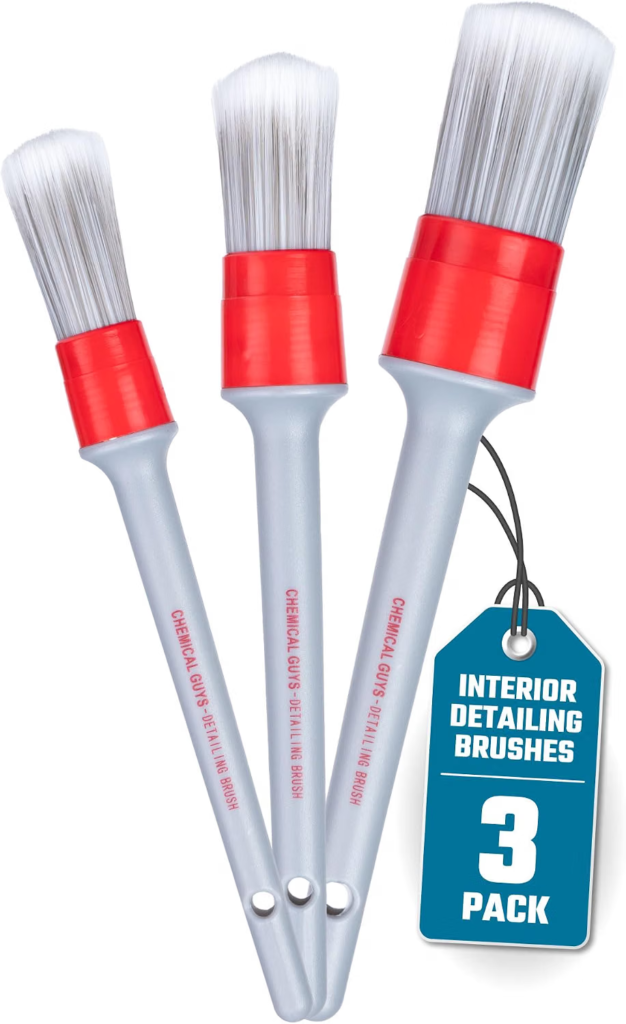
A surprising amount of visible grime collects in places a microfiber towel simply can’t reach, like AC vents, emblem gaps, and stitching on seats. A varied brush set with different bristle stiffness and head shapes covers most of these areas without scratching delicate trim or electronics.
Key features:
- Multiple brush sizes and bristle types for different surfaces
- Safe for vents, badges, switches, and stitched seams
- Pairs well with an APC or interior cleaner for tight-space detailing
Professional Detailing Products at a Glance
Need a quick overview? The table below summarizes each professional detailing product by its stage in the detailing process and its primary purpose, making it easy to choose the right tools for washing, paint correction, protection, interior care, and wheel maintenance.
| Stage | Product | Best For |
| Wash | Chemical Guys Mr. Pink Super Suds | Maintenance washing without stripping protection |
| Pre-wash | Chemical Guys TORQ Foam Cannon | Reducing contact-wash scratching |
| Decontamination | Chemical Guys Medium Clay Bar Kit | Removing bonded surface contaminants |
| Decontamination | CarPro IronX | Dissolving embedded brake dust |
| Correction | Chemical Guys TORQX Polisher | Removing swirl marks and light scratches |
| Correction | Meguiar’s Ultimate Compound | Leveling moderate paint defects |
| Protection | Gtechniq Crystal Serum Light | Multi-year ceramic protection |
| Protection | Adam’s Detail Spray | Maintaining gloss between details |
| Finishing | The Rag Company Eagle Edgeless 500 | Scratch-free drying and buffing |
| Interior | Chemical Guys Leather Cleaner and Conditioner | Cleaning and conditioning leather |
| Interior | Stoner Invisible Glass | Streak-free, tint-safe glass cleaning |
| Wheels and Tires | Meguiar’s Endurance Tire Gel | Long-lasting, fling-resistant tire shine |
| Wheels and Tires | Chemical Guys Diablo Wheel Gel | Safe brake dust removal on coated wheels |
| Detail Kit | Chemical Guys Arsenal Builder Kit | All-in-one starter system |
| Detail Tools | Chemical Guys Interior Detailing Brush Set | Cleaning tight interior spaces |
How Do You Choose the Right Detailing Product for Your Vehicle?
The right product depends on your paint condition, your vehicle’s finish, and how much time you’re willing to spend, not just brand reputation.
Start by checking what’s already on the paint. A car with no existing wax or sealant needs decontamination first, while a recently coated vehicle mainly needs pH-neutral maintenance products that won’t strip that protection. Matte finishes, vinyl wraps, and certain dark colors also have specific product restrictions, since standard compounds and some wax formulas can damage them.
Time and skill level matter just as much as the product itself. A spray sealant takes minutes and needs no special technique, while ceramic coating application demands proper prep, controlled conditions, and patience. Choosing tools that match your actual time and confidence level produces better results than buying the most expensive option in each category and rushing the process.
Finally, think in systems rather than single purchases. A $60 ceramic coating applied over contaminated, unpolished paint will look worse and last a shorter time than a $20 wax applied to properly decontaminated paint. Sequence and prep consistently outperform any single product’s price tag.
What’s the Difference Between Consumer and Professional-Grade Products?
Consumer products are built for convenience and broad compatibility. Professional-grade products are built for a specific result and usually require more technique to use correctly.
A one-step wash-and-wax spray, for example, is designed to be safe on nearly any surface with zero risk of damage, which means its protection and correction power are both fairly limited. A professional-grade compound and dedicated wax, used in sequence, can remove actual defects and last considerably longer, but only if applied correctly with the right tools and dwell times.
This is also where ceramic coatings and sealants differ from wax in a meaningful way. Wax sits on top of the clear coat and wears off within weeks. A quality sealant lasts a few months. A properly applied ceramic coating chemically bonds to the surface and can protect for one to several years, which is why detailers increasingly treat it as a near-standard offering rather than a premium upsell.
How Often Should You Detail Your Car Like a Professional?
A full professional-level detail, including wash, decontamination, and protection, is generally recommended every four to six months for most daily-driven vehicles.
Between full details, a maintenance wash every one to two weeks keeps contamination from building up to the point where decontamination becomes necessary again. Vehicles parked outside, driven on salted winter roads, or exposed to heavy tree sap and bird activity may need full details closer to every three months. Garage-kept vehicles driven mainly on clean highways can often stretch toward the six-month mark without losing meaningful protection.
Quick detailer sprays and spot cleaning can be used as often as needed in between, since they’re designed for frequent, low-impact use rather than deep correction.
What Mistakes Should You Avoid When Using These Products?
A few avoidable mistakes account for most of the disappointing results home detailers run into.
- Skipping decontamination and going straight to wax or sealant, which traps contaminants under the protective layer instead of removing them.
- Using a dirty or low-pile towel for buffing, which reintroduces the exact swirl marks a polish step just removed.
- Applying compound or polish in direct sunlight or on hot paint, which causes products to dry too fast to work correctly.
- Using too much pressure with a polisher instead of letting the pad and product do the work, which increases the risk of burning through clear coat.
- Mixing product chemistries that aren’t designed to layer, such as applying a sealant directly over fresh, uncured ceramic coating.
Most of these mistakes come from rushing the process rather than using the wrong product. Slowing down and following the correct order solves the majority of them.
How Car Care Guy Helps You Build the Right Detailing Arsenal
Choosing fifteen products is one thing. Knowing which five actually fit your vehicle, paint condition, and budget is the harder part, and that’s the gap Car Care Guy is built to close.
Rather than ranking products by price or popularity alone, Car Care Guy evaluates compatibility, durability, ease of use, and real long-term value for the specific vehicle types and budgets American drivers actually have. If you’re deciding between a spray sealant and a true ceramic coating, comparing microfiber towel quality, or figuring out which clay bar grade fits a daily driver versus a show car, our dedicated buying guides walk through the tradeoffs in plain language instead of marketing claims.
Start with whichever stage of your detailing process needs the most help, whether that’s washing, paint correction, or interior care, and use our category guides to narrow fifteen good options down to the one or two that are actually right for your car.
Conclusion
You don’t need all fifteen products on day one. Start with the wash and decontamination stage, since clean, contaminant-free paint is what every later step depends on. From there, add a protection product that matches your time budget, whether that’s a quick spray sealant or a longer-lasting ceramic coating, and round out the kit with interior and wheel care as needed.
Built in the right order, with products matched to your paint’s actual condition, this list can take a daily driver from average to showroom-level without a single trip to a professional detailing shop.
Frequently Asked Questions
1. Is It Worth Buying Professional-Grade Products as a DIYer?
Yes, for most drivers who detail more than once or twice a year. A professional-grade product set costs more upfront than basic consumer sprays, but it delivers results closer to a $150 to $300 professional detail and lasts for dozens of applications, often paying for itself within a year or two of regular use.
2. Can You Use Professional Detailing Products on a Ceramic-Coated Car?
Most can, but pH-neutral, ceramic-safe products are required for maintenance washing. Avoid wax, traditional sealants, and acidic wheel cleaners on coated surfaces, since they can interfere with the coating’s bond or strip its hydrophobic properties prematurely.
3. Does Ceramic Coating Really Outlast Wax?
Yes. Wax typically lasts four to eight weeks before reapplication is needed, while a properly applied professional-grade ceramic coating commonly lasts one to several years, depending on the product and maintenance routine. The tradeoff is more involved prep and application work upfront.
4. Do These Products Work on All Paint Colors and Finishes?
Most do, but matte finishes, vinyl wraps, and some specialty paints require dedicated matte-safe products, since standard compounds, waxes, and glossy sealants can permanently alter a matte finish. Always check a product’s label for matte or wrap compatibility before applying.
5. Do I Need a Polisher, or Can I Correct Paint by Hand?
Light swirl marks can sometimes be improved by hand with enough time and the right compound, but a dual-action polisher produces more consistent, professional-level correction with less physical effort. For anything beyond very light defects, a polisher is the more reliable choice.