The best car wax and polish products solve different problems. Polish can improve the appearance of suitable paint by addressing light defects or refining the finish. Wax adds a protective finishing layer, while an all-in-one product combines some polishing with protection.
That difference matters when you shop. Waxing over swirls will not permanently remove them, and polishing without suitable protection leaves an unfinished detailing routine. The right purchase depends on whether your paint needs correction, a gloss boost, protection, or a shorter maintenance process.
This guide reviews fourteen wax, polish, and related finishing products using published specifications and verified listings. The recommendations are research-based rather than hands-on test results, with clear buying decisions for prepared paint, light swirls, machine polishing, and one-step care.
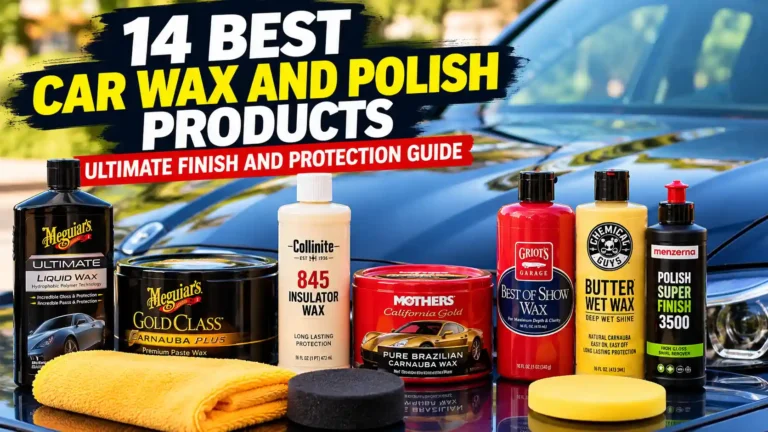
Best Car Wax and Polish: Quick Comparison
Use the category column before choosing a product. A polish and a wax may belong in the same detailing session, but they are not interchangeable purchases.
This article contains affiliate links. If you buy through them, we may earn a commission at no extra cost to you.
| # | Product | Best For / Category | Amazon |
|---|---|---|---|
| 1 | Meguiar’s Ultimate Liquid Wax, 16 oz | Synthetic liquid protection with included accessories | Check Price on Amazon |
| 2 | Meguiar’s Gold Class Paste Wax G7014J, 11 oz | Carnauba-polymer paste finishing | Check Price on Amazon |
| 3 | Collinite 845 Insulator Wax, 16 fl oz | Liquid carnauba-polymer protection | Check Price on Amazon |
| 4 | Collinite 476S Super Doublecoat, 18 oz | Traditional protection-focused paste | Check Price on Amazon |
| 5 | Mothers California Gold Pure Brazilian Carnauba Wax 05550, 12 oz | Final wax after separate preparation | Check Price on Amazon |
| 6 | Griot’s Garage Best of Show Wax 11171, 16 oz | Gloss-focused liquid waxing | Check Price on Amazon |
| 7 | Chemical Guys Butter Wet Wax WAC_201_16, 16 oz | Simple liquid-wax application | Check Price on Amazon |
| 8 | P21S 12700W Carnauba Wax | Nonabrasive finishing wax | Check Price on Amazon |
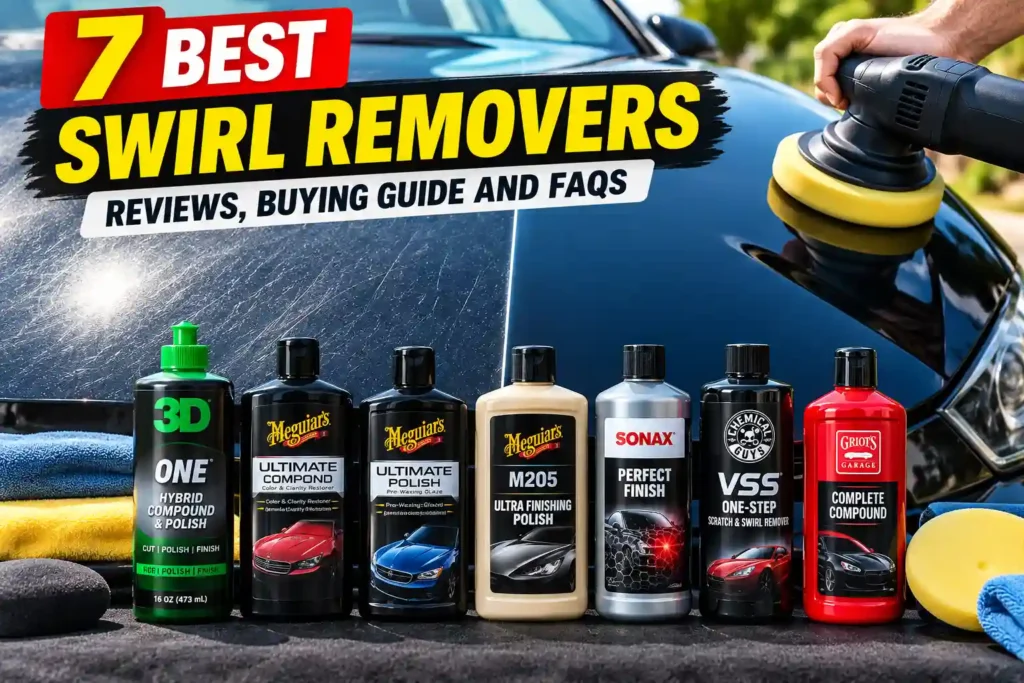
| 9 | Meguiar’s Ultimate Polish, 16 oz | Fine swirls and pre-wax gloss | Check Price on Amazon |
| 10 | Meguiar’s M205 Ultra Finishing Polish, 8 oz | Refinement after compounding | Check Price on Amazon |
| 11 | SONAX Perfect Finish, 250 mL | Machine polishing and finishing | Check Price on Amazon |
| 12 | 3D ONE, 16 oz | Hybrid compound-and-polish correction | Check Price on Amazon |
| 13 | 3D Speed, 16 oz | All-in-one polish and protection | Check Price on Amazon |
| 14 | Mothers California Gold Micro-Polishing Glaze 08100, 16 oz | Gloss preparation before final wax | Check Price on Amazon |
14 Best Car Wax and Polish Products Reviewed
These reviews explain what each bottle or container contributes to a detailing routine. Read the buying decision before adding products together so you avoid duplicate waxes, unnecessary polishing, or an incompatible preparation sequence.
1. Best Synthetic Liquid Starting Point: Meguiar’s Ultimate Liquid Wax
Best for: Owners who want standalone protection and useful application accessories.
Meguiar’s Ultimate Liquid Wax is a synthetic paint protectant rather than a carnauba wax or corrective polish. The linked 16-ounce product includes a foam applicator and microfiber towel, reducing the extra items a first-time buyer needs to source.
Its place in the routine is after washing and any necessary paint preparation. Apply a thin, even layer according to the instructions, remove residue, and keep the included towel clean. The product is intended for glossy paint and clear coat.
Choose it for protection and a finished appearance. It cannot permanently remove the scratches or swirls beneath it, and water beading alone does not establish a complete measure of protection.
Key Features
- Pure synthetic protective formula.
- 16-ounce liquid format.
- Foam applicator and microfiber towel included.
- Manufacturer permits hand or suitable dual-action application.
Pros
- Clear role as the final protective step.
- Included accessories simplify a first purchase.
- Liquid format suits controlled, thin application.
Cons
- Does not replace corrective polishing.
- Unsuitable as a general recommendation for matte finishes.
- Results depend on surface preparation and ongoing care.
Buying Decision
Buy Ultimate Liquid Wax when suitable paint already looks good and needs protection. Add a polish only if inspection shows a problem that polishing can address.
2. Best Carnauba-Polymer Paste: Meguiar’s Gold Class Paste Wax G7014J
Best for: Drivers who enjoy applying a traditional paste finishing wax.
Gold Class G7014J blends carnauba and polymers in an 11-ounce paste format. It is a finishing option for prepared glossy paint, with an included soft foam applicator.
The paste container makes it easy to load an applicator gradually. The important technique is restraint: a thin coat is easier to manage than a thick layer that leaves unnecessary residue to remove.
This is a different application preference from a liquid bottle, not evidence that paste automatically lasts longer. If swirls are your main complaint, address them with appropriate preparation before expecting the wax to showcase a refined finish.
Key Features
- Carnauba-and-polymer blend.
- Specific G7014J 11-ounce paste format.
- Soft foam applicator supplied.
- Intended for clear coats and suitable glossy paint.
Pros
- Familiar hand-waxing format.
- Applicator helps make the container immediately useful.
- Relevant finishing step after polishing.
Cons
- Manual loading and spreading take care.
- Heavy application increases removal work.
- Cannot permanently correct paint defects.
Buying Decision
Choose Gold Class if you prefer paste application and a carnauba-polymer finishing product. Choose Ultimate Liquid Wax if a synthetic liquid with a towel included better suits your routine.
3. Best Liquid Carnauba-Polymer Blend: Collinite 845 Insulator Wax
Best for: Daily-driver owners who want a protection-focused liquid finishing product.
Collinite 845 combines carnauba with polymers in a 16-fluid-ounce bottle. The manufacturer describes it as a hybrid paint sealant, making its protective role more informative than the word “wax” alone.
It belongs on appropriately prepared paint after any corrective work. Follow the bottle directions for preparation and spreading, and concentrate on a thin coat rather than trying to create a visibly thick protective layer.
The manufacturer promotes weather protection, but the real maintenance interval depends on exposure, washing, and surface preparation. Keep it away from excluded materials such as unpainted plastic, rubber, and vinyl.
Key Features
- Carnauba-polymer hybrid formulation.
- 16-fluid-ounce liquid bottle.
- Suitable hand or dual-action application according to Collinite.
- Protective finishing role rather than swirl correction.
Pros
- Combines a liquid format with hybrid protection chemistry.
- Fits a separate polish-and-protect routine.
- Useful alternative for owners who dislike paste loading.
Cons
- Requires attention around excluded trim materials.
- No permanent correction of existing defects.
- Advertised durability is not a maintenance guarantee.
Buying Decision
Choose 845 for liquid hybrid protection on compatible paint. Choose 476S if you specifically prefer a paste, or select a polish first when paint defects are the actual concern.
4. Best Traditional Protection-Focused Paste: Collinite 476S Super Doublecoat
Best for: Owners who prioritize a dedicated protective paste and accept careful application.
Collinite positions 476S as a durability-focused automotive wax. The linked container is the 18-ounce version, a meaningful detail when comparing it with smaller containers sold under the same product name.
Buy it as a finishing product for prepared paint. Working in manageable sections and following the label’s removal timing matters more than applying a heavy layer.
Its protection emphasis does not remove the need to wash correctly or inspect the finish. It also does not make a scratched panel look permanently corrected; preparation still determines what lies beneath the final layer.
Key Features
- Specific 476S Super Doublecoat paste.
- Linked 18-ounce container.
- Manufacturer emphasizes weather protection.
- Separate protective finishing stage.
Pros
- Clear purpose for a protection-centered routine.
- Larger container suits repeated hand application.
- Paste format appeals to owners who prefer traditional waxing.
Cons
- Application and removal require deliberate technique.
- Container size may exceed an occasional user’s needs.
- Does not replace a polish or coating-specific maintenance product.
Buying Decision
Choose 476S when a protection-focused paste matches your habits. Choose 845 if the same general routine would be easier for you with a liquid product.
5. Best Final Step in a Staged Routine: Mothers California Gold Pure Brazilian Carnauba Wax
Best for: Owners who clean and refine paint separately before waxing.
Mothers 05550 is a 12-ounce paste identified as Step 3 in the brand’s Ultimate Wax System. That positioning makes its purpose clear: preserve the appearance achieved during earlier preparation.
The product suits someone who wants separate control over cleaning, finishing, and protection. You can inspect the paint after preparation and decide whether it is ready for the final wax rather than expecting one product to handle everything.
The linked listing states that the applicator and towel are sold separately. Include those items in the actual purchase decision, particularly when comparing with waxes that supply accessories.
Key Features
- Specific 05550 12-ounce paste.
- Brazilian carnauba finishing wax.
- Step 3 in a staged care system.
- Intended for suitable automotive paints and clear coats.
Pros
- Clear role after cleaning and gloss preparation.
- Useful for owners who prefer separate detailing stages.
- Pairs logically with the brand’s preparation products when appropriate.
Cons
- Applicator and towel require separate purchase.
- Does not combine correction and protection.
- Several preparation stages require more time than an all-in-one.
Buying Decision
Choose Mothers 05550 if the paint is prepared and you want a dedicated final wax. Choose 3D Speed if combining mild improvement and protection is a higher priority than separate stages.
6. Best Gloss-Focused Liquid Wax: Griot’s Garage Best of Show Wax
Best for: Enthusiasts who enjoy a separate liquid finishing step after preparation.
Best of Show Wax 11171 is a 16-ounce liquid wax with carnauba as a central part of its positioning. It is relevant when you want the final waxing stage to complement paint already cleaned and refined.
Griot’s permits hand or orbital application with an appropriate foam pad. That flexibility is useful for owners who hand-wax smaller areas but use a machine to spread product over larger panels.
The name reflects the product’s appearance focus, not proof that it will make every car look better than another wax. Existing paint condition, application, and lighting strongly influence the result you see.
Key Features
- Specific 11171 16-ounce liquid.
- Carnauba-focused protective finishing product.
- Hand or appropriate orbital application.
- Applied after relevant paint preparation.
Pros
- Convenient alternative to paste loading.
- Fits an appearance-focused detailing session.
- Flexible application methods.
Cons
- Does not replace swirl removal.
- Foam pad and clean removal towels need planning.
- Product name does not establish comparative gloss superiority.
Buying Decision
Buy Best of Show for a dedicated liquid waxing step in a gloss-focused routine. If haze or swirls are masking the finish, invest time in appropriate polishing before changing waxes.
7. Best for Simple Liquid Application: Chemical Guys Butter Wet Wax
Best for: Drivers who want a spreadable liquid finishing wax for regular care.
Butter Wet Wax WAC_201_16 is a 16-ounce liquid wax marketed around straightforward spreading and removal. It is a relevant choice when an approachable application process helps you keep up with maintenance.
Use it after cleaning and any necessary preparation on approved glossy surfaces. A thin application and clean microfiber removal are still important even when the product is positioned as easy to use.
Its wet-look description concerns appearance rather than defect correction. Do not expect it to remove scratches, or assume its durability matches another wax without comparable evidence.
Key Features
- Specific WAC_201_16 16-ounce bottle.
- Spreadable liquid-wax format.
- Intended for hand or suitable machine application.
- Banana scent is part of the product formulation.
Pros
- Simple format for routine hand waxing.
- Useful finishing step after suitable preparation.
- Convenient for owners who dislike paste containers.
Cons
- Fragrance may be unwelcome to some users.
- Does not supply corrective polishing.
- Easy application does not eliminate preparation or aftercare.
Buying Decision
Choose Butter Wet Wax if application convenience encourages regular care. Choose a different formula based on explicit protection needs rather than expecting a scent or wet-look claim to determine performance.
8. Best Nonabrasive Finishing Wax: P21S 12700W Carnauba Wax
Best for: Owners who want a finishing wax after completing separate correction.
P21S 12700W is a nonabrasive carnauba finishing wax supplied with an applicator. The listing also specifies no added dyes or perfumes, which is relevant if you prefer fewer cosmetic additions.
Nonabrasive is a useful category distinction. You are buying the final wax stage rather than a product intended to remove swirls while you apply it.
That makes it a logical choice for carefully prepared paint, but a poor answer to a correction problem. Do not confuse this listing with the separate P21S 12701W product; compare the exact product number when shopping.
Key Features
- Exact 12700W carnauba wax.
- Nonabrasive formulation.
- No added dyes or perfumes listed.
- Applicator included.
Pros
- Clearly defined finishing role.
- Included applicator reduces accessory shopping.
- Relevant option for owners avoiding added fragrance.
Cons
- Cannot correct visible swirls.
- Separate preparation adds time if paint needs attention.
- Similar P21S product names require careful listing comparison.
Buying Decision
Choose P21S 12700W for prepared glossy paint when a nonabrasive final wax fits your routine. Choose a suitable polish first if improving defects is the main goal.
9. Best Entry Point for Fine Swirls: Meguiar’s Ultimate Polish
Best for: DIY owners addressing fine towel marks and improving gloss before wax.
Ultimate Polish is a 16-ounce pre-wax polish and glaze intended for fine swirls, towel marks, and appearance refinement. Meguiar’s identifies conditioning oils and suitability for hand or dual-action use on glossy paint.
This is a useful starting point when a clean car looks slightly hazy rather than heavily damaged. Work a small test area, inspect, and use the least aggressive process that gives an acceptable result.
Protect the paint afterward. Although the word “Ultimate” also appears on Meguiar’s wax, these are different products with different roles in the sequence.
Key Features
- 16-ounce pre-wax polishing product.
- Intended for fine swirls and towel marks.
- Conditioning oils support appearance refinement.
- Hand or dual-action application.
Pros
- Relevant starting category for light defects.
- Can be used without a rotary machine.
- Clear fit before a separate protective wax.
Cons
- Not a substitute for standalone protection.
- Deep scratches may exceed its intended role.
- Full-car hand polishing can be time-consuming.
Buying Decision
Buy Ultimate Polish when light defects need attention before waxing. If the paint is already satisfactory, spend on protection and clean application tools instead of polishing unnecessarily.
10. Best for Post-Compound Refinement: Meguiar’s M205 Ultra Finishing Polish
Best for: Detailers refining suitable paint after a more aggressive correction step.
M205 is an ultra-fine finishing polish designed to address light defects and refine gloss. The linked 8-ounce bottle is a smaller commitment for a limited project or an owner building a correction kit.
Meguiar’s permits hand, dual-action, and rotary use. That flexibility does not make every method equally suitable for every user; pad choice, experience, and paint condition still determine the process.
Its most distinct role is finishing after compounding when a test area shows that further refinement is needed. Do not automatically add another polishing stage if the existing finish is already acceptable.
Key Features
- Exact M20508 8-ounce format.
- Ultra-fine finishing polish.
- Intended for light defects and post-compound refinement.
- Multiple manufacturer-approved application methods.
Pros
- Clear place in a staged correction process.
- Smaller bottle suits focused projects.
- Useful when an earlier step leaves light haze or holograms.
Cons
- Separate paint protection is still required.
- Not the first choice for deep defects.
- Machine technique and pad selection affect the outcome.
Buying Decision
Choose M205 when inspection justifies a dedicated finishing stage. Choose Ultimate Polish for a simpler consumer pre-wax routine, or skip correction entirely when the paint only needs protection.
11. Best Machine-Focused Finishing Choice: SONAX Perfect Finish
Best for: Experienced users who want a machine polish with corrective and finishing capability.
SONAX Perfect Finish is a 250 mL machine-polishing product with diminishing abrasives. Its silicone-free formulation and correction-to-finish positioning make it relevant to users planning a controlled polishing session.
The linked instructions recommend a rotary polisher and an appropriate SONAX pad, sold separately. Confirm the current process guidance for your equipment rather than buying solely from a headline scratch-removal claim.
This is a polish, so plan suitable protection afterward. Results depend on the pad, machine, paint, and technique, and one product cannot guarantee a finished result on every panel.
Key Features
- 250 mL, approximately 8.45-fluid-ounce bottle.
- Machine-polishing role.
- Diminishing-abrasive technology.
- Silicone-free formula.
Pros
- Purposeful option for an equipped correction routine.
- Combines corrective and finishing intent.
- Smaller bottle suits evaluation on a specific project.
Cons
- Polisher and pads are additional purchases.
- Rotary use requires appropriate skill.
- No standalone protective finishing layer.
Buying Decision
Choose Perfect Finish if your equipment and experience match its recommended process. Choose a hand-compatible consumer polish for a smaller, less equipment-intensive job.
12. Best Hybrid Compound-and-Polish: 3D ONE
Best for: Users who want cutting and finishing capability from one correction product.
3D ONE is a hybrid compound and finishing polish, supplied here in a 16-ounce bottle. Its core benefit is simplifying the correction-product selection rather than combining wax and polish.
Pad choice and technique influence how the product cuts and finishes. Test a small area, inspect the result under good lighting, and decide whether the same process is appropriate for the rest of the vehicle.
Treat this as a correction stage and plan separate protection. A one-step correction claim means the cutting and finishing may be combined; it should not be confused with 3D Speed’s polish-and-protect role.
Key Features
- Specific 16-ounce 3D ONE product.
- Hybrid cutting compound and finishing polish.
- Manufacturer positions it for paint correction.
- Application setup influences the correction-to-finish balance.
Pros
- Can reduce the number of correction formulas to manage.
- Useful for an adaptable polishing workflow.
- Clear alternative to buying a separate compound and finishing polish immediately.
Cons
- Separate protection remains part of the routine.
- Pad and technique choices require judgment.
- Some paints or defects still need a different process.
Buying Decision
Choose 3D ONE to simplify correction, not to eliminate the protection stage. Choose 3D Speed when combined mild polishing and protection are the actual reason for buying an all-in-one.
13. Best All-in-One Polish and Protection: 3D Speed
Best for: Daily-driver owners who value a shorter improvement-and-protection routine.
3D Speed combines polishing with protective finishing in a 16-ounce bottle. It is the clearest choice here for someone who wants more improvement than standalone wax can provide without committing to separate correction and waxing stages.
The manufacturer describes light-defect correction and permits hand or suitable machine use. Keep expectations aligned with that role: a time-saving maintenance approach is different from pursuing every visible defect.
The tradeoff is flexibility. Separate products let you choose the correction and protective layer independently, while Speed combines those decisions. It is also different from preparing bare paint for a coating system that requires a particular residue-free process.
Key Features
- 16-ounce all-in-one polish and wax product.
- Intended for light defects and appearance improvement.
- Leaves a protective finishing layer.
- Hand or suitable machine application.
Pros
- Reduces separate product stages.
- Useful for practical daily-driver maintenance.
- Addresses light defects and protection in one purchase.
Cons
- Less independent control over correction and protection.
- Deep defects may require a dedicated process.
- Protective residue may not suit a subsequent coating-preparation sequence.
Buying Decision
Buy Speed when time matters and moderate improvement is enough. Choose a separate polish and wax if you want more control or are planning a specific coating system.
14. Best Gloss-Preparation Glaze: Mothers California Gold Micro-Polishing Glaze
Best for: Owners following a staged Mothers routine before applying final wax.
Mothers 08100 is a 16-ounce glaze identified as Step 2 in its Ultimate Wax System. The brand emphasizes depth, clarity, reflectivity, and appearance preparation before the protective stage.
Its strongest purchase case is that defined place in a staged routine. If you have cleaned the paint and want the brand’s gloss-preparation step before 05550 wax, the product relationship is straightforward.
Do not confuse a glaze’s appearance emphasis with guaranteed permanent scratch removal. Also check compatibility before using it beneath a coating or sealant with specific preparation requirements.
Key Features
- Exact 08100 16-ounce glaze.
- Step 2 between preparation and final wax.
- Intended to enhance depth and reflectivity.
- Designed for suitable paint and clear coat.
Pros
- Clear fit within a staged Mothers routine.
- Relevant to appearance-focused preparation.
- Separates gloss preparation from the final protective choice.
Cons
- Still requires a final protective product.
- Not a substitute for dedicated correction when needed.
- Adds a stage that some maintenance routines do not require.
Buying Decision
Choose this glaze when its defined preparation role fits your wax system. Choose an abrasive polish when actual defect correction is the priority, and avoid adding a glaze automatically to a coating-preparation routine.
Which Car Wax or Polish Should You Buy First?
Your paint’s condition determines the first purchase more reliably than color, packaging, or a gloss claim. This table helps identify the next useful step rather than repeating the product comparison above.
| Paint condition or goal | Useful starting point | What follows |
|---|---|---|
| Clean glossy paint with no correction goal | Standalone wax or synthetic protectant | Appropriate maintenance |
| Fine swirls or towel marks | Suitable light polish after preparation | Compatible protective product |
| Haze remaining after compounding | Finishing polish and a test area | Suitable protection |
| More involved correction | Assessed compound-and-polish process | Inspection, refinement if needed, protection |
| Limited time and moderate improvement desired | Suitable all-in-one polish and protectant | Maintenance based on condition |
| Preparing for a ceramic coating | The coating maker’s specified preparation process | Coating application and cure instructions |
| Matte, satin, film, or wrap | Material-specific approved care | Follow that finish manufacturer’s routine |
How to Choose the Best Car Wax and Polish
Choose a product that matches your paint, equipment, available time, and desired outcome. Buying several products with overlapping jobs often adds expense without improving the finish.
Inspect Paint Before Choosing Correction
Wash, dry, and examine the car in suitable lighting. Look for contamination, light swirls, isolated scratches, haze, and areas with failing paint.
Polishing removes some material, so use it when the condition justifies it. Deep scratches, thin paint, previous repairs, and failing clear coat may need professional assessment rather than stronger DIY correction.
Understand Paste, Liquid, Carnauba, and Synthetic
Paste and liquid describe application format, not an automatic durability ranking. Carnauba, polymers, and synthetic blends describe different formulation choices, but preparation and maintenance still affect performance.
Choose a format you will apply correctly. A carefully applied liquid product is more useful than a paste you consistently overapply or avoid using.
Match the Product to Your Tools
Hand application can suit wax spreading and small polishing projects. Machine polishing adds equipment, suitable pads, cleaning requirements, and technique to the purchase.
Do not buy a machine-focused polish without budgeting for the appropriate setup. A dual-action or rotary tool also needs product-specific operating guidance; one machine setting is not a universal recipe.
Separate Appearance Improvement from Protection
A final wax enhances the appearance of the prepared surface and adds protection, but does not permanently level swirls. An abrasive polish can address suitable defects but generally needs a protective finishing step.
An all-in-one combines roles. Choose it deliberately when fewer stages matter rather than assuming every bottle called “polish” leaves protection.
Check the Entire Finish, Including Trim
Glossy paint approval does not automatically include textured trim, rubber, matte surfaces, PPF, or vinyl. Keep product off excluded materials and follow the exact instructions for application near them.
For ceramic-coated paint, confirm that polishing, glazing, or waxing fits the intended maintenance plan. Polishing can affect the coating, while added products can alter the surface behavior you are trying to maintain.
Include Accessories in the Real Purchase
Plan for clean applicators, removal towels, inspection lighting, and any necessary pads or machine. Some waxes here include an applicator or towel; others do not.
Enough clean towels can be more valuable than another overlapping finishing product. Loaded or contaminated fibers undermine both application and inspection.
How to Polish and Wax a Car in the Right Order
The usual order is cleaning, necessary decontamination, justified polishing, inspection, and compatible protection. Exact preparation and cure requirements depend on the products and the finish.
- Wash and dry the vehicle using an appropriate method.
- Remove remaining contamination only where necessary with surface-compatible products.
- Inspect paint condition and identify special finishes or repaired areas.
- Test the chosen polishing process on a small section if correction is needed.
- Work in manageable sections and maintain clean pads and towels.
- Remove residue and inspect before deciding whether more correction is justified.
- Complete any surface preparation required by the protective product.
- Apply wax or another compatible protection thinly and evenly.
- Follow removal, cure, and water-exposure directions.
- Maintain through proper washing and periodic inspection.
If you choose an all-in-one, follow its combined process rather than automatically repeating every separate step. If you choose a ceramic coating, follow that system’s preparation requirements instead of assuming wax or glaze belongs underneath it.
Common Car Wax and Polish Mistakes to Avoid
Most wasted effort comes from using the wrong category, applying too much product, or correcting paint without a clear need. These habits matter more than changing brands whenever the finish disappoints.
Applying Wax to Fix Scratches
Wax cannot permanently remove scratches. Inspect the defect and choose an appropriate correction process only if the paint can safely tolerate it.
Polishing Every Time You Wash
Polishing is a condition-based process rather than a routine wash step. Preserve paint by correcting only when necessary and improving the wash technique that causes recurring marks.
Applying a Thick Protective Layer
More visible residue does not prove more protection. Thin, even application follows the intended process and reduces avoidable removal work.
Expecting One-Step Correction to Mean Protection
A compound-and-polish can combine correction stages without leaving the protective layer you need. Read the product’s role carefully; 3D ONE and 3D Speed illustrate that difference.
Layering Products Without Checking Compatibility
Glazes, waxes, sealants, and coatings do not form a universally compatible stack. Follow the next product’s preparation requirements before adding anything underneath it.
conclusion
Start with Meguiar’s Ultimate Liquid Wax for synthetic protection and included accessories, Gold Class for a carnauba-polymer paste, or Collinite 845 for a liquid hybrid approach. The right choice is the one that suits your prepared paint and application habits.
For light defects, consider Ultimate Polish; for a defined finishing stage, M205 or an appropriate machine-polishing process may fit better. Choose 3D Speed when polishing and protection in fewer stages are the priority. Buy a complementary pair only when the condition calls for both correction and protection.
Frequently Asked Questions
These answers address the decisions that most often cause confusion when buying car wax and polish. Always check the finish and product instructions before applying a general recommendation to a specific vehicle.
Is car wax or polish better?
Neither is universally better because they perform different jobs. Polish addresses suitable appearance defects or refinement, while wax provides a protective finishing step on prepared paint.
Should I polish before waxing?
Polish before waxing when inspection shows a correction or refinement need. If the paint already looks satisfactory, clean and prepare it appropriately, then protect it without unnecessary polishing.
Can car wax remove swirl marks?
Wax does not permanently remove swirl marks. Suitable abrasive polishing may address them, while some appearance products can make marks less noticeable without providing the same permanent correction.
Is paste wax better than liquid wax?
Paste is not inherently better than liquid. Formulation, preparation, application, exposure, and maintenance matter more than the container format alone.
What is the difference between 3D ONE and 3D Speed?
3D ONE is a hybrid compound and finishing polish for correction. 3D Speed combines polishing with protective finishing, making it a different choice for a shorter maintenance routine.
Can I use these products on matte paint or vinyl wrap?
Do not use ordinary gloss-enhancing waxes or abrasive polishes unless the finish and product manufacturers explicitly permit them. Matte paint, satin surfaces, wraps, and PPF need material-specific guidance.
Can I wax a ceramic-coated car?
Only add wax if it fits the coating manufacturer’s care guidance and your maintenance goal. A topper can change surface behavior, and polishing can affect the coating itself.
How often should I wax my car?
The appropriate interval depends on the product, preparation, weather exposure, washing, and observed condition. Use the manufacturer’s guidance and inspection rather than assuming one calendar interval applies to every vehicle.
Do I need a machine to polish a car?
Some polishes permit hand use, but larger correction jobs can demand substantial time and effort. Machine-focused products need suitable equipment and skill; select the process around the actual defect and paint condition.