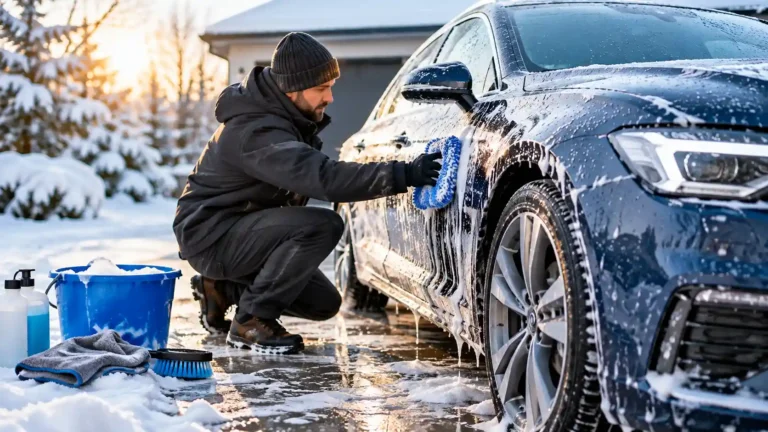
Washing your car in winter can be challenging when low temperatures cause water to freeze around door seals, locks, windows, and other exterior components. However, skipping winter car washes altogether can allow road salt, dirt, sand, and other contaminants to accumulate on your vehicle’s paint and undercarriage.
The good news is that you can wash a car in winter without freezing damage by choosing the right washing conditions, using appropriate car cleaning products, removing contamination safely, and drying the vehicle thoroughly before water freezes.
This guide explains how to wash a car in winter step by step, when it is safe to wash outdoors, how to prevent frozen car doors and locks, which cleaning methods work best in cold weather, and how to protect your vehicle’s paint throughout the winter season.
Whether you wash your car at home, use a self-service car wash, or visit a professional detailing facility, these winter car washing tips will help you maintain a cleaner vehicle while reducing the risk of avoidable cold-weather problems.
Why Is Washing a Car in Winter Important?
Winter weather creates several challenges for automotive maintenance. Rain, snow, slush, mud, sand, and road treatment chemicals can accumulate on the bodywork and settle into areas that are difficult to clean.
Regular winter car washing helps remove these contaminants before they contribute to staining, corrosion, or deterioration of exterior components. According to AAA’s winter car washing guidance, cleaning the vehicle during winter is particularly important after exposure to road salt and ice-melting chemicals.
Remove Road Salt and De-Icing Chemicals
In regions where roads are treated with salt or chemical de-icers, these materials can collect on wheel arches, suspension components, brake components, and the vehicle’s undercarriage.
When these contaminants remain on susceptible metal surfaces, they can contribute to corrosion. Washing the affected areas is an important part of winter maintenance.
Pay particular attention to the underside of the vehicle, the lower doors, wheel wells, and areas behind the wheels. These sections frequently collect road grime and splashed-up contaminants.

Protect Automotive Paint From Winter Contamination
Winter grime can include grit, mud, salt, mineral deposits, and other abrasive or corrosive contaminants. Rubbing these materials across the paint without first removing loose dirt can cause scratches and reduce the finish’s gloss.
A safe winter car wash removes this buildup without unnecessary friction. Use a suitable automotive shampoo, clean wash media, and a thorough rinse to minimize the risk of scratching.
If you need a refresher on safe washing techniques, consult your guide to washing a car without scratching its paint.
Maintain Visibility and Exterior Components
Clean windows, mirrors, headlights, and exterior lighting help you maintain visibility while driving in winter weather.
Salt residue and road film can accumulate on these surfaces even when the rest of the vehicle looks reasonably clean. Keeping the glass and lighting clean is therefore an important part of winter vehicle maintenance.
However, never pour boiling or very hot water onto a cold windshield. A sudden temperature change can damage glass, and any water left behind may freeze.
When Is It Safe to Wash a Car in Winter?
The safest time to wash your vehicle depends on the outdoor temperature, wind, sunlight, available shelter, and how quickly you can dry the car after washing.
There is no single temperature that guarantees a damage-free outdoor wash in every situation. Even when the air is slightly above freezing, water may freeze in shaded areas or around components that remain cold.
Wash Your Car in a Heated Garage When Possible
A heated garage or suitable indoor washing facility provides a more controlled environment. It allows you to clean the vehicle without exposing wet door seals and exterior components to immediate subfreezing conditions.
Make sure the space has suitable drainage and ventilation. Never run a gasoline or diesel engine in an enclosed garage because exhaust gases can create a serious carbon monoxide hazard.
If the garage is unheated, check the actual temperature and the conditions of the vehicle before beginning. An enclosed space alone does not guarantee that water will remain liquid.
Choose a Milder Day for Outdoor Washing
If you need to wash your car outdoors, choose a relatively mild day and work during the warmest part of the day when practical.
Check both the current temperature and the forecast for the period immediately after washing. A sudden temperature drop can cause water remaining around locks, handles, seals, mirrors, and other components to freeze.
Consider the wind as well. Strong wind can accelerate cooling and make it harder to work methodically and dry the vehicle before water freezes.
If conditions are too cold for safe washing, wait for a better opportunity or use a professional facility designed for winter car washing.
Consider a Professional Winter Car Wash
A professional car wash can be a practical choice when outdoor temperatures are below freezing. Facilities designed for cold-weather operations may offer heated bays, undercarriage washing, suitable drying equipment, and areas where the vehicle can be dried before returning outdoors.
Choose a facility with a washing method appropriate for your vehicle’s condition. If your car is heavily covered in grit, removing loose contamination before touching the paint is important regardless of the season.
Follow the facility’s instructions, especially if the vehicle has delicate exterior accessories, aftermarket modifications, or a specialized protective coating.
What You Need to Wash a Car in Winter
Preparing the correct supplies before starting helps reduce the time your vehicle remains wet and exposed to freezing conditions.
For a conventional winter hand wash, gather the following items:
- Automotive car wash shampoo suitable for your vehicle’s paint protection.
- A wash mitt or other paint-safe wash tool.
- Two wash buckets if using the two-bucket method.
- A suitable source of clean rinse water.
- A hose or pressure washer with adjustable output, when appropriate.
- Several clean microfiber drying towels.
- Separate wheel brushes or wash tools.
- A small microfiber towel for door seals, handles, and panel gaps.
- A compatible silicone-based rubber seal protectant, if needed.
- Appropriate automotive lock and hinge lubricants recommended for your vehicle.
Keep everything within reach before applying water. Searching for towels or cleaning products while the car is wet increases the chance that water will freeze before you finish.
Avoid using household detergents, rough sponges, or unsuitable chemicals on your vehicle’s exterior. Choose products intended for automotive surfaces and follow the manufacturer’s directions.
How to Wash a Car in Winter Without Freezing Damage: Step-by-Step Guide
The most effective winter car wash combines careful preparation, gentle cleaning, thorough rinsing, and immediate drying. The following process is suitable for a typical exterior hand wash, although the exact approach should be adjusted to your vehicle and washing environment.
Step 1: Check the Weather and Prepare Your Vehicle
Before washing, check the air temperature, wind, and forecast. Confirm that you have enough time to complete the wash and dry the vehicle before freezing conditions develop.
Move the car into a heated or otherwise suitable sheltered washing space when available. If you must work outdoors, choose a mild period with enough time to finish properly.
Inspect the vehicle for heavy mud, ice, salt deposits, and loose debris. If thick ice covers the bodywork, allow it to thaw safely or use an appropriate automotive de-icing method rather than scraping the paint.
Close the windows and sunroof fully. Make sure the fuel door, trunk, and other openings are closed as appropriate for the wash.
Step 2: Remove Loose Snow, Ice, and Dirt
Before applying shampoo, remove loose snow and superficial dirt without dragging abrasive particles across the paint.
Use a soft snow brush designed for automotive use when necessary. Avoid metal tools or rough household brushes that may scratch the bodywork.
Do not scrape bonded ice from painted panels with a hard object. Allow it to thaw naturally in a suitable environment or use a method approved for the affected surface.
If the vehicle has substantial road grime or sand, a careful pre-rinse can help loosen contamination before contact washing. However, do not begin an outdoor rinse if the water is likely to freeze on the vehicle or surrounding ground.
Step 3: Pre-Rinse the Vehicle When Conditions Permit
Pre-rinsing removes loose dirt, salt residue, and other surface contamination before you touch the paint.
Use clean water and work from the upper panels toward the lower bodywork, adjusting the spray to avoid forcing water into openings, damaged seals, or sensitive areas.
Pay particular attention to the lower doors, wheel arches, and rear body panels where road spray accumulates.
A pressure washer can help remove heavy contamination, but use an appropriate nozzle, a safe working distance, and moderate pressure. Avoid directing concentrated spray at door seals, window edges, electrical connectors, damaged paint, or delicate trim.
If outdoor temperatures are too low for rinsing safely, use a heated wash facility instead.
Step 4: Wash the Vehicle With Automotive Shampoo
Prepare your automotive shampoo according to the manufacturer’s dilution instructions.
The two-bucket method is a useful option: one bucket holds the shampoo solution, while the other holds clean rinse water for the wash mitt. Rinsing the mitt frequently helps reduce the amount of dirt transferred back onto the paint.
Wash one section at a time, starting with relatively clean upper panels before moving toward the dirtier lower sections. Use gentle straight-line movements and avoid pressing hard against the surface.
Rinse the wash mitt whenever it collects visible dirt. Use separate tools for wheels and tires because brake dust and road grime can contaminate paint-cleaning equipment.
If the water or shampoo begins freezing, stop the wash and move the vehicle to a more suitable environment rather than continuing to scrub an icy surface.
Step 5: Clean the Wheels, Tires, and Wheel Wells
Wheels and wheel wells often collect a heavy concentration of winter road grime. Salt and other contaminants can accumulate around the inner wheel surfaces and lower body panels.
Use a wheel cleaner approved for your wheel finish and follow its instructions. Choose separate brushes or mitts for the wheels to avoid transferring brake dust and gritty residue onto the paint.
Clean wheel wells carefully, using an appropriate rinse method when conditions permit. Do not direct water aggressively into electrical components or other sensitive areas.
Pay attention to accessible undercarriage areas that collect road salt. A professional wash with an undercarriage rinse may be useful following exposure to road de-icers.
Do not spray concentrated chemicals onto braking components, and follow the vehicle and product manufacturers’ guidance for cleaning these areas.
Step 6: Rinse the Vehicle Thoroughly
After washing, rinse away all shampoo and loosened contamination before the solution dries.
Start with the upper body panels and work downward. Check around exterior trim, door handles, mirrors, the trunk opening, and other locations where cleaning solution may remain.
Thorough rinsing is particularly important when using a shampoo that requires complete removal. Residual product can leave streaks or spots and complicate the drying process.
Never substitute very hot water for a proper rinse on a vehicle with cold glass or body panels. Use water at a temperature appropriate for the washing system and surface conditions.
Step 7: Dry the Car Immediately
Drying is one of the most important steps when learning how to wash a car in winter without freezing damage.
Once rinsing is complete, begin drying the bodywork promptly with clean, absorbent microfiber towels. Work from the roof and windows to the hood, trunk, and side panels.
Use a gentle blotting or controlled wiping motion. Replace a saturated towel when necessary and use clean towels for sensitive surfaces.
Do not leave water to evaporate naturally when freezing conditions are approaching. Water trapped in gaps, seals, mirrors, and other recesses can freeze even after the visible exterior appears dry.
A suitable car dryer or filtered-air blower can help remove water from difficult-to-reach areas, provided it is used safely and according to the equipment’s instructions.
Step 8: Dry Door Seals, Handles, Mirrors, and Locks
Water trapped around access points is a common reason a freshly washed car can become difficult to open in freezing weather.
Open the doors when safe and wipe the accessible door jambs and rubber weather seals with a clean microfiber towel. Remove moisture around handles, mirrors, the trunk opening, and the fuel door.
If your vehicle has conventional exposed lock cylinders, follow its manufacturer’s guidance regarding suitable lubrication and moisture protection. Many newer vehicles use electronic or concealed locking systems that require different care.
Avoid spraying general-purpose chemicals indiscriminately into electronic locks, window mechanisms, or other components.
For rubber seals, use a compatible rubber protectant when recommended. Apply it sparingly and keep the product away from glass, painted surfaces where it is not approved, pedals, and braking components.
Step 9: Dry the Windows, Wipers, and Exterior Lighting
Use a clean glass towel to dry the windshield, side windows, rear window, mirrors, and visible exterior light lenses.
Inspect the wiper blades and the area near the base of the windshield. Remove remaining water and loosened debris where accessible without damaging the blades or surrounding parts.
Never force a frozen wiper blade away from the windshield. Allow it to thaw safely before operating the wipers.
Check that the headlights, brake lights, turn signals, and license plate remain clear of dirt and residue.
Step 10: Apply Paint Protection When Conditions Are Suitable
After the car is clean and completely dry, consider applying a compatible wax, paint sealant, or other protective product if the temperature and surface conditions meet the product’s requirements.
Some products require a particular application temperature or curing period. Check the label before using them outdoors in winter.
A wax or sealant can make maintenance easier and provide a protective surface layer, but it cannot eliminate the need for regular washing. If conditions are too cold for correct application, postpone the treatment rather than compromising the result.
For a detailed comparison of protective options, link this section to your existing CarCareGuy guide on car wax, paint sealants, and ceramic coatings.

How to Prevent Car Doors, Locks, and Windows From Freezing After Washing
Water that remains around openings and moving parts can freeze when temperatures drop. Prevention focuses on removing moisture and maintaining susceptible seals according to the vehicle manufacturer’s recommendations.
Dry the Rubber Door Seals
Use a clean microfiber towel to dry the rubber seals around the doors and trunk. Remove moisture from accessible grooves without stretching or pulling the material.
If your vehicle’s manufacturer recommends a particular rubber seal treatment, apply it according to the instructions.
Avoid petroleum products or other chemicals that may be incompatible with the vehicle’s rubber seals. A product specifically designed for automotive weatherstripping is generally the more appropriate choice.
Keep Locks and Door Mechanisms Dry
Dry the accessible areas around door handles and conventional lock cylinders.
Where lubrication is required, use a product approved for the particular lock or mechanism. Do not assume that every lubricant is suitable for modern electronic locking systems.
Avoid forcing frozen locks, handles, or doors. If a door is frozen shut, use an appropriate automotive de-icer or allow the ice to thaw safely.
Never pour boiling water onto the door or window. It can create a sudden temperature change and may leave additional water that freezes again.
Prevent Window and Wiper Problems
Dry the window edges and accessible areas around the wiper blades after washing.
If freezing weather is expected, make sure the wipers are not stuck to the glass before activating them. Operating frozen wipers can strain the motor or damage the blades.
Use a windshield washer fluid rated for the expected temperatures in your region. Ordinary water or summer washer fluid may freeze in conditions for which it is not designed.
Common Winter Car Washing Mistakes to Avoid
Washing your car in winter requires extra care. Freezing temperatures can cause water to turn into ice, damage paint, and make doors difficult to open. Avoid these common mistakes to keep your car clean and protected throughout winter.
1. Washing Your Car Outdoors in Freezing Weather
Washing your car outdoors in freezing temperatures can cause water to turn into ice on the paint, windows, and door seals. This can make doors difficult to open and create slippery surfaces around your vehicle.
Check the weather before washing your car. If water may freeze before you finish drying, use a heated car wash or wait for warmer conditions.
2. Pouring Hot Water on Frozen Windows
Pouring boiling water onto a cold windshield can damage the glass because of the sudden temperature change. The water may also freeze again, making the problem worse.
Use an automotive glass de-icer instead. Follow the product instructions and let the ice melt safely. Never force frozen wipers away from the windshield.
3. Leaving Your Car Wet After Washing
Water left on your car can freeze around door seals, handles, mirrors, and window edges. Frozen moisture may prevent doors from opening properly.
Dry your car immediately after washing with clean microfiber towels. Pay special attention to door edges, rubber seals, and mirrors. Make sure these areas are dry before parking outside in freezing weather.
4. Wiping Road Dirt With a Dry Towel
Road dirt often contains sand, salt, and small abrasive particles. Wiping these contaminants with a dry towel can scratch your car’s clear coat.
Rinse away loose dirt before touching the paint. Then use automotive shampoo and a clean wash mitt. For heavily soiled cars, avoid wiping the surface with a waterless wash product.
5. Using Too Much Pressure Near Seals and Trim
A pressure washer can remove winter grime, but excessive pressure may damage rubber seals, exterior trim, and sensitive components.
Use a suitable nozzle and keep the recommended distance from the vehicle. Avoid spraying directly at door seals, window edges, electrical connections, or damaged paint.
6. Applying Wax or Sealant in Very Cold Weather
Car wax and paint sealants need suitable conditions for proper application. Cold temperatures can make some products difficult to spread, remove, or cure.
Check the product label before applying paint protection. Follow the recommended temperature range and curing instructions. If the weather is too cold, wait for warmer conditions or use a professional detailing facility.
7. Ignoring Road Salt Under Your Car
Road salt and de-icing chemicals can collect underneath your vehicle and inside the wheel wells. These contaminants can contribute to corrosion on susceptible metal components.
Wash the undercarriage after driving on salt-treated roads when practical. Use a suitable undercarriage wash and avoid directing concentrated water at sensitive electrical components.
8. Using the Wrong Windshield Washer Fluid
Water and summer windshield washer fluid may freeze in cold weather. Frozen fluid can affect your washer system and make it harder to keep the windshield clean.
Choose windshield washer fluid rated for the lowest temperatures you expect. Use automotive de-icing products instead of household chemicals, which may damage paint, glass, or rubber.
9. Starting Without Drying Supplies
Washing your car without enough clean towels can leave water on the surface for too long. In freezing weather, this water may turn into ice around doors, mirrors, and other exterior components.
Prepare your microfiber towels before starting. Dry the car immediately after rinsing and check areas where water can collect. If the weather is too cold to finish safely, use a suitable professional car wash.
Avoiding these common mistakes helps protect your car’s paint, remove winter grime, and reduce the risk of freezing damage. Always check the weather, use suitable automotive products, and dry your vehicle thoroughly after washing.
How Often Should You Wash Your Car in Winter?
The best winter car washing schedule depends on local weather, driving frequency, parking conditions, and the contaminants your vehicle encounters.
If you regularly drive on roads treated with salt or chemical de-icers, prioritize washing after significant exposure. In other environments, wash when road film, mud, and other contamination become noticeable.
A vehicle parked in a garage and driven occasionally may need less frequent washing than one used daily on wet, dirty winter roads.
Avoid following a rigid schedule without considering the weather. In subfreezing conditions, delaying a full wash until safer conditions are available may be preferable to allowing water to freeze around the vehicle’s components.
When a full wash is not practical, an appropriate waterless or low-water cleaning product may help with light dust and limited surface contamination. Do not use this approach on heavily soiled paint because wiping substantial grit across the surface can cause scratches.
Winter Car Washing Checklist
Before you begin, use this checklist to reduce the likelihood of freezing damage.
- Check the forecast and choose suitable washing conditions.
- Prepare your shampoo, wash mitts, buckets, and drying towels.
- Remove loose snow and dirt without scraping the paint.
- Pre-rinse the vehicle only when conditions permit.
- Clean the paint with suitable automotive shampoo.
- Wash wheels and dirty lower sections with separate tools.
- Rinse away the shampoo thoroughly.
- Dry the vehicle immediately after rinsing.
- Remove moisture from door seals, handles, mirrors, and panel gaps.
- Check the windows, wipers, locks, and exterior lights.
- Apply paint protection only when the product’s conditions are met.
- Clean the undercarriage after exposure to road salt when practical.
Completing these steps helps make winter car washing safer and more consistent.
Frequently Asked Questions About Washing a Car in Winter
Can I Wash My Car When It Is Below Freezing?
It is generally better to avoid washing a car outdoors when temperatures are below freezing because water can freeze on the bodywork and around door seals, locks, and other components. A heated or suitably equipped professional wash facility is a better option when the weather is too cold for safe outdoor washing.
What Temperature Is Too Cold to Wash a Car Outside?
There is no universal temperature that guarantees a safe outdoor wash. Wind, sunlight, surface temperature, humidity, drainage, and the likelihood of temperatures dropping all influence the risk. If water may freeze before you can finish drying the vehicle, postpone the outdoor wash or use a suitable indoor facility.
Should I Use Hot Water to Wash a Car in Winter?
Avoid boiling or very hot water, especially on cold windows and glass surfaces, because sudden temperature changes can cause damage. Use a suitable car washing system with water at an appropriate temperature, following the equipment and vehicle manufacturer’s guidance.
How Do I Keep My Car Doors From Freezing After a Wash?
Dry the door seals, jambs, handles, and accessible locking areas thoroughly after washing. Use an automotive rubber seal protectant or lock lubricant only when it is compatible with your vehicle and recommended for the component. Remove excess moisture before the vehicle returns to freezing conditions.
Is an Automatic Car Wash Safe in Winter?
An automatic car wash can be suitable for winter cleaning if it is designed to operate in the prevailing conditions and uses a washing method appropriate for your vehicle. When possible, choose a facility that offers undercarriage rinsing and effective drying. Afterward, check and dry door seals and other areas where water may remain.
Is a Waterless Car Wash Better in Winter?
A suitable waterless wash can be useful for removing light dust or limited surface contamination when a conventional wash is impractical. However, it is not the best choice for heavy mud, sand, or thick road grime because wiping these contaminants across the paint can cause scratches. Follow the product’s instructions and use a method appropriate for the amount of dirt present.
Does Washing a Car in Winter Cause Rust?
Washing itself does not normally cause rust when the vehicle is cleaned and dried appropriately. In fact, removing road salt and chemical de-icers helps reduce exposure to contaminants that can contribute to corrosion. Problems can arise when water is allowed to freeze in unwanted locations or when the wash introduces moisture into areas that are not properly dried.
Should I Wax My Car During Winter?
You can apply a suitable wax or paint sealant in winter when the application and curing conditions meet the product manufacturer’s requirements. Some products are not suitable for very cold surfaces. If the weather is too cold, postpone application or choose a suitable professional facility.
Should I Dry the Undercarriage After a Winter Wash?
The undercarriage deserves attention because it can collect road salt, mud, and other contaminants. Remove contamination with an appropriate undercarriage rinse when practical. Follow the wash facility’s guidance and avoid using excessive pressure around sensitive components. If the vehicle is exposed to freezing conditions, avoid leaving unnecessary standing water in accessible areas.
Final Thoughts on Washing a Car in Winter Without Freezing Damage
Washing your car during winter is an important part of maintaining its paint, exterior components, and undercarriage. The key is to remove salt and grime without allowing water to freeze around vulnerable parts of the vehicle.
Choose suitable washing conditions, use automotive cleaning products, rinse away contamination thoroughly, and dry the vehicle immediately. Pay particular attention to rubber door seals, handles, locks, mirrors, windows, and other areas where water may remain.
If outdoor conditions are too cold, use a professional facility equipped for winter washing or wait for a milder day. Avoid boiling water and aggressive cleaning tools, and follow your vehicle manufacturer’s maintenance guidance.With the right preparation and a consistent winter maintenance routine, you can keep your vehicle clean while reducing the risk of freezing-related problems throughout the season.