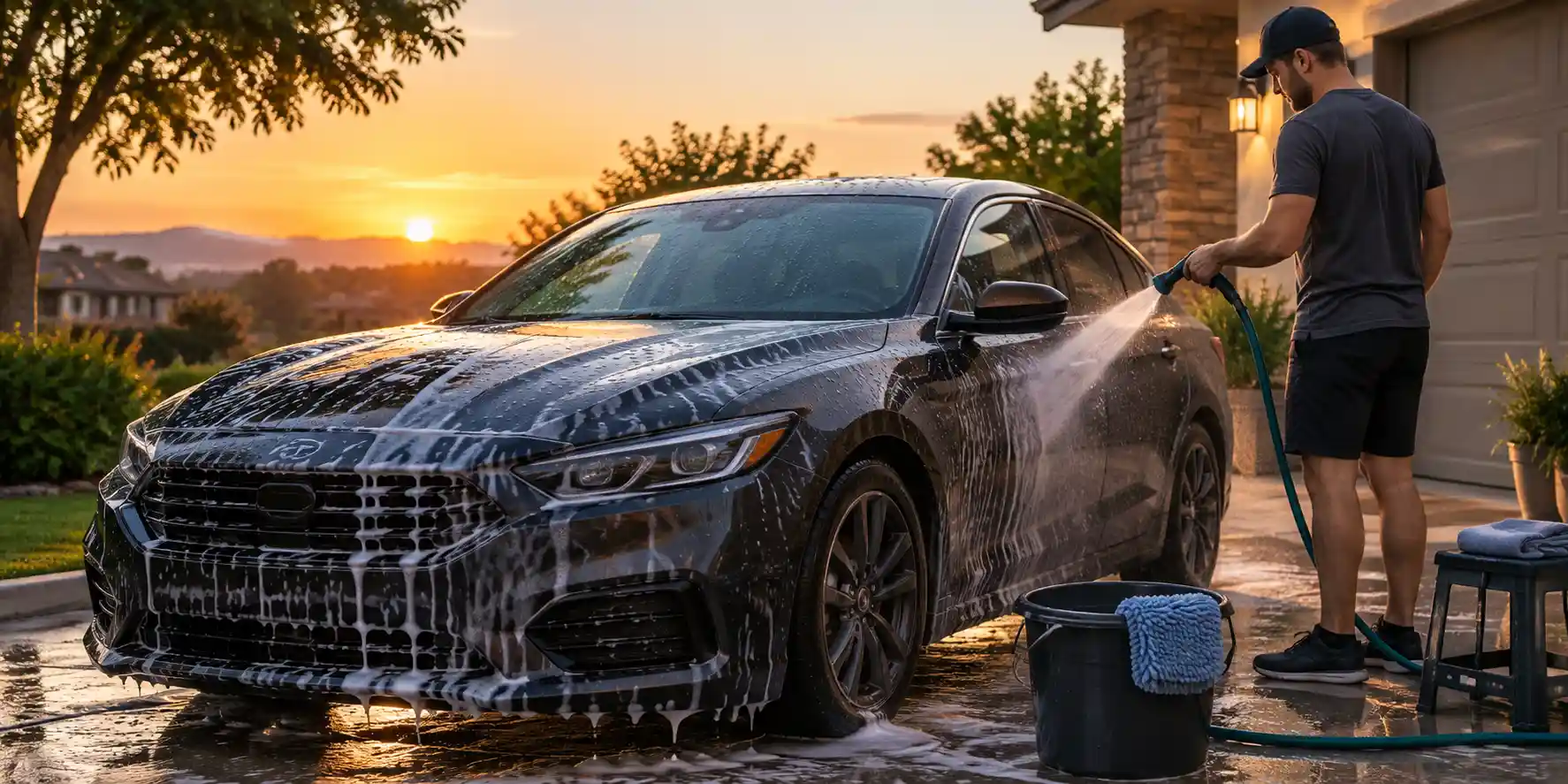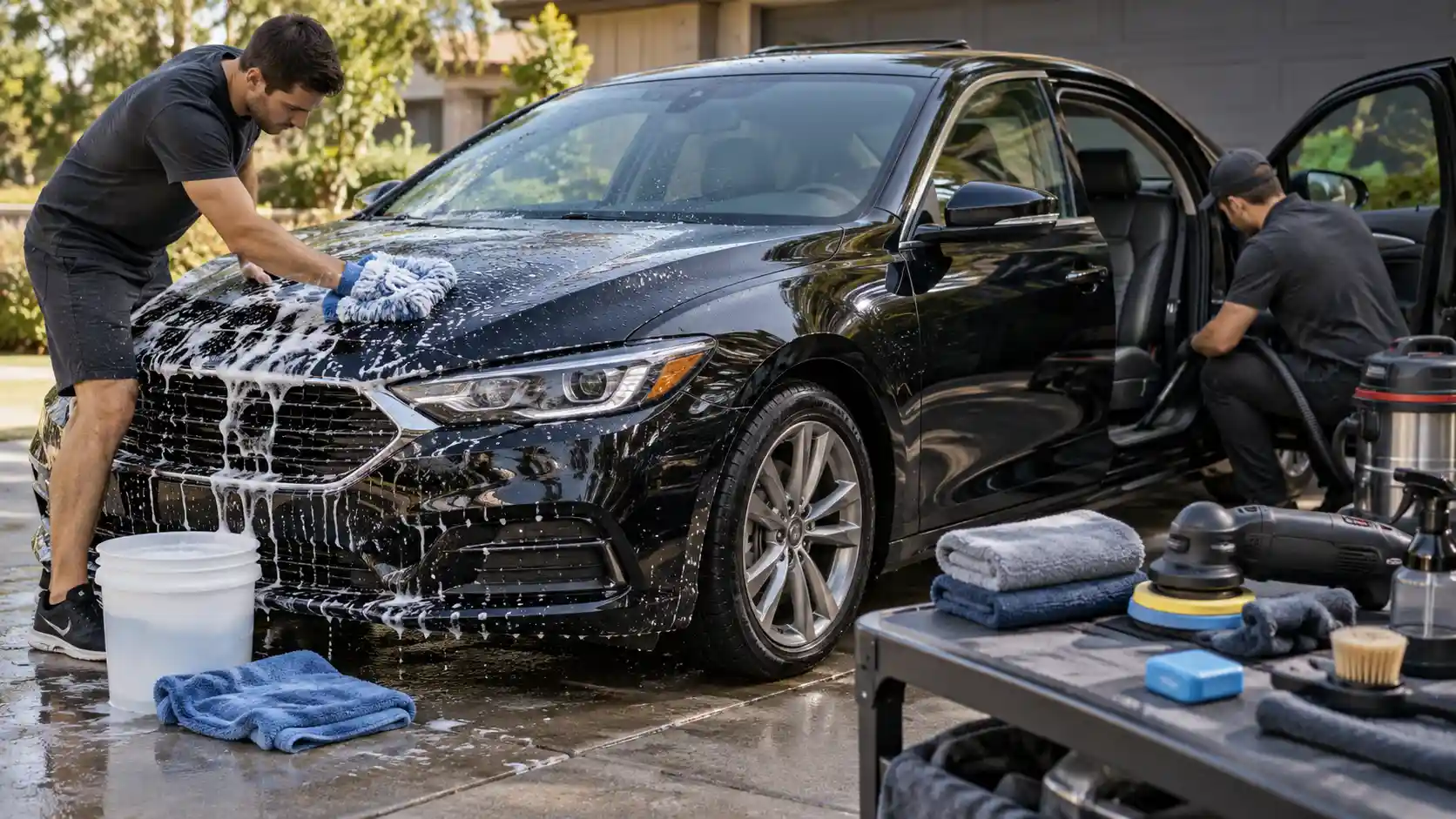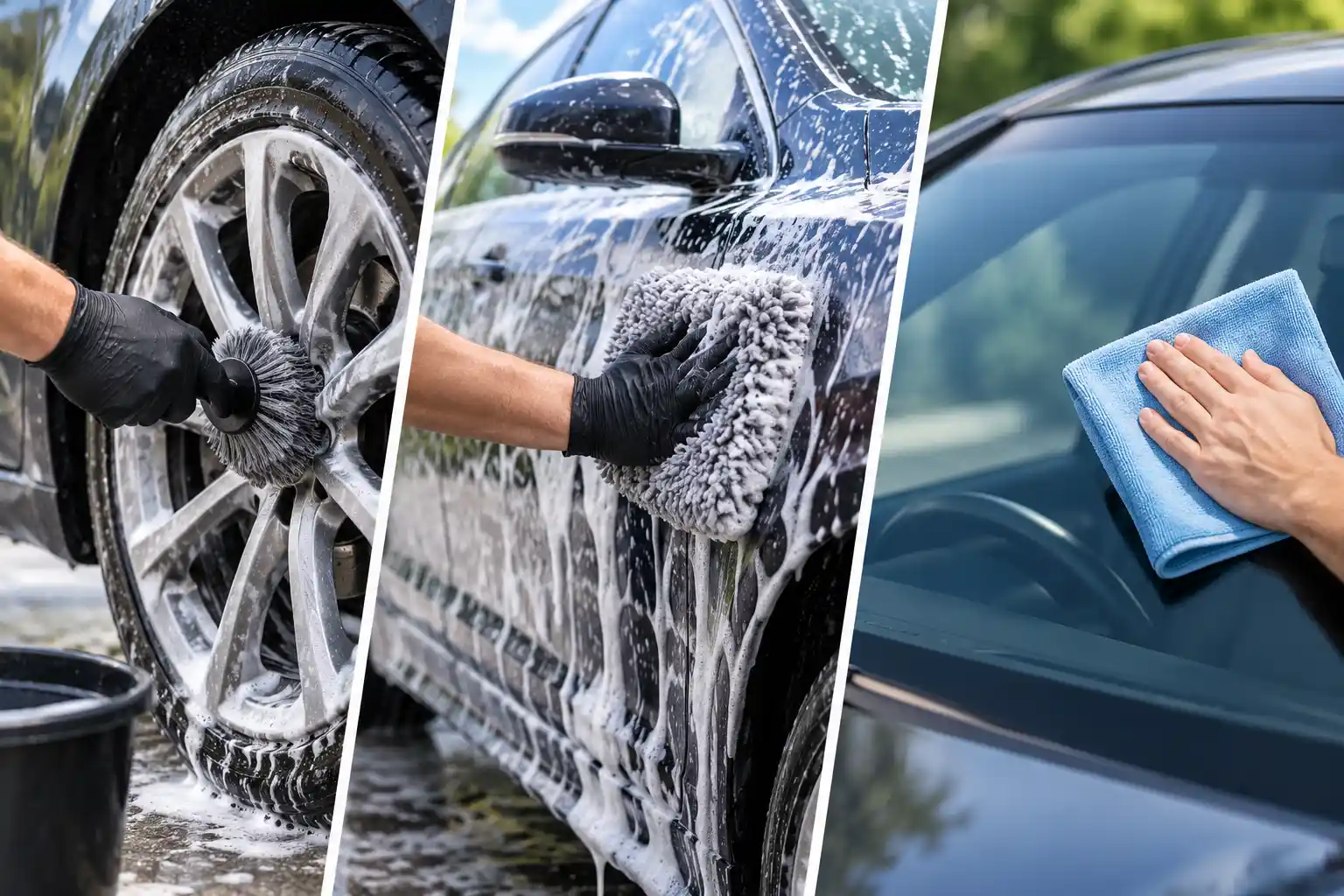
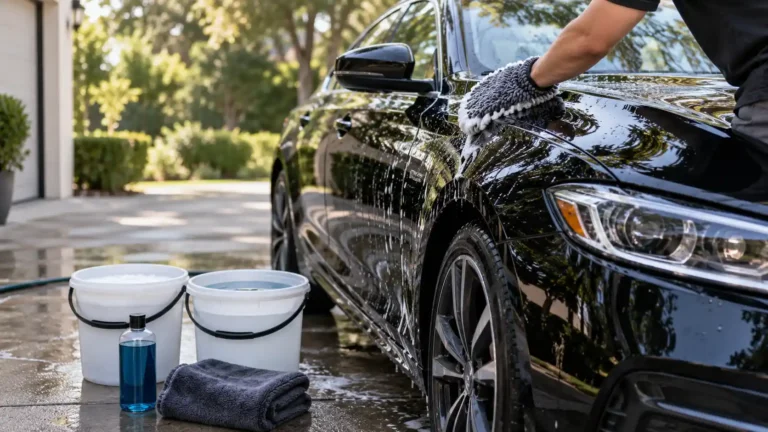
Washing a black car without leaving swirl marks requires the same core fundamentals as any color, but with less room for error, since swirl marks are dramatically more visible on black and other dark paint under direct sunlight. The two-bucket method, microfiber tools, gentle pressure, and shade-only washing all matter more on a black vehicle simply because every mistake shows up more clearly.
This guide explains why black paint reveals swirl marks so easily, the specific technique adjustments worth making, and how to maintain a black car’s finish between washes.
Why Do Swirl Marks Show Up So Much More on Black Paint?
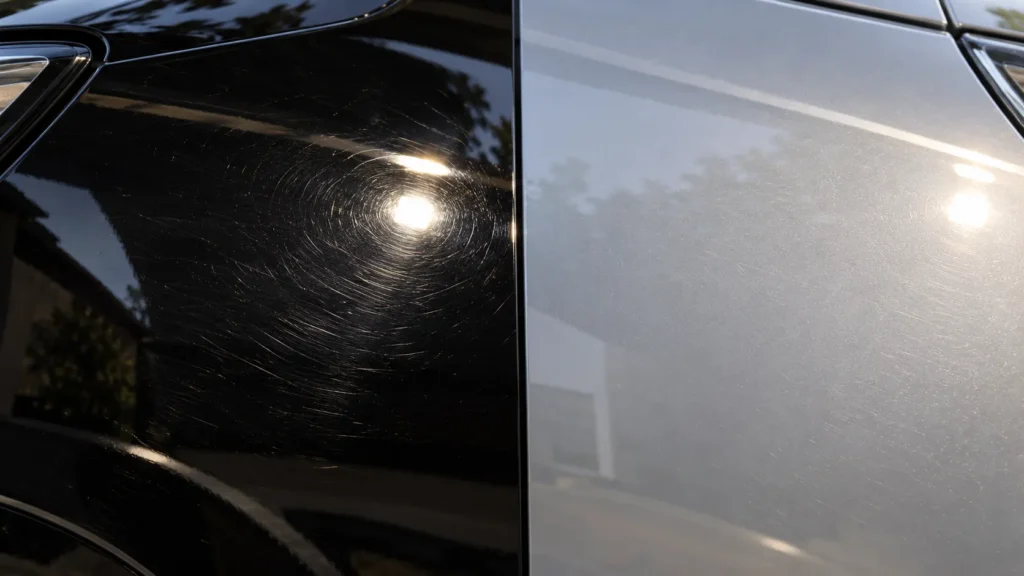
Black paint has no underlying color variation to break up light reflection, which means any imperfection in the clear coat surface reflects light directly back in a way that’s immediately visible to the eye. Lighter colors and metallics scatter reflected light more, which effectively hides the same depth of scratch that would be glaringly obvious on a solid black surface.
This isn’t a difference in how easily black paint scratches, since the clear coat itself is generally similar in hardness regardless of the color underneath. It’s purely a visibility issue, which is why black car owners often notice swirl marks that other drivers with different paint colors might never realize they have.
What Washing Adjustments Matter Most for Black Paint?
A few specific habits make a bigger difference on black paint than they would on lighter or metallic colors.
- Washing exclusively in shade – water spotting and soap residue show up starkly on black paint, making shade non-negotiable rather than just preferred.
- Using a higher-quality, denser microfiber mitt – the extra pile density provides more cushioning between the mitt and the paint surface, reducing marring risk further.
- Rinsing the mitt more frequently – black paint reveals even small amounts of reintroduced grit, so rinsing after every panel section rather than every few panels reduces risk.
- Drying with extra care and patience – rushing the drying step is more likely to leave visible drag marks on black paint than on a color that hides them better.
- Inspecting more frequently during the wash – checking your work under angled light partway through the process catches technique issues before they compound across the whole vehicle.
Does Black Paint Actually Scratch More Easily Than Other Colors?
No, black paint doesn’t scratch more easily in a physical sense, since clear coat hardness is generally consistent across paint colors from the same manufacturer. What differs is visibility: the same depth of fine scratch that’s barely noticeable on a silver or white vehicle stands out clearly on black due to how light reflects off a solid, uniform dark surface.
This distinction matters because it means the goal isn’t to treat black paint as inherently more fragile, but rather to be more disciplined about technique since mistakes simply can’t hide the way they might on other colors. Anyone who washes a black car carefully using proper technique protects the paint just as effectively as they would on any other color.
What’s the Best Way to Inspect Black Paint for Swirl Marks?
Checking black paint under direct, angled sunlight, or with a dedicated swirl-finder flashlight held at a low angle to the surface, reveals fine scratches that aren’t visible under flat, overhead lighting. This inspection method works on any color but is especially useful and revealing on black paint, where the contrast between clean paint and swirl marks is most pronounced.
Doing this inspection periodically, not just after suspected damage, helps you catch developing patterns in your own washing technique before they accumulate into more significant, harder-to-correct swirling. Many black car owners keep a small flashlight specifically for this purpose as part of their regular maintenance routine.
Does Protection Like Wax or Ceramic Coating Help Hide or Prevent Swirl Marks on Black Cars?
A fresh layer of wax or sealant adds gloss and depth that can make minor imperfections slightly less noticeable, though it doesn’t actually fill in or repair existing scratches in any meaningful way. Ceramic coatings offer a harder surface that can provide somewhat better scratch resistance than wax alone, though no topical product makes paint truly scratch-proof against poor washing technique.
The most reliable way to keep black paint swirl-free remains proper washing technique rather than relying on a protective product to compensate for it. Protection products are a valuable complement to good technique, extending gloss and providing a barrier against environmental contaminants, but they aren’t a substitute for careful washing habits.
Does Dust Show Up Faster on Black Cars, and How Should That Change Your Routine?
Dust and light airborne contamination are noticeably more visible on black paint within a day or two of a wash, compared to lighter colors where the same amount of dust blends in more easily. This visual sensitivity can tempt owners into more frequent full washes than are actually necessary, which paradoxically increases the number of opportunities for a technique mistake to occur.
A better approach for managing this visibility is a quick, contact-free rinse or a spray-and-wipe with a dedicated quick detailer between full washes, rather than running the complete wash process every time dust becomes noticeable. This keeps the car looking fresh without multiplying the number of full wash cycles the paint goes through in a given month.
How Should You Choose Products Specifically for a Black Vehicle?
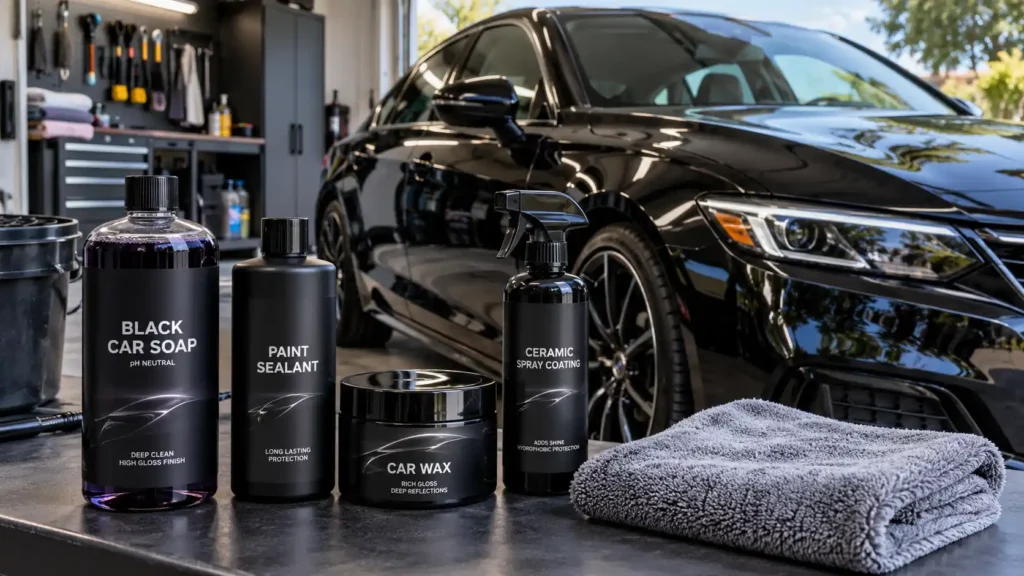
Products marketed as “black car soap” or “dark paint” formulas often contain the same core surfactants as general-purpose pH-neutral car soap, with added gloss enhancers that can slightly deepen the appearance of black paint after washing. These aren’t strictly necessary for a safe wash, but the added gloss-enhancing ingredients are a genuine, if modest, cosmetic benefit specific to dark colors.
More important than the soap itself is choosing a wax, sealant, or ceramic product known for producing deep, wet-looking gloss, since black paint shows off this kind of reflective depth more dramatically than lighter colors do. Reading reviews or product descriptions that specifically mention performance on black or dark paint can help narrow down a protection product that maximizes this visual benefit.
Frequently Asked Questions
Is it worth paying for professional detailing specifically because I have a black car?
Professional detailing can help correct existing swirl marks through machine polishing, which is a specialized skill worth outsourcing if you’re not comfortable doing it yourself. For routine washing, though, a careful home wash routine using proper technique works just as well on black paint as it does for a professional, since the fundamentals are the same.
Can I use a ceramic spray coating to hide swirl marks I already have?
No, ceramic spray coatings add gloss and a protective layer but don’t fill in or correct existing swirl marks, which require actual paint correction through polishing to remove. A coating applied over swirl marks may even make them slightly more visible in some lighting conditions due to the added reflectivity.
Does black paint need more frequent washing than other colors?
Not necessarily more frequent washing for cleanliness reasons, but black paint does benefit from more frequent gentle inspection, since dust and light contamination show up faster visually than on lighter colors. Some black car owners choose a quick rinse or wipe-down between full washes purely to manage dust visibility rather than genuine dirt buildup.
Is a matte black finish washed the same way as a glossy black finish?
No, matte finishes require specifically formulated matte-safe soaps and should never be waxed or polished with standard gloss-restoring products, since these can permanently alter the intentionally non-reflective finish. If your vehicle has a matte wrap or matte paint, checking manufacturer-specific care instructions is essential before applying any of the general techniques covered here.
Can direct sunlight alone damage black paint even without a wash mistake?
Direct sunlight itself doesn’t cause swirl marks, since that requires physical contact and friction, but prolonged UV exposure does contribute to oxidation and fading over years, which affects all paint colors including black. Regular waxing or sealant application helps mitigate this separate, non-mechanical form of paint aging.
Should I avoid automatic car washes entirely if I own a black car?
Brush-style automatic car washes carry the same swirl mark risk on black paint as any other color, just with more visible results, so avoiding them in favor of hand washing or a touchless facility is a reasonable precaution specifically for black vehicles. If a hand wash isn’t practical, choosing a well-maintained touchless facility reduces this risk considerably compared to an older brush-style tunnel, and it’s worth inspecting the paint under angled light after a few visits to confirm a specific facility isn’t introducing marring before committing to it as a regular routine.