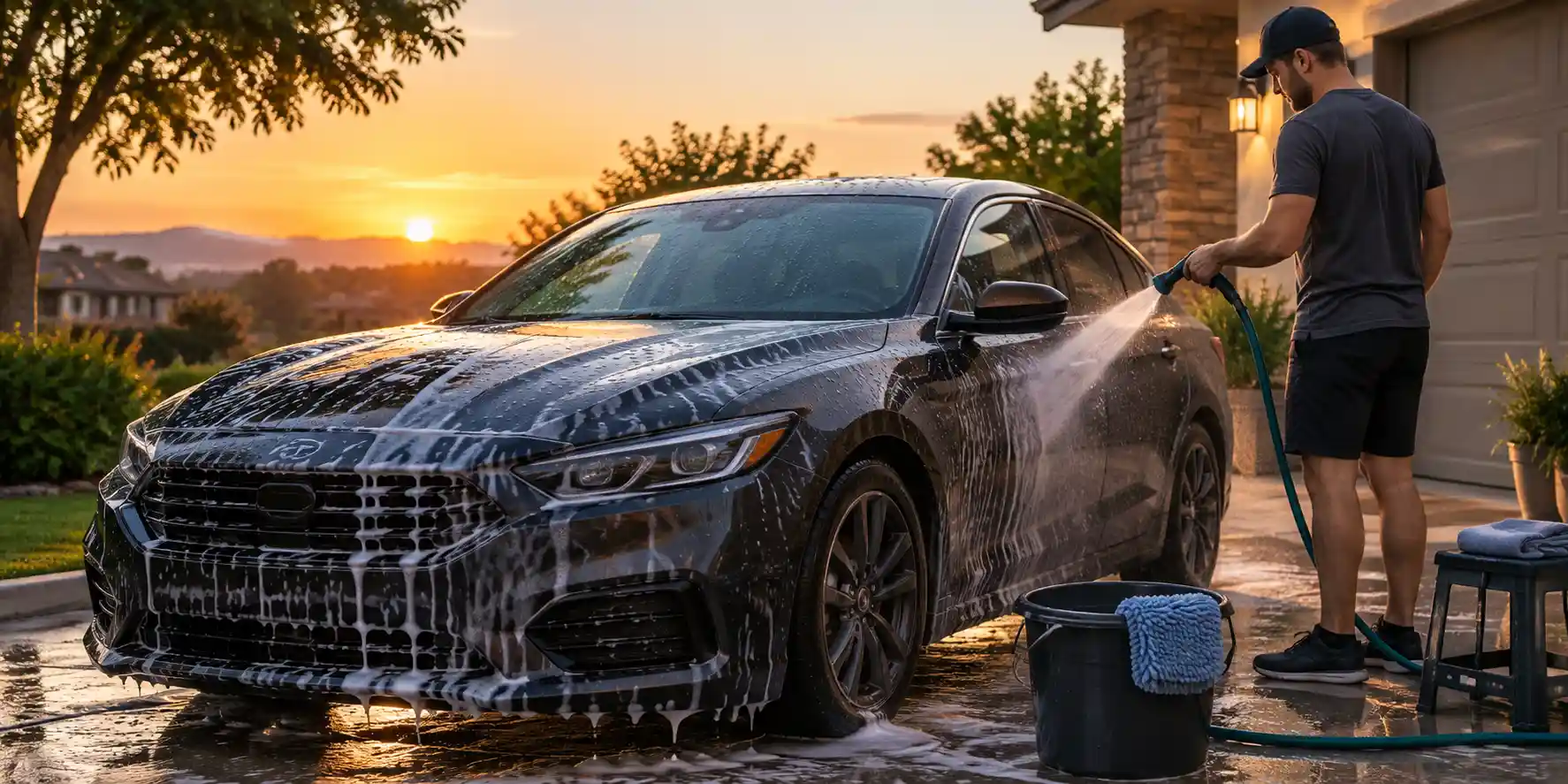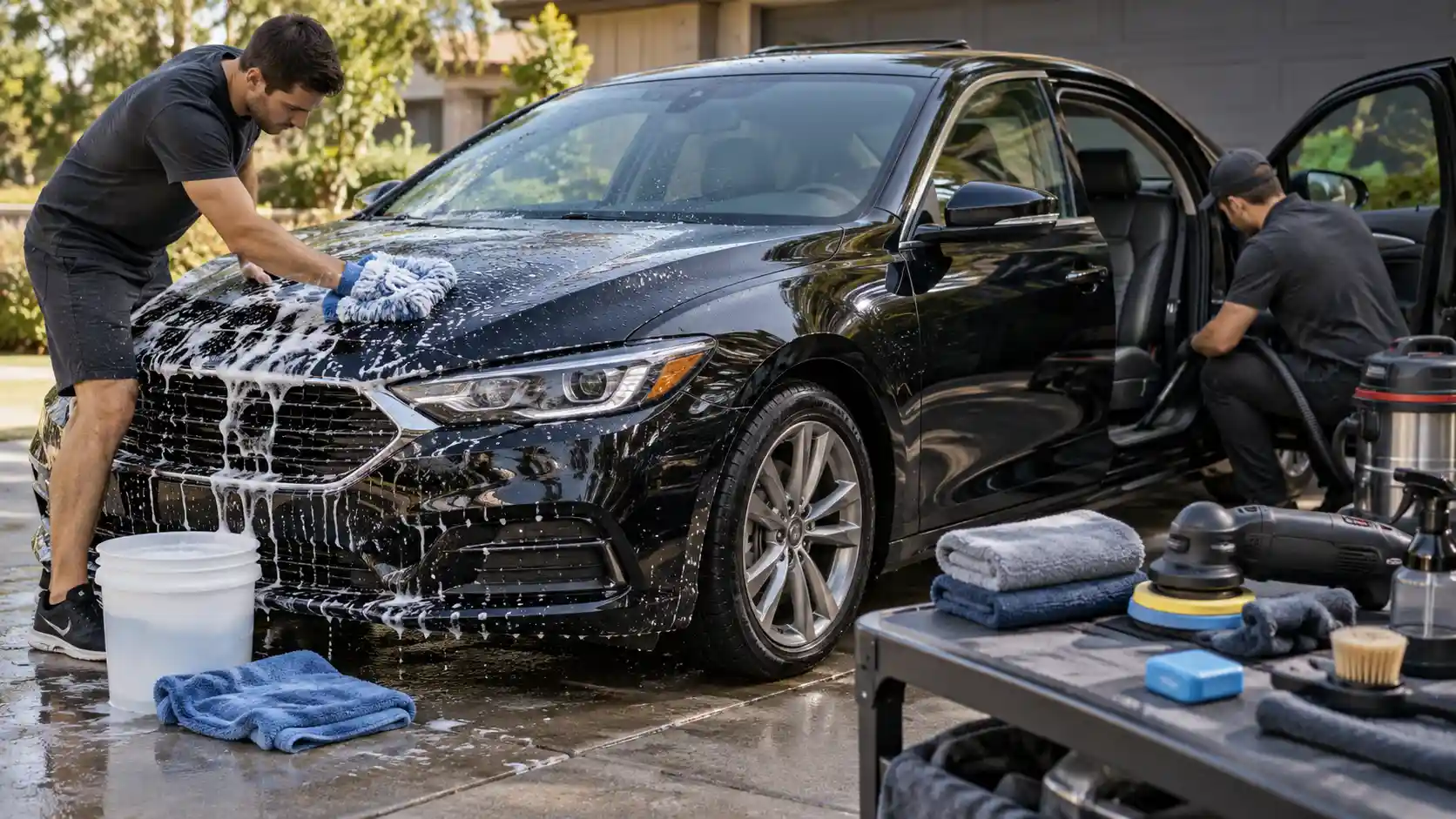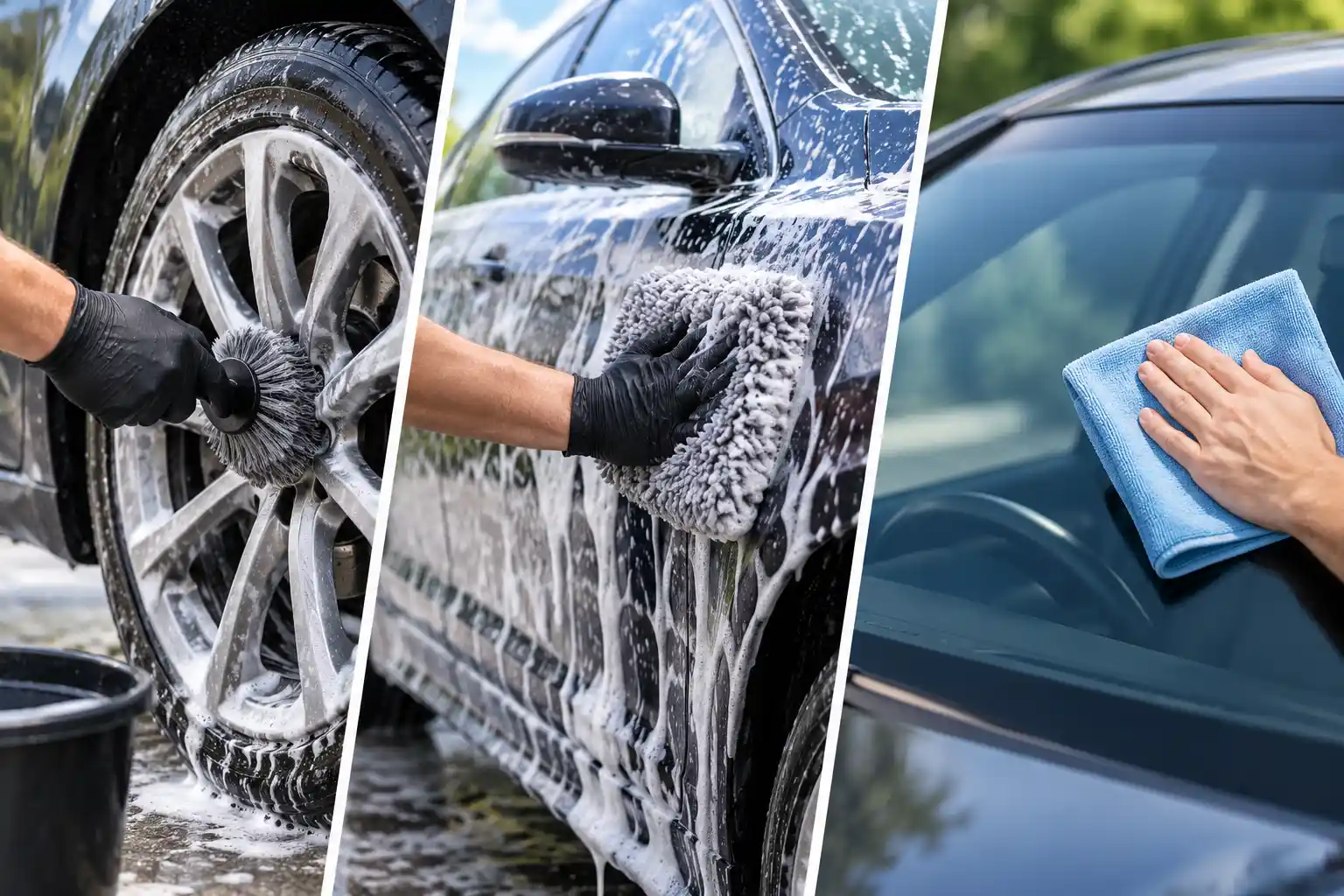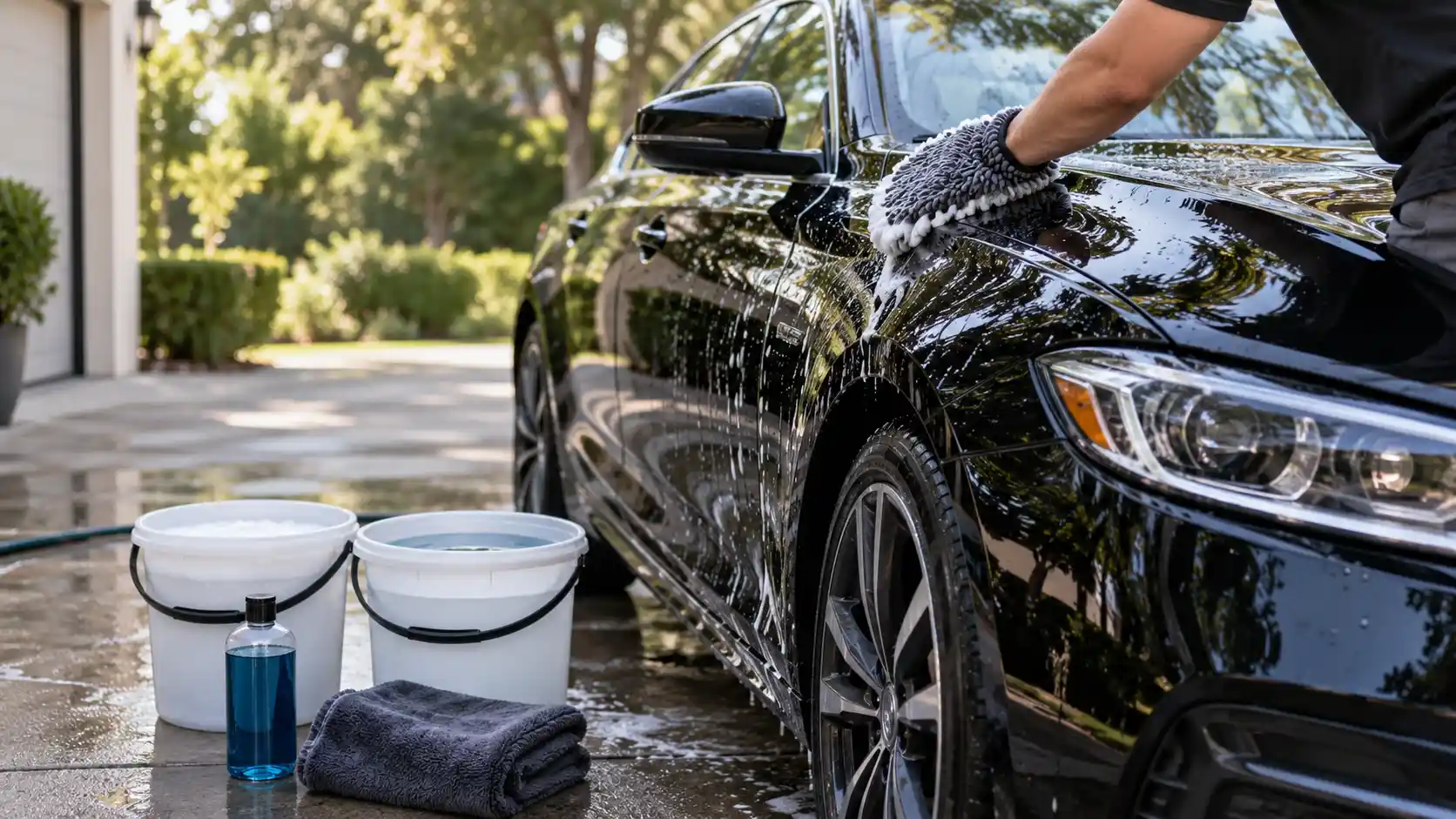

Car washing needs change throughout the year because the contaminants your vehicle encounters change with the weather. Winter brings road salt and salty slush that can accumulate underneath the vehicle, summer creates heat and faster water evaporation, spring brings heavy pollen, and fall adds leaves, organic debris, and preparation for winter.
The basic washing process does not need to be reinvented every season. What changes is what you prioritize, how often you wash, and when conditions make washing easier or safer.
What Should You Prioritize When Washing in Winter?
Winter washing should focus on removing road salt and de-icing residue, particularly from the undercarriage, wheel wells, and lower body panels. Salt and salty slush can remain on exposed components and contribute to corrosion when they are not regularly removed. AAA specifically recommends frequent washing during salt season and emphasizes undercarriage cleaning.
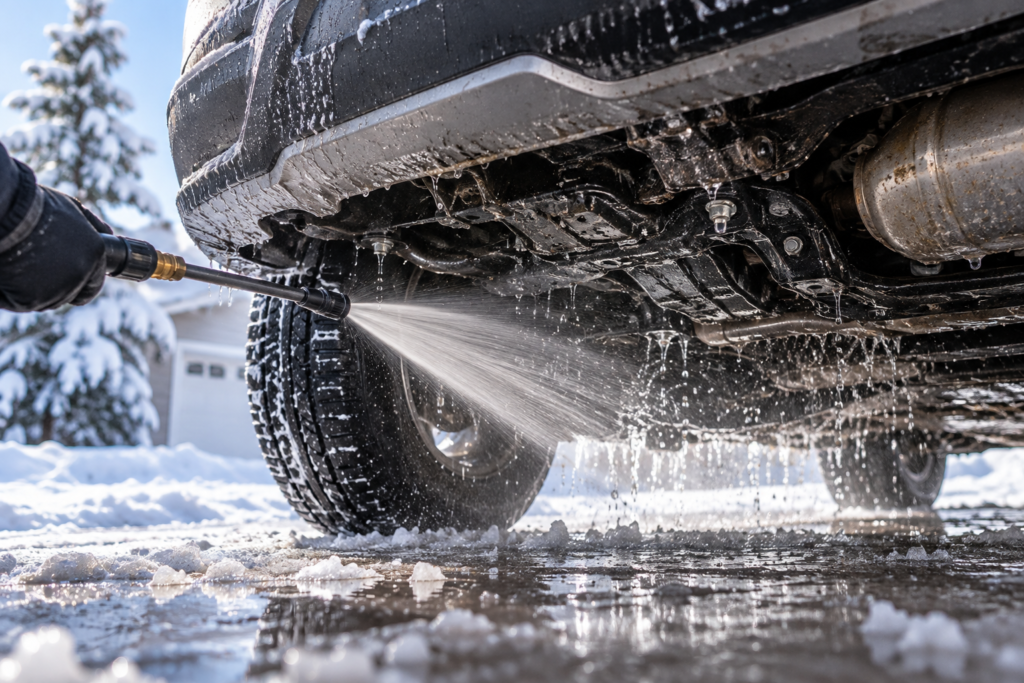
Priorities for winter washing
- Prioritize the undercarriage An underbody rinse is particularly useful in regions where roads are treated with salt or other de-icing chemicals.
- Wash regularly during active salt season AAA’s current guidance recommends washing at least every two weeks during winter salt exposure, with more frequent washing after driving on heavily salted roads.
- Pay attention after snow and ice events Roads can carry substantial salt and de-icing residue during and after winter storms.
- Rinse loose salt before making physical contact with the paint This reduces the amount of abrasive road contamination that must be moved across the surface during washing.
- Dry door jambs and rubber seals Water left in these areas can freeze and make doors or seals difficult to operate.
- Avoid washing when water will immediately freeze If conditions are cold enough for water to freeze on the vehicle before you can dry it, postponing the wash or using a suitable heated facility is more practical.
You do not need hot water to wash away road salt. In cold conditions, the more important concern is preventing wash water from freezing in door seals, locks, trim gaps, and other areas.
What Should You Prioritize When Washing in Summer?
Summer washing is mainly about controlling heat, evaporation, and contamination. Direct sunlight and hot panels can cause rinse water or shampoo solution to dry before you have time to remove it properly.
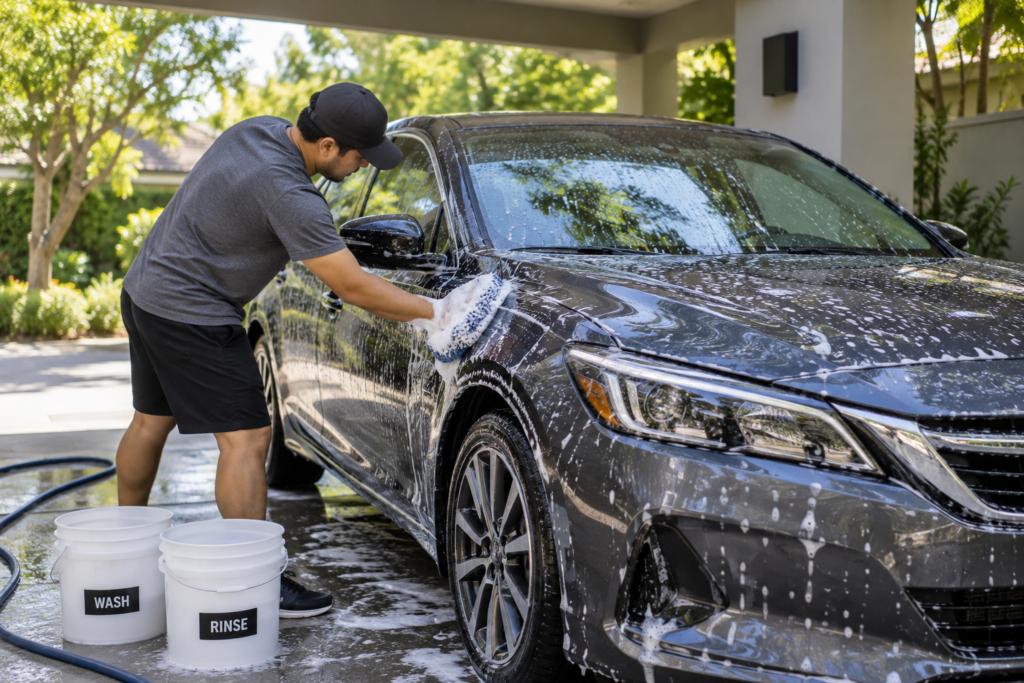
Priorities for summer washing
- Wash in shade whenever possible Early morning or evening can also provide cooler conditions.
- Work in manageable sections Smaller sections make it easier to rinse before shampoo dries on the paint.
- Dry promptly after the final rinse Allowing water to evaporate on a hot surface increases the chance of visible water spotting.
- Remove bug residue and tree sap promptly These contaminants can become more difficult to remove after prolonged exposure to heat and sunlight.
- Inspect the vehicle more frequently Summer driving can bring increased exposure to insects, dust, pollen, and other environmental contamination.
- Maintain paint protection according to the product’s requirements Do not assume every wax, sealant, or coating needs the same reapplication schedule.
A common mistake is assuming that summer automatically means you need to apply wax more frequently. The correct interval depends on the specific product, the vehicle’s exposure, and whether the protection is still performing as intended.
What Should You Prioritize When Washing in Spring?
Spring often combines heavy pollen with the residue left behind by winter. This makes it a useful season for both routine washing and a more thorough inspection of the vehicle.
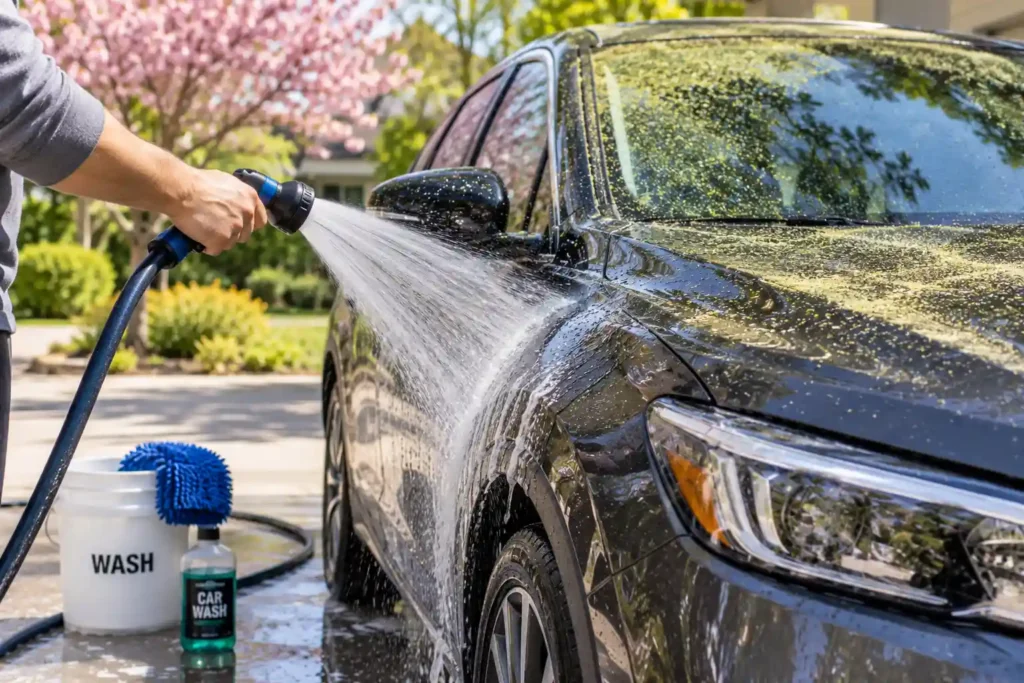
Priorities for spring washing
- Remove pollen with a proper wash rather than dry-wiping it away Pollen can become more problematic when it remains on painted surfaces and is exposed to moisture and heat. Automotive guidance from Subaru documents paint effects associated with prolonged pollen, rain, and heat exposure.
- Rinse before using a wash mitt A thorough pre-rinse helps remove loose contamination before physical contact with the paint.
- Inspect for winter-related contamination and damage — Look for accumulated road film, stone chips, scratches, and areas where exposed metal may need attention.
- Clean the undercarriage after salt season AAA recommends a final thorough undercarriage cleaning in spring to remove deposits left from winter.
- Decontaminate only when necessary A clay bar can be useful for bonded contamination that remains after normal washing, but it should not be treated as a mandatory part of every spring wash.
- Reapply paint protection when appropriate Spring is a convenient time to inspect the existing protection and apply a new product if the previous protection has reached the end of its useful service life.
Why should you avoid dry-wiping pollen?
The problem is not simply that every pollen grain is inherently abrasive. A pollen-covered vehicle can also contain dust, road film, and other particles. Dragging that contamination across dry paint can create unnecessary friction and increase the risk of marring.
A rinse-and-wash approach is therefore preferable to wiping a heavily contaminated surface while it is dry.
What Should You Prioritize When Washing in Fall?
Fall is primarily about controlling organic debris and preparing the vehicle for winter.
Priorities for fall washing
- Remove leaves regularly Pay particular attention to the cowl, windshield-wiper area, drainage channels, and gaps around trim.
- Do not allow wet organic debris to accumulate Leaves and other debris can retain moisture against vehicle surfaces.
- Inspect paint protection before winter If existing wax or sealant is no longer providing the desired protection, fall can be a practical time to reapply it.
- Clean the undercarriage before winter Starting winter with a clean vehicle removes existing contamination before salt and de-icing residue are added.
- Inspect chips and scratches Areas where paint has been damaged and bare metal is exposed deserve attention before prolonged winter exposure.
- Clean rubber seals and weatherstripping Removing dirt and maintaining these areas can help reduce problems as temperatures fall.
- Remove tree sap promptly Sap can become more difficult to remove after prolonged exposure to the elements.
Does Wash Frequency Need to Change Season by Season?
Yes, but there is no single wash schedule that applies to every vehicle or climate.
The biggest factor is contamination rather than the calendar itself.
| Season | Main Contamination | What to Prioritize | Typical Approach |
|---|---|---|---|
| Winter | Road salt, de-icing residue, slush | Undercarriage and lower body | Wash regularly during salt exposure |
| Spring | Pollen, winter residue, rain contamination | Thorough exterior wash and inspection | Increase attention during heavy pollen periods |
| Summer | Bugs, dust, sap, heat-related water spotting | Shade, section-by-section washing, prompt drying | Wash when contamination accumulates |
| Fall | Leaves, sap, organic debris | Debris removal and winter preparation | Maintain the vehicle and prepare protection |
In salt-treated regions, winter may require the most deliberate washing even when the vehicle does not look particularly dirty. AAA’s 2026 guidance recommends at least every-two-week washing during salt exposure and more frequent cleaning after heavily salted-road use.
In other climates, the appropriate interval can be longer. A vehicle parked indoors and driven infrequently does not face the same contamination load as a daily driver parked outside.
How Should Your Product Choices Shift With the Seasons?
Most car-care products do not need to be replaced with a completely different seasonal equivalent. Instead, seasonal conditions change which product characteristics become more useful.
Winter
Prioritize:
- Undercarriage rinse capability
- Effective pre-rinse and wash products
- Products that can be applied within their stated temperature range
- Drying tools that help prevent water from remaining in vulnerable areas
Always follow the manufacturer’s application-temperature instructions for waxes, sealants, coatings, and other products.
Spring
Prioritize:
- Gentle exterior washing
- Good pre-rinse capability
- Microfiber wash and drying tools
- Paint decontamination products when bonded contamination remains
- Paint protection when existing protection needs renewal
Summer
Prioritize:
- Products that are practical to use in warm conditions
- Quick and controlled drying
- Bug and sap removal products when necessary
- Paint protection appropriate for the manufacturer’s recommended application conditions
Do not assume that a product marketed as having UV protection will necessarily last a specific number of months. Durability depends on the product, preparation, environmental exposure, and maintenance.
Fall
Prioritize:
- Products for removing organic contamination
- Paint decontamination where needed
- Wax or sealant if the existing protection needs replacement
- Cleaning tools that make it easier to remove leaves and debris from difficult areas
The goal is not to build four completely different car-washing kits. It is to adjust the tools and products around the contamination your vehicle is actually encountering.
Does Garage Access Change What’s Realistic Season to Season?
Yes. Garage access can make seasonal washing considerably easier because it provides protection from direct sunlight, precipitation, and extreme temperatures.
A garage can be particularly useful in winter because it may provide a controlled environment for washing and drying. It can also make summer washing easier by keeping the vehicle and wash surface out of direct sunlight.
Without a garage, timing becomes more important.
In summer, an early-morning or evening wash can reduce heat-related drying problems. In winter, waiting for a milder period when water will not immediately freeze can make the process safer and more manageable.
A covered self-serve wash bay can also be useful for people who do not have suitable space at home. Look for a facility that offers an undercarriage rinse if winter road salt is a significant concern.
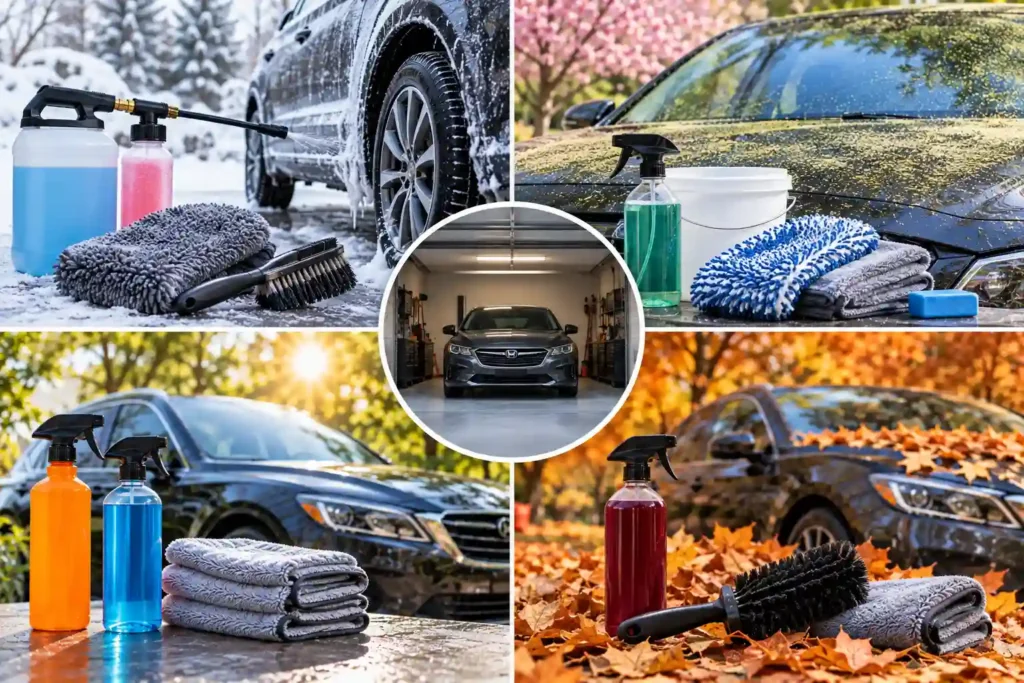
What Is the Best Seasonal Washing Strategy?
The simplest approach is to keep the core wash process consistent and change the priorities around it:
- Pre-rinse thoroughly to remove loose contamination.
- Wash with a product intended for automotive surfaces.
- Work in manageable sections when conditions are hot or drying is rapid.
- Rinse thoroughly.
- Dry the vehicle before water spots develop.
- Give special attention to seasonal contamination.
- Inspect paint protection periodically rather than replacing it on an arbitrary schedule.
In winter, add greater emphasis to the undercarriage. In spring, focus on pollen and post-winter contamination. In summer, control heat and rapid drying. In fall, remove organic debris and prepare the vehicle for winter.
Frequently Asked Questions
Is it safe to wash my car in freezing temperatures?
Washing becomes more difficult as temperatures fall because water can freeze in door seals, locks, trim gaps, and other areas. The practical concern is less about a particular thermometer reading and more about whether you can wash and dry the vehicle before water freezes.
If conditions are well below freezing, a heated or temperature-controlled wash facility is generally more practical than washing outdoors. Avoid using hot water to melt ice around frozen doors because the added water can refreeze afterward. AAA similarly advises against using hot water for frozen vehicle doors.
Does living in a region without winter road salt mean I can skip undercarriage washing?
No, but the reason for doing it changes.
Without regular road-salt exposure, corrosion prevention may be less of a concern, but the underside can still accumulate mud, dirt, and organic contamination. Periodic undercarriage rinsing remains useful, especially after driving through muddy or heavily contaminated conditions.
Why does pollen require a different approach than regular dust?
Pollen is a biological contaminant, and its behavior can change when it remains on a vehicle and is exposed to moisture and heat. Subaru has documented paint effects associated with prolonged pollen exposure combined with rain and high temperatures.
The safest practical approach is to rinse and wash pollen away rather than dry-wiping a heavily contaminated surface.
Should I change my car wash soap based on the season?
Usually not.
A suitable car-wash soap can generally be used throughout the year. What changes is the contamination you are trying to remove and the conditions in which you are washing.
Winter may require more attention to salt and undercarriage rinsing, while spring may require more frequent pollen removal. Summer requires better control of drying, and fall requires more attention to leaves and organic debris.
Should I clay-bar my car every spring?
No.
A clay bar is intended to remove bonded contamination that normal washing does not remove. It should not automatically be part of every seasonal wash.
After washing and drying the vehicle, inspect the paint. If bonded contamination remains and the surface is appropriate for mechanical decontamination, a clay product may be useful. Follow the product instructions and use adequate lubrication.
Is fall the best time for a full detail before winter?
Fall can be a practical time for a thorough detail because it gives you an opportunity to remove existing contamination and inspect the vehicle before winter road treatments begin.
AAA recommends thoroughly cleaning the vehicle before winter and applying protective wax to the finish.
However, there is no requirement that every vehicle receive a full clay-bar treatment, polish, and wax every fall. The appropriate level of detailing depends on the vehicle’s condition and the state of its existing protection.
Conclusion
Seasonal car care is mainly about responding to the contamination and weather conditions your vehicle actually experiences.
Winter deserves extra attention to road salt and the undercarriage. Spring calls for pollen removal and a post-winter inspection. Summer requires better control of heat, shade, and drying. Fall is the time to manage leaves and organic debris while preparing the vehicle for winter exposure.
You do not need a completely different wash routine for every season. Keep the fundamentals consistent, then adjust frequency, timing, and specific cleaning priorities around the conditions your vehicle faces.