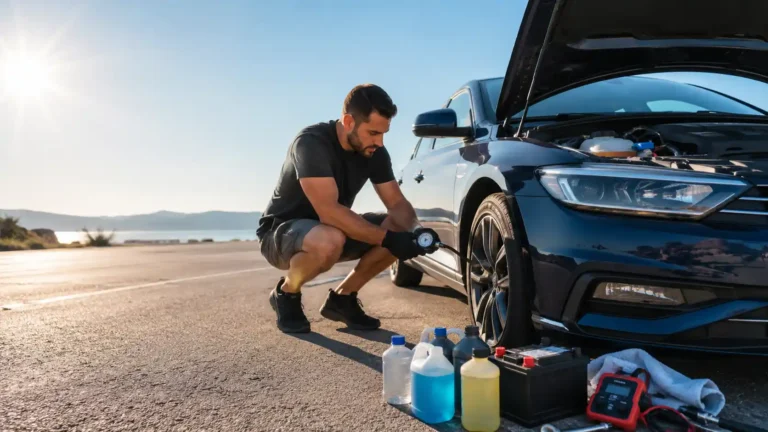
Summer places unique demands on every major vehicle system. Higher temperatures accelerate battery wear, increase tire pressure, and force the engine cooling system to work harder than usual. Road surface temperatures can become significantly hotter than the surrounding air, placing additional stress on tires and reducing their lifespan.
Extended exposure to heat can also affect engine fluids, air conditioning performance, and interior materials. As temperatures rise, routine maintenance becomes an important factor in vehicle reliability, safety, and operating costs. Understanding the seasonal effects of heat on key components helps explain why summer-specific car care remains a regular part of responsible
Summer Car Care Checklist
Summer heat affects several vehicle components, including tires, batteries, fluids, cooling systems, and air conditioning. A seasonal inspection helps identify wear, fluid loss, or performance issues before they lead to breakdowns or expensive repairs.
- Check Tire Pressure and Tread
- Inspect Battery Health
- Top Off Coolant and Other Fluids
- Check Belts and Hoses
- Test the Air Conditioning System
Check Tire Pressure and Tread
Tires experience greater stress during hot weather because heat increases air pressure and raises road surface temperatures. Check tire pressure when the tires are cold and compare it with the recommended level in the owner’s manual or door placard. Also inspect tread depth and look for uneven wear, cracks, or damage that could affect traction and safety.
Inspect Battery Health
High temperatures can accelerate battery wear and reduce its lifespan. Check the battery terminals for corrosion, ensure connections are secure, and watch for signs of a weak battery, such as slow engine cranking. Testing battery performance before summer travel can help prevent unexpected starting problems.
Top Off Coolant and Other Fluids
Coolant plays a critical role in controlling engine temperature during hot weather. Verify that coolant levels are within the recommended range and inspect the cooling system for leaks. It is also a good time to check engine oil, brake fluid, transmission fluid, power steering fluid, and windshield washer fluid to ensure all systems operate properly.
Check Belts and Hoses
Belts and hoses are exposed to constant heat under the hood, which can cause rubber components to deteriorate over time. Look for cracks, bulges, fraying, or soft spots, and ensure all hose connections are tight. Replacing worn components early can help prevent overheating and mechanical failures.
Test the Air Conditioning System
The air conditioning system works harder during summer than at any other time of year. Check that the system cools the cabin efficiently and produces consistent airflow. If cooling performance has decreased, unusual noises are present, or airflow feels weak, the system may require inspection or servicing before extended summer driving.
How to Protect Your Car from Summer Heat
Heat protection is about reducing how much sun and high temperature your car absorbs. Parking in shade, using a sunshade, and keeping the interior protected all help slow down wear on plastics, dashboard materials, and seats. Summer care is not only about mechanical parts. It also helps the cabin stay cooler and more comfortable every time you get in.
Park in Shade Whenever Possible
Shade lowers direct sun exposure, which helps reduce heat buildup inside the vehicle. This matters because the cabin can become much hotter than the outside air, and NHTSA warns that heat inside a parked vehicle can become dangerous very quickly. Choosing shade whenever you can is one of the easiest habits for protecting both the car and the people inside it.
Use a Windshield Sunshade
A windshield sunshade helps block direct sunlight from heating the dash and steering area. It is a small tool, but it supports a cooler cabin and adds a layer of protection for interior surfaces that can fade or age faster in strong sun. Pairing a sunshade with parking in shade gives you better protection during peak summer hours.
Tint or Protect the Interior
Interior protection is useful because repeated sun exposure can make the cabin feel hotter and wear surfaces faster. Even simple steps like keeping the dashboard clean, using covers where appropriate, and limiting direct sun exposure can help preserve the interior over time. This is especially helpful for daily drivers that spend hours in the sun each week.
Prevent Dashboard and Seat Damage
Dashboard plastics and seat materials can age faster in heat if they are not protected. Keeping the car clean and shaded reduces the stress caused by strong sunlight and high cabin temperatures. Over time, that can help the interior stay in better shape and keep the car looking newer.
How to Keep Your Car Safe on Hot Roads
Driving on hot roads places extra stress on tires, the cooling system, the battery, and other critical components. A few preventive checks can reduce the risk of breakdowns and help maintain vehicle performance during summer travel.
- Watch for Overheating Signs
- Maintain Proper Tire Inflation
- Check for Warning Lights
- Keep an Emergency Kit Ready
Watch for Overheating Signs
Engine overheating can develop quickly during hot weather, especially in slow-moving traffic or on long drives. Pay attention to a rising temperature gauge, steam from under the hood, warning messages, or unusual burning smells. These signs often indicate a problem with the cooling system that should be addressed immediately.
Maintain Proper Tire Inflation
Tires are more vulnerable to damage when exposed to high temperatures and long periods of driving. Check tire pressure regularly when the tires are cold and ensure it matches the vehicle manufacturer’s recommendation. Proper inflation helps improve handling, fuel efficiency, and tire lifespan while reducing the risk of a blowout.
Check for Warning Lights
Dashboard warning lights provide early alerts about potential mechanical or electrical issues. Common warnings related to the engine, battery, tire pressure, or cooling system should never be ignored, especially during summer. Investigating problems early can help prevent more expensive repairs later.
Keep an Emergency Kit Ready
An emergency kit can be valuable if a breakdown occurs in extreme heat. Consider carrying drinking water, a phone charger, jumper cables, a flashlight, a first-aid kit, and basic roadside supplies. Having these essentials available can improve safety and convenience while waiting for assistance.
Summer Car Maintenance for Long Trips
Long-distance summer driving places extended stress on the engine, tires, battery, and cooling system. Performing a few maintenance checks before departure can help improve reliability, reduce the risk of breakdowns, and ensure the vehicle is prepared for higher temperatures and longer hours on the road.
Inspect Before You Travel
Before a road trip, it helps to inspect the car as a whole instead of waiting for a problem to appear. That means looking at tire condition, fluid levels, the battery, and visible wear under the hood. NHTSA’s summer checklist is built around this same idea because prevention is easier than roadside repair.
Clean the Exterior and Windows
Clean windows and mirrors improve visibility, especially when summer glare and dust are common. A clean car also makes it easier to spot tire damage, fluid leaks, or other signs of trouble during your inspection. It is a small step, but it supports safer driving and better maintenance awareness.
Make Sure Wipers and Lights Work
NHTSA says wiper blades can also be vulnerable to summer heat and should be checked for wear. It also recommends checking headlights, brake lights, turn signals, emergency flashers, and interior lights. Good visibility matters on hot summer days, especially when sudden storms or evening travel are part of the trip.
Pack Water and Emergency Supplies
Water is part of the emergency kit NHTSA recommends for summer travel. That makes sense because heat can turn a small delay into a bigger comfort and safety problem. A few basic supplies can make a breakdown more manageable while you wait for help.
Common Summer Car Care Mistakes to Avoid
Many summer vehicle problems are caused by overlooked maintenance rather than major mechanical failures. Avoiding a few common mistakes can help reduce wear, improve reliability, and lower the risk of heat-related breakdowns.
- Skipping routine tire pressure checks
- Using the tire sidewall pressure instead of the manufacturer’s recommended pressure
- Ignoring low coolant levels
- Delaying battery inspection and testing
- Overlooking worn belts and hoses
- Neglecting air conditioning system maintenance
- Ignoring dashboard warning lights
- Driving with insufficient fluid levels
- Forgetting to inspect tires before long trips
- Traveling without an emergency roadside kit
How Often Should You Check Your Car in Summer?
Key summer maintenance items should be inspected on a regular schedule. Tire pressure, fluid levels, and warning lights benefit from monthly checks, while the battery, cooling system, belts, and hoses should be inspected before long trips or whenever signs of wear appear. Consistent monitoring helps keep the vehicle reliable during periods of high heat.
Conclusion
Summer heat can affect nearly every major vehicle system, from tires and batteries to coolant and air conditioning. Regular inspections, proper fluid levels, healthy tires, and a well-maintained cooling system help reduce the risk of breakdowns and costly repairs during hot weather.
Whether you are commuting daily or planning a long road trip, staying on top of seasonal maintenance improves reliability, safety, and overall vehicle performance throughout the summer months.
Frequently Asked Questions
What Is the Most Important Summer Car Maintenance Step?
The most important summer car maintenance step is checking tire pressure and tread condition. Properly inflated tires improve safety, handling, and fuel efficiency, while adequate tread helps maintain traction on hot roads.
How Does Hot Weather Affect Tires?
Hot weather increases tire pressure and places additional stress on tire components. High temperatures can accelerate wear and make existing tire problems more likely to cause a failure.
Can Summer Heat Damage a Car Battery?
Yes, summer heat can damage a car battery by accelerating internal wear and reducing its lifespan. Extreme temperatures can also increase the risk of unexpected battery failure.
How Do You Keep a Car Cool in Summer?
You can keep a car cool in summer by parking in the shade, using a windshield sunshade, maintaining the air conditioning system, and reducing direct sunlight exposure.
How Often Should You Check Tire Pressure in Summer?
Tire pressure should be checked at least once a month and before any long trip. Regular checks help maintain proper handling, improve fuel efficiency, and reduce tire wear.
Why Is Coolant Important During Summer?
Coolant helps regulate engine temperature and prevents overheating. Maintaining the correct coolant level is essential because engines work harder in high temperatures.
Should You Service Your Car Before a Summer Road Trip?
Yes, servicing your car before a summer road trip is recommended. Checking tires, fluids, the battery, brakes, and the cooling system can help reduce the risk of breakdowns.
Can Summer Heat Cause Engine Overheating?
Yes, extreme heat can increase the likelihood of engine overheating, especially if coolant levels are low or the cooling system is not functioning properly.
What Fluids Should Be Checked During Summer?
The most important fluids to check during summer are coolant, engine oil, brake fluid, transmission fluid, power steering fluid, and windshield washer fluid.
Is It Safe to Drive With an Overheating Engine?
No, driving with an overheating engine can cause serious mechanical damage. If the temperature gauge rises into the danger zone, stop the vehicle safely and allow the engine to cool before investigating the cause.