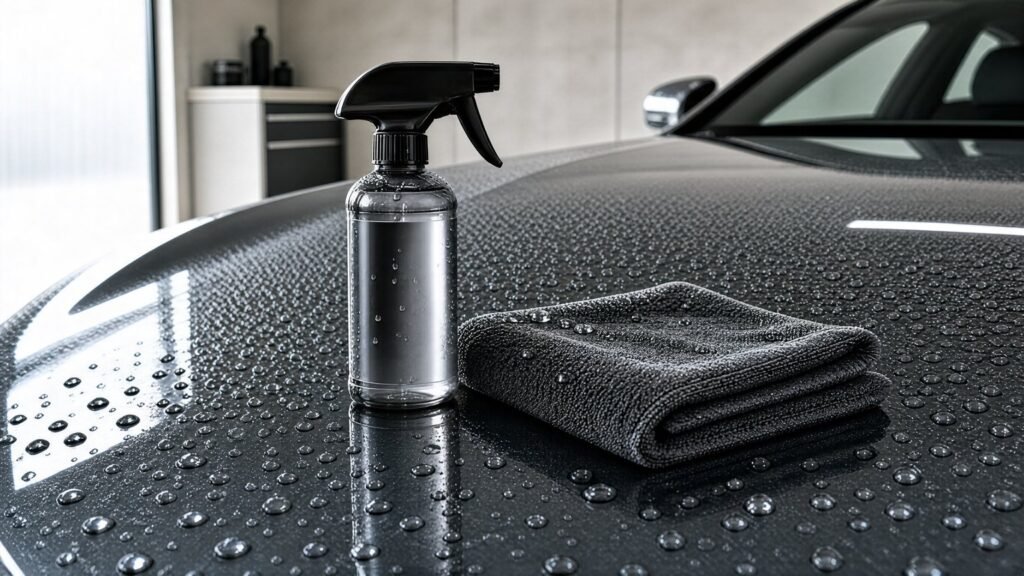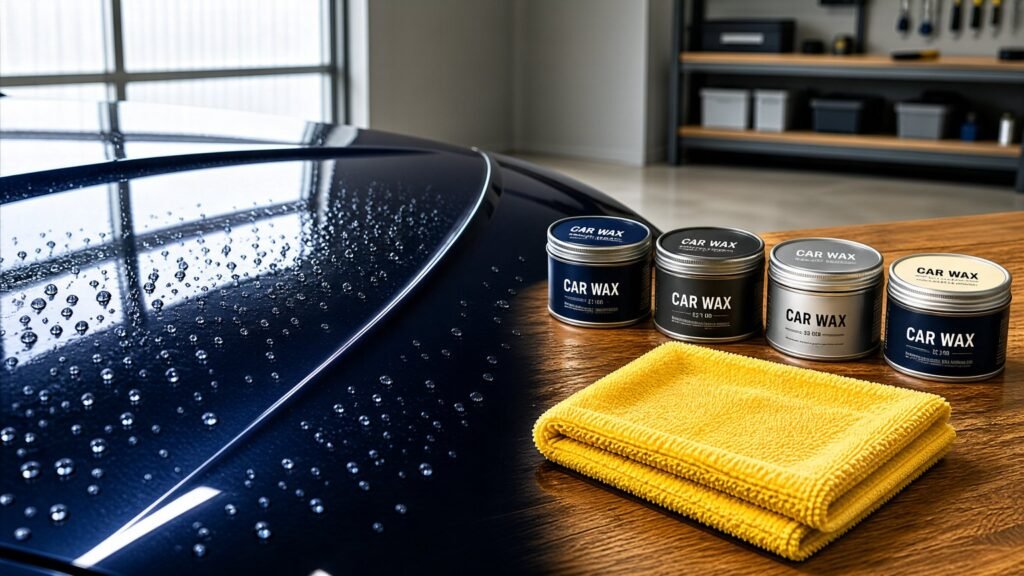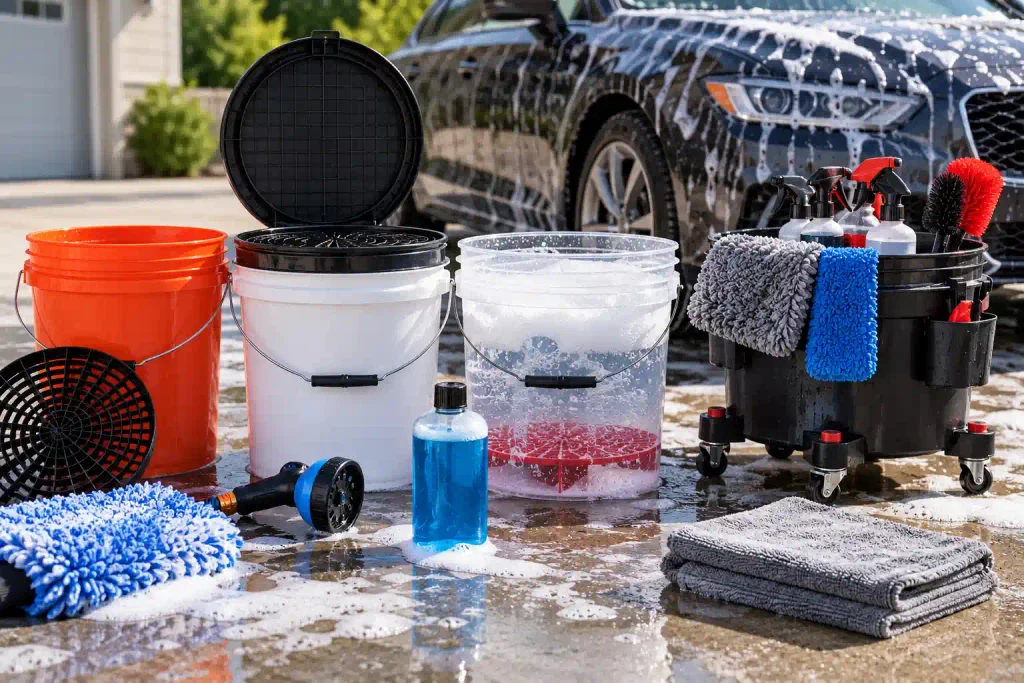
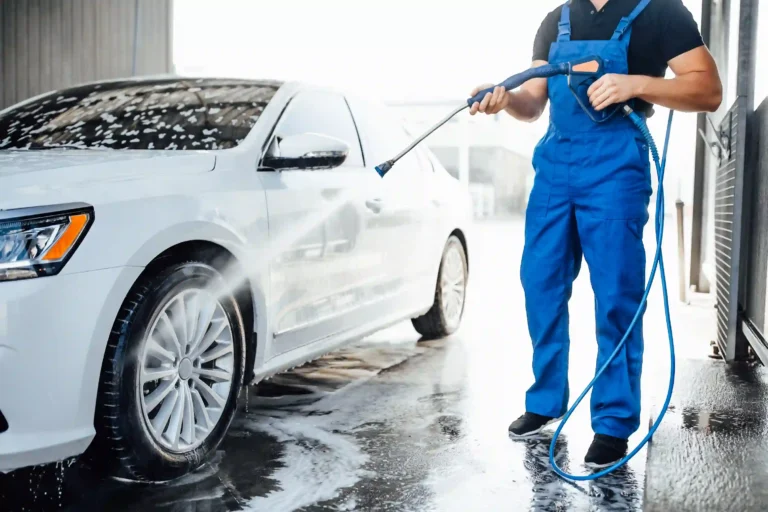
Car detailing is a thorough process of cleaning, maintaining, and improving a vehicle’s interior and exterior surfaces. Unlike a basic car wash, professional detailing can include deep interior cleaning, paint decontamination, polishing, paint correction, protective coatings, and specialized treatments for wheels, glass, headlights, and other surfaces.
Understanding the different types of car detailing helps you choose the right service for your vehicle’s condition and your maintenance goals. A car with dirty upholstery may need interior detailing, while a vehicle with swirl marks may benefit from paint correction. A well-maintained car may only need a maintenance detail and fresh paint protection.
In this guide, you will learn about the main types of car detailing, what each service includes, when to choose it, how the services differ, and how to select a suitable detailing package.
What Is Car Detailing?
Car detailing is the systematic cleaning, reconditioning, and protection of a vehicle’s interior and exterior. The International Detailing Association describes detailing as a thorough process of cleaning individual vehicle areas to achieve the desired condition.
A detailing service may involve removing dirt from carpets, cleaning leather seats, decontaminating painted surfaces, polishing paintwork, protecting exterior trim, or improving the appearance of wheels and tires.
The exact work depends on the vehicle’s condition, the customer’s requirements, and the detailing package.
For example, a new vehicle that receives regular maintenance may only need a thorough wash, interior cleaning, and a protective treatment. An older vehicle that has accumulated stains, embedded dirt, faded trim, and paint defects may require several specialized services.
Car detailing is primarily concerned with surface cleanliness, appearance, and protection. It does not replace mechanical maintenance, brake repairs, tire replacement, or other work needed to keep a vehicle operating safely.
What Are the Main Types of Car Detailing?
The main types of car detailing can be grouped according to the surfaces being treated, the level of cleaning required, and the results you want to achieve.
| Type of detailing | Main purpose | Best suited for |
|---|---|---|
| Interior detailing | Deep-clean cabin surfaces | Dirty seats, carpets, trim, and interior glass |
| Exterior detailing | Clean and maintain exterior surfaces | Road grime, dirt, water residue, and dull finishes |
| Full car detailing | Combine interior and exterior care | Vehicles needing comprehensive cleaning |
| Maintenance detailing | Maintain an already-clean vehicle | Routine upkeep between deeper details |
| Paint decontamination | Remove bonded surface contamination | Rough paint and persistent surface deposits |
| Paint correction | Reduce selected paint defects | Swirl marks, light scratches, and dull paint |
| Paint protection | Help protect suitable surfaces | Vehicles needing easier maintenance and protection |
| Wheel and tire detailing | Clean wheels, tires, and accessible wheel wells | Brake dust, road grime, and tire residue |
| Engine bay detailing | Clean accessible engine compartment surfaces | Dust, grime, and surface contamination |
| Specialty detailing | Address particular materials or problems | Headlights, glass, pet hair, and stubborn stains |
These are descriptive service categories rather than a universal industry classification. A detailing shop may combine several treatments into one package or offer each service separately.
1. Interior Car Detailing
Interior car detailing focuses on cleaning the passenger compartment, including upholstery, carpets, dashboard surfaces, door panels, storage compartments, and interior glass.
It is especially useful when regular vacuuming and occasional surface wiping are no longer enough to remove accumulated dirt and residue.

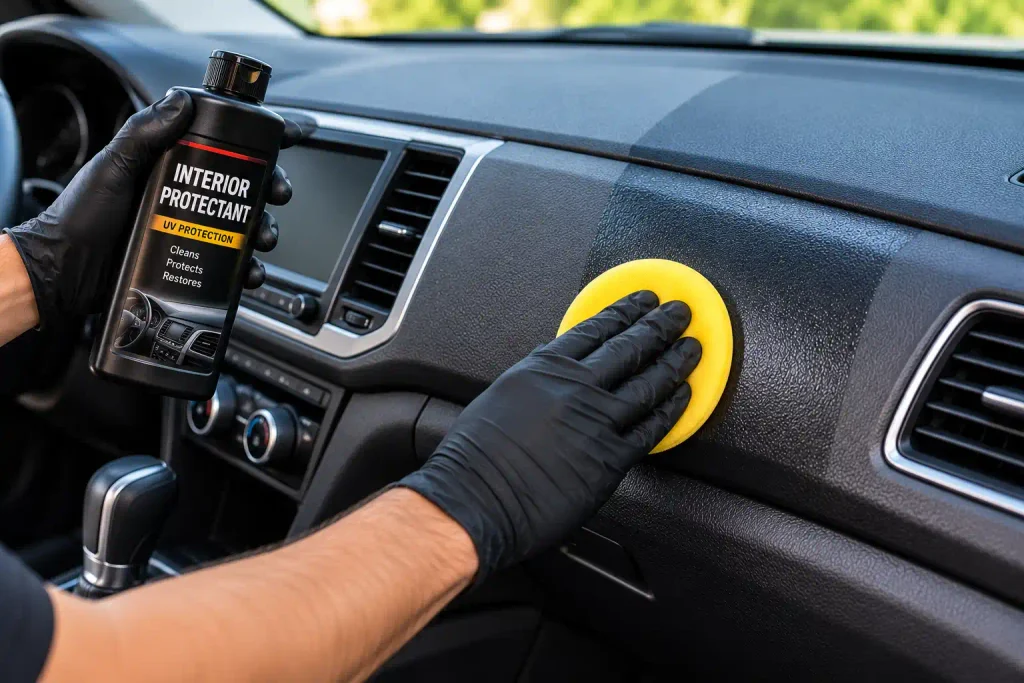
Dashboard and Interior Trim Cleaning
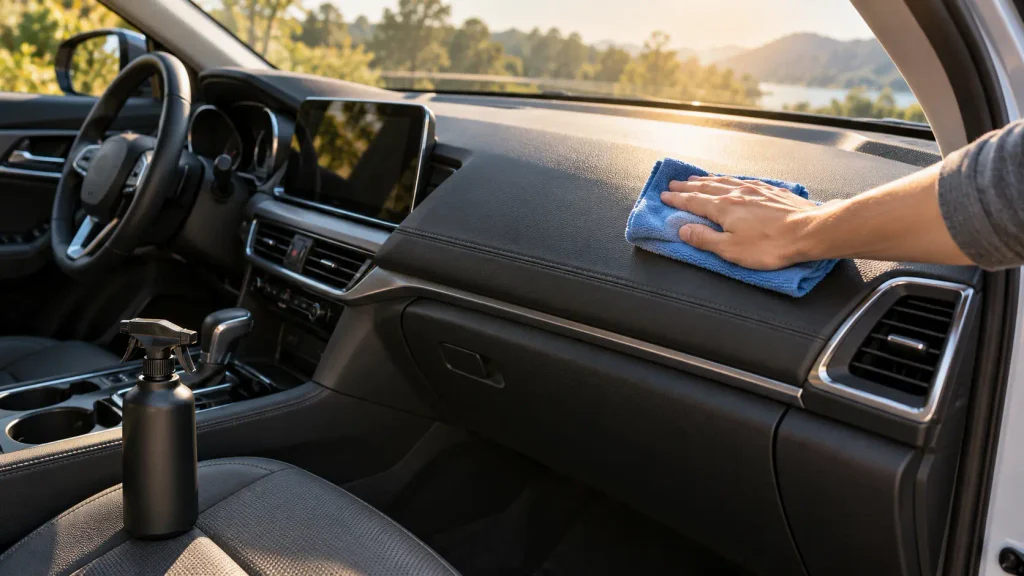
Dashboard and trim cleaning removes dust, fingerprints, oily residue, and everyday contamination from suitable interior surfaces.
A detailer may use microfiber towels, soft brushes, and compatible interior cleaners to clean the dashboard, center console, door panels, cup holders, and other accessible areas.
Different surfaces require different products. Glossy trim, screens, textured plastic, rubber, and soft-touch materials should not automatically be cleaned with the same chemical or abrasive tool.
After cleaning, a compatible protectant may be applied where appropriate. Interior dressings should not leave the steering wheel, pedals, or other control surfaces slippery.
Carpet and Floor Mat Cleaning
Carpet detailing removes loose dirt, embedded dust, and suitable stains from floor carpets and removable mats.
The process may include vacuuming, brushing, applying a compatible cleaner, and extracting loosened contamination when the material and cleaning method allow it.
Heavily soiled carpets may require deeper cleaning than a standard interior package provides.
Proper drying is important because excessive moisture trapped in carpet padding can contribute to persistent odors and other moisture-related problems.
Fabric Seat and Upholstery Cleaning
Fabric seats can accumulate body oils, food spills, dust, drink stains, and everyday grime.
Fabric upholstery detailing may include vacuuming, spot treatment, gentle agitation, and extraction cleaning. The appropriate method depends on the fabric, stain, and manufacturer’s care recommendations.
Not every stain can be removed completely. Some marks may have permanently altered the material, while aggressive scrubbing can damage fibers or spread the stain.
A professional detailer should inspect the upholstery and choose a suitable method before attempting difficult stain removal.
Leather Seat Cleaning and Care
Leather detailing removes surface contamination from compatible leather seating materials. Depending on the material and manufacturer recommendations, it may also involve a suitable protective product or conditioner.
Many automotive seats use coated leather or synthetic leather rather than untreated leather. These materials do not necessarily require the same products or treatment.
Using an unsuitable cleaner, excessive moisture, or an incompatible conditioner may affect the surface finish.
For practical guidance, see your related Car Care Guy article, How to Clean and Condition Leather to Prevent Cracking. Link this anchor text to the verified published URL when adding the internal link in WordPress.
Interior Glass and Mirror Cleaning
Interior glass can develop fingerprints, dust, oily films, and residue that reduce clarity or create distracting reflections.
Glass detailing involves cleaning the windshield, side windows, rear glass, and interior mirrors with compatible glass-cleaning products and lint-free materials.
A clean windshield is particularly important because streaks can become more noticeable when sunlight or headlights shine through the glass.
Avoid using products that leave greasy residue or damage tinted film and sensitive interior materials.
Air Vent and Hard-to-Reach Area Cleaning
Air vents, seams, cup holders, control buttons, and narrow gaps collect dust and debris that ordinary wiping may not remove.
Detailers may use soft detailing brushes, microfiber tools, and controlled air cleaning to reach accessible areas.
Care is essential around electronic controls, display screens, and delicate trim. Spraying liquid directly into vents or electrical switches can cause problems.
Read our related article, How to Clean Air Vents in a Car, for more detailed instructions on cleaning accessible ventilation surfaces.
2. Exterior Car Detailing
Exterior car detailing focuses on cleaning and maintaining the vehicle’s painted surfaces, windows, wheels, tires, exterior trim, and other accessible exterior components.
The goal is to remove contamination while minimizing the risk of scratching the paint or damaging delicate finishes.
Hand Washing and Exterior Cleaning
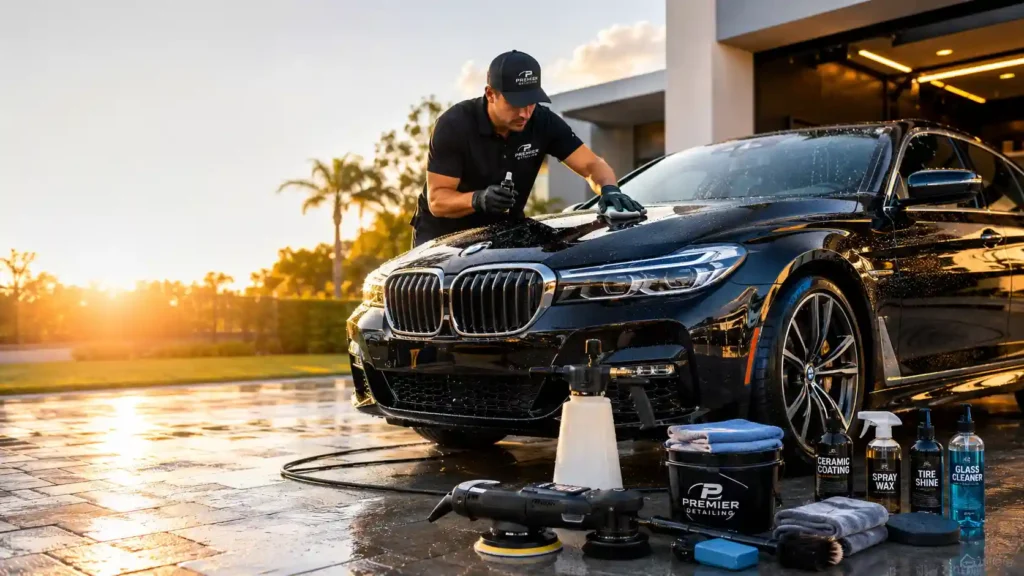
A proper exterior detail typically begins with an inspection and wash.
The vehicle may be rinsed to remove loose dirt before suitable automotive shampoo and clean wash materials are used to clean the paint.
Wheels, tires, door jambs, exterior glass, and trim may receive additional attention depending on the package.
Careful washing is important because dirt trapped in a wash mitt or abrasive cleaning material can create fine scratches and swirl marks.
Wheel and Tire Detailing
Wheels and tires collect road grime, brake dust, mud, and other contaminants.
Wheel detailing may involve cleaning the wheel faces, spokes, barrel areas that can be reached safely, and suitable surrounding surfaces. Tire cleaning removes accumulated residue from the rubber.
The product must be compatible with the wheel’s finish. Painted, polished, anodized, chrome, and coated wheels may require different cleaning methods.
A tire dressing may be applied as an optional finishing treatment. Avoid products that leave the tire excessively slippery or create unwanted sling onto the paint.
Exterior Glass Cleaning
Exterior glass detailing removes road film, dust, water residue, and other contamination from windows and mirrors.
A compatible automotive glass cleaner can improve visibility by removing surface residue that ordinary washing may leave behind.
Persistent water spots may require a glass-specific treatment, while etched glass or damaged surfaces may need specialist assessment.
Do not use abrasive products indiscriminately on glass, tinted film, or surrounding trim.
Exterior Trim Cleaning and Restoration
Exterior trim detailing addresses contamination and the appearance of plastic, rubber, and other non-painted surfaces.
Cleaning can remove accumulated dirt, while a compatible restoration product may improve the appearance of faded or weathered trim.
The result depends on the material and the cause of the discoloration. A dressing may temporarily improve appearance without reversing permanent material damage.
For painted surfaces, use an appropriate paint-care process instead of applying trim products indiscriminately.
Door Jamb and Emblem Cleaning
Door jambs, fuel-door recesses, badge edges, and other narrow exterior areas can accumulate dirt that remains after a standard wash.
Detailing may include carefully cleaning these areas with suitable brushes and towels.
These areas should be cleaned without forcing excessive water into electrical connectors, damaged seals, or other sensitive locations.
3. Full Car Detailing
Full car detailing generally combines extensive interior cleaning with exterior cleaning and selected finishing treatments.
It is suitable for a vehicle that needs a comprehensive refresh rather than attention to just one surface.
However, the phrase “full detail” does not have one universal checklist. Some providers include only interior and exterior cleaning, while others offer paint decontamination, a light polish, or a protective treatment as part of the package.

What Does a Full Detail Include?
Depending on the provider, a full detail may include:
- Exterior pre-rinse and hand wash.
- Wheel and tire cleaning.
- Exterior glass cleaning.
- Paint decontamination where required.
- Vacuuming of seats, carpets, mats, and cargo areas.
- Cleaning of dashboard, console, door panels, and accessible interior surfaces.
- Fabric or leather care appropriate to the material.
- Interior glass and mirror cleaning.
- Optional paint enhancement or protective treatment.
Not every package includes every task. Machine polishing, intensive stain removal, odor treatment, ceramic coating, engine bay cleaning, and paint protection film installation may be separate services.
Before booking, ask the provider for a written scope of work that states exactly what is included.
When Should You Choose a Full Detail?
A full detail may be useful when a vehicle has accumulated both interior and exterior dirt, before selling a car, after a long road trip, or when routine maintenance has been neglected.
It can also be a good starting point when you want a clean vehicle before deciding whether more specialized treatments are necessary.
A full detail does not automatically mean paint correction or permanent stain removal. The appropriate result depends on the vehicle’s original condition and the services selected.
4. Maintenance Car Detailing
Maintenance detailing is designed to keep an already-clean vehicle in good condition between more intensive detailing sessions.
It generally requires less extensive cleaning than a full detail because the vehicle receives regular care.
What Does Maintenance Detailing Include?
A maintenance package may include an exterior wash, wheel cleaning, drying, interior vacuuming, light surface cleaning, glass cleaning, and refreshing an existing protective treatment where appropriate.
The exact package depends on the detailer’s service menu.
Maintenance detailing should focus on removing accumulated contamination before it becomes more difficult to clean. It may not be suitable for heavily stained upholstery, severely contaminated paint, or neglected interiors.
Who Benefits From Maintenance Detailing?
Maintenance detailing is useful for people who regularly drive their vehicles and want to maintain a clean appearance without paying for a deep detail every time.
It can also help maintain the results of previous paint correction, waxing, or ceramic coating when the correct cleaning methods and products are used.
The frequency should depend on how quickly the vehicle becomes dirty, where it is parked, the weather, and how frequently it is driven.
5. Paint Decontamination Detailing
Paint decontamination removes certain contaminants that ordinary washing may not remove completely.
A vehicle can appear clean but still have bonded contamination on its painted surfaces. If the paint feels rough after a proper wash, additional inspection may be worthwhile.
Chemical Paint Decontamination
Chemical decontamination uses products formulated to address particular contaminants.
Depending on the product, these treatments may target iron particles, road tar, or other deposits that ordinary shampoo does not readily remove.
Different products have different applications and compatibility requirements. Follow the manufacturer’s instructions, including dwell time, surface restrictions, rinsing, and environmental conditions.
Chemical decontamination should not be treated as a universal solution for every type of contamination.
Clay Bar and Mechanical Decontamination
A detailing clay bar or suitable synthetic alternative can remove certain bonded contaminants from compatible surfaces when used with an appropriate lubricant.
This process may be useful when paint remains rough after washing and appropriate chemical treatment.
Mechanical decontamination can sometimes leave minor marring, particularly on soft paint or when used incorrectly. The surface should be inspected afterward, and polishing may be considered if necessary.
Clay treatment does not repair deep scratches, chips, or other damage within the paint layers.
When Is Paint Decontamination Necessary?
Paint decontamination may be appropriate before paint correction or when inspection identifies contamination that remains after washing.
It is not necessarily required at every wash or detailing appointment.
For related advice, your Car Care Guy article about removing fallout and industrial rail dust from paint would be a useful internal link in this section.
6. Paint Polishing and Paint Correction
Paint polishing and paint correction improve the appearance of suitable painted surfaces by reducing selected surface defects. These services require a clear understanding of the paint system and the limitations of the available finish.
They are not the same as routine exterior washing or applying wax.
One-Step Paint Polishing
One-step polishing typically uses a product and pad combination designed to improve gloss and address certain light defects in a single polishing stage.
Depending on the products and paint condition, the process may reduce the appearance of light swirl marks, minor surface imperfections, or haze.
Results vary with paint hardness, defect depth, product choice, and technique. One-step polishing is not suitable for every paint condition.
Multi-Step Paint Correction
Multi-step paint correction uses more than one polishing stage when the surface requires a more involved process.
A technician may use a more cutting-focused stage to reduce suitable defects, followed by a refining polish to improve clarity and finish.
The decision depends on the paint’s condition, the desired result, and the amount of material that can be safely removed.
Paint correction is not a method for repairing every scratch. Deep scratches, chipped paint, or defects extending through the clear coat may require touch-up work or repainting.
Removing Swirl Marks and Light Scratches
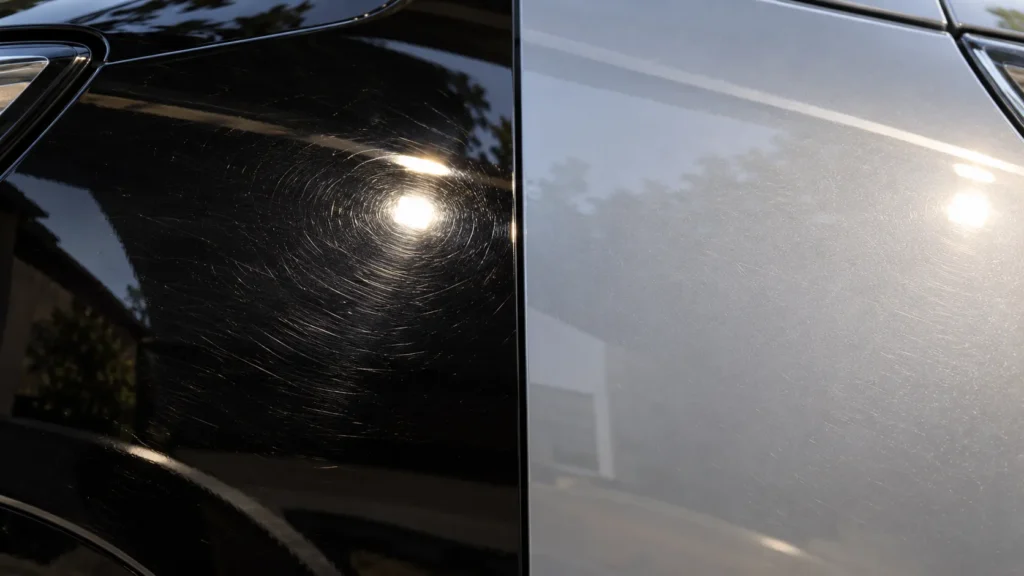
Swirl marks are fine surface defects that can become especially visible under direct lighting. They may result from improper washing, drying, wiping, or other forms of contact with the paint.
Appropriate polishing can reduce some of these defects, but the process removes a small amount of paint or clear coat depending on the polishing system and surface.
Because clear coat is finite, repeated aggressive correction should be avoided. A detailer should assess the paint before recommending extensive polishing.
How to Choose the Right Paint Correction Service
The right correction level depends on the severity and visibility of the defects, the intended result, and the paint’s condition.
A one-step service may be suitable when the main goal is improved gloss and modest defect reduction. More involved correction may be justified when a paint inspection indicates that additional polishing stages are appropriate.
Ask whether the service is intended for gloss enhancement or measurable defect reduction. Also ask what defects cannot safely be removed.
7. Paint Protection Services
Paint protection services help maintain the appearance of the vehicle’s exterior by adding a protective layer or film to suitable surfaces.
Wax, synthetic sealants, ceramic coatings, and paint protection film serve different purposes. They should not be treated as interchangeable products.
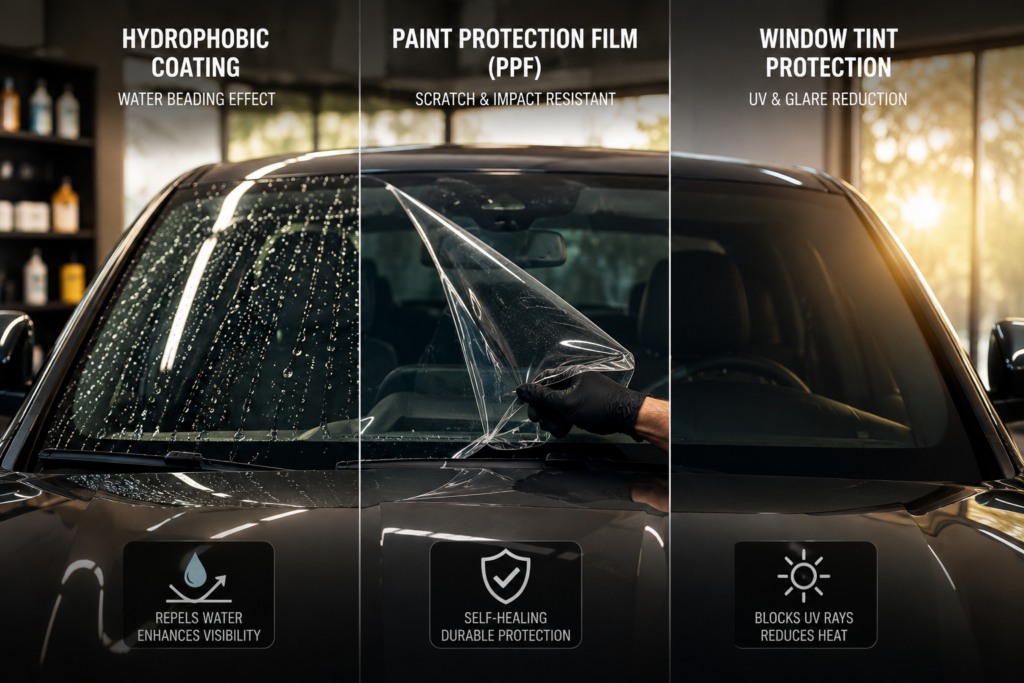
Car Waxing
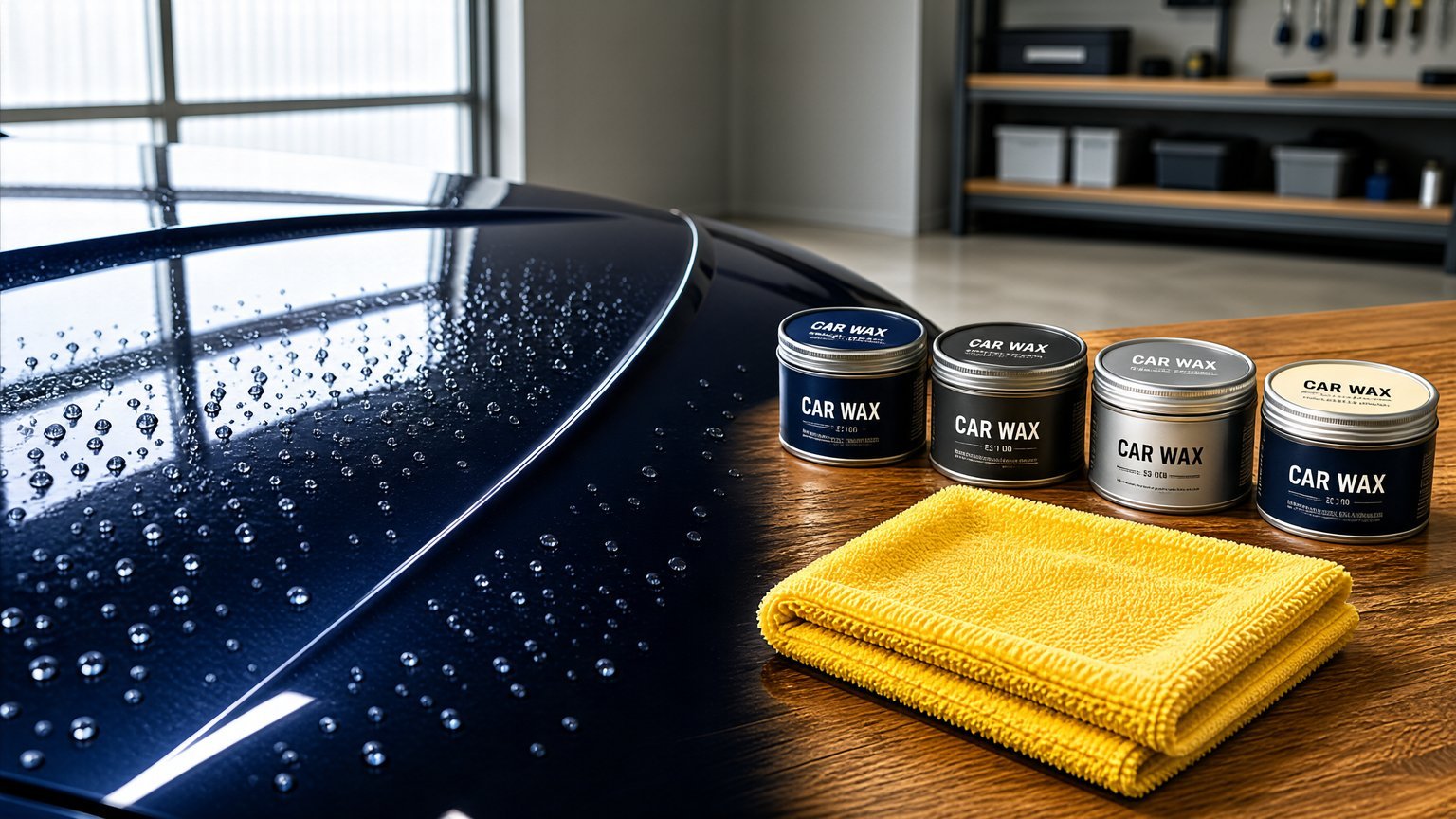
Waxing applies a protective product over the paint to improve gloss and water behavior while helping shield the surface from some everyday contamination.
Traditional wax products differ in composition, durability, and application method. Their performance also depends on preparation, maintenance, and exposure to environmental conditions.
Wax does not make paint immune to scratches, stone chips, or permanent staining.
Synthetic Paint Sealants
Synthetic sealants are paint protection products formulated to provide a protective finish and make routine cleaning easier.
Their durability varies by formulation, application, surface preparation, and maintenance.
Sealants are often chosen by drivers who want a protective treatment without committing to a more involved coating installation.
Check the product instructions for application, curing, compatible maintenance products, and reapplication recommendations.
Ceramic Coating
Ceramic coatings are protective products applied to suitable prepared surfaces. Depending on the formulation, they may improve gloss, water behavior, and resistance to certain forms of contamination.
Proper surface preparation is important. A coating generally does not remove existing scratches or automatically correct paint defects.
Some coatings are designed for professional installation, while other products are intended for consumer use. Their application requirements, durability claims, and maintenance needs differ.
Ceramic coatings also do not make a vehicle scratch-proof. The coating should be maintained according to the product manufacturer’s instructions.
Paint Protection Film
Paint protection film, commonly called PPF, is a physical film installed over selected painted areas to help protect them from stone chips, road debris, and other forms of localized impact damage.
Unlike wax or ceramic coating, PPF creates a physical barrier over the surface.
Coverage may be limited to high-impact areas, such as the front bumper or hood, or extended to more panels according to the selected installation.
Film quality, installation technique, coverage, and maintenance influence the results. Follow the film manufacturer’s guidance for washing, polishing, and applying compatible protective products.
For more information, see 3M’s automotive film support resources.
8. Wheel and Tire Detailing
Wheel and tire detailing focuses on cleaning the areas around the wheels, removing suitable contamination, and improving the appearance of tires and wheel surfaces.
Brake dust, road grime, mud, and embedded residue may require products specifically designed for wheel cleaning.
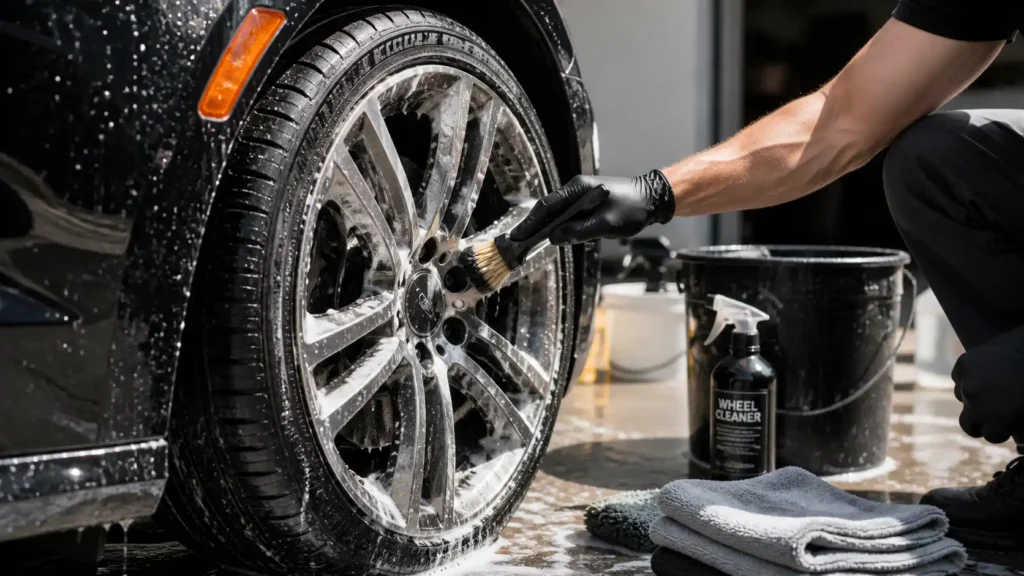
Wheel Deep Cleaning
A deep wheel-cleaning service may involve pre-rinsing, applying a compatible cleaner, agitating accessible surfaces with suitable brushes, and thoroughly rinsing the wheel.
The cleaning method should be selected according to the wheel finish. Aggressive chemicals or abrasive tools may damage delicate finishes.
Heavily contaminated wheels may need a dedicated treatment rather than ordinary car shampoo alone.
Tire Cleaning and Dressing
Tire cleaning removes accumulated grime and residue from the tire sidewalls.
A compatible dressing may then be applied if the owner wants a particular appearance or finish.
Some drivers prefer a natural-looking finish, while others prefer more gloss. The product should be applied according to its instructions and should not leave the tread or surrounding road-contact surfaces slippery.
Wheel Well Cleaning
The accessible wheel wells can accumulate road dirt, mud, and debris.
Cleaning these areas can improve the overall appearance of the vehicle and make future inspections easier.
Care is needed around brake components, electrical connections, and other parts that should not be exposed to unsuitable chemicals or excessive pressure.
9. Engine Bay Detailing
Engine bay detailing involves cleaning accessible surfaces within the engine compartment. It is usually an optional service rather than a requirement for every detailing package.
A clean engine compartment can make surface contamination more visible and improve the appearance of the area, but it does not replace mechanical servicing or engine diagnostics.
What Does Engine Bay Detailing Include?
Depending on the vehicle and service, the process may include removing loose debris, protecting sensitive components as appropriate, applying compatible cleaning products, carefully removing contamination, and drying the cleaned surfaces.
A light cleaning may be suitable for a dusty engine compartment. Heavy grease or stubborn contamination may require additional procedures.
Engine Bay Cleaning Precautions
Modern engine compartments can contain electrical connectors, sensors, exposed components, and areas that should not be soaked.
Cleaning methods must account for the vehicle’s design and the product manufacturer’s directions. Excessive water pressure and indiscriminate chemical use can cause problems.
Ask the detailer how sensitive areas will be handled, particularly on vehicles with complex electronics.
Engine bay detailing should not be confused with fixing oil leaks, repairing cooling system problems, or servicing mechanical components.
10. Specialty Car Detailing Services
Specialty detailing addresses a particular surface, material, or problem that may not be included in a standard package.
These services are useful when a specific issue requires more attention than routine interior or exterior cleaning provides.
Headlight Restoration
Headlight restoration addresses hazy or oxidized lens surfaces when the damage is suitable for restoration.
The process may involve cleaning, controlled abrasion, polishing, and applying an appropriate protective finish.
A severely damaged, cracked, or internally contaminated headlight may require repair or replacement instead.
The goal is to improve the lens condition without compromising its integrity or lighting performance.
Water Spot Removal
Water spots can form when mineral-containing water evaporates and leaves residue behind.
Some deposits may be removable with a compatible treatment, while others can leave etching or damage that cannot be corrected by ordinary cleaning.
A detailer should inspect the surface before choosing a treatment. Products intended for glass should not automatically be used on paint, and vice versa.
For related guidance, link to your Car Care Guy article about removing water spots etched into paint.
Pet Hair Removal
Pet hair can become trapped in carpet fibers, upholstery, and gaps around seats.
Pet hair removal may involve careful vacuuming, suitable brushes, and specialized tools selected for the material.
The difficulty depends on the type of fabric, the amount of hair, and how deeply it has become embedded.
Pet hair removal may be priced separately because it can require considerably more labor than routine vacuuming.
Odor Removal and Interior Deodorizing
Vehicle odors may come from spilled drinks, food residue, moisture, smoke, pets, or other sources.
Effective odor treatment starts by identifying and addressing the source. Cleaning contaminated upholstery, removing residue, drying damp materials, and replacing an affected cabin filter may be appropriate depending on the cause.
A fragrance or deodorizer may temporarily mask an odor without eliminating its source.
Persistent musty smells or signs of moisture intrusion may require further inspection before additional detailing is performed.
Stain Removal
Specialist stain removal targets particular types of contamination in fabric, carpets, and suitable interior materials.
Different stains respond to different cleaning methods. A treatment that works on a water-based stain may be unsuitable for an oil-based stain or a delicate upholstery finish.
The detailer should identify the material and test the selected method where appropriate. Permanent discoloration cannot always be reversed.
11. Mobile Car Detailing
Mobile detailing describes how the service is delivered rather than a separate cleaning treatment.
A mobile detailer travels to the customer’s location and performs the agreed service using suitable equipment and products.
What Services Can Mobile Detailers Provide?
Depending on the provider, mobile services may include exterior washing, interior detailing, upholstery cleaning, maintenance detailing, and certain paint protection treatments.
More complex services may require a controlled workshop environment, specialist equipment, or conditions that cannot be provided at every mobile appointment.
Availability also depends on access to suitable water, electricity, workspace, and other practical requirements.
Is Mobile Detailing Right for Your Car?
Mobile detailing can be convenient for people who prefer not to travel to a workshop.
Before booking, confirm the service area, equipment, cleaning method, included tasks, and how water or power requirements will be handled.
For paint correction, ceramic coating, or other demanding treatments, ask whether the provider can deliver the necessary preparation, lighting, and working conditions at your location.
How to Choose the Right Type of Car Detailing
The most suitable detailing service depends on the vehicle’s current condition and the outcome you want. A full detail may be unnecessary for a car that only needs an exterior wash, while a basic wash will not resolve embedded carpet stains or paint defects.
Use the following guide to narrow down your options.
| Your vehicle’s condition | Detailing service to consider |
|---|---|
| Exterior is dusty or covered in ordinary road dirt | Exterior detailing |
| Interior has accumulated dust and everyday grime | Interior detailing |
| Both interior and exterior need deep cleaning | Full car detailing |
| Vehicle is already clean and needs regular upkeep | Maintenance detailing |
| Paint feels rough after washing | Paint decontamination |
| Paint has visible swirl marks or light defects | Paint polishing or correction assessment |
| Paint needs a fresh protective layer | Wax or synthetic sealant |
| You want a specialized paint protection treatment | Ceramic coating assessment |
| Front-end paint needs physical protection from road debris | Paint protection film |
| Wheels and tires are heavily contaminated | Wheel and tire detailing |
| Engine compartment surfaces are dusty or dirty | Engine bay detailing |
| Headlights have a hazy exterior surface | Headlight restoration assessment |
| Seats contain stains or pet hair | Specialty interior detailing |
| You cannot visit a detailing shop | Mobile detailing, if suitable |
Before purchasing a package, ask what it includes, which products will be used, and what results are realistic for your vehicle.
Car Washing vs. Car Detailing: What Is the Difference?
Car washing and car detailing are related, but they are not the same service.
A basic car wash mainly removes loose dirt and surface contamination. Detailing is generally more extensive and may include deep interior cleaning, paint decontamination, polishing, specialty stain removal, and protective treatments.
| Feature | Basic car wash | Car detailing |
|---|---|---|
| Main purpose | Remove ordinary surface dirt | Clean, recondition, and maintain selected surfaces |
| Interior cleaning | Often limited or optional | May include deep cleaning of seats, carpets, trim, and glass |
| Paint decontamination | Not usually included | May be included or offered separately |
| Paint correction | Generally not included | Available as a separate specialist service |
| Paint protection | May include a basic finishing product | May include wax, sealant, coating, or other protection |
| Time and labor | Usually less extensive | Depends on condition and service scope |
| Customization | Often limited | Can be tailored to particular needs |
A package labelled “full detail” may still exclude paint correction, ceramic coating, or other specialty treatments. Always verify the written scope rather than relying only on the package name.
How Often Should You Get Your Car Detailed?
There is no universal detailing schedule that suits every vehicle. The appropriate frequency depends on how often you drive, where you park, the local climate, the amount of contamination, and the time you can devote to routine care.
A vehicle regularly exposed to heavy dust, rain, muddy roads, or outdoor parking may need more frequent cleaning than a vehicle kept in a sheltered location.
Consider the following approach:
- Maintain basic exterior cleanliness before heavy contamination becomes difficult to remove.
- Vacuum and clean the interior as needed to prevent dirt and spills from accumulating.
- Arrange a deeper interior or exterior detail when routine cleaning no longer produces the desired result.
- Assess paint condition before paying for decontamination or correction.
- Maintain waxes, sealants, or coatings according to the product manufacturer’s instructions.
Frequent detailing is not automatically better if the process uses unsuitable chemicals or abrasive techniques. Proper methods and surface compatibility matter more than applying every available treatment.
How Much Does Car Detailing Cost?
Car detailing costs vary by location, vehicle size, condition, service scope, products used, and labor required.
Interior detailing for a lightly soiled car may require considerably less work than stain removal from heavily contaminated upholstery. Paint correction also varies depending on the number and severity of defects and the number of polishing stages required.
Ceramic coating installation and paint protection film typically involve different preparation and application procedures from a routine wash or maintenance detail.
When comparing quotes, check whether the package includes interior cleaning, exterior decontamination, paint polishing, protection, and any specialty treatments you need.
Ask whether difficult stains, pet hair removal, excessive contamination, or other labor-intensive tasks incur additional charges.
The cheapest package is not always the best option, but a more expensive package is not automatically necessary. Choose services that address your vehicle’s actual condition and your maintenance priorities.
Frequently Asked Questions About Types of Car Detailing
What Are the Main Types of Car Detailing?
The main types include interior detailing, exterior detailing, full car detailing, maintenance detailing, paint decontamination, paint correction, paint protection, wheel and tire detailing, engine bay detailing, and specialty services.
Mobile detailing is another option, describing how a service is delivered rather than a particular cleaning method.
What Is the Difference Between Interior and Exterior Detailing?
Interior detailing cleans surfaces inside the passenger compartment, including seats, carpets, dashboard trim, and glass.
Exterior detailing focuses on painted panels, wheels, tires, windows, and other exterior surfaces. Depending on the package, it may also include decontamination, polishing, or protective treatments.
Does Full Car Detailing Include Paint Correction?
Not necessarily. Some providers include a light polishing stage in their full detailing package, while others offer paint correction separately.
Confirm whether the package provides cleaning only, gloss enhancement, or actual defect reduction.
Is Ceramic Coating a Type of Car Detailing?
Ceramic coating is a paint protection treatment commonly offered by detailing businesses. It is often performed after suitable cleaning and paint preparation.
The coating itself does not remove scratches or make paint completely scratch-proof. Results depend on preparation, the specific product, application, and maintenance.
Does Car Detailing Remove Scratches?
Some light surface defects may be reduced through appropriate polishing or paint correction. Deeper scratches, paint chips, and defects that extend beyond the correctable surface layer may require other repairs.
A detailer should assess the paint before promising a particular level of correction.
What Is the Difference Between Wax and Ceramic Coating?
Wax and ceramic coating are different types of surface protection. Wax is generally applied to provide gloss and a protective finish, while a suitable ceramic coating can provide a more durable protective layer depending on its formulation.
Their durability and performance vary by product and maintenance. Neither makes a vehicle completely immune to scratches or impact damage.
Is Interior Detailing Worth It?
Interior detailing can be useful when dirt, stains, odors, and accumulated debris are difficult to remove with routine cleaning.
The value depends on the condition of the interior, the services performed, and the result you want to achieve.
Can Car Detailing Improve Resale Appearance?
Detailing can improve the cleanliness and presentation of a vehicle, which may help it look better to prospective buyers.
However, detailing cannot repair mechanical faults or guarantee a higher selling price. The vehicle’s overall condition, service history, market demand, and other factors also matter.
Can I Detail My Car at Home?
Yes. Many routine detailing tasks, including washing, vacuuming, cleaning suitable interior surfaces, and applying compatible consumer paint protection products, can be performed at home.
More demanding procedures, such as multi-stage paint correction, difficult stain removal, and professional coating installation, may require specialist knowledge, tools, and controlled working conditions.
Final Thoughts
Understanding the types of car detailing helps you choose appropriate services for your vehicle’s interior, exterior, paint, and protective finishes.
Interior detailing addresses cabin cleanliness, exterior detailing removes surface contamination, and full detailing combines both areas. Paint decontamination and correction address specific paint conditions, while waxes, sealants, ceramic coatings, and paint protection film serve different protective purposes.
Specialty treatments can also help with wheels, tires, headlights, stains, odors, and engine compartment surfaces.
The most effective approach is to assess your vehicle’s actual condition before purchasing a detailing package. Choose compatible products and methods, understand what each service includes, and maintain the results with appropriate regular care.
Whether your car needs a simple maintenance detail or more involved paint correction, selecting the right service helps you maintain its appearance without paying for treatments your vehicle may not need.