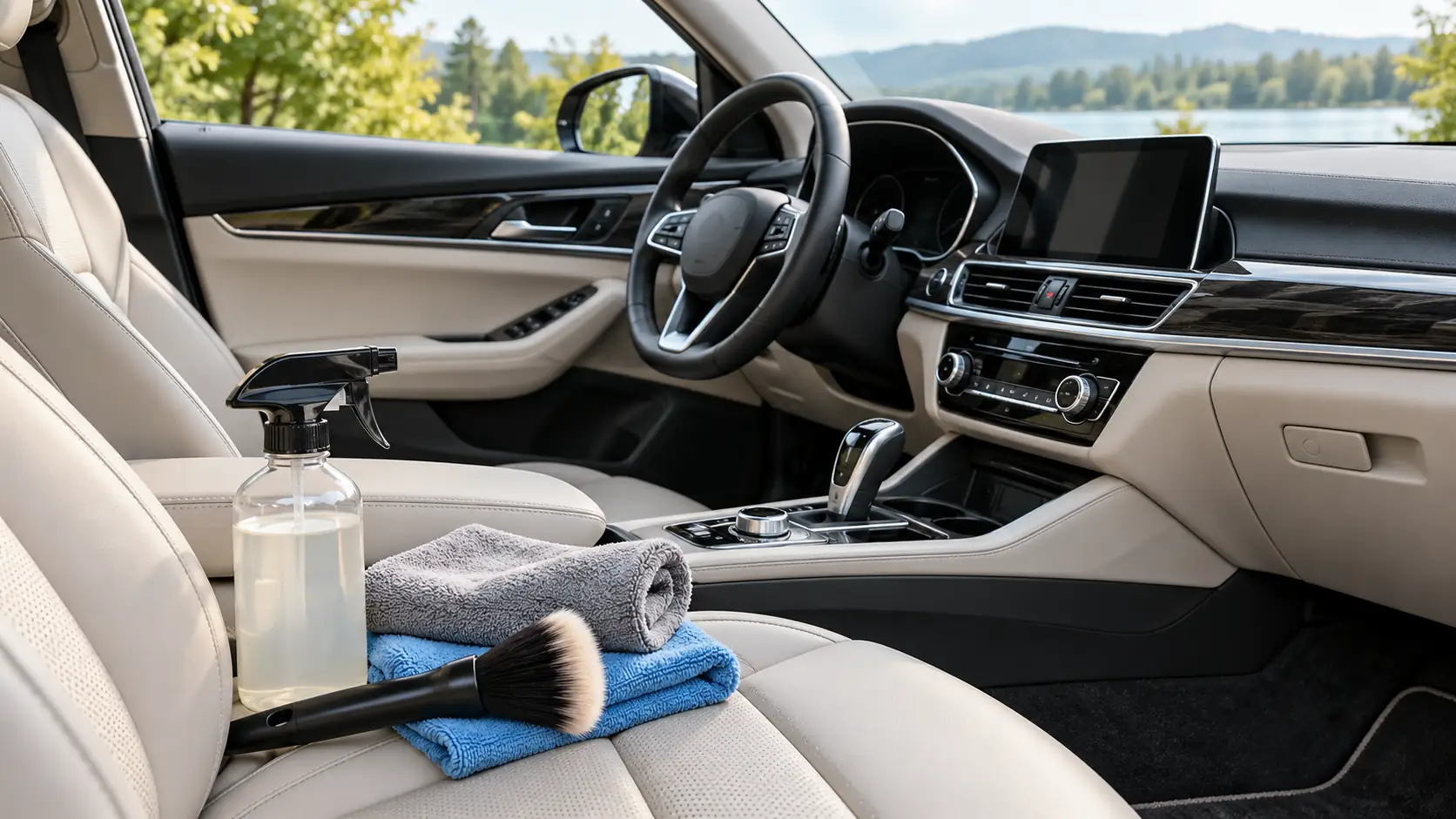
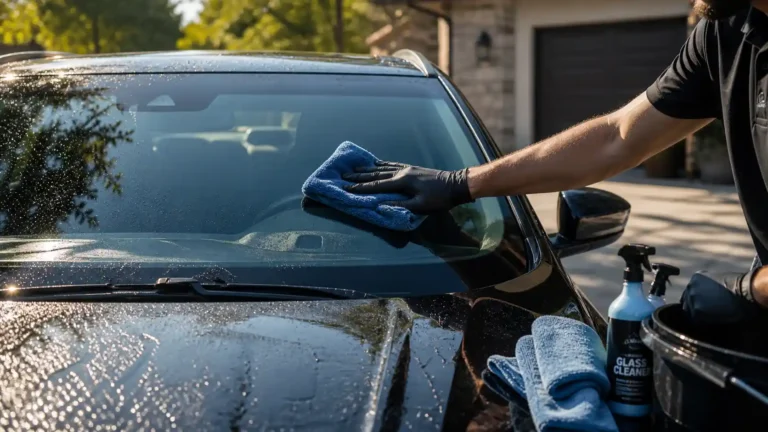
Vehicle glass clarity is directly linked to road safety and driver performance. Research from the National Highway Traffic Safety Administration shows that reduced visibility, including glare and surface contamination, can impair hazard detection and increase reaction time.
Studies on night driving indicate that glare from headlights becomes more severe when windshields contain dirt, film, or micro-residue. In addition, environmental exposure such as dust, mineral deposits, and traffic pollutants contributes to surface buildup that standard washing may not fully remove. Maintaining clear automotive glass is therefore not only a maintenance task but a factor that supports consistent visibility across varying driving conditions.
Why Clear Vehicle Glass Matters
Clear vehicle glass matters because visibility is part of safe driving. NHTSA has long treated visibility and glare as safety issues, and its research notes that glare can measurably reduce visibility. Dirty glass makes that problem worse because grime, haze, and streaks can scatter light and create more visual noise for the driver.
Safety and Visibility Benefits
Clean glass helps the driver see lane lines, traffic lights, pedestrians, and hazards more clearly. That matters most at night, in rain, and in low light, when glare becomes harder to manage. NHTSA explains that visibility is a key part of safety because it affects the distance at which hazards can be seen and how quickly they can be recognized. In simple terms, the clearer the glass, the less your eyes have to work.Clear visibility also depends on the wipers and washer fluid working well.
An NHTSA owner manual warns that using the wrong washer fluid can impair visibility in cold weather and that contaminants on the windshield or wiper blades reduce wiping effectiveness. AAA also says worn wipers can create smearing and become a safety hazard, with many drivers needing replacement every 6 to 12 months depending on climate and use.
Common Causes of Dirty or Hazy Glass
Dirty or hazy glass usually comes from everyday buildup, not one big accident. Road film, dust, pollen, bird droppings, tree sap, bug splatter, smoke residue, and oily interior film can all make glass look dull or cloudy. NHTSA’s manual specifically lists contaminants such as wax spray, bird droppings, tree sap, and other organic substances as things that reduce wiper effectiveness. That is why a windshield can still look dirty even after a quick wipe.Interior haze is often caused by fingerprints, dashboard off-gassing, and residue from cleaners that were not meant for automotive glass.
Exterior haze is usually more stubborn because it mixes dirt with traffic film and water spots. Over time, those layers create streaks and glare that basic washing may not fully remove. This is why a good glass care routine needs more than a fast spray-and-wipe.
Essential Tools and Products for Car Glass Care
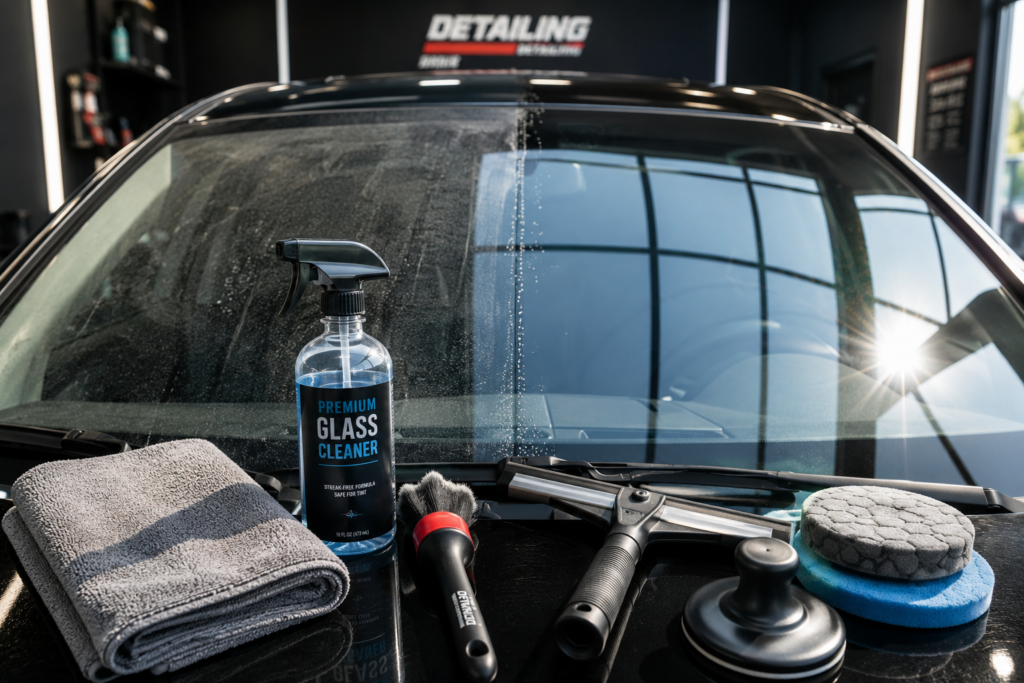
The right tools make glass cleaning easier and safer. A strong cleaner is useful, but the towel, applicator, and finishing method matter just as much. Automotive sources consistently point toward lint-free microfiber cloths, non-abrasive cleaners, and products made for glass or automotive surfaces, not all-purpose household shortcuts.
Using the wrong material can leave lint, streaks, or even fine scratches. That is why professional detailing brands emphasize microfiber towels for glass and other delicate surfaces. 3M describes microfiber cloths as scratch-free and lint-free, and Meguiar’s offers glass towels and microfiber towels specifically for glass, chrome, and interior detailing.
- Microfiber Towels vs Paper Towels
- Choosing the Right Glass Cleaner
- Optional Tools for Deep Cleaning
1. Microfiber Towels vs Paper Towels
Microfiber towels are the better choice for car glass because they trap residue instead of just pushing it around. A good microfiber glass towel is designed to absorb cleaner, reduce lint, and leave a smoother finish. Brands like Chemical Guys and 3M market microfiber cloths as lint-free and safe for glass surfaces.
Paper towels can work in a pinch, but they are less consistent for detailing. They can break down, leave fibers, and often require multiple passes, which increases the chance of streaks.
2. Choosing the Right Glass Cleaner
A cleaner made specifically for automotive glass is recommended because it is designed to be safe for rubber seals and tinted surfaces. The National Highway Traffic Safety Administration advises using non-abrasive cleaners, as improper products can lead to smearing, glare, or surface damage.
A quality glass cleaner should remove grease, haze, and contaminants without leaving residue. Products from brands like Meguiar’s are formulated to clean both interior and exterior glass while maintaining a streak-free finish.
3. Optional Tools for Deep Cleaning
Deep cleaning tools are useful when standard cleaning does not restore clarity. Clay bars, for example, can remove bonded contaminants such as water spots, tree sap, and road tar. 3M and Meguiar’s both highlight clay as an effective solution for stubborn surface contamination.This step is not required for regular maintenance. It is typically used when the glass surface feels rough or appears cloudy even after proper cleaning, indicating deeper contamination.
Step-by-Step Guide to Cleaning Car Glass
A clean windshield depends more on technique than on force. The goal is to lift dirt, remove film, and finish without leaving streaks behind. Automotive manuals and detailing brands both support a careful process that uses the right cleaner, the right cloth, and the right order.The simplest rule is this: clean the glass in stages. Start with loose dirt, move to a proper glass cleaner, then finish with a dry microfiber towel. If there is stubborn contamination, handle that separately before you try to protect the glass. That is how you avoid dragging grime across the surface and creating more haze.
Step 1. Cleaning Exterior Glass Properly
Exterior glass should be cleaned first because it collects the most road film and airborne dirt. Spray the cleaner onto the microfiber towel or use the product as directed, then work in small sections so the cleaner does not dry too fast. An NHTSA manual recommends automotive-approved non-abrasive cleaner and warns against products that can create smears or glare. That makes section-by-section cleaning the safest approach.
If the windshield has heavy buildup, use a second pass with a fresh towel instead of overloading one cloth. This gives better control and lowers the chance of streaking. The finish should look clear from several angles, not just straight on, because glare often shows up when sunlight or headlights hit the glass at an angle.
Step 2.Cleaning Interior Glass Without Streaks
Interior glass usually needs a lighter touch. The inside surface often has a thin film that comes from dust, plastic vapor, and fingerprints, so too much cleaner can leave smears instead of clarity. Use a clean microfiber towel and a safe automotive glass cleaner, then buff the surface dry with a second towel to remove the last trace of moisture. That approach matches how automotive care brands describe quick, streak-free interior detailing.
It also helps to clean the windshield from both angles. A lot of drivers think the outside glass is the main problem, but interior haze is often what causes the worst glare at night. Once both sides are clean, the glass usually looks sharper and brighter right away.
Step 3. Best Technique for a Crystal-Clear Finish
The best finish comes from controlled pressure, clean towels, and a final inspection in good light. If you can still see haze, repeat the wipe with a fresh microfiber cloth instead of adding more product. Many detailing products are built around this method because a cleaner, drier finish usually gives better clarity than a wet one.
How to Remove Tough Stains and Residue
Some contaminants bond tightly to automotive glass and cannot be removed with standard cleaning alone. These include mineral deposits, oily films, and organic residues. Proper removal improves optical clarity and reduces light scattering, which directly affects visibility in bright sunlight and nighttime driving conditions.
- Removing Water Spots from Glass
- Eliminating Grease, Film, and Smoke Residue
- Dealing with Tree Sap, Bugs, and Road Grime
Removing Water Spots from Glass
Water spots form when mineral-rich water evaporates and leaves behind deposits such as calcium and magnesium. These minerals create visible marks that scatter light and reduce glass transparency, especially under direct sunlight.Over time, these deposits can bond more strongly with the glass surface, making them harder to remove. Standard glass cleaners may not fully dissolve mineral buildup, which is why specialized water spot removers or mild acidic solutions are often more effective.
For deeper contamination, detailing methods such as clay treatment can help lift bonded particles without damaging the surface. Early removal is important because prolonged exposure can lead to etching, where minerals permanently affect the glass surface and reduce clarity.
Eliminating Grease, Film, and Smoke Residue
Grease and film buildup typically develop from traffic pollution, engine emissions, and interior materials releasing compounds over time. Studies on vehicle interiors indicate that plastics and vinyl can emit volatile organic compounds, which settle on glass and form a thin haze layer.
This residue often appears as a cloudy film, particularly noticeable under sunlight or headlights at night. A high-quality automotive glass cleaner is designed to break down these oily layers without leaving streaks.Using a controlled cleaning method with a microfiber towel helps lift the film effectively. Repeated light cleaning is usually more effective than applying excessive product at once, as it reduces smearing and ensures a clearer finish.
Dealing with Tree Sap, Bugs, and Road Grime
Organic contaminants such as tree sap and bug residue contain natural sugars and proteins that adhere strongly to glass surfaces. Once hardened, they become difficult to remove with basic cleaning methods.Dedicated automotive products like bug removers or tar cleaners are formulated to break down these substances safely. Clay bars are also commonly used in detailing to remove stubborn contaminants without scratching the glass.
Road grime presents another challenge, as it often combines oil, dust, and fine particles into a sticky layer. Proper removal not only restores clarity but also prepares the surface for protective coatings, ensuring better bonding and long-term performance.
3 Types of Protecting Your Car Glass
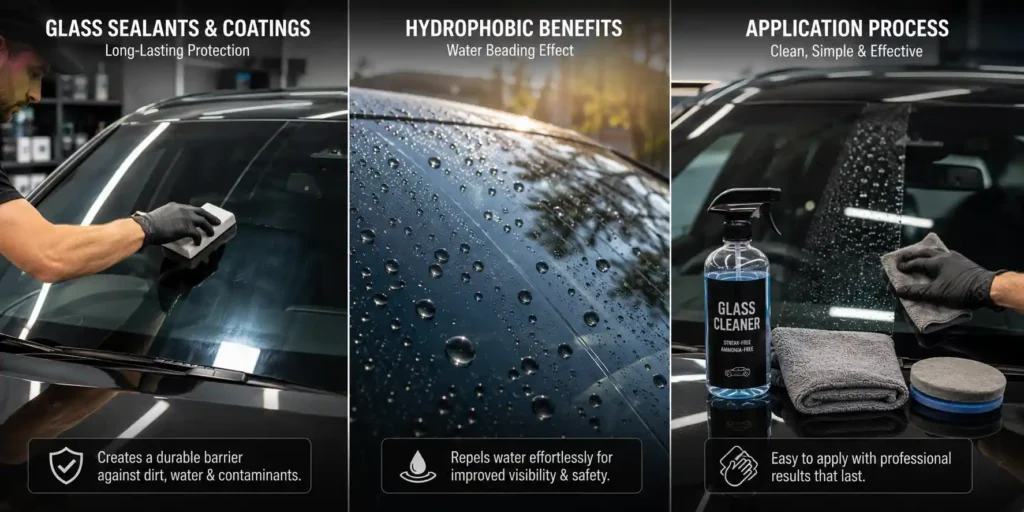
Glass protection creates a barrier that repels water, dirt, and contaminants. This improves visibility during rain and reduces how often deep cleaning is needed. Hydrophobic coatings are widely used in automotive detailing because they make water bead and slide off the surface.
1. What Are Glass Sealants and Coatings
Glass sealants and coatings are protective layers applied to the surface of automotive glass. These products bond to the glass and create a smooth layer that reduces friction and prevents contaminants from sticking easily.
Hydrophobic coatings are designed to repel water. Research on surface coatings shows that hydrophobic materials reduce water adhesion, allowing droplets to roll off quickly instead of spreading across the surface. This behavior improves visibility during rain by clearing water from the driver’s line of sight.Some coatings last for weeks, while others can last several months depending on the product and driving conditions.
2. Benefits of Hydrophobic Protection
Hydrophobic protection improves driving visibility, especially in wet conditions. When water beads up and slides off the windshield, the driver can see more clearly without relying heavily on wipers.
This also reduces glare during night driving. Water droplets on untreated glass can scatter light from headlights, but a treated surface helps reduce that effect. Research on visibility confirms that scattered light reduces contrast and makes objects harder to see, which highlights the importance of clear glass surfaces.
Another benefit is easier cleaning. Dirt and grime do not stick as strongly to coated glass, so regular maintenance becomes faster and more effective.
3. How to Apply Glass Protection Products
Applying glass protection requires a clean surface. Any dirt or residue left on the glass can reduce how well the coating bonds. That is why proper cleaning is always done before applying a sealant or coating.
The product is usually applied evenly across the glass and then buffed with a clean microfiber towel. Some coatings require curing time, while others work immediately after application.
For best results, follow the instructions provided with the product. Proper application ensures even coverage and longer-lasting protection.
Long-Term Maintenance Tips for Clear Glass
Regular glass maintenance keeps visibility sharp and reduces the buildup of dirt, haze, and water spots over time. Simple habits like routine cleaning, caring for wiper blades, and preventing dust and fog help maintain clear, streak-free vehicle glass in all driving conditions.
How Often You Should Clean Car Glass
Car glass should be cleaned regularly, depending on driving conditions. Vehicles exposed to dust, rain, and pollution may need cleaning more frequently than those used in cleaner environments.
Automotive experts often suggest cleaning exterior glass every one to two weeks for best results. Interior glass may need less frequent cleaning but should still be checked regularly for haze and fingerprints.Consistency matters more than intensity. Light, regular cleaning prevents the need for aggressive deep cleaning later.
Maintaining Wiper Blades for Better Results
Wiper blades play a key role in keeping the windshield clear. If they are dirty or worn, they can spread dirt instead of removing it. AAA notes that worn wipers reduce visibility and should typically be replaced every 6 to 12 months.
Cleaning the wiper blades with a damp cloth helps remove dirt and residue. This simple step can improve wiping performance and reduce streaking on the glass.Proper washer fluid also matters. Using the correct fluid helps clean the windshield effectively and prevents issues like freezing or streaking in different weather conditions.
Preventing Dust, Fog, and Streaks
Preventing buildup is easier than removing it. Parking in covered areas reduces exposure to dust and tree sap. Using sunshades can also limit interior heat and reduce film buildup on the inside glass.Fogging is often caused by temperature differences and humidity.
Keeping the interior clean and using proper ventilation helps reduce condensation. Some drivers also use anti-fog treatments to improve visibility in humid conditions.Streak prevention depends on proper technique. Using clean microfiber towels and avoiding excess cleaner are simple habits that make a noticeable difference.
Common Car Glass Cleaning Mistakes to Avoid
Many glass cleaning problems come from small mistakes that reduce clarity instead of improving it. These mistakes often lead to streaks, glare, or long-term surface issues. Presenting them in a clear table makes it easier to understand what to avoid and what to use instead.
| Mistake Area | Wrong Materials or Methods | What to Use or Do Instead |
|---|---|---|
| Cleaning Materials | Paper towels, rough cloths, old rags | Clean microfiber towels that trap dirt and reduce scratches |
| Towel Condition | Dirty or reused cloth full of residue | Always use a fresh, clean microfiber towel for each wipe |
| Cleaning Environment | Cleaning under direct sunlight or heat | Clean in shade or cooler conditions to prevent fast drying |
| Cleaning Technique | Spraying too much product at once | Apply a small amount and clean in sections |
| Product Usage | Overusing glass cleaner | Use light application and wipe thoroughly |
| Finishing Step | Skipping dry wipe after cleaning | Always finish with a dry microfiber towel for streak-free results |
Seasonal Car Glass Care Tips
Car glass is affected by changing weather conditions throughout the year. Factors like rain, humidity, heat, and dust can impact visibility and surface clarity. Adjusting your glass care routine based on the season helps maintain consistent visibility, reduces buildup, and improves overall driving safety.

Rainy Season Visibility Tips
Rain creates constant water contact with the windshield, which can reduce visibility if the glass is not properly maintained. Water droplets can scatter light and create glare, especially at night.
Hydrophobic coatings are particularly useful in rainy conditions because they help water bead and slide off the glass. This improves visibility and reduces reliance on wipers.Regular cleaning during the rainy season is important because road spray and mud can quickly build up on the glass surface.
Winter Fog and Condensation Control
Fogging happens when there is a temperature difference between the inside and outside of the vehicle. Moisture in the air condenses on the glass, creating a foggy layer that blocks visibility.
Using proper ventilation, such as defogging systems and air circulation, helps reduce condensation. Keeping the interior glass clean also plays a role because dirt and film can attract moisture and make fogging worse.Anti-fog treatments can provide additional support by reducing moisture buildup on the glass surface.
Summer Heat and Dust Protection
Summer conditions often bring dust, heat, and strong sunlight. Dust particles settle on glass and create a thin layer that affects clarity. Heat can also increase interior film buildup due to material emissions from dashboards and plastics.
Frequent light cleaning helps manage dust before it becomes a thick layer. Parking in shaded areas reduces heat exposure and helps maintain both interior and exterior glass quality.Using protective coatings during summer can also make cleaning easier by preventing dust from sticking strongly to the surface.
Conclusion
Taking care of your car’s glass is not just about keeping it clean. It directly affects how clearly you see the road and how safely you drive in different conditions. When the glass is properly cleaned, protected, and maintained, it reduces glare, improves visibility, and makes driving more comfortable.A simple routine using the right tools, proper cleaning methods, and occasional protection can make a big difference. It also reduces the need for heavy cleaning and helps keep the glass in good condition for a longer time.
In the end, consistent care is what matters most. Clean glass regularly, avoid common mistakes, and use protective solutions when needed. These small steps ensure that your vehicle glass stays clear, safe, and reliable every time you drive.
Frequently Asked Questions (FAQs)
This section answers common questions about car glass care with clear, concise responses optimized for featured snippets and quick search visibility.
How do I get streak-free car glass?
Streak-free car glass comes from using the right method and tools. Use a clean microfiber towel, apply a small amount of automotive glass cleaner, and finish with a dry cloth. Clean in the shade and work in sections to prevent quick drying and streak formation.
Can I use household glass cleaner on my car?
Household glass cleaners can be used, but they are not recommended for cars. Many contain ammonia, which can damage tinted windows and interior surfaces. Automotive glass cleaners are safer and designed to prevent streaks and residue buildup.
How long does glass protection last?
Glass protection can last from a few weeks to several months, depending on the product. Basic sealants wear off faster, while advanced coatings last longer. Weather, driving conditions, and regular cleaning also affect how long the protection remains effective.
What is the best way to prevent foggy windows?
The best way to prevent foggy windows is to control moisture inside the car. Use proper ventilation, keep interior glass clean, and apply anti-fog products if needed. These steps reduce condensation and help maintain clear visibility in humid conditions.