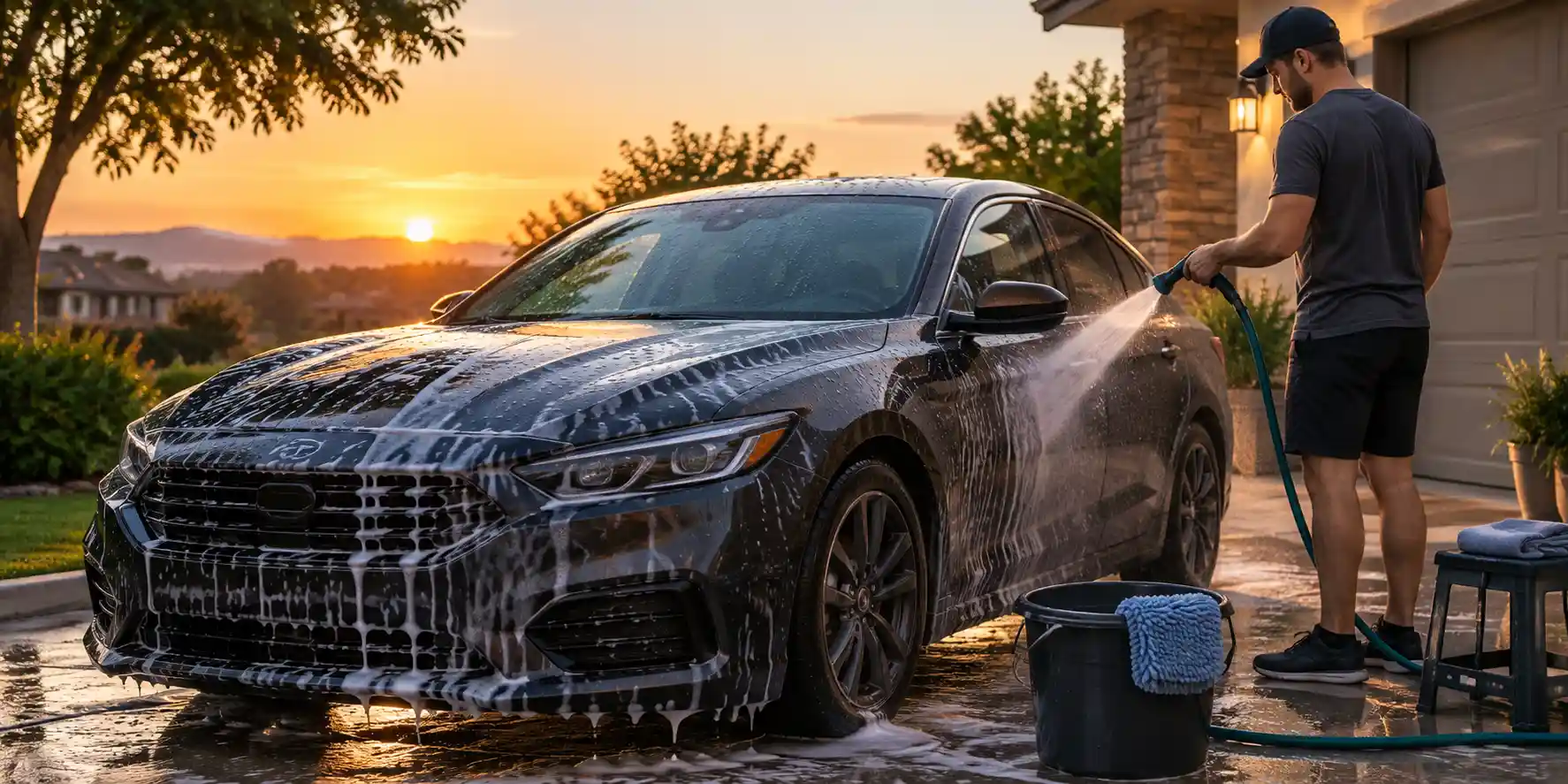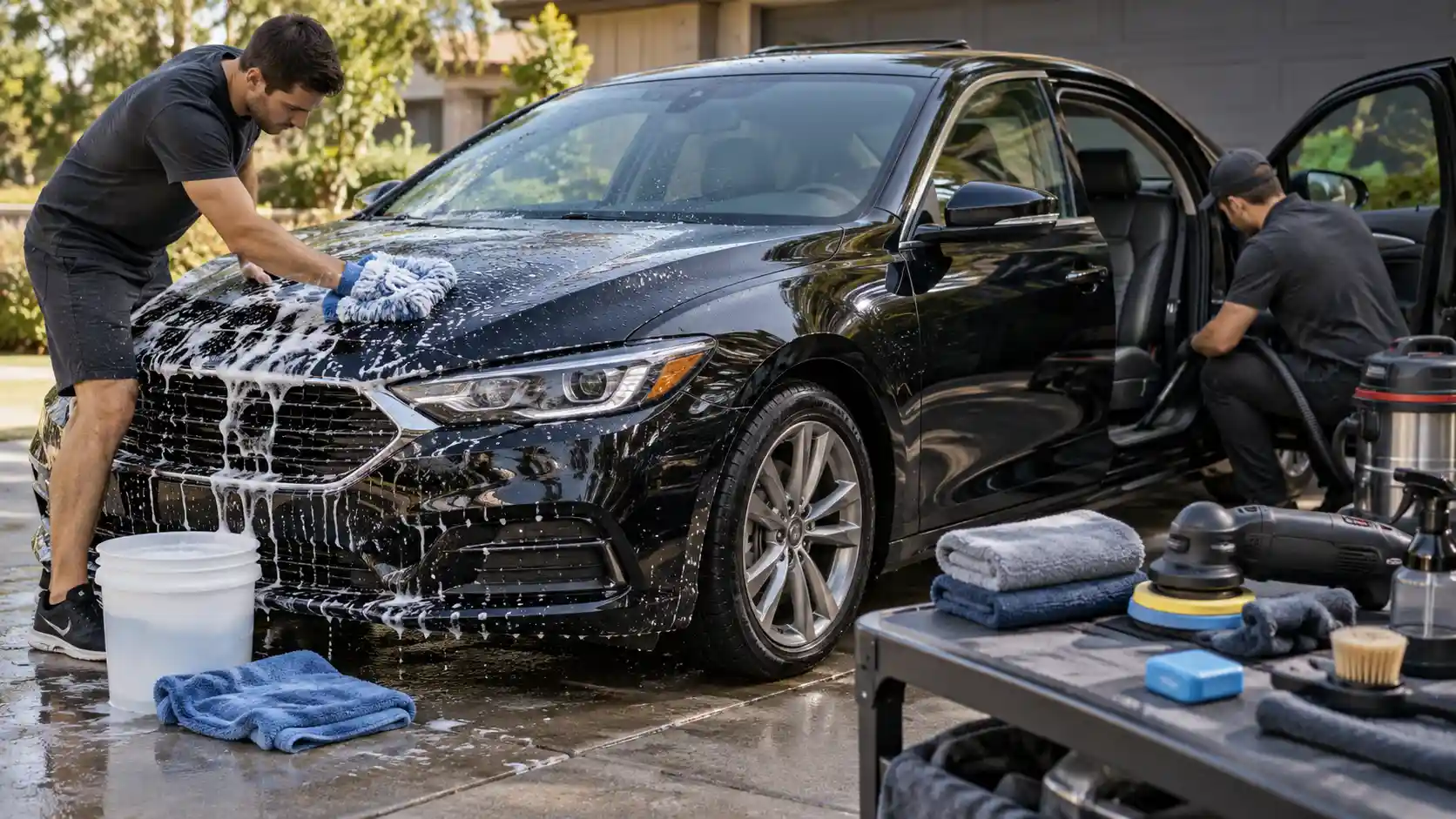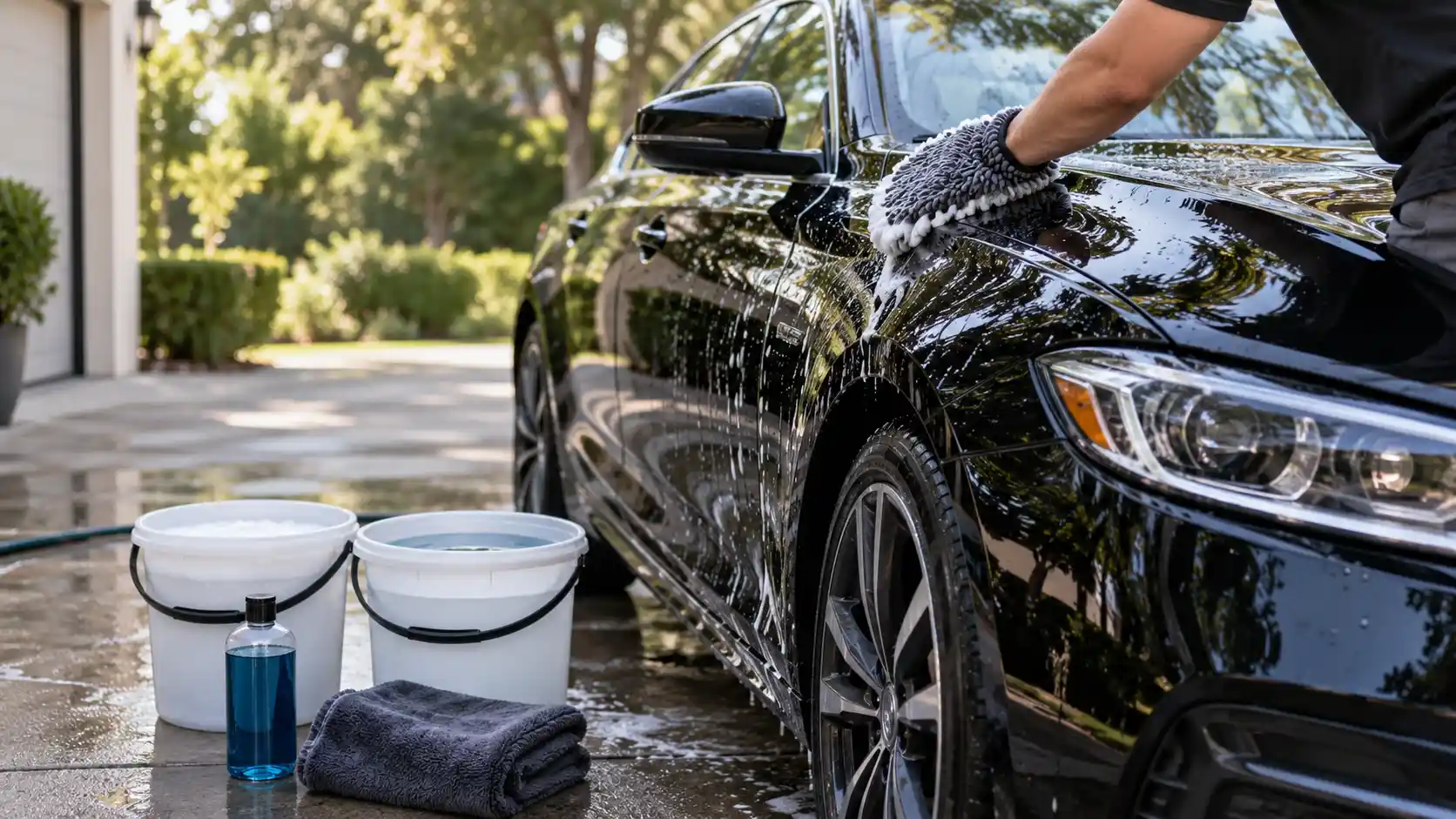
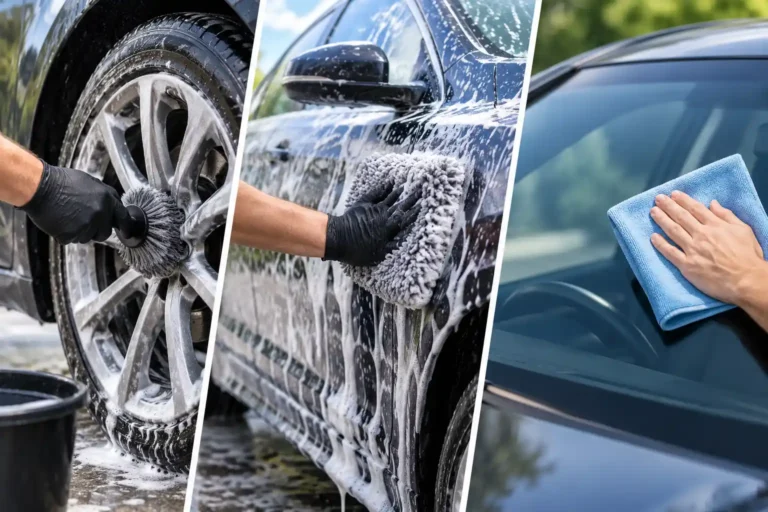
The correct order to wash a car is wheels first, body second, and glass last, following a cleanest-to-dirtiest logic that prevents contamination from one area transferring onto another. Reversing this order, especially washing wheels after the body, risks splashing brake dust and grit onto paint you’ve already cleaned.
This guide breaks down exactly why this sequence works, what happens at each stage, and how the order changes slightly depending on your specific setup and tools.
Why Does Wheel-Body-Glass Order Matter So Much?
Wheels carry the heaviest concentration of abrasive contamination on the entire vehicle, primarily brake dust containing fine metal particles that act almost like sandpaper against paint. Washing wheels last, after the body is already clean, risks splashing this abrasive, dirty water back onto freshly cleaned paint.
Washing wheels first and completely finishing that stage before moving to the body eliminates this cross-contamination risk entirely. Glass comes last because it benefits from a completely clean, dry surrounding area, and because glass cleaner residue on already-cleaned paint or trim is easier to avoid when glass is the final step rather than an earlier one.
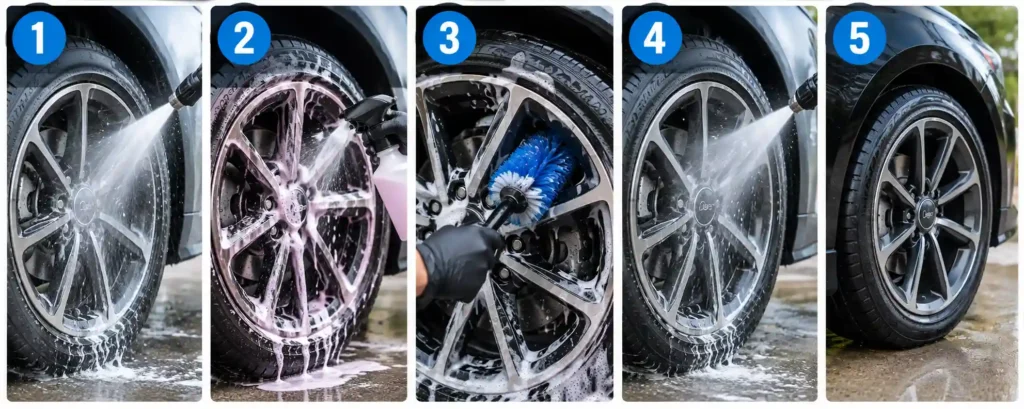
Step 1: Washing the Wheels
Wheels need entirely dedicated tools, never shared with anything used on the body or glass, since brake dust residue embedded in a mitt or brush will scratch paint the moment it’s reused elsewhere.
- Rinse each wheel first to loosen loose dirt before applying any cleaner.
- Apply a wheel-safe cleaner matched to your wheel’s specific finish, whether that’s clear-coated alloy, painted, or chrome.
- Agitate with a dedicated wheel brush, working into barrels, spokes, and lug nut areas using gentle, overlapping strokes.
- Rinse thoroughly before moving to the next wheel, checking that no cleaner residue remains in tight crevices.
- Complete all four wheels before starting any work on the body.
Step 2: Washing the Body
Once all four wheels are finished and rinsed, switch entirely to paint-safe tools that have never touched a wheel.
- Rinse the entire body first to loosen surface dirt before any mitt contact.
- Wash from top to bottom, starting with the roof and upper panels and working down toward the lower body and rocker panels last, since dirt naturally concentrates lower on the vehicle.
- Use the two-bucket method throughout, rinsing the wash mitt in a dedicated rinse bucket before returning it to the soap bucket.
- Rinse each section thoroughly before it has a chance to dry, especially in warm weather.
- Dry with a clean microfiber towel, blotting rather than dragging across the surface.
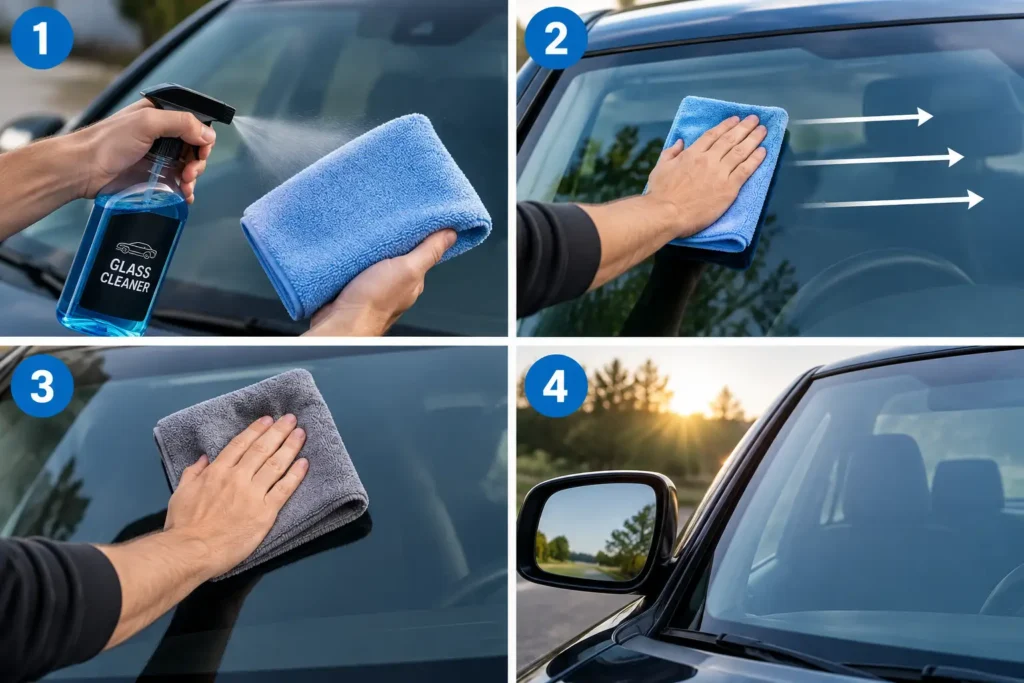
Step 3: Cleaning the Glass
Glass is handled last, once the rest of the vehicle is clean and dry, to avoid glass cleaner overspray landing on already-finished paint or trim.
- Spray a dedicated automotive glass cleaner onto a clean microfiber towel rather than directly onto the glass, reducing overspray onto surrounding trim.
- Wipe in a consistent direction, such as horizontal strokes on the outside and vertical strokes on the inside, making it easier to identify which side any streaks are on.
- Use a second, dry microfiber towel to buff away any remaining residue or streaking.
- Check windows and mirrors under different lighting angles to catch streaks that aren’t visible from a single viewing position.
Does This Order Change if You’re Using a Foam Cannon or Pre-Wash Step?
Adding a foam pre-wash step doesn’t change the fundamental wheel-body-glass sequence, but it does add a preliminary stage before wheel washing begins. Applying foam to the entire vehicle, including wheels, and letting it dwell for several minutes loosens surface dirt across all areas simultaneously before you begin the actual wheel-first washing sequence.
Some detailers choose to foam and rinse the wheels separately from the body even during this pre-wash stage, maintaining the same tool separation principle throughout the entire process rather than only during the main wash. This extra caution isn’t strictly necessary if you’re using a touchless foam application, but it becomes important again once you switch to brush or mitt contact.
What Happens if You Wash Out of Order?
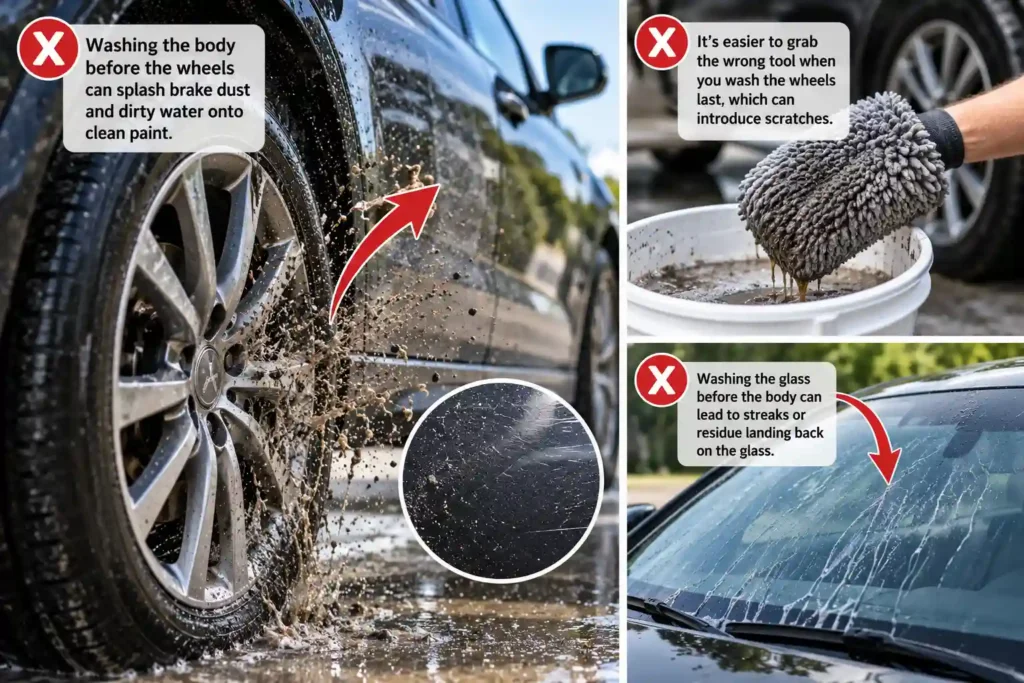
Washing the body before the wheels risks two specific problems: splashing dirty, brake-dust-contaminated wheel water onto paint you’ve already finished, and forgetting to switch tools since the natural flow of a body-then-wheels approach makes it easier to grab the wrong mitt out of habit. Both of these mistakes introduce fine scratches that accumulate over repeated washes even if any single instance seems minor.
Washing glass before the body similarly risks streaking or residue landing back on the glass during subsequent body washing, undoing the work already done on the windows. Following the wheels-body-glass order consistently removes these avoidable sources of rework and cross-contamination.
Does the Top-to-Bottom Rule Within the Body Stage Matter as Much as Wheels-First?
Yes, the top-to-bottom principle within the body-washing stage follows the same logic as the overall wheels-body-glass sequence, just applied at a smaller scale. Roofs and upper panels generally accumulate less heavy contamination than rocker panels and lower doors, which sit closer to road spray and tire kickback during driving.
Working from the cleanest area downward means any dirt that does wash down the vehicle during the process lands on sections you haven’t cleaned yet, rather than recontaminating a panel you just finished. Skipping this internal ordering and washing randomly across the body increases the chance of dragging heavier lower-body grime up onto cleaner upper panels through splash-back or an inconsistent water flow pattern.
How Does Drying Fit Into the Overall Sequence?
Drying should follow immediately after rinsing each major stage rather than being saved entirely until the very end of the whole wash, particularly in warm or sunny conditions where water spots can form before a full wash-then-dry-everything approach gets around to a given panel. Some detailers dry the wheels and body separately, right after finishing each respective stage, before moving on to glass cleaning.
This staged drying approach also gives you a natural opportunity to inspect each section as you go, catching missed dirt or leftover cleaner residue while you’re still in that part of the process rather than discovering it only during a final walkaround. Building drying into each stage, rather than treating it as a separate final step for the whole vehicle, produces more consistent results across the entire wash.
Frequently Asked Questions
Does the order matter as much if I’m using a touchless automatic car wash?
Order matters less in a touchless automatic wash, since there’s no physical tool switching happening between wheels and body the way there is in hand washing. The facility’s equipment is designed to handle the full vehicle in one automated sequence, removing the cross-contamination risk that’s specific to manual tool-based washing.
Should I dry the wheels before moving on to the body?
Drying the wheels isn’t strictly necessary before starting the body, since they’ll likely get slightly wet again from body rinse overspray regardless. What matters more is that the wheels are fully cleaned and rinsed, with dedicated tools, before any body washing tools come into play.
Is it okay to clean the interior glass before washing the exterior?
Yes, interior glass cleaning can be done at any point relative to the exterior wash sequence, since it’s a separate, contained area unaffected by exterior wash water or tools. Many people choose to do interior glass either before starting the exterior wash or as part of a broader interior detailing session.
What if my car doesn’t have particularly dirty wheels on a given wash?
Even relatively clean-looking wheels still carry meaningfully more abrasive brake dust than the body’s paint, since brake dust generation happens continuously during driving regardless of visible buildup. Maintaining the wheels-first order and tool separation remains worthwhile every time, not just when wheels look visibly dirty.
Can I skip washing the wheels sometimes and just focus on the body?
You can, though this allows more brake dust buildup to accumulate over time, eventually requiring more aggressive cleaning to remove than if you’d addressed it during each regular wash. Maintaining the full wheels-first sequence at each wash, even a quick one, prevents this buildup from becoming a bigger separate task later.
Should I wash the engine bay as part of this same sequence?
Engine bay cleaning is best treated as a separate task from the wheels-body-glass sequence, since it requires specific precautions around covering sensitive electrical components and shouldn’t be combined with the general flow of an exterior wash. If you do clean the engine bay in the same session, doing it either before the exterior wash begins or well after everything else is finished avoids any risk of water or degreaser runoff affecting freshly cleaned paint or wheels.
conclusion
Following the right washing order makes car cleaning safer and more efficient. Start with the wheels, where brake dust and road grime are typically heaviest, then move to the body using clean, paint-safe tools. Within the body stage, work from the roof and upper panels down to the dirtier lower sections. Finish with the exterior glass after the vehicle is clean and dry to reduce streaks and residue.
The key is not simply washing in a particular order, but preventing dirty water, grit, and contaminated tools from moving back onto areas you’ve already cleaned. With dedicated wheel tools, proper rinsing, and clean microfiber towels, this sequence helps reduce avoidable contamination and keeps the wash process consistent.