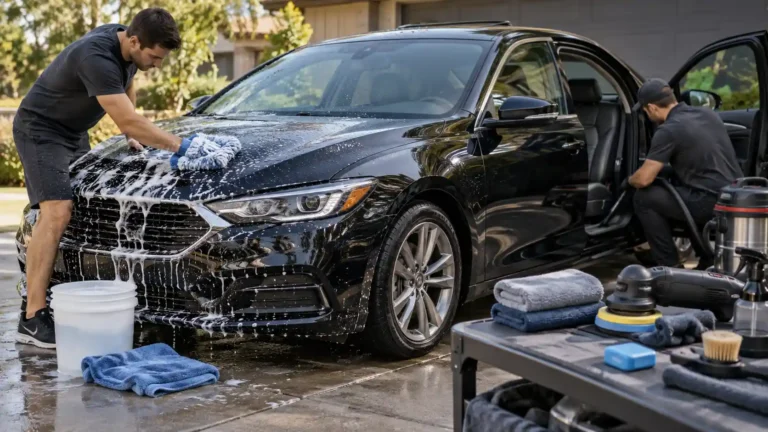
Washing removes surface dirt and grime from a vehicle’s exterior, while detailing is a comprehensive process that includes washing plus decontamination, paint correction, protection application, and deep interior cleaning. Understanding this distinction matters because expecting detailing-level results from a routine wash, or paying detailing prices for what’s actually just a wash, leads to mismatched expectations either way.
This guide clarifies exactly where washing ends and detailing begins, what each process actually includes, and how to decide which one your vehicle needs at a given time.
What Does Washing Actually Include?
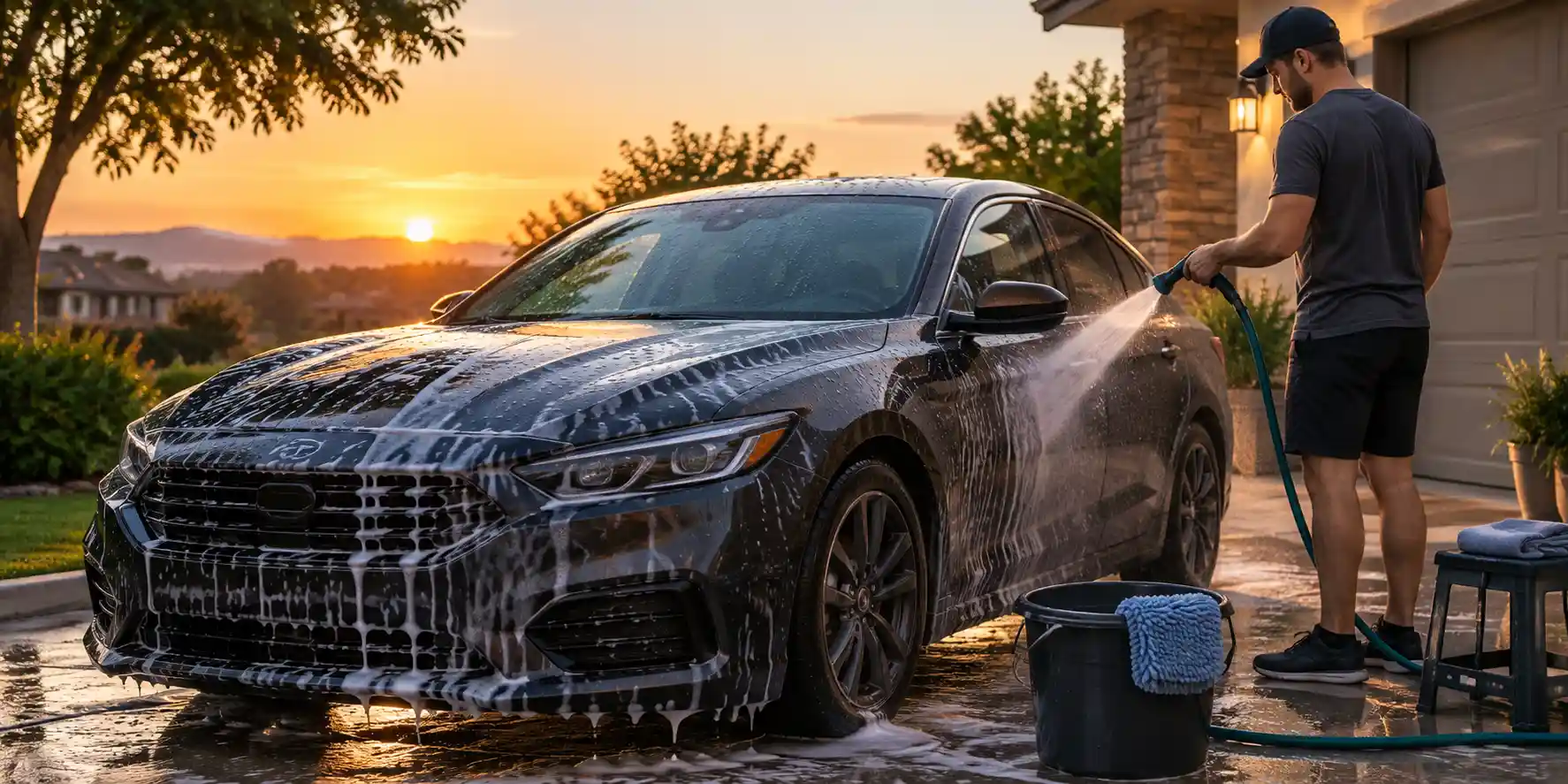
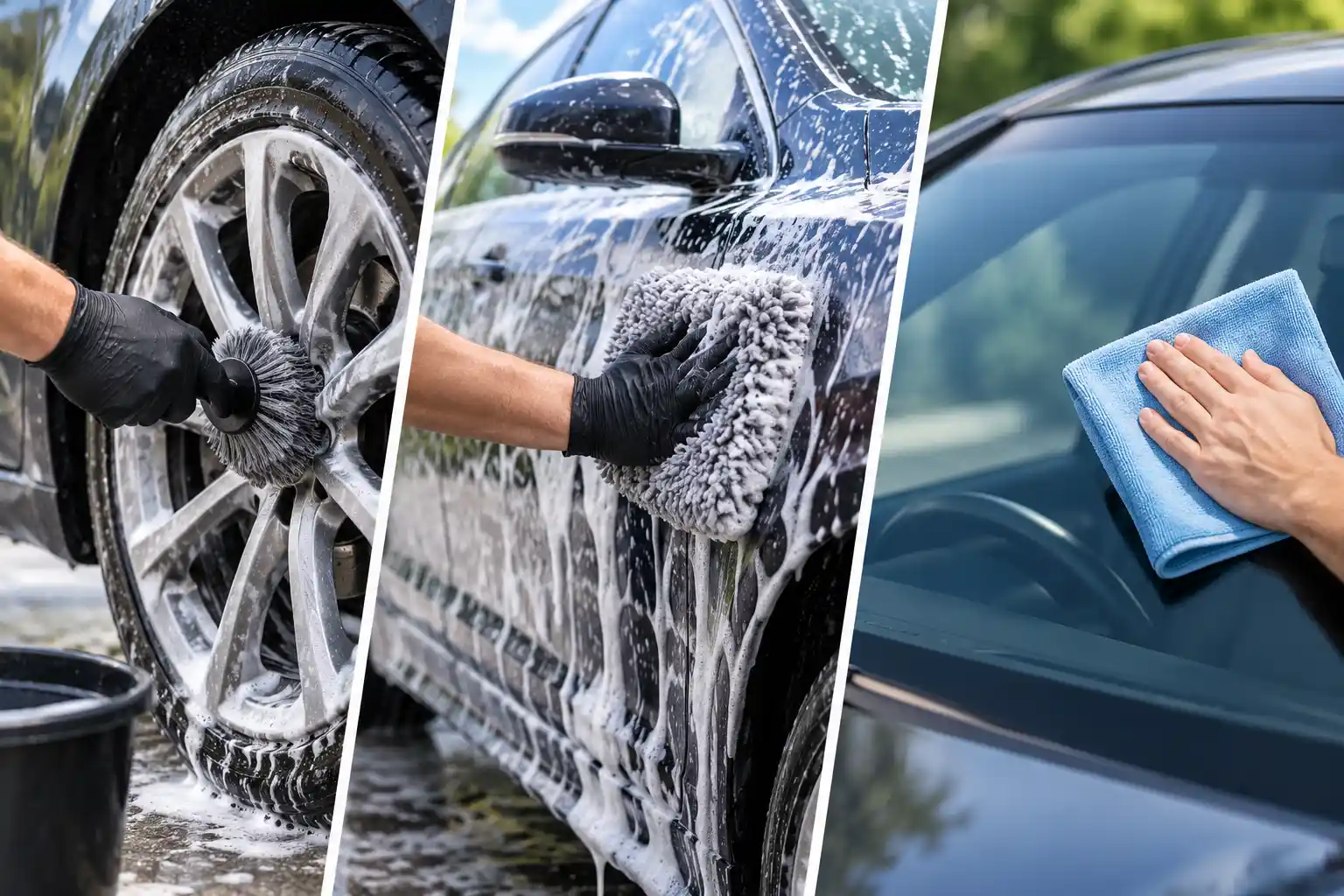
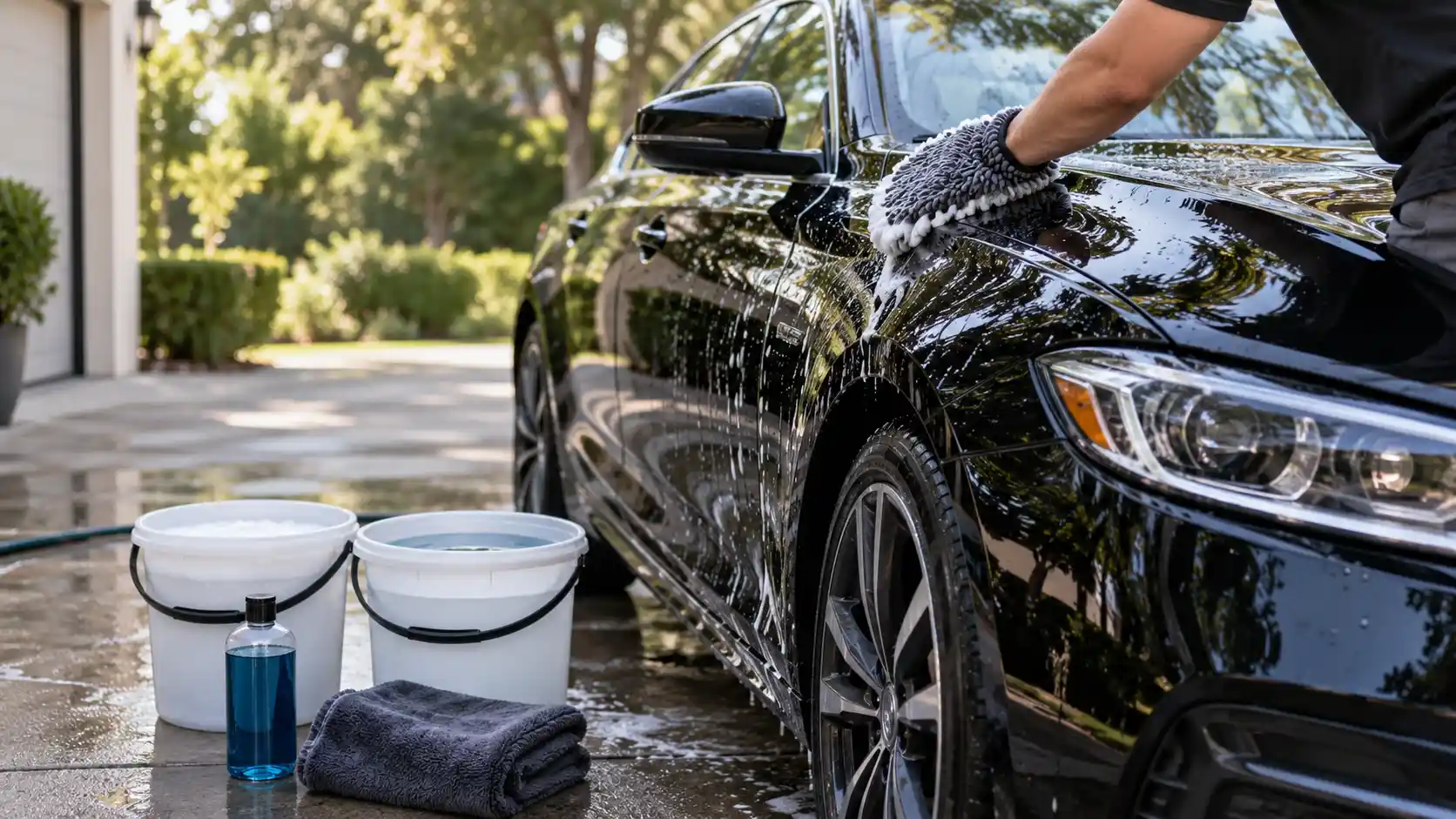
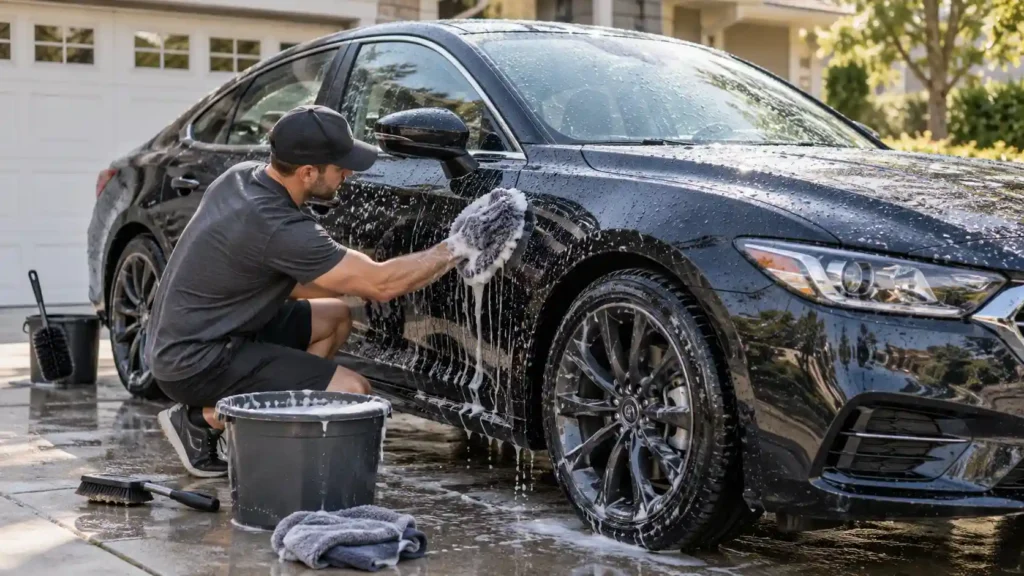
Washing is the routine maintenance task of removing loose dirt, dust, and grime from a vehicle’s exterior surfaces using soap and water. A proper wash covers the wheels, body panels, and glass, following correct order and technique to avoid introducing scratches, but it stops there.
Washing is meant to be done frequently, often weekly or biweekly, and takes most people 30 minutes to an hour depending on vehicle size and technique. It maintains a baseline level of cleanliness but doesn’t address bonded contamination, existing paint imperfections, or interior deep cleaning.
What Does Detailing Actually Include?
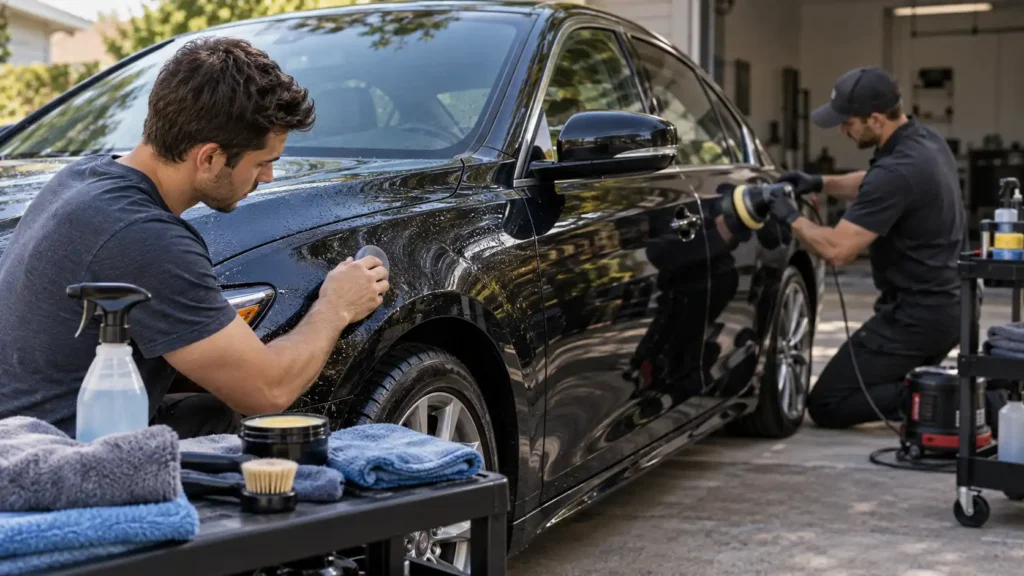
Detailing is a far more comprehensive process built around four stages: washing and decontamination, paint correction and protection, interior deep cleaning, and final glass and trim work.
- Washing and decontamination – includes a full wash plus clay bar treatment to remove bonded contaminants that washing alone can’t lift.
- Paint correction – addresses existing swirl marks, light scratches, and oxidation through polishing, something a routine wash never touches.
- Protection application – wax, sealant, or ceramic coating applied after correction to protect the freshly restored paint.
- Interior deep cleaning – vacuuming, surface cleaning, leather or fabric conditioning, and attention to often-overlooked areas like cup holders and seat tracks.
- Final trim and glass work – tire dressing, trim conditioning, and thorough glass cleaning inside and out.
A full detail typically takes three to five hours for a beginner, or one to two hours for an experienced professional, and is usually done two to four times a year rather than as a routine task, making it closer to a seasonal project than a weekly chore.
Why Does This Distinction Actually Matter?
Confusing washing with detailing leads to two common mismatches: expecting a quick wash to remove swirl marks or bonded contamination it was never designed to address, or paying full detailing prices when all you actually needed was a routine wash. Both mismatches waste money or create unrealistic expectations about results.
Understanding that these are genuinely different services, with different tools, time commitments, and outcomes, helps you budget appropriately and communicate clearly if you’re paying a professional for either service. It also clarifies what to expect from your own DIY efforts if you’re doing the work yourself.
How Often Should You Wash Versus Detail Your Car?
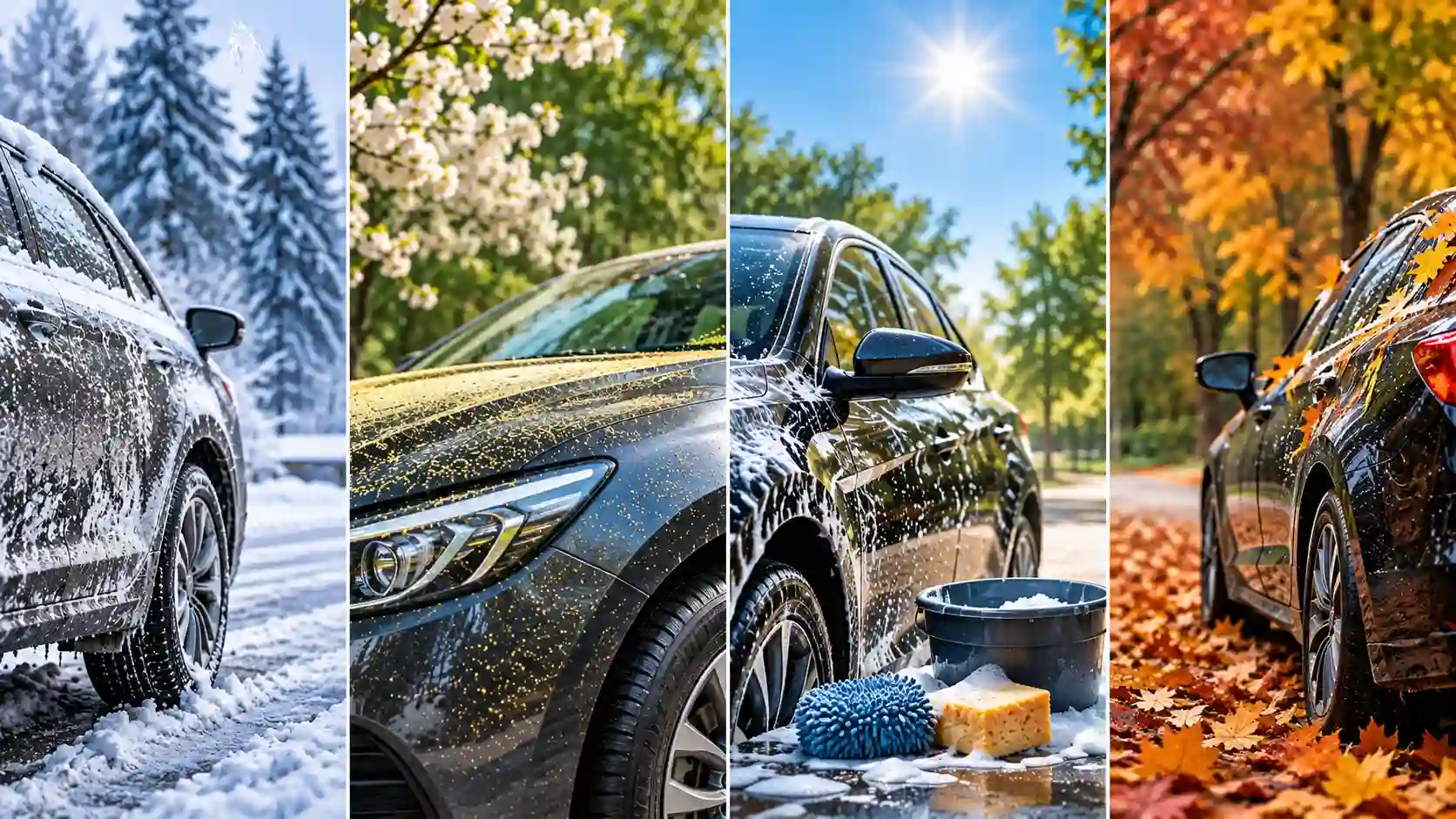
Washing is a routine maintenance task, while detailing is performed less often to address deeper cleaning, paint care, and protection needs. The right schedule depends on how frequently you drive, the conditions your vehicle faces, and its overall condition.
A simple schedule can help you decide which level of care your vehicle needs:
| Car Care Task | Typical Frequency | When to Do It More Often |
|---|---|---|
| Routine washing | Weekly to biweekly | After heavy road grime, harsh weather, or exposure to road salt |
| Full detailing | Two to four times per year | When the paint becomes contaminated, dull, or visibly marked, or the interior needs deep cleaning |
| Clay bar treatment | As needed between full details | When paint feels gritty or bonded contamination remains after washing |
| Wax or sealant touch-up | Periodically as needed | When existing paint protection is wearing away |
| Interior deep cleaning | Several times per year or as needed | When upholstery, carpets, or frequently touched areas become heavily soiled |
Can You Do Detailing-Level Work Yourself, or Does It Require a Professional?
DIY detailing is entirely achievable for most vehicle owners, though it requires more tools, product knowledge, and time investment than routine washing does. Basic detailing tasks like clay bar treatment, wax application, and interior deep cleaning are approachable for a beginner following proper technique and safety guidance.
More advanced paint correction, particularly machine polishing to remove significant swirl marks or scratches, carries a higher skill requirement and risk of burning through clear coat if done incorrectly, which is where many DIYers choose to bring in a professional. A reasonable approach for many owners is handling routine washing and basic detailing steps themselves while outsourcing occasional aggressive paint correction to someone experienced with that specific skill.
How Does Terminology Confusion Cause Problems When Booking a Professional Service?
Many businesses use the words “wash” and “detail” loosely in their marketing, which means a service labeled as a “detail” at one shop might only include what’s actually a thorough wash, while another shop’s “full detail” includes genuine paint correction and interior deep cleaning. This inconsistency makes it easy to book a service expecting one outcome and receive something quite different, particularly for someone comparing prices between shops without realizing the underlying scope of work varies just as much as the price does.
Asking a shop directly what specific steps are included in their advertised package, rather than relying on the label alone, avoids this mismatch entirely and saves the frustration of discovering the gap only after paying and picking up the vehicle. A legitimate full detail should include, at minimum, decontamination, some form of paint protection application, and interior attention beyond a quick vacuum, and any shop unwilling to specify what’s included is worth questioning before booking.
Does a Vehicle’s Condition Determine Whether It Needs Washing or Detailing?
A vehicle that’s washed regularly and shows no visible swirl marks, oxidation, or heavy interior grime generally only needs continued routine washing to maintain that condition. Signs that detailing has become necessary include paint that feels gritty after washing, visible swirl marks under direct light, fading or dull-looking clear coat, or an interior that hasn’t had a deep clean in longer than six months to a year.
A vehicle that’s been neglected for an extended period, whether recently purchased used or simply not maintained, usually benefits from a full detail as a reset point before returning to a regular washing-only maintenance schedule going forward. Starting with a comprehensive detail and then maintaining that baseline with routine washing is generally more effective than trying to wash your way back to a well-maintained condition over many separate sessions, since accumulated oxidation and bonded contamination don’t resolve on their own no matter how many additional washes you add.
conclusion
Washing and detailing serve different purposes, so the right choice depends on your vehicle’s condition and what you want to accomplish. Routine washing is the foundation of car care, removing loose dirt and grime and helping maintain a clean exterior. Detailing goes further by addressing bonded contamination, paint imperfections, protection, and deeper interior cleaning.
If your vehicle is regularly maintained and the paint and interior remain in good condition, consistent washing may be all you need most of the time. Choose detailing when the paint feels rough, looks dull, shows visible swirl marks, or the interior needs deeper cleaning. You can handle many basic detailing tasks yourself, while complex paint correction may be better left to an experienced professional.
Frequently Asked Questions
Is a car wash the same as car detailing?
No. A car wash primarily removes loose dirt, dust, and grime from the vehicle’s exterior. Car detailing is more comprehensive and can include decontamination, paint correction, paint protection, interior deep cleaning, and detailed glass and trim care.
How often should you wash your car?
Most vehicles benefit from washing about every one to two weeks under normal conditions. Vehicles exposed to heavy road salt, harsh weather, or significant road grime may need more frequent washing to keep contamination from accumulating.
How often should you detail your car?
Most vehicles do not need a full detail every time they are washed. A full detail two to four times per year is a reasonable general schedule, while individual detailing tasks such as waxing or interior deep cleaning may be performed more often when needed.
Is detailing worth it if I wash my car regularly?
Yes, detailing can address problems that routine washing does not. Washing removes loose surface contamination, while detailing can address bonded contaminants, paint imperfections, protection, and deeper interior cleaning. If your vehicle is already well maintained, you may only need selected detailing services rather than a complete detail.
Can I detail my car myself?
Yes. Many detailing tasks, including clay bar treatment, waxing, interior deep cleaning, and thorough washing, can be performed by vehicle owners. More advanced paint correction requires greater skill because incorrect machine polishing can damage the clear coat.
Does detailing remove scratches from car paint?
Detailing can improve or remove some paint imperfections, but it depends on the defect. Paint correction through polishing can address certain swirl marks, light scratches, and oxidation. Deeper scratches that extend beyond the clear coat may require a different repair approach.
Is waxing part of a car wash or detailing?
Waxing is generally considered a detailing or paint-protection step rather than part of a basic wash. Some wash routines may include a spray wax or sealant for added protection, but traditional wax application requires additional preparation and time.
How do I know whether my car needs a detail?
Signs that a vehicle may benefit from detailing include gritty paint after washing, visible swirl marks, dull or oxidized paint, heavy interior grime, or a long period without deep cleaning. A regularly maintained vehicle may only need routine washing and occasional individual detailing services.
What should I ask a detailer before booking?
Ask for a specific breakdown of the services included in the package. Confirm whether it includes decontamination, paint correction, protection, interior deep cleaning, glass cleaning, and trim or tire treatment. Comparing the actual scope of work is more useful than comparing package names alone.