Wheels collect the worst dirt on a car, and they scratch easier than most people expect. Brake dust, road grit and the wrong brush leave fine marks that dull the finish. The fix is a safe method: cool the wheels, pre-rinse the grit, use a cleaner that matches the finish, and wash with soft tools that never touch the paint.
This guide shows how to wash car wheels without scratching them, step by step. It covers the tools, the right cleaner for each finish, heavy brake dust, and how to keep wheels clean longer.
Why Wheels Get Scratched During Washing
Most wheel scratches come from four causes. Each one is easy to avoid once you know it.
- Loose grit. Brake dust and road sand act like sandpaper when a brush drags them across the finish. A pre-rinse removes most of it first.
- Shared tools. A mitt or towel that touched brake dust carries hard particles. Using it on paint can scratch the paint. Using paint tools on wheels spreads grease and grit.
- Hard brushes. Stiff bristles and bare metal ferrules cut into painted and clear-coated finishes.
- Hot wheels. Hot metal dries cleaner on the surface, which leaves spots and etching. Hot wheels should cool before they get wet.
Harsh chemistry also damages wheels. Acid-based cleaners can etch or discolor uncoated aluminum and custom finishes, so the cleaner has to fit the wheel.
What Tools Do You Need to Wash Wheels Safely?
A safe wheel wash needs a few dedicated tools. Dedicated means the tool is used on wheels only.
Buckets and Grit Guards
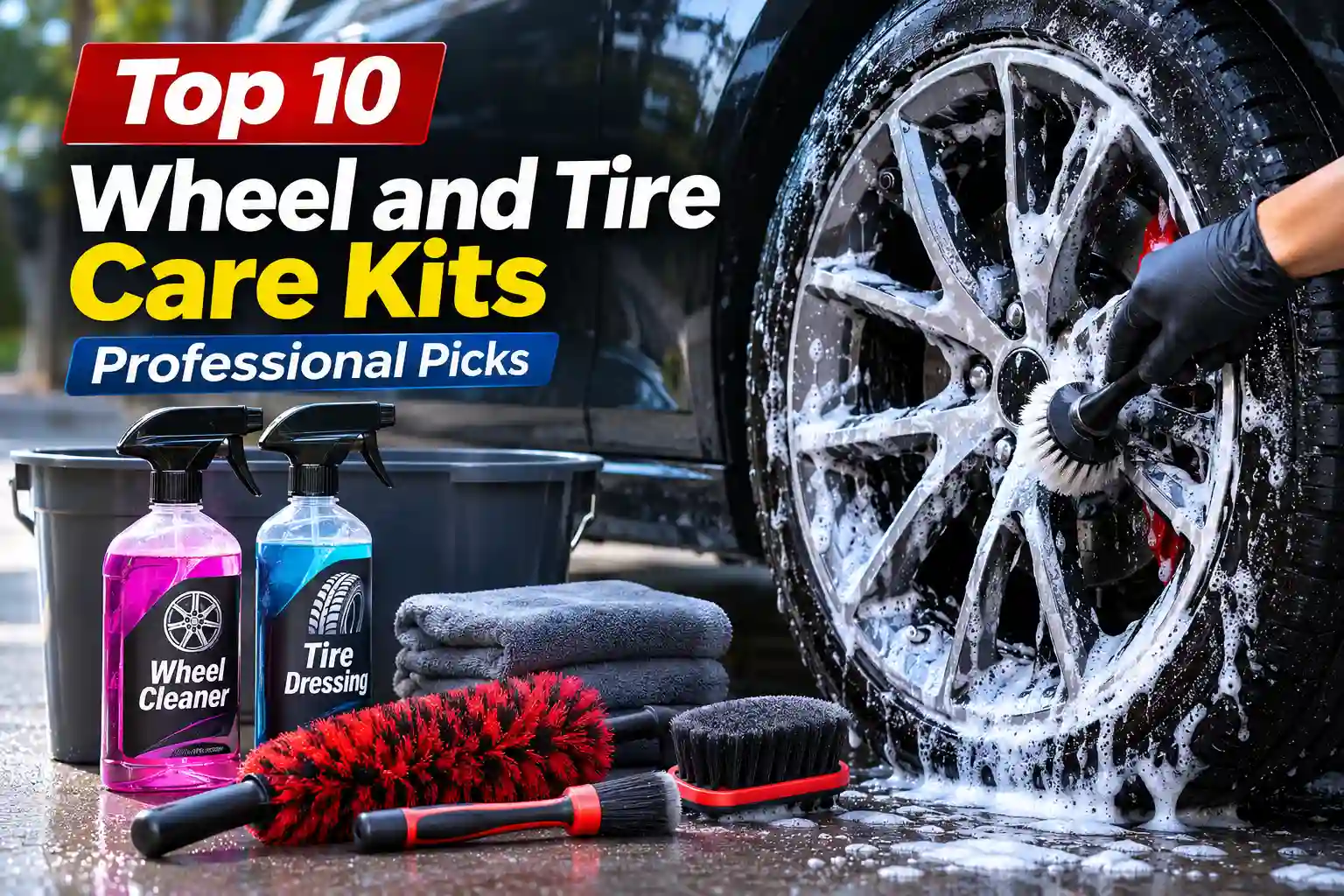
Use one bucket for wheels and tires only. Fill it with water and a little car wash soap. A separate bucket keeps brake dust out of the water you use on paint. A grit guard at the bottom traps the dirt you rinse off a brush, so you do not pick it back up. If you are choosing buckets, see the best car wash buckets.
Soft Brushes for Barrels, Spokes and Lug Nuts
Wheels have three areas that need different tools:
- Barrel: the inside of the wheel behind the spokes. A long, soft, flexible brush reaches it.
- Spokes and face: a soft detailing brush or a wheel mitt cleans the visible surface.
- Lug nuts and tight gaps: a small soft brush reaches the holes and edges.
Choose soft, synthetic bristles with a coated or plastic-covered handle. Keep these brushes away from paint. The best car detailing brushes list shows options by shape and size.
Microfiber Mitts and Drying Towels
A soft microfiber wheel mitt cleans the open face of the wheel gently. Low-grade towels can mar the finish, so use good-quality microfiber. After washing, dry with a clean towel set aside for wheels. The best microfiber wash mitts for cars and the best car drying towels cover both jobs.
How to Wash Car Wheels Step by Step
Wash one wheel at a time. That keeps the cleaner from drying on a wheel while you work on another.
Step 1: Cool the Wheels and Pre-Rinse
Let the wheels cool after driving. Park in the shade if you can. Then rinse each wheel from top to bottom with a strong stream of water. This knocks off loose brake dust and grit before any brush touches the wheel. Do not skip this step. It removes the particles most likely to scratch.
Step 2: Apply Cleaner and Let It Dwell
Spray a wheel cleaner made for your wheel finish over the whole wheel. Let it dwell for one to two minutes so it can break down grime. Do not let it dry on the wheel. If the cleaner starts to dry, rinse or re-wet it. Check the label for the exact dwell time.
Step 3: Agitate with Soft Brushes
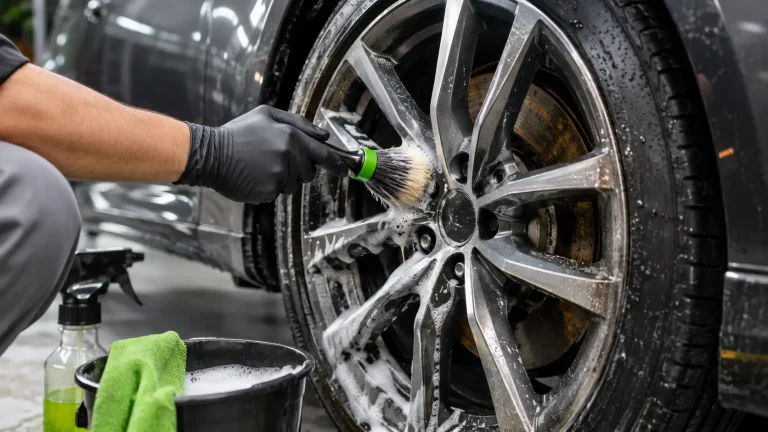
Dip the soft brush in your wheel bucket and work it over the barrel first, then the spokes and face, then the lug nuts. Use light pressure. The cleaner does the heavy work, so scrubbing hard adds scratches without adding results. Rinse the brush in the bucket often.
Step 4: Rinse and Dry
Rinse the wheel well with clean water from top to bottom. Make sure no cleaner stays in the gaps or around the lug nuts. Dry the wheel with a clean microfiber towel kept for wheels. Drying prevents water spots and streaks.
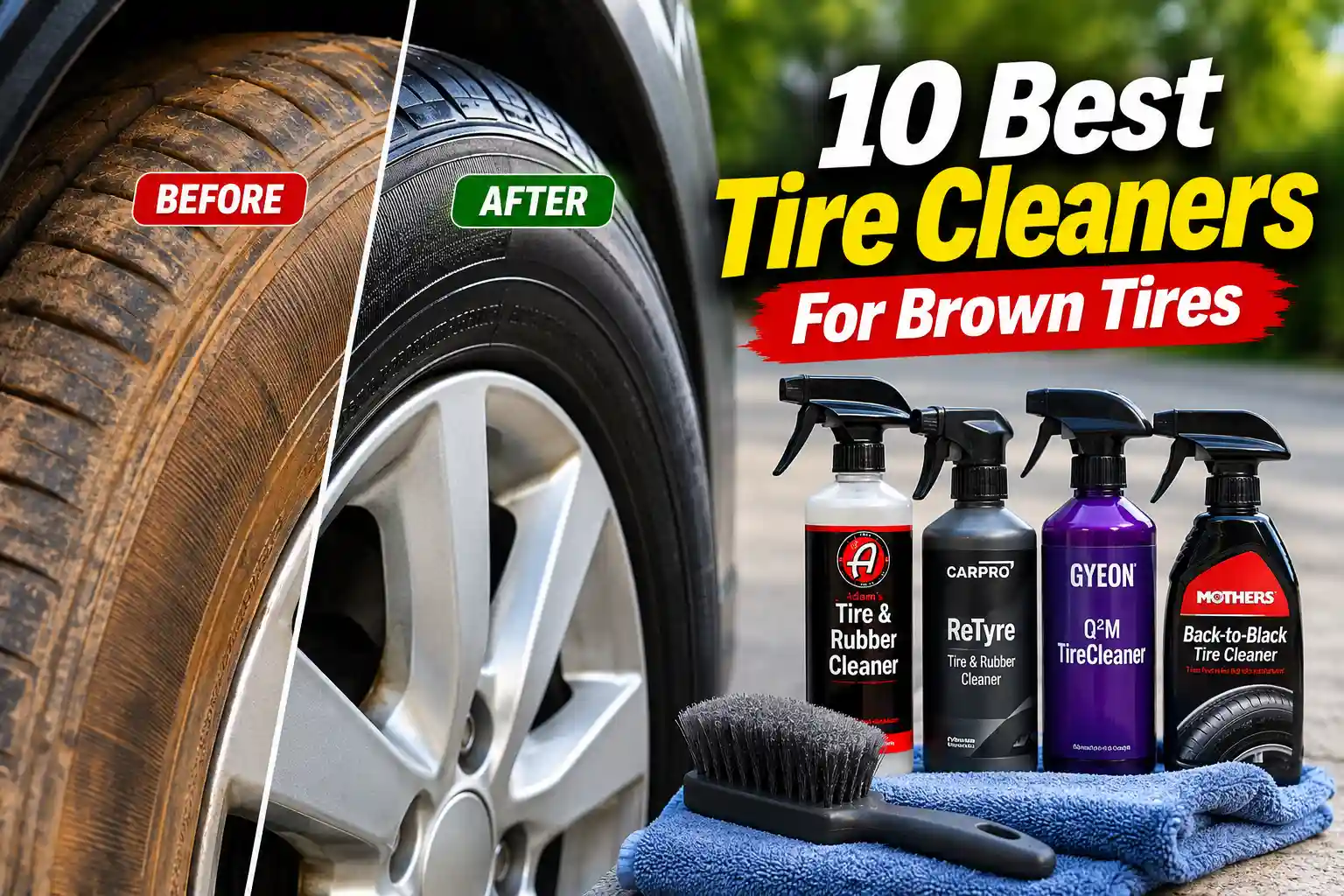
If the tires look brown or dull, tire browning is old dressing and road film. Scrub the sidewall with a tire brush and tire cleaner. Do this after the wheel is clean.
Which Wheel Cleaners Are Safe for Your Wheel Finish?
The right cleaner depends on the finish, how dirty the wheel is, and whether the wheel has a coating.
pH-Neutral vs. Acid vs. Alkaline Cleaners
- pH-neutral cleaners are the safest for regular washing. They rank near 7 on the pH scale and are gentle on most finishes. A neutral cleaner rarely removes baked-on brake dust by itself.
- Acid-based cleaners work fast on heavy brake dust, but they carry the most risk. They can etch uncoated aluminum, polished wheels and some custom finishes. Use them only on finishes the maker says are safe, and rinse well.
- Alkaline cleaners cut grease and road film. Strong ones can harm some finishes, so check the label first.
Some pH-balanced cleaners change as they work. They react with iron in brake dust and turn more active, which is why a neutral label does not mean a cleaner is weak. For picks that handle brake dust well, see the best wheel cleaners for brake dust.
Painted, Chrome, Polished and Matte Wheels
| Wheel finish | Safest cleaner | Watch out for |
|---|---|---|
| Painted or clear-coated | Mild soap and water or pH-neutral wheel cleaner | Stiff brushes and strong acids |
| Chrome or plated | Non-acid cleaner, mild degreaser | Acid and abrasive pads |
| Polished or forged aluminum | pH-neutral cleaner | High risk of etching, so test first |
| Powder coated | pH-neutral or mild alkaline cleaner | Harsh solvents |
| Matte | pH-neutral cleaner made for matte | Wax, polish and shine products |
Always test a new cleaner on a small hidden spot first. Check the label for finishes the cleaner should not touch.
How to Remove Heavy Brake Dust Without Scratching
Heavy brake dust sticks to the finish and does not rinse off with soap. Hard scrubbing makes it worse. Use chemistry first and force last.
- Rinse the wheel well.
- Spray an iron remover made for wheels. It dissolves embedded iron particles from brake dust. Many iron removers turn purple as they work.
- Wait the time on the label, and keep the product wet.
- Agitate lightly with a soft brush.
- Rinse thoroughly and dry.
Iron remover also works on paint. See how to remove iron from car paint for paint-safe steps. If the dust is still there after one round, repeat the process instead of scrubbing harder.
What’s the Correct Order to Wash Your Wheels and Car?
Wash the wheels first. Wheels are the dirtiest part of the car, and they need the most contact time with cleaner. If you wash them first, the dirty spray from wheel work will not land on paint you already cleaned.
The usual order is wheels and tires, then paint from top to bottom, then glass, then drying. For the full order, see the correct order to wash car wheels, body and glass. Use the two-bucket method for the paint, and keep the wheel bucket and tools separate.
How Often Should You Wash Your Wheels?
Wash the wheels every time you wash the car, about every one to two weeks for most daily drivers. Wash them more often if the car has high-dust brake pads, drives in salt or mud, or sits outside in harsh weather. Brake dust left too long can turn corrosive and harm the finish. Regular washing is easier than a deep clean after months of buildup.
Does Wheel Sealant or Ceramic Spray Make Washing Easier?
Yes. A wheel wax, sealant or ceramic spray creates a smooth layer that sheds brake dust and makes the next wash faster. Apply it to clean, dry, cool wheels. Wheel protection lasts weeks to months, depending on the product and how much you drive, and it needs reapplying over time. See how to protect car wheels for product types, and wax vs sealant vs ceramic coating to compare durability.
If your wheels already have a ceramic coating, use a pH-neutral, wax-free shampoo or wheel cleaner. Harsh cleaners can weaken some coatings.
Common Wheel-Washing Mistakes
- Washing hot wheels. Cleaner dries on the hot surface and leaves spots.
- Skipping the pre-rinse. Grit gets dragged across the finish.
- Using paint tools on wheels, or the reverse. Brake dust scratches paint.
- Using a stiff brush. It cuts the clear coat.
- Letting cleaner dry. Dried cleaner stains and etches the finish.
- Scrubbing hard on brake dust. Hard scrubbing scratches. Let the cleaner and iron remover do the work.
- Using acid on unknown finishes. It can etch bare or polished aluminum.
- Using car wash tracks with low-profile tires. The metal tracks can damage the wheels.
Frequently Asked Questions
Can I wash my wheels with regular car shampoo?
Yes, for light dirt. A pH-neutral car shampoo is gentle and safe on most finishes. It will not remove baked-on brake dust, so use a dedicated wheel cleaner or iron remover for heavy buildup.
Should I wash my wheels before or after washing the car?
Wash the wheels first. They are the dirtiest part of the car, and washing them first keeps dirty spray off clean paint. Use separate tools for the wheels.
Can brake dust permanently damage wheels?
Yes, if it stays on too long. Brake dust can turn corrosive and harm clear coat and bare metal. Wash wheels regularly and protect them with a wheel sealant or ceramic spray.
Is a pH-neutral wheel cleaner the safest option?
For regular washing, yes. It is gentle on most finishes. For baked-on brake dust, a pH-neutral cleaner may need help from an iron remover and a longer dwell time.
Can I use the same microfiber towel on my wheels and paint?
No. Brake dust and grit in the towel can scratch paint. Keep a separate set of mitts, brushes and towels for wheels.
Is it safe to use a pressure washer on alloy wheels?
Yes, a pressure washer helps with the pre-rinse and final rinse. Keep a safe distance, and avoid cracked, chipped or peeling finishes where water can get under the coating.
What’s the safest way to remove heavy brake dust?
Rinse the wheel, spray an iron remover made for wheels, wait the label time, agitate lightly with a soft brush, then rinse. Repeat the process instead of scrubbing harder.
Does ceramic coating make wheels easier to clean?
Yes. A ceramic coating or ceramic spray creates a slick surface that sheds brake dust, so washing takes less time and less force.
Conclusion
Safe wheel washing comes down to four habits. Cool the wheels, pre-rinse the grit, match the cleaner to the finish, and use soft tools kept only for wheels. Add an iron remover for heavy brake dust and a wheel sealant to keep them cleaner between washes.