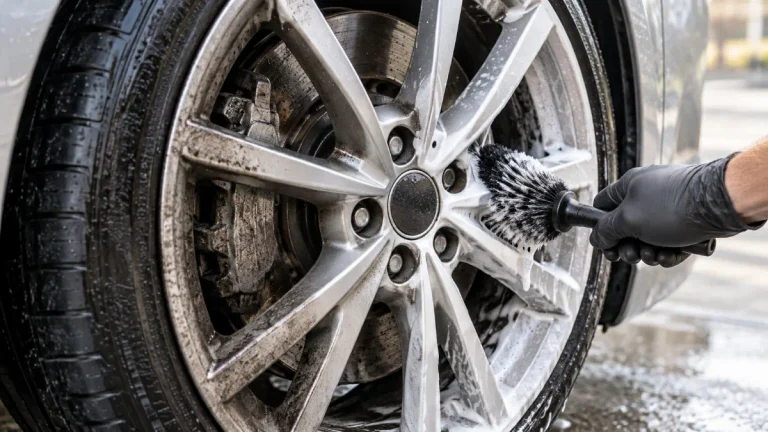
Brake dust sticks to wheel faces, collects around lug nuts, and settles inside barrels where car shampoo often leaves it behind. The right cleaner should loosen that grime without damaging the finish underneath. Choosing one is tricky because “alloy” describes the wheel’s metal, not its surface: a clear-coated alloy, a painted rim, and bare polished aluminum may need different products.
Start with SONAX Wheel Cleaner Full Effect if you want a dedicated brake-dust cleaner with broad stated wheel-finish compatibility. If your rims are uncoated polished aluminum, Meguiar’s Hot Rims Aluminum Wheel Cleaner is the more targeted choice. For frequent cleaning of wheels and tires, P&S Brake Buster makes more sense than using a dedicated iron remover every wash.
These recommendations are based on published product specifications and use directions. They are not hands-on performance rankings. Confirm your wheel finish and check the bottle before applying any cleaner.
Quick Comparison: Best Wheel Cleaners for Brake Dust
| Product | Best for | Key specification or limit | Check Price on Amazon |
|---|---|---|---|
| SONAX Wheel Cleaner Full Effect, 500 mL | Most owners seeking a dedicated brake-dust cleaner | Acid-free, color-changing formula; manufacturer lists painted, alloy, anodized, clear-coated, chrome, aluminum, and stainless-steel wheels | Check Price on Amazon |
| Meguiar’s Hot Rims Aluminum Wheel Cleaner, 24 oz | Bare or polished aluminum rims | Foaming gel formulated for sensitive uncoated polished aluminum and other stated finishes | Check Price on Amazon |
| P&S Brake Buster Wheel Cleaner, 1 Pint | Frequent wheel-and-tire cleaning | Non-acid cleaner for brake dust and road grime; maker recommends a test spot | Check Price on Amazon |
| Griot’s Garage Heavy-Duty Wheel Cleaner, 35 oz | Wheels with stubborn accumulated brake dust | Thick, non-acidic cleaner that turns purple; 35 oz bottle, item 11026 | Check Price on Amazon |
| Turtle Wax Hybrid Solutions Iron Remover & Wheel Cleaner, 23 oz | Brake dust on wheels plus iron fallout on paint | pH-neutral two-surface use; rinse after the specified dwell time | Check Price on Amazon |
| Armor All Extreme Wheel and Tire Cleaner, 24 fl oz | Straightforward cleaning of coated wheels and tires | Foaming wheel-and-tire spray; manufacturer does not recommend uncoated wheels | Check Price on Amazon |
| CARPRO IronX Iron Remover, 500 mL | Targeted iron decontamination of wheels and other approved exterior surfaces | pH-balanced iron remover; maker lists alloy wheels, paint, plastic, chrome, and glass | Check Price on Amazon |
1. SONAX Wheel Cleaner Full Effect, 500 mL — Best for Broad Wheel-Finish Compatibility
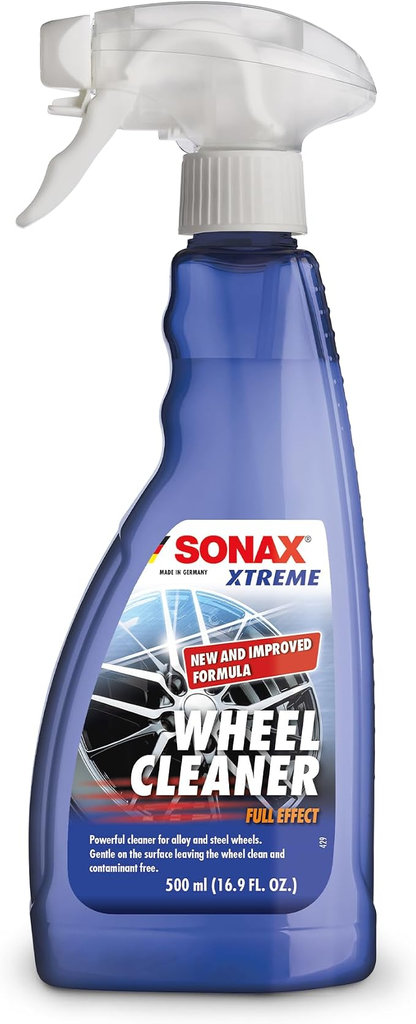
SONAX Full Effect is a ready-to-use, acid-free spray made to loosen brake dust and road grime. It changes from a bright yellow-green to red as it reacts with contamination. SONAX lists compatibility with painted, alloy, anodized, clear-coated, chrome, aluminum, and stainless-steel wheels. That breadth makes it a practical first cleaner when you know your wheel finish but do not want a product restricted to clear-coated factory rims.
The color change helps you see where it is reacting; it does not mean every bit of dirt has vanished. Thick deposits, spoke corners, and barrels may still need a soft wheel brush. SONAX instructs users to work on a cool, dry wheel in the shade, treat one wheel at a time, keep the cleaner wet during the specified dwell period, and rinse thoroughly.
This is a wheel cleaner rather than a dedicated tire cleaner. If tire sidewalls are also dirty, P&S Brake Buster is the more convenient one-bottle choice. If your wheel is an unusual aftermarket finish or has damaged coating, verify its care instructions first even when a cleaner lists broad compatibility.
Best for: Drivers who want one ready-to-use brake-dust cleaner for a stated range of common wheel finishes.
Pros
- Manufacturer explicitly lists several coated and metal wheel finishes.
- Color change shows the cleaner’s reaction with contamination.
- No mixing or dilution step before use.
Cons
- A separate tire cleaner may still be needed.
- Heavy dust behind spokes may require a brush and a second pass.
- A spray bottle is less practical than a larger refill format for frequent multi-car washing.
Buying Decision: Pick SONAX for an adaptable, dedicated wheel cleaner. Buy Meguiar’s if bare polished aluminum is your specific concern, or P&S if cleaning tires in the same step matters more.
2. Meguiar’s Hot Rims Aluminum Wheel Cleaner, 24 oz — Best for Uncoated Aluminum Rims
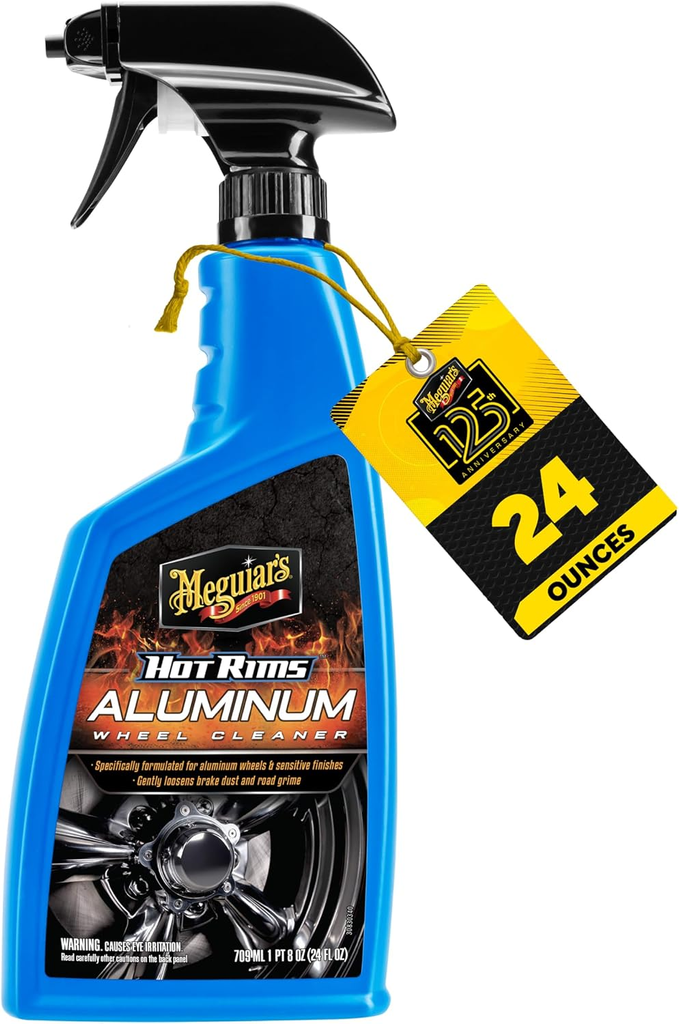
An aluminum wheel can be clear-coated, painted, anodized, or left bare. If yours is uncoated polished aluminum, choose a cleaner whose maker specifically addresses that finish. Meguiar’s Hot Rims Aluminum Wheel Cleaner is a foaming gel formulated for sensitive uncoated polished aluminum. The product information also names anodized and powder-coated finishes and exposed brake components.
Its clinging spray is useful around spokes and lug recesses, where brake dust builds up. Use a soft wheel brush if needed, and follow the bottle’s rinse directions. Do not mistake this for an aluminum polish: it removes contamination but will not restore metal that has oxidized, pitted, or become permanently stained.
There is little reason to choose a specialized bare-aluminum cleaner solely because your wheels contain aluminum under an intact clear coat. A regular compatible wheel cleaner can handle those coated rims. If you cannot identify the finish, check the wheel maker’s care information before spraying.
Best for: Owners of uncoated polished aluminum or another sensitive finish explicitly covered by the product label.
Pros
- Product is specifically positioned for bare polished aluminum.
- Foam clings to wheel faces and recesses while it works.
- Also lists anodized and powder-coated finishes.
Cons
- Does not polish oxidation or repair damaged metal.
- Still needs a compatible brush for dirt lodged between spokes.
- Less reason to buy it if your wheels are ordinary clear-coated factory alloys.
Buying Decision: Choose this when the actual surface is bare polished aluminum. For mixed wheel finishes across several cars, compare the maker’s instructions with SONAX or Griot’s before buying.
3. P&S Brake Buster Wheel Cleaner, 1 Pint — Best for Frequent Wheel-and-Tire Cleaning
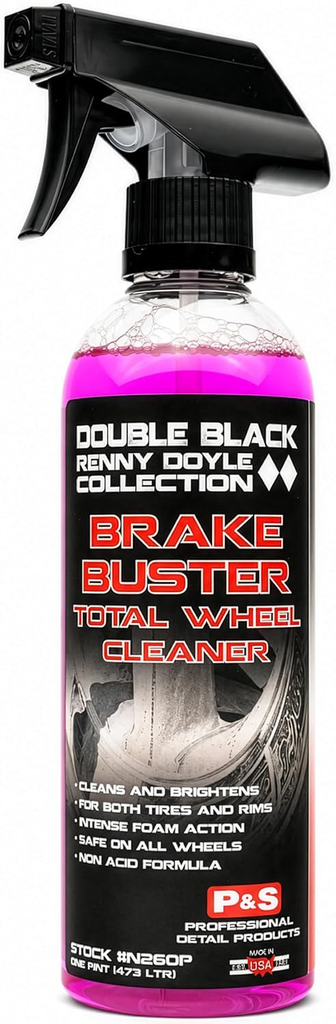
P&S Brake Buster is a non-acid cleaner intended to remove brake dust, road oil, dirt, and related buildup. Its advantage is routine wheel-and-tire care: you can address the rim and the dirty tire sidewall during the same wash rather than keeping a separate iron-reactive product for every session. The linked ASIN is the one-pint bottle, not a gallon or a bundle.
P&S says Brake Buster can be used on wheel surfaces but recommends testing a small area on the back of a wheel. Its general FAQ advises using products straight unless a product’s own back label says otherwise; follow the directions on the bottle you receive rather than relying on an online dilution recipe.
Brake Buster suits a maintained daily driver with regular road film and brake dust. When dust is thick and has been left for months, a dedicated iron-removing cleaner such as SONAX or the heavier Griot’s option may be a better next step. It cannot repair a corroded wheel finish.
Best for: Drivers who wash their cars often and want one product for wheels and tire sidewalls.
Pros
- Handles tire grime as well as wheel contamination.
- Non-acid formula suits a routine cleaning role.
- Available in larger formats if the pint size proves useful.
Cons
- One pint can go quickly if you clean several vehicles.
- Maker still calls for a test spot on the wheel.
- Not a substitute for focused iron decontamination on long-neglected wheels.
Buying Decision: Get the pint if you want to try a wheel-and-tire routine before committing to a larger bottle. Choose SONAX if embedded brake dust is the main problem and tires are already covered.
4. Griot’s Garage Heavy-Duty Wheel Cleaner, 35 oz — Best for Built-Up Brake Dust
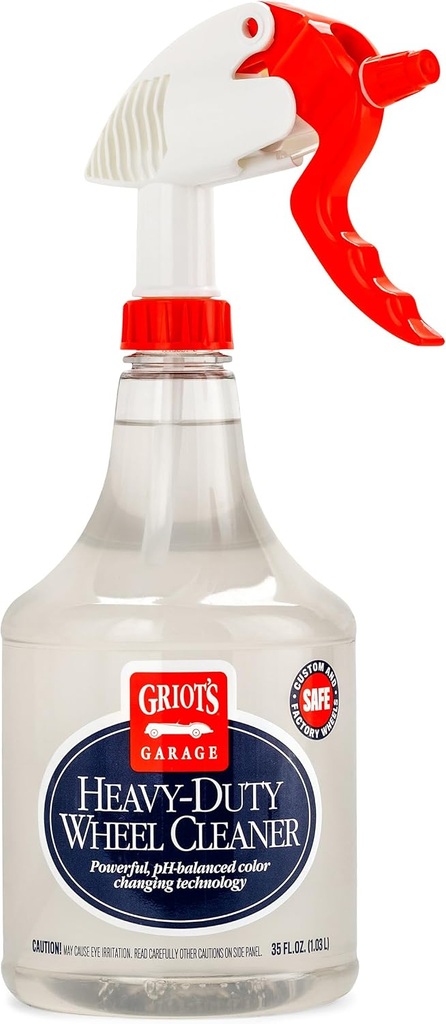
Griot’s Garage positions Heavy-Duty Wheel Cleaner for wheels that have gone longer between washes or produce heavy brake dust. The non-acidic formula is thick enough to cling to the wheel and turns purple as it reacts. The linked product is the 35 oz bottle, item 11026; the brand also sells other sizes under different item numbers.
This makes sense on a commuter or performance car whose front wheels darken quickly. Give the product the dwell time on its label, gently work difficult spots with a wheel-safe brush, and rinse completely. Griot’s lists it as safe for wheel finishes, but the wheel maker’s instructions still take priority for unusual, damaged, or refinished surfaces.
Its main downside is fit: if your wheels only pick up light road film, you probably do not need a heavy-duty iron-reactive cleaner for every wash. A regular wheel-and-tire product such as Brake Buster can be easier to use frequently. The purple reaction also does not remove baked-on material without any brushing in every case.
Best for: Wheels that accumulate a stubborn layer of brake dust between washes.
Pros
- Clinging cleaner is suited to wheel faces and barrels with more buildup.
- Purple reaction makes iron contamination visible.
- 35 oz bottle gives more product than many standard trigger sprays.
Cons
- More cleaner than a lightly soiled wheel needs during every wash.
- Heavy deposits may still require agitation and a repeat application.
- Does not replace a dedicated tire-sidewall cleaner.
Buying Decision: Choose Griot’s when a maintained-wheel cleaner leaves noticeable brake residue behind. Use P&S for frequent combined wheel-and-tire cleaning instead.
5. Turtle Wax Hybrid Solutions Iron Remover & Wheel Cleaner, 23 oz — Best for Wheels and Paint Fallout
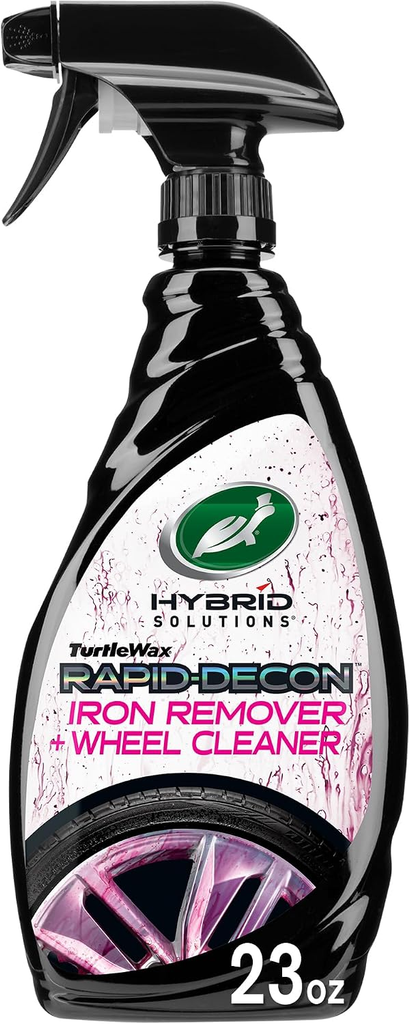
The Turtle Wax product linked here is a 23 oz iron remover and wheel cleaner, sold under Hybrid Solutions branding. Turtle Wax describes it as a pH-neutral product for brake dust on wheels and iron fallout on painted body panels. That second use matters if you are preparing a car for a thorough wash and notice small bonded contamination spots on the paint as well as dirty wheels.
Turtle Wax instructs users to work on cool surfaces, keep the spray wet for its stated 2–4 minute dwell time, and rinse well. For heavy wheel dirt, use a suitable brush. When using it on paint, first wash the car and work in small sections rather than spraying a hot panel and walking away. The maker markets a lower-odor formula, though odor tolerance is personal and good ventilation still matters.
This is not a tire cleaner, and it is unnecessary as a routine whole-car spray when only the wheel faces have light dirt. If you only need iron removal and want a specialist product without focusing on general road grime, CARPRO IronX is another fit.
Best for: Owners who want one product for wheel brake dust and occasional iron fallout on paint.
Pros
- Manufacturer provides separate wheel and painted-panel directions.
- Color reaction helps locate iron contamination.
- A single bottle can serve two distinct decontamination jobs.
Cons
- Does not clean tire sidewalls as part of the same step.
- Paint application requires washing first and careful section-by-section rinsing.
- Routine whole-car use can consume the 23 oz bottle quickly.
Buying Decision: Buy this if iron fallout is present on both wheels and paint. For wheels alone, SONAX or Griot’s is the more direct purchase; for a regular wheel-and-tire wash, choose P&S.
6. Armor All Extreme Wheel and Tire Cleaner, 24 fl oz — Best for Coated Wheels and Tires
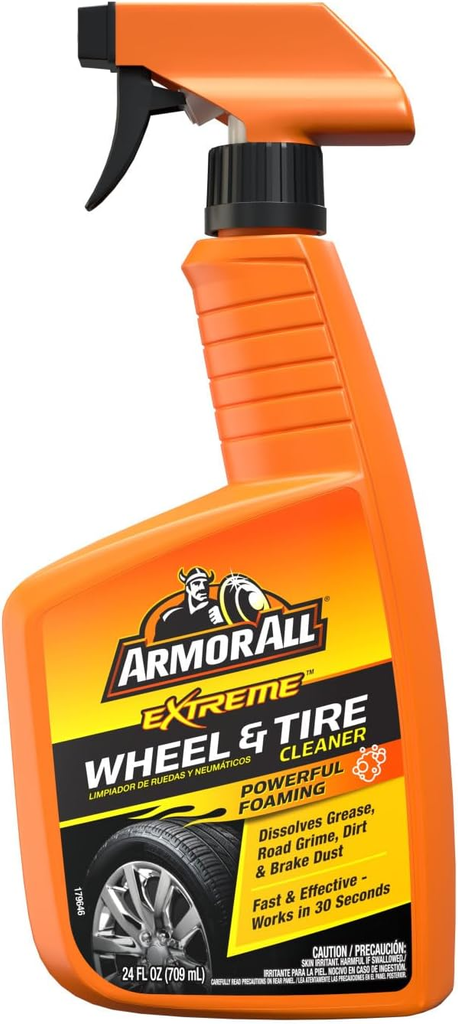
Armor All Extreme Wheel and Tire Cleaner is a foaming spray for road grime and brake dust on wheels plus dirt on tire sidewalls. It makes sense when your vehicle has coated factory or coated aftermarket wheels and you want a simple cleaner for both surfaces. Spray, follow the bottle’s short dwell instruction, brush as needed, and rinse well.
The finish limit is important: Armor All says this product is not recommended for uncoated wheels, including uncoated chrome or brushed aluminum. The brand also says to avoid warm wheels and stop if a test spot develops haze or spots. That makes this a poor default for unknown or bare-metal finishes despite the broad-sounding product name.
Compared with P&S, this is another wheel-and-tire option for ordinary maintenance. The deciding factor is your finish: Armor All states a narrower coated-wheel recommendation, while P&S recommends a test spot across wheel finishes. Neither will fix brake dust that has permanently marked a failing clear coat.
Best for: Basic upkeep of confirmed coated wheels and tires.
Pros
- Cleans the wheel face and tire sidewall in one routine.
- Foaming spray is easy to apply around spokes.
- Clear coated-wheel guidance helps rule out unsuitable bare-metal use.
Cons
- Not recommended by the maker for uncoated wheels.
- Still needs a test spot, especially on refinished or unfamiliar rims.
- Heavier baked-on dust may need a brush or a dedicated iron-reactive cleaner.
Buying Decision: Choose Armor All only after confirming the wheel is coated. If you have bare polished aluminum, choose Meguiar’s Hot Rims Aluminum Wheel Cleaner instead.
7. CARPRO IronX Iron Remover, 500 mL — Best for Targeted Iron Decontamination
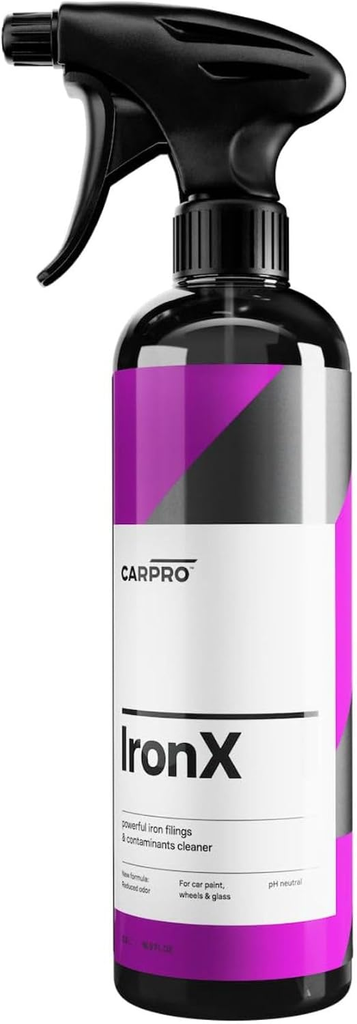
CARPRO IronX is an iron remover rather than a general-purpose wheel-and-tire shampoo. It reacts with ferrous particles from brakes and other fallout so they can be rinsed away. CARPRO lists paint, plastic, chrome, glass, and alloy wheels among its use surfaces. The Amazon link is for the original 500 mL bottle with sprayer, not a lemon-scent variant or multipack.
Choose it when a normal wash leaves specks on wheel faces or you also plan to decontaminate paint before further detailing. CARPRO says to wash the surface, spray the product, allow 3–5 minutes while the reaction changes color, use a damp soft sponge as directed, and rinse thoroughly. Work out of direct sunlight and do not let the cleaner dry.
Because its strength is iron removal, it is not the first bottle to buy if your main job is washing tire sidewalls or removing ordinary greasy road film. The original formula may also have a noticeable chemical odor. For bare, specialty, or damaged wheel finishes, check the wheel maker’s care directions rather than assuming that “alloy wheels” includes every exposed metal surface.
Best for: Detailers who need targeted removal of iron particles from compatible wheels and other approved exterior surfaces.
Pros
- Targets ferrous contamination that can remain after ordinary washing.
- Maker lists use on several exterior surfaces beyond wheels.
- Color reaction helps identify where iron fallout is present.
Cons
- Does not replace a tire cleaner or a routine degreasing wash.
- Requires controlled dwell and thorough rinsing.
- Specialty metal finishes still need individual compatibility checks.
Buying Decision: Pick IronX when iron contamination is the job. Choose Turtle Wax if you also want a product presented specifically as a wheel cleaner and paint fallout remover, or P&S for everyday wheel-and-tire grime.
Which Wheel Cleaner Should You Buy?
| Your wheel or cleaning job | Most suitable pick | What to check first |
|---|---|---|
| Typical clear-coated or painted alloy with brake dust | SONAX Wheel Cleaner Full Effect | Confirm the finish is intact and follow the dwell directions. |
| Bare polished aluminum rim | Meguiar’s Hot Rims Aluminum Wheel Cleaner | Confirm the surface really is uncoated aluminum. |
| Frequent wheel and tire washes | P&S Brake Buster | Do a test spot and follow the actual bottle label. |
| Thick, stubborn brake dust after missed washes | Griot’s Garage Heavy-Duty Wheel Cleaner | Allow time for a soft brush and full rinsing. |
| Brake dust on rims plus iron fallout on painted panels | Turtle Wax Hybrid Solutions Iron Remover & Wheel Cleaner | Work on cool, prewashed painted panels in small sections. |
| Confirmed coated wheels and dirty tire sidewalls | Armor All Extreme Wheel and Tire Cleaner | Do not use it on uncoated wheels. |
| Isolated iron deposits across approved exterior surfaces | CARPRO IronX | Do not let it dry; check specialty-finish instructions. |
How to Choose a Wheel Cleaner for Alloy or Aluminum Rims
Choose a cleaner based on the wheel’s finish, the type of dirt, and how often you wash your wheels. Check the wheel maker’s care instructions before using a new product.
- Identify the finish. Most factory alloy wheels have a protective coating. Aftermarket wheels may have exposed polished aluminum, anodized, chrome, matte, or custom finishes. A cleaner labeled “safe for alloy wheels” may still be unsuitable for your finish. If you are unsure, check the manufacturer’s care guide.
- Match the cleaner to the dirt. A wheel-and-tire cleaner is useful for regular road film and tire grime. An iron remover targets ferrous brake dust and bonded particles. Neither can repair pitting or a failing clear coat. For dirt trapped in narrow recesses, try a soft wheel-safe brush.
- Consider the full cleaning routine. Check whether you also need rinse water, a wheel-safe brush or mitt, and separate towels. A small bottle may be enough for occasional washes; frequent cleaning of several cars makes bottle size and refill availability more important.
- Check claims against the surface. Terms such as “acid-free,” “pH-neutral,” and “safe for all wheels” do not replace the wheel maker’s instructions. Follow the cleaner’s label, and test it on an inconspicuous area if the finish is specialty, refinished, or visibly damaged.
How to Remove Brake Dust Without Damaging Wheels
- Park in shade and wait until the wheels and brakes are cool. Check the cleaner’s instructions for whether the wheel should be dry or wet when you start.
- Work on one wheel at a time. Apply enough product to the wheel face and the areas you can safely reach behind the spokes.
- Allow only the dwell time stated on that product’s label. Keep the surface wet; do not let cleaner dry on the rim.
- Gently clean stubborn areas with a soft, wheel-safe brush or dedicated mitt. Use separate tools for the tires and for painted body panels.
- Rinse thoroughly, including lug recesses and the inner barrel. Dry with a dedicated clean towel.
- If brake dust remains, repeat the approved cleaning process. Do not scrape a wheel with metal tools or assume an iron remover can reverse pitting.
Avoid combining different wheel chemicals in one pass. Rinse one product completely before changing cleaners, and follow the wheel and product makers’ care directions.
Common Mistakes
- Buying by wheel material alone: Clear-coated alloy and bare polished aluminum have different surface needs.
- Spraying hot wheels: Heat can shorten dwell time and increase spotting or staining risk.
- Letting cleaner dry: A color change is a reaction cue, not permission to leave the product on indefinitely.
- Assuming a brush is unnecessary: Heavy deposits in lug holes and barrels may need gentle agitation.
- Using a wheel towel on paint: Trapped brake dust can scratch painted panels.
- Expecting cleaner to repair finish damage: Cleaner removes contamination; corrosion, etched coatings, and curb rash require other work.
- Using a coated-wheel-only product on bare metal: Check the manufacturer’s exceptions before applying it.
FAQs
What is the difference between brake dust and ordinary road dirt?
Brake dust includes fine particles generated by braking; some are iron-bearing and react with dedicated iron removers. Road dirt can include mud, oil, and film that a general wheel-and-tire cleaner can address. A wheel may have both, which is why a single spray does not always finish a neglected wheel without brushing.
Are color-changing wheel cleaners safe for aluminum?
Compatibility depends on the specific product and the aluminum’s finish. SONAX explicitly lists aluminum among its approved wheel surfaces. Meguiar’s Hot Rims Aluminum Wheel Cleaner is made for uncoated polished aluminum. Check the actual product label and wheel maker’s guidance before using any iron-reactive cleaner on bare or refinished metal.
Can I use a wheel cleaner on my tires?
Only when the product permits it. P&S Brake Buster and Armor All Extreme Wheel and Tire Cleaner are presented for both jobs. SONAX Full Effect and CARPRO IronX are more focused on wheel or iron contamination; use an appropriate tire cleaner for rubber sidewalls.
Does purple runoff mean every wheel needs an iron remover?
No. A purple reaction shows that a formula is responding to iron contamination; it is not a measure of how damaged or dirty the wheel is overall. Routine cleaning with a compatible wheel-and-tire product may be enough when the wheels are maintained regularly.
Can wheel cleaner remove baked-on brake dust without scrubbing?
Some contamination loosens during the recommended dwell and rinse. Older deposits around spokes and in barrels may need a soft brush, a second application, or professional assessment if the finish is already damaged. Avoid claims of guaranteed touch-free removal.
Final Verdict
SONAX Wheel Cleaner Full Effect is the best overall starting point for brake-dust removal because the maker lists compatibility with a broad range of wheel finishes and the product directly targets brake contamination. Meguiar’s Hot Rims Aluminum Wheel Cleaner is the specific pick for uncoated polished aluminum. P&S Brake Buster suits regular wheel-and-tire washes, while Griot’s Heavy-Duty Wheel Cleaner suits heavier buildup. Choose Turtle Wax or CARPRO IronX when iron fallout beyond the wheel is part of the job; use Armor All only on compatible coated wheels.