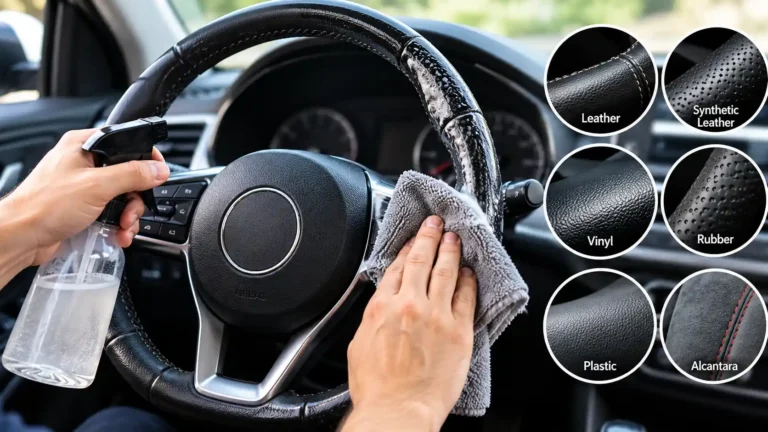
Knowing how to clean a steering wheel properly helps remove sweat, body oils, dirt, sticky residue, and bacteria without damaging the surface. Because the steering wheel is one of the most frequently touched parts of a car’s interior, it can develop a greasy feel, discoloration, and visible grime even when the rest of the cabin looks clean.
However, not every steering wheel is made from the same material. Leather, synthetic leather, vinyl, rubber, plastic, and Alcantara require different cleaning techniques. Using the wrong cleaner, excessive moisture, or an oily dressing can damage the finish or leave the steering wheel slippery.
The safest approach is to identify the steering wheel material, check the vehicle manufacturer’s cleaning instructions, and use a compatible product with gentle wiping techniques.
In this guide, you will learn how to clean a steering wheel step by step, remove stubborn grease, care for different materials, and maintain a clean, comfortable grip without damaging the surface.
Why Does a Steering Wheel Get Dirty?
A steering wheel collects contamination through regular driving. Every time you hold the wheel, your hands transfer sweat, natural skin oils, dust, and residue from lotions or hand creams onto its surface.
Over time, these contaminants can form a greasy layer that attracts additional dirt. Dark steering wheels may develop a shiny appearance, while lighter-colored wheels can show visible discoloration around frequently touched areas.
Several common factors contribute to steering wheel buildup:
- Sweat and skin oils transferred from your hands.
- Dust and airborne particles that settle on the surface.
- Hand creams, sunscreen, cosmetics, and cleaning product residue.
- Food residue transferred from your fingers.
- Frequent contact that gradually wears the protective surface finish.
- Infrequent cleaning that allows dirt to accumulate.
A shiny steering wheel is not always simply dirty. On leather and coated synthetic materials, excessive shine can also indicate wear or deterioration of the original finish. Cleaning can remove surface contamination, but it cannot reverse every type of material damage.
What Do You Need to Clean a Steering Wheel?
Before cleaning your steering wheel, gather the right supplies. You generally need only a few basic tools, provided they are compatible with your vehicle’s specific steering wheel material.
Recommended supplies include:
- A soft, clean, lint-free cloth or the type of cloth specified by your vehicle manufacturer.
- A compatible automotive interior cleaner or material-specific cleaner.
- Clean water, when permitted by the manufacturer’s instructions.
- A second dry cloth for removing moisture.
- A soft-bristle brush for suitable textured materials.
- A compatible leather cleaner for steering wheels specifically approved for that product.
For ordinary dirt, an approved mild cleaning solution and a soft cloth may be sufficient. More stubborn contamination may require a specialized automotive cleaner.
Avoid automatically using household disinfectants, strong solvents, glass cleaners, abrasive pads, waxes, or oily interior dressings. A product that works well on a dashboard or leather seat may not be suitable for the steering wheel’s particular coating.
Most importantly, follow your vehicle owner’s manual. Steering wheel cleaning instructions can differ even between vehicles with apparently similar materials.
How to Clean a Steering Wheel Step by Step
The correct steering wheel cleaning process starts with identifying the surface, removing loose dirt, testing a compatible cleaner, and wiping the wheel without leaving excess liquid or slippery residue.
Step 1: Park the Car and Switch Off the Ignition
Park the vehicle securely on level ground, apply the parking brake, and switch off the ignition before cleaning.
Make sure you can reach the steering wheel comfortably without moving the vehicle or interfering with the steering controls. Keep the keys or start-control system in the appropriate state specified by your vehicle’s manual.
Avoid operating the steering wheel unnecessarily while cleaning, and never allow cleaning liquid to enter the horn pad, steering wheel buttons, seams, or electrical openings.
Step 2: Identify the Steering Wheel Material
Before applying a cleaning product, determine whether the steering wheel is covered in genuine leather, synthetic leather, vinyl, rubber, plastic, or Alcantara.
Check your owner’s manual or vehicle specifications if the material is uncertain. Some steering wheels combine several materials, including leather-covered sections, plastic trim, rubber grips, and specialized microfiber surfaces.
This matters because a product designed for leather may not be suitable for Alcantara, while an oily plastic dressing may leave an undesirable film on a surface intended for a secure grip.
Choose your cleaning method only after identifying the material.
Step 3: Remove Loose Dust and Debris
Inspect the wheel for loose dust, crumbs, and particles around its spokes, seams, buttons, and textured areas.
Use a clean, soft cloth to remove loose contamination. For suitable textured materials, a soft brush may help loosen dirt from recessed areas.
Do not use a stiff brush or rough scouring pad. Small abrasive particles trapped beneath a cleaning cloth can scratch delicate surfaces if rubbed forcefully.
Pay particular attention to stitching, seams, and the edges around steering wheel controls.
Step 4: Choose a Compatible Cleaner
Select a cleaner specifically approved for your steering wheel material.
For ordinary dirt, some vehicle manufacturers permit a lightly dampened cloth with a mild soap solution. Others specify their own cleaning products or prohibit certain cloth types and chemicals.
Leather steering wheels deserve particular attention because their surfaces may have a protective coating. Certain general-purpose leather cleaners can be unsuitable for some steering wheel finishes.
For synthetic leather, vinyl, rubber, or Alcantara, follow the instructions intended for that exact material.
Never assume that a product labeled as a universal interior cleaner is appropriate for every steering wheel.
Step 5: Test the Cleaner on an Inconspicuous Area
Before cleaning the entire steering wheel, test the product on a small, inconspicuous section where the manufacturer permits testing.
Apply the cleaner using the recommended cloth or applicator and follow the product instructions. Once the test area is sufficiently dry, inspect it for changes in color, texture, gloss, or surface feel.
Stop if the material becomes sticky, discolored, unusually shiny, or otherwise altered.
If the steering wheel has an unfamiliar finish or existing peeling, testing alone may not establish that a product is safe. Use manufacturer-approved guidance instead.
Step 6: Apply a Small Amount of Cleaner to the Cloth
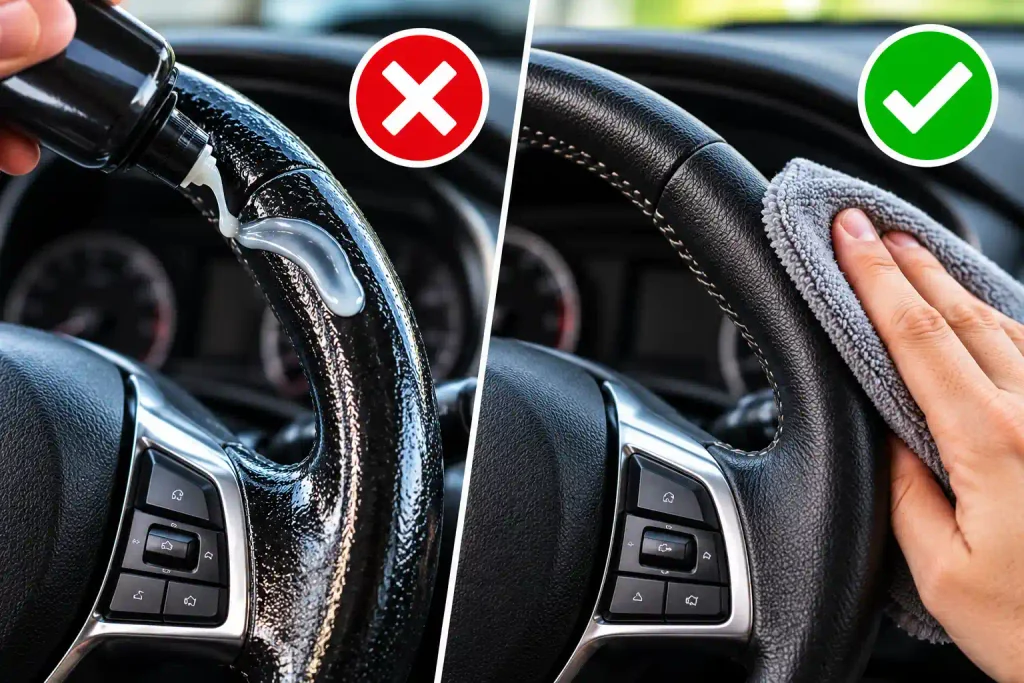
When the product instructions allow it, apply a small quantity of cleaner to the appropriate cloth rather than spraying liquid directly onto the steering wheel.
This provides better control over the amount of moisture used and reduces the likelihood of liquid entering seams, buttons, or electrical openings.
The cloth should be damp rather than dripping when the chosen cleaning method involves water.
Some material-specific products require different application methods, so follow the label rather than automatically using the same technique for every steering wheel.
Step 7: Clean the Steering Wheel Gently
Wipe the steering wheel using light, controlled movements. Work around the rim and spokes while avoiding excessive pressure.
Pay attention to the areas where your hands normally rest, as these sections often accumulate more oils and grime.
If the manufacturer recommends cleaning the entire wheel rather than spot-cleaning individual patches, follow that instruction to help avoid uneven changes in appearance.
Do not scrub aggressively to remove a dark or shiny area. If the surface does not improve with gentle cleaning, the finish itself may be worn.
Step 8: Clean Around Buttons and Seams Carefully
Steering wheels often contain buttons, switches, trim joints, stitching, and gaps that can collect dirt.
Wipe around these areas carefully with a suitably damp cloth. Keep liquid from running into openings, and do not press wet cloths into switches or force cleaning solution beneath trim.
A soft brush may be appropriate for certain textured surfaces, but use it only when compatible with the material and the manufacturer’s cleaning procedure.
Avoid removing steering wheel trim or attempting to clean inside the wheel’s internal components.
Step 9: Remove Cleaning Residue
After removing the dirt, follow the cleaner’s instructions for removing any remaining product.
Depending on the material and cleaning system, this may involve wiping with a separate clean cloth or using a cloth lightly dampened with water.
Do not leave excess soap or cleaner on the steering wheel. Residue can create a sticky feel, alter the finish, or attract additional contamination.
The aim is to leave the surface clean without introducing unnecessary moisture.
Step 10: Dry the Steering Wheel Completely
Use a clean, dry cloth to remove remaining moisture when permitted by the material’s care instructions.
Allow the wheel to dry completely before driving. Check the rim, spokes, seams, and areas around the controls for any remaining dampness or cleaning residue.
Do not apply a dressing or conditioner simply because the surface has been cleaned. Additional products may be unnecessary and could affect grip.
Before driving, confirm that the steering wheel feels clean and dry, without a greasy or slippery film.
How to Clean a Leather Steering Wheel
Leather steering wheels require careful maintenance because many use a protective coating designed to preserve the appearance and feel of the leather underneath.
Sweat, skin oils, and everyday handling can leave a greasy buildup, particularly around the upper rim and the areas where your hands rest. However, aggressive cleaning can damage the finish rather than restore it.
Use a Cleaner Approved for the Steering Wheel
Start by removing loose dust with a suitable soft cloth. Then use the cleaning method specified in your owner’s manual.
Some manufacturers recommend a damp cloth and a mild soap solution, while others specify particular automotive cleaning products. Do not assume that a leather seat cleaner or conditioner is automatically safe for a leather steering wheel.
Remove Greasy Buildup Gently
Work around the steering wheel using light pressure and small, controlled movements.
Avoid scrubbing the same area repeatedly in an attempt to remove every shiny patch. If the shine remains after gentle cleaning, the coating may have worn down.
For additional leather care guidance, read our guide on how to clean and condition leather car seats. The general material-care principles are relevant, but steering wheel-specific manufacturer instructions should take priority.
Avoid Excessive Conditioner
Leather conditioner is not automatically necessary for every leather steering wheel. Some steering wheel finishes are specifically designed to be maintained without conventional conditioning products.
Do not apply an oily conditioner, wax, or glossy dressing unless your vehicle manufacturer explicitly approves it for that surface.
A steering wheel needs a dependable grip, not a shiny finish.
How to Clean a Synthetic Leather or Vinyl Steering Wheel
Synthetic leather and vinyl steering wheels can be easier to wipe clean than some textured materials, but they still require product compatibility and moisture control.
Wipe With a Suitable Cleaner
Begin by removing loose dust with a soft cloth. Use an approved vinyl or synthetic leather cleaner according to its instructions.
If your vehicle manufacturer permits mild soap and water, apply a small amount to the recommended cloth and wipe the wheel gently.
Avoid solvents, abrasive sponges, and strong degreasers that may affect the surface coating.
Prevent Sticky or Glossy Residue
After cleaning, remove product residue using the method specified by the manufacturer.
Do not automatically apply a dashboard dressing or plastic protectant. Products designed to create a glossy dashboard finish can be inappropriate for a steering wheel, where surface grip is essential.
If the wheel remains sticky after cleaning, consider whether the coating may be deteriorating rather than assuming more cleaner is required.
How to Clean an Alcantara Steering Wheel
Alcantara is a specialized microfiber material often used in performance-oriented interiors. Its soft, suede-like texture requires different care from ordinary leather or smooth vinyl.
Sweat and skin oils can accumulate in the fibers, flattening their texture and making the wheel look dirty or worn.
Step 1: Remove Loose Dust
Use a soft brush, dry cloth, or suitable vacuum attachment to remove loose dirt without aggressively rubbing the fibers.
The official Alcantara cleaning guidance recommends regular dust removal and gentle handling.
Step 2: Use an Approved Cleaning Method
Follow the vehicle manufacturer’s instructions and the official care recommendations for the material.
Depending on the product and application, the appropriate method may involve a lightly moistened cloth or a cleaner specifically designed for Alcantara.
Do not saturate the wheel. Excessive moisture can make it harder to dry and may affect the material’s appearance.
Step 3: Avoid Harsh Chemicals and Steam
Avoid bleach, aggressive solvents, excessive heat, and unapproved steam-cleaning methods.
The manufacturer of Alcantara specifically advises against vigorous rubbing and does not recommend steam machines for routine care.
Step 4: Restore the Texture Carefully
Once the material has dried completely, a gentle pass with a suitable soft-bristle brush may help restore its texture when permitted by the care instructions.
Do not brush aggressively or continue if the fibers appear damaged.
For official guidance, consult the Alcantara cleaning and maintenance guide.
How to Remove Sweat, Grease, and Sticky Residue From a Steering Wheel
Different kinds of contamination may require different cleaning approaches. Start by identifying the residue and using the least aggressive method compatible with your steering wheel.
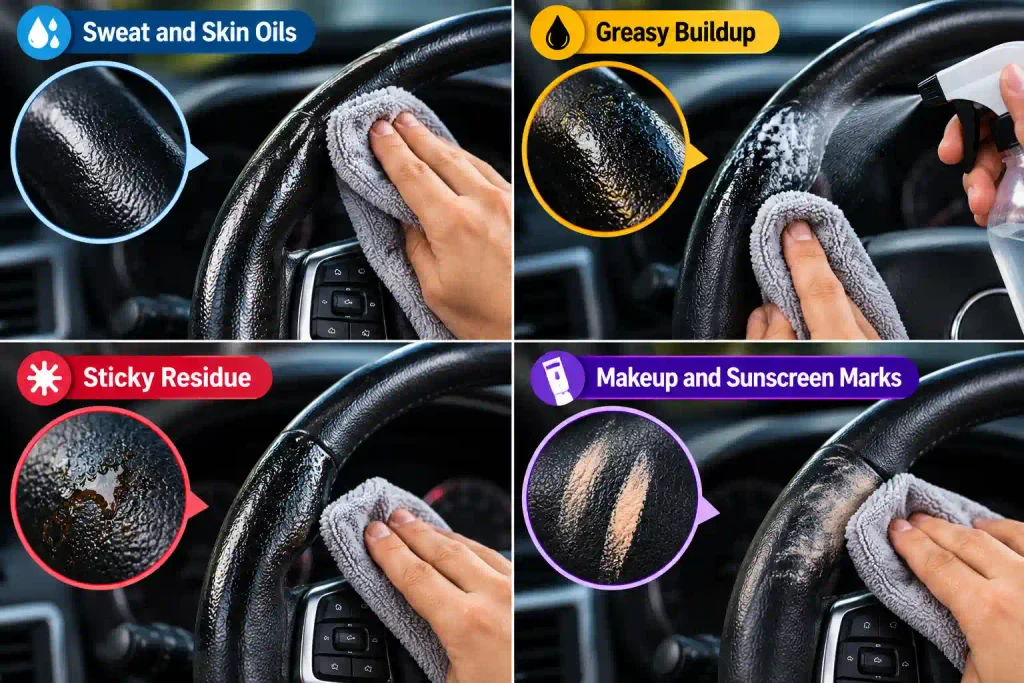
Sweat and Skin Oils
Sweat and skin oils often accumulate around the upper rim and the sections where the driver holds the wheel.
Use a compatible cleaner and gently wipe the affected areas. If the manufacturer’s instructions recommend cleaning the entire steering wheel uniformly, clean the full appropriate surface rather than treating isolated patches.
Persistent shine may indicate wear rather than remaining oils.
Greasy Buildup
Greasy contamination may come from hand creams, sunscreen, cosmetics, or natural skin oils.
Remove it with a product approved for the specific material. Avoid concentrated degreasers or strong solvents, as they can damage certain finishes.
If grease remains after following the recommended cleaning method, seek advice from an automotive detailing professional.
Sticky Residue
Sticky residue can result from spilled beverages, unsuitable interior products, or a deteriorating surface coating.
First, try the manufacturer’s recommended cleaning method. Remove the cleaner residue completely and allow the wheel to dry.
If the sticky feel returns soon after cleaning, the coating itself may be breaking down. Repeatedly applying stronger products could make the damage worse.
Makeup and Sunscreen Marks
Cosmetics and sunscreen can leave visible marks or oily residue on steering wheels.
Use a material-compatible cleaner and gentle wiping motions. Avoid applying unapproved solvents to remove colored or greasy marks.
If the stain remains, identify the material and product compatibility before attempting another treatment.
Common Steering Wheel Cleaning Mistakes to Avoid
A steering wheel can be damaged by the cleaning process even when the product appears effective at first. The following mistakes are particularly important to avoid.
Using Strong Solvents
Paint thinners, aggressive solvents, and certain household cleaners may affect coatings, dyes, and synthetic materials.
Use only approved products and avoid experimenting with harsh chemicals on an important driving control.
Applying Oily Dashboard Dressing
Glossy dashboard dressings are not automatically suitable for steering wheels. An oily or slippery film may compromise the grip you expect from the wheel.
Keep the steering wheel free from unapproved dressings and remove residue according to the surface manufacturer’s instructions.
Using Abrasive Scrubbers
Scouring pads and stiff brushes can scratch plastic, damage leather coatings, or alter microfiber texture.
Choose a suitable soft cloth or material-specific tool instead.
Spraying Cleaner Directly Into Controls
Direct spraying may allow liquid to enter switches, trim gaps, and electronic components.
Apply cleaner using the product’s recommended controlled method, and avoid soaking the rim or spokes.
Using Too Much Water
A wet steering wheel can allow moisture to reach seams and internal openings. Excess moisture is unnecessary for routine surface cleaning.
Use a controlled amount of liquid and dry the surface according to the manufacturer’s instructions.
Trying to Restore Worn Leather Through Aggressive Cleaning
A shiny patch or peeling surface may result from wear rather than dirt. Repeated scrubbing cannot rebuild a damaged coating.
If the material remains discolored, sticky, cracked, or peeling after careful cleaning, professional assessment may be appropriate.
How Often Should You Clean Your Steering Wheel?
The appropriate cleaning frequency depends on how often you drive, the condition of your hands, the vehicle’s environment, and the steering wheel material.
Use these practical guidelines:
- Routine maintenance: Wipe away ordinary dirt when it becomes noticeable.
- After heavy contamination: Clean sweat, sunscreen, or other residue promptly using an approved method.
- During interior detailing: Inspect the rim, spokes, seams, and controls for buildup.
- When the surface becomes sticky: Determine whether the cause is removable residue or deterioration of the finish.
There is no universal requirement to deep-clean every steering wheel on a fixed schedule. Gentle maintenance when needed is preferable to repeatedly exposing the material to cleaning chemicals.
How to Keep Your Steering Wheel Clean for Longer
Simple habits can reduce the accumulation of oils, grime, and cleaning residue.
Keep Your Hands Clean
When practical, clean your hands before driving, especially after applying sunscreen, cosmetics, hand cream, or handling greasy items.
Do not use hand sanitizer and immediately grip the steering wheel while your hands remain wet unless the product and vehicle guidance establish compatibility.
Avoid Eating While Driving
Food residue and oily fingers can transfer contamination to the steering wheel. Keeping food and greasy products away from the wheel helps reduce cleaning needs.
Clean Spills Promptly
If a drink or other substance contacts the steering wheel, wipe it away promptly using a suitable cloth and the approved cleaning method.
Do not let sticky residue accumulate around buttons or seams.
Use Material-Specific Cleaning Products
Keep your interior cleaning products organized by material. Products designed for leather seats, dashboards, fabric, or glass should not automatically be used on the steering wheel.
For help organizing your interior detailing supplies, see our DIY car detailing checklist.
Avoid Unnecessary Surface Dressings
A steering wheel does not need a glossy finish to look clean. The priority is removing dirt and leaving the surface dry, clean, and suitable for secure handling.
Avoid products that leave an oily or slippery residue unless the vehicle manufacturer specifically approves their use.
When Should You Replace or Professionally Restore a Steering Wheel?
Cleaning can remove surface contamination, but it cannot reverse all material damage.
Consider a professional assessment if your steering wheel has:
- Peeling or flaking surface material.
- Deep cracks or tears.
- A sticky coating that returns after cleaning.
- Exposed underlying material.
- Severe discoloration or damaged stitching.
A specialist may be able to repair or re-cover certain surfaces. Replacement may be necessary when the material is extensively damaged.
If the damage involves the horn pad, airbag cover, steering wheel controls, or other safety-related components, consult an authorized service professional. Do not attempt to dismantle or repair airbag components as part of routine interior detailing.
Frequently Asked Questions About Cleaning a Steering Wheel
What Is the Best Way to Clean a Steering Wheel?
The best way to clean a steering wheel is to identify its material, use a manufacturer-approved cleaner, wipe gently with the recommended cloth, remove residue, and let the surface dry completely. Avoid excess moisture, abrasive tools, and oily products that could leave the wheel slippery.
Can You Use Dish Soap to Clean a Steering Wheel?
A mild soap solution may be suitable for certain steering wheels when permitted by the vehicle manufacturer. However, some steering wheel materials require specific products or cleaning methods. Check your owner’s manual and never assume that dish soap is appropriate for every leather, vinyl, synthetic leather, or Alcantara surface.
Can You Use Alcohol to Clean a Leather Steering Wheel?
Do not assume that rubbing alcohol or alcohol-based cleaners are safe for a leather steering wheel. Some products may affect the protective coating or color. Follow your vehicle manufacturer’s instructions and use only a compatible cleaner approved for that specific surface.
How Do You Remove Grease From a Steering Wheel?
To remove grease from a steering wheel, use a compatible cleaner and gently wipe the affected surface with the recommended cloth. Avoid strong degreasers, harsh solvents, and aggressive scrubbing. If the wheel remains shiny or sticky after cleaning, the surface coating may be worn or deteriorating.
Can You Use Leather Conditioner on a Leather Steering Wheel?
Only use leather conditioner if your vehicle manufacturer explicitly approves it for the steering wheel’s particular finish. Some steering wheels are designed to be maintained with cleaning alone or with specific care products. Avoid oily conditioners that could leave an unwanted slippery residue.
How Do You Clean an Alcantara Steering Wheel?
Clean an Alcantara steering wheel by removing loose dust, using the manufacturer-approved cleaning method, and applying minimal moisture. Avoid harsh chemicals, excessive rubbing, and unapproved steam cleaning. Allow the material to dry completely before gently brushing it if the care instructions permit.
Why Does My Steering Wheel Feel Sticky After Cleaning?
A steering wheel may feel sticky after cleaning because of leftover product residue, an incompatible cleaner, or deterioration of the surface coating. Use the manufacturer’s recommended residue-removal method. If the stickiness returns after the surface has dried, seek professional advice rather than applying stronger chemicals.
How Often Should You Clean a Steering Wheel?
Clean your steering wheel whenever noticeable dirt, sweat, or residue accumulates. The frequency depends on driving habits, environmental conditions, and material type. Regular gentle maintenance is generally preferable to frequent aggressive scrubbing or unnecessary application of cleaning products.
Final Thoughts
Learning how to clean a steering wheel properly means choosing the correct method for the material and avoiding unnecessary friction, chemicals, and moisture. Leather, synthetic leather, vinyl, plastic, rubber, and Alcantara may look similar in certain vehicles, but they do not always require the same care.
Identify the material, check your owner’s manual, test compatible products when appropriate, and clean gently. Remove residue completely and allow the wheel to dry before driving.
Most importantly, do not use glossy or oily dressings simply to improve the appearance. A clean steering wheel should be free from contamination and slippery residue while retaining the feel intended by the vehicle manufacturer.