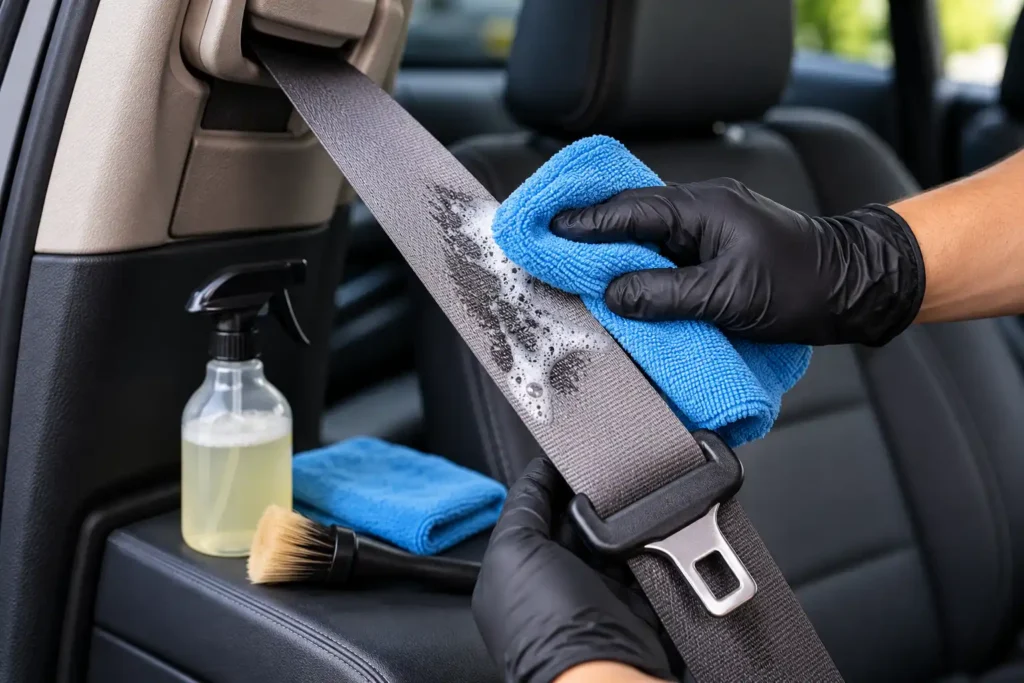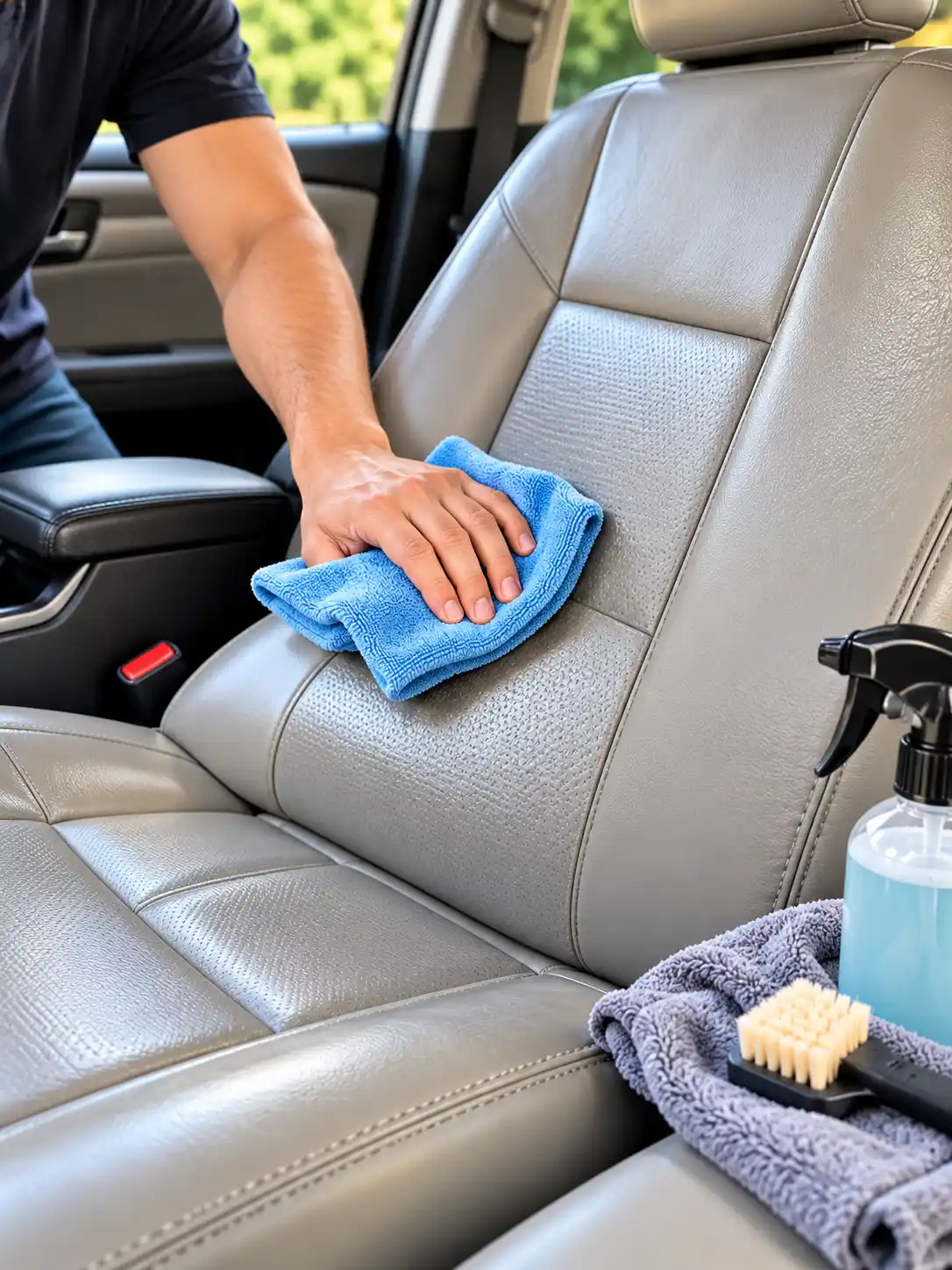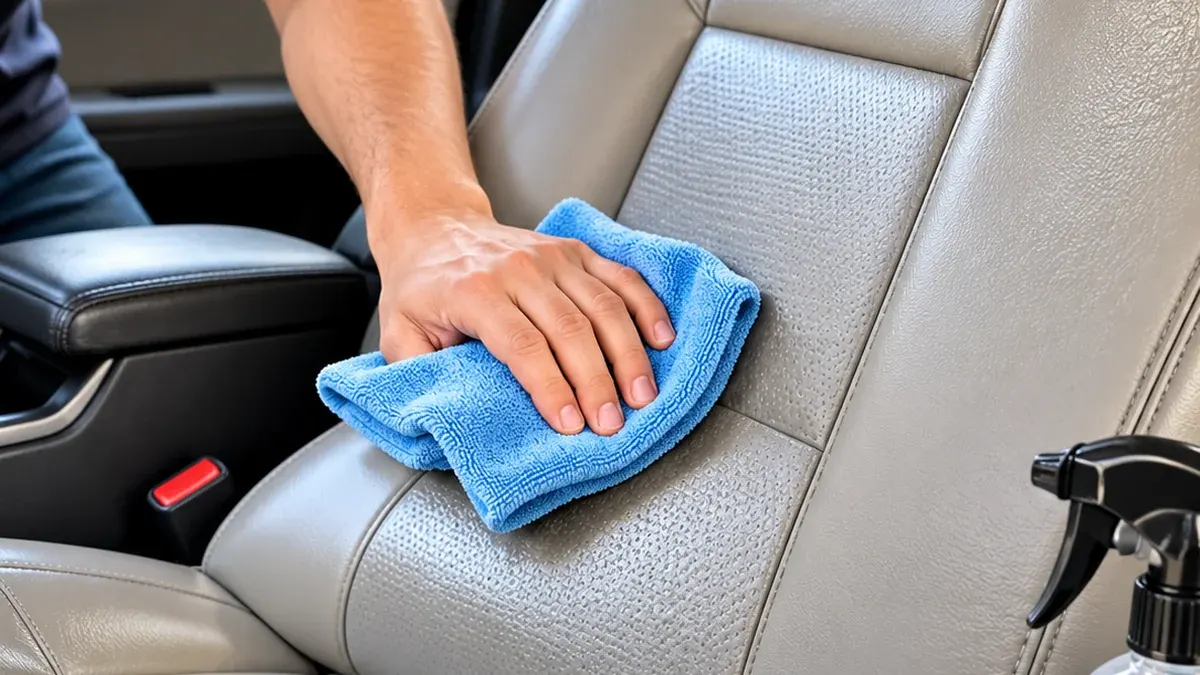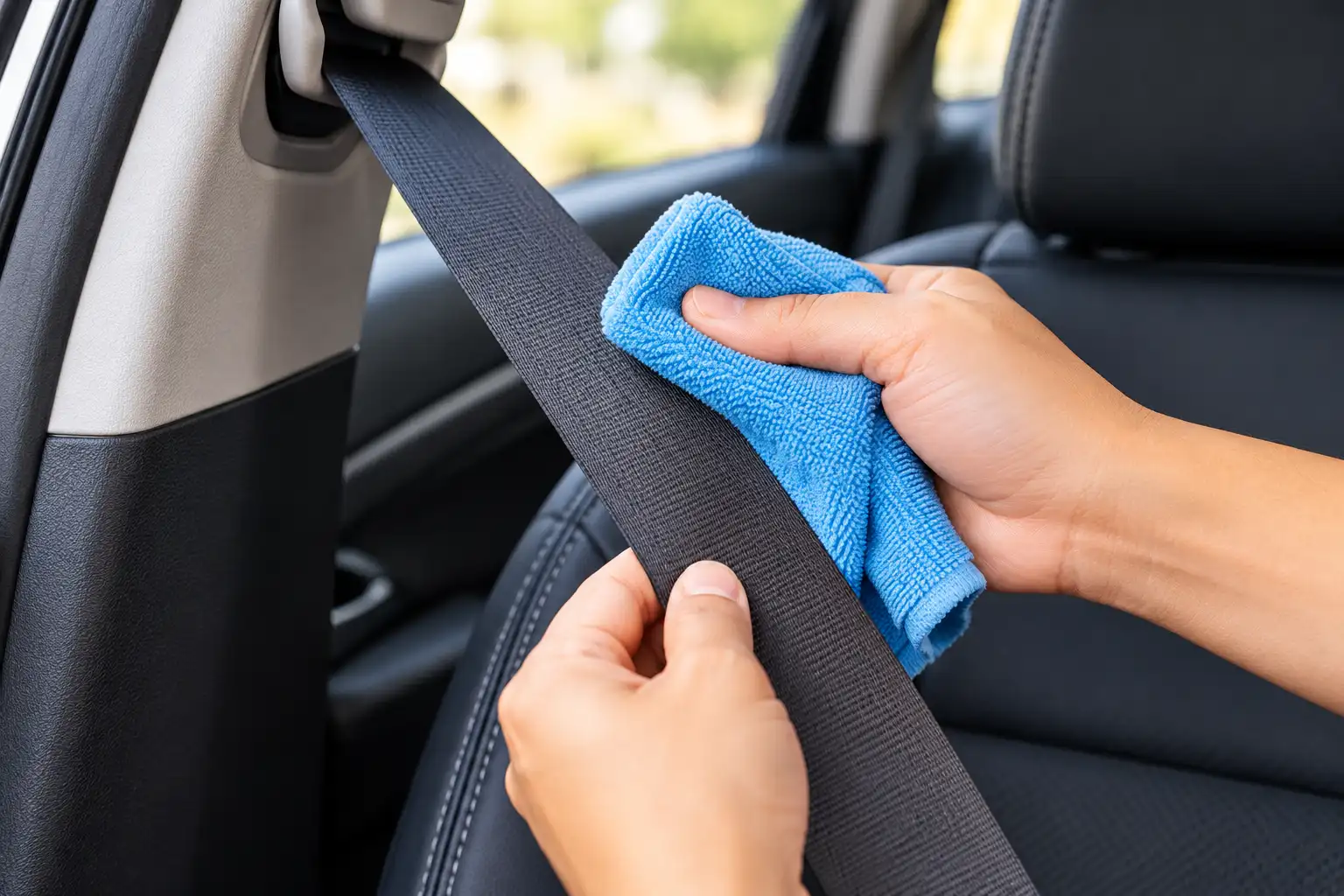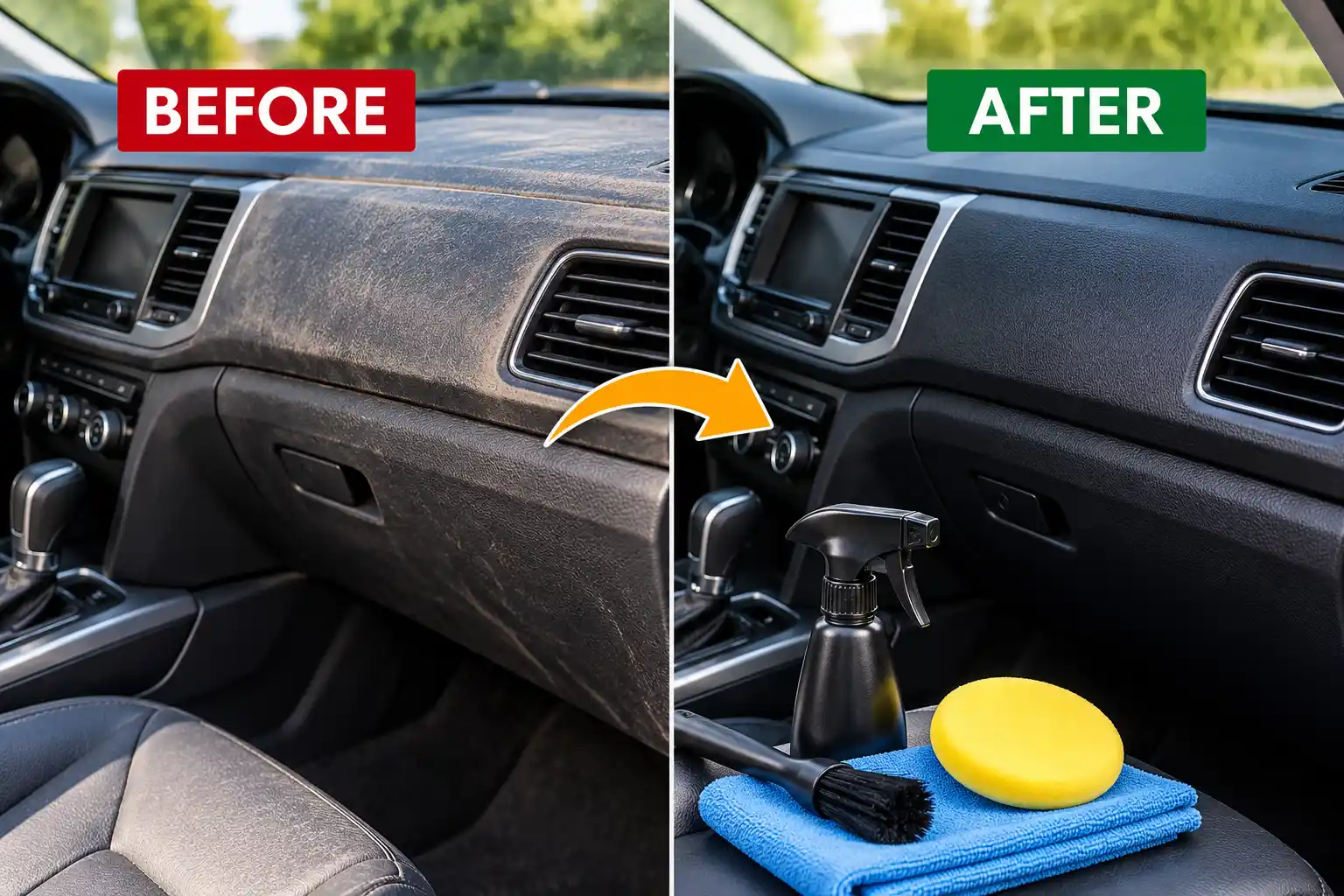
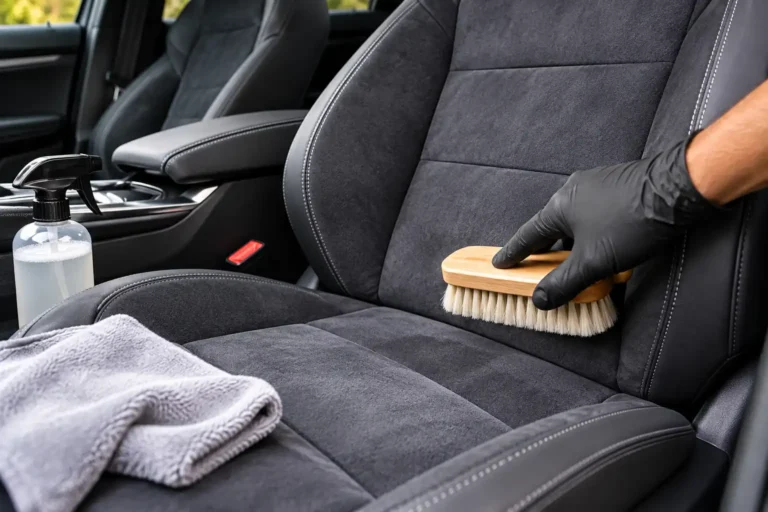
Alcantara seats give a car interior a soft, suede-like texture and a premium appearance. However, everyday use can leave them covered with dust, body oils, sweat, food stains, and flattened fibers. Cleaning them incorrectly can cause discoloration, water marks, or changes to the original texture.
The best way to clean Alcantara seats is to remove loose dirt with a vacuum cleaner, gently treat stains with a suitable cleaning method, use as little moisture as possible, and let the material dry naturally. Regular maintenance is usually easier and safer than waiting until the seats become heavily soiled.
This guide explains: How to clean Alcantara car seats step by step, which products and tools to use, how to remove common stains, and how to maintain the material without damaging its soft finish.
What Are Alcantara Seats?
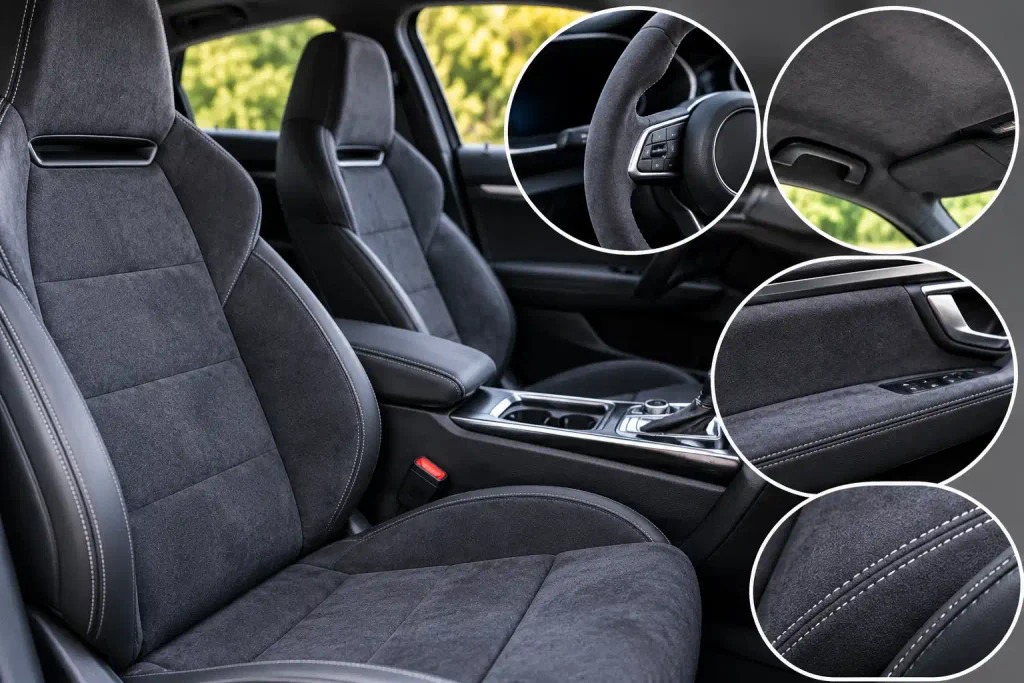
Alcantara is a branded synthetic microfiber material that has a soft, suede-like feel. It is used in vehicle seats, steering wheels, headliners, door panels, and other interior components. Although it resembles natural suede, it is not leather and should not automatically be treated with leather-cleaning products.
The material requires gentle cleaning to preserve its appearance and surface texture. The official Alcantara cleaning and maintenance guide recommends regular dust removal, gentle wiping, and avoiding vigorous rubbing or direct steam cleaning.
Before cleaning, check your vehicle owner’s manual. Some manufacturers provide specific instructions for the Alcantara or microfiber fabric fitted to particular models.
What You Need to Clean Alcantara Seats
Gather the appropriate cleaning tools before starting. Using a few suitable supplies is better than applying several untested products to the seat.
- A vacuum cleaner with an upholstery attachment
- A clean, soft detailing brush
- White, lint-free microfiber or cotton cloths
- A soft sponge
- Clean water
- An Alcantara-compatible upholstery cleaner approved for your vehicle’s material
- A dry absorbent towel
A dedicated Alcantara cleaner can be useful for greasy or persistent stains, but always check the product label and the vehicle manufacturer’s instructions. Test any cleaner on a small, inconspicuous area before treating a visible section of the seat.
Avoid using ordinary leather conditioner, vinyl dressing, abrasive brushes, harsh household cleaners, bleach, or unapproved solvents. These products may alter the color or texture of the material.
How to Clean Alcantara Seats Step by Step
Follow these steps for routine cleaning and light to moderate dirt. For removable upholstery, special contamination, or a manufacturer’s specific cleaning procedure, follow the applicable care instructions instead.
Step 1: Park the Car and Inspect the Seats
Park the vehicle in a shaded, well-ventilated location and allow the seats to cool. Hot surfaces can make cleaning and drying more difficult.
Inspect the seat cushions, backrests, side bolsters, seams, and areas around the seat controls. Look for dust, crumbs, shiny or flattened patches, liquid spills, grease, and other stains.
Identify the type of contamination before choosing a cleaning method. Loose dust usually needs only vacuuming, while an oily stain may require a dedicated cleaner. A large stain or one that has penetrated the seat padding may need professional treatment.
Step 2: Vacuum Loose Dirt and Dust
Use a vacuum cleaner with a clean upholstery attachment to remove dust, crumbs, hair, and loose debris.
Move the attachment slowly across the seat without pressing it aggressively into the fabric. Pay particular attention to seams, creases, and the gaps between the seat cushion and backrest.
Vacuuming first is important because rubbing a dirty seat can push debris deeper into the material or spread it across the surface.
If dirt remains around the stitching, use a soft detailing brush to loosen it gently while vacuuming. Do not use a stiff brush or scrape the fibers.
Step 3: Brush the Surface Gently
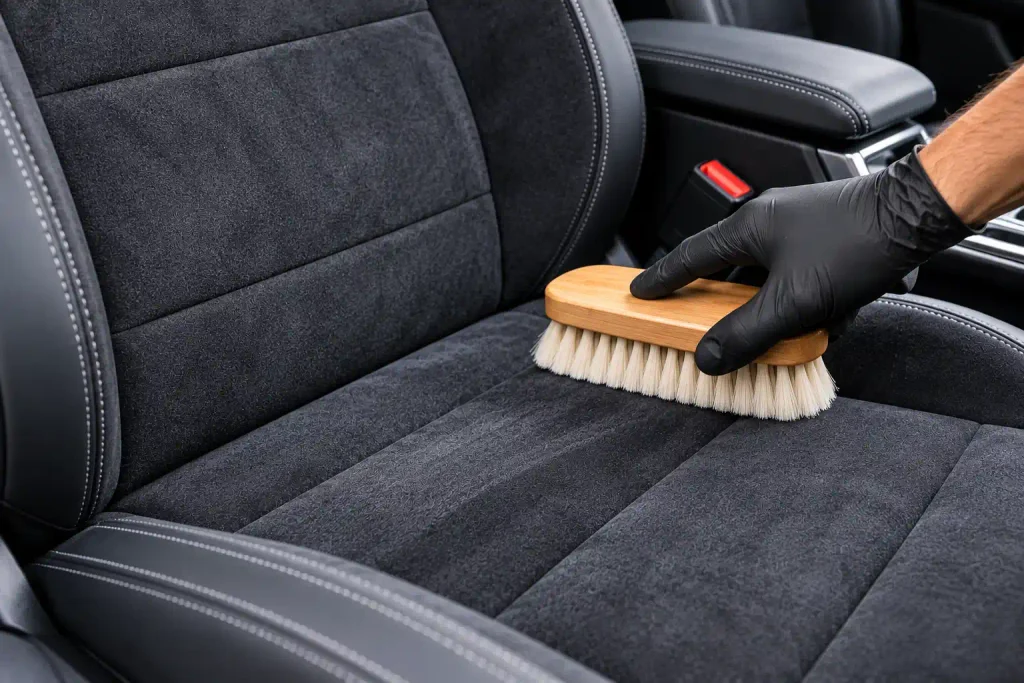
Once the loose dirt has been removed, lightly brush the seat with a clean, soft-bristle brush.
Use short, gentle strokes rather than vigorous scrubbing. This can help loosen surface dirt and lift flattened fibers without unnecessarily stressing the material.
If the seat already looks smooth or shiny in frequently used areas, do not try to correct it by brushing harder. The appearance may result from compressed fibers, accumulated body oils, or wear rather than ordinary dust.
Step 4: Wipe the Seat With a Slightly Damp Cloth
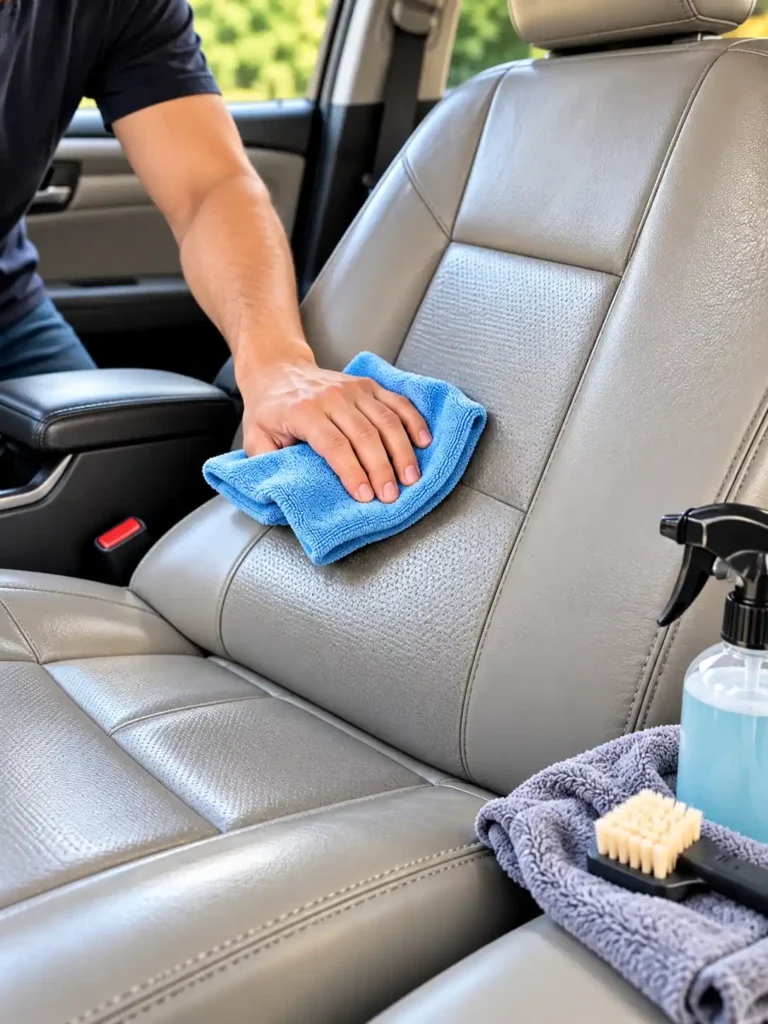
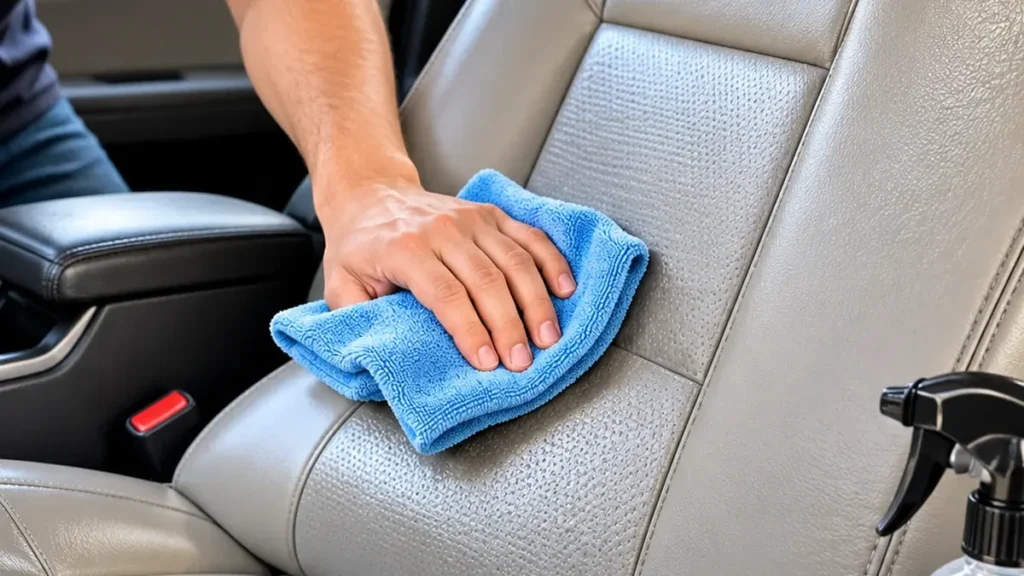
For routine maintenance, lightly dampen a clean white cotton cloth with water and wring it out thoroughly. The cloth should be damp, not dripping wet.
Wipe the surface gently and evenly. Avoid concentrating too much moisture on one small spot, and do not press hard enough to saturate the upholstery.
Use a clean section of the cloth as dirt transfers onto it. Printed paper towels and colored cloths are best avoided because they may leave residue or transfer dye.
Do not pour water directly onto the seat. Excessive moisture can penetrate the upholstery and may contribute to prolonged drying, water marks, or problems with the underlying materials.
The official Alcantara care instructions specifically recommend a slightly moistened white cotton cloth for routine weekly cleaning.
Step 5: Apply an Appropriate Cleaner When Needed
If dust removal and gentle wiping are not enough, use a cleaner specifically approved for Alcantara or for the exact seat material identified in your vehicle’s manual.
Read the product directions carefully. Some cleaners require a particular application method, dilution, or removal procedure.
Apply the cleaner as directed by its manufacturer. Do not spray cleaning product directly onto the seat unless both the product instructions and the vehicle manufacturer’s guidance explicitly permit that method. If direct application is not approved, apply a small amount to a clean cloth or sponge instead.
Work gently and treat only the area necessary. Avoid soaking the seat, scrubbing repeatedly, or combining different cleaning products.
After treatment, remove any cleaner residue as directed on the product label. If the instructions call for a clean damp cloth, use one that has been thoroughly wrung out.
Always perform a spot test in a hidden area and allow it to dry before treating a large or visible section.
Step 6: Blot Stains Instead of Rubbing Them
If you encounter a fresh spill, act promptly. Use a clean, non-printed absorbent cloth to lift the liquid by blotting rather than rubbing.
For thicker substances, carefully remove the excess with a spoon or suitable plastic tool before treating the remaining mark. Avoid scraping the material itself.
For localized stains, work gently from the outside edge toward the center to reduce the chance of spreading the stain. Rinse or replace the cloth as needed so that you do not transfer dirt back onto the seat.
The official Alcantara stain-removal guide recommends prompt treatment, avoiding vigorous rubbing, and never pouring cleaner directly onto the material.
Different stains may require different methods. Do not assume that a cleaner suitable for food residue will also be suitable for ink, oil, or dye transfer.
Step 7: Remove Residue Without Overwetting
Once the dirt has been treated, check whether any product residue remains. Follow the cleaner’s directions for removing it, using a clean white cloth or a well-wrung sponge where appropriate.
Work in small sections and turn the cloth frequently. Avoid repeatedly wetting an area that is already damp.
If the stain remains after careful treatment, do not continue scrubbing in an attempt to force it out. Repeated friction can affect the surface texture. An approved specialist cleaner or professional upholstery detailer may be the safer choice.
Step 8: Let the Seats Dry Naturally
Allow the seats to dry completely before using the vehicle as usual. Keep the area well ventilated and avoid direct, intense heat.
Do not use a hair dryer, heat gun, or direct steam cleaner to speed up the process. Alcantara’s official care guidance advises against direct steam cleaning and recommends allowing cleaned material to dry before brushing it gently.
Drying time depends on the amount of moisture used, the vehicle’s ventilation, and the surrounding conditions. Do not cover the seats while they are still damp.
Once the material is fully dry, use a clean, soft-bristle brush with light strokes if needed to restore a more even surface appearance.
How to Remove Common Stains From Alcantara Seats
The right treatment depends on what caused the stain. Start by checking the vehicle’s instructions and any specialist stain-removal guidance before applying a cleaning product.
How to Remove Coffee and Drink Stains
Blot up the spill immediately using a clean, absorbent, non-printed cloth. Do not rub the liquid into the fibers.
Follow the applicable stain-removal instructions using a suitable method for the material. If the spill contains milk, sugar, or other ingredients that leave residue, careful cleaning may be necessary even after the visible liquid has disappeared.
Avoid pouring water onto the seat or repeatedly soaking the same area. If the mark persists, use an approved Alcantara cleaner according to its directions.
How to Remove Grease and Body Oil
Body oils can accumulate on seat bolsters and other frequently touched areas, leaving them darker or shinier than the surrounding material.
Vacuum the area first if loose dirt is present. Then use a cleaner explicitly suitable for Alcantara and permitted by the vehicle manufacturer.
Do not use ordinary leather conditioner or an untested degreaser. These may leave residue or change the material’s appearance. If an oily patch has become deeply embedded, seek professional cleaning rather than scrubbing aggressively.
How to Remove Ink or Dye Transfer
Ink, clothing dye, and other strongly colored marks can be difficult to remove without affecting the upholstery’s color.
Avoid rubbing the mark or applying a general-purpose solvent. Some stain-removal guides specify different methods for particular stain types, but those methods should not be used automatically on every car seat.
Check the official Alcantara stain guide and your vehicle owner’s manual. If the appropriate treatment is unclear or the stain is extensive, have a qualified upholstery specialist assess it.
How to Remove Pet Hair
Use a vacuum with an upholstery attachment to remove loose hair. Move slowly across the surface and clean the tool regularly.
If hair is embedded in the fibers, a soft brush may help loosen it. Use gentle strokes and avoid aggressive rubber tools or abrasive devices that could disturb the surface.
Finish by vacuuming the loosened hair. For heavily embedded pet hair, a professional detailer may be able to remove it more safely.
How to Deal With Persistent Odors
First, identify the source of the odor. Food, drinks, sweat, and moisture trapped in the seat or surrounding carpet may continue to smell even after the visible surface has been cleaned.
Remove any contamination using a method suitable for the upholstery and allow it to dry completely. Do not spray perfume, deodorizer, or an unapproved chemical directly onto Alcantara to mask the smell.
If an odor returns after cleaning, the source may be deeper in the seat padding or elsewhere in the vehicle. Consider professional inspection instead of repeatedly adding moisture.
What Should You Avoid When Cleaning Alcantara Seats?
Some cleaning mistakes can cause more damage than the original stain. Keep these precautions in mind:
- Do not scrub aggressively. Excessive friction can change the appearance and texture of the fibers.
- Do not use a steam cleaner directly on Alcantara unless the specific vehicle and material manufacturer explicitly approves a method.
- Do not saturate the seats with water or cleaning solution.
- Do not use bleach or unapproved solvents.
- Do not apply ordinary leather conditioners, leather creams, or vinyl dressings to Alcantara.
- Do not mix cleaning products or experiment with chemicals on a visible part of the seat.
- Do not use colored or printed cloths that may transfer dye or ink.
- Do not apply intense heat to dry the upholstery.
Vehicle-specific instructions matter. For example, some owner’s manuals warn that commonly available upholstery, leather, or vinyl cleaners can damage certain Alcantara microfiber fabrics. Check your own manual before choosing a product.
How Often Should You Clean Alcantara Seats?
The best cleaning schedule depends on how frequently you drive, whether passengers or pets regularly use the vehicle, and how quickly the seats become dirty.
For routine care, use this practical schedule as a starting point:
- Daily or after use when necessary: Remove fresh spills and visible debris promptly.
- Weekly: Remove dust with a vacuum or soft brush and gently wipe the material with a slightly damp white cotton cloth when appropriate.
- Periodically: Inspect the seats for buildup, greasy patches, and persistent stains. Use a suitable specialist cleaner if needed.
- When heavily soiled: Follow the vehicle manufacturer’s instructions or consult a professional detailer.
These are general maintenance suggestions, not mandatory intervals for every vehicle. Adjust them according to the manufacturer’s guidance and the condition of the seats.
For a broader interior maintenance routine, see the DIY Car Detailing Checklist. You can also use our guide on How Often to Deep Clean Your Car to plan regular interior care.
Can You Restore Flattened or Shiny Alcantara Seats?
Flattened or shiny areas often develop where drivers sit, slide across the bolsters, or repeatedly touch the material. Dust and body oils may also affect the surface’s appearance.
Start by vacuuming the area and checking the cleaning instructions. If the material is clean and completely dry, gently brushing it with a soft-bristle brush may help make the surface look more even.
However, brushing cannot reverse all wear. If the fibers are worn, matted, discolored, or damaged, aggressive scrubbing is unlikely to restore the original finish and may make the problem worse.
For expensive or heavily worn seats, ask an upholstery specialist to assess whether professional cleaning or repair is appropriate.
Should You Clean Alcantara Seats Yourself or Hire a Professional?
Routine dust removal and light maintenance are generally manageable at home when you follow the correct care instructions.
Professional cleaning is worth considering when the seats have deep grease stains, extensive discoloration, persistent odors, old stains of unknown origin, or contamination that has penetrated the upholstery padding.
It is also a sensible option when the vehicle manufacturer’s cleaning instructions are restrictive or the correct treatment for a particular stain is uncertain.
Choose a detailer who has experience with Alcantara and ask which products and methods will be used. A service intended for leather or ordinary fabric upholstery may not be suitable for your seats.
Conclusion
Cleaning Alcantara seats safely comes down to gentle handling, suitable products, and moisture control. Vacuum loose dirt first, use a lightly damp white cloth for routine maintenance, treat stains promptly, and let the material dry naturally.
Avoid aggressive scrubbing, direct steam, excessive water, and cleaners that have not been approved for your upholstery. Above all, follow your vehicle manufacturer’s instructions and the official Alcantara care guidance.
With consistent maintenance and careful stain treatment, you can help preserve the soft texture and premium appearance of your car’s Alcantara seats for longer.
Frequently Asked Questions About Cleaning Alcantara Seats
1. What Is the Best Way to Clean Alcantara Car Seats?
The best way to clean Alcantara car seats is to vacuum loose dirt, gently wipe the material with a slightly damp white cotton cloth, and use an approved Alcantara cleaner when necessary. Avoid excessive moisture and aggressive rubbing, and follow your vehicle manufacturer’s instructions.
2. Can You Use Water to Clean Alcantara Seats?
Yes, a slightly damp cloth can be used for routine Alcantara maintenance. Wring the cloth thoroughly so it does not drip, and avoid soaking the upholstery. Allow the seats to dry naturally before using them as usual.
3. Can You Use Leather Cleaner on Alcantara Seats?
Do not assume that leather cleaner is safe for Alcantara. Alcantara is a synthetic microfiber material, and some vehicle manufacturers warn that leather and vinyl cleaning products can damage it. Use a cleaner approved for your specific material.
4. Can You Use a Steam Cleaner on Alcantara Seats?
Direct steam cleaning is not recommended in Alcantara’s general care instructions. Heat and moisture can pose risks to the upholstery. Check the vehicle manufacturer’s guidance and use an approved cleaning method instead.
5. How Do You Remove Stains From Alcantara Seats?
Blot fresh spills immediately with a clean, non-printed absorbent cloth. Remove excess material without scraping the fabric, then use a stain treatment appropriate for the specific substance and upholstery. Avoid rubbing, soaking, or experimenting with unapproved solvents.
6. How Do You Make Alcantara Seats Soft Again?
Vacuum the seats and, when the material is fully dry and clean, gently brush the surface with a soft-bristle brush. This may help lift flattened fibers, but it cannot reverse permanent wear or fiber damage.
7. How Often Should You Clean Alcantara Car Seats?
Remove spills and debris as soon as possible, vacuum regularly, and use a slightly damp white cotton cloth for routine maintenance when appropriate. Deep-clean only as needed, using the manufacturer’s recommended methods and products.