Car wheels face some of the harshest conditions on a vehicle. Road salt, moisture, de-icing chemicals, brake dust, and road grime all affect wheel appearance and durability.
Road salt is especially damaging because it speeds up corrosion on exposed metal surfaces. The EPA estimates that road salt causes about $5 billion in annual damage to vehicles, roads, and infrastructure in the United States. AAA also notes that salt can cling to metal parts and accelerate rust, especially around the underside and exposed components.
Brake dust adds another layer of risk. It contains abrasive particles that build up quickly on wheel surfaces. Over time, these contaminants stain the finish, weaken protection, and increase the risk of corrosion.
Wheel protection is not only about appearance. Proper wheel care helps preserve the finish, reduce long-term damage, and make future cleaning easier.
Step-by-Step Car Wheel Protection Process
A simple wheel protection process helps beginners clean wheels safely and protect them from brake dust, road dirt, water spots, and corrosion. The main goal is to remove loose dirt first, clean the surface gently, dry it properly, and then add a protective layer.
Wheel Protection Steps
- Rinse dirt and debris
- Apply wheel cleaner
- Scrub gently
- Rinse and dry properly
- Apply protection with sealant or coating
Step 1: Rinse Dirt and Debris
Start by spraying the wheels with clean water. This removes loose dirt, sand, mud, and small road particles from the surface.
This step is important because dry dirt can scratch the wheel when you start scrubbing. A garden hose is enough for normal cleaning. A pressure washer works better if the wheels are very dirty, but keep the pressure at a safe distance from the wheel surface.
Step 2: Apply Wheel Cleaner
Spray a wheel-safe cleaner over the full wheel surface. Cover the spokes, edges, lug nut area, and inner sections where brake dust usually collects.
Let the cleaner sit for a short time so it can loosen brake dust, grease, and road grime. Do not let the cleaner dry on the wheel. If it dries, it can leave marks or stains, especially on painted, polished, or coated wheels.
For beginners, a pH-balanced wheel cleaner is the safest choice because it cleans well without being too harsh.
Step 3: Scrub Gently
Use a soft wheel brush or microfiber wash mitt to clean the wheel. Scrub the spokes, around the lug nuts, and the inner areas where dirt hides.
Do not press too hard. Gentle scrubbing is enough when the cleaner has already loosened the dirt. Hard scrubbing can scratch the finish or damage protective coatings.
Use a separate brush or mitt only for wheels. Wheel dirt often contains brake dust and small metal particles, so you should not use the same tool on the car paint.
Step 4: Rinse and Dry Properly
Rinse the wheel thoroughly with clean water. Make sure all cleaner, dirt, and foam are removed from the surface.
Leftover cleaner can dry on the wheel and affect the finish over time. After rinsing, dry the wheel with a clean microfiber towel. Drying helps prevent water spots, streaks, and mineral marks.
Do not let the wheels air dry if you want a cleaner finish.
Step 5: Apply Protection with Sealant or Coating
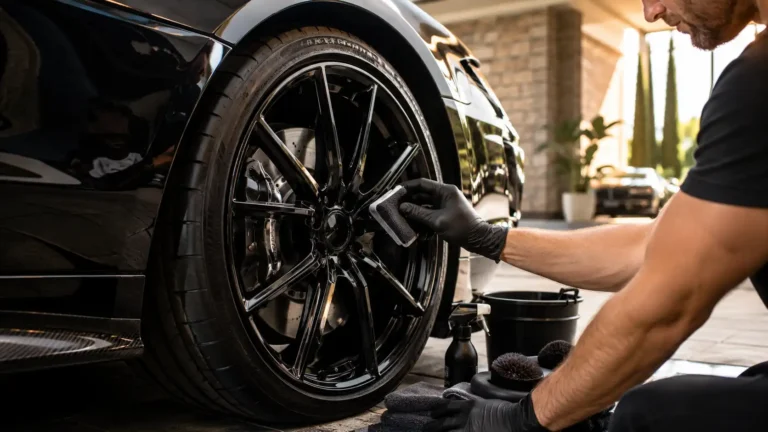
After the wheel is clean and dry, apply a wheel sealant or ceramic coating. This adds a protective layer over the surface.
The protection helps stop brake dust, moisture, and road grime from sticking strongly to the wheel. It also makes the next cleaning easier because dirt washes off faster.
For beginners, a spray wheel sealant is usually easier to apply. Ceramic coating lasts longer, but it needs more careful application.
Here is the updated section with product names + Amazon buying links.
Essential Products for Wheel Protection
The right products make wheel cleaning safer and more effective. Each product has a specific role, from removing brake dust to adding long-term surface protection.
Wheel Cleaners
Wheel cleaners remove brake dust, grease, and road dirt more effectively than regular car shampoo. For beginners, a pH-balanced wheel cleaner is usually safer for regular use because it cleans without being too harsh on the wheel finish.
Recommended wheel cleaner products:
| Product Name | Best For | Amazon Buying Link |
| Meguiar’s Hot Rims Wheel & Tire Cleaner | Regular wheel and tire cleaning | Check Price on Amazon |
| Chemical Guys Diablo Wheel Cleaner | pH-balanced routine wheel cleaning | Check Price on Amazon |
| Chemical Guys, Diablo Brake Dust & Wheel Cleaner Spray for Rims | Beginner-friendly spray cleaner | Check Price on Amazon |
| Meguiar’s Wheel Cleaner Search Page | More Meguiar’s wheel cleaner options | Check Price on Amazon |
Brushes and Microfiber Towels
Safe wheel care also depends on the tools used during cleaning. Soft wheel brushes help clean tight areas around spokes, lug nuts, and inner wheel barrels. Microfiber towels help dry the wheels without dragging dirt across the surface.
Recommended wheel cleaning tools:
| Product Name | Best For | Amazon Buying Link |
| EZ Detail Big Wheel Brush – 18-Inch Flexible Nylon Rim | Cleaning inner barrels and tight wheel areas | Check Price on Amazon |
| Chemical Guys, Gerbil Wheel & Rim Brush, Soft Natural Bristles, for Tires | Deep wheel cleaning and spoke areas | Check Price on Amazon |
| Mothers Car Wash Brush, Wheel and Fender Brush | Basic wheel scrubbing | Check Price on Amazon |
| Rag Company Eagle Edgeless 500 Detailing Towel | Drying wheels safely | Check Price on Amazon |
| Chemical Guys, Professional Microfiber Towels | Wiping and drying after cleaning | Check Price on Amazon |
Wheel Sealants and Ceramic Coatings
Wheel sealants and ceramic coatings add a protective layer over the wheel surface. This layer helps reduce brake dust buildup, improves water resistance, and makes future cleaning easier.
Recommended wheel protection products:
| Product Name | Best For | Amazon Buying Link |
| CARPRO CQUARTZ DLUX Wheel and Trim Coat | Long-term ceramic wheel protection | Check Price on Amazon |
| Gyeon Q² Rim EVO Ceramic Wheel Coating | Heat-resistant ceramic wheel protection | Check Price on Amazon |
Best Practices for Long-Term Wheel Protection
Long-term wheel protection depends on consistent care and safe cleaning habits. Regular maintenance helps prevent brake dust buildup, surface staining, and early corrosion.
Clean Wheels Regularly
Clean wheels every one to two weeks to stop dirt and brake dust from bonding to the surface.
Frequent cleaning keeps the finish cleaner and reduces the need for aggressive scrubbing later.
Avoid Harsh Chemicals
Strong chemicals can strip protective layers and damage wheel finishes.
Mild, wheel-safe products help preserve shine, protect coatings, and extend the life of sealants.
Protect Wheels from Brake Dust
Brake dust is abrasive and can stain wheels if left untreated. It contains tiny metal particles that stick to the surface and become harder to remove over time.
Protective coatings make it harder for brake dust to bond with the wheel and easier to remove during routine cleaning.
Wheel Maintenance and Care Schedule
A regular maintenance schedule helps preserve wheel condition and reduce long-term wear. Small, consistent routines are easier to manage and more effective than occasional deep cleaning.
Weekly Cleaning Routine
A light weekly cleaning removes fresh dirt before it builds up. This keeps wheels looking better and makes deeper cleaning easier.
Weekly cleaning is especially useful for vehicles driven in dusty, rainy, or high-traffic conditions.
Monthly Protection Routine
Applying a wheel sealant once a month helps maintain a stronger barrier against dirt and moisture.
Ceramic coatings usually last longer, but they still need regular washing to maintain performance. Monthly inspection helps confirm whether the protective layer is still working properly.
Seasonal Care Tips
Seasonal weather changes affect wheel health.
Winter exposes wheels to salt, moisture, and de-icing chemicals. Summer adds heat, dust, and more brake dust buildup from frequent driving.
Adjusting the cleaning routine by season helps maintain protection throughout the year.
Conclusion
Protecting car wheels is a practical maintenance step that helps preserve both appearance and durability. Regular cleaning, safe products, and a protective layer reduce the impact of brake dust, moisture, salt, and road contamination.
Wheels are exposed to harsh conditions every day, so damage often builds slowly. Consistent care limits corrosion, keeps the finish cleaner for longer, and helps the wheels remain in better condition over time.
FAQs
How can I protect my car wheels effectively?
Clean your wheels regularly with a wheel-safe cleaner, dry them properly, and apply a sealant or ceramic coating. This helps block brake dust, moisture, and road grime from damaging the surface.
How often should I clean my wheels?
Most vehicles need wheel cleaning every one to two weeks. Vehicles driven in rain, snow, salted roads, or dusty areas need more frequent cleaning to prevent buildup.
Is ceramic coating good for wheels?
Yes. Ceramic coating is a strong option for wheel protection. It creates a durable layer that helps resist dirt, water, and brake dust while making future cleaning easier.
Can brake dust damage wheels?
Yes. Brake dust can damage wheels over time. It contains tiny metal particles that stick to the surface and can cause staining, corrosion, or finish damage if left untreated.
What products are best for wheel protection?
The best products for wheel protection include pH-balanced wheel cleaners, soft wheel brushes, microfiber towels, wheel sealants, and ceramic coatings. These products clean safely and help maintain the wheel finish.