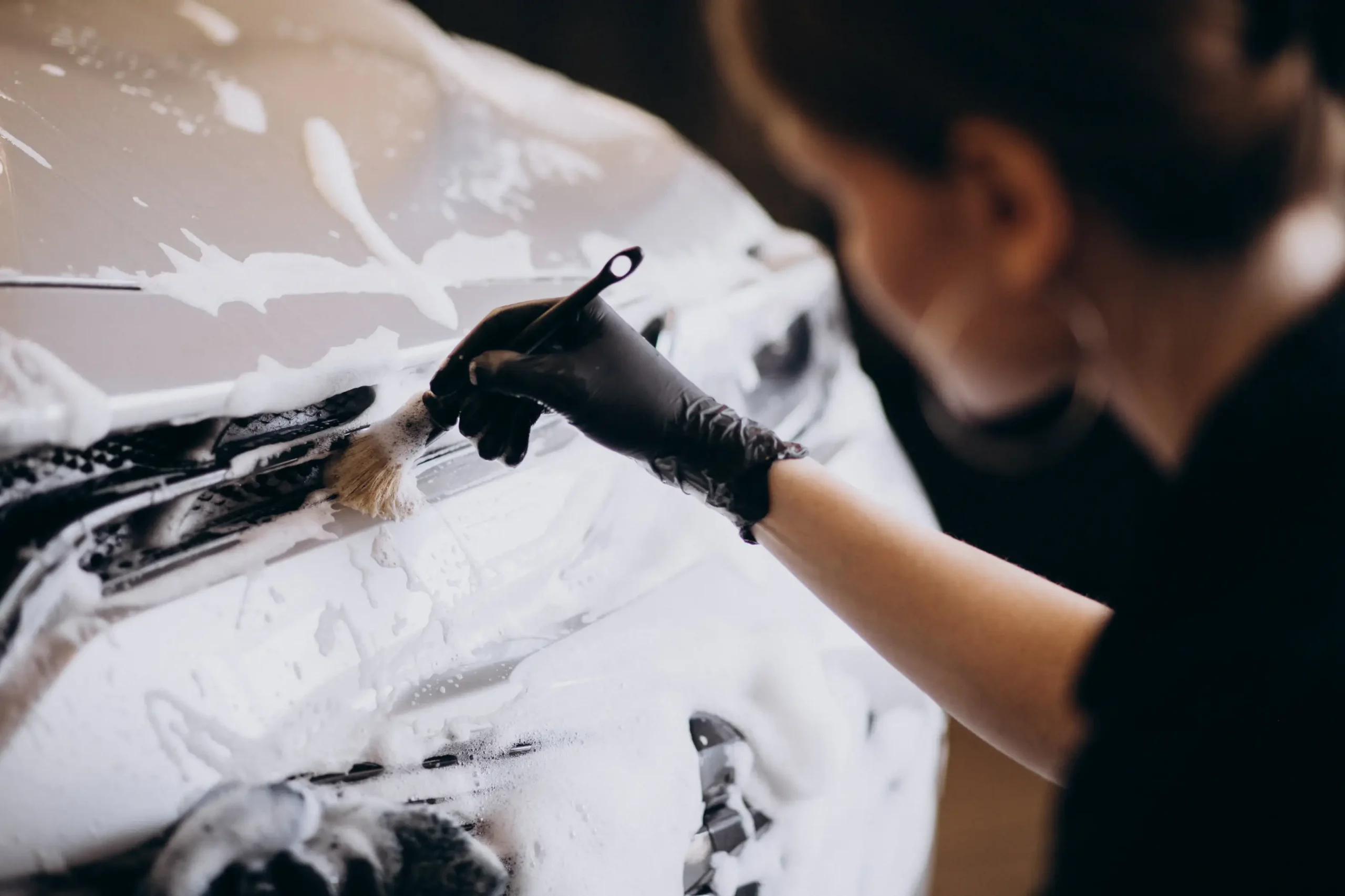
Vehicle undercoating is a protective treatment applied to the underside of a car, truck, or SUV. Its main purpose is to reduce direct exposure of metal components to water, road salt, mud, gravel, and other materials that contribute to corrosion.
Undercoating can be useful, particularly for vehicles driven where road salt is common. However, applying a thick coating over rust, moisture, dirt, or poorly prepared metal can create new problems instead of solving them.
The right decision depends on the age and condition of the vehicle, local climate, type of coating, and how long you plan to keep the vehicle. This guide explains what undercoating does, the different types available, realistic costs, advantages, disadvantages, and when the treatment makes sense.
What Is Vehicle Undercoating?
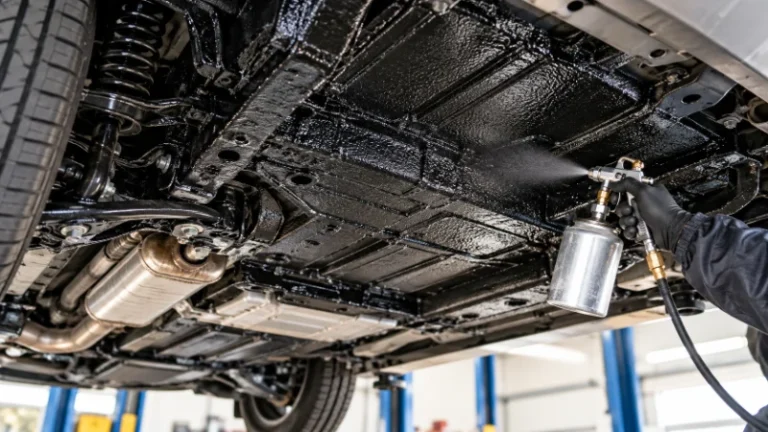
Vehicle undercoating is a protective material sprayed or brushed onto exposed areas underneath a vehicle.
Depending on the product and vehicle, treatment may cover areas such as the floor pan, frame or subframe, wheel wells, crossmembers, suspension mounting areas, and other exposed metal surfaces.
The coating creates a barrier between the metal and substances that encourage corrosion, particularly water and road salt.
Undercoating is not a rust repair. If structural metal has already been weakened by severe corrosion, spraying a coating over it will not restore the lost metal or strength.
This distinction matters because the condition of the underbody before application can determine whether an undercoating helps or creates additional problems.
AAA specifically identifies road salt and liquid de-icers as sources of underbody corrosion. Rust can affect much more than appearance, including brake lines, fuel system components, exhaust components, electrical connections, and structural areas.
How Does Undercoating Protect a Vehicle?
Corrosion develops when exposed metal reacts with moisture and oxygen. Salt and other contaminants can accelerate the electrochemical reactions involved in corrosion.
Undercoating reduces exposure by putting another layer between vulnerable metal and the environment.
For example, imagine a steel frame rail being repeatedly covered with salty winter water. Without protection, the solution can remain around seams, welds, fasteners, and damaged paint. As the area repeatedly becomes wet and dry, corrosion can develop.
A properly applied coating reduces direct contact between that metal and the contaminated water.
This protection is especially relevant in regions where roads are regularly treated with salt or liquid de-icing chemicals. NHTSA has documented substantially higher brake-pipe corrosion complaints in salt-belt states among older vehicles included in one investigation.
However, undercoating does not eliminate the need to wash and inspect the underside of the vehicle.
What Parts of a Vehicle Are Usually Undercoated?
The exact coverage depends on the vehicle design and product being used.
Common treatment areas include the chassis or frame, subframes, floor pans, wheel wells, rocker-area seams, exposed brackets, crossmembers, and other corrosion-prone metal underneath the vehicle.
A professional application should also identify areas where the coating should not be sprayed.
Brake rotors, brake friction surfaces, hot exhaust components, catalytic converters, moving parts, sensors, drain holes, and components specifically excluded by the coating manufacturer should remain clear.
Simply spraying every visible component underneath a vehicle is not proper undercoating.
What Are the Main Types of Vehicle Undercoating?
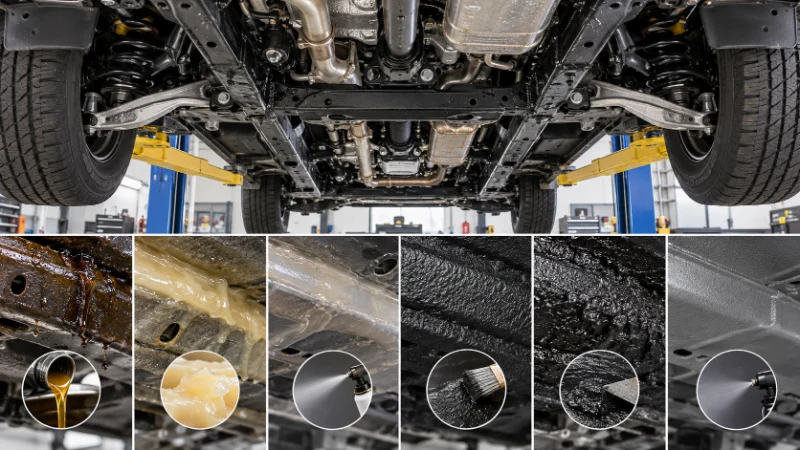
The word “undercoating” covers several products with very different properties. Choosing the right type is often more important than simply deciding whether to undercoat.
| Type | How It Behaves | Common Advantage | Main Concern |
|---|---|---|---|
| Oil-based | Remains soft and penetrates seams | Good penetration into small gaps | Usually requires regular reapplication |
| Lanolin-based | Soft, waxy coating that remains flexible | Good for exposed metal and seams | Can collect dirt and gradually wear away |
| Wax-based | Forms a flexible protective film | Useful for cavities and hidden areas | May require periodic renewal |
| Rubberized | Dries into a thicker flexible film | Resists abrasion and can reduce some road noise | Damage or poor adhesion can allow moisture underneath |
| Asphalt-based | Creates a heavy, durable coating | Suitable for some trucks and heavy-use applications | Can become difficult to inspect or repair |
| Polyurethane/polyurea | Creates a tough bonded coating | Strong resistance to abrasion when professionally applied | Requires careful surface preparation |
J.D. Power identifies rubber, polyurethane, wax, oil, and asphalt-based materials among the common undercoating categories.
Oil-Based Undercoating
Oil-based corrosion treatments remain fluid rather than forming a completely hard shell.
That allows the material to work its way into seams and crevices where water and salt can collect. This characteristic can make an oil treatment useful for older vehicles or vehicles with minor surface corrosion.
The disadvantage is durability.
Oil-based coatings gradually wash away and normally require periodic inspection and reapplication. They can also remain messy or attract road dust.
Lanolin and Wax-Based Undercoating
Lanolin and wax-based treatments follow a similar principle. Instead of creating a rigid shell, they leave a softer protective layer.
These coatings can be useful around seams, frame cavities, fasteners, and irregular surfaces where a hard coating may be difficult to apply properly.
They still require maintenance. Areas directly exposed to wheel spray, water, and road debris tend to lose protection faster than enclosed cavities.
Rubberized Undercoating
Rubberized coatings dry into a thicker film over the metal.
The coating can provide resistance against moisture and minor impacts from stones and road debris. Some products also provide a degree of sound damping.
The condition of the surface is critical.
A rubberized coating should not simply be sprayed over loose rust, wet metal, dirt, or existing contaminants. If adhesion fails or the coating becomes damaged, moisture may reach the metal underneath while remaining difficult to see.
Hard-film undercoatings therefore make the most sense when they are applied to properly cleaned and prepared surfaces.
Asphalt-Based Undercoating
Asphalt-based coatings are heavier and are commonly associated with trucks, commercial vehicles, trailers, and other applications where a thick protective film is desirable.
They can offer good abrasion protection but may also make future inspection of the underlying metal more difficult.
Older hard coatings should periodically be checked for cracking, lifting, or separation.
Polyurethane or Polyurea Coatings
These coatings create a durable bonded layer and may provide strong protection against abrasion and chemicals.
Surface preparation is especially important because these products depend on good adhesion.
They tend to make more sense for clean or properly restored surfaces than for heavily rusted underbodies where corrosion is already developing below existing coatings and scale.
What Is the Difference Between Undercoating and Rustproofing?
The terms are often used interchangeably, but they do not always describe exactly the same service.
Undercoating generally refers to protecting exposed surfaces underneath the vehicle.
Rustproofing can be broader. A rustproofing service may treat enclosed or semi-enclosed locations such as rocker panels, doors, frame cavities, seams, and other areas where corrosion can begin from the inside.
That distinction becomes important because not all vehicle corrosion starts on the visible bottom surface.
A thick coating on the floor pan does little for an untreated enclosed seam that remains full of salty moisture.
For that reason, when comparing professional treatments, ask what areas are actually included rather than comparing services by name alone.
What Are the Benefits of Undercoating a Vehicle?
A properly selected and applied undercoating can provide several practical benefits.
1. It Can Reduce Underbody Corrosion
Corrosion prevention is the main reason for using undercoating.
Creating a barrier between metal and water, salt, and road contaminants reduces the exposure that contributes to rust formation.
The benefit is usually greater in vehicles exposed to frequent winter road treatments, coastal environments, wet conditions, or muddy roads.
2. It Helps Protect Difficult-to-See Areas
Most drivers regularly see their vehicle’s paint but rarely inspect the underside.
Meanwhile, wheel spray can carry water, dirt, and salt onto crossmembers, suspension mounting points, seams, and other exposed components.
A corrosion treatment can provide additional protection in these areas.
3. Some Coatings Reduce Damage From Road Debris
Harder underbody coatings can help protect painted surfaces from small stones and gravel thrown up by the tires.
This matters because a chip in the factory coating can expose bare metal. Once water and salt reach the damaged area, corrosion has an opportunity to begin.
4. Some Products Can Reduce Underbody Noise
Thicker rubberized or asphalt-based coatings can provide limited sound damping by reducing vibration and some impact noise from gravel and road debris.
Undercoating should not be considered a substitute for dedicated automotive sound insulation, but reduced road noise can be a secondary benefit of certain products.
5. It May Help Preserve Vehicles Kept for Many Years
Rust protection becomes more relevant as vehicles age.
Modern vehicles already receive considerable corrosion protection during manufacturing, but factory protection does not make metal immune to decades of salt, moisture, chips, damaged coatings, and accumulated debris.
AAA continues to recommend underbody washing and corrosion-prevention measures even for modern vehicles exposed to road salt.
What Are the Disadvantages of Vehicle Undercoating?
Undercoating also has limitations that should be considered before paying for the service.
Poor Application Can Hide Corrosion
The biggest concern is applying a hard coating over an unsuitable surface.
If rust, moisture, salt, loose scale, or dirt remains underneath, the coating may conceal rather than solve the corrosion problem.
A black underbody can look clean from outside while deterioration continues underneath.
Hard Coatings Can Be Damaged
Road debris can chip or puncture some coatings. Age and movement can also cause certain materials to crack or separate.
Once this happens, contaminated water can reach the metal through the damaged area.
Regular inspection is therefore important, even when a product is marketed as long-lasting.
Some Treatments Require Reapplication
Oil, lanolin, and wax products deliberately remain softer than permanent coatings.
That flexibility is useful, but exposed areas can gradually lose the product.
Annual or periodic service can therefore become part of the long-term ownership cost.
Application Can Be Messy
Soft coatings can drip shortly after application or remain tacky enough to hold dust and dirt.
This usually affects appearance rather than protection, but people who frequently work underneath their own vehicles may find it inconvenient.
It Adds Cost to Vehicle Ownership
Undercoating is preventive maintenance, not an essential repair for every vehicle.
Someone driving a relatively new vehicle in a dry region may receive less value from the treatment than an owner keeping a truck for 15 years in a road-salt state.
That is why undercoating should be evaluated according to exposure and ownership plans rather than automatically purchased with every vehicle.
Can Undercoating Make Rust Worse?
Yes, undercoating can contribute to corrosion if an unsuitable product is applied incorrectly.
The greatest concern involves hard coatings applied over existing rust, moisture, contamination, or poorly prepared metal.
If a rigid coating later cracks or separates, salty water can enter through the damaged area. The coating may then hide what is happening underneath.
That does not mean rubberized or other hard-film undercoatings automatically cause rust. They can work well when the substrate is clean, dry, properly prepared, and periodically inspected.
The problem is treating undercoating as something that can simply be sprayed over any existing underbody condition.
Can You Undercoat a Vehicle That Already Has Rust?
A vehicle with light surface corrosion may still be a candidate for corrosion treatment, but the correct procedure depends on the type and severity of rust.
Loose rust and scale should be removed so the true condition of the metal can be assessed.
Deep scaling, perforation, weakened mounting points, or severe structural corrosion should be repaired before thinking about cosmetic protection.
Soft oil or wax-based corrosion inhibitors are often considered more suitable than thick hard films when treating an older vehicle with minor existing surface corrosion because they can penetrate seams rather than permanently hiding them.
They still cannot repair metal that has already been lost to rust.
How Is Undercoating Applied Properly?
Preparation matters as much as the product.
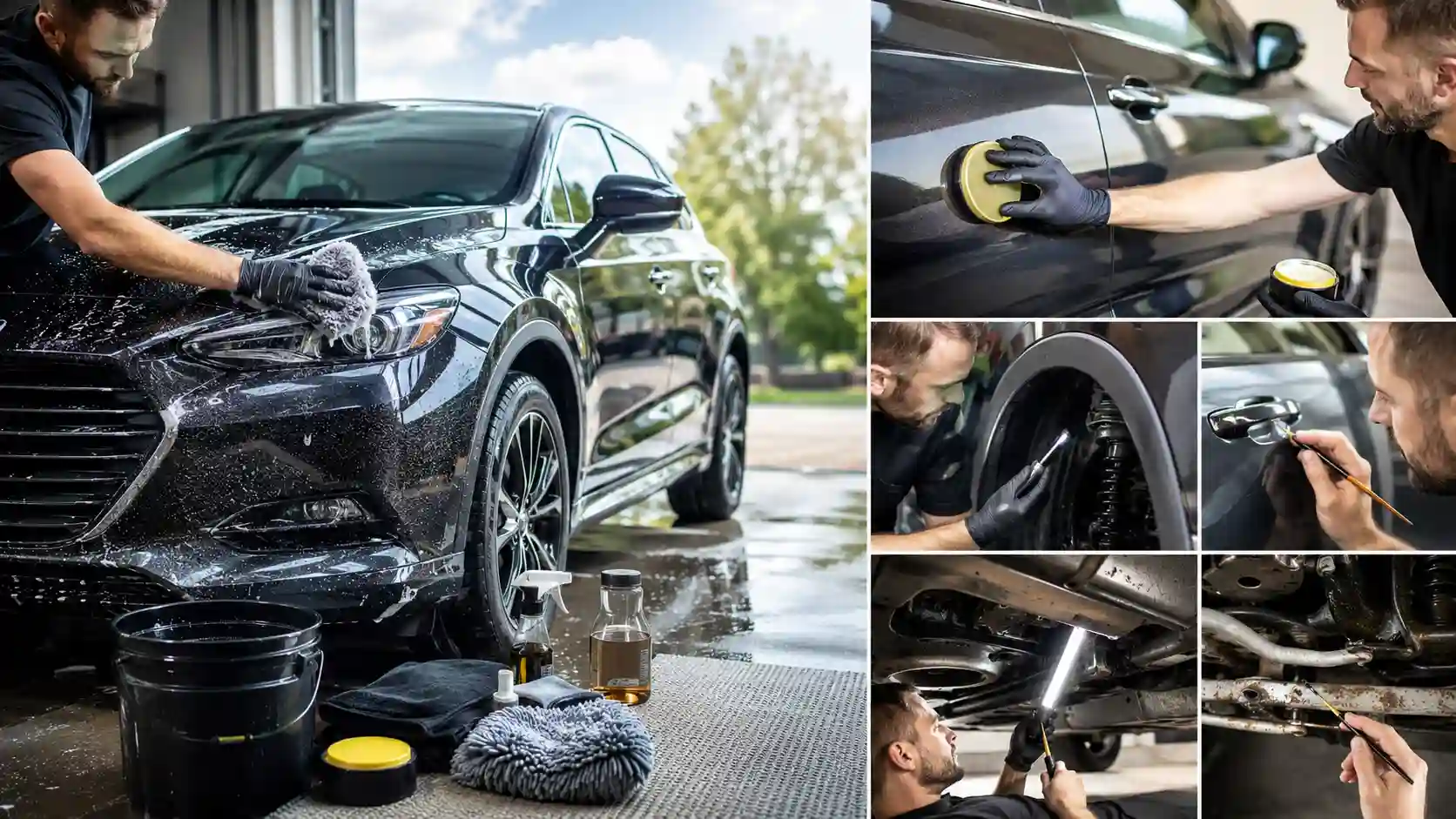
A professional treatment normally starts with an underbody inspection. Heavy dirt, mud, salt, grease, and loose material must be removed. The underside then needs enough time to dry.
Existing loose rust or deteriorated factory coating may require additional preparation.
Components that should not receive the product are masked or avoided. The coating is then applied at the coverage and thickness recommended by its manufacturer.
After curing or settling, the vehicle should be inspected periodically for thin areas, damage, wash-off, or corrosion developing around untreated components.
Applying another coat every year without inspecting what is underneath is not a substitute for proper maintenance.
How Much Does Vehicle Undercoating Cost?
For U.S. vehicle owners, a reasonable current budget for professional undercoating is approximately $150 to $600 for many cars and light trucks, although larger vehicles, extensive surface preparation, premium systems, or corrosion-remediation work can push the price significantly higher. Current published 2026 pricing from shops and industry sources shows considerable variation depending on vehicle size and treatment type.
| Service | Approximate U.S. Cost |
|---|---|
| DIY aerosol or basic treatment materials | $40 to $120+ |
| Basic professional treatment | $150 to $400 |
| Larger SUV or pickup treatment | $250 to $600+ |
| Treatment requiring substantial cleaning or preparation | $500 to $800+ |
| Premium or extensive multi-stage treatment | $800 to $1,000+ |
These numbers should be treated as general budgeting ranges, not fixed prices.
Vehicle size matters because a full-size pickup has substantially more exposed underbody area than a compact car.
Preparation also affects labor. Removing skid plates, cleaning heavy mud, treating surface corrosion, removing loose scale, accessing frame cavities, or taking off wheel-well liners can all increase the cost.
A low advertised price may also cover only exposed underbody surfaces rather than rocker panels, cavities, doors, wheel wells, and other corrosion-prone areas.
Always ask what the quoted price actually includes.
How Long Does Vehicle Undercoating Last?
There is no single service interval for every type of undercoating.
Soft oil-based treatments often need inspection or renewal approximately once a year, especially on surfaces exposed directly to road spray.
Wax and lanolin treatments may last longer in protected cavities while wearing away more quickly underneath the vehicle.
Hard rubberized, asphalt, polyurethane, or polyurea coatings can remain in place for multiple years, but they still need inspection for cracking, chips, separation, and damage.
Rather than relying only on a promised number of years, inspect the coating periodically.
A coating that is intact after several years may require only small repairs. A damaged coating should be addressed before corrosion spreads underneath it.
Is Undercoating Worth It?
Undercoating is most likely to provide value when the vehicle faces regular corrosion exposure and will be kept long enough for that protection to matter.
It deserves stronger consideration if you regularly drive on salted winter roads, live near saltwater, travel on gravel or muddy roads, own a work truck, plan to keep the vehicle for many years, or have a clean older vehicle that you want to preserve.
It may be less important for a newer vehicle driven mainly in a dry climate, particularly when the factory corrosion protection remains in excellent condition.
Modern vehicles already use corrosion-resistant manufacturing techniques and factory-applied protection. Aftermarket undercoating therefore should not automatically be treated as a required new-car purchase.
Evaluate the underside first.
What Should You Check Before Paying for Undercoating?
Before having a vehicle treated, make sure the shop can clearly explain:
- The product being used: Ask whether it is oil, lanolin, wax, rubberized, asphalt, polyurethane, or another coating and why that material fits your vehicle.
- How the underbody will be prepared: Cleaning, drying, rust removal, and inspection should happen before the protective coating is applied.
- Exactly what will be coated: Confirm whether the service includes only exposed underbody metal or also wheel wells, rocker areas, frame cavities, and other locations.
- What areas will be avoided: Brake surfaces, exhaust components, drains, sensors, and other sensitive parts should not simply be covered.
- How often inspection or reapplication is needed: Maintenance requirements differ substantially between soft and hard coatings.
- How existing rust will be handled: A reputable installer should inspect corrosion rather than hide it under a fresh black coating.
The answers are more useful than claims that a particular treatment is “permanent.”
Does Undercoating Replace Regular Undercarriage Washing?
No. Undercoating and washing perform different jobs.
A protective coating helps reduce direct exposure of metal to corrosive substances. Washing removes salt and contaminants that have already accumulated underneath the vehicle.
Both can be useful.
AAA recommends frequent undercarriage washing during periods when road salt and de-icers are used. In February 2026, AAA advised drivers in salt-exposed regions to prioritize the undercarriage and wash vehicles at least every two weeks, with more frequent cleaning following heavy salt exposure.
Pay particular attention to wheel wells, drainage areas, seams, frame sections, and locations where mud can remain wet for long periods.
Is DIY Undercoating a Good Idea?
DIY undercoating can work if the vehicle is safely raised, the surface is properly prepared, and the product’s instructions are followed carefully.
The actual spraying is often the easiest part.
Cleaning the underside, removing loose material, identifying corrosion, masking components, achieving even coverage, working around shields, and keeping the vehicle safely supported require considerably more effort.
Overspray is another concern. Undercoating should not contaminate brakes, exhaust components, belts, hot surfaces, or components the manufacturer says must remain untreated.
For simple maintenance of an accessible truck frame, DIY treatment may be practical.
For a heavily rusted vehicle, complicated modern underbody, extensive cavity treatment, or permanent hard-film coating, professional inspection and application may be worth the additional cost.
Should a Brand-New Car Be Undercoated?
Not necessarily.
New vehicles already receive corrosion protection at the factory. Depending on the vehicle, that can include treated metal, primers, sealers, coatings, protective panels, and corrosion-resistant finishes.
Additional undercoating may make sense for a new vehicle that will spend many years in severe salt exposure, but the decision should be based on actual conditions rather than the assumption that every new vehicle needs another coating immediately.
Inspect the existing protection and review the vehicle manufacturer’s maintenance and corrosion information before applying aftermarket materials.
Is Undercoating Different for Electric Vehicles?
The basic goal is the same, but EVs require additional care because high-voltage battery packs, electrical connectors, cooling components, wiring, and protective battery structures are located around the lower portion of the vehicle.
AAA notes that road salt can also affect EV underbody components and recommends corrosion-inhibiting protection along with regular undercarriage cleaning.
That does not mean every exposed EV component should be sprayed.
Follow the vehicle manufacturer’s requirements and use a technician familiar with the model before applying aftermarket coatings around battery enclosures, electrical connections, sensors, cooling components, or designated service areas.
Final Thoughts
Vehicle undercoating can be useful, but its effectiveness depends heavily on choosing the right product and preparing the surface correctly.
For vehicles that regularly encounter road salt, moisture, gravel, or harsh winter conditions, undercoating can add another layer of protection against corrosion. Oil, lanolin, and wax treatments provide flexible protection and penetration into seams, while rubberized, asphalt, and polyurethane-type coatings create more durable physical barriers when applied to properly prepared surfaces.
The biggest mistake is using undercoating to hide an existing problem. Severe rust needs inspection and repair. Dirt and moisture need to be removed. Hard coatings need clean surfaces, and even long-lasting treatments should be checked periodically.
Expect professional undercoating to cost roughly $150 to $600 for many vehicles, with larger vehicles and extensive preparation costing more. Whether that expense makes sense ultimately depends on your climate, vehicle condition, driving environment, and how long you intend to keep the vehicle.
Frequently Asked Questions About Vehicle Undercoating
What does undercoating do for a vehicle?
Undercoating protects exposed areas underneath a vehicle from moisture, salt, road debris, and other contaminants. Depending on the material used, it may also reduce stone-chip damage and some underbody noise.
Does undercoating stop existing rust?
No. Undercoating cannot reverse corrosion or replace metal that has already rusted away. Some penetrating oil or wax treatments may help slow further corrosion on lightly rusted surfaces, but severe rust should be repaired before additional protection is applied.
Is undercoating worth it on an older car?
It can be, particularly when the vehicle is structurally sound and you intend to keep it for several more years. The existing underbody should be inspected first because coating heavily corroded or weakened metal provides little benefit.
How often should a vehicle be undercoated?
It depends on the product. Oil-based treatments often need annual inspection or reapplication, while wax and hard-film coatings may last longer. Exposure to road salt, water, gravel, and pressure washing can shorten service life.
Can undercoating trap moisture?
A hard coating can trap or conceal moisture if it is applied over a wet, rusty, dirty, or poorly prepared surface or if the coating later cracks and separates. Proper preparation and periodic inspection reduce this risk.
Is rubberized undercoating good or bad?
Rubberized undercoating can provide effective protection on clean, properly prepared surfaces. It becomes problematic when applied over existing corrosion or when damaged coating allows water to get underneath unnoticed.
Does undercoating prevent all rust?
No. Undercoating reduces exposure but cannot make a vehicle completely rustproof. Corrosion can also develop inside seams, doors, rocker panels, cavities, and areas not covered by the treatment.
How much does it cost to undercoat a car?
Professional undercoating commonly costs around $150 to $600 in the United States. Larger vehicles, rust preparation, cavity treatment, premium coatings, or extensive disassembly can increase the price to $800 or more.
Can you wash a car after undercoating?
Yes, but allow the coating to cure or settle for the period specified by the product manufacturer or installer. After that, regular undercarriage cleaning can still be important, especially during winter.
Does a new vehicle need undercoating?
Not always. Modern vehicles already have factory corrosion protection. Additional treatment is more likely to be useful when the vehicle will experience years of road-salt exposure or other severe corrosion conditions.
What is the difference between rustproofing and undercoating?
Undercoating primarily protects exposed surfaces underneath the vehicle. Rustproofing is a broader term that may also include treatment inside doors, rocker panels, frame cavities, seams, and other enclosed areas where corrosion can start.
Should you undercoat over rust?
A thick hard coating generally should not be applied directly over loose or active rust without proper preparation. The corrosion should first be inspected, loose material removed, and damaged metal repaired when necessary. A penetrating oil or wax corrosion treatment may be more appropriate for some lightly rusted older vehicles.