Automotive solvents are liquids that dissolve grease, oil, tar, adhesive and paint. The main types are petroleum solvents such as mineral spirits, naphtha, toluene and xylene, chlorinated solvents such as TCE and PCE, and water-based cleaners. Each one differs in strength, drying speed, paint safety and health risk.
Choosing the wrong solvent can ruin paint, melt plastic or harm your health. This guide explains the types, how strength and evaporation differ, what each is used for, which are safe near paint and how to use them more safely.
What Are Automotive Solvents?
Automotive solvents are cleaning and thinning liquids used on cars to dissolve grease, oil, brake dust, tar, adhesive and paint. They work by dissolving the material so it can be wiped or rinsed away. They are found in brake cleaners, degreasers, thinners, adhesive removers and parts washers.
They are powerful, so the right choice depends on the job and the surface. A solvent that cleans a brake rotor can damage paint or rubber. Read the label and match the product to the task.
What Types of Automotive Solvents Are There?
There are three main groups: petroleum solvents, chlorinated solvents and water-based (aqueous) cleaners. Petroleum types are the most common. Chlorinated types are strong but carry serious health concerns. Water-based cleaners are the lowest-risk option for many jobs.
Petroleum Solvents (Mineral Spirits, Naphtha, Toluene, Xylene)
Petroleum solvents are made from crude oil. Common examples are mineral spirits, naphtha, benzene, toluene, xylene and kerosene. They dissolve oils, greases and resins well, and they are sold alone or inside blends such as brake cleaners and thinners.
Mineral spirits are the milder, slow-drying choice for light degreasing and thinning oil-based paint. Toluene and xylene are aromatic solvents, which have much stronger solvency but also bring more health and fire concerns. Benzene is rarely used because of its toxicity.
Chlorinated Solvents (TCE and PCE)
Chlorinated solvents such as trichloroethylene (TCE) and perchloroethylene (PCE) are strong degreasers that do not burn easily, so they were once common in brake cleaners. They are now heavily restricted because of their health risks.
The U.S. EPA found unreasonable risks to human health from most uses of TCE, including consumer products like brake cleaners. For PCE, the EPA said consumer uses, including automotive care products, present unreasonable risks. If you see these names on a label, choose a different product.
Water-Based (Aqueous) Alternatives
Water-based cleaners use detergents instead of harsh solvents to lift grease and dirt. They are the lowest-risk option for many cleaning jobs, and many auto shops now use them for most of their degreasing.
They work well in aqueous parts washers and for general degreasing, though very heavy or baked-on residue may still need a stronger product. Check the label, because even some water-based products contain regulated VOCs.
How Do Solvent Strength and Evaporation Rate Differ?
Solvents differ in how strongly they dissolve soil and how fast they dry. Stronger solvents clean faster but can also harm paint, plastic and rubber. Fast-drying ones leave quickly, while slow-drying ones stay on the surface longer.
Aromatic solvents like toluene and xylene are much stronger than mineral spirits. Mineral spirits are milder and evaporate slowly, which makes them better for soaking and wiping parts. Brake cleaner dries fast and leaves no residue, which is why it suits brake parts. Match the strength to the job, and start with the mildest product that works.
What Are Automotive Solvents Used For?
Automotive solvents are used for degreasing, cleaning brakes, washing parts, thinning paint and preparing surfaces. Each job needs a different strength, so using the right type keeps parts and paint safe.
Brake Cleaning and Degreasing
Brake cleaners remove brake dust, oil and grease from rotors, calipers and other metal parts, then evaporate without leaving residue. Degreasers do a similar job on engines and underbody parts. They can break down rubber and some plastics, so keep them off hoses, seals and trim.
Choose a non-chlorinated brake cleaner when you can. Spray from a short distance, let the part dry fully and wear gloves and eye protection.
Parts Washer Cleaning
Parts washers use a solvent bath or spray to clean greasy components. Mineral-spirit washers are the oldest and most common type, and aqueous washers are a growing alternative. Both remove oil and grime so you can inspect and rebuild parts.
Dry parts right after cleaning, because bare metal can rust fast. Very fast-drying brake cleaner is a poor fit for a parts washer.
Paint Thinning and Surface Prep
Solvents thin oil-based paint and clean surfaces before painting so the paint sticks. Mineral spirits and similar thinners dissolve oils and residue. Shops also use dedicated prep cleaners to remove wax, silicone and grease before refinishing.
Use the thinner the paint maker recommends, since the wrong one can cause bad finishes. Never use harsh thinner on finished paint you want to keep.
Which Solvents Are Safe for Car Paint and Detailing?
Mild, detailing-grade products made for paint are the safe choice. Strong petroleum solvents, aromatics, lacquer thinner and brake cleaner can soften or dull clear coat, so keep them off finished paint. Always test in a hidden spot first.
For tar, adhesive and sap, use a product made for automotive paint. For general cleaning, car soap and water do most of the work. Use solvents only on the spot that needs them, wipe off residue quickly, and wash and protect the area afterward. Rubber and some plastics can also be damaged, so test those too.
What Are the Health and VOC Risks?
Many solvents release volatile organic compounds (VOCs), which add to smog and can irritate the eyes, nose, throat and skin. Some can also cause asthma, lung problems or nerve effects. Chlorinated and aromatic solvents carry the highest concerns.
Fumes build up fast in a closed garage. Some types are highly flammable, and others are not flammable but are still toxic. Used solvent and soaked rags are often hazardous waste, so do not pour them down a drain or into the trash.
How Do You Use Solvents Safely?
Work outdoors or in a well-ventilated space, wear gloves and eye protection, keep flames and sparks away, test on a hidden spot first and store containers sealed. Use the smallest amount that does the job and choose a milder or water-based product when you can.
Read the label and the safety data sheet before starting. Apply with a rag or brush instead of flooding the area, and avoid mixing products. Let soaked rags dry flat outdoors or place them in a sealed metal container. Store solvents in their original containers away from heat, and take waste to a local hazardous waste drop-off.
Frequently Asked Questions
Can solvents damage plastic or rubber?
Yes. Many solvents, including brake cleaner and acetone, can soften, swell or break down rubber and some plastics. Keep them off hoses, seals, bushings and trim. If you must clean near these parts, use a milder product and test a hidden spot first.
What is the best solvent for removing adhesive residue?
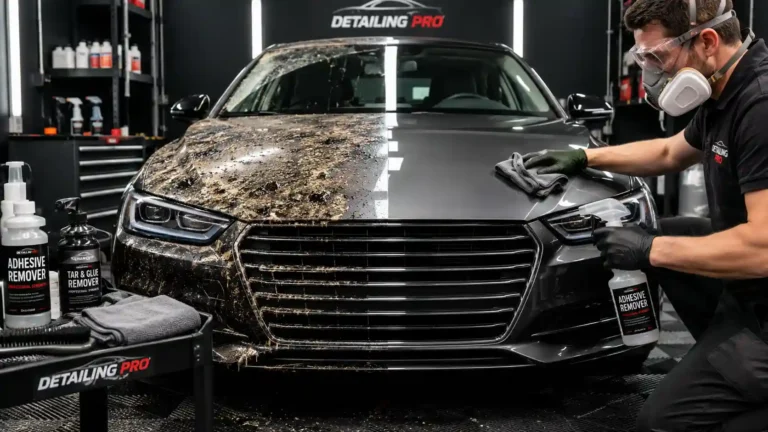
Use a product made for automotive adhesive on paint, since it removes residue without harsh strength. Dedicated adhesive removers are usually safer than general solvents. Soften the residue, wipe gently and wash the area afterward. Test a hidden spot first.
Is mineral spirits the same as paint thinner?
Mineral spirits are one type of paint thinner. The name mineral spirits is common in the U.S., while white spirit is the term used in other countries for the same petroleum-based liquid. Paint thinner is a broader label that can include less refined grades, so check the product label.
Conclusion
Automotive solvents are useful but need care. Choose the mildest product that does the job, keep strong petroleum and chlorinated types off paint and rubber, and avoid TCE and PCE products altogether.
Work with fresh air, protect your skin and eyes, and dispose of waste the right way. When a water-based cleaner will do the job, it is often the safer choice.