
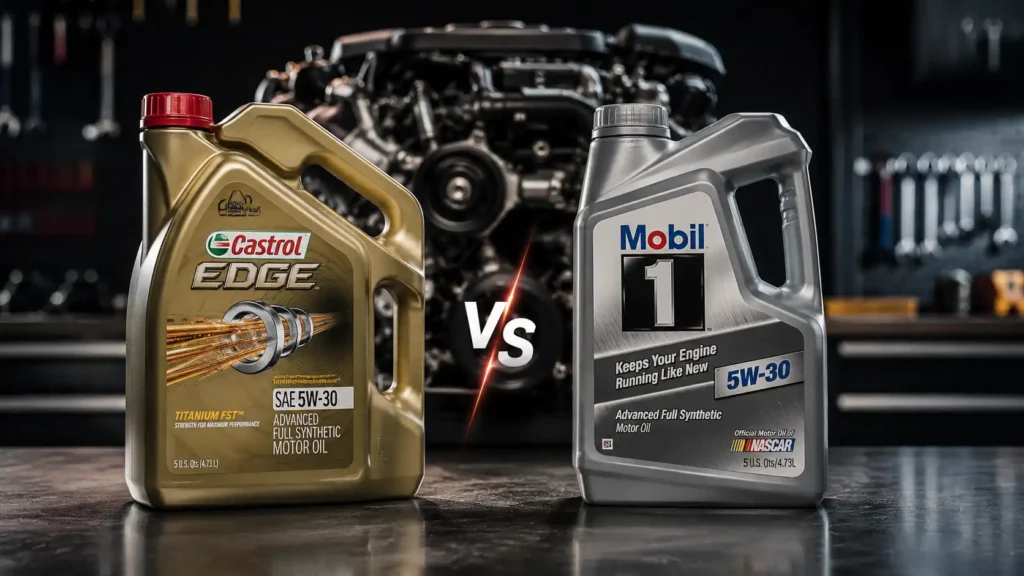
Castrol Edge and Mobil 1 are both full synthetic Group III motor oils, and for the vast majority of everyday drivers, neither has a measurable advantage over the other at normal 5,000-mile change intervals. The real difference comes down to manufacturer certifications and specific engine demands: Castrol Edge tends to hold up better under sustained high-load conditions thanks to its titanium additive, while Mobil 1 carries broader dexos1 Gen 3 certification for GM vehicles.
This guide breaks down the actual formulation differences, what independent testing shows, and which oil makes sense for your specific vehicle.
If you’re due for a change either way, our guide on how often should you really change your oil covers the interval question separately from the brand question.
What’s the Core Formulation Difference Between Castrol Edge and Mobil 1?
Castrol Edge and Mobil 1 are both full synthetic oils, but their main difference is in the additive technology used to support engine protection. Castrol focuses on film strength, while Mobil 1 emphasizes cleanliness, wear protection, and extended performance.
Core Formulation Comparison
| Factor | Castrol Edge | Mobil 1 |
|---|---|---|
| Base Oil | Group III synthetic | Group III synthetic |
| Key Technology | Fluid Titanium Technology | Triple Action Formula |
| Main Focus | Oil film strength under pressure | Cleanliness, wear protection, and durability |
| PAO Base Stock | No | No |
| Best Suited For | High-load and performance driving | Everyday driving and extended protection |
Quick Comparison: Castrol Edge vs Mobil 1 at a Glance
The quick comparison table gives readers a fast overview of how Castrol Edge and Mobil 1 differ in technology, certifications, pricing, and ideal use cases. The short transition below helps connect that snapshot to the detailed comparison that follows.
The table shows where each oil stands at a glance, while the sections below explain why those differences matter in real-world driving.
| Factor | Castrol Edge | Mobil 1 |
|---|---|---|
| Base oil | Group III synthetic | Group III synthetic |
| Key technology | Fluid Titanium Technology | Triple Action Formula |
| Best under high load | Stronger film integrity under pressure spikes | Slightly less oil consumption over long intervals |
| OEM certification | Strong for BMW/Audi/VW European approvals | Licensed dexos1 Gen 3 (GM) |
| Typical price (5 qt) | Around $30 | Around $25 |
| Buy link | Check Price | Check Price |
Castrol Edge vs Mobil 1: Detailed Product Reviews
Both oils offer full synthetic protection, but they are designed around slightly different priorities. Castrol Edge focuses on maintaining oil film strength under demanding conditions, while Mobil 1 emphasizes balanced protection, cleanliness, and longer-lasting performance.
1. Castrol Edge
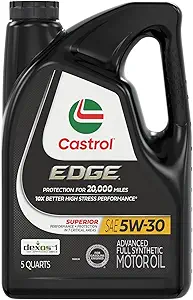
Castrol Edge is a full synthetic motor oil built around Fluid Titanium Technology. It is particularly suited to drivers who regularly deal with turbocharged engines, high temperatures, or heavier engine loads.
Pros
- Strong oil film protection under high pressure
- Good fit for turbocharged and performance engines
- Broad European vehicle compatibility
- Fluid Titanium Technology
- Available in multiple viscosity grades
Cons
- Typically costs slightly more than Mobil 1
- Certification varies by specific formulation
- Standard Edge is not the same as Castrol’s extended-performance products
Review:
Castrol Edge is a strong choice when high-load protection and manufacturer-specific European approvals are important. For drivers who regularly tow, drive aggressively, or operate a turbocharged engine, its focus on maintaining oil film strength makes it an appealing option.
2. Mobil 1
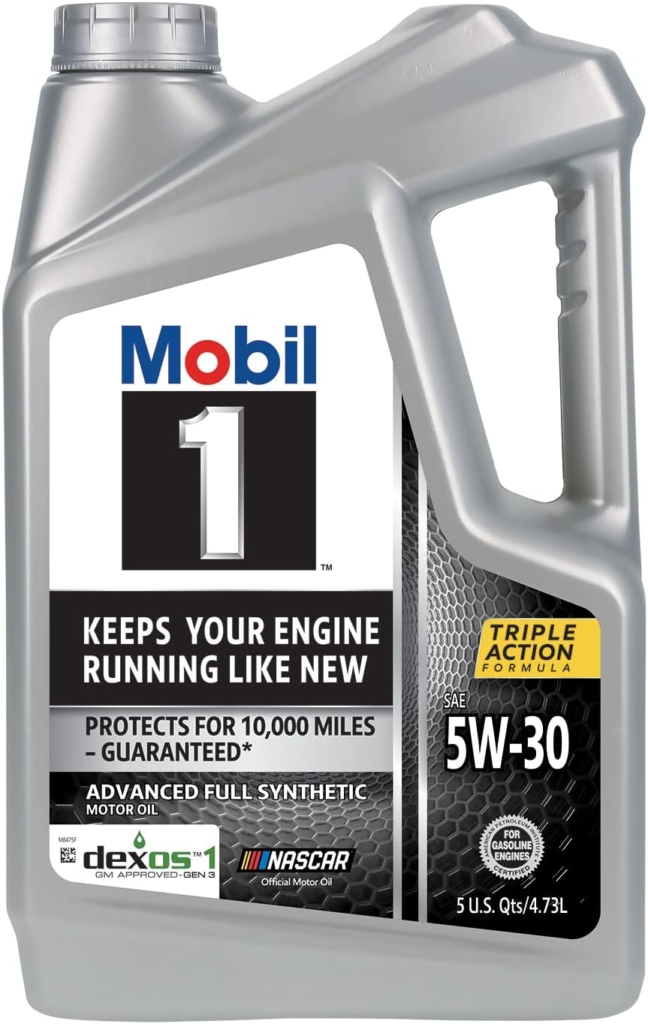
Mobil 1 is a full synthetic motor oil known for its Triple Action Formula, which focuses on engine cleanliness, wear protection, and durability between oil changes. It is a versatile option for everyday driving and vehicles requiring specific GM certifications.
Pros
- Strong everyday engine protection
- Licensed dexos1 Gen 3 options
- Good focus on engine cleanliness
- Extended Performance options available
- Often slightly cheaper than Castrol Edge
Cons
- Certification depends on the specific formulation
- Standard Mobil 1 may not be ideal when a European-specific approval is required
- Extended Performance versions cost more
Review:
Mobil 1 is the more practical all-around choice for drivers who prioritize balanced protection, cleanliness, and availability. It is especially attractive for GM owners whose vehicle requires dexos1 Gen 3-certified oil.
Which Oil Performs Better Under High Load and High Heat?
Castrol Edge shows an advantage in high-load scenarios, since its titanium additive maintains oil film integrity during pressure spikes that occur in turbocharged and performance engines. This makes it a reasonable preference for drivers who tow, drive a turbocharged vehicle, or push their engine harder than typical daily commuting.
Mobil 1, by comparison, tends to burn off slightly less oil over extended intervals, which matters more to drivers focused on minimizing top-offs between full oil changes than to those prioritizing peak film strength under load. Neither difference is dramatic enough to significantly change engine longevity at normal change intervals, but they do reflect genuinely different engineering priorities between the two products.
Does Manufacturer Certification Actually Matter for Your Vehicle?
Yes, in some cases certification is the deciding factor rather than a marketing detail. Mobil 1 is a licensed dexos1 Gen 3 oil, the specific standard General Motors requires for warranty compliance on many of its vehicles, while Castrol Edge does not carry dexos1 Gen 3 approval in its standard US retail formulations.
Castrol Edge, on the other hand, is the clearer choice for European makes like BMW, Audi, Volkswagen, Mercedes, and Porsche, since BMW Longlife and Audi/VW Long Life certifications specifically favor Castrol’s formulations. For Japanese or Korean vehicles that only specify a general API SP rating without a manufacturer-specific approval code, neither brand holds a certification advantage, making the choice largely one of price and availability.
What Does Independent Testing Actually Show?
Independent used-oil analysis data, commonly shared on enthusiast forums like Bob Is The Oil Guy, shows no statistically significant wear reduction for Castrol Edge over Mobil 1 at normal 5,000-mile change intervals for typical daily driving. This means that for most drivers doing standard commuting without extreme towing or performance demands, either brand provides comparable real-world engine protection.
The differences that do show up in testing tend to appear specifically under extended intervals, high heat, or sustained high-load conditions, which is exactly where Castrol’s titanium technology is engineered to have its advantage. For a driver changing oil on a normal schedule under normal conditions, brand choice matters considerably less than simply staying current with your change interval.
How Much Does Price Actually Differ Between the Two?
The price difference is relatively small, so certification and engine requirements should matter more than cost when choosing between the two oils.
| Factor | Castrol Edge | Mobil 1 |
|---|---|---|
| Price (5 qt) | Around $30 | Around $25 |
| Price Difference | +$5 | — |
| Best Value | When on sale or required by vehicle | When on sale or required by vehicle |
Do Extended-Interval Formulations Change the Comparison?
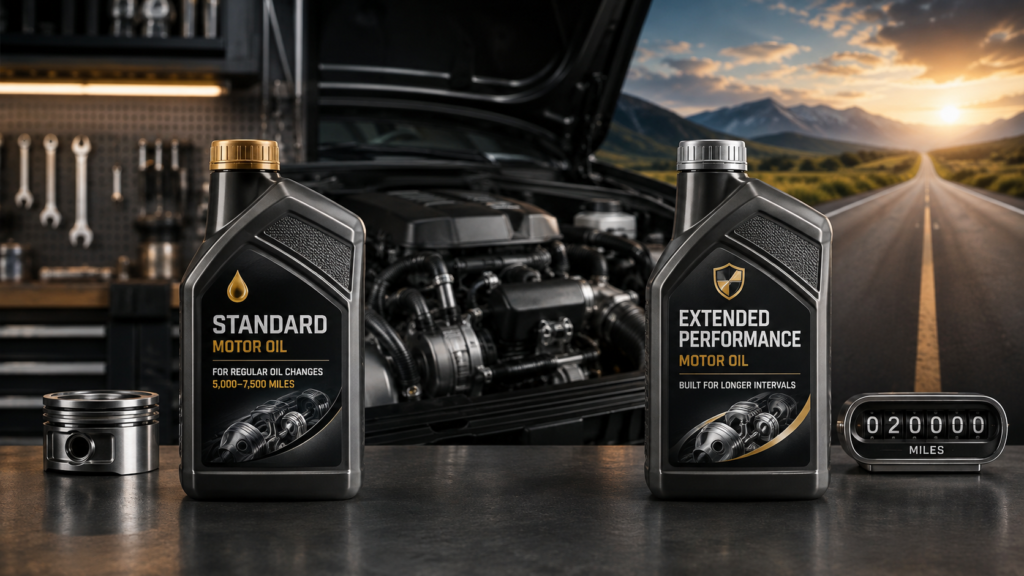
Both brands offer extended-performance lines built specifically for longer intervals between changes, and this is one area where the two products diverge more noticeably than their standard formulations. Mobil 1 Extended Performance is rated for up to 20,000 miles between changes, while Castrol offers its own Extended Performance formula rated for similarly long intervals, both relying on more robust additive packages than their base products.
Choosing an extended-interval formulation from either brand makes more sense for drivers who genuinely want to stretch their oil change schedule, rather than defaulting to it automatically, since these formulations typically cost more per quart than the standard version. For drivers sticking with a conventional 5,000 to 7,500 mile interval, the standard formulation from either brand provides adequate protection without paying for capability you won’t use.
Conclusion
Castrol Edge and Mobil 1 are both strong full synthetic motor oils, and neither is a universal winner for every vehicle. Castrol Edge is the better fit for drivers who prioritize high-load protection, turbocharged engines, and certain European manufacturer specifications. Mobil 1 is a practical choice for everyday driving, especially when your vehicle requires dexos1 Gen 3 certification or you want a strong balance of cleanliness and wear protection.
Ultimately, the best oil is the one that matches your vehicle’s recommended viscosity and manufacturer certification. If both oils meet those requirements, price, availability, and your driving conditions can reasonably determine the final choice.
Frequently Asked Questions
Is Castrol Edge better than Mobil 1?
Neither oil is universally better. Castrol Edge may be preferable for high-load or turbocharged driving, while Mobil 1 offers a strong all-around option for everyday use. The correct viscosity and manufacturer certification should come first.
Is Mobil 1 better for GM vehicles?
Mobil 1 can be the better choice when your GM vehicle specifically requires Dexos1 Gen 3 certification. Check the owner’s manual to confirm the exact oil specification required for your engine.
Is Castrol Edge good for turbocharged engines?
Yes. Castrol Edge is designed with Fluid Titanium Technology to support oil film strength under high mechanical pressure, making it a suitable option for turbocharged and performance-oriented engines when the required specification is met.
Can you mix Castrol Edge and Mobil 1?
Generally, switching between Castrol Edge and Mobil 1 at different oil changes is acceptable when both oils have the required viscosity and specifications for your vehicle. There is no general requirement to use the same brand at every oil change.
Which is better for high-mileage cars, Castrol Edge or Mobil 1?
Both brands offer high-mileage formulations designed for older vehicles. The better choice depends on the specific viscosity and certification your vehicle requires rather than mileage alone.
How often should you change Castrol Edge or Mobil 1?
The correct oil-change interval depends on your vehicle, oil formulation, driving conditions, and manufacturer’s recommendation. Standard formulations are commonly used for shorter intervals, while extended-performance products are designed for longer intervals when appropriate.
Does Castrol Edge use PAO synthetic oil?
According to the article’s comparison, standard retail Castrol Edge 5W-30 is described as using a Group III synthetic base oil rather than PAO. Formulations can vary by product and market, so the specific product specification should be checked before making a technical comparison.