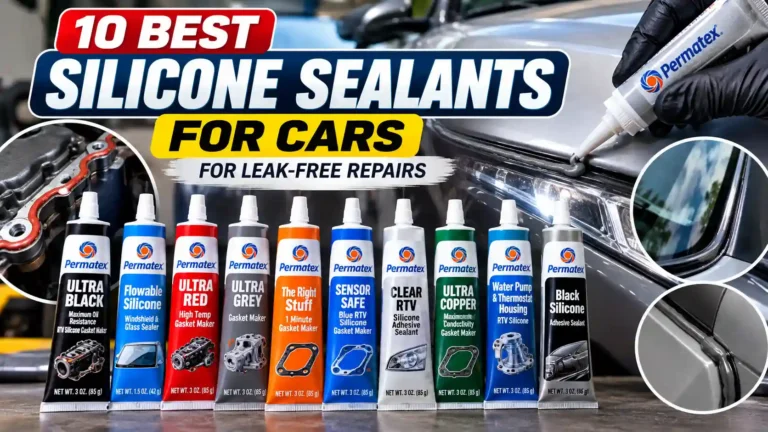
The best silicone sealants for cars match the joint, the material, and the fluid or weather exposure. A clear weather sealant, an oil-resistant RTV gasket maker, and a coolant-specific silicone have different jobs. Choosing by color or temperature rating alone can leave you with the wrong product for the repair.
For an approved oil-exposed gasket-making application, Permatex Ultra Black is a useful starting choice. For an appropriate small water-leak path around supported glass applications, Permatex Flowable Silicone offers a different approach. Neither is a universal solution for every leak, and a sound repair still depends on diagnosis, preparation, assembly, and curing.
This guide compares ten application-specific Permatex silicone products with verified direct listings. The recommendations use manufacturer information and technical guidance checked in October 2026, rather than our own leak or durability tests. “Leak-free” describes the repair goal, not a guarantee that any tube will fix a damaged or incorrectly assembled joint.
Best Automotive Silicone Sealants: Quick Comparison Table
Use this silicone sealant comparison to match the product to the repair category. Confirm the vehicle procedure first; fluid resistance does not authorize sealant use on a joint that requires another sealing method.
This article contains affiliate links. If you buy through them, we may earn a commission at no extra cost to you.
| # | Product | Best For / Category | Amazon |
|---|---|---|---|
| 1 | Permatex Ultra Black 82180, 3 oz | Approved high-flex, oil-resistant gasket making | Check Price on Amazon |
| 2 | Permatex Flowable Silicone 81730, 1.5 oz | Suitable small glass-related water-leak paths | Check Price on Amazon |
| 3 | Permatex Clear RTV Adhesive Sealant 80050, 3 oz | Approved general-purpose non-engine sealing | Check Price on Amazon |
| 4 | Permatex Ultra Grey 82194, 3 oz | Approved rigid, high-torque or vibration-related joints | Check Price on Amazon |
| 5 | Permatex Ultra Copper 81878, 3 oz | Approved high-temperature RTV applications | Check Price on Amazon |
| 6 | Permatex High-Temp Red RTV 81160, 3 oz | Compatible conventional high-temperature gasket work | Check Price on Amazon |
| 7 | Permatex Water Pump & Thermostat RTV 22071, 0.5 oz | Approved coolant-exposed housing applications | Check Price on Amazon |
| 8 | Permatex Gear Oil RTV 81182, 3 oz | Approved differential or transfer-case sealing | Check Price on Amazon |
| 9 | Permatex Automatic Transmission RTV 81180, 3 oz | Approved ATF-exposed gasket applications | Check Price on Amazon |
| 10 | Permatex The Right Stuff 90 Minute Black 25228, 3 oz | Compatible repairs requiring its faster service schedule | Check Price on Amazon |
10 Best Silicone Sealants for Cars Reviewed
These automotive silicone reviews explain the supported use, practical handling advantages, and limitations behind each purchase. Select by the actual joint and procedure, then use the buying decision to confirm that the product fits your repair.
1. Permatex Ultra Black 82180: Best for Approved Oil-Resistant Gasket Making
Best for: Supported oil-exposed assemblies where the service procedure permits a flexible RTV gasket maker.
Ultra Black is a flexible RTV gasket maker positioned for oil resistance. Permatex identifies applications such as timing covers and oil pans within its product guidance, making it a relevant candidate when the exact vehicle procedure calls for this type of sealant.
The sensor-safe, non-corrosive formulation is useful when that compatibility is required. It does not authorize applying the material directly to sensors or sealing every electronic component. Likewise, resistance to oily service conditions does not mean the mating surfaces should be left contaminated during assembly.
Choose it for an approved gasket-making stage, with the joint disassembled and prepared as required. Smearing sealant over the outside of an active oil leak is a different approach and should not be assumed to reproduce a correctly formed gasket.
Key Features
- Flexible oil-resistant RTV gasket maker.
- Verified 82180, 3-ounce tube listing.
- Manufacturer identifies sensor-safe, non-corrosive formulation.
- Intended for supported automotive gasket applications.
Pros
- Clear role for suitable oil-exposed joints.
- Flexible formulation suits approved applications requiring that behavior.
- Manageable tube size for a selected repair.
Cons
- Does not override gasket or seal requirements in the service procedure.
- Requires proper surface preparation and assembly.
- Not a general repair for gasoline-contact parts or head-gasket failure.
Buying Decision
Choose Ultra Black when the joint, fluid, and service instructions support it. Buy the required replacement hardware or gasket components as part of the repair. Choose a fluid-specific formula when the procedure and exposure call for coolant, ATF, or gear-oil compatibility instead.
2. Permatex Flowable Silicone 81730: Best for Supported Small Water-Leak Paths
Best for: Appropriate small leak paths in manufacturer-supported glass-related sealing applications.
Permatex Flowable Silicone has a thinner consistency intended to penetrate small openings rather than remain as a thick surface bead. The 1.5-ounce tube suits localized work once the source and supported repair method have been identified.
The technical guidance lists glass-related applications and calls for a clean, dry leak source. Its flowability can be useful where a conventional paste would sit above the opening. It can also travel beyond the intended area, so application control matters around trim and nearby materials.
Do not interpret Windshield and Glass Sealer as a substitute for structural glazing adhesive. If the windshield bond is failing, the glass is loose, or corrosion is involved, arrange the appropriate assessment. Keep sealant away from drain paths that must remain open.
Key Features
- Clear flowable silicone sealer.
- Verified 81730, 1.5-ounce tube.
- Intended to reach supported small leak paths and irregularities.
- Requires clean, dry preparation and the specified cure.
Pros
- Thin consistency suits a different gap geometry from thick RTV paste.
- Small package is practical for localized approved work.
- Clear appearance can be useful where appearance matters.
Cons
- Can flow outside the target area if applied excessively.
- Does not replace a failed structural windshield bond.
- Will not solve a blocked drain or an unidentified water-entry source by itself.
Buying Decision
Choose 81730 only after locating a suitable small leak path and confirming this repair is appropriate. Choose a thicker approved sealant when bead placement is the requirement. Seek a glazing repair when the problem involves the windshield’s bonding system rather than an approved minor sealing task.
3. Permatex Clear RTV 80050: Best General-Purpose Non-Engine Sealant
Best for: Supported non-structural sealing jobs where a clear, flexible general-purpose RTV is approved.
Permatex Clear RTV Adhesive Sealant is a general-purpose product for compatible indoor and outdoor applications. The manufacturer identifies materials such as glass, metal, certain plastics, fabric, and vinyl, with flexibility and weather resistance among its functions.
Its thicker paste format serves a different purpose from the flowable glass sealer. It can be useful when the approved job requires a placed bead on supported horizontal or vertical surfaces. Confirm adhesion and compatibility with the actual finish before treating a visible seam.
Permatex specifically excludes engine-gasket applications for this product. That limitation makes the buying choice clearer: use it for its approved general-purpose role, and select a suitable gasket maker when the task involves an engine assembly.
Key Features
- Clear general-purpose RTV adhesive sealant.
- Verified 80050, 3-ounce listing.
- Flexible, weather-resistant formulation.
- Manufacturer excludes engine-gasket applications.
Pros
- Useful clear finish for suitable visible sealing work.
- Thicker consistency supports controlled bead placement.
- Covers several approved materials within a non-engine role.
Cons
- Not an engine gasket maker.
- Material and finish compatibility still require checking.
- Not a structural glazing adhesive or universal weatherstrip replacement.
Buying Decision
Choose 80050 for a defined, approved general-purpose sealing task. Do not buy it because clear silicone seems less noticeable and then extend it to an engine repair. For oil, coolant, or transmission assemblies, select the exact material required by the service procedure.
4. Permatex Ultra Grey 82194: Best for Approved Rigid, High-Torque Joints
Best for: Supported assemblies whose procedure calls for a rigid high-torque or vibration-resistant RTV formulation.
Ultra Grey is positioned for high-torque and high-vibration applications. That makes it worth considering when the specified joint behavior differs from the high-flex oil-resistant role emphasized by Ultra Black.
The verified listing is the 82194, 3-ounce version. Permatex describes a sensor-safe, non-corrosive formula, but the joint still needs the prescribed preparation and curing conditions. Color is a product identifier here, not a universal code used consistently across all sealant brands.
The manufacturer’s standard guidance includes a full-cure period under normal conditions, with more time needed in cold or very dry conditions. Plan downtime from the exact instructions instead of filling the assembly as soon as the surface feels skinned over.
Key Features
- RTV gasket maker positioned for high torque and vibration.
- Verified 82194, 3-ounce tube.
- Manufacturer identifies sensor-safe, non-corrosive use characteristics.
- Product-specific assembly and cure requirements.
Pros
- Defined role for suitable rigid-flange applications.
- Useful when the service requirement favors this formulation.
- Small tube fits a focused repair purchase.
Cons
- Grey color alone does not establish the correct specification.
- Cure conditions can affect downtime.
- Not suitable as a generic replacement for every gasket or flange sealant.
Buying Decision
Choose Ultra Grey when the vehicle procedure and joint design support its role. Compare Ultra Black when high-flex oil resistance is the relevant requirement. Do not substitute either for a specified anaerobic sealant or molded gasket without approval.
5. Permatex Ultra Copper 81878: Best for Approved High-Temperature RTV Work
Best for: Supported applications that require this product’s high-temperature RTV characteristics.
Ultra Copper is a high-temperature RTV gasket maker, with the linked 81878 product supplied in a 3-ounce tube. Permatex identifies a sensor-safe, low-odor, non-corrosive formulation.
The important comparison is the actual temperature exposure and approved joint, not the copper color. Intermittent temperature ratings describe a different condition from continuous operation. Do not use a headline peak rating as permission to seal any exhaust-related gap or hot component.
Surface condition and assembly still matter. Damaged flanges, incorrect fastener loading, or a joint that requires another gasket cannot be corrected simply by selecting a higher-temperature silicone.
Key Features
- High-temperature RTV gasket-maker formulation.
- Verified 81878, 3-ounce listing.
- Manufacturer identifies sensor-safe and non-corrosive characteristics.
- Separate temperature and application requirements must be checked.
Pros
- A focused choice when the approved repair requires high-temperature RTV.
- Manageable tube size for a selected assembly.
- Documented formulation characteristics support compatibility checking.
Cons
- A peak intermittent rating is not a continuous-use rating.
- Not a universal exhaust repair or flange-repair material.
- Joint design and vehicle specifications remain decisive.
Buying Decision
Choose Ultra Copper only when its actual rating and the repair procedure match the job. Buy the required gasket or replacement component when the assembly needs one. Avoid choosing it merely because the temperature number is higher than another tube’s rating.
6. Permatex High-Temp Red RTV 81160: Best Conventional High-Temperature Option
Best for: Compatible gasket-making work where the exact 81160 formulation and procedure are approved.
The verified 81160 listing is labeled High-Temp Red RTV Silicone Gasket, in a 3-ounce tube. It is intended for supported formed-in-place gasket applications involving higher-temperature demands.
Read the label on the actual product supplied. Product names and packaging can change, and another red RTV is not necessarily the same formula. Use the part number and technical instructions to confirm the selected material rather than matching color alone.
Its role is conventional approved high-temperature gasket work, not automatic superiority over the other silicones. Oil resistance, cure chemistry, sensor compatibility, and required assembly method can matter as much as the temperature range.
Key Features
- High-temperature red RTV gasket product.
- Verified 81160, 3-ounce listing.
- Intended to form gaskets in supported applications.
- Exact formulation and instructions should be checked by part number.
Pros
- A relevant option when the repair specifies this high-temperature product.
- Small tube suits a localized assembly job.
- Provides another documented gasket-making choice within the range.
Cons
- Not every red silicone has identical properties.
- Temperature alone is insufficient for product selection.
- Does not repair head-gasket failure or damaged mating surfaces.
Buying Decision
Choose 81160 when the exact product is appropriate for the assembly and exposure. Choose a different specified formula if oil, coolant, or another fluid requirement controls the repair. Match the required specification before comparing red and copper labels.
7. Permatex Water Pump & Thermostat RTV 22071: Best Coolant-Focused Small Tube
Best for: Supported water-pump or thermostat-housing work where RTV use is permitted.
This specialty RTV is formulated around water-glycol exposure in approved water-pump and thermostat-housing applications. The 0.5-ounce tube is a practical format for a small permitted task where a larger package would be unnecessary.
The manufacturer describes a sensor-safe, non-corrosive formula and identifies gasket-making or dressing roles. That does not mean every thermostat housing needs added silicone. Many assemblies use a specific molded seal or gasket with its own installation requirements.
Confirm the source of the coolant leak before choosing sealant. A cracked housing, damaged seal, corroded surface, or leaking pump component may need replacement. RTV should perform the specified sealing stage rather than cover a part failure.
Key Features
- Water-pump and thermostat-focused RTV formulation.
- Verified 22071, 0.5-ounce tube.
- Manufacturer identifies water-glycol resistance.
- Sensor-safe and non-corrosive positioning.
Pros
- Fluid-specific focus helps narrow the purchase.
- Small format suits limited approved work.
- Relevant option when the procedure permits a coolant-resistant RTV.
Cons
- Some assemblies require a dry-installed gasket or molded seal instead.
- Small quantity may be insufficient for a larger permitted application.
- Does not repair a failed pump or cracked housing.
Buying Decision
Choose 22071 when the repair permits this coolant-focused RTV and the amount suits the job. Buy the specified replacement gasket or O-ring when required. If the component itself is damaged, address that failure before considering a sealant purchase.
8. Permatex Gear Oil RTV 81182: Best for Approved Gear-Oil Exposure
Best for: Supported differential or transfer-case applications where a gear-oil-resistant RTV is specified or permitted.
Permatex Gear Oil RTV is formulated for the environment created by gear oil and its additives. The linked 81182 product is a 3-ounce tube, selected for its exposure-specific role rather than general weather sealing.
That distinction is useful when the assembly’s lubricant includes friction modifiers or other additives relevant to sealant compatibility. Do not assume a silicone chosen for outside water sealing will tolerate the same internal service environment.
The housing or cover still needs the correct preparation, fastener procedure, and cure before fluid filling. Where a gasket or another sealant type is required, use that method. A specialty tube does not compensate for a bent cover or damaged flange.
Key Features
- Specialty RTV intended for supported gear-oil applications.
- Verified 81182, 3-ounce tube.
- Manufacturer identifies resistance to gear-oil additive exposure.
- Relevant to approved differential and transfer-case sealing work.
Pros
- Clear fluid-specific buying role.
- Useful when lubricant compatibility controls the material choice.
- Focused package for a defined repair.
Cons
- Not approval to replace every differential or transfer-case gasket.
- Distorted parts and damaged threads still need repair.
- Fluid filling must wait for the specified process.
Buying Decision
Choose 81182 when the assembly permits RTV and its gear-oil role matches the exposure. Confirm the correct lubricant and repair procedure at the same time. Do not use exterior caulk or a generic clear sealant for an internal gear-oil joint.
9. Permatex Automatic Transmission RTV 81180: Best for Approved ATF-Exposed Joints
Best for: Transmission applications that permit this ATF-resistant RTV under the service instructions.
Permatex 81180 is formulated to resist the detergents and additives in automatic transmission fluid while retaining flexibility. Its intended role is different from a general oil-resistant silicone or exterior seam sealer.
The verified listing is a 3-ounce tube. Although the manufacturer identifies gasket-making and dressing applications, many transmission pans use specific reusable or molded gaskets. Do not add silicone to those automatically or replace them without the permitted procedure.
Application amount is especially important in assemblies with internal passages. Follow the required bead path and quantity rather than trying to make a stronger seal with extra material. Clean assembly and the specified cure are part of the purchase plan.
Key Features
- RTV formulated around ATF exposure.
- Verified 81180, 3-ounce tube.
- Manufacturer identifies sensor-safe, non-corrosive characteristics.
- Intended for supported gasket-making or dressing work.
Pros
- Focused compatibility with a distinct fluid environment.
- Flexible sealing role within approved applications.
- Useful when the transmission procedure allows this exact approach.
Cons
- Not a blanket substitute for transmission-pan gaskets.
- Excess material can create problems inside an assembly.
- Cleanliness, assembly sequence, and cure requirements add work beyond applying a bead.
Buying Decision
Choose 81180 only after confirming RTV is permitted on the transmission joint. If the procedure calls for a particular gasket installed without sealant, buy that component instead. Use the minimum prescribed application rather than extra material as insurance.
10. Permatex The Right Stuff 90 Minute Black 25228: Best for Its Faster Service Schedule
Best for: Compatible gasket-making repairs where the exact 90-minute formula and service procedure suit the available downtime.
The Right Stuff 25228 is the 90 Minute Black formula, supplied here in a 3-ounce package. It should not be confused with other Right Stuff products that carry different return-to-service wording.
The manufacturer provides a faster fluid-fill or service schedule for this product under its specified assembly process. That can be useful when downtime is a real constraint, but the timing belongs to the exact directions and conditions. It does not start a universal countdown that overrides the vehicle’s repair requirements.
Preparation and assembly still come first. Have the parts, tools, and required components ready before application. A faster formula is a poor shortcut if it leads you to skip cleaning, damage inspection, or the prescribed fastener process.
Key Features
- The Right Stuff 90 Minute Black gasket maker.
- Verified part 25228, 3-ounce listing.
- Manufacturer-defined faster service schedule.
- Product-specific assembly and fluid-exposure instructions.
Pros
- Useful when the approved process fits a shorter downtime window.
- Clear part-number identification distinguishes it from other formulas.
- Small package suits a selected compatible repair.
Cons
- Not the same product as every other Right Stuff gasket maker.
- Advertised timing depends on following the specified process.
- Does not eliminate preparation or vehicle-specific restrictions.
Buying Decision
Choose 25228 when the exact 90-minute formula is approved and its schedule helps you complete the job correctly. Choose a standard formula if you can provide its required downtime and it better matches the specification. Do not select faster cure as a substitute for the correct repair material.
Automotive Silicone Sealant Buying Guide
Choosing a silicone sealant for a car starts with the service requirement and the cause of the leak. These buying checks help you select the correct chemistry, quantity, and application process before disassembling the vehicle.
Identify the source and required sealing method
Trace the leak instead of assuming the wettest visible spot is the failure point. For water entry, inspect the relevant seals, drains, and bonding condition. For mechanical leaks, identify the assembly, fluid, and actual failed component.
Check whether the repair calls for RTV, an anaerobic sealant, a gasket, an O-ring, glazing adhesive, or another material. These categories cannot be exchanged just because all of them can stop leaks in their intended applications.
Match the formulation to the fluid
Oil, ATF, gear oil, and water-glycol coolant create different service conditions. Choose the exact material the procedure specifies or an explicitly approved equivalent. Do not assume resistance to one fluid guarantees resistance to every other one.
A general-purpose clear sealant is not an engine gasket maker. A temperature-resistant product is not automatically gasoline-resistant. The fluid requirement can rule out a product before color or package size matters.
Compare continuous and intermittent temperature ratings
Continuous exposure and brief peak exposure are different specifications. Use the actual joint conditions when checking the technical information. A high intermittent number does not establish suitability for prolonged operation at that temperature.
Also check pressure, movement, substrate, and assembly design. Temperature is one part of the specification, not the whole buying decision.
Check cure chemistry and sensor compatibility
Use a documented sensor-safe or non-corrosive formula where the assembly requires it. Do not extend those claims to every sensor, connector, camera, or electronic module. Potting or coating electronics requires its own approved material and procedure.
Cure chemistry and material compatibility also matter around metals, plastics, coatings, and existing seals. A small hidden compatibility test can help with an approved cosmetic application, but it does not replace service instructions for a mechanical joint.
Plan assembly and return to service before opening the tube
RTV products can have different skinning, assembly, full-cure, and fluid-exposure requirements. Humidity and temperature can affect curing. A bead that feels dry outside is not automatically ready for the assembly’s operating conditions.
Read the exact instructions and resolve any conflict with the vehicle procedure before starting. Do not apply a universal finger-tighten, wait, and retorque method to every joint. Fastener sequence and timing must match the supported repair.
Include replacement parts and preparation supplies
A successful repair may require a gasket, O-ring, fasteners, a replacement cover, or a new housing in addition to sealant. Include the permitted cleaning materials, residue-removal tools, masking, and protective equipment.
A tube should be purchased as part of a defined repair rather than as a trial treatment for an unknown failure. Replacing the failed component can be more useful than repeatedly buying a different silicone.
How to Use Silicone Sealant for a Car Repair
Correct automotive silicone application controls contamination, material quantity, assembly timing, and curing. Use the product and vehicle instructions for the exact procedure; these steps organize the work rather than provide a universal bead size or torque sequence.
Diagnose and prepare the joint
Confirm the source and repair method. Disassemble where required, inspect mating surfaces, and address damaged or distorted parts. Remove old material with a method that does not harm the substrate or leave debris in the assembly.
Clean and dry as instructed
Use the approved cleaner and allow the required drying. Do not leave oil or water on a gasket surface because the product advertises resistance to those fluids after curing. Protect nearby finishes and equipment from incompatible cleaners.
Apply the specified amount and bead path
Use the correct nozzle opening and placement. Extra material can squeeze inside a component or spread across areas that must stay clear. Follow the joint’s prescribed application, including bolt-hole treatment where specified.
Assemble under the supported timing and fastener procedure
Have the tools and components ready before applying sealant. Follow the correct torque values, sequence, and any required waiting periods. If instructions conflict, resolve the procedure before continuing rather than combining unrelated steps.
Allow the required cure and verify the repair
Wait for the specified fluid-fill and return-to-service point. Inspect through the appropriate leak-check procedure after reassembly. A bead’s appearance alone does not confirm the seal under operating conditions.
Common Silicone Sealant Mistakes That Cause Repeat Leaks
Repeat leaks often result from using the wrong sealing method or leaving the underlying damage unresolved. Avoid these errors before assuming a different silicone brand will fix the job.
- Selecting RTV by color alone.
- Using clear general-purpose sealant as an engine gasket maker.
- Smearing the outside of an active mechanical leak instead of completing the required repair.
- Adding silicone to a gasket that must be installed dry.
- Applying excessive material around internal passages.
- Filling with fluid before the required cure stage.
- Blocking a drain while trying to stop water entry.
- Treating flowable glass sealer as structural windshield adhesive.
- Using these products for gasoline-contact or head-gasket repairs.
If the joint leaks again, reassess preparation, parts, and assembly rather than adding another exterior layer. The repair method should explain the failure and address it directly.
conclusion
Choose Ultra Black for approved flexible oil-resistant gasket work, Ultra Grey for its supported rigid high-torque role, and Ultra Copper or 81160 Red only when the actual high-temperature application permits them. Choose the water-pump, gear-oil, or automatic-transmission formula when that fluid-specific role matches the service requirement.
For suitable non-engine sealing, choose Clear RTV when a placed bead is appropriate or Flowable Silicone when an approved small leak path needs that consistency. Choose The Right Stuff 25228 only when the exact 90-minute formula and its service schedule fit the repair.
The best silicone sealants for cars support a correctly diagnosed and assembled repair. Confirm the specified material, purchase any failed parts, and allow the required cure instead of expecting one tube to guarantee a leak-free result.
FAQs
These silicone sealant FAQs address compatibility, curing, and common repair choices. The vehicle procedure and exact product instructions remain the deciding references for the job.
What is the best silicone sealant for cars?
There is no universal best formula for every car leak. Ultra Black suits some approved oil-exposed gasket work, while flowable glass sealer and clear RTV have different non-engine roles. Select the material specified for the actual joint and exposure.
Is RTV silicone the same as household bathroom silicone?
No, the category name does not establish equivalent formulation or automotive approval. Fluid resistance, cure chemistry, temperature, and material compatibility can differ. Choose an automotive product only where its documented role and the vehicle procedure match.
Can I use silicone to stop an oil-pan leak from outside?
Do not assume an exterior smear replaces the required gasket repair. The pan, flange, gasket, or another component may need inspection and disassembly. Use the prescribed sealing process after identifying the actual source.
Can I use silicone instead of a gasket?
Only if the service procedure permits that gasket-making method. Some joints require molded gaskets, O-rings, anaerobic sealants, or other specific materials. Do not replace them with RTV automatically.
Is clear RTV safe for engine gaskets?
The Permatex 80050 product reviewed here is explicitly not recommended for engine-gasket applications. Choose the specified gasket maker for the assembly. A clear appearance does not establish mechanical or fluid compatibility.
Can flowable silicone reseal a bonded windshield?
It is not a substitute for the structural adhesive used in a bonded windshield installation. A failed bond needs the appropriate glazing assessment and repair. Use flowable sealer only for supported minor sealing applications.
How long should automotive RTV cure before driving?
Follow the exact product and assembly instructions. Skin time, full cure, fluid filling, and return to service may be different milestones. Faster formulas also have their own required conditions and should not be generalized to other tubes.
Does sensor-safe mean I can coat any electrical connection?
No, a sensor-safe gasket-maker claim does not approve coating every electrical component. Connectors, sensors, and electronics need their own specified material and method. Do not improvise a potting or insulation repair from that phrase.
Is a higher-temperature RTV always better?
No, a product can have a suitable temperature range and still be wrong for the fluid, substrate, or joint. Compare continuous and intermittent ratings along with the full repair specification. Choose the correct material rather than the largest temperature number.
Can these silicone sealants repair gasoline leaks or a head gasket?
They are not selected for those repairs in this guide. Use the vehicle’s required fuel-system or engine-repair procedure and materials. Do not apply general RTV as a substitute for replacing failed fuel components or a head gasket.