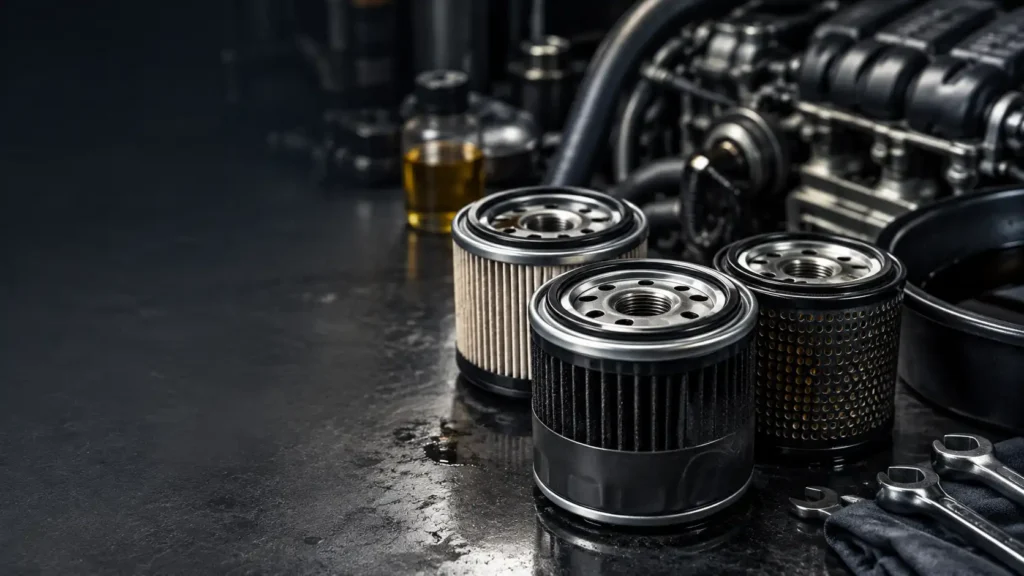
The best oil filter for the price balances real filtration performance, measured in micron rating and dust-holding capacity, against what you’re actually paying per filter. WIX consistently rates as the strongest mid-range value, Mobil 1 Extended Performance offers the longest rated interval for synthetic oil users, and FRAM Ultra Synthetic closes much of the quality gap that older FRAM filters were criticized for, though FRAM’s standard economy lines remain worth avoiding.
This guide covers what actually makes one oil filter better than another, our top picks by budget and use case, and how filter quality connects to your oil change interval.
If you’re doing the full job yourself, our guide on how to change your own oil at home step by step covers filter installation as part of the complete process.
Quick Comparison: Best Oil Filters for the Price at a Glance
These three oil filters stand out for different reasons: WIX XP offers the best overall value, Mobil 1 Extended Performance is ideal for longer synthetic oil intervals, while FRAM Ultra Synthetic provides a strong budget-friendly alternative with improved filtration and construction.
Now that you’ve seen how the top picks compare at a glance, let’s take a closer look at what makes each filter worth considering and which one is the best fit for your vehicle.
| Rank | Product | Best For | Rated Interval | Buy Link |
|---|---|---|---|---|
| 1 | WIX XP | Best overall value | Up to 20,000 miles | Check Price |
| 2 | Mobil 1 Extended Performance | Best for long synthetic intervals | Up to 20,000 miles | Check Price |
| 3 | FRAM Ultra Synthetic | Best FRAM option (avoid standard FRAM lines) | Up to 20,000 miles | Check Price |
Best Oil Filters for the Price: Detailed Reviews
The three filters below offer different advantages depending on your budget, oil type, and preferred oil-change interval. Here’s what makes each one worth considering.
1. WIX XP Best Overall Value
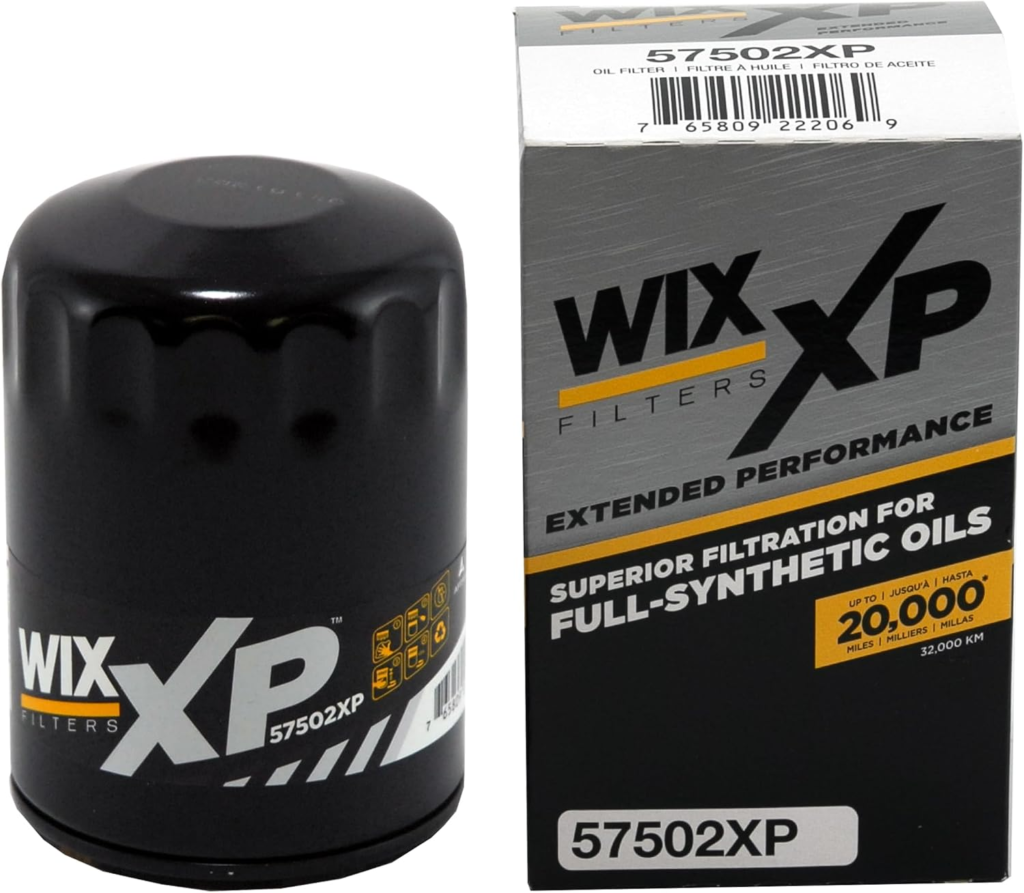
WIX XP is a premium mid-range oil filter that combines strong filtration, durable construction, and extended service capability, making it a well-balanced choice for most drivers.
Pros
- 99% efficient at 23 microns
- Metal end caps and center core
- Rated for up to 20,000 miles
- Good balance of quality and price
- Suitable for synthetic oil
Cons
- Costs more than basic economy filters
- 20,000-mile capacity may be unnecessary for shorter intervals
Review:
WIX XP stands out as the strongest overall value because it combines quality filtration media with robust internal construction. It makes particularly good sense for drivers using synthetic oil who want a filter capable of longer service intervals. For normal 5,000–7,500-mile changes, its durability still makes the extra cost worthwhile.
2. Mobil 1 Extended Performance Best for Long Synthetic Intervals
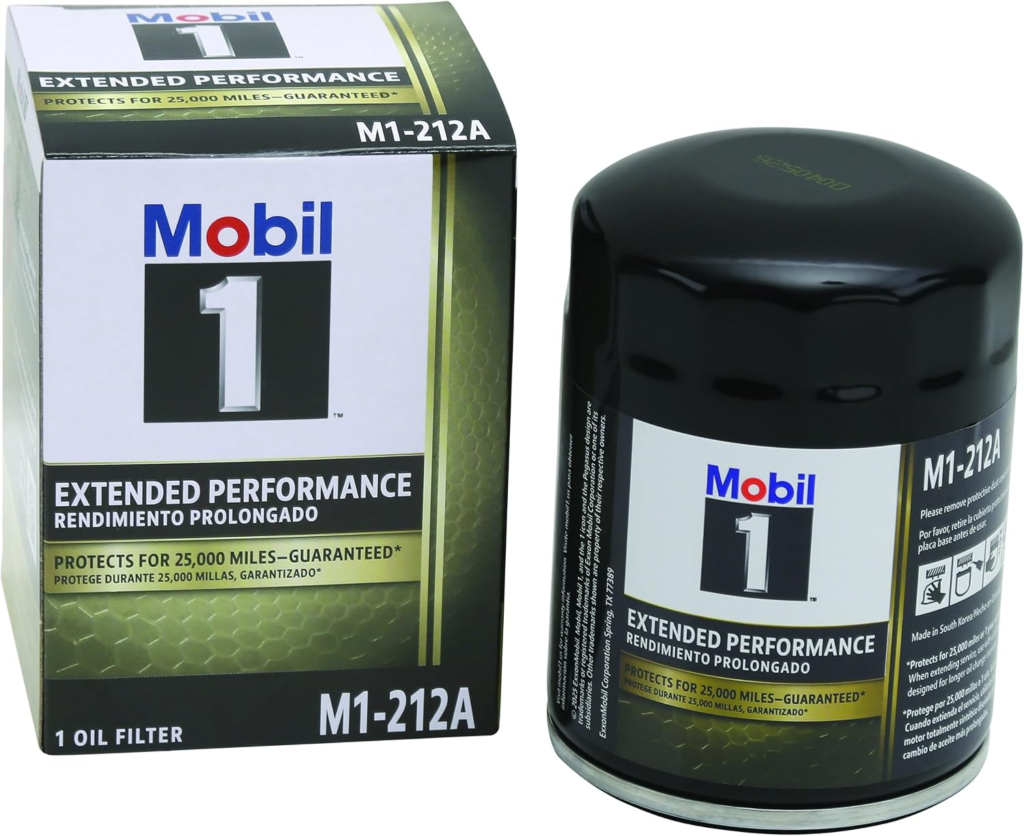
Mobil 1 Extended Performance is a heavy-duty filter designed for drivers who want dependable filtration and extended service capability alongside synthetic motor oil
Pros
- Removes over 99% of harmful contaminants
- Rated for up to 20,000 miles or 1 year
- Heavy-duty canister construction
- Strong anti-drain-back protection
- Widely available
Cons
- More expensive than basic filters
- Extended capacity is unnecessary for short oil-change intervals
Review:
Mobil 1 Extended Performance is a strong choice for drivers following longer synthetic-oil change intervals. Its heavy-duty construction and high filtration efficiency provide the durability needed for extended service. It is also convenient for DIY maintenance because the filter is widely available from major retailers.
3. FRAM Ultra Synthetic Best FRAM Option
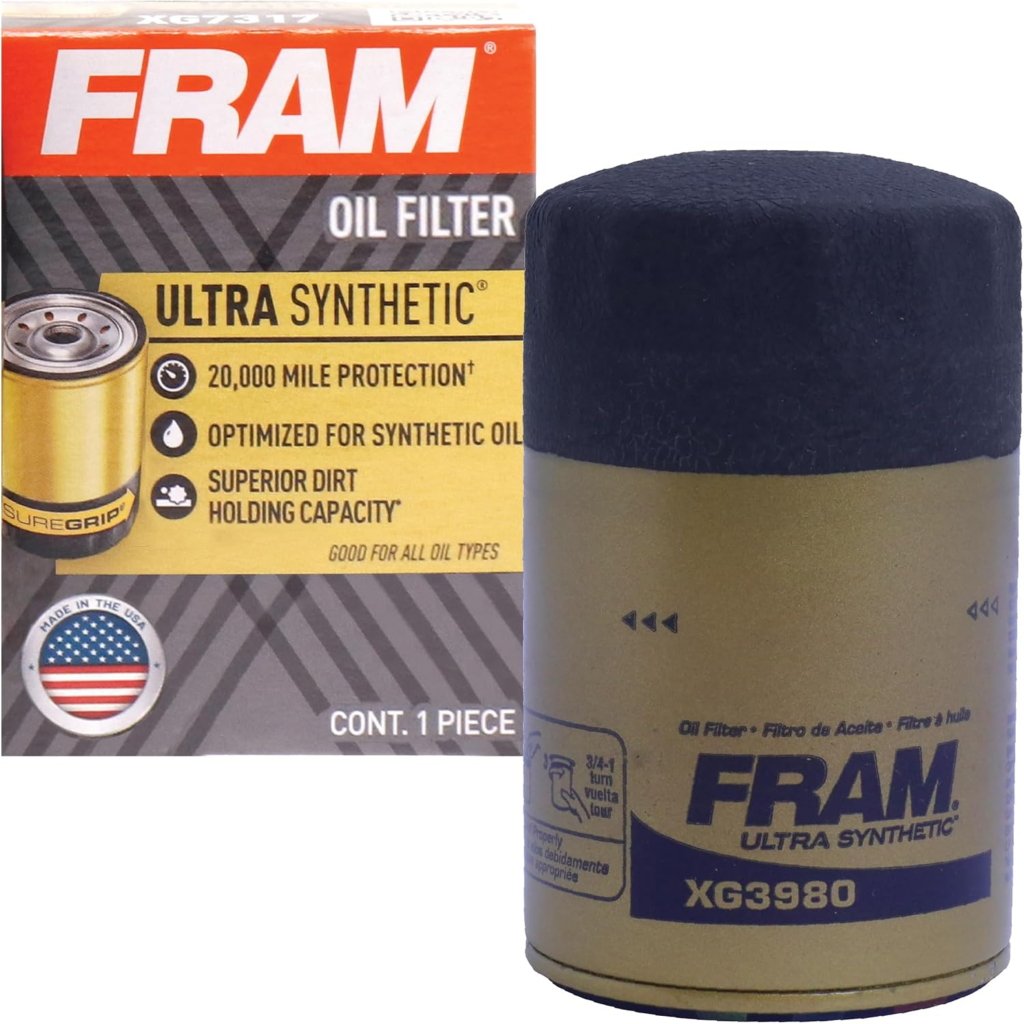
FRAM Ultra Synthetic is the brand’s premium filter line, offering synthetic filtration media and significantly stronger performance than its basic economy models.
Pros
- Pleated synthetic filtration media
- 99%+ claimed filtration efficiency
- Rated for up to 20,000 miles
- SureGrip surface for easier removal
- Competitive pricing
Cons
- More expensive than standard FRAM filters
- Long service rating may be unnecessary for frequent oil changes
Review:
FRAM Ultra Synthetic is worth considering if you want a better FRAM filter without moving into the highest-priced options. Its synthetic media and extended-service rating make it much more competitive with premium alternatives. For buyers choosing FRAM, the Ultra Synthetic line is the better option for long-term filtration performance.
What Actually Makes One Oil Filter Better Than Another?
A handful of construction details separate a genuinely good filter from one that only looks similar on the shelf.
- Filtration media – synthetic or micro-glass blend media traps smaller particles more effectively than basic cellulose media used in cheaper filters.
- Micron rating and efficiency – look for filters rated 99% efficient at 20-25 microns or better; lower numbers mean finer filtration.
- End cap material – metal end caps hold up better under pressure and heat than cardboard end caps, which can degrade over a filter’s service life.
- Anti-drain-back valve – prevents oil from draining out of the filter when the engine is off, protecting against dry-start wear each time you start the car.
- Rated mileage interval – confirm the filter’s rated interval actually matches your oil type and change schedule, since a basic filter paired with extended-interval synthetic oil creates a mismatch.
Paying for genuinely better filtration media and construction, rather than just a recognizable brand name, is where your money is actually well spent in this category.
Does a More Expensive Filter Actually Matter for a Normal Oil Change Interval?
For drivers on a standard 5,000 to 7,500 mile change interval, the difference between a basic economy filter and a premium extended-interval filter matters less than it does for drivers stretching to 15,000 or 20,000 miles between changes. A filter simply doesn’t accumulate enough contaminant load in a shorter interval to fully expose the difference in dust-holding capacity between tiers.
The bigger risk with cheap filters isn’t filtration efficiency at short intervals, but construction quality, specifically cardboard end caps that can degrade or a weak anti-drain-back valve that fails to prevent dry-start wear. Paying a modest premium for a mid-tier filter like WIX, even on a standard interval, buys meaningfully better construction reliability rather than just marginally better filtration.
How Does Filter Choice Connect to Your Oil Change Interval?
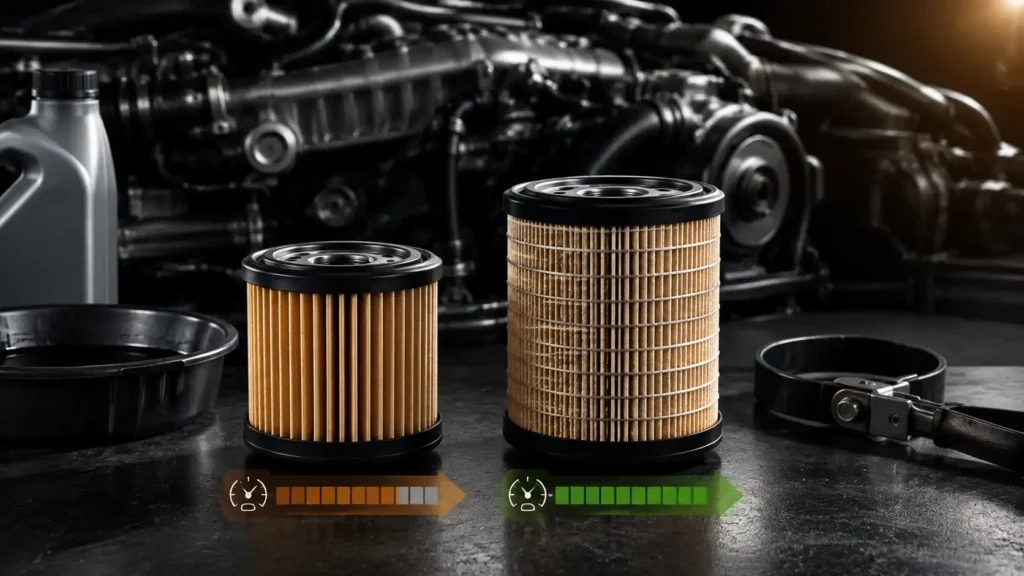
If you’re running synthetic oil on an extended interval, whether 15,000 or 20,000 miles, using a filter specifically rated for that same interval is important, since a basic filter’s media and dust-holding capacity aren’t engineered to last that long. Mismatching a short-interval filter with a long-interval oil change schedule can leave the filter overwhelmed well before your next scheduled oil change.
Conversely, there’s no meaningful downside to using an extended-interval filter even if you change your oil more frequently than its rated mileage; it simply means the filter has extra capacity margin it never gets to use. Matching or exceeding your oil’s rated interval with your filter’s rated interval, rather than the reverse, is the safer pairing.
Conclusion
Choosing the best oil filter for the price means balancing filtration performance, construction quality, service life, and your actual oil-change schedule. WIX XP is the strongest overall value, offering durable construction and high filtration efficiency at a reasonable price. Mobil 1 Extended Performance is ideal for drivers using synthetic oil on longer intervals, while FRAM Ultra Synthetic provides a capable premium alternative at a competitive price.
For standard 5,000–7,500-mile oil changes, you don’t necessarily need a 20,000-mile-rated filter, but better construction can still provide added reliability. If you use extended-interval synthetic oil, choose a filter rated to match or exceed your intended service interval. Most importantly, always confirm proper vehicle fitment before buying.
Frequently Asked Questions
What is the best oil filter for the money?
WIX XP is the best overall value because it combines strong filtration, durable construction, and an extended service rating without moving into the highest price tier. It is a particularly good choice for drivers who want a premium-quality filter for both standard and extended oil-change intervals.
Are expensive oil filters worth it?
Yes, but the benefit depends on your oil-change interval. For standard 5,000–7,500-mile intervals, a premium filter’s extra capacity may not be necessary. However, better construction, filtration media, and anti-drain-back protection can still make a higher-quality filter worthwhile.
How often should I change my oil filter?
You should generally change the oil filter whenever you change the engine oil, unless the vehicle or filter manufacturer specifically recommends otherwise. If you’re using an extended oil-change interval, make sure the filter is rated for the same interval or longer.
Is WIX XP better than Mobil 1 Extended Performance?
Neither is universally better. WIX XP is the better overall value, while Mobil 1 Extended Performance is a strong choice for drivers prioritizing extended synthetic-oil intervals and widely available premium filtration. The best option depends on price, vehicle fitment, and your maintenance schedule.
Is FRAM Ultra Synthetic a good oil filter?
Yes. FRAM Ultra Synthetic is a legitimate premium option and is substantially different from FRAM’s basic economy lines. It uses synthetic filtration media and is designed for extended service, making it worth considering when priced competitively.
Can I use a different brand of oil filter than my motor oil?
Yes. You do not generally need to match the oil-filter brand to the motor-oil brand. The important factors are correct vehicle fitment, filter specifications, and compatibility with your oil-change interval.
How do I choose the right oil filter for my car?
Check your vehicle’s year, make, model, and engine against the manufacturer’s fitment information. You should also compare the filter’s rated efficiency, construction, and service interval with your planned oil-change schedule. Always verify fitment before installation.
Is a 20,000-mile oil filter necessary?
Not necessarily. A 20,000-mile-rated filter is most useful when your vehicle and oil are specifically suited to an extended service interval. If you change your oil every 5,000–7,500 miles, a standard or mid-range filter may provide sufficient capacity for that shorter interval.