Regular vehicle cleaning plays a measurable role in maintaining paint condition, preventing corrosion, and preserving resale value. AAA recommends washing vehicles every one to three weeks because road salt, bird droppings, tree sap, and airborne contaminants can damage automotive paint over time.
At the same time, the global car detailing market continues to grow as more vehicle owners invest in long term appearance protection and interior restoration. Although car washing and car detailing are often grouped together, the two services differ significantly in cleaning depth, tools, cost, paint protection, and maintenance impact. Understanding these differences is important for evaluating vehicle care costs, appearance retention, and long term surface preservation.
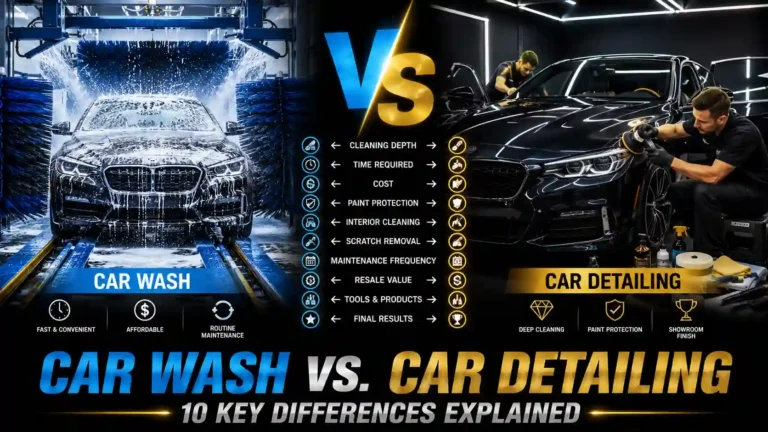
Car Wash vs. Car Detailing: 10 Key Differences Explained
The simplest way to compare them is this: a car wash is for maintenance, while detailing is for restoration and protection. EPA also notes that commercial washes are better for water management, while AAA recommends frequent washing to protect the car from dirt, salt, and acidic debris.
1. Difference in Cleaning Depth
A car wash cleans the surface, but detailing goes deeper into paint, trim, fabric, carpet, and hidden areas. That deeper work is why detailing often looks dramatically better.
2. Difference in Time Required
A wash is quick, often done in minutes. Detailing takes longer because it includes more steps, more attention, and more finishing work.
3. Difference in Cost
A car wash is usually the budget choice, while detailing costs more because it uses more labor, products, and skill. The higher price reflects the deeper work being done.
4. Difference in Tools and Products Used
Washes rely on soap, water, and basic cleaning tools. Detailing uses more specialized products and equipment, which is one reason professionals can produce better results than most DIY efforts.
5. Difference in Interior Cleaning
A wash may include a quick vacuum or wipe-down, but detailing can shampoo carpets, clean vents, treat leather, and remove stains more fully. That makes a major difference in how fresh the cabin feels.
6. Difference in Paint Protection
Washing removes dirt, but waxing and detailing add protection. AAA says wax helps protect the paint and should be done multiple times a year, especially when weather and road conditions are harsh.
7. Difference in Scratch and Swirl Removal
A wash can accidentally leave swirl marks if done badly. Consumer Reports warns against circular washing motions because they can create light but noticeable scratches, while detailers can often correct minor defects with better tools and experience.
8. Difference in Vehicle Resale Value
Clean cars usually make a stronger first impression, and KBB says a cleaned and detailed car is worth more at trade-in than a worn, poorly maintained one. AAA also says keeping a car clean helps protect its resale value.
9. Difference in Service Frequency
AAA recommends washing about every one to three weeks, depending on climate and usage, and waxing two to four times a year. Detailing is usually less frequent because it is a deeper service, not a weekly routine.
10. Difference in Final Results
A wash gives a clean, everyday look. Detailing aims for a much sharper, fresher, and more polished finish that feels closer to showroom condition.
What Is a Car Wash?
A car wash is a routine vehicle cleaning service that removes surface dirt, dust, mud, road salt, bird droppings, road film, and other contaminants from a car’s exterior. Some services also include light interior cleaning, such as vacuuming or dashboard wiping, but the main purpose is regular maintenance rather than deep restoration. It focuses mostly on visible surfaces to keep the vehicle clean between more advanced maintenance services like polishing or detailing.
Industry research shows that regular washing helps reduce paint contamination and lowers the risk of corrosion caused by salt, moisture, and environmental pollutants.
Commercial car wash facilities are also designed to manage wastewater more efficiently than home washing methods, helping reduce harmful runoff entering storm drains. Because of this, regular car washing is widely considered an important part of long term vehicle maintenance and appearance protection.
4 Types of Car Wash Services
Car washes usually come in a few common forms, including automatic, hand wash, touchless, and self-service. The main difference is how much physical contact, time, and attention the car receives. AAA notes that if you use an automatic wash, cloth brushes are generally less likely to scratch than harsher alternatives, while Consumer Reports advises careful washing technique to reduce swirl marks.
- Automatic Car Wash
An automatic wash is the fastest option and is best for drivers who want a quick clean with little effort. It is convenient, but the result is usually limited to surface cleaning.
- Hand Car Wash
A hand wash gives more control and can be gentler when done correctly. It is often better than a rushed machine wash when the goal is to reduce visible marks and clean problem areas more carefully.
- Touchless Car Wash
A touchless wash avoids direct brushing, so it can reduce the risk of brush-related marks. It still relies on cleaning chemicals and water pressure, so it cleans the exterior but does not provide the deep finish of detailing.
- Self-Service Car Wash
A self-service wash gives drivers the tools to wash their own car while using a facility built to manage runoff better than a home driveway. EPA says commercial washes are safer for waterways because they often recycle or treat wastewater before release.
What Is Included in a Standard Car Wash?
A standard car wash is designed to remove surface level dirt and improve a vehicle’s overall appearance in a short amount of time. Most services include rinsing, soap application, wheel and tire cleaning, window cleaning, and vehicle drying. Some locations also provide a quick interior vacuum or dashboard wipe, but the process mainly focuses on exterior maintenance rather than deep restoration.
Exterior Foam Cleaning
Exterior foam cleaning is one of the first stages of a car wash. Foam and automotive soap help loosen dirt, dust, mud, and road grime so contaminants can be rinsed away more safely. This process improves the vehicle’s appearance and helps reduce buildup on the paint surface, although it does not correct oxidation, swirl marks, or paint damage.
Tire and Wheel Cleaning
Tires and wheels collect heavy amounts of brake dust, grease, road salt, and debris during daily driving. Cleaning these areas improves the vehicle’s appearance and helps prevent long term buildup that can affect wheel condition over time. Wheel cleaning is considered one of the most important visual parts of a standard car wash because dirty wheels can make even a clean vehicle look neglected.
Window Cleaning
Window cleaning removes fingerprints, dust, water spots, and road film from the glass surfaces. Clean windows improve visibility during driving and create a cleaner overall appearance. Standard washes usually focus on surface level cleaning rather than deep glass polishing or stain removal.
Vehicle Drying
Vehicle drying is the final step in most car wash services. Drying helps prevent water spots caused by mineral deposits left behind after rinsing. It also gives the vehicle a cleaner and more polished finish immediately after the wash process is completed.
Advantages and Disadvantages of Car Washing
| Advantages of Car Washing | Disadvantages of Car Washing |
| Fast and convenient for regular vehicle maintenance | Does not remove scratches or swirl marks |
| More affordable than professional detailing | Cannot restore faded or oxidized paint |
| Helps remove dirt, mud, bird droppings, and road salt | Limited interior cleaning in most services |
| Improves the vehicle’s everyday appearance | Does not provide deep cleaning or restoration |
| Easy to repeat weekly or biweekly | Paint protection is usually short term |
| Helps reduce contamination buildup on paint surfaces | Some automatic washes may create minor swirl marks over time |
| Suitable for busy vehicle owners needing quick cleaning | Does not fully protect long term resale appearance |
| Commercial facilities often manage wastewater more efficiently | Cannot clean hidden areas as thoroughly as detailing |
What Is Car Detailing?
Car detailing is a deep cleaning and restoration service designed to improve both the interior and exterior condition of a vehicle. Unlike a standard car wash that focuses mainly on surface dirt removal, detailing involves more advanced cleaning, polishing, and protective treatments. The process can include exterior washing, paint polishing, waxing, interior vacuuming, carpet shampooing, leather treatment, and cleaning hard to reach areas that regular washing often misses.
Industry sources such as Kelley Blue Book describe car detailing as a complete interior and exterior deep-cleaning process that helps restore a vehicle’s appearance and maintain its condition over time. Professional detailing is also commonly used to protect paint surfaces, improve interior cleanliness, and maintain resale value by keeping the vehicle closer to showroom condition.
What Is Included in Car Detailing?
Detailing can include exterior washing, polishing, waxing, wheel care, interior vacuuming, carpet shampooing, dashboard cleaning, and treatment of leather or trim. KBB says it may also include engine bay cleaning and work in areas such as the headliner and door panels.
Exterior Detailing
Exterior detailing focuses on the body panels, trim, wheels, and paint finish. It usually aims for a deeper shine and better protection than a normal wash.
Interior Detailing
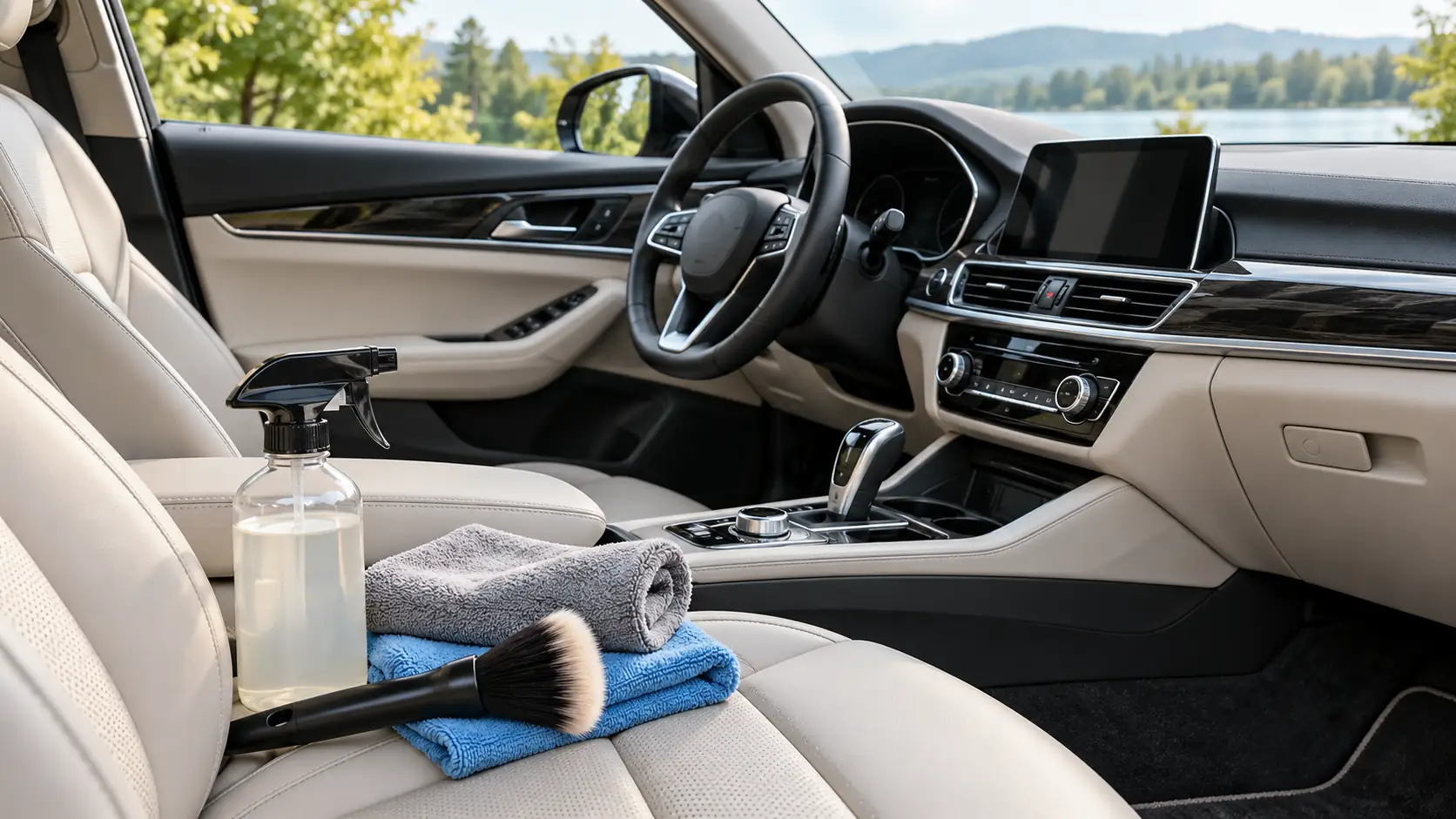
Interior detailing goes after stains, dust, crumbs, odors, and wear in fabric, carpet, leather, and plastic surfaces. This is one of the clearest ways detailing goes beyond washing.
Paint Correction
Paint correction is a step that helps reduce visible marks and restore gloss. Consumer Reports says professional detailers may have special tools and experience that can remove scuffs and scratches the average owner cannot.
Waxing and Ceramic Coating
Waxing adds a protective layer and a brighter look, while more advanced protection services are often part of premium detailing packages. AAA recommends waxing every season or two to four times a year depending on use and weather.
5 Types of Car Detailing Services
Car detailing services are available in different levels depending on the vehicle’s condition, cleaning needs, and protection requirements. Some packages focus on basic maintenance, while others provide complete interior and exterior restoration. Many professional detailers also offer mobile services, allowing vehicle owners to receive detailing at home or work without visiting a physical location.
- Basic Detailing
Basic detailing is designed for vehicles that need more than a standard wash but do not require heavy restoration. This service usually includes exterior washing, interior vacuuming, dashboard cleaning, window cleaning, and light waxing. It is commonly used for routine maintenance and improving the overall appearance of moderately clean vehicles.
- Full Detailing
Full detailing is a more comprehensive service that covers deep cleaning for both the interior and exterior. It often includes paint decontamination, polishing, waxing, carpet shampooing, leather treatment, wheel cleaning, and detailed interior surface cleaning. Full detailing is popular among vehicle owners who want to restore cleanliness, improve shine, and maintain long term vehicle condition.
- Mobile Detailing
Mobile detailing provides the same deep-cleaning services as traditional detailing but at the customer’s preferred location. Professional detailers travel with the necessary equipment and products, making the service more convenient for busy vehicle owners. Mobile detailing has become increasingly popular because it combines flexibility with professional level cleaning and protection.
- Premium Detailing Packages
Premium detailing packages focus on advanced restoration and long term protection. These services may include paint correction, ceramic coating, engine bay cleaning, odor removal, and specialized treatments for leather or upholstery. Premium packages are often chosen for luxury vehicles, neglected cars, or owners who want a near showroom-quality finish with stronger surface protection.
- Advantages and Disadvantages of Car Detailing
Detailing gives the deepest clean, the best finish, and stronger protection. The tradeoff is cost and time, since it takes much longer than a standard wash and may be more than a casual driver needs every week.
Car Wash vs. Car Detailing Comparison Table
Car washing focuses on quick exterior maintenance, while car detailing provides deeper cleaning, restoration, and long term surface protection. Both services help maintain a vehicle, but they differ in cleaning depth, time, cost, and overall results.
| Feature | Car Wash | Car Detailing |
| Purpose | Regular surface cleaning | Deep cleaning and restoration |
| Cleaning Depth | Exterior surface level | Interior and exterior deep cleaning |
| Time Required | Usually 10 to 30 minutes | Several hours or more |
| Cost | Lower cost | Higher cost |
| Paint Protection | Limited | Advanced protection options |
| Interior Cleaning | Basic or minimal | Detailed interior restoration |
| Scratch Removal | Not included | Minor correction possible |
| Best For | Routine maintenance | Long term appearance care |
When Should You Choose a Car Wash?
A car wash is the better option when a vehicle only needs routine cleaning to remove dust, light dirt, mud, pollen, bird droppings, or normal road grime. It is designed for quick maintenance and is usually the most affordable and time efficient choice for keeping a car clean between deeper services. Regular washing also helps reduce contamination buildup that can damage paint over time.
Best Situations for Regular Car Washing
Car washing works best after rain, highway driving, light mud exposure, or everyday commuting. It is mainly intended for maintenance cleaning rather than restoring faded paint or heavily used interiors. Drivers who wash their vehicles regularly often prevent long term dirt buildup and maintain a cleaner exterior appearance throughout the year.
Benefits Most From a Car Wash
Daily commuters, rideshare drivers, family vehicle owners, and busy car owners usually benefit most from regular car washing. It keeps the vehicle presentable without requiring the higher cost or longer service time associated with professional detailing.
When Should You Choose Car Detailing?
Car detailing is the better choice when a vehicle needs more than basic cleaning. It is commonly recommended when the paint looks dull, the interior feels heavily used, stains and odors build up, or the vehicle is being prepared for resale or trade in. Professional detailing focuses on restoring appearance and adding long term surface protection.
Best Situations for Car Detailing
Detailing is most useful for neglected vehicles, older cars, luxury vehicles, or cars exposed to harsh weather and heavy driving conditions. It is also a common choice before selling a vehicle because a cleaner and more polished appearance can improve buyer perception and resale appeal.
Benefits Most From Detailing
Owners of luxury cars, family vehicles, older vehicles, and cars driven in coastal, snowy, or dusty environments often benefit most from detailing. The deeper cleaning and protective treatments help preserve paint condition, interior materials, and overall vehicle appearance.
DIY Car Washing Tips
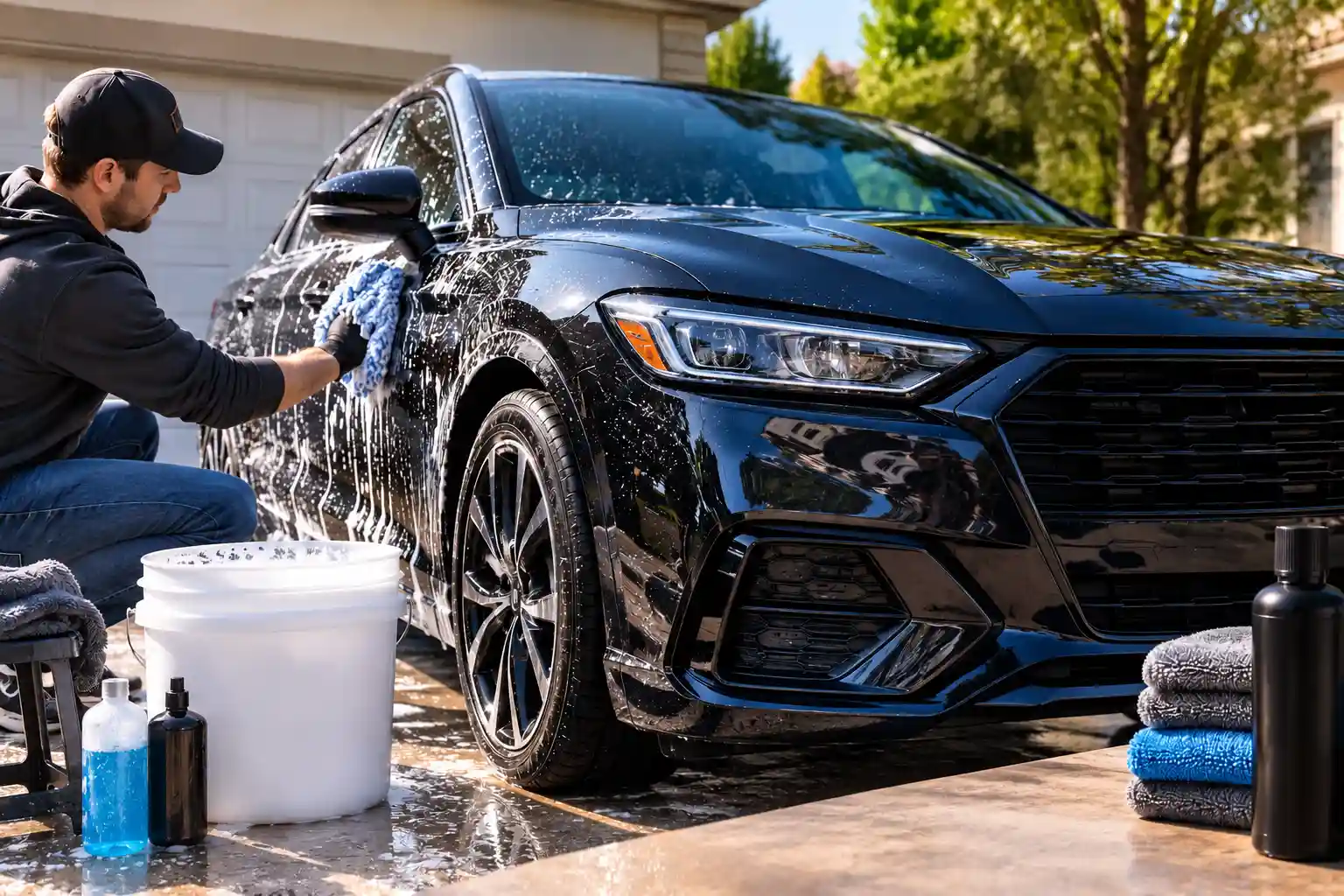
- Use automotive specific car soap instead of household detergents
- Wash the vehicle with soft microfiber wash mitts to reduce scratches
- Rinse the car thoroughly before scrubbing to remove loose dirt
- Use clean water and separate buckets for washing and rinsing when possible
- Avoid aggressive circular scrubbing because it can create swirl marks
- Wash the vehicle in shaded areas to reduce water spots and soap residue
- Dry the car properly with a microfiber towel to prevent mineral buildup
DIY Car Detailing Tips
- Vacuum seats, carpets, and floor mats regularly to prevent dirt buildup
- Use interior safe cleaners for dashboards, leather, plastic, and upholstery surfaces
- Apply wax or paint sealant to improve shine and surface protection
- Clean hard to reach areas such as vents, cup holders, and door panels carefully
- Use microfiber towels instead of rough cloths to avoid surface damage
- Test detailing chemicals on small hidden areas before full application
- Consider professional detailing for paint correction, deep scratches, or advanced restoration work
Common Mistakes to Avoid
Avoid using household cleaners, rough brushes, dirty towels, or dish soap on automotive paint because these materials may damage protective coatings and leave scratches. Washing a car in direct sunlight can also create water spots and soap residue. Environmental agencies additionally warn against allowing dirty runoff water to flow directly into storm drains.
How Often Should You Wash or Detail Your Car?
Most experts recommend washing vehicles more frequently than detailing them. Regular washing removes harmful contaminants before they damage the paint surface, while detailing is generally performed less often for deeper restoration and protection. The ideal schedule depends on climate, driving habits, road conditions, and where the vehicle is parked.
Recommended Car Wash Schedule
For most vehicles, washing every one to three weeks is considered a healthy maintenance routine. Cars exposed to road salt, coastal air, heavy rain, dust, bird droppings, or tree sap may require more frequent washing because these contaminants can damage paint and accelerate corrosion if left untreated.
Recommended Car Detailing Schedule
Professional detailing is commonly recommended two to four times per year depending on vehicle usage and environmental exposure. Vehicles with leather interiors, dark paint, or heavy daily use may benefit from more frequent detailing to maintain appearance and surface protection.
Factors That Affect Cleaning Frequency
Several factors influence how often a vehicle should be cleaned, including weather conditions, driving distance, road salt exposure, parking under trees, coastal humidity, and heavy traffic commuting. Harsh environments usually increase contamination buildup and make both washing and detailing more important for long term vehicle maintenance.
Common Myths About Car Washing and Detailing
Many vehicle owners assume car washing and car detailing are nearly identical services, but the process, tools, and results are very different. Misunderstandings about paint protection, scratch removal, and cleaning quality often lead drivers to choose the wrong service for their vehicle’s condition and maintenance needs.
“Car Detailing Is Just an Expensive Wash”
This is one of the most common misconceptions. Car detailing goes far beyond a basic wash by including deep interior cleaning, paint polishing, surface protection, stain removal, and paint correction. While a car wash mainly removes surface dirt, detailing focuses on restoring and preserving the vehicle’s condition.
“Automatic Car Washes Are Always Safe”
Automatic car washes can be safe, but the system and maintenance quality matter. Modern soft cloth and touchless systems are generally safer than older brush systems. However, poorly maintained equipment or improper washing techniques may still create swirl marks or fine scratches on the paint surface over time.
“Waxing and Detailing Are the Same Thing”
Waxing is only one part of the detailing process. Professional detailing may also include washing, polishing, vacuuming, carpet shampooing, leather treatment, wheel cleaning, odor removal, and paint protection. Wax mainly adds a protective layer and shine, while detailing focuses on complete vehicle care and restoration.
Conclusion
Car washing and car detailing both matter, but they serve different goals. A wash keeps the car clean on a regular basis, while detailing restores more depth, shine, and protection.
EPA also reminds drivers that commercial wash facilities are safer for waterways than washing in a driveway, and AAA recommends washing often enough to stop dirt, salt, and acidic debris from building up. When you use both services the right way, your car stays cleaner, looks better, and holds its value more effectively over time.
FAQs
What is the main difference between a car wash and car detailing?
A car wash focuses on quick exterior cleaning and regular maintenance, while car detailing provides deep cleaning, restoration, and protection for both the interior and exterior. Detailing also includes services like polishing, waxing, paint correction, and interior treatment that a standard wash usually does not provide.
Is car detailing worth the extra cost?
Yes, car detailing is often worth the extra cost because it helps protect paint, improve interior condition, and maintain resale value. Deep cleaning and protective treatments can also extend the life of surfaces like leather, carpet, and exterior paint.
How often should you wash your car?
Most experts, including AAA, recommend washing a car every one to three weeks depending on weather, road conditions, and driving habits. Vehicles exposed to road salt, mud, or heavy pollution may require more frequent washing.
How often should you detail your car?
Most vehicles only need professional detailing two to four times per year. However, cars exposed to harsh weather, heavy daily use, or long commutes may benefit from more frequent detailing services.
Can car detailing remove scratches?
Car detailing can remove or reduce light scratches, swirl marks, oxidation, and minor paint defects through polishing and paint correction techniques. Deep scratches that reach below the clear coat usually require body repair or repainting.
Does detailing increase resale value?
Yes, detailing can improve resale value because a clean and well-maintained vehicle creates a stronger first impression for buyers. A detailed interior and polished exterior also make signs of wear less noticeable.
Is automatic car washing safe for paint?
Modern automatic car washes can be safe when they use soft cloth systems or touchless technology. However, poorly maintained brushes or improper washing methods may still create swirl marks or fine scratches over time.
Which is better for a new car: washing or detailing?
Both are important for a new car. Regular washing removes contaminants that can damage paint, while detailing provides additional protection through waxing, polishing, or ceramic coatings that help preserve the vehicle’s appearance longer.
Which service gives better value?
A car wash gives better value for regular maintenance because it is fast and affordable. Car detailing provides better long-term value when the goal is paint protection, restoration, interior preservation, or resale preparation.
Which option is better for luxury vehicles?
Luxury vehicles usually benefit more from professional detailing because premium paint finishes, leather interiors, and delicate materials require deeper care and protection to maintain their appearance and value.
Which service saves more time?
A standard car wash saves more time because most services are completed within minutes. Car detailing takes significantly longer because it involves deeper cleaning, polishing, and restoration work for multiple vehicle surfaces.