
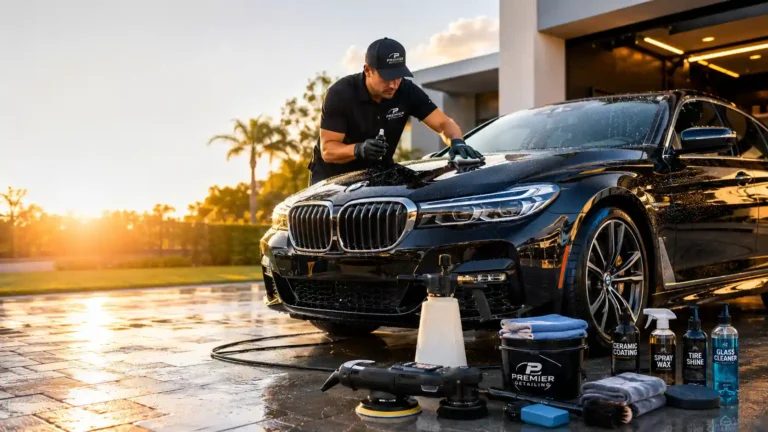
Exterior car care is the cleaning, protection, and routine upkeep of a vehicle’s outside surfaces. It includes paint, glass, wheels, tires, lights, trim, and exposed seals. Good care removes harmful contamination, preserves visibility, and helps you spot damage before it becomes harder to address.
The basic approach is simple: clean gently, use products suited to each material, protect surfaces where appropriate, and inspect them regularly. You do not need to polish your car every month or apply every available coating. A consistent wash routine and a few well-chosen supplies are a better starting point.
What Does Exterior Car Care Include?
Exterior care involves several different jobs. Understanding the difference helps you choose the right treatment instead of using a stronger product when a gentler one would work.
| Task | What it does | Important limit |
|---|---|---|
| Washing | Removes loose dirt and road film | Does not repair scratches |
| Decontamination | Targets bonded particles or specific deposits | Requires surface-compatible methods |
| Polishing | Refines paint by removing a small amount of material | Is not routine cleaning |
| Protection | Adds wax, sealant, or another protective layer | Does not make paint damage-proof |
| Inspection | Identifies chips, cracking, wear, and other changes | Cannot replace a mechanical inspection |
Detailing combines these jobs into a more thorough process. However, exterior car care does not have to mean a full detail every time you wash. Most owners benefit from regular gentle cleaning, with more involved work only when the surface needs it.
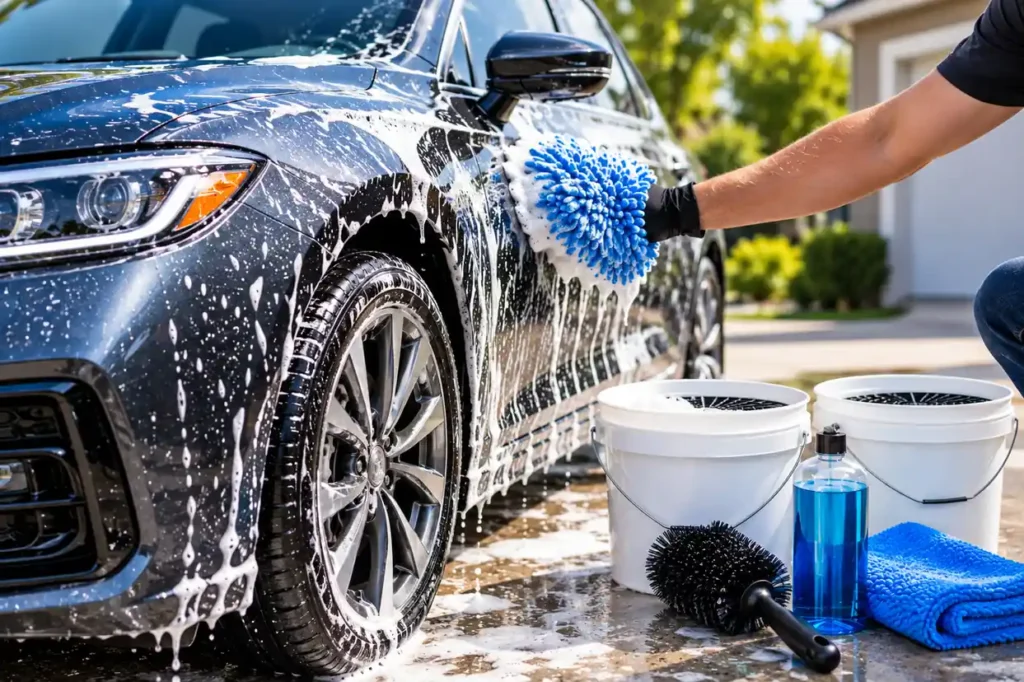
Know Your Vehicle’s Surfaces Before You Start
A method that works on glossy factory paint may be unsuitable for matte paint, vinyl wrap, or damaged clear coat. Check the owner’s manual and any instructions supplied with aftermarket finishes before choosing chemicals or equipment.
Paint and clear coat
Many glossy automotive finishes have a clear protective layer over the color coat. Abrasive polishing removes some material from the finish, so it should address a specific defect rather than become an automatic maintenance step.
Peeling, cracking, or cloudy areas may indicate finish damage rather than dirt. Do not scrub or polish them aggressively in an attempt to restore gloss.

Wraps, paint protection film, and matte finishes
Vinyl wraps and paint protection film have their own cleaning requirements. Edges, seams, and damaged areas deserve particular care, especially around pressure washers.
Matte and satin finishes need products that preserve their intended appearance. Ordinary gloss-enhancing waxes or polishing methods may alter the finish. Follow the finish supplier’s instructions instead of treating every exterior panel like glossy paint.
Wheels, trim, glass, and lights
Wheel finishes vary, including painted, coated, polished, and other treatments. A cleaner suitable for one finish may not suit another. Exterior plastic, rubber, lamp lenses, and glass also require compatible products.
If you cannot identify a surface or coating, avoid aggressive cleaners until you confirm what is appropriate.
Supplies for a Basic Exterior Care Routine
Start with a small kit that lets you wash without transferring abrasive dirt between surfaces. Separate paint-cleaning tools from equipment used on wheels and tires.
Useful supplies include:
- Automotive wash soap approved for your finish.
- A clean wash mitt or another suitable soft wash tool.
- Clean buckets or another method that keeps dirty tools away from clean wash solution.
- Dedicated wheel and tire brushes.
- A hose with a gentle spray setting.
- Clean, soft drying towels.
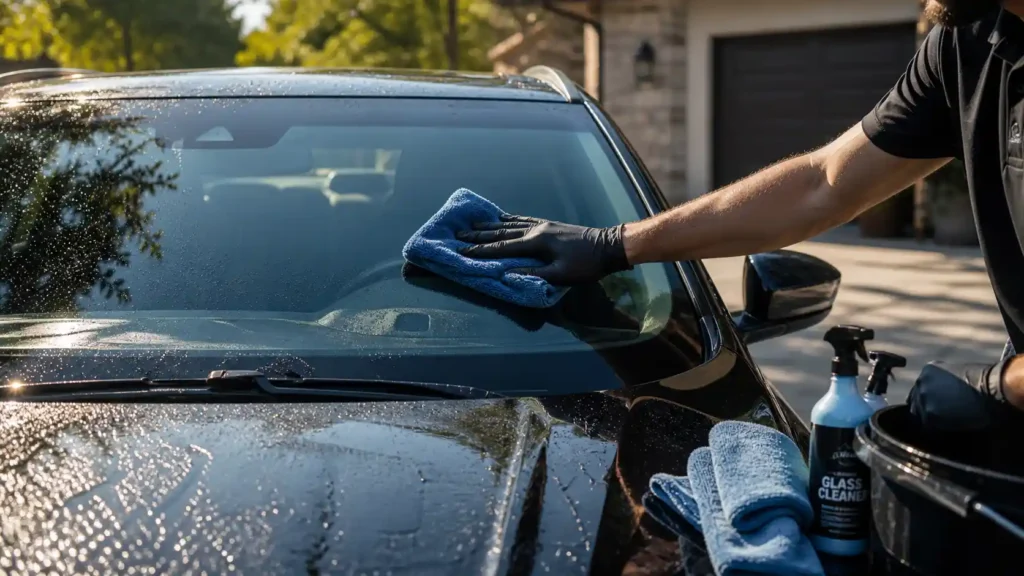
- Glass cleaner suitable for the vehicle’s glass and any applied treatments.
- A compatible wax or sealant, if appropriate for the finish.
Optional products include a targeted bug remover, tar remover, or decontamination treatment. Buy these for a confirmed need, not as mandatory steps for every wash.
Read labels for dilution, application temperature, dwell time, rinsing, and protective equipment. Do not mix cleaning chemicals or assume that a stronger concentration will clean more safely.
How to Clean Your Car’s Exterior
Work on cool surfaces, preferably out of direct sun. The goal is to loosen and remove contamination while minimizing unnecessary rubbing. Choose a location where wash water can drain appropriately and where local rules permit vehicle washing.
1. Inspect the vehicle
Walk around the car before getting it wet. Look for loose trim, peeling paint, damaged film edges, heavy mud, and obvious contaminants such as bird droppings or sap.
Check that windows and doors are closed. Follow the owner’s manual for any required car-wash mode or precautions around powered openings and accessories.
2. Clean wheels and tires with separate tools
Let wheels and brakes cool before cleaning them. Use a cleaner approved for the wheel finish, follow its dwell instructions, and rinse as directed before it dries.
Keep these brushes and towels away from painted body panels. Wheel grime can contain abrasive particles that you do not want trapped in a paint wash mitt.
Cosmetic cleaning does not establish that a tire is safe. Bulges, exposed cords, significant cracking, or recurring pressure loss call for tire inspection rather than dressing.
3. Rinse away loose dirt
Rinse the body to remove loose grit before touching the finish. Pay attention to lower panels, where road contamination collects.
If using a pressure washer, follow both the equipment instructions and the vehicle or finish guidance. Avoid directing concentrated pressure at damaged paint, seals, electrical openings, or film edges. There is no single nozzle distance that is safe for every machine and surface.
4. Wash gently from cleaner areas toward dirtier areas
Prepare wash solution according to the label. Clean manageable sections, generally moving from upper panels toward lower, dirtier areas.
Rinse or replace the wash tool frequently so trapped dirt does not stay against the paint. Use light pressure, and do not keep scrubbing a stubborn spot. It may need a contaminant-specific treatment rather than more force.
Keep soap from drying on the vehicle. Rinse sections as needed for the conditions and product instructions.
5. Dry the vehicle carefully
Use clean, soft towels and gentle passes rather than dragging a dirty towel across the finish. Replace towels that fall on the ground.
Drying helps reduce mineral deposits left as water evaporates. However, a mark that remains after drying may be an existing deposit or etched damage. Do not assume it needs polishing without further assessment.
6. Finish the glass and inspect your work
Clean exterior glass with a compatible cleaner and a separate clean towel. Remove residue that could cause streaking or glare, particularly on the windshield.
Look over the dry vehicle in good light. If contamination remains, identify it before choosing the next treatment. A second aggressive wash is not automatically the right answer.
How to Handle Contamination That Washing Leaves Behind
Regular washing will not remove every deposit. The safest next step depends on whether you are dealing with material sitting on the surface or damage within the finish.
Bird droppings and bug remains should be removed promptly using a surface-compatible method. Wet or soften the material before gently lifting it away. Avoid scraping dried deposits across paint.
Tar and tree sap may need a dedicated remover approved for the affected surface. Follow the directions and any spot-test requirement. Household solvents are not reliable substitutes because their compatibility with paint, trim, film, and coatings can differ.
Clay bars and synthetic clay tools remove some bonded contamination, but they can also mark the finish. Use them only when needed, with the specified lubricant and technique. Do not make claying a compulsory part of every wash.
If a stain remains after appropriate cleaning, stop and reassess. Etching, clear-coat failure, and deep scratches cannot be washed away. A qualified detailer or body shop can help distinguish a removable deposit from finish damage.
Protecting Paint and Maintaining Other Surfaces
Protection works best on a clean surface and must match the finish. No product eliminates the need to wash, and none makes paint immune to scratches, chips, or chemical damage.
Wax, sealant, and coatings
Wax and paint sealant add a protective layer and can change how water behaves on the surface. Ceramic coatings are another category, often with more demanding preparation and application requirements.
Choose based on the finish, your maintenance habits, and the product’s instructions rather than a guaranteed lifespan claim. Durability depends on exposure, preparation, washing, and the specific product.
Apply only to approved surfaces, and follow directions for drying, buffing, curing, and getting the vehicle wet afterward. Some products can stain unpainted trim or leave residue in textured areas.
Trim, rubber, and tires
Clean exterior plastic and rubber with compatible products. Use a dressing only where it is approved, and remove excess as directed.
Keep tire dressing off tread surfaces, brakes, and other areas where a slippery residue would be unsafe. A shiny appearance is optional; it is not proof of healthy rubber.

Chips, rust, and damaged finishes
Inspect exposed edges and lower panels for chips or corrosion. Touch-up work depends on the paint system and the condition underneath the damage.
Rust spreading beneath paint, flaking metal, or damage near structural areas needs professional assessment. Covering corrosion with wax or paint does not resolve its cause.
How to Choose Exterior Car Care Products
Choosing the right exterior car care products helps you clean and protect your vehicle without damaging its paint, trim, glass, or other surfaces. Instead of buying a large collection of detailing supplies, focus on products that match your vehicle’s finish, cleaning needs, and maintenance routine.
1. Choose Products Based on the Surface
Not every exterior surface requires the same cleaning solution. Automotive paint, wheels, tires, glass, rubber, and plastic trim have different care requirements.
- Car wash soap: Choose a pH-balanced automotive shampoo suitable for your vehicle’s paint and existing protection.
- Wheel cleaner: Select a cleaner specifically approved for your wheel finish, whether painted, coated, or polished.
- Glass cleaner: Use an automotive glass cleaner that is compatible with windshield treatments and exterior glass coatings.
- Plastic and rubber cleaner: Choose products designed for exterior trim, rubber seals, and unpainted plastic.
- Microfiber towels: Look for soft, clean, absorbent towels designed for automotive detailing.
If your vehicle has matte paint, vinyl wraps, or paint protection film, check the manufacturer’s care instructions before purchasing cleaning products.
2. Understand the Difference Between Wax, Sealant, and Ceramic Coating
Paint protection products serve different purposes, so consider their application requirements and maintenance needs before choosing one.
- Car wax: A practical option for owners who prefer straightforward application and periodic reapplication.
- Paint sealant: Provides a protective layer and is often selected for convenient maintenance and surface protection.
- Ceramic coating: Requires more careful surface preparation and application. Depending on the product, it can provide longer-lasting protection than traditional wax.
None of these products makes your vehicle scratch-proof or eliminates the need for regular washing. Always follow the manufacturer’s application and maintenance instructions.
3. Consider Your Driving and Parking Conditions
Your vehicle’s environment affects which exterior car care products you need.
For example, vehicles frequently parked outdoors may need more regular cleaning and paint protection because they are exposed to bird droppings, tree sap, dust, and weather-related contamination.
If you regularly drive on highways, consider keeping a suitable bug remover and automotive wash supplies available. Vehicles exposed to muddy roads or heavy brake dust may also benefit from dedicated wheel cleaners and brushes.
Choose products based on the contaminants your vehicle actually encounters rather than purchasing every available detailing chemical.
4. Check Product Compatibility and Application Instructions
Before buying an exterior car care product, read its label carefully. Check which surfaces it is designed for, whether dilution is required, and how long it should remain on the surface before rinsing or wiping.
Also consider:
- Whether the product is safe for your paint protection or coating.
- Whether it can be used on matte finishes or wrapped surfaces.
- Whether it requires special application tools.
- Whether it must be applied in shade or on cool surfaces.
- Whether it requires additional rinsing or curing time.
Avoid mixing different cleaning chemicals or using household cleaners as substitutes unless the vehicle or product manufacturer specifically approves them.
5. Build a Practical Exterior Car Care Kit
You do not need dozens of products to maintain a clean vehicle. Start with essential supplies and add specialized products only when a particular cleaning problem requires them.
A basic exterior car care kit can include automotive wash shampoo, a soft wash mitt, clean buckets, microfiber drying towels, a dedicated wheel brush, automotive glass cleaner, and a compatible paint protection product.
As your detailing needs develop, you can add specialized products such as bug remover, tar remover, or iron remover.
The best exterior car care products are not necessarily the most expensive or the ones with the most features. Choose products that are compatible with your vehicle, easy to use correctly, and suitable for your regular maintenance routine.
How Often Should You Perform Exterior Car Care?
Use the vehicle’s condition and exposure to set your routine rather than relying on one universal schedule. A garaged car driven occasionally has different needs from a daily driver exposed to road salt, construction dust, or frequent tree debris.
Check the exterior regularly and wash when contamination builds up. Address bird droppings, bug remains, and similar deposits sooner rather than waiting for the next planned wash.
After winter driving, consult the vehicle’s guidance on removing road salt, including accessible underbody areas. Never crawl under a vehicle supported only by a jack to clean it.
Reapply protection according to the product’s maintenance instructions and the surface condition. Water beading alone does not provide a complete measure of remaining protection because contamination and surface treatments can change it.
Common Mistakes and When to Get Help
Most avoidable problems come from using the wrong product, working on a dirty or hot surface, or trying to remove a defect with more force. Keeping the process simple makes those mistakes easier to avoid.
Do not wipe dusty paint with a dry towel. Avoid abrasive household pads, unnecessarily harsh cleaners, and repeated polishing without assessing the finish. Keep chemicals from drying unless the product specifically calls for it.
Seek professional help for peeling clear coat, deep scratches, persistent etching, damaged wraps, or uncertain paint thickness before correction. Exterior cleaning also does not replace inspection of cracked lamps, damaged mirrors, loose trim, or other parts that affect safe operation.
Conclusion
Exterior car care means matching the cleaning and protection method to the material in front of you. Start with gentle washing, separate tools for dirty areas, careful drying, and regular inspections. Treat stubborn contamination selectively, and stop when the problem appears to be damage rather than dirt.
Frequently Asked Questions
Can a waterless wash replace a traditional wash?
A waterless wash can suit light contamination when the product is approved for the finish and used as directed. It is not a universal substitute for rinsing away heavy grit or mud. Follow its towel-use instructions carefully to limit dragging dirt across the surface.
Should you use a car cover outdoors?
An outdoor car cover can help in some storage situations, but fit, material, and cleanliness matter. A loose cover moving against a dirty finish can cause abrasion. Choose one intended for the vehicle and environment, and follow its installation and maintenance instructions.
Does an electric vehicle need different exterior cleaning?
An electric vehicle still needs surface-appropriate exterior cleaning, but its manual may specify precautions for charge ports, powered features, and automatic car washes. Do not direct water into an open charge port. Follow the vehicle’s instructions rather than assuming another model’s procedure applies.