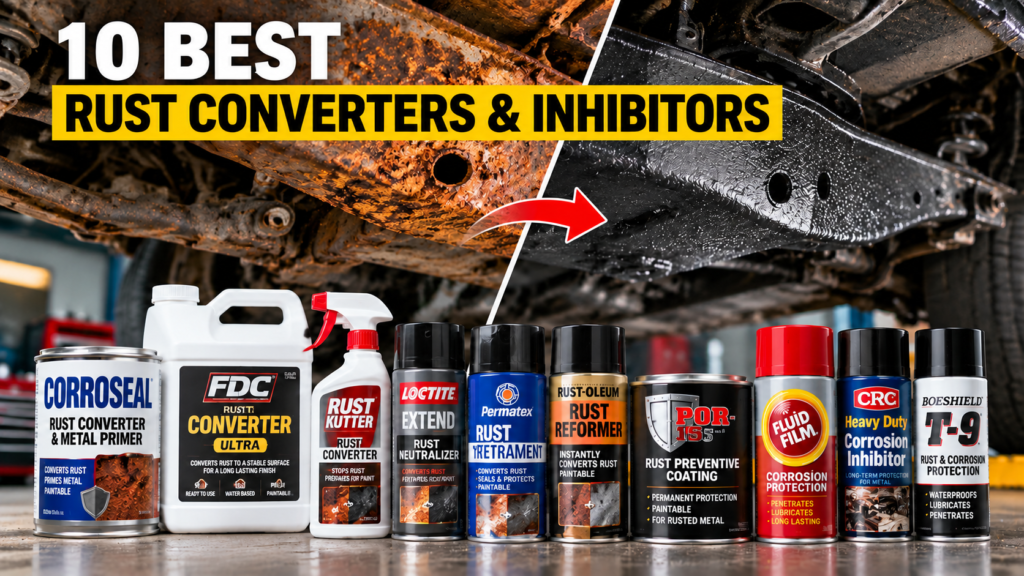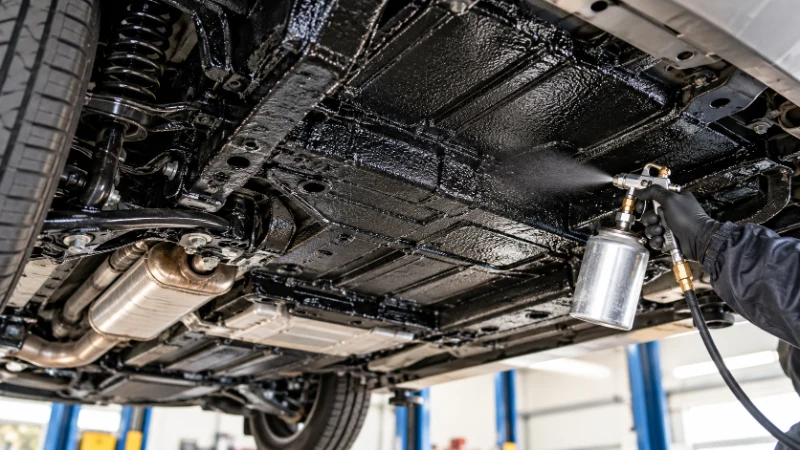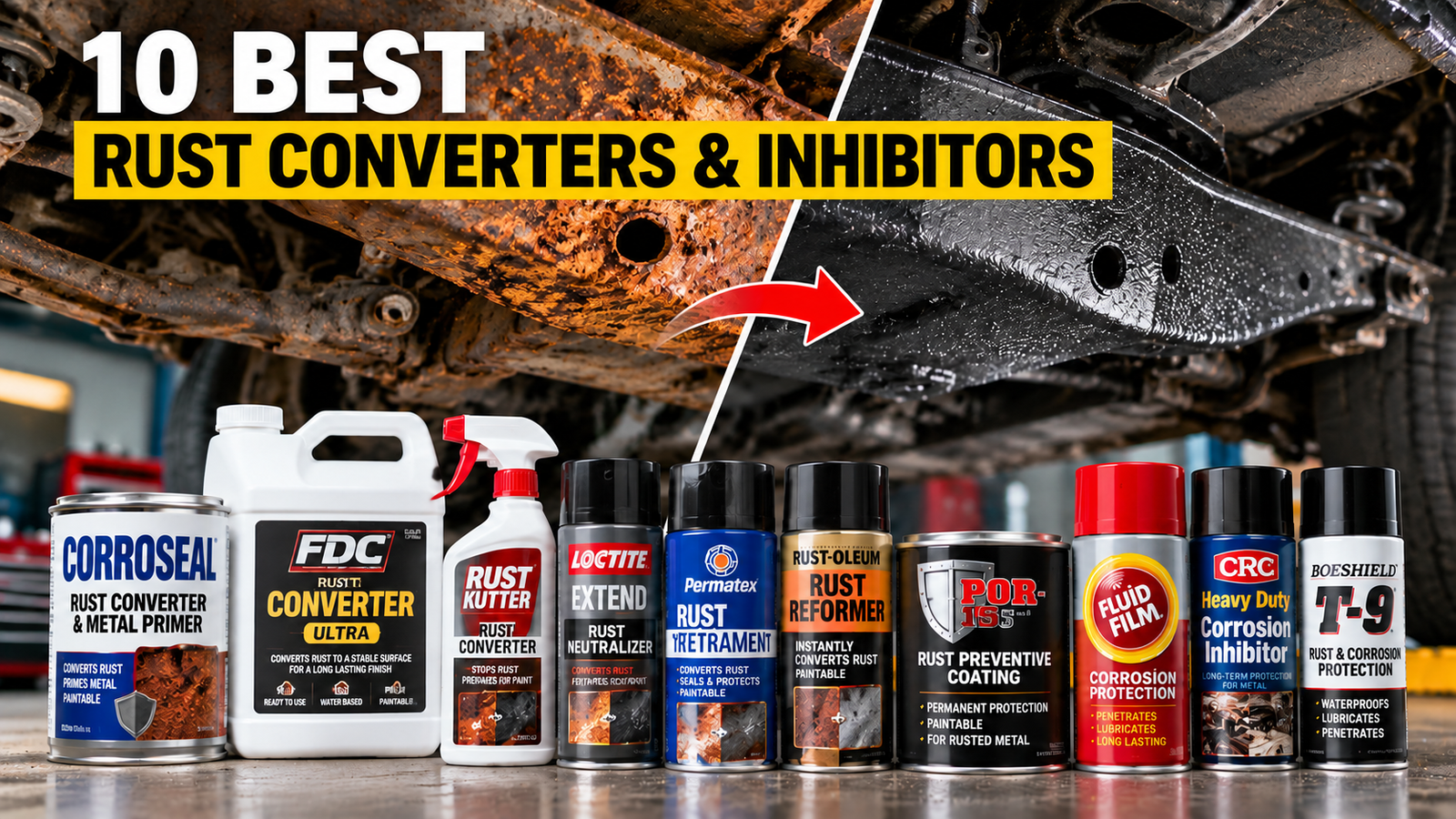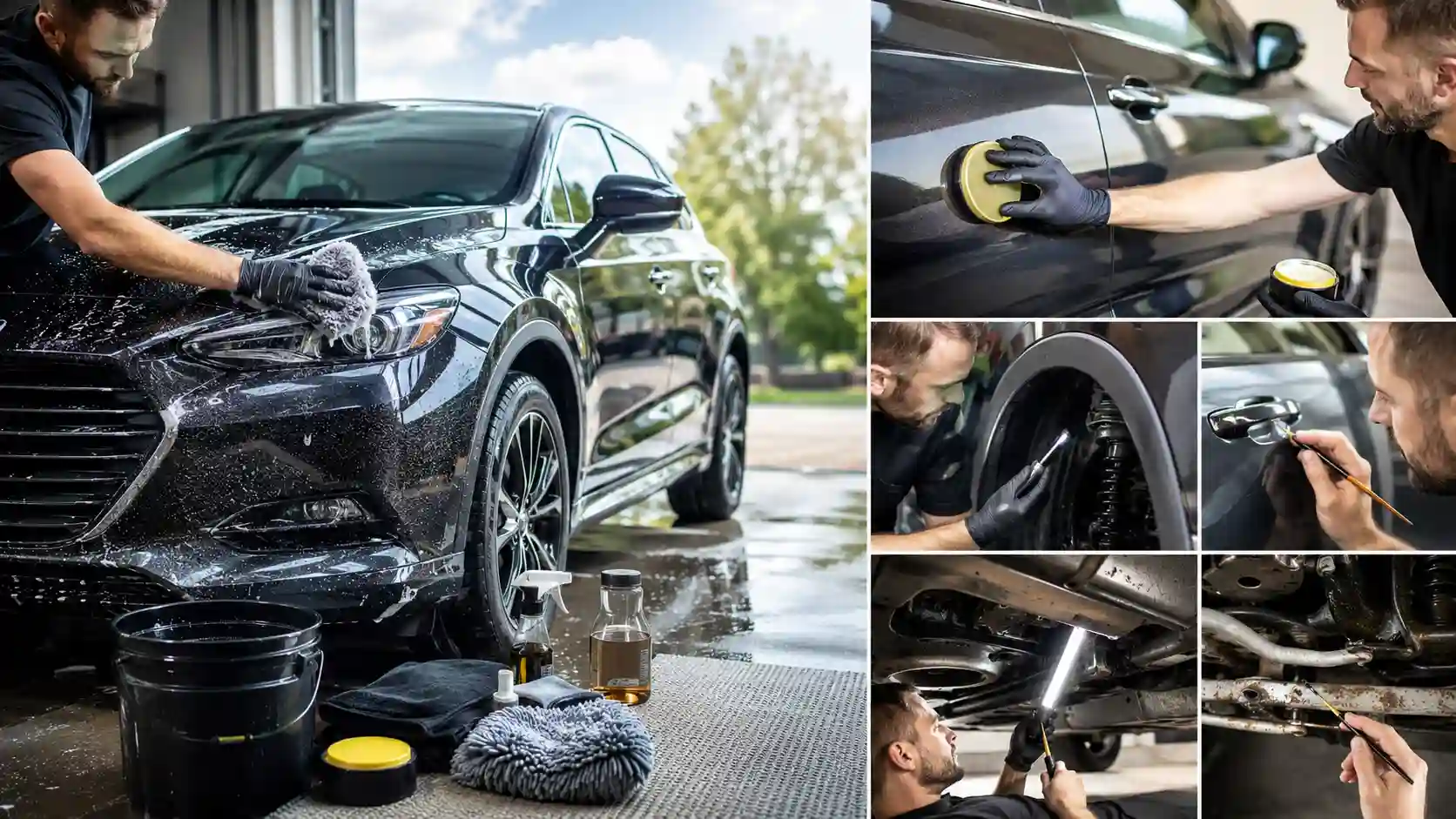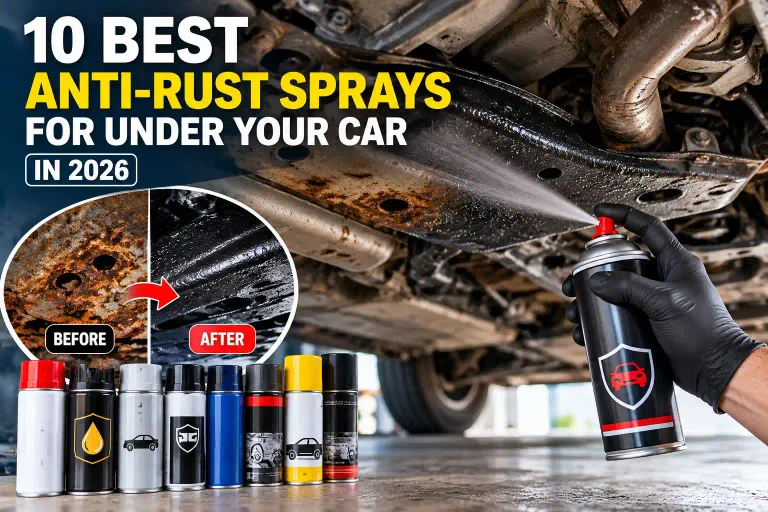
The best anti-rust sprays for under your car depend on what you are protecting and the condition of the metal. A creeping soft film, a cavity wax, a prepared hard coating, and a rust converter perform different jobs; choosing the wrong category can add work while leaving the actual problem unresolved.
This 2026 guide compares ten individual products and packages for maintained films, targeted component protection, internal cavities, prepared barriers, and a conversion stage. It explains where each purchase fits rather than treating all ten as interchangeable full-underbody sprays.
These are research-based reviews using manufacturer information and verified listings. We did not conduct salt-spray, wash-off, road, or long-term corrosion tests. No product here repairs metal already lost to corrosion.
Quick Product Comparison of 10 Best Anti-Rust Sprays
| Product | Best For / Category | Amazon |
|---|---|---|
| Fluid Film Aerosol, 11.75 oz | Best Maintained Soft-Film Starting Point | Check Price on Amazon |
| Woolwax Black Undercoating, Twelve 12 oz Cans | Best Larger Black Lanolin Aerosol Package | Check Price on Amazon |
| B’laster Surface Shield Rust Protectant, Six-Can Pack | Best Lanolin Undercoating Multipack | Check Price on Amazon |
| CRC Heavy Duty Corrosion Inhibitor 06026, 10 wt oz | Best Flexible Film for Targeted Hardware | Check Price on Amazon |
| Boeshield T-9, 12 oz Aerosol | Best Thin Dry-Wax Approach | Check Price on Amazon |
| LPS 3 Premier Rust Inhibitor, 11 oz Aerosol | Best Industrial Waxy Inhibitor for Assessed Areas | Check Price on Amazon |
| 3M Cavity Wax Plus 08852, 18 oz Aerosol | Best Professional Internal-Cavity Wax | Check Price on Amazon |
| Eastwood Internal Frame Coating, 14 oz, Black | Best Specialized Internal-Frame Coating | Check Price on Amazon |
| 3M Professional Grade Rubberized Undercoating 03584, 16 oz | Best Prepared-Surface Rubberized Coating | Check Price on Amazon |
| Rust-Oleum Stops Rust Reformer Spray 248658 | Best Converter Stage for Supported Rusty Steel | Check Price on Amazon |
Our Top Picks Anti-Rust Sprays
1. Best Maintained Soft-Film Starting Point — Fluid Film Aerosol, 11.75 oz
Best for: Owners protecting appropriate underbody metal with a maintained lanolin-based film.
Fluid Film is a corrosion-preventive and lubricant rather than a hard paint or rust converter. Its lanolin-based film makes it a relevant starting point for suitable underbody metal when you want protection that can be inspected and renewed.
The linked aerosol is 11.75 ounces. It suits targeted application and touch-ups, but a single can should not be assumed sufficient for a complete vehicle. Plan access, coverage, and the correct process before buying by can count.
The tradeoff is a soft film rather than a clean dry painted finish. Dirt pickup, wash exposure, and service conditions affect maintenance. Confirm compatibility around rubber, plastics, and existing coatings, and keep the product off brakes, tires, belts, exhaust, and other prohibited areas.
Key Features
- Lanolin-based corrosion-preventive formulation.
- 11.75-ounce aerosol in the linked listing.
- Soft maintained film rather than a rust-conversion paint.
- Penetrating and lubricating role on appropriate materials.
Pros
- Relevant to an inspection-and-renewal approach.
- Aerosol is convenient for smaller accessible areas.
- Does not require a hard painted finish to be the goal.
Cons
- Soft film can attract dirt and needs condition checks.
- One can is not a defined full-vehicle allowance.
- Not a repair for lost metal or a paint-ready rust converter.
Buying Decision
Choose Fluid Film for appropriate maintained metal protection and touch-ups. Choose a correctly prepared hard-coating system if a dry finish is the actual requirement.
2. Best Larger Black Lanolin Aerosol Package — Woolwax Black Undercoating, Twelve 12 oz Cans
Best for: Users planning repeated suitable undercoating work who want a larger aerosol supply and reach accessories.
The linked Woolwax package contains twelve 12-ounce black aerosol cans, a trigger, and a 24-inch extension. It is a significant supply purchase rather than one small rust-treatment spray, so confirm the current pack before ordering.
Woolwax remains wet and creeping according to the manufacturer. That makes its role maintained lanolin-based protection, not a cured paint or chemical restoration of rusted metal. The extension can assist access to suitable areas, but spraying into a hidden space does not prove complete coverage.
The black finish can make later visual inspection less straightforward, so inspect and document the substrate first. Choose this pack when you will use the quantity and follow the application restrictions. Do not buy a large supply as a reason to coat an unknown or severely corroded underside.
Key Features
- Twelve 12-ounce black aerosol cans in the linked package.
- Trigger and 24-inch extension included.
- Lanolin-based wet, creeping protective approach.
- Aerosol format avoids needing a bulk spray compressor setup.
Pros
- Useful supply for repeated suitable work.
- Reach accessories add application options.
- Distinct soft-film approach for buyers avoiding a cured coating.
Cons
- Large quantity and storage commitment.
- Black appearance can obscure the condition underneath.
- Extensions do not verify hidden coverage or compatibility.
Buying Decision
Choose this Woolwax package if its quantity and wet-film approach match a planned maintenance job. Choose a smaller aerosol when you only need a few targeted areas protected.
3. Best Lanolin Undercoating Multipack — B’laster Surface Shield Rust Protectant, Six-Can Pack
Best for: Buyers who want a vehicle-oriented lanolin corrosion-protection spray in a multipack.
Surface Shield is marketed for lanolin-based corrosion protection and moisture displacement. Its role is maintaining an appropriate protective barrier, not converting rust into a paintable substrate.
The linked listing is a six-can package. The brand advertises protection up to two years, but that is not a guaranteed inspection-free interval for every underbody. Exposure, preparation, coverage, washing, and local conditions influence the practical result.
Follow the instructions for shaking, temperature, and application, particularly if the formula has thickened in cold conditions. Choose it for the supported protective role rather than an unverified comparison that it always lasts longer than competing films.
Key Features
- Lanolin-based vehicle-oriented corrosion protectant.
- Moisture-displacing protective role.
- Six-can linked package.
- Application directions address shaking and temperature-related consistency.
Pros
- Multipack supports a planned job and later touch-ups.
- Clear prevention purpose rather than a general penetrating-oil substitute.
- Suitable candidate for maintained underbody protection where permitted.
Cons
- Maximum advertised life is not a universal service interval.
- More cans than an occasional targeted task may need.
- Not a structural repair or rust-conversion primer.
Buying Decision
Choose Surface Shield if its supported use and multipack fit your protection routine. Continue inspecting rather than relying on the maximum-duration marketing claim.
4. Best Flexible Film for Targeted Hardware — CRC Heavy Duty Corrosion Inhibitor 06026, 10 wt oz
Best for: Users protecting selected compatible metal components rather than applying a thick full-underbody coating.
CRC 06026 is a flexible corrosion inhibitor intended for suitable metal surfaces, components, and fasteners exposed to salt spray and humidity. It is more relevant to targeted component protection than a blanket claim to coat every part beneath a car.
The linked can is 10 weight ounces, and the manufacturer describes a dark amber finish. Plan where the film belongs and follow the component and product instructions. A listing’s electrical-connection use is not permission to flood connectors or spray live equipment.
Choose CRC when its flexible protective role matches the hardware and conditions. It does not remove rust scale, replace lost metal, or provide a stone-chip-resistant rubberized layer. Inspect the protected area and maintain the film according to the actual exposure.
Key Features
- 10-weight-ounce aerosol.
- Flexible dark amber corrosion-inhibiting film.
- Manufacturer-listed metal-component and fastener protection.
- Designed for suitable salt-spray and humidity exposure.
Pros
- Focused option for selected components.
- Flexible barrier differs from a cured black undercoat.
- Convenient small aerosol for controlled work.
Cons
- Not a complete underbody armor coating.
- Surface and component restrictions remain important.
- Does not convert or repair corrosion damage.
Buying Decision
Choose CRC for a supported targeted component-protection task. Choose a vehicle undercoating film or prepared hard coating when the job involves broader approved areas.
5. Best Thin Dry-Wax Approach — Boeshield T-9, 12 oz Aerosol
Best for: Owners who prefer a thinner waxy protective film on appropriate selected underbody metal.
Boeshield T-9 uses a solvent-carried wax approach: it penetrates, displaces moisture, and leaves a waxy protective film as the carrier evaporates. The manufacturer includes automotive and undercarriage applications within its guidance.
The linked can is 12 ounces. Its more dry-feeling wax finish offers a different handling preference from continuously wet lanolin films. Allow the product’s stated setting period and apply the film weight directed for the task rather than wiping everything away by habit.
Dry wax is not a guarantee against all road exposure or abrasion. Reapplication depends on conditions, and a thin film does not replace a protective coating specified for a particular surface. Choose it for the finish and targeted role, not a promise that the car becomes immune to rust.
Key Features
- 12-ounce aerosol.
- Solvent-carried wax formulation.
- Penetration and moisture displacement before the film sets.
- Manufacturer includes automotive corrosion-protection use.
Pros
- Different finish preference from a continuously wet undercoat.
- Useful for suitable targeted metal protection.
- Aerosol fits small maintenance tasks.
Cons
- Requires setting and exposure-specific maintenance.
- Thin film is not a stone-chip-resistant coating.
- No universal corrosion-free guarantee.
Buying Decision
Choose T-9 when a thin dry-wax approach suits the approved surface. Choose a thicker maintained film or a prepared coating when the environment and substrate call for it.
6. Best Industrial Waxy Inhibitor for Assessed Areas — LPS 3 Premier Rust Inhibitor, 11 oz Aerosol
Best for: Users with a specifically supported metal-protection task who want an industrial waxy inhibitor.
LPS 3 is an industrial rust inhibitor that forms a waxy, pliable film. The manufacturer distinguishes it from the lighter lubricating and moisture-displacing products in its range, so the exact LPS number matters.
The linked 11-ounce aerosol is a hazy-brown protective product. Its role in this comparison is selected supported metal protection after checking the technical instructions, not an automatic whole-car undercoating recommendation.
Consider the actual environment, film condition, material compatibility, and later service needs. A tacky wax film can collect contamination and may need removal before another coating or repair. Do not infer automotive compatibility for every component from an industrial corrosion-inhibitor claim.
Key Features
- LPS 3 waxy corrosion-inhibitor formulation.
- 11-ounce aerosol in the linked listing.
- Pliable protective film rather than a rust-conversion paint.
- Industrial technical guidance supports specific application assessment.
Pros
- Defined product number allows precise selection.
- Useful alternative waxy-film option for an assessed task.
- Small format suits targeted protection.
Cons
- Not a universal full-underbody product.
- Waxy/tacky film affects cleanliness and later coating work.
- Actual components and exposure require checking.
Buying Decision
Choose LPS 3 for a task explicitly supported by its technical directions. Choose a vehicle-oriented undercoating product when you need a clearer broad automotive application.
7. Best Professional Internal-Cavity Wax — 3M Cavity Wax Plus 08852, 18 oz Aerosol
Best for: Collision-repair professionals protecting appropriate internal panels, rails, and enclosures.
3M Cavity Wax Plus is specifically intended for internal body panels, frame rails, and structural enclosures. Its non-hardening, self-healing wax is designed to remain pliable and reflow within suitable protected cavities.
This product is labeled for industrial or occupational use, not consumer use. It is included as a professional option rather than a casual DIY recommendation. The compatible applicator wand kit is sold separately from the reviewed can.
Its role is internal corrosion protection under an approved procedure, not coating every exposed wheel-well surface. Proper access, coverage, drainage, and repair sequencing matter. Wax does not restore structural metal or justify covering an unassessed damaged rail.
Key Features
- Non-hardening, self-healing cavity wax.
- Designed for appropriate internal automotive panels and enclosures.
- Compatible applicator wand system available separately.
- Industrial/occupational-only designation.
Pros
- Specific professional cavity-protection role.
- Pliable wax approach supports protected seams and crevices.
- Defined application system rather than a generic spray claim.
Cons
- Not a consumer-use recommendation.
- Wand kit is not included in the reviewed can.
- Internal coverage cannot be assumed from spraying near an opening.
Buying Decision
Choose 08852 within a professional cavity-protection procedure. For exposed consumer-maintenance areas, choose a supported product intended for that role rather than treating cavity wax as universal undercoating.
8. Best Specialized Internal-Frame Coating — Eastwood Internal Frame Coating, 14 oz, Black
Best for: Experienced users following the specified process for suitable hollow frame sections.
Eastwood’s Internal Frame Coating is a specialized internal coating, not simply an oil sprayed across the outside of a chassis. The linked 14-ounce black aerosol uses an extension-nozzle process to reach appropriate frame openings and internal surfaces.
The useful reason to buy is access to a specific internal application. Follow the instructions for preparation, shaking, coverage, drying, and protective equipment. Confirm the supplied extension components and inspect where the coating can actually reach.
Marketing about stopping or destroying rust does not mean missing metal is restored or future inspection becomes unnecessary. Loose scale, trapped contamination, drainage, and the frame’s condition still require assessment. Choose this for its approved internal-coating process rather than as a substitute for structural repair.
Key Features
- 14-ounce black internal-frame coating aerosol.
- Extension-nozzle application for suitable openings.
- Specialized coating role rather than a general wet lubricant.
- Preparation and drying requirements are part of the process.
Pros
- Addresses an application ordinary external spraying may miss.
- Defined internal-frame purpose.
- Aerosol format can avoid a bulk coating setup for an appropriate job.
Cons
- Hidden coverage and substrate condition are difficult to assess.
- Black coating can obscure the surface underneath.
- Cannot restore strength lost to corrosion.
Buying Decision
Choose Eastwood only when its internal-frame method fits a sound, assessed section and you can follow the instructions. Use professional assessment first when rails, mounting points, or hidden corrosion are suspect.
9. Best Prepared-Surface Rubberized Coating — 3M Professional Grade Rubberized Undercoating 03584, 16 oz
Best for: Users coating properly prepared, approved underbody or wheel-well areas with an asphalt-based protective finish.
3M 03584 offers a different approach from soft oils and waxes: an asphalt-based rubberized coating for appropriate vehicle areas. Its purpose includes corrosion and abrasion protection on prepared surfaces, with sound-deadening properties described by the manufacturer.
The linked can is 16 ounces. Remove the contamination and loose rust required by the instructions, confirm the substrate is sound, and apply only to approved areas. A black coating over unknown scale or moisture can hide problems and fail to adhere correctly.
This is not a creeping cavity treatment or a chemical rust converter. Choose it when the prepared-surface coating approach is appropriate and you can provide the required drying conditions. Continue checking the coating for damage, lifting, or corrosion rather than assuming the finished appearance is proof of a permanent fix.
Key Features
- 16-ounce aerosol.
- Asphalt-based rubberized undercoating.
- Manufacturer-listed corrosion and abrasion protection role.
- Sound-deadening properties on appropriate applications.
Pros
- Relevant to an approved prepared-surface barrier job.
- Different finish from wet protective films.
- Aerosol format suits limited coating work.
Cons
- Preparation is essential and more involved than a touch-up oil spray.
- Opaque coating can conceal the substrate.
- Not a rust converter or structural repair.
Buying Decision
Choose 03584 when a properly prepared rubberized barrier is the specified approach. Choose a maintained soft film when inspection and renewal of that type of protection suit the job better.
10. Best Converter Stage for Supported Rusty Steel — Rust-Oleum Stops Rust Reformer Spray 248658
Best for: Users treating a small suitable rusty steel area before a compatible finishing process.
Rust Reformer belongs to the conversion stage rather than the same category as undercoating oils. The manufacturer describes converting suitable rusted metal into a flat black, paintable surface, with subsequent finishing governed by the instructions.
Remove loose material and contamination as directed, confirm the metal remains sound, and follow the coating and topcoat schedule. Do not assume an aerosol converter can reach beneath thick scale or treat a clean rust-free surface in the same way as a rusty one.
Its buying value is a targeted preparation role within a compatible repair and coating plan. It is not a complete underbody protection system on its own and cannot replace lost metal. A darker surface is not proof that deep corrosion, a weakened mount, or a failing line has become serviceable.
Key Features
- Rust-conversion treatment for supported rusty metal.
- Flat black paintable resulting surface.
- Aerosol format for accessible areas.
- Preparation and topcoating schedule must follow the label.
Pros
- Clear role for a small suitable rust-treatment stage.
- Useful before an approved compatible finish.
- Avoids confusing a converter with a lubricating film.
Cons
- Not a standalone full-underbody coating.
- Cannot convert away missing metal or inaccessible corrosion.
- Surface condition and topcoat compatibility must be checked.
Buying Decision
Choose Rust Reformer for a sound, supported rusty area within a complete finishing plan. Choose an inhibitor for rust prevention or seek repair when metal integrity is in question.
Rust Inhibitors, Undercoatings, and Converters Are Different
Soft films protect suitable surfaces through a maintained oil, lanolin, or wax layer. Cavity products target protected internal spaces. Hard coatings need a suitable prepared substrate and drying process. Converters treat supported existing rust within a finishing plan.
Assess the metal before covering it. Loose scale, deep pitting, perforation, or corrosion around rails, jack points, suspension mounts, and brake or fuel lines can need professional inspection. A spray cannot determine whether a damaged part is safe.
All applications are selective. Keep products off brake friction surfaces, tires, belts, exhaust and other hot components, sensors, connectors, drains, and any area prohibited by the vehicle or product instructions. Product compatibility with “metal” does not mean every part beneath the car should be sprayed.
How We Chose These Products
We compared actual product category, manufacturer application purpose, film behavior, verified linked formats, preparation requirements, reach needs, maintenance, and meaningful limits. Industrial or professional-only products are identified separately, and targeted protectants are not presented as universal underbody coatings.
The awards describe editorial suitability, not comparative durability or test performance. Maximum protection claims, industrial laboratory results, and can counts do not establish a guaranteed service interval or full-vehicle coverage. Confirm the exact formula, size, accessories, seller, and instructions before purchase.
This article contains affiliate links. If you buy through them, we may earn a commission at no extra cost to you.
Buying Guide: Choose Protection for the Actual Underside
Choosing the best anti-rust spray for your car’s underbody depends on the metal’s condition, existing rust, driving environment, and required protection. Lanolin-based rust inhibitors, rubberized undercoatings, cavity waxes, and rust converters serve different purposes. Inspect the underside first, identify vulnerable areas, and select a compatible product that provides the right protection without hiding structural damage.
A Practical Underbody Protection Sequence
To apply anti-rust spray under a car, start by inspecting the underbody, cleaning the approved metal surfaces, and allowing them to dry as required. Protect brakes, exhaust components, and other restricted areas before applying the selected rust inhibitor or undercoating. Follow the manufacturer’s application and drying instructions, then inspect the protective layer regularly for wear or corrosion.
Common Anti-Rust Spray Mistakes
Common mistakes when applying anti-rust spray to a car include spraying over loose rust, coating wet or dirty surfaces, using incompatible products, and skipping proper surface preparation. These errors can reduce coating effectiveness, interfere with adhesion, or conceal existing corrosion. Following the product instructions and checking the underbody’s condition helps avoid unnecessary damage and ineffective rust protection.
Conclusion: Which Anti-Rust Spray Should You Buy?
Choose Fluid Film for a suitable maintained soft-film starting point. Choose Woolwax or Surface Shield when their linked package quantities and supported lanolin-protection roles match a planned job. Consider Boeshield T-9, CRC 06026, or LPS 3 for specifically assessed targeted protection.
Choose cavity or internal-frame products only for those applications. Choose 3M 03584 when a properly prepared rubberized barrier is appropriate, and Rust Reformer only for a supported conversion stage before compatible finishing.
Inspect first, select the category, and plan maintenance. The right spray can assist corrosion protection; it cannot restore structural metal or replace a needed repair.
Frequently Asked Questions
What is the best anti-rust spray for a car’s underside?
There is no universal choice for every substrate and condition. Fluid Film is our research-based starting option for appropriate maintained soft-film protection. A coating, cavity treatment, or converter is a different buying decision.
Can I spray over existing rust?
Only within the selected product’s preparation and surface requirements, after assessing whether the metal remains suitable. Loose scale and contamination may need removal. A spray does not restore lost strength or make severe corrosion safe.
Is rubberized undercoating better than lanolin protection?
Neither is universally better. Rubberized coatings rely on suitable preparation and a sound barrier, while lanolin films require a compatible maintained-film process. Choose for the surface, environment, and inspection plan.
Is a rust converter the same as an inhibitor?
No. A converter treats supported existing rust within a finishing process. An inhibitor helps protect appropriate surfaces through a film or other barrier. Follow the specific category’s instructions.
How many aerosol cans do I need?
The required quantity depends on surface area, product coverage, film thickness, access, and the actual job. A pack size is not a coverage guarantee. Estimate from the instructions and reassess whether professional application is more practical.
How often should the protection be renewed?
Follow the product and application conditions rather than a fixed universal interval. Inspect after significant salt, water, washing, or abrasion exposure. Renew lost film or repair coating damage as directed.
Can I coat brake or fuel lines?
Do not treat a generic metal-protection claim as approval. Inspect critical lines for corrosion and follow vehicle-specific component and product guidance. Never contaminate brake friction surfaces or coat a failing line instead of repairing it.
Can I apply these sprays with the car on a jack?
Do not work beneath a vehicle supported only by a hydraulic jack. Use approved rated support equipment or a suitable lift following the vehicle instructions. Safe access must be arranged before the coating task.