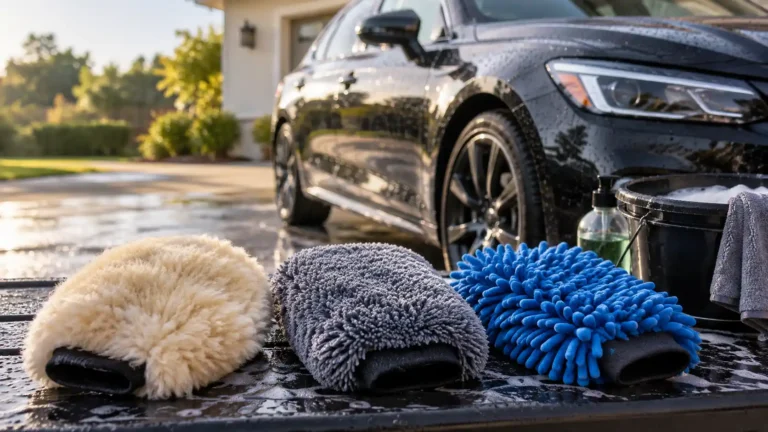
Microfiber wash mitts are the safest and most widely recommended choice for regular washing, since their deep, looped fibers trap and hold dirt away from the paint better than sheepskin or chenille alternatives. Sheepskin offers excellent softness and natural lubricity but comes at a higher price and requires more careful maintenance, while chenille sits in the middle with good performance at a lower cost than either alternative.
This guide compares all three materials directly, explains how each one interacts with paint during washing, and helps you choose the right mitt for your budget and priorities.
Quick Comparison: Sheepskin vs Microfiber vs Chenille
All three wash mitt materials can be used for routine car washing, but they differ in how well they trap dirt, how much maintenance they require, and what you can expect to pay. The table below provides a quick overview before we look at each material in more detail.
| Factor | Sheepskin | Microfiber | Chenille |
|---|---|---|---|
| Dirt-trapping ability | Very good, natural fiber structure | Excellent, deep looped pile design | Good, though less deep than microfiber |
| Softness | Very soft, natural material | Soft, synthetic looped fibers | Soft, though slightly less plush |
| Price | Highest, often $25-50 | Moderate, typically $10-20 | Lowest, typically $8-15 |
| Maintenance | Requires specific cleaning to preserve natural fibers | Machine washable, durable | Machine washable, durable |
| Longevity | Good with proper care | Very good, holds up to repeated washing | Good, though pile can mat over time |
| Best for | Owners wanting a premium, traditional feel | Most drivers seeking reliable, affordable performance | Budget-conscious buyers wanting solid performance |
How Does Microfiber Actually Work to Prevent Scratches?
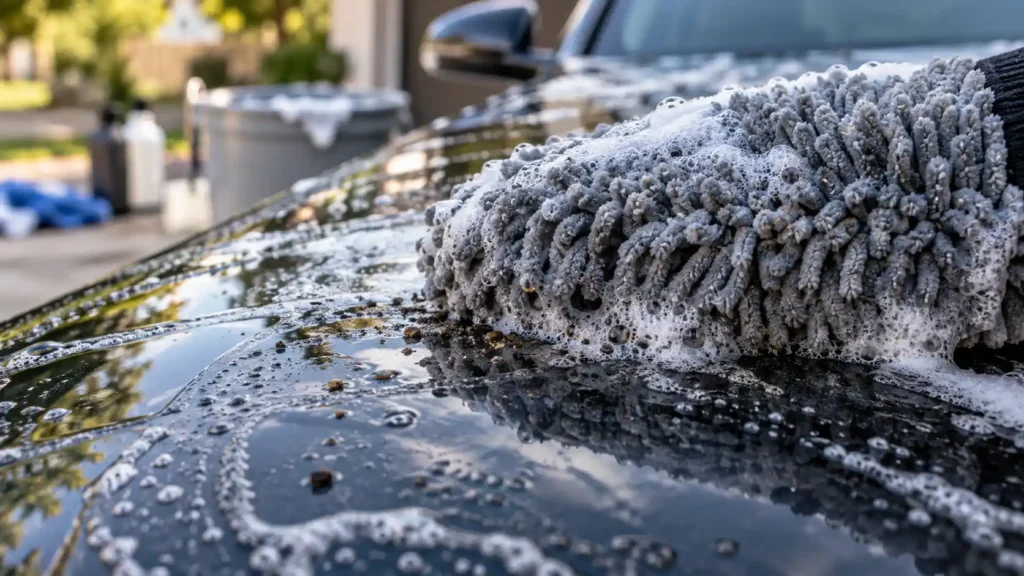
Microfiber wash mitts use synthetic fibers woven into a deep, looped pile structure specifically designed to pull dirt particles away from the paint’s surface and trap them deep within the fibers, rather than holding them against the surface the way a flatter material would. This structure is what makes microfiber the standard recommendation across the detailing community for routine washing.
The fibers themselves are also finer than natural alternatives, distributing contact pressure more evenly across the paint surface during each wash stroke. This combination of dirt-trapping design and gentle, even contact is why microfiber consistently outperforms older materials like standard sponges in independent testing and widespread professional use.
What Makes Sheepskin Mitts Different?
Sheepskin wash mitts use natural wool fibers, which have their own inherent softness and a degree of natural lubricity that some detailers find provides a particularly smooth glide across the paint during washing. This natural material has been used in detailing for decades and maintains a loyal following among enthusiasts who prefer its traditional feel over synthetic alternatives.
The tradeoff comes in both cost and care requirements, since genuine sheepskin mitts are typically the most expensive option covered here and require specific cleaning methods to preserve the natural fibers without them becoming matted or losing their softness over repeated washing cycles. Sheepskin also tends to hold more water than synthetic alternatives, which some users see as a benefit for lubrication and others see as added weight during use.
What Makes Chenille Mitts a Reasonable Middle Ground?
Chenille wash mitts use a looped, textured synthetic fiber that sits between microfiber and traditional sponges in terms of dirt-trapping depth, offering meaningfully better performance than a flat sponge at a price point typically lower than either microfiber or sheepskin. This makes chenille a popular entry point for drivers upgrading from a basic sponge without yet investing in premium materials.
The main tradeoff compared to microfiber is a somewhat shallower fiber structure, meaning chenille traps dirt less effectively over the course of a full wash, particularly on a heavily soiled vehicle. For routine maintenance washing on a car that isn’t extremely dirty, this difference is often negligible in practice, making chenille a reasonable budget-conscious choice.
Which Wash Mitt Material Should You Choose?
For most car owners, microfiber is the most practical choice because it offers a strong balance of dirt-trapping ability, durability, and cost. Sheepskin makes more sense if you prioritize a premium, traditional washing feel, while chenille is a budget-friendly option for routine cleaning when your vehicle is not heavily contaminated.
The best wash mitt material depends on what matters most to you:
- Choose microfiber if you want the best overall balance of performance, durability, and price. Its deep, looped fibers are designed to trap dirt away from the paint, and the material can generally withstand repeated washing when properly cared for.
- Choose sheepskin if softness and a traditional premium feel are your priorities. Genuine sheepskin can provide a smooth washing experience, but it costs more and requires more careful maintenance to preserve its natural fibers.
- Choose chenille if keeping costs low is your main priority. Chenille provides a meaningful step up from a basic flat sponge and works well for routine washing, although its shallower fiber structure may not trap heavy contamination as effectively as microfiber.
Does Mitt Maintenance Matter as Much as the Material Choice Itself?
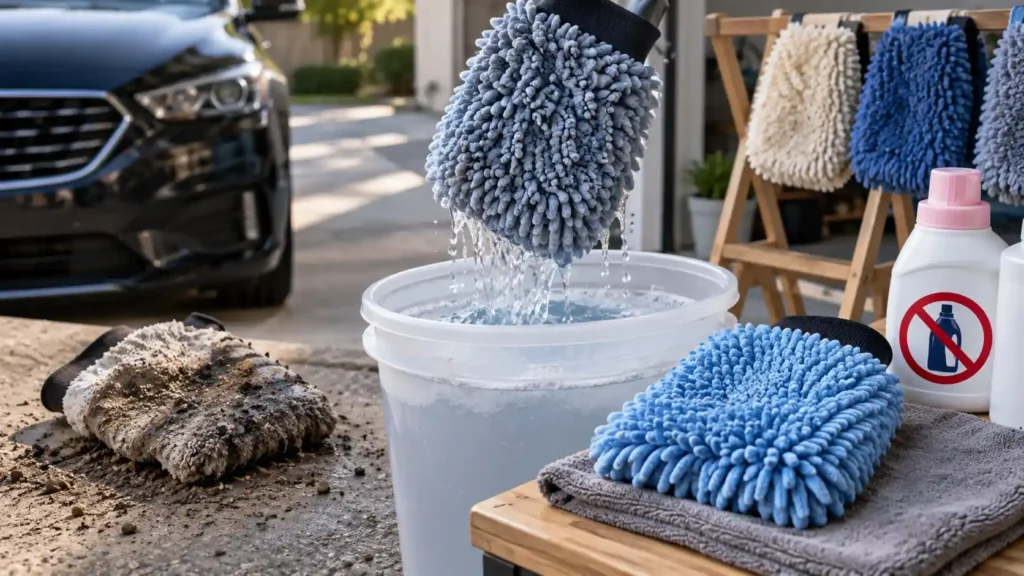
Yes, regardless of which material you choose, a mitt that’s been dropped on the ground, not rinsed adequately between uses, or washed alongside other laundry with fabric softener will perform worse than a properly maintained lower-tier alternative. Fabric softener in particular coats microfiber fibers and reduces their ability to trap and hold dirt effectively.
Rinsing thoroughly after each use, air drying rather than machine drying with heat, and replacing any mitt once it shows visible wear or embedded grit that won’t rinse out keeps any of these three materials performing close to their potential. A premium sheepskin mitt used carelessly can underperform a well-maintained microfiber mitt, which is why maintenance habits matter alongside the initial material choice.
Are There Other Wash Mitt Materials Worth Knowing About?
Beyond the three primary materials covered here, a few other options occasionally show up in detailing product lines. Wool-blend mitts combine natural wool fibers with a synthetic backing, aiming to capture some of sheepskin’s softness at a lower price point, though they typically don’t match genuine sheepskin’s dirt-trapping performance. Synthetic lambswool mitts are another middle-ground option, mimicking the texture of natural sheepskin using entirely synthetic materials, which sidesteps the higher maintenance requirements of genuine sheepskin while still offering a plush feel.
These alternative materials are worth considering if you like the idea of a sheepskin-style mitt but want to avoid the higher price or specific care routine that genuine sheepskin demands. That said, they remain a smaller share of the market compared to the three primary materials, and genuine reviews or in-person testing are worth seeking out before committing to one of these less common options.
How Does Mitt Size and Shape Affect the Washing Experience?
Larger mitts cover more surface area per pass, which can speed up the washing process on bigger vehicles like trucks and SUVs, while smaller mitts offer more precise control for detail work around mirrors, door handles, and tighter body lines. Most quality mitts across all three materials come in a standard size designed to fit comfortably over an adult hand, though some manufacturers offer dedicated smaller mitts specifically for detail areas.
Double-sided mitts, which use two different textures or colors on opposite sides, let you designate one side for lighter dirt and reserve the other for heavier contamination, adding a layer of organization within a single tool. This design choice doesn’t change the fundamental material comparison covered here, but it’s worth considering alongside material choice when selecting a specific product.
conclusion
Choosing between sheepskin, microfiber, and chenille ultimately comes down to your washing habits, budget, and priorities. For most car owners, microfiber offers the most practical combination of dirt-trapping ability, durability, and cost, making it a strong choice for regular washing. Sheepskin is worth considering if you prefer a softer, traditional washing experience and are willing to give the material more careful maintenance. Chenille can make sense when keeping costs down is more important and your vehicle typically has only light to moderate contamination.
Whichever material you choose, proper maintenance and washing technique remain important. Rinse the mitt thoroughly after use, keep it away from abrasive surfaces such as wheels, and replace it when embedded grit or visible wear can no longer be removed.
Frequently Asked Questions
Can I use the same wash mitt on wheels and paint if it’s high quality?
No, regardless of material quality, a wash mitt used on wheels picks up abrasive brake dust that will scratch paint if that same mitt is later used on the body. This rule applies equally to microfiber, sheepskin, and chenille, since the risk comes from cross-contamination rather than the material itself.
How often should a wash mitt be replaced?
Most wash mitts last one to two years with proper care and regular use, though this varies based on how often you wash and how well you maintain the mitt between uses. Visible matting, embedded grit that won’t rinse clean, or a noticeably rougher feel are all signs it’s time for a replacement regardless of the original material.
Is a more expensive mitt always a better choice?
Not necessarily, since a well-maintained mid-priced microfiber mitt often outperforms a poorly cared-for premium sheepskin mitt in actual scratch prevention. Price correlates loosely with material quality, but maintenance habits and proper technique matter at least as much as the mitt’s price point.
Can chenille or sheepskin mitts be machine washed like microfiber?
Chenille can generally be machine washed similarly to microfiber, though checking the specific product’s care instructions is worth doing. Genuine sheepskin often requires gentler, sometimes hand-washing-only care to avoid damaging the natural fibers, which is part of why it demands more maintenance attention overall.
Do professional detailers have a strong preference among these three materials?
Many professional detailers default to microfiber for its balance of performance, durability, and cost across a high volume of vehicles, though some maintain a preference for sheepskin on premium vehicles where the traditional feel and glide matter more to their process. Chenille sees less use in professional settings but remains a popular choice among budget-conscious home detailers.