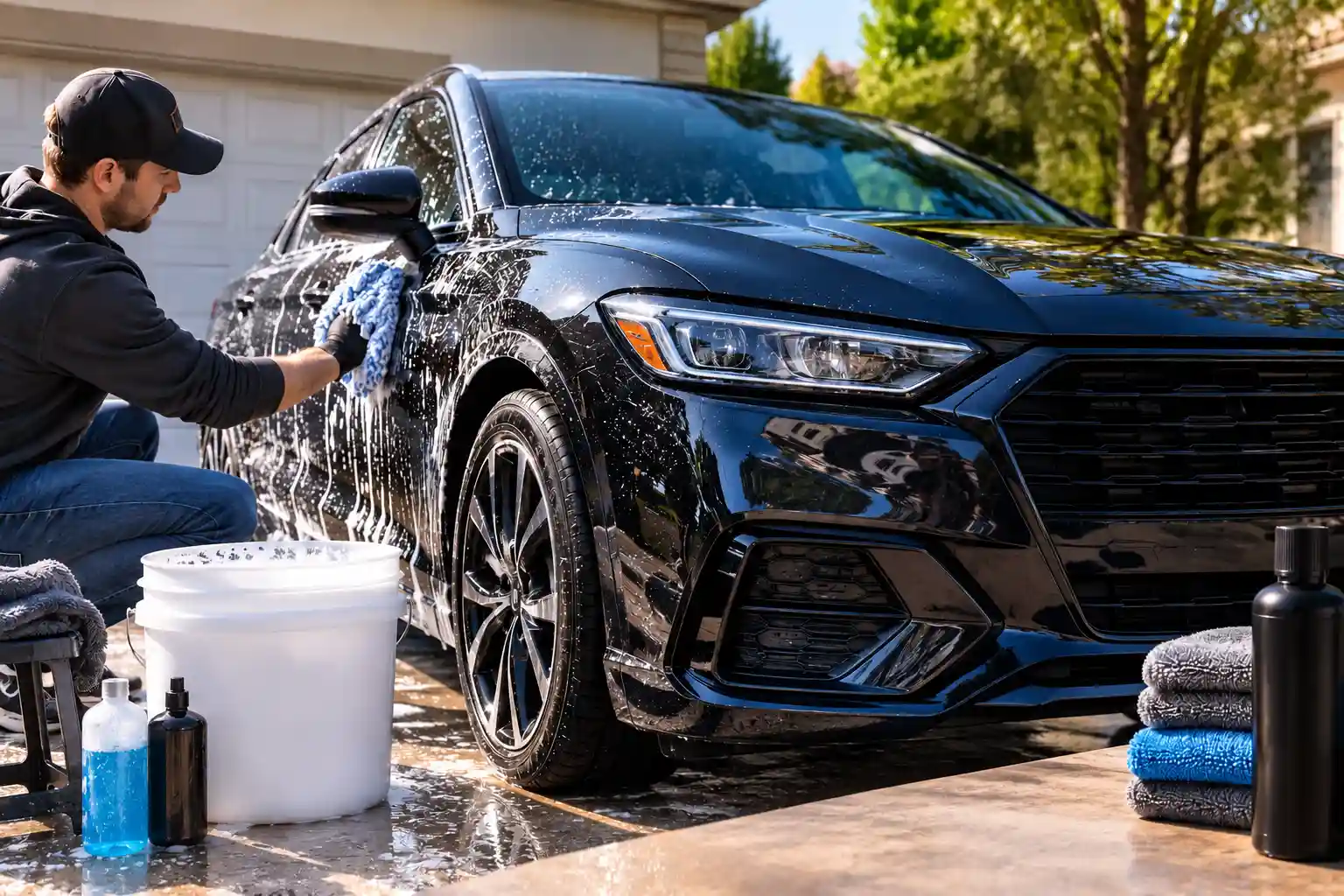
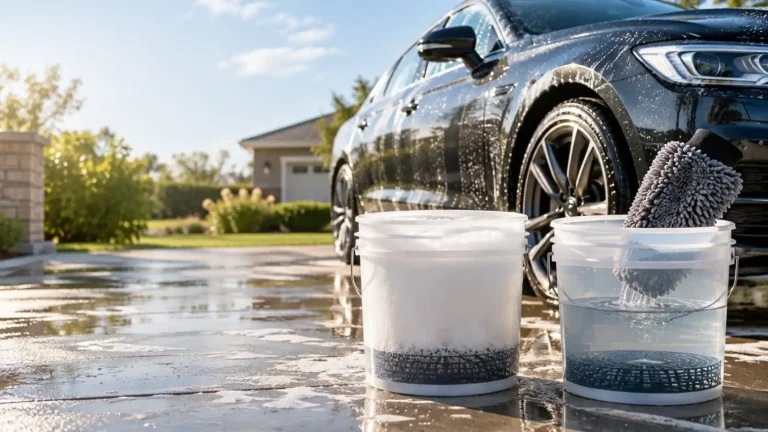
The two-bucket method uses one bucket of soapy wash water and a separate bucket of clean rinse water, each fitted with a grit guard, so you can rinse dirt out of your wash mitt before dipping it back into the soap. This simple separation is one of the single most effective ways to prevent swirl marks, since it stops abrasive grit from being carried back onto the paint on every pass.
This guide explains exactly how the method works, why a single bucket causes damage, how to set it up correctly, and the small technique details that make the biggest difference.
What Actually Goes Wrong With Single-Bucket Washing?
Washing with a single bucket means your wash mitt is repeatedly dipped back into the same soapy water it just used to clean a dirty section of paint, carrying whatever grit it picked up on that pass straight back into the solution you’re about to apply again. Every subsequent dip and wipe reintroduces this same trapped dirt against the paint surface.
This creates a compounding problem: your wash water gets progressively dirtier as you work, meaning the later sections of the vehicle you wash actually receive a more contaminated solution than the early ones did. The physical grinding of trapped grit against the clear coat during this process is one of the most direct and preventable causes of fine swirl mark scratches.
How Does the Two-Bucket Method Solve This?
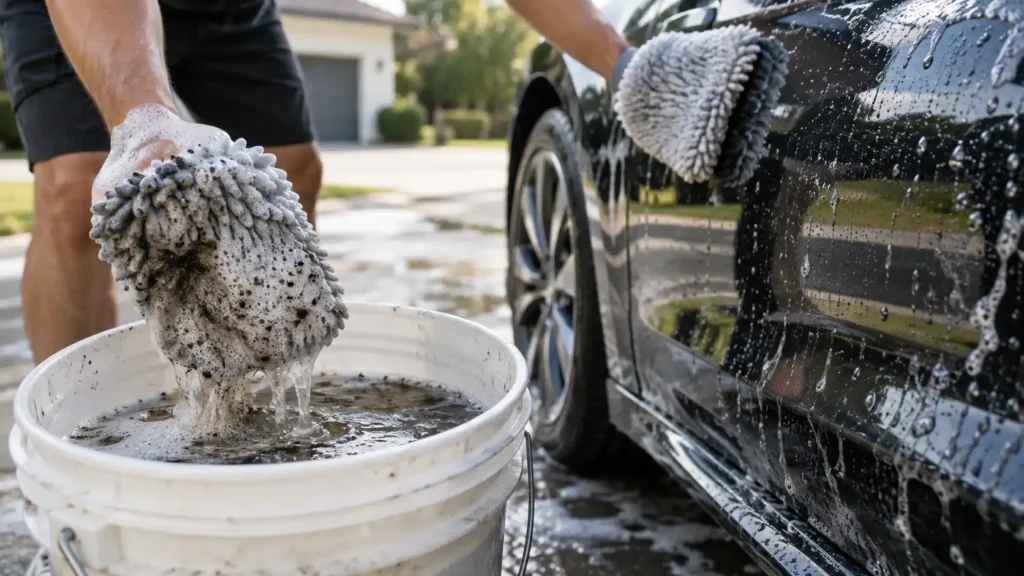
The two-bucket method interrupts this cycle by giving the mitt a place to release trapped dirt before it goes back into clean soap solution. After washing a section of the car, you dip the mitt into the second, plain water bucket first, working it against the grit guard at the bottom to dislodge trapped particles, before returning it to the soap bucket for more suds.
This means the soap bucket stays meaningfully cleaner throughout the entire wash, since dirt gets deposited and trapped in the rinse bucket instead of being carried back and forth indefinitely. The mitt itself also stays cleaner between soap applications, reducing the abrasive particles pressed against the paint on each subsequent pass.
What Is a Grit Guard and Why Does It Matter?
A grit guard is a rigid, perforated plastic insert that sits at the bottom of each bucket, creating a physical barrier between the settled dirt and the water above it. When you swirl your wash mitt against the grit guard in the rinse bucket, dislodged dirt falls through the guard’s openings and settles below it, out of reach of the mitt on your next dip.
Without a grit guard, dirt simply stays suspended or resettles in the water where your mitt can pick it back up on the next pass, significantly reducing the two-bucket method’s effectiveness. Grit guards are inexpensive, typically $10 to $15 each, and are considered a near-essential companion to the two-bucket method rather than an optional upgrade.
How Do You Set Up and Use the Two-Bucket Method Correctly?
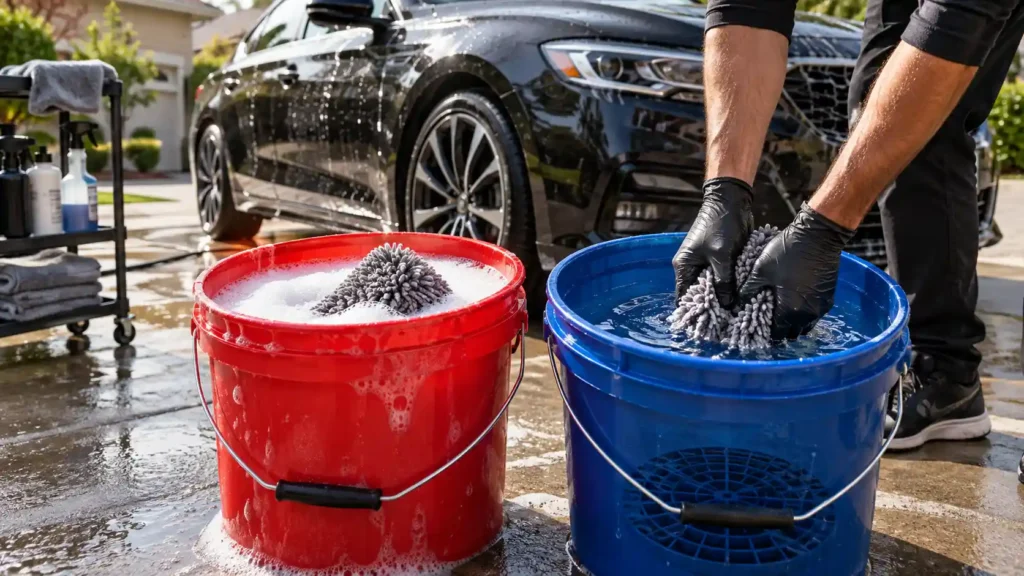
To use the two-bucket method, fill one bucket with soapy wash water and the other with clean rinse water, then place a grit guard in the bottom of each bucket. Wash a section of the car with the soapy mitt, rinse the mitt in the clean-water bucket, and only then reload it with soap.
Follow these steps:
- Prepare the soap bucket. Fill one bucket with clean water and add car wash soap according to the manufacturer’s recommended dilution.
- Prepare the rinse bucket. Fill the second bucket with clean water only. Do not add soap.
- Install the grit guards. Place one grit guard in the bottom of each bucket before adding water. The guards help separate released dirt from the water and wash mitt.
- Wash a small section. Dip the microfiber wash mitt into the soap bucket and gently wash one section of the vehicle.
- Rinse the mitt before reloading. Before putting the mitt back into the soap bucket, place it in the rinse bucket and work it against the grit guard to release trapped dirt and grit.
- Reload with soap and repeat. Return the cleaner mitt to the soap bucket, then continue washing the next section. Repeat the rinse-then-reload cycle throughout the contact wash.
The key rule is simple: wash with soap, rinse the mitt in clean water, then reload with soap. This keeps the two-bucket system working as intended and helps reduce the amount of abrasive dirt carried back onto the vehicle’s paint.
Does the Two-Bucket Method Replace Other Safe Washing Habits?
No, the two-bucket method addresses one specific source of scratching, cross-contaminated wash water, but it works best alongside other fundamentals like washing in shade, using genuine microfiber tools, and applying light pressure rather than scrubbing hard. Skipping these other habits while still using two buckets leaves other avoidable scratch sources unaddressed.
Think of the two-bucket method as one essential component of a complete safe-washing system rather than a standalone fix that guarantees scratch-free results on its own. Combined with proper technique elsewhere in the wash, it meaningfully reduces the overall risk of introducing swirl marks during routine washing.
Is There Research or Testing Behind the Two-Bucket Method’s Effectiveness?
The two-bucket method’s logic is grounded in straightforward physics rather than a formally published study: dirt particles are abrasive, and reducing how much abrasive material stays in contact with a wash mitt directly reduces the friction responsible for fine scratching. Professional detailers and detailing product manufacturers have widely adopted and recommended the technique for years based on this consistent mechanical reasoning combined with observed results.
While there isn’t a widely cited controlled scientific study specifically measuring swirl mark reduction from two-bucket use, the underlying principle, that reducing contact with trapped grit reduces scratching, is well established in how abrasion and surface scratching work generally. This is part of why the technique has become close to a universal recommendation across the detailing community rather than a disputed or niche practice.
What Size and Type of Bucket Works Best for This Method?
Standard five-gallon buckets are the most common choice for the two-bucket method, offering enough volume to avoid running low on water mid-wash while still being manageable to carry and position around the vehicle. Buckets specifically designed for detailing often include molded-in rope handles and lids that double as convenient seating, though a basic hardware store bucket works just as effectively as a specialty product.
Using buckets of a noticeably different color or design for the soap bucket versus the rinse bucket helps prevent confusion mid-wash, especially if you set up the buckets on opposite sides of the vehicle. Some detailers also prefer slightly larger buckets, six or seven gallons, for larger vehicles like trucks and SUVs, simply to reduce how often the water needs replacing during a longer wash session, and the added capacity also means less frequent bending down to refill or check on either bucket mid-wash.
Conclusion
The two-bucket method is a simple way to reduce the risk of swirl marks during routine car washing. By separating soapy wash water from clean rinse water, you can remove dirt and abrasive particles from the wash mitt before returning it to the soap bucket. Using a grit guard in each bucket helps keep dislodged dirt away from the mitt, making the process more effective.
The method does not guarantee scratch-free paint, so it should be combined with other safe washing habits, including clean microfiber tools, light pressure, and proper washing technique. For most car owners, a two-bucket setup provides a practical way to reduce cross-contamination and limit the amount of trapped grit that comes back into contact with the paint.
Frequently Asked Questions
How often should I replace the water in each bucket during a wash?
For most vehicles, the water in both buckets lasts through a full wash without needing to be replaced, especially with a grit guard trapping dislodged dirt effectively. For a particularly dirty vehicle, or if the soap water becomes visibly cloudy partway through, replacing it partway through the wash is a reasonable extra precaution.
Can I use the two-bucket method with a foam cannon pre-wash step too?
Yes, using a foam cannon as a pre-wash step and then following with the two-bucket method for the actual contact wash combines both techniques effectively. The foam loosens dirt before any mitt contact, and the two-bucket method then keeps that contact as safe as possible during the hands-on portion of the wash.
Is one grit guard bucket enough, or do I need identical buckets for both?
The buckets don’t need to be identical, but each one does need its own grit guard to be effective, since the guard is what actually traps the dislodged dirt in each bucket. Many detailers use color-coded buckets, such as one color for soap and another for rinse water, to avoid mixing them up during the wash.
Does the two-bucket method work for washing wheels too?
Yes, and it’s just as important for wheels, if not more so, given how much abrasive brake dust wheels typically carry. Using a completely separate two-bucket setup for wheels, distinct from the buckets used on the body, maintains the broader principle of never sharing tools or water between these two areas.
Is the two-bucket method necessary if I only wash my car a few times a year?
The method matters regardless of wash frequency, since the risk it addresses, reintroducing trapped grit into the wash water, happens within a single wash session rather than accumulating across multiple washes. Even an infrequent wash benefits from the same careful technique as a weekly one, since the paint on a rarely washed vehicle has no more tolerance for introduced scratches than one washed every week.
Can I use a three-bucket system for even better results?
Some detailers do add a third bucket, typically dedicating separate rinse buckets to different sections of the vehicle, like one for upper panels and another for lower, more contaminated areas. This is a reasonable refinement for anyone washing a particularly dirty vehicle or aiming for the highest possible level of care, though the standard two-bucket setup already addresses the large majority of cross-contamination risk for most routine washes.