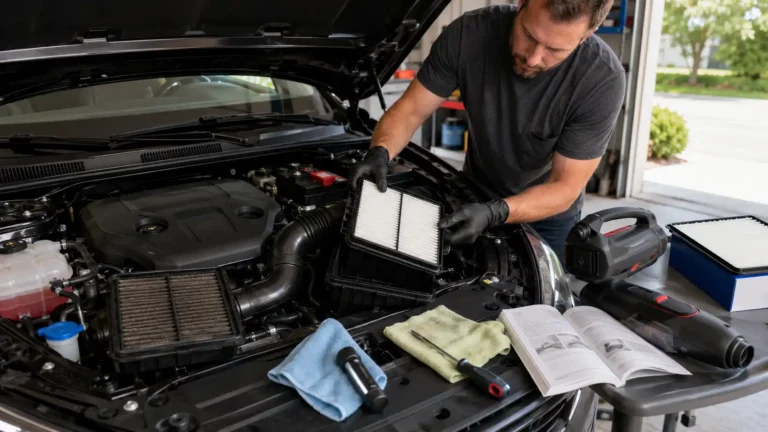
Replacing an engine air filter takes about 10 minutes for most vehicles, since the filter housing is designed for easy access without requiring any tools beyond a screwdriver for a few clips. This is one of the fastest, cheapest maintenance tasks you can do yourself, and it directly affects engine performance and fuel efficiency.
This guide covers what the air filter does, how to tell it needs replacing, the tools you’ll need, a fast step-by-step process, and a few things worth checking while the housing is open.
What Does the Engine Air Filter Do?
The engine air filter cleans the air entering the engine before it mixes with fuel for combustion, trapping dust, debris, insects, and other particles that could otherwise damage internal engine components. Modern engines rely on a precise air-to-fuel ratio, and a clean, unrestricted air filter helps maintain that balance for efficient combustion.
This filter is completely separate from the cabin air filter, which cleans the air entering the passenger compartment rather than the engine. Confusing the two is common, but they serve entirely different systems and are usually located in different parts of the vehicle.
What Are the Signs Your Air Filter Needs Replacing?
A dirty engine air filter restricts the amount of clean air flowing into the engine, which can reduce performance, lower fuel efficiency, and affect overall drivability. While some symptoms develop gradually, inspecting the filter regularly can help you catch problems before they become more serious.
Common Signs of a Dirty Engine Air Filter
- Reduced Engine Power – A clogged air filter limits airflow, causing sluggish acceleration and reduced engine performance, especially during hard acceleration or uphill driving.
- Poor Fuel Economy – Restricted airflow can make the engine work harder, leading to increased fuel consumption and fewer miles per gallon.
- Dirty or Discolored Air Filter – If the filter appears dark gray, packed with dust, leaves, insects, or debris, it’s likely time for a replacement.
- Rough Idle or Engine Hesitation – Insufficient airflow may cause the engine to idle unevenly or hesitate when accelerating, particularly if the filter is heavily clogged.
- Check Engine Light – In some vehicles, a severely restricted air filter can affect airflow sensor readings, potentially triggering the check engine light.
- Black Smoke From the Exhaust – An overly restricted air filter may contribute to incomplete combustion, which can occasionally produce darker exhaust emissions.
- Unusual Intake or Engine Noise – A dirty filter can sometimes change the sound of the engine or air intake, especially under acceleration.
How to Check Your Air Filter
A simple visual inspection is one of the easiest ways to determine whether your engine air filter needs replacing:
- Remove the air filter from the housing.
- Hold it up to a bright light.
- If little or no light passes through the filter media, or it’s covered with dirt and debris, replace it.
What Tools Do You Need for This Job?
Replacing an engine air filter requires very few tools, making it one of the easiest DIY car maintenance tasks. Most vehicles use a simple air filter housing secured with clips or a few screws, so you can usually complete the job in under 10 minutes with basic hand tools.
Before you begin, gather the following tools and materials to make the replacement process quick and hassle-free.
| Tool / Item | Purpose | Required? |
|---|---|---|
| Flathead or Phillips Screwdriver | Removes screws from air filter housings that aren’t secured with clips. | Sometimes |
| Replacement Engine Air Filter | Replaces the old filter and restores clean airflow to the engine. Make sure it matches your vehicle’s year, make, model, and engine size. | Yes |
| Microfiber Cloth or Clean Rag | Wipes dust, dirt, and debris from inside the air filter housing before installing the new filter. | Recommended |
| Handheld Vacuum | Removes loose dirt, leaves, and debris from the air filter box without pushing contaminants into the intake. | Optional |
| Flashlight | Improves visibility inside the engine bay and helps inspect the housing and intake tube. | Optional |
| Owner’s Manual | Confirms the correct air filter location, replacement interval, and part number for your vehicle. | Recommended |
| Work Gloves | Keeps your hands clean and protects against sharp plastic edges or hot engine components. | Optional |
Tool Descriptions
- Flathead or Phillips Screwdriver – Some air filter housings use screws instead of spring clips. A basic screwdriver is all that’s needed to remove and reinstall the housing cover.
- Replacement Engine Air Filter – This is the only essential replacement part. Always purchase the correct filter based on your vehicle’s year, make, model, and engine size to ensure a proper seal and optimal filtration.
- Microfiber Cloth or Clean Rag – Use it to wipe away dust and dirt inside the air filter housing before installing the new filter, helping prevent contaminants from entering the engine.
- Handheld Vacuum – A small vacuum safely removes leaves, sand, and debris from the air box without blowing dirt into the intake system.
- Flashlight – Useful for inspecting the air filter housing, intake tube, and surrounding engine components, especially in low-light conditions.
- Owner’s Manual – Provides the correct replacement interval, filter specifications, and the exact location of the air filter housing for your vehicle.
- Work Gloves – Optional but helpful for keeping your hands clean and protecting them while working around the engine bay.
How Do You Change an Air Filter Step by Step?
Replacing an engine air filter is one of the simplest DIY maintenance tasks and usually takes 5–10 minutes. While the location and design of the air filter housing vary slightly between vehicles, the replacement process is nearly identical for most cars, trucks, and SUVs.
Follow these simple steps to replace your engine air filter safely and correctly.
Step 1: Park Safely and Turn Off the Engine
Park your vehicle on a level surface, switch off the engine, and allow it to cool for a few minutes. Open the hood and secure it with the prop rod or hydraulic supports before beginning.
Step 2: Locate the Engine Air Filter Housing
Find the air filter housing inside the engine bay. It’s usually a black plastic box connected to a large air intake tube that leads to the engine or throttle body.
Tip: If you’re unsure where it’s located, check your owner’s manual.
Step 3: Open the Air Filter Housing
Release the spring clips or remove the retaining screws holding the housing cover in place. Carefully lift the lid without forcing it, ensuring you don’t disconnect any attached sensors or hoses.
Step 4: Remove the Old Air Filter
Lift the old air filter out of the housing and note its orientation before removing it completely. Most filters only fit one way, but checking the position makes installation easier.
Inspect the old filter for excessive dirt, leaves, insects, or debris, which can indicate it’s overdue for replacement.
Step 5: Clean the Air Filter Housing
Before installing the new filter, clean the inside of the housing using a microfiber cloth or handheld vacuum. Remove any dust, sand, leaves, or loose debris to prevent contaminants from entering the engine.
Avoid using compressed air, as it may push dirt deeper into the intake system.
Step 6: Install the New Air Filter
Place the new engine air filter into the housing in the same orientation as the old one. Make sure it sits flat and forms a complete seal around the edges.
A poorly seated filter can allow unfiltered air to bypass the filter media and enter the engine.
Step 7: Reinstall and Secure the Housing Cover
Lower the housing cover back into place and fasten all clips or screws securely. Double-check that the cover is fully seated and there are no gaps around the edges.
Step 8: Start the Engine and Perform a Quick Inspection
Start the engine and let it idle for a minute. Listen for any unusual noises and ensure the air filter housing is securely closed. If everything sounds normal, the replacement is complete.
What Should You Check While the Housing Is Open?
Since you’re already accessing the air filter housing, it’s worth taking an extra minute to check a couple of related items.
- The intake tube for cracks or loose connections – a cracked intake tube can allow unfiltered air to bypass the filter entirely, undermining its purpose.
- The housing itself for cleanliness – a dirty housing can reintroduce debris even after installing a fresh filter if it isn’t wiped out first.
- Any mass airflow sensor visible near the housing – if your engine has been running rough, a quick visual check for visible dirt on this sensor, without touching it directly, can sometimes explain the issue.
These quick checks don’t add meaningful time to the job but can catch a secondary issue that a filter swap alone wouldn’t address.
How Often Should You Change an Engine Air Filter?
Most manufacturers recommend replacing the engine air filter every 12,000 to 15,000 miles under normal driving conditions, though this interval shortens meaningfully for vehicles driven frequently on dusty, unpaved, or rural roads. Checking the filter visually between scheduled replacements is a simple way to catch a filter that’s clogging faster than the standard interval assumes.
Vehicles used mainly for highway commuting in areas with relatively clean air often see their filters last toward the longer end of this range, while vehicles frequently driven off-road or in construction areas may need replacement considerably sooner.
Does a Cheap Air Filter Perform as Well as an Expensive One?
Air filters vary in material and design, from basic paper filters to higher-end pleated or foam options, and the differences do matter for both filtration effectiveness and airflow. A basic paper filter, sold at a lower price point, generally provides adequate filtration for typical driving conditions and remains the most common choice among manufacturers themselves.
Higher-end filters, sometimes marketed for improved airflow or extended service life, can offer modest benefits but rarely produce a dramatic difference in everyday driving performance. Choosing a filter that matches your vehicle’s specifications correctly matters more than choosing the most expensive option available, since a poor fit can allow unfiltered air to bypass the filter regardless of its material quality.
How Does a New Air Filter Affect Throttle Response and Performance?
Replacing a heavily clogged air filter with a fresh one often produces a noticeable improvement in throttle response, since the engine can once again draw in the full volume of air it’s designed to use during acceleration. Drivers who’ve been living with a gradually clogging filter sometimes don’t notice the decline until after the swap, when the difference in responsiveness becomes obvious by comparison.
This improvement tends to be most noticeable on engines that were significantly restricted beforehand, while a filter replaced right on schedule, before it gets heavily clogged, produces a more subtle difference. Either way, the performance benefit combined with the low cost and minimal time investment makes this one of the best return-on-effort maintenance tasks available to any driver.
Conclusion
Changing an engine air filter is one of the easiest and most affordable maintenance tasks you can perform yourself. In less than 10 minutes, you can help maintain proper engine airflow, improve throttle response, support better fuel efficiency, and protect internal engine components from harmful dirt and debris.
Regular inspections and timely replacement, especially if you drive in dusty conditions, can prevent unnecessary performance issues and help your engine operate at its best. By following the simple steps in this guide and installing the correct replacement filter for your vehicle, you’ll save money on maintenance while keeping your car running smoothly for miles to come.
Frequently Asked Questions
How long does it take to change a car air filter?
Changing a car air filter usually takes 5 to 10 minutes for most vehicles. Most air filter housings use clips or a few screws, so the job requires little or no specialized equipment.
How often should you change a car air filter?
Most manufacturers recommend changing a car air filter every 12,000 to 15,000 miles (19,000 to 24,000 km) under normal driving conditions. If you regularly drive on dusty, gravel, unpaved, or construction roads, inspect the filter more often and replace it when it becomes dirty.
Can you clean and reuse a car air filter?
Standard paper car air filters should not be cleaned and reused. Washing or using compressed air can damage the filter media, so replace a disposable paper filter when it becomes dirty. Reusable foam or oiled cotton filters should only be cleaned according to the manufacturer’s instructions.
Does changing a car air filter improve fuel economy?
Changing a heavily clogged car air filter can help restore proper airflow and may improve fuel economy. On modern fuel-injected vehicles, however, the improvement is generally modest unless the old filter was significantly restricted.
What are the signs that you need to change your car air filter?
Common signs include reduced engine performance, sluggish acceleration, poor fuel economy, a visibly dirty filter, rough idling, or engine hesitation. A visual inspection can help confirm whether the filter is heavily contaminated and needs replacement.
What happens if you don’t change your car air filter?
A neglected car air filter can become restricted and reduce airflow to the engine. This may contribute to reduced performance, sluggish acceleration, lower fuel efficiency, and, in severe cases, problems related to excessive contamination.
Can you drive a car without an air filter?
You should not drive a car without its engine air filter installed. The filter prevents dust, dirt, insects, and other contaminants from entering the engine, so driving without it can expose internal engine components to harmful debris.
Does a more expensive car air filter improve performance?
Not necessarily. The most important factor is choosing a properly fitting filter that meets your vehicle manufacturer’s specifications. Premium filters may offer different materials or service characteristics, but a correctly specified OEM-quality paper filter is generally suitable for everyday driving.
Should you change the cabin air filter when you change the engine air filter?
You can change both at the same time for convenience, but they serve different purposes. The engine air filter protects the engine from airborne contaminants, while the cabin air filter cleans air entering the passenger compartment.