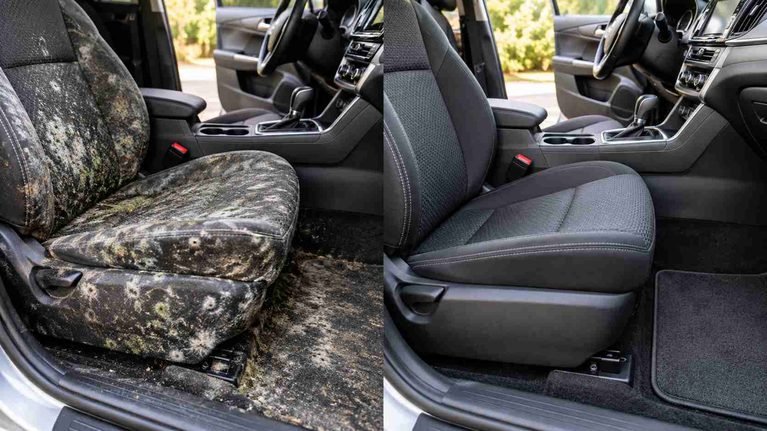
The best way to get rid of mold in your car is to remove the visible mold, clean the affected surfaces according to their material, dry the interior completely, and fix the moisture source that caused the mold to grow. Simply wiping away the visible spots or covering the musty smell with an air freshener will not solve the underlying problem.
Mold and mildew can develop inside a vehicle after water gets into the carpet, seats, floor padding, trunk, door panels, or other areas and remains damp long enough for mold to grow. Common causes include leaking door or window seals, clogged drains, wet floor mats, spills, flooding, and moisture trapped beneath carpet or upholstery.
Because mold can grow in carpet, fabric, and upholstery, removing the visible growth is only part of the job. EPA and CDC guidance emphasizes moisture control, physical removal, cleaning, and thorough drying because porous materials can retain mold below the visible surface.
This guide explains how to get rid of mold in your car safely, how to clean mold from carpet and seats, what cleaning products to use, when contaminated materials may need replacement, and how to prevent mold from coming back.
What Should You Do Before Removing Mold From Your Car?
Before you start cleaning, remove everything from the vehicle so you can inspect the entire interior. Take out trash, floor mats, personal belongings, papers, and anything else that could be carrying moisture or visible mold.
Park the vehicle somewhere with good ventilation and keep the doors or windows open while you work when it is safe to do so.
For a small amount of visible mold, wear protective gloves, eye protection, and a properly fitted N95 respirator or equivalent respiratory protection. CDC recommends protecting your nose, mouth, eyes, and skin when cleaning mold.
People with significant mold allergies, asthma, chronic respiratory conditions, immune suppression, or other health concerns should avoid mold cleanup and consider having the vehicle professionally cleaned.
Do not start by aggressively brushing dry mold because disturbing contaminated material can spread particles through the cabin. Work carefully and avoid unnecessary agitation.
How Do You Get Rid of Mold in Your Car Step by Step?
The basic process is straightforward:
- Remove the source of moisture.
- Remove loose contamination.
- Clean the affected surfaces.
- Extract moisture from carpet and upholstery.
- Dry the interior completely.
- Inspect for hidden mold.
- Repair the leak or moisture problem permanently.
The order matters because cleaning mold without fixing the moisture source makes recurrence much more likely.
Step 1: Find and Fix the Moisture Source
Before spending hours cleaning the interior, determine how water or excessive moisture got into the car.
Check for:
- Damaged door or window seals
- Leaks around the windshield or rear glass
- Blocked sunroof drains
- Wet or contaminated floor mats
- Water underneath the carpet
- Trunk or hatch leaks
- Spills that soaked into the padding
- Air-conditioning condensation drainage problems
Look underneath the floor mats and around the carpet edges. Pay particular attention to areas that remain damp even after the visible mold has been cleaned.
If the carpet is repeatedly becoming wet, cleaning it without repairing the leak will not provide a lasting solution.
Step 2: Remove Trash, Mats, and Heavily Contaminated Items
Take the floor mats out of the vehicle and inspect them separately.
Heavily contaminated porous materials can be difficult to clean completely because mold can penetrate into their internal spaces. EPA notes that porous materials such as carpet may sometimes need to be discarded when mold contamination cannot be completely removed.
Do not automatically throw everything away, however. First determine whether the material can be thoroughly cleaned and completely dried without damaging it.
For contaminated items that can be removed, clean them outside the passenger compartment whenever practical.
Step 3: Vacuum the Interior Carefully
Once loose items are removed, vacuum the affected areas carefully.
Focus on:
- Carpet
- Seat seams
- Floor edges
- Under the seats
- Door pockets
- Cargo areas
- Floor-mat surfaces
- Carpet around the center console
Use a crevice attachment around seams and difficult areas.
Vacuuming removes loose debris before wet cleaning, but it should not be treated as the complete mold-removal process. Mold contamination embedded in fabric or carpet requires appropriate cleaning and physical removal.
What Is the Best Cleaner for Mold in a Car?
There is no single household cleaner that is appropriate for every automotive surface.
The safest approach is to use a cleaner that is compatible with the specific material and follow the manufacturer’s directions. For many hard, non-porous surfaces, detergent and water can be suitable for physically removing mold. EPA specifically recommends scrubbing mold from hard surfaces with detergent and water and then drying the surface completely.
For automotive carpet and upholstery, use a cleaner designed for that material rather than assuming a household chemical will be safe for the fabric, dye, adhesive, or underlying padding.
Most importantly, do not focus only on killing mold. Dead mold can still cause allergic reactions, so the goal is to physically remove the contamination and then eliminate the moisture that supports regrowth.
What About Vinegar and Baking Soda?
Vinegar and baking soda are commonly recommended online for mold problems, but they should not be presented as guaranteed mold-killing solutions for every car interior.
Vinegar can leave a strong odor and may not be appropriate for every automotive material. Baking soda can help absorb odors and moisture, but it should not be considered a complete mold-remediation treatment.
For a mold problem, physical removal, appropriate cleaning, extraction, drying, and moisture control are more important than relying on a homemade chemical mixture.
Never mix different cleaning chemicals together.
How Do You Remove Mold From Car Carpet?
Carpet is one of the more difficult interior materials to clean because moisture and contamination can travel beneath the visible surface and into the padding.
Start by vacuuming the carpet thoroughly. Then use an automotive carpet or upholstery cleaner that is appropriate for the material.
Work in small sections:
- Apply the cleaner according to its instructions.
- Gently agitate the affected area with a soft upholstery brush.
- Extract the dirty moisture with a wet/dry vacuum or upholstery extractor.
- Repeat only when necessary.
- Dry the carpet and padding completely.
Avoid saturating the carpet unnecessarily. The more water you push into the carpet and padding, the harder it becomes to dry the interior completely.
What If Mold Is Under the Carpet?
If the visible mold disappears but the vehicle still smells strongly musty, inspect underneath the carpet and around the padding.
A carpet surface can appear clean while moisture or contamination remains underneath. Persistent dampness or a recurring mold smell is a reason to inspect deeper rather than repeatedly spraying the surface.
If the padding is heavily contaminated, cannot be thoroughly cleaned, or remains damp, replacement may be more practical than repeated surface treatments. EPA guidance recognizes that mold can penetrate porous materials and make complete removal difficult.
How Do You Remove Mold From Cloth Car Seats?
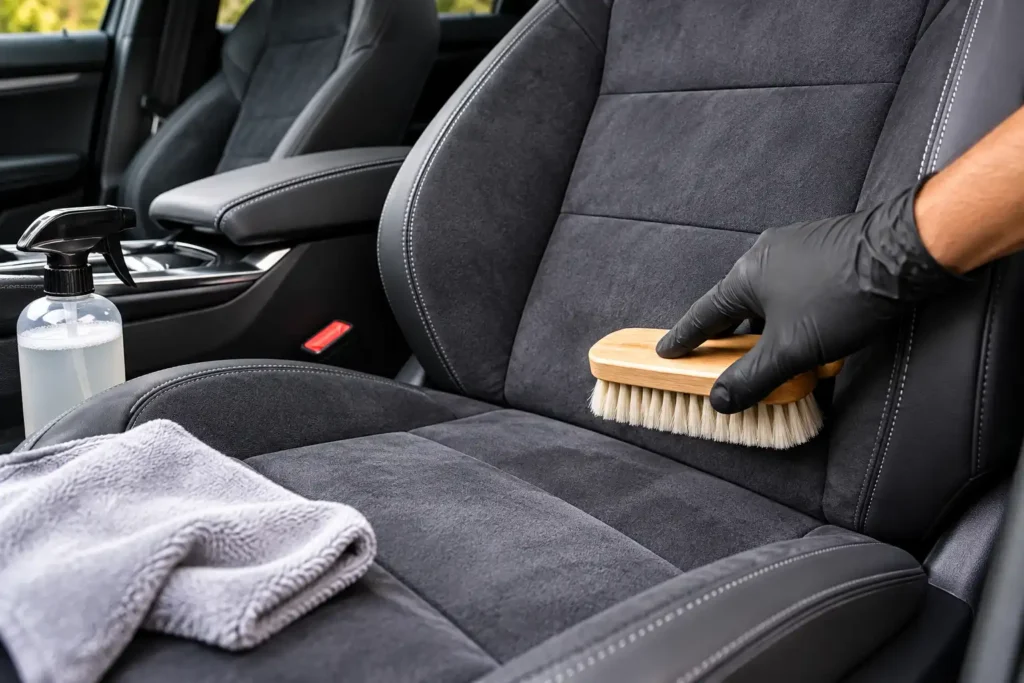
For cloth seats, start by vacuuming the seat surface and seams.
Apply a material-safe upholstery cleaner lightly to a small section, then gently work the cleaner into the fabric using a soft brush.
Avoid soaking the seat.
After cleaning, extract or blot as much moisture as possible. A wet/dry vacuum or upholstery extractor is useful because it physically removes dirty moisture instead of leaving it inside the fabric.
Pay close attention to:
- Seat seams
- Stitching
- Creases
- The area between the seat cushion and backrest
- Seat edges
- Areas underneath the seats
Once cleaning is complete, use strong airflow to dry the upholstery thoroughly.
How Do You Clean Mold From Leather Car Seats?
Leather requires a different approach from fabric because the cleaning product must be suitable for the specific leather finish.
Do not automatically use the same cleaner that you use on carpet or cloth upholstery.
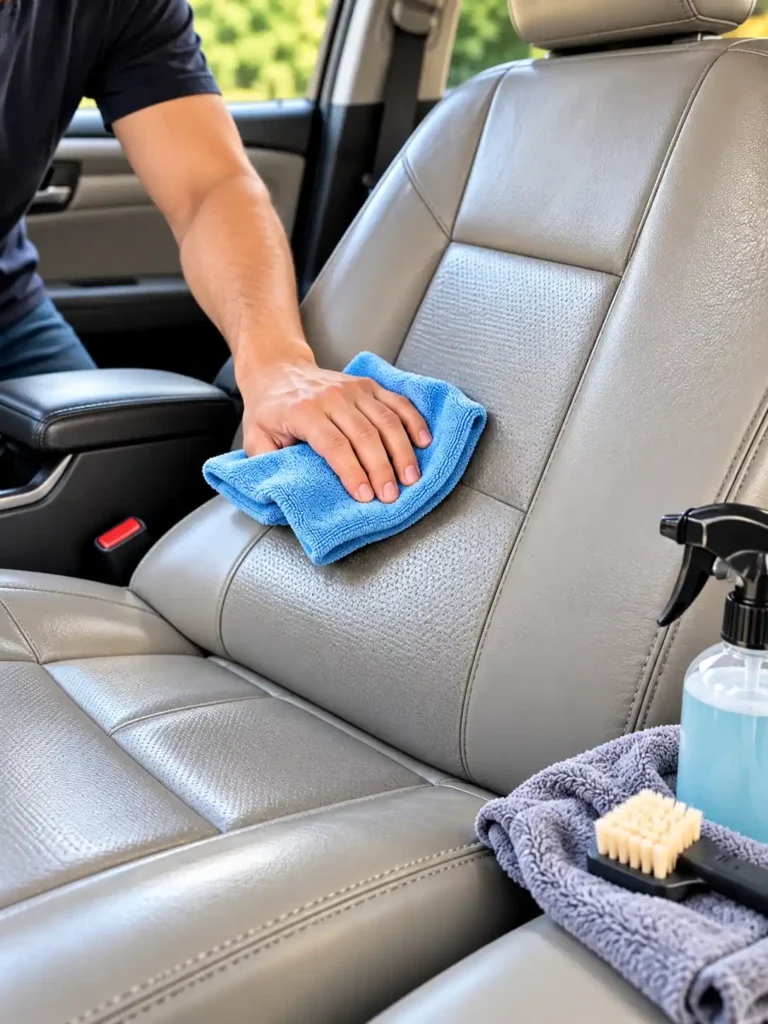
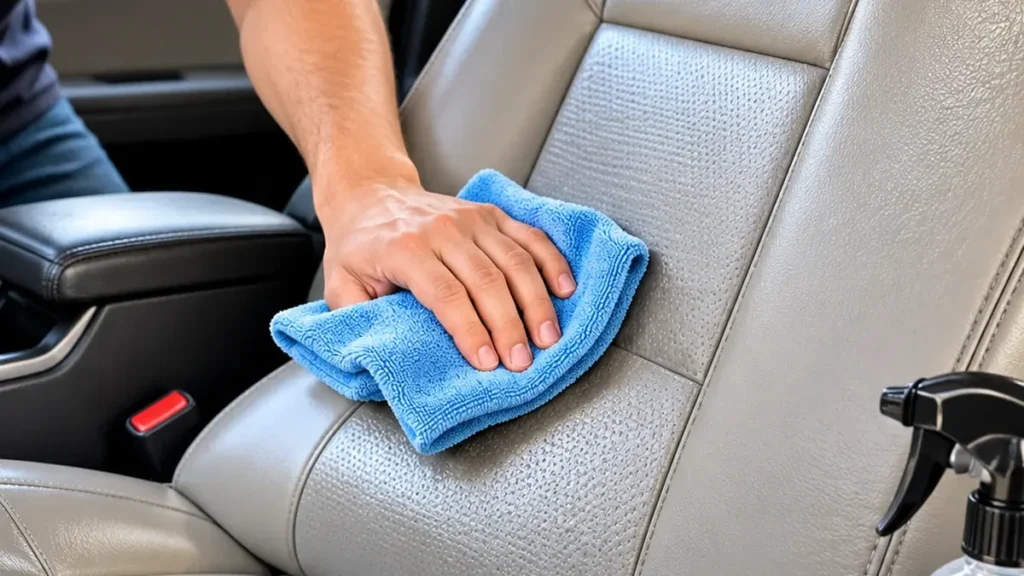
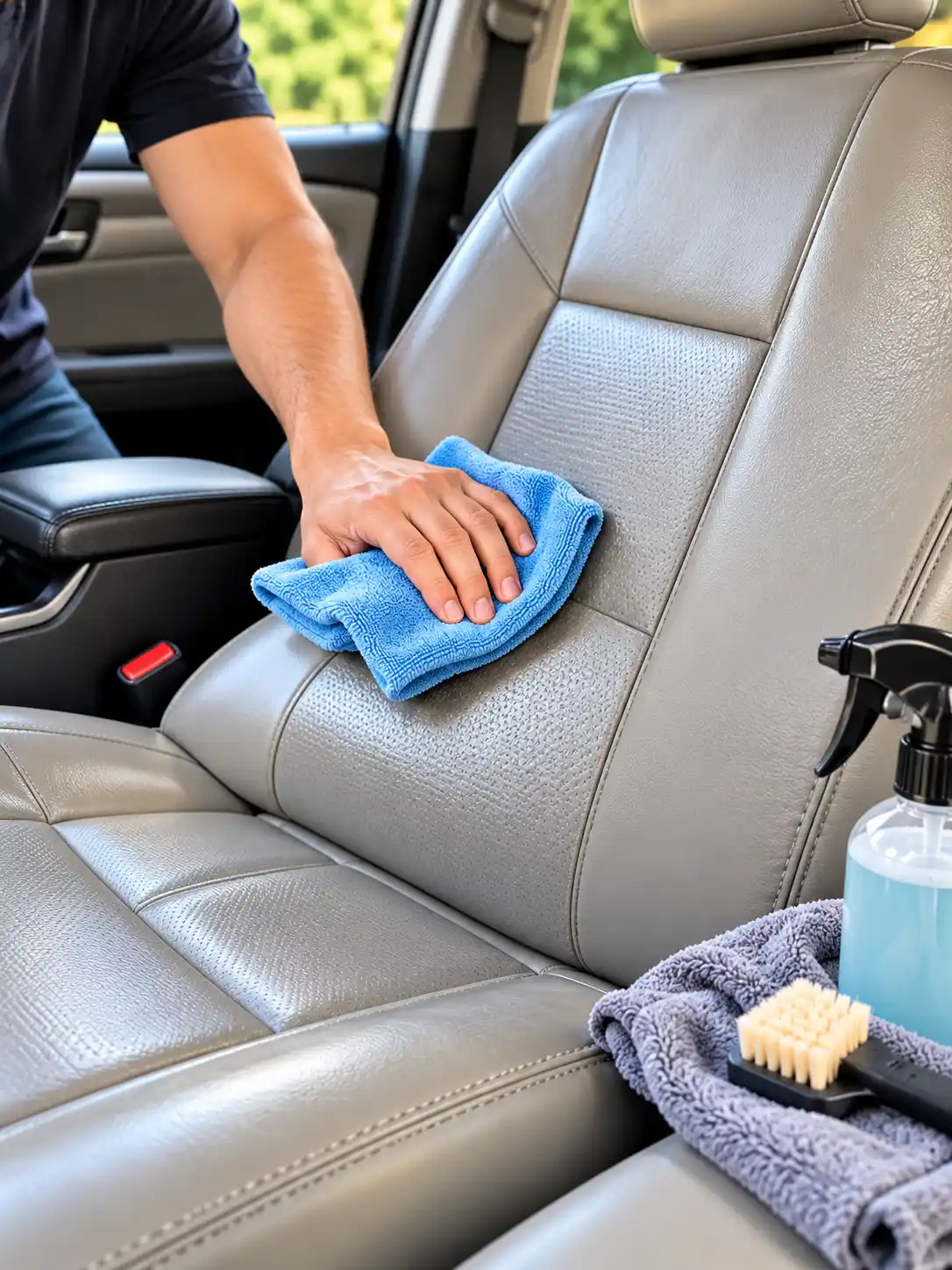
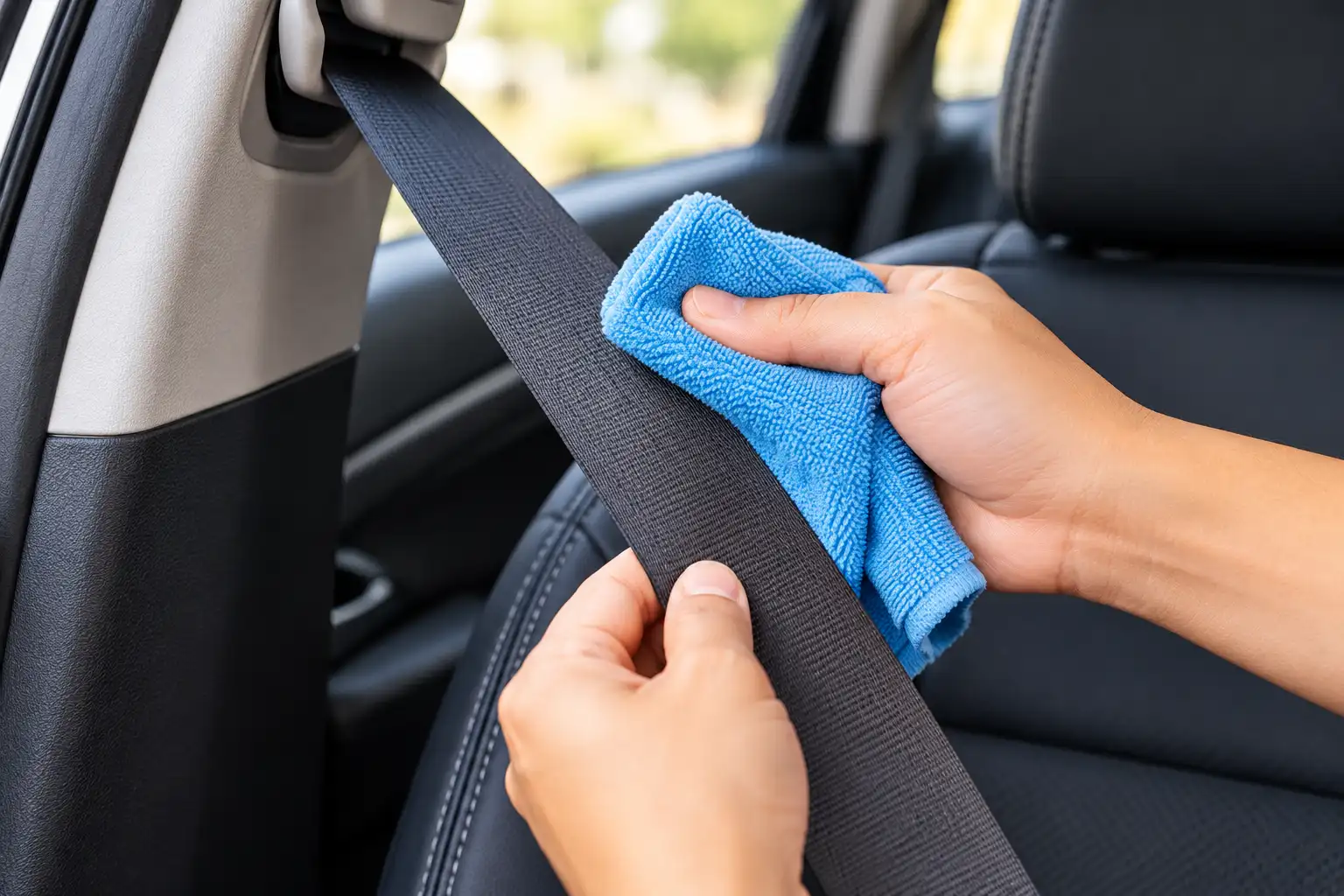
For light surface contamination, use a leather-safe cleaner and a clean microfiber towel, following the vehicle or product manufacturer’s care instructions.
Avoid soaking leather seats or allowing cleaning solution to collect around seams.
After cleaning, dry the surface naturally and inspect the stitching, seams, and areas around the seat base for signs of hidden moisture.
How Do You Remove Mold From Hard Plastic and Vinyl Surfaces?
Hard plastic and vinyl surfaces are generally easier to clean than porous carpet or upholstery.
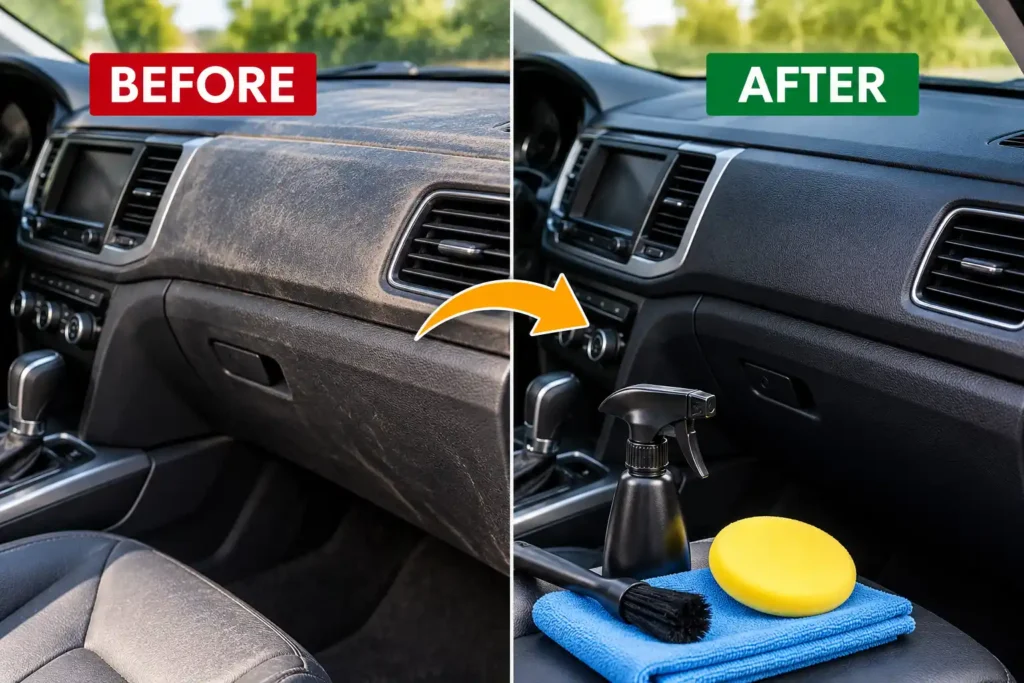
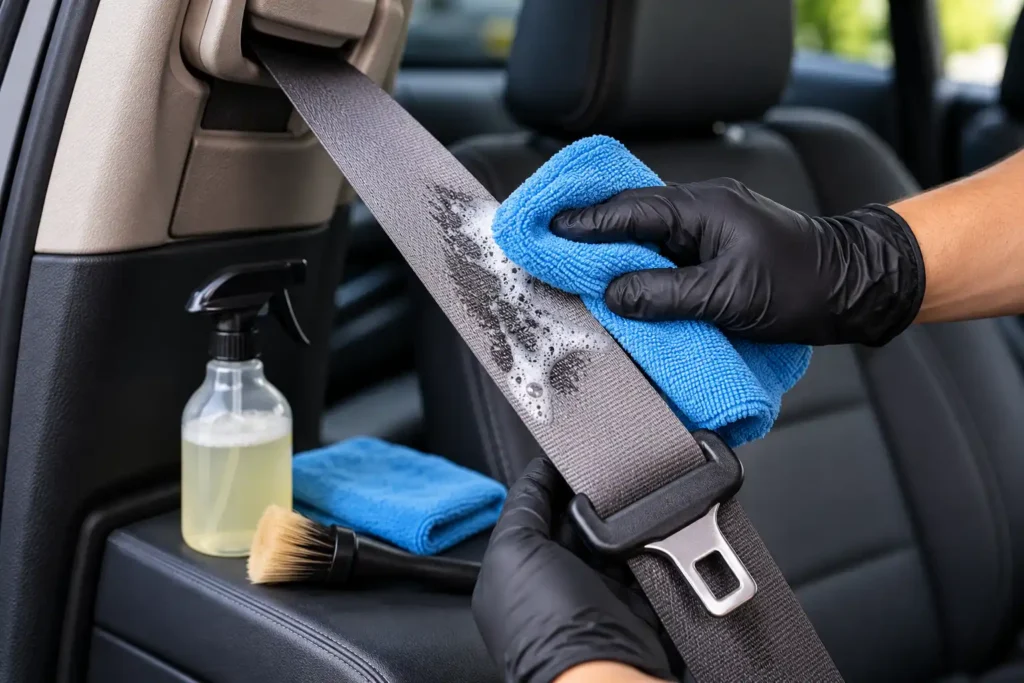
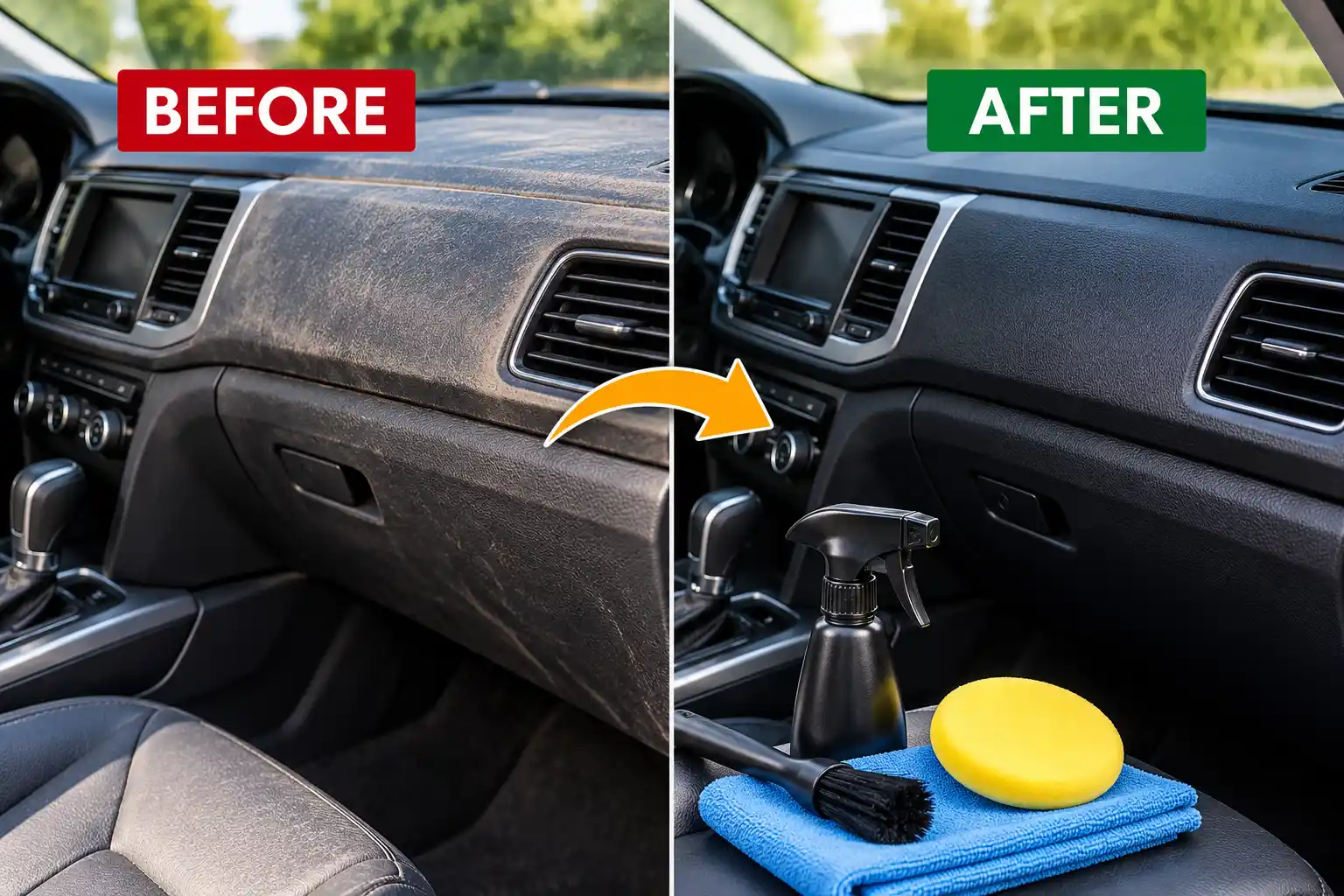
Use a material-safe interior cleaner or detergent-and-water solution appropriate for the surface. Wipe the affected area thoroughly with a clean microfiber towel, then dry the surface.
Pay attention to areas where moisture can collect, including:
- Door pockets
- Dashboard seams
- Center console compartments
- Door-panel edges
- Trim joints
- Storage compartments
Cleaning the visible surface is important, but you should still investigate why moisture was present there if mold has appeared repeatedly.
How Do You Dry a Moldy Car Interior Completely?
Drying is one of the most important steps in getting rid of mold in a car.
After cleaning, increase airflow through the cabin by opening the doors or windows in a safe, suitable location.
Fans can help move air across wet carpet and upholstery. A dehumidifier can also help remove moisture from the cabin when practical.
Use a wet/dry vacuum or upholstery extractor to remove as much water as possible from carpet and fabric before relying on evaporation alone.
Do not close the vehicle immediately after cleaning if the interior is still damp.
The surface may feel dry while deeper carpet padding or seat cushioning remains wet. Check carefully before considering the cleanup finished.
CDC recommends drying wet materials quickly and using airflow and dehumidification to remove moisture.
Should You Use Bleach to Kill Mold in a Car?
Bleach is not automatically the best choice for a car interior.
EPA does not recommend bleach as a routine mold-cleanup method and notes that the primary goal is removing the mold and resolving the moisture problem. Bleach can also create material-compatibility problems with automotive fabrics, carpets, dyes, and other surfaces.
If you choose to use any disinfectant or mold-control chemical, make sure the product is appropriate for the exact surface and follow its label instructions carefully.
Never mix bleach with ammonia or other cleaning products because dangerous fumes can form.
How Do You Know When Mold Has Spread Too Far for DIY Cleaning?
DIY cleaning may not be the best option when mold is extensive, repeatedly returns, or has penetrated deeply into porous materials.
Consider professional inspection or remediation when:
- Mold covers a large portion of the interior.
- Carpet padding is heavily contaminated.
- Mold is inside inaccessible areas.
- A strong musty odor remains after thorough cleaning and drying.
- The vehicle has experienced significant water or flood damage.
- Mold repeatedly returns after the moisture source has been repaired.
- You cannot safely work with the contamination yourself.
Repeatedly cleaning the visible surface without investigating hidden areas can waste time and allow the underlying problem to continue.
Why Does Mold Keep Coming Back in Your Car?
Mold usually comes back because the moisture problem was never fully corrected.
Cleaning removes existing contamination, but moisture control prevents new growth.
Check for:
- Recurring water leaks
- Wet carpet padding
- Damaged weather seals
- Blocked drains
- Persistent condensation
- Wet floor mats
- Water entering the trunk or cargo area
- Spills that were never fully extracted
If the same area becomes damp again after cleaning, stop treating it as a simple cleaning problem and investigate the source of the moisture.
Can an Ozone Treatment Get Rid of Mold in a Car?
Ozone should not be treated as a replacement for cleaning and moisture control.
EPA states that ozone at concentrations that do not exceed public-health standards does not effectively remove mold and other biological pollutants, and ozone generators should not be used in occupied spaces.
That means an ozone machine is not a substitute for physically cleaning contaminated surfaces, extracting moisture, replacing severely contaminated porous materials when necessary, and fixing the leak.
Odor treatment should come after the underlying contamination and moisture problem have been addressed.
How Can You Prevent Mold From Coming Back?
Once the interior is clean and dry, prevention becomes much easier.
Check for water leaks periodically, especially after heavy rain or car washing. Inspect door and window seals, sunroof drains where fitted, the trunk area, and floor carpeting for signs of moisture.
Remove wet floor mats and allow them to dry completely before putting them back into the vehicle.
Clean up spills as soon as possible and extract liquid that has soaked into carpet or upholstery rather than allowing it to remain trapped underneath.
Regular vacuuming and interior cleaning also make it easier to notice developing problems before they become major mold issues.
How Long Does It Take to Get Rid of Mold in a Car?
The cleaning itself may take several hours depending on how much of the interior is affected, but drying can take longer.
A lightly affected hard surface may dry relatively quickly, while carpet, padding, and seat cushions can retain moisture much longer.
Do not judge the result by how quickly the visible mold disappears. The real goal is to remove the contamination, eliminate the moisture source, and make sure the affected materials are completely dry.
Frequently Asked Questions
What is the fastest way to get rid of mold in your car?
The fastest reliable approach is to stop the moisture source, remove loose contamination, clean the affected surfaces with material-appropriate products, extract moisture from carpet and upholstery, and dry the interior completely. Trying to mask the smell without fixing the moisture problem will not solve the cause.
Can I remove mold from my car myself?
Yes, small and manageable areas may be cleaned yourself when you can work safely and thoroughly. However, extensive contamination, heavily affected porous materials, flood damage, or mold hidden inside inaccessible parts of the interior may require professional remediation.
Does vinegar kill mold in a car?
Vinegar is widely suggested as a household mold treatment, but it should not be treated as a guaranteed solution for automotive mold. The more important steps are physically removing the contamination, using a cleaner suitable for the affected material, thoroughly drying the interior, and fixing the source of moisture.
Does baking soda remove mold from car seats?
Baking soda can help with odors and absorb some moisture, but it is not a complete solution for mold contamination. Mold should be physically removed and the affected upholstery should be cleaned and dried properly.
Can I use bleach on car carpet to remove mold?
Bleach is generally not the preferred routine treatment for automotive carpet because it can damage or discolor materials, and EPA does not recommend bleach as a routine mold-cleanup method. A suitable automotive upholstery cleaner and proper extraction are usually more appropriate.
Is mold in a car dangerous?
Mold exposure can cause symptoms such as stuffy nose, coughing, wheezing, irritated eyes, or skin irritation in some people. People with asthma or mold allergies can experience more serious reactions.
How do I know if mold is underneath my car carpet?
A recurring musty odor, damp carpet, wet padding, or mold that repeatedly returns in the same location can indicate contamination below the visible carpet surface. In that situation, inspect underneath the carpet rather than repeatedly cleaning only the top.
Should I replace moldy car carpet?
Replacement may be necessary when porous carpet or padding is heavily contaminated, cannot be cleaned thoroughly, or cannot be completely dried. EPA notes that mold can penetrate porous materials and make complete removal difficult.
Will an air freshener remove mold smell?
No. An air freshener can temporarily cover an odor, but it does not remove the mold or correct the moisture problem causing the smell.
How can I prevent mold from returning to my car?
Keep the interior dry, repair leaks promptly, dry wet floor mats and upholstery completely, clean spills quickly, and inspect areas that commonly collect moisture. Moisture control is the most important part of long-term mold prevention.