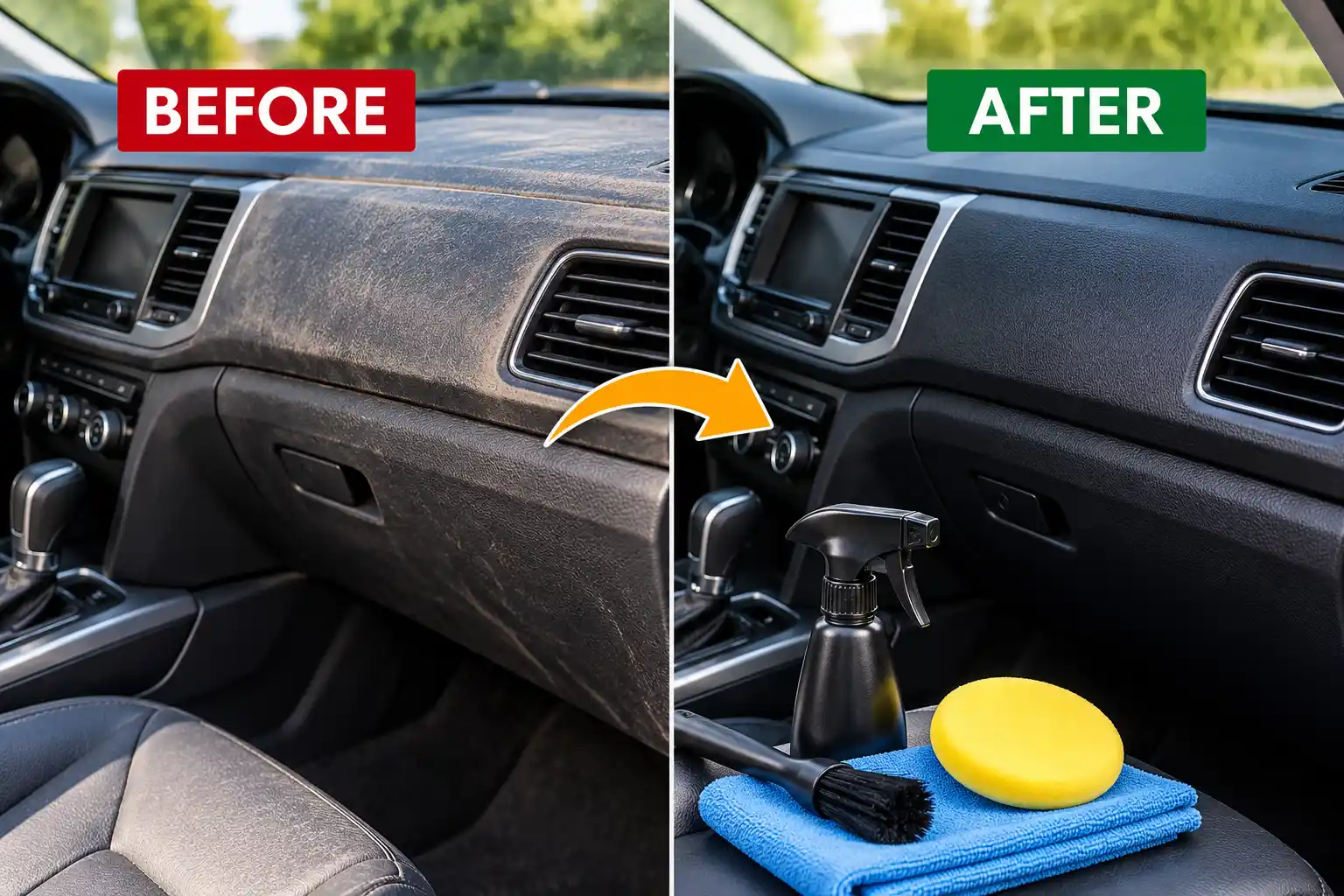
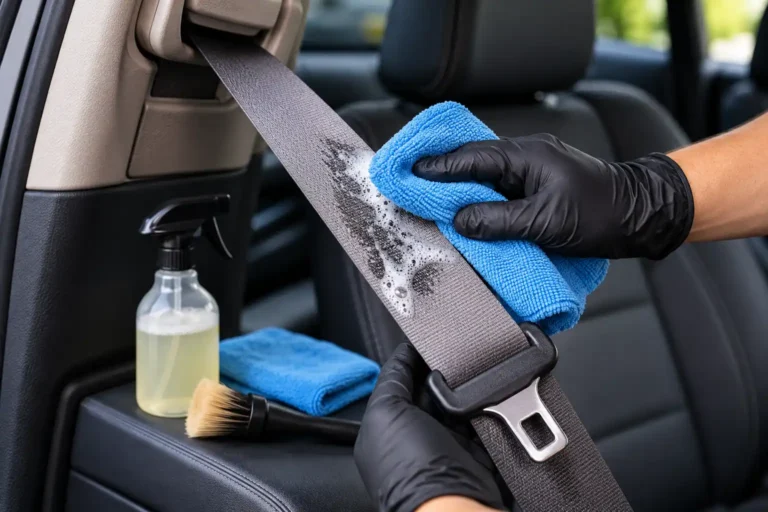
Seat belts are among the most frequently touched parts of a car interior, yet they are often overlooked during routine detailing. Over time, seat belt webbing can collect body oils, sweat, dust, food residue, makeup, and other contaminants that leave it looking gray, yellow, or darkened. Stains can also create unpleasant odors and make an otherwise clean vehicle interior look neglected.
Choosing the best seat belt cleaner requires more care than selecting an ordinary upholstery cleaner. Seat belts are safety equipment made from engineered webbing, and certain chemicals can weaken or discolor their fibers. A product that removes stubborn stains is not necessarily suitable for a seat belt.
For most vehicles, a mild soap solution and lukewarm water are the safest starting points when permitted by the owner’s manual. Dedicated seat belt cleaners may be another option, but the product must be appropriate for your specific belt and used according to its instructions.
In this guide, you will learn which seat belt cleaners to consider, how to compare commercial products, how to deep-clean dirty seat belts, and which cleaning mistakes to avoid.
What Is the Best Cleaner for Car Seat Belts?
The best cleaner for car seat belts is generally a mild soap solution made with lukewarm water, provided the vehicle manufacturer’s instructions permit it. For stubborn grime, a dedicated seat belt cleaner may be worth considering if its label specifically permits use on seat belt webbing and the vehicle manufacturer allows that type of product.
Unlike ordinary car upholstery, seat belt webbing must retain its intended strength and function. Avoid choosing a cleaner solely because it removes grease quickly or produces impressive results on carpets and fabric seats.
The following comparison explains the main options.
| Cleaner type | Best use | Important consideration |
|---|---|---|
| Mild soap and lukewarm water | Routine cleaning and ordinary dirt | The preferred starting point in many vehicle owner’s manuals |
| Dedicated seat belt cleaner | Certain stubborn stains and accumulated grime | Verify webbing compatibility and follow both sets of instructions |
| Mild upholstery or fabric cleaner | Only when explicitly suitable for seat belt webbing | A product designed for seats or carpets is not automatically approved for belts |
| Enzyme-based cleaner | Certain organic stains, if specifically approved | Do not assume that an enzyme formula is safe for restraint webbing |
| Microfiber cloth and soft-bristle brush | Applying a suitable cleaner and loosening surface dirt | Avoid abrasive brushes, aggressive scrubbing, and excessive friction |
Toyota recommends cleaning seat belts with mild soap and lukewarm water using a cloth or sponge. Ford similarly advises using a soft, damp cloth and a mild soap-and-water solution, while warning against solvents, bleach, and dyes. Read the guidance for your particular vehicle before choosing a product.
Best Seat Belt Cleaners to Consider
There is no single commercial cleaner that can be recommended for every vehicle without checking the belt material and manufacturer’s requirements. The following options are organized by intended use rather than by unverified cleaning-performance claims.
1. Mild Soap and Lukewarm Water
Best for: Routine maintenance, light dirt, and ordinary surface grime.
A mild soap solution is the first option to consider because many vehicle manufacturers recommend this approach for seat belt webbing. It is inexpensive, easy to prepare, and does not require purchasing a specialized detailing product.
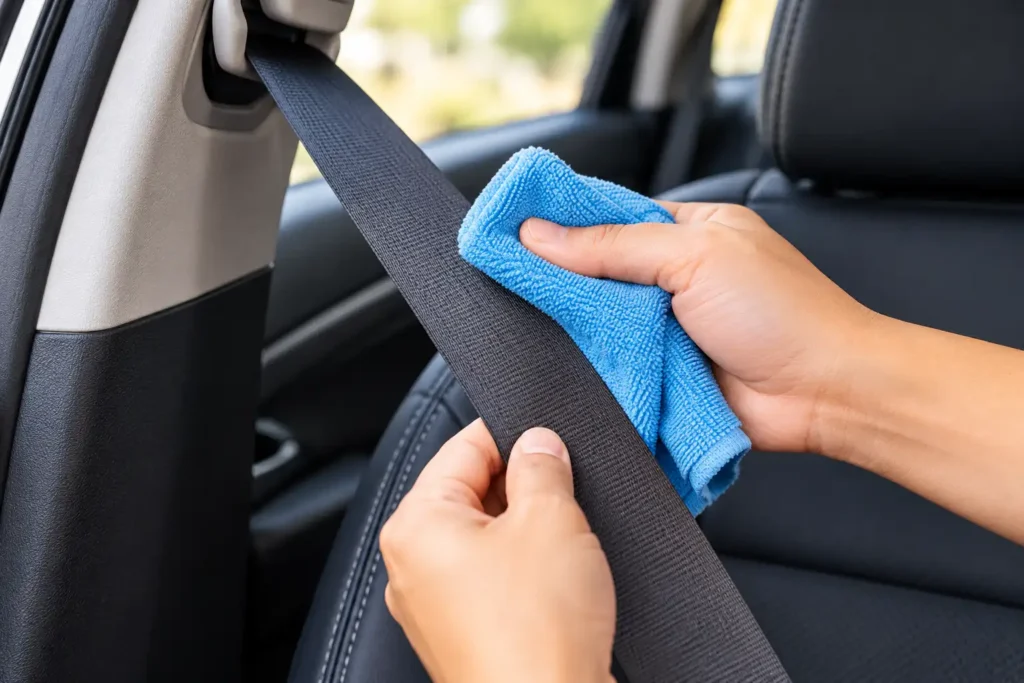
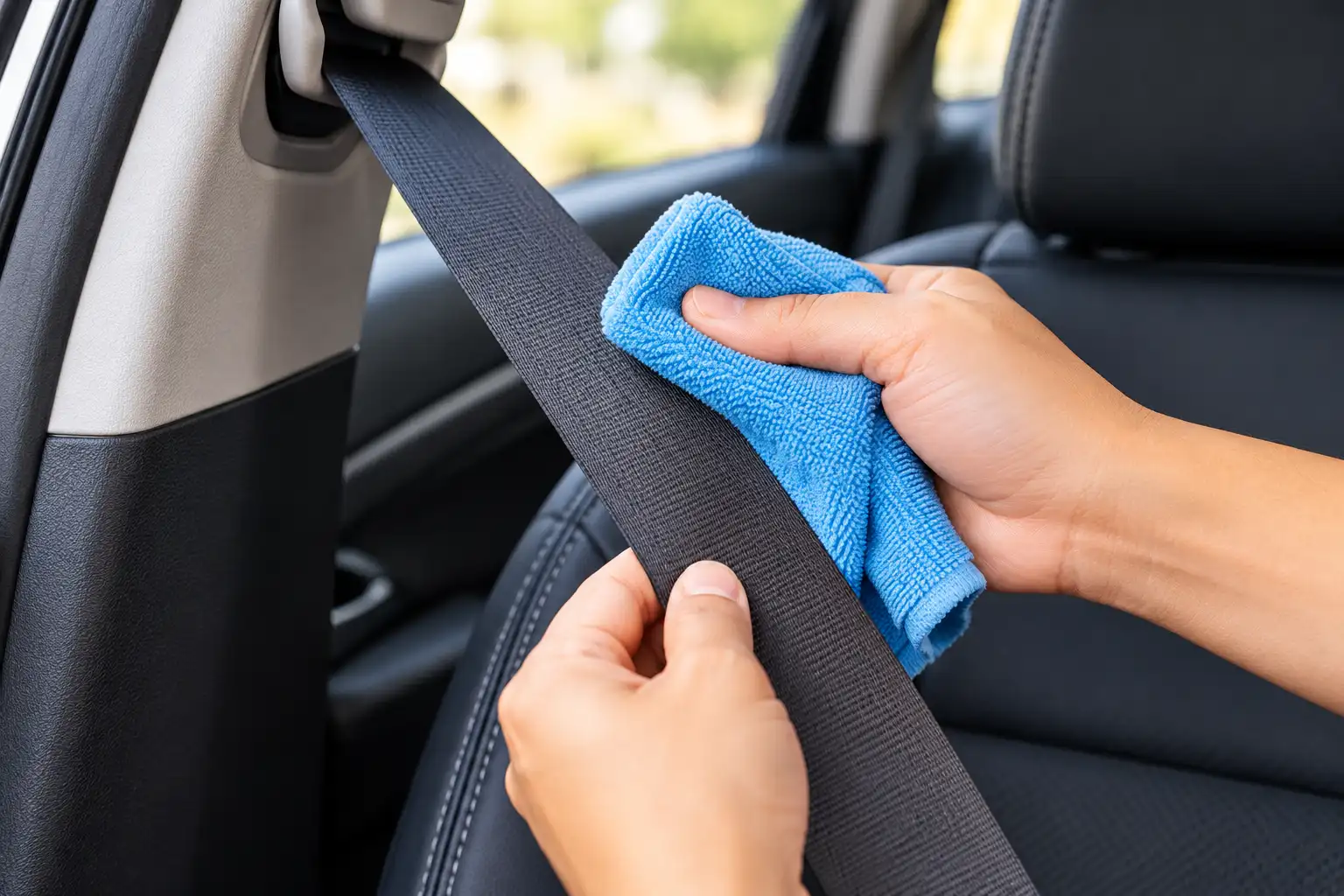
Use a small amount of mild soap mixed with lukewarm water, following the vehicle manufacturer’s instructions. Apply the solution with a soft cloth or sponge rather than pouring it directly onto the belt.
A clean cloth dampened with plain water can then be used to remove soap residue if the manufacturer’s instructions call for it.
Advantages:
- Inexpensive and readily available.
- Suitable for routine cleaning when approved by the vehicle manufacturer.
- Allows controlled application with minimal moisture.
- Avoids the need for aggressive stain-removal chemicals.
Limitations:
- May require repeated gentle cleaning for heavy grime.
- May not remove old or deeply embedded stains completely.
- The strength of the soap solution must remain appropriate for the belt.
Best choice for most car owners: Start here unless the vehicle’s owner’s manual specifies a different method.
2. Dedicated Seat Belt Cleaner
Best for: Drivers and detailers dealing with visible buildup on frequently used seat belts.
A dedicated seat belt cleaner is designed specifically for cleaning restraint webbing rather than general upholstery. One example to research is DP Detailing Products DP-310 Seat Belt Cleaner, which is marketed for removing dirt, stains, body oils, and everyday grime from seat belts.
However, the product’s marketing claims should not be treated as independent proof of compatibility with every vehicle’s seat belt system. Before purchasing or using it, confirm that its current label permits use on your belt material, review the safety information, and check the vehicle manufacturer’s cleaning instructions.
Advantages:
- Formulated and marketed specifically for seat belt cleaning.
- May be convenient for detailing heavily soiled belts.
- Offers an alternative to preparing a soap solution manually.
Limitations:
- Compatibility still needs to be verified for your vehicle.
- Stubborn or old stains may not disappear completely.
- A product’s claims do not establish independent confirmation of webbing strength or long-term compatibility.
- Availability and price vary by location.
For more information, review the DP-310 product listing. Verify the current manufacturer’s product instructions before use.
A dedicated seat belt cleaner is an option, not an automatic upgrade over mild soap and water. When compatibility is unclear, use the cleaning method recommended by the vehicle manufacturer instead.
3. Mild Automotive Upholstery Cleaner
Best for: Only those situations where the vehicle manufacturer and product label both allow the cleaner to be used on seat belt webbing.
Automotive upholstery cleaners are designed for particular interior materials, including fabric seats, carpets, and some textile surfaces. However, seat belt webbing has a different safety function from ordinary interior fabric.
Do not assume that a cleaner labeled safe for fabric seats is also appropriate for seat belts. Strong detergents, solvents, bleach, dyes, or abrasive ingredients can create unnecessary risks.
Before choosing an upholstery cleaner, verify that:
- The product’s instructions explicitly permit the intended seat belt application.
- The vehicle manufacturer’s instructions allow that type of cleaner.
- The cleaner does not contain prohibited ingredients for the application.
- The prescribed application method does not saturate the webbing or the retractor.
If the manufacturer recommends mild soap and water only, do not substitute a commercial upholstery product just because it claims to provide deep cleaning.
4. Enzyme-Based Cleaner for Organic Stains
Best for: Specific organic stains only when the cleaner is explicitly approved for seat belt webbing.
Food residue, milk, and other organic spills can leave discoloration or unpleasant odors. Enzyme-based cleaning products are marketed for particular types of organic contamination, but that does not mean every enzyme cleaner is safe for automotive restraint materials.
Check the vehicle manufacturer’s instructions and the cleaner’s label before considering this option. If compatibility cannot be established, do not use the product on the seat belt.
Avoid experimenting with an enzyme cleaner merely because the stain is difficult to remove. A persistent stain is a cosmetic problem; weakening the restraint system could create a much more serious safety issue.
How to Choose the Best Seat Belt Cleaner
Choosing a seat belt cleaner involves more than comparing cleaning power, fragrance, price, or customer ratings. Use the following criteria before buying.
Check Seat Belt Compatibility First
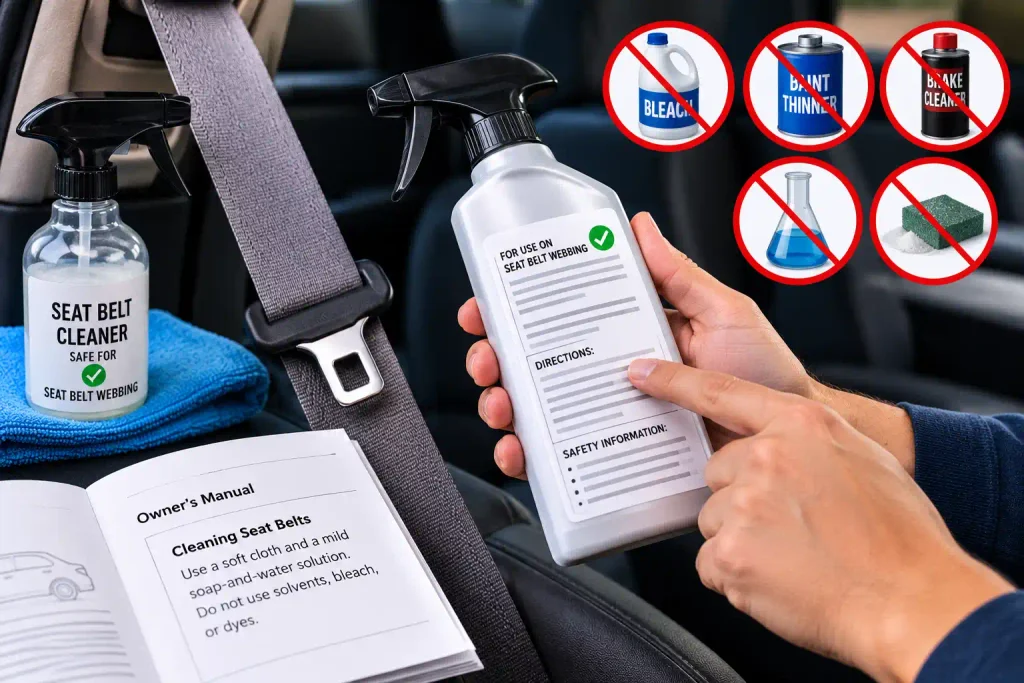
Look for a clear statement on the product label identifying seat belt webbing as an approved application. A product described only as a carpet cleaner, leather cleaner, or general interior degreaser should not be assumed suitable.
Next, check your owner’s manual. If the manual restricts cleaning to mild soap and water, follow that recommendation rather than relying on a product’s broad marketing claims.
Avoid Harsh Chemicals
Ford warns that solvents, bleach, and dyes may weaken seat belt webbing. Other vehicle manufacturers also caution against chemicals that can damage the belt material.
Avoid using:
- Chlorine bleach and bleaching products.
- Paint thinners, acetone, and other chemical solvents.
- Brake cleaner or strong degreasers.
- Dyeing products intended to change fabric color.
- Abrasive powders and aggressive cleaning compounds.
- Unapproved strong detergents or untested chemical mixtures.
Do not mix cleaning products to create a stronger formula. Combining chemicals can introduce additional hazards without making the seat belt safer to clean.
Consider Application and Moisture Control
The way a cleaner is applied is just as important as the formula.
Choose a method that allows you to control the amount of moisture reaching the webbing and keeps liquid away from the retractor mechanism. Spraying large amounts of liquid directly at the seat belt opening can allow moisture to enter the mechanism.
Follow the product label for application, removal, and drying. Do not modify the prescribed method to achieve faster results.
Review the Product Label and Safety Information
Read the directions before purchasing or using a commercial cleaner. When available, consult the Safety Data Sheet for information about chemical hazards and handling precautions.
A Safety Data Sheet can help you understand a product’s handling risks, but it does not independently establish that a cleaner will preserve the strength of seat belt webbing.
If the manufacturer cannot establish compatibility and the product’s intended use is unclear, choose the vehicle-approved cleaning method instead.
What You Need to Clean Seat Belts Safely
Before cleaning, gather the following supplies:
- Mild soap and lukewarm water, or another cleaner specifically approved for the seat belt.
- Two clean, soft microfiber cloths or other suitable lint-free cloths.
- A soft-bristle brush, if permitted by the vehicle’s instructions.
- A clean sponge, if recommended for the selected method.
- A suitable means of keeping the belt extended while it dries, when needed and permitted.
Avoid stiff brushes and tools that could cut, snag, or abrade the webbing. Do not use a clamp in a way that pinches, cuts, or damages the belt.
Park in a safe, ventilated area and make sure the vehicle is secure before beginning work.
How to Deep-Clean Car Seat Belts Step by Step
This is a general method for cleaning ordinary surface dirt. The vehicle manufacturer’s directions take priority, and certain models may require a more restrictive procedure.
Step 1: Inspect the Seat Belt Before Cleaning
Pull out the seat belt slowly and inspect the accessible webbing. Look for dirt, stains, cuts, fraying, abrasion, melted or damaged fibers, and unusual discoloration.
Check that the belt appears to move normally and that the buckle and latch show no obvious damage.
Do not continue with cosmetic cleaning if the belt is damaged, contaminated by an unknown chemical, or showing signs of failure. Seek inspection by an authorized dealer or qualified restraint-system specialist.
Cleaning cannot repair damaged webbing.
Step 2: Extend the Belt Carefully
If the owner’s manual permits the belt to be pulled out for cleaning, extend it gradually to expose the dirty section.
Keep the belt under control so it cannot retract while wet. If the manufacturer allows the use of a holding device, secure the webbing without damaging, sharply bending, or pinching it.
Keep cleaning liquid away from the opening and internal retractor mechanism. Do not disassemble the seat belt assembly or remove trim to reach hidden components.
Step 3: Prepare the Approved Cleaning Solution
If the manufacturer’s instructions recommend mild soap and lukewarm water, prepare the solution using the specified type and amount of soap.
Do not use hot water or add bleach, solvents, fragrance oils, or other chemicals to increase cleaning power.
For a commercial seat belt cleaner, follow the current label exactly. Do not assume a product can be diluted or applied differently from its instructions.
Step 4: Apply the Cleaner Gently
Dampen a soft cloth or sponge with the approved solution and remove excess liquid before touching the belt.
Wipe the dirty webbing gently. Use controlled movements and work on a small section at a time.
If a soft brush is explicitly suitable for the application, use gentle strokes along the webbing. Do not scrub aggressively or try to force dirt out of the weave with excessive pressure.
Avoid flooding the belt with cleaning solution. The aim is to clean the exposed surface while protecting the material and keeping moisture away from internal components.
Step 5: Treat Stubborn Dirt Carefully
If dark grime remains, repeat the approved cleaning process rather than immediately switching to a stronger chemical.
Use a clean part of the cloth to avoid spreading dirt back over the webbing. Follow any product-specific instructions regarding contact time or repeated application.
If a stain persists, stop before excessive scrubbing damages the fibers. Professional assessment is preferable to experimenting with stronger degreasers or solvents.
Step 6: Remove Soap Residue
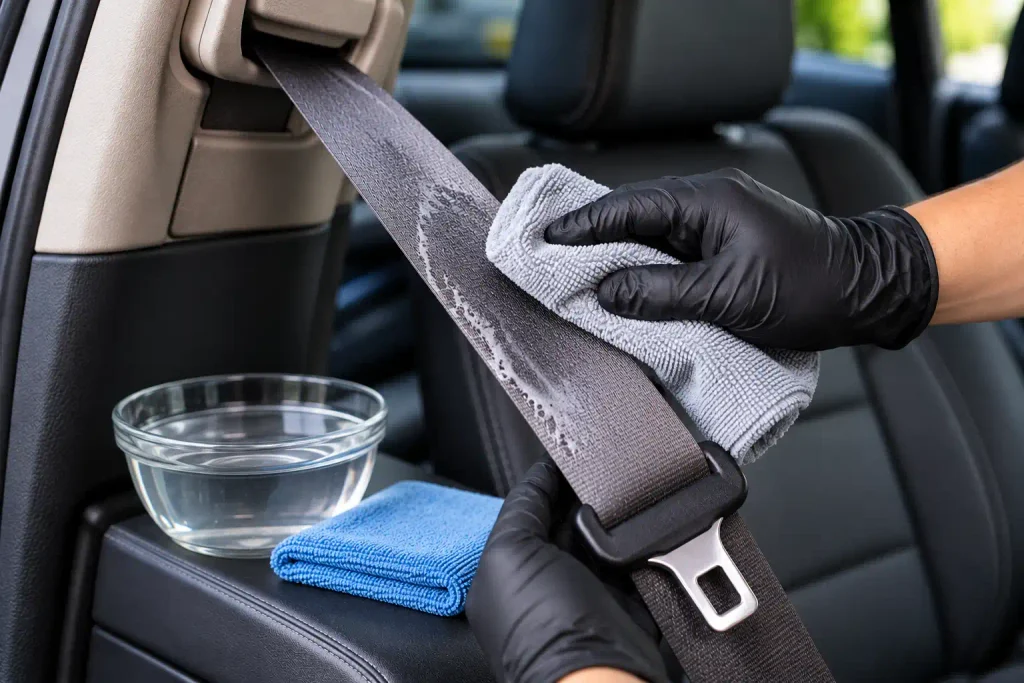
If the cleaning instructions call for rinsing or removing soap, use a clean cloth dampened with plain water and wrung out thoroughly.
Wipe the treated section gently, keeping moisture under control. Do not pour water onto the belt or attempt to flush the retractor mechanism.
Remove as much remaining moisture as practical using a clean, dry cloth, without pulling or twisting the webbing unnecessarily.
Step 7: Allow the Belt to Dry Completely
Keep the belt extended and secured until the webbing is completely dry. Follow the vehicle manufacturer’s drying instructions, using natural airflow in a suitable, well-ventilated location.
Do not allow a wet belt to retract into its mechanism. Nissan explicitly warns against retracting wet seat belts, and Mazda likewise instructs owners to dry belts thoroughly before retracting them.
Avoid hair dryers, heat guns, strong artificial heat, and other shortcuts that are not approved by the manufacturer.
Step 8: Check the Belt After Cleaning
Once the belt is fully dry, release it carefully and check whether it retracts normally. Verify that the latch engages and releases as expected, following the vehicle’s instructions.
If the belt remains sticky, retracts slowly, feels unusually stiff, or does not latch correctly, do not assume another round of cleaning will fix it.
Arrange an inspection with an authorized dealer or qualified restraint-system specialist. Do not disassemble, lubricate, or modify the belt mechanism yourself.
How to Remove Common Seat Belt Stains
Different stains may require different approaches, but every treatment must be compatible with the restraint webbing.
Body Oils and Gray or Black Grime
Body oils, sweat, and everyday dirt may accumulate where the belt touches the neck, shoulder, or hands.
Begin with the manufacturer’s recommended mild cleaning method. Use a soft cloth and repeat gentle cleaning if allowed. A dedicated seat belt cleaner may be considered if it is explicitly approved for the application.
Avoid aggressive degreasers. If dark grime does not come off without extensive scrubbing, consult a professional.
Coffee, Soft Drinks, and Food Spills
Blot fresh spills promptly with a clean, absorbent cloth without rubbing the liquid deeper into the webbing.
Then follow the approved cleaning process. Use only the recommended solution and remove residue as instructed.
Sticky drink residue can attract further dirt, so careful removal is important. However, do not soak the belt in an attempt to rinse out the spill.
Makeup, Sunscreen, and Lotion
Makeup and body-care products can leave colored or oily marks.
Remove excess material gently with a clean cloth, then use the vehicle-approved cleaning method. Avoid applying cosmetics removers, alcohol, acetone, or other solvents unless the vehicle manufacturer explicitly approves the specific product for seat belt webbing.
Some marks may not be removable without professional intervention.
Pet or Persistent Odors
If a seat belt has been exposed to a pet accident or another organic spill, remove the surface contamination promptly using an approved method.
Do not use an enzyme cleaner, fragrance spray, or deodorizer unless its use on the belt is specifically permitted. If an odor continues after cleaning and full drying, seek professional advice rather than repeatedly wetting the webbing.
For broader interior odor issues, see our guide on How to Remove Odors From Your Car.
Common Seat Belt Cleaning Mistakes to Avoid
Seat belt webbing is designed to protect occupants during a collision. Avoid these mistakes when cleaning it:
- Using bleach or chemical solvents that may weaken the fibers.
- Applying an unapproved upholstery cleaner because it works well on seats or carpets.
- Saturating the belt with water or cleaning solution.
- Allowing wet webbing to retract into the retractor.
- Using abrasive brushes or aggressive scrubbing.
- Drying the belt with excessive heat.
- Disassembling the belt mechanism to clean hidden parts.
- Assuming a clean appearance means a damaged belt is safe.
- Trying to restore torn, frayed, or chemically damaged webbing with cleaning products.
Never dye the belt or apply coatings, protectants, or fabric treatments unless the vehicle manufacturer specifically approves them. These products can change the webbing’s properties or leave unwanted residue.
How Often Should You Clean Seat Belts?
The ideal cleaning frequency depends on how often the vehicle is used, how quickly the belts become dirty, and the manufacturer’s maintenance recommendations.
A practical approach is to inspect the belts regularly and remove fresh spills as soon as possible using an approved method. During routine interior detailing, check the webbing for grime, unusual odors, fraying, and abnormal movement.
Vehicles used frequently by children, pets, or passengers may need more frequent inspection. However, deep cleaning is not necessary merely because a calendar interval has passed if the belts are clean and functioning normally.
For a complete vehicle maintenance routine, visit our DIY Car Detailing Checklist.
Should You Clean or Replace a Damaged Seat Belt?
Cleaning is appropriate for removable surface dirt and certain stains when the manufacturer’s instructions permit it. Replacement or professional inspection is necessary when a belt is damaged or its safe operation is uncertain.
Look for:
- Cuts, fraying, or damaged fibers.
- Visible abrasion, melting, or unusual deformation.
- Contamination by chemicals that may affect the webbing.
- A belt that retracts unusually slowly or sticks.
- A buckle that does not latch or release correctly.
- A seat belt that has been involved in a collision requiring replacement under the vehicle manufacturer’s instructions.
Do not rely on a visual cleaning result to determine whether restraint webbing has retained its strength. After a collision, follow the vehicle manufacturer’s inspection and replacement requirements even if the belt looks normal.
When in doubt, contact an authorized dealer or qualified restraint-system specialist. The cost of professional inspection or replacement is preferable to taking an unnecessary risk with a safety-critical component.
Conclusion
The best seat belt cleaners for deep and safe vehicle interior cleaning are those that remove dirt without compromising the restraint system. For many vehicles, mild soap and lukewarm water provide the appropriate starting point. A dedicated seat belt cleaner may be useful in specific situations, but only when both the product instructions and the vehicle manufacturer’s requirements permit it.
Clean gently, use minimal moisture, avoid bleach and solvents, and keep the belt extended until completely dry. Inspect the webbing and mechanism after cleaning, and never use cleaning products to try to repair damaged belts.
With the correct method, you can maintain a cleaner vehicle interior while giving proper priority to seat belt safety.
Frequently Asked Questions About Seat Belt Cleaners
1. What Is the Best Cleaner for Car Seat Belts?
Mild soap and lukewarm water are the preferred starting point for many vehicles because manufacturers such as Toyota and Ford recommend this approach. Use a commercial seat belt cleaner only when its label and your vehicle’s instructions permit it.
2. Can You Use Upholstery Cleaner on Seat Belts?
Not automatically. A cleaner suitable for fabric seats or carpets may not be suitable for restraint webbing. Check the product label and owner’s manual before applying any commercial upholstery cleaner to a seat belt.
3. Can You Use Bleach to Whiten Seat Belts?
No. Vehicle manufacturers warn that bleach and other inappropriate chemicals can weaken or discolor seat belt webbing. Use the approved cleaning method instead of trying to restore the original color with bleach or dye.
4. How Do You Deep-Clean Dirty Seat Belts Safely?
Extend the belt if permitted by the manufacturer’s instructions, apply an approved mild cleaning solution with a soft cloth, and gently wipe away the dirt. Remove residue as directed, prevent moisture from entering the retractor, and allow the webbing to dry completely before retracting it.
5. Can You Use a Steam Cleaner on Car Seat Belts?
Do not use a steam cleaner unless the vehicle manufacturer explicitly approves that method for the seat belt. High heat and uncontrolled moisture are unnecessary risks for safety-critical webbing and its mechanism.
6. Why Is My Seat Belt Not Retracting After Cleaning?
The belt may still be damp, dirty, twisted, or affected by a problem in the retractor mechanism. Do not force it, lubricate it, or disassemble it. If it does not retract normally after the webbing is completely dry, arrange a professional inspection.
7. Should I Replace a Seat Belt That Has Been in an Accident?
Follow the vehicle manufacturer’s post-collision inspection and replacement requirements. Some collisions require replacement even if there is no visible damage. Cleaning does not restore webbing that has been stretched, cut, frayed, chemically damaged, or otherwise compromised.