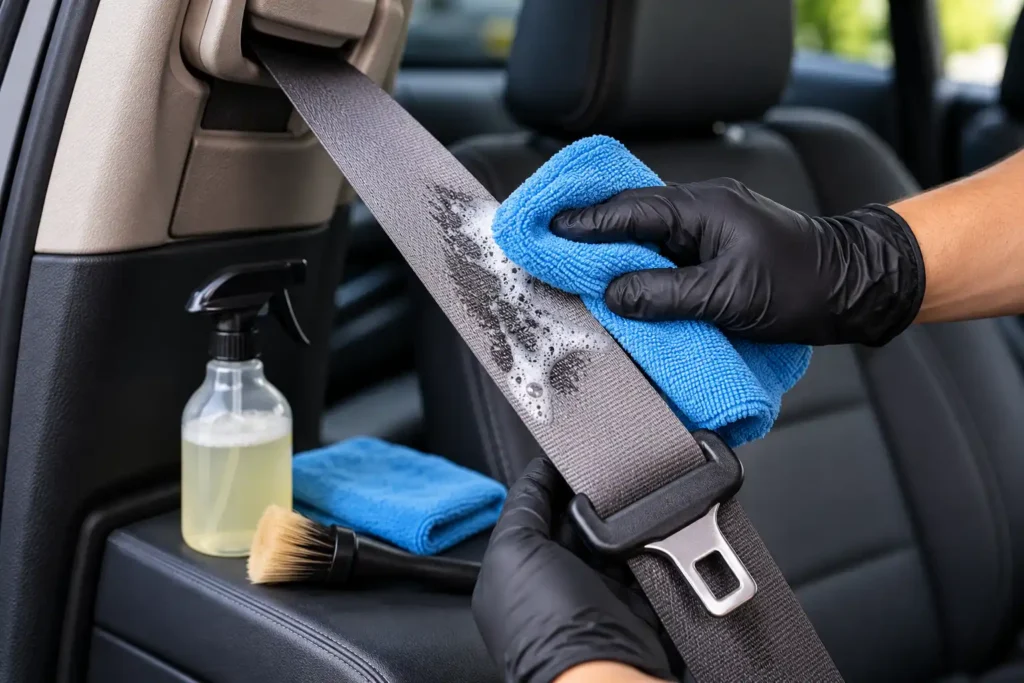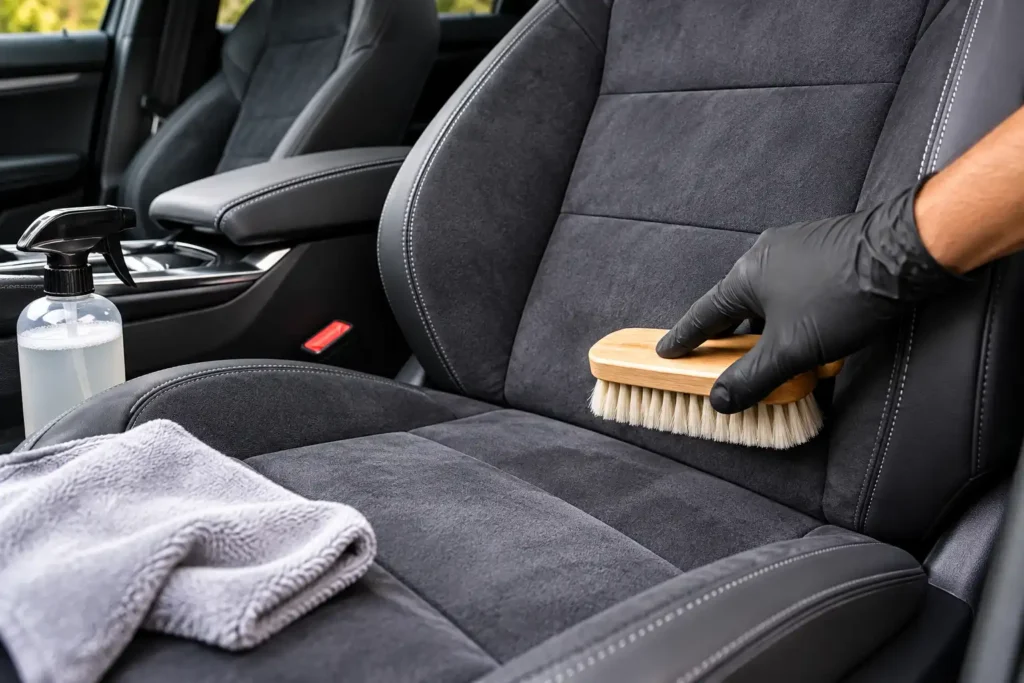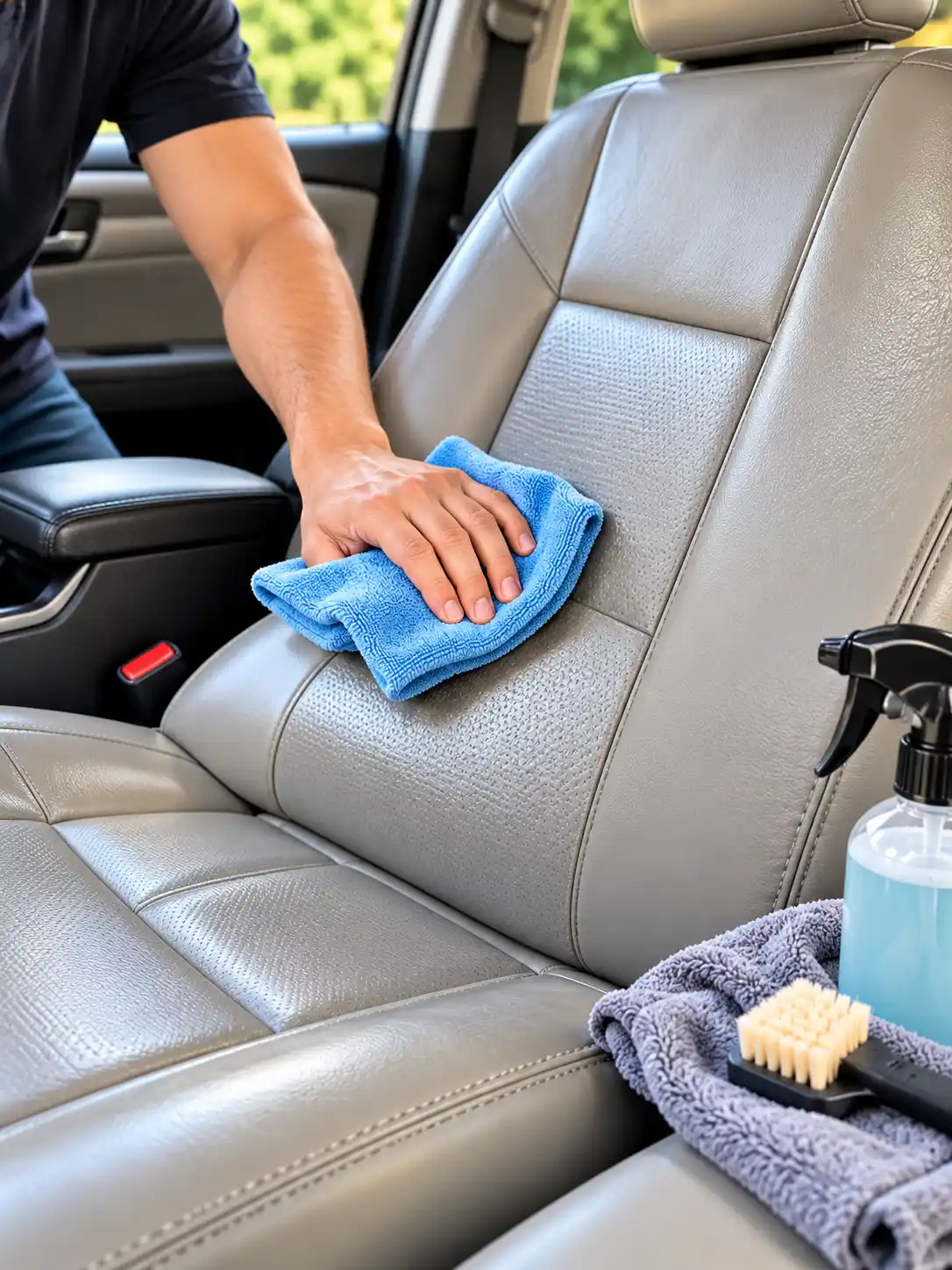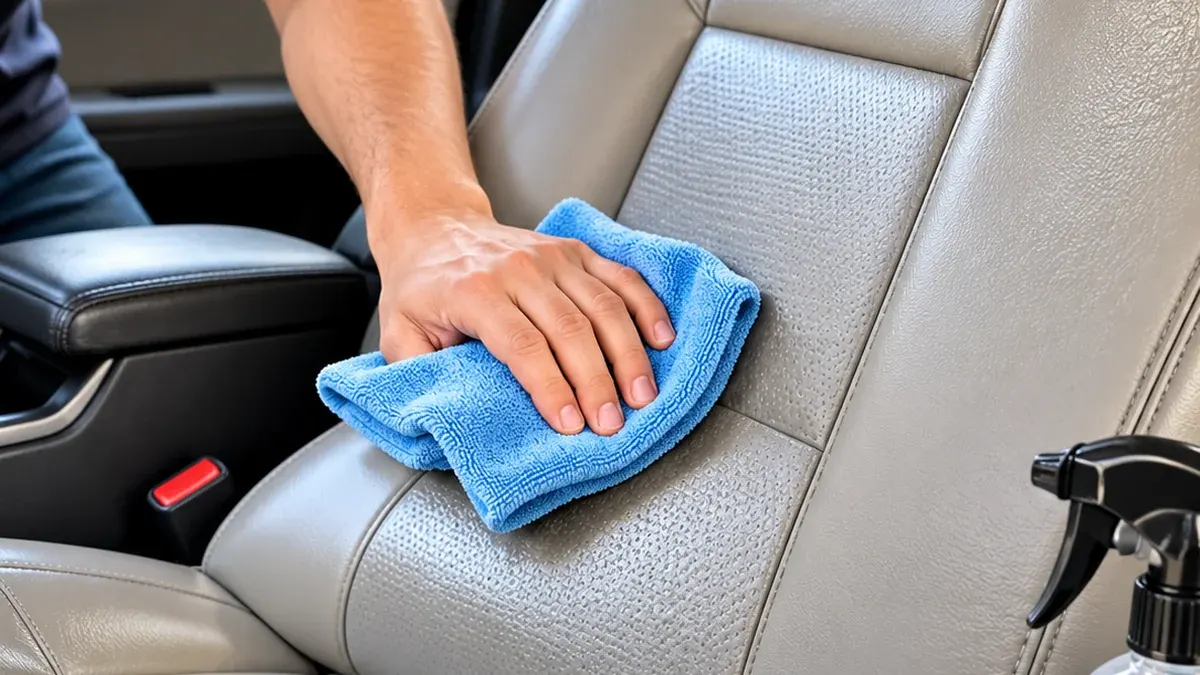
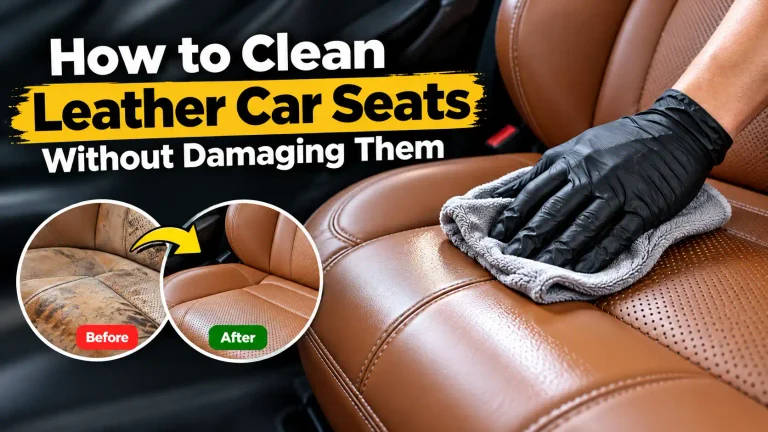
Cleaning leather car seats without damaging them requires the right cleaning product, controlled moisture, gentle cleaning techniques, and proper drying. Automotive leather can be affected by dirt, body oils, spills, heat, sunlight, and unsuitable chemicals, so understanding the correct leather seat cleaning process helps protect the interior while maintaining its appearance.
This guide explains how to clean leather car seats step by step, how to identify different leather and leather-like materials, how to clean perforated leather, how to handle stains and spills, when leather conditioner may be appropriate, and which common cleaning mistakes can damage automotive upholstery.
What Do You Need to Clean Leather Car Seats?
Before cleaning leather car seats, having the right tools and products makes the process safer and easier. You do not need a large collection of detailing products; a few suitable cleaning tools can remove everyday dirt, dust, body oils, and light stains without unnecessarily exposing the leather surface to moisture or chemicals.
• Vacuum cleaner with a crevice attachment
• Automotive leather cleaner or a cleaner approved by the vehicle manufacturer
• Clean microfiber or lint-free towels
• Soft detailing brush
• Separate dry towel
• Compatible leather conditioner, when recommended for the specific material
Always check the vehicle owner’s manual before using a new cleaning or conditioning product.
How to Clean Leather Car Seats Step by Step
The safest leather car seat cleaning process starts with removing loose dirt before introducing any liquid. Cleaning in small sections and controlling the amount of product helps reduce unnecessary moisture, friction, and residue on the seat surface.
1. Remove Loose Dirt and Debris
Removing loose dirt is the first step when cleaning automotive leather because dust, sand, and other particles can create additional abrasion when rubbed across the seat.
Use a vacuum with a soft brush or crevice attachment to clean:
• Seat cushions
• Seat backs
• Seams
• Stitching
• Gaps between cushions
• Perforated sections
Pay particular attention to the driver’s seat because it normally receives more daily contact and dirt than less frequently used seats.
2. Identify the Seat Material
Identifying the material before choosing a leather cleaner is one of the most important parts of safe car interior detailing. Modern vehicles can use genuine leather, coated leather, synthetic leather, vinyl, leatherette, or combinations of different materials.
Check the vehicle owner’s manual or manufacturer documentation whenever possible. A seat that looks like leather may actually have a synthetic or coated surface that requires a different cleaning or conditioning approach.
3. Test the Cleaner in an Inconspicuous Area
Testing a leather cleaner before treating the entire seat helps identify potential discoloration, finish changes, or other unwanted reactions.
Apply a small amount according to the product instructions to a hidden area. Allow it to dry and inspect the surface before continuing with the rest of the seat.
4. Apply Leather Cleaner to the Cloth
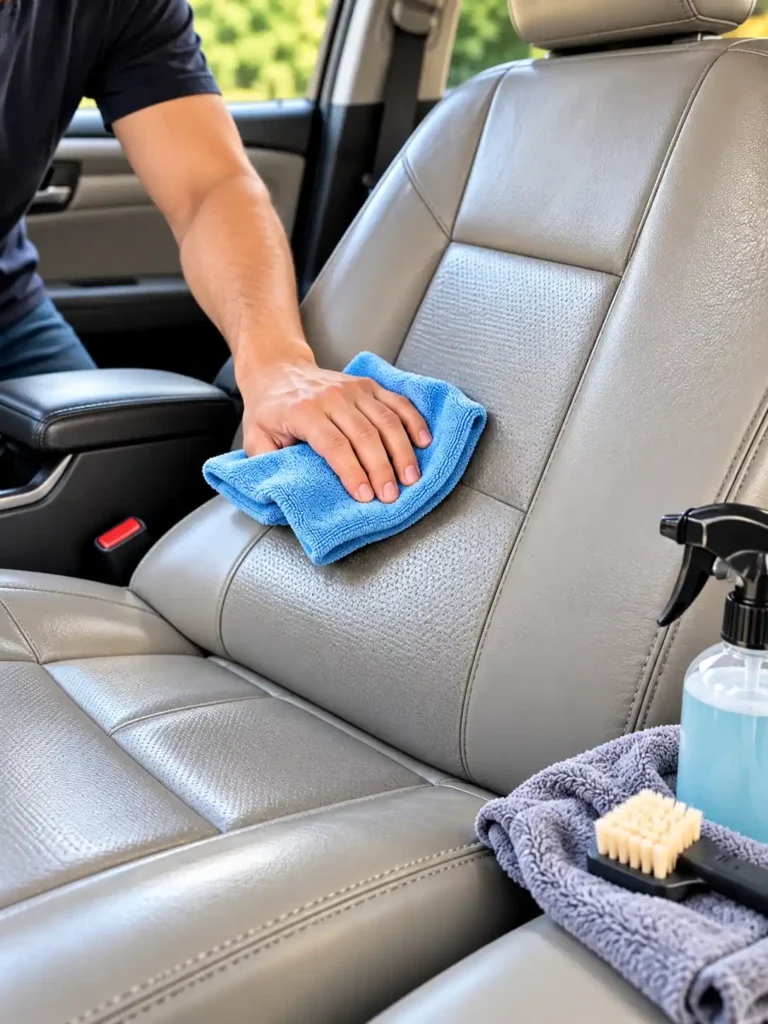
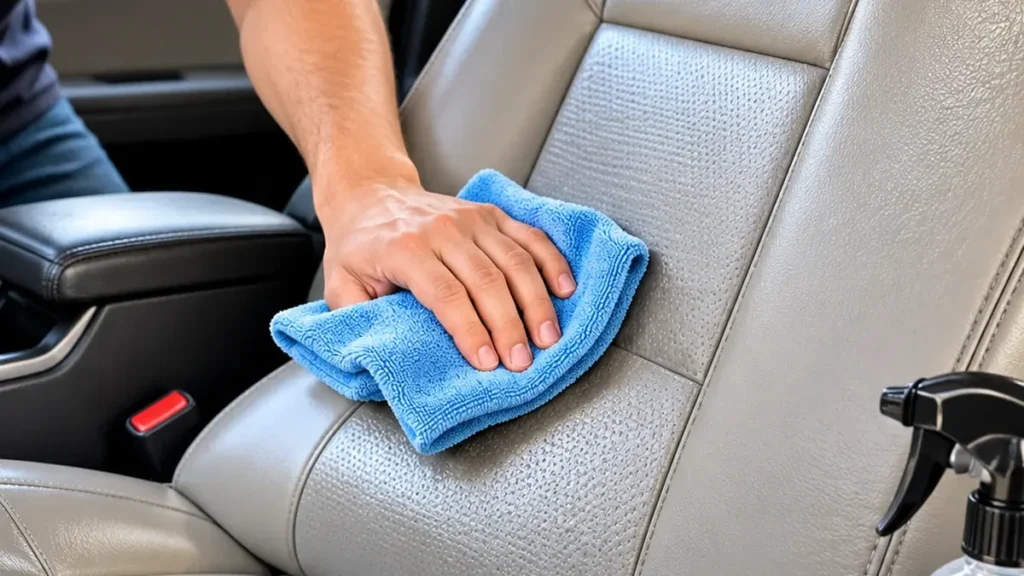
Applying a controlled amount of automotive leather cleaner to a microfiber or lint-free cloth can make it easier to control how much liquid reaches the seat.
Avoid unnecessarily flooding the surface with cleaner, particularly around seams, perforations, controls, and other areas where liquid can enter the interior.
5. Clean One Small Section at a Time
Working in small sections makes leather seat cleaning more controlled and helps prevent cleaner from remaining on the surface for too long.
Gently wipe areas such as the:
• Driver’s seat bolster
• Seat cushion
• Seat back
• Headrest
• Armrest
• Frequently touched areas
Use light pressure rather than aggressive scrubbing.
6. Clean Seams and Perforations Carefully
Perforated leather requires additional care because liquid can pass through the small holes and reach the material underneath.
Use a soft detailing brush to loosen dirt around stitching and perforations when appropriate. Avoid applying excessive liquid to these areas.
7. Remove Cleaner Residue
Removing remaining cleaner after each section helps prevent residue from drying on the leather surface.
Use a clean cloth according to the cleaner’s instructions and make sure no visible product remains on the seat.
8. Allow the Leather to Dry Naturally
Proper drying is an important part of leather car seat maintenance because excessive heat can negatively affect automotive interior materials.
Allow the seats to dry naturally in a shaded, ventilated environment whenever possible. Opening the doors or windows can improve airflow without exposing the leather to unnecessary direct heat.
Should You Use Leather Conditioner After Cleaning?
Leather conditioning is not automatically required after every cleaning session. Whether a conditioner is appropriate depends on the type of leather, the surface coating, the vehicle manufacturer’s recommendations, and the specific conditioner being used.
When Leather Conditioner May Be Appropriate
If the vehicle manufacturer or leather-care product recommends conditioning, apply a compatible product after the leather has been cleaned and completely dried.
Spot-test the conditioner first and apply only the amount recommended by the product manufacturer.
When You Should Avoid Leather Conditioner
Do not assume that every leather-like automotive surface needs conventional leather conditioner. Some coated leather, synthetic leather, vinyl, and leatherette surfaces may not benefit from traditional conditioning products.
Check the product label and vehicle manufacturer’s instructions before applying conditioner.
How Often Should You Clean Leather Car Seats?
Leather seat maintenance should be based on the vehicle’s use rather than one fixed cleaning schedule. Daily driving, children, pets, spills, body oils, dust, sunlight, and climate can all influence how frequently automotive leather needs attention.
Normal Maintenance
Inspect the seats regularly and clean visible dirt or spills before they become heavily embedded in the surface.
High-Use Vehicles
Vehicles that are driven frequently or regularly carry passengers may require more frequent interior cleaning, particularly on the driver’s seat and other high-contact areas.
Vehicles Exposed to Strong Sunlight
Vehicles parked outdoors for long periods may require additional attention because heat and sunlight can accelerate deterioration of interior materials.
How Do You Clean Perforated Leather Car Seats?
Perforated leather seats need a more controlled cleaning process because the small holes can allow excess liquid to enter the seat. This makes moisture control especially important when cleaning ventilated or perforated automotive leather.
Step-by-Step Perforated Leather Cleaning
Start by vacuuming the perforations to remove loose debris. Apply a small amount of suitable cleaner to a cloth rather than flooding the seat.
Work gently around the perforations and remove excess moisture promptly.
If the seats include heating, cooling, or ventilation components, follow the vehicle manufacturer’s cleaning instructions before using any liquid product.
How Do You Remove Spills From Leather Car Seats?
Quickly dealing with spills can reduce the chance of staining and discoloration. The first step is to remove as much liquid as possible without spreading it across a larger area.
Fresh Liquid Spills
Blot the spill with a clean, dry cloth rather than aggressively rubbing it.
Once the excess liquid has been removed, use an appropriate leather cleaner according to the product and vehicle manufacturer’s instructions.
Difficult Stains
Food, grease, ink, dye transfer, and other difficult stains may require different treatment methods. Avoid immediately reaching for aggressive chemicals because repeated harsh cleaning can damage the leather finish.
If gentle cleaning does not remove a persistent stain, professional automotive leather repair or detailing may be safer.
Can You Use Baby Wipes on Leather Car Seats?
Baby wipes are designed for skin rather than specifically for automotive leather surfaces, and their ingredients can vary between products. For regular leather seat cleaning, a product specifically approved for the seat material is a safer choice.
Why Dedicated Leather Cleaners Are Better
Automotive leather cleaners are formulated for vehicle interior surfaces and can provide more predictable results when used according to their instructions.
Always check your vehicle manufacturer’s recommendations before introducing a new cleaning product.
Can You Use Dish Soap on Leather Car Seats?
Dish soap should not automatically be treated as a safe leather cleaner. Automotive manufacturers can specify particular cleaning products or detergents for their interior materials, so following the vehicle owner’s manual is preferable to experimenting with household cleaning products.
What Should You Use Instead?
Use a leather cleaner designed for automotive leather or another product specifically approved for your vehicle’s interior material.
What Products Should You Avoid on Leather Car Seats?
Choosing the wrong cleaning chemical is one of the easiest ways to damage a vehicle’s interior finish. Household chemicals, strong solvents, and excessive moisture can create problems that may not be immediately visible.
Products to Avoid
Unless specifically approved for the particular surface, use caution with:
• Bleach
• Strong solvents
• Gasoline or petroleum products
• Unapproved alcohol-based cleaners
• Strong acidic or alkaline cleaners
• Abrasive household cleaners
• Excessive amounts of water
Always check both the vehicle owner’s manual and the product label before applying a chemical to automotive leather.
What Is the Difference Between Genuine Leather and Leatherette?
Understanding the difference between genuine leather and leatherette helps you choose the correct cleaning and conditioning products. Modern car interiors can contain several different leather-like materials, and they should not automatically be treated in exactly the same way.
Genuine Leather
Genuine leather is made from animal hide and can have different surface finishes or protective coatings depending on how it is manufactured and used in the vehicle.
Leatherette and Synthetic Leather
Leatherette and synthetic leather are manufactured materials that can look similar to genuine leather but have different construction and care requirements.
How Can You Identify Your Seat Material?
The vehicle owner’s manual, manufacturer specifications, and original vehicle documentation are more reliable than judging the material only by appearance or texture.
Does Leatherette Need Leather Conditioner?
Leatherette does not automatically require conventional leather conditioner. Because synthetic leather and vinyl are manufactured materials, the appropriate maintenance product depends on the specific surface and its finish.
Check the Product Instructions
If a product is specifically designed for both genuine and synthetic automotive leather, follow its instructions.
If it is intended only for genuine leather, do not assume it is suitable for leatherette.
Can You Steam Clean Leather Car Seats?
Steam cleaning is not a universal solution for automotive leather. Heat and moisture can affect leather finishes and other interior components, so the correct cleaning method depends on the vehicle and the specific seat material.
A Safer Routine Cleaning Approach
For normal maintenance, controlled cleaning with an appropriate product and microfiber cloth is easier to manage than introducing large amounts of heat and moisture.
Check the vehicle manufacturer’s recommendations before using a steam cleaner on leather seats.
Can You Fix Cracked Leather Car Seats With Conditioner?
Leather conditioner cannot reliably replace leather material that has already cracked, torn, peeled, or deteriorated. Once structural damage has developed, cleaning and conditioning alone generally cannot restore the missing material.
Minor Surface Damage
Some minor surface damage may be repairable with a professional leather repair process.
Severe Cracking and Peeling
Deep cracking, tears, or extensive peeling may require filler, refinishing, panel repair, or replacement of the affected upholstery.
Does Sunlight Damage Leather Car Seats?
Long-term exposure to heat and direct sunlight can contribute to fading and deterioration of vehicle interior materials. Managing sunlight exposure is therefore an important part of long-term leather car seat care.
How to Reduce Sun Exposure
Whenever practical, park in shade and use an appropriate windshield sunshade. Vehicles with convertibles or large glass roofs may receive more direct sunlight and therefore require additional attention to interior protection.
What Are the Most Common Leather Seat Cleaning Mistakes?
Most leather seat damage from routine cleaning comes from using inappropriate chemicals, excessive moisture, aggressive scrubbing, or incorrect drying methods. Avoiding these mistakes is one of the simplest ways to extend the appearance and service life of automotive leather.
Using the Wrong Cleaner
A household cleaner designed for glass, kitchens, or other surfaces may not be appropriate for automotive leather.
Applying Too Much Liquid
More cleaner does not mean better cleaning. Excess liquid can be especially problematic around perforations, seams, controls, and electrical components.
Scrubbing Too Hard
Aggressive scrubbing can damage the surface finish or change the appearance of the material.
Skipping the Spot Test
Testing a product in an inconspicuous location first can help identify unwanted reactions before the entire seat is treated.
Conditioning Without Checking the Material
Not every leather-like surface should be treated with conventional leather conditioner.
Using Direct Heat
Allow cleaned seats to dry naturally in a shaded and ventilated environment whenever possible.
How Does Leather Seat Care Fit Into a Full Car Detail?
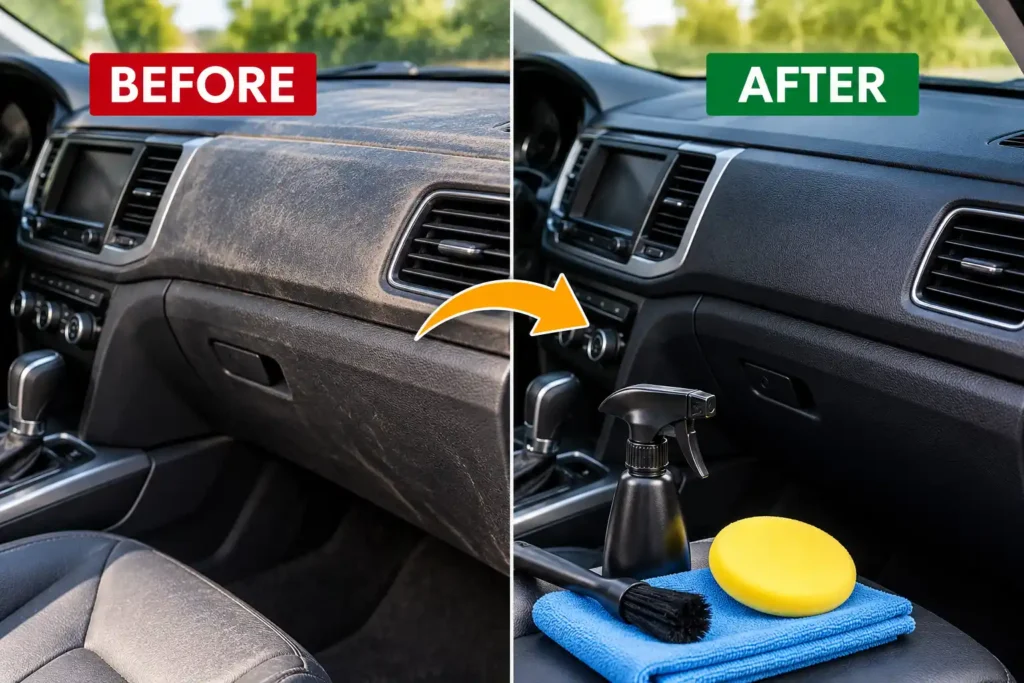
Leather seat cleaning is an important part of automotive interior detailing, but it is only one component of complete vehicle care. Combining proper leather maintenance with safe vacuuming, dashboard cleaning, carpet care, and exterior washing creates a more complete car-care routine.
Complete Interior Detailing
For a broader step-by-step interior and exterior detailing process, see our DIY Car Detailing Checklist for Beginners.
Exterior Car Washing
If you are cleaning the entire vehicle, proper exterior washing techniques are also important. See our guide to Common Car Washing Mistakes That Damage Your Paint.
Choosing a Car Washing Method
If you are deciding between washing your vehicle by hand and using an automatic car wash, see our Hand Washing vs Automatic Car Wash: Pros and Cons.
What Is the Correct Leather Car Seat Cleaning Routine?
A consistent leather seat cleaning routine helps remove dirt and body oils before they build up and become more difficult to clean. The process should remain controlled rather than relying on excessive chemicals, water, or aggressive scrubbing.
Recommended Routine
- Remove personal items.
- Vacuum loose dirt and debris.
- Identify the seat material.
- Check the vehicle owner’s manual.
- Spot-test the cleaning product.
- Apply a small amount of suitable cleaner to a microfiber or lint-free cloth.
- Clean one section at a time.
- Use a soft brush around seams when appropriate.
- Minimize moisture around perforations.
- Remove cleaner residue.
- Allow the seats to dry naturally.
- Apply compatible conditioner only when recommended.
- Inspect the finished surface.
Frequently Asked Questions About Cleaning Leather Car Seats
These common leather car seat questions cover the search intents people typically have after learning the basic cleaning process. The answers focus on safe automotive leather care, material identification, cleaning frequency, stains, conditioning, and damage prevention.
What is the safest way to clean leather car seats?
Vacuum loose dirt first, identify the seat material, spot-test an appropriate cleaner, apply a controlled amount to a microfiber or lint-free cloth, clean gently in small sections, remove residue, and allow the seats to dry naturally.
How often should leather car seats be cleaned?
Cleaning frequency depends on vehicle use, passengers, spills, dirt, body oils, climate, and sunlight exposure. Inspect the seats regularly and clean them when visible contamination develops.
Should I condition leather car seats after every cleaning?
Not necessarily. Conditioning depends on the leather type, surface coating, vehicle manufacturer’s recommendations, and the conditioner being used.
Can I use water to clean leather car seats?
A lightly dampened cloth may be appropriate for some automotive leather surfaces, but avoid soaking the seats. Follow the manufacturer’s cleaning instructions for your specific vehicle.
How do I clean white leather car seats?
Use a cleaner approved for the specific leather and finish. Work gently in small sections and avoid harsh household chemicals or aggressive scrubbing.
How do I clean black leather car seats?
Use the same controlled process: vacuum, identify the material, spot-test the cleaner, clean gently, remove residue, and allow the surface to dry naturally.
How do I clean perforated leather seats?
Vacuum the perforations first and use very little liquid. Apply cleaner to a cloth instead of flooding the perforated surface, then remove excess moisture promptly.
Can cracked leather seats be restored?
Minor damage may sometimes be repaired professionally. Deep cracks, tears, peeling, or missing material generally require a more extensive leather repair or upholstery solution.
Is leatherette cleaned the same way as genuine leather?
Not necessarily. Leatherette and synthetic leather can have different cleaning requirements from genuine leather. Check the owner’s manual and product instructions before cleaning or conditioning.
Can I use an all-purpose cleaner on leather seats?
Do not assume an all-purpose cleaner is safe for automotive leather. Use a product approved for the specific material or follow the vehicle manufacturer’s recommended cleaning method.
Final Thoughts on Leather Car Seat Care
The safest way to clean leather car seats is to use a controlled, material-specific approach. Vacuum first, identify the material, test the product, use a small amount of suitable cleaner, clean gently, remove residue, and allow the seats to dry naturally.
Most importantly, remember that a vehicle advertised with a “leather interior” may contain different materials and surface finishes. When you are unsure whether your seats are genuine leather, coated leather, leatherette, or synthetic leather, check the owner’s manual or manufacturer documentation before choosing a cleaner or conditioner.
Proper leather seat maintenance does not require excessive products. Consistent cleaning, controlled moisture, suitable products, and protection from unnecessary heat and sunlight can help keep automotive interiors looking better for longer.