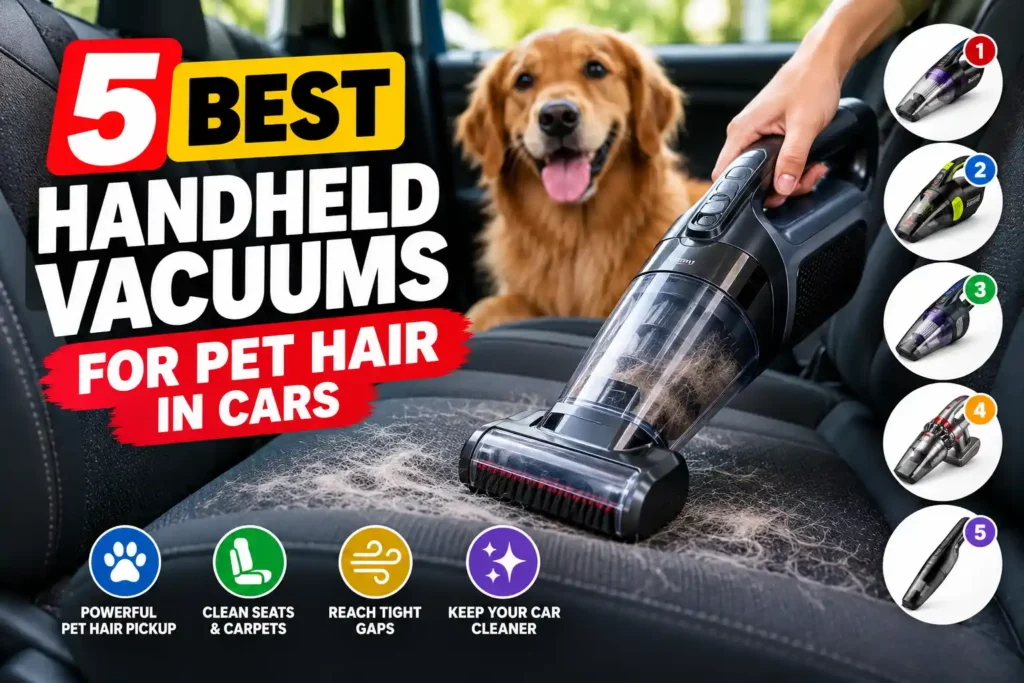
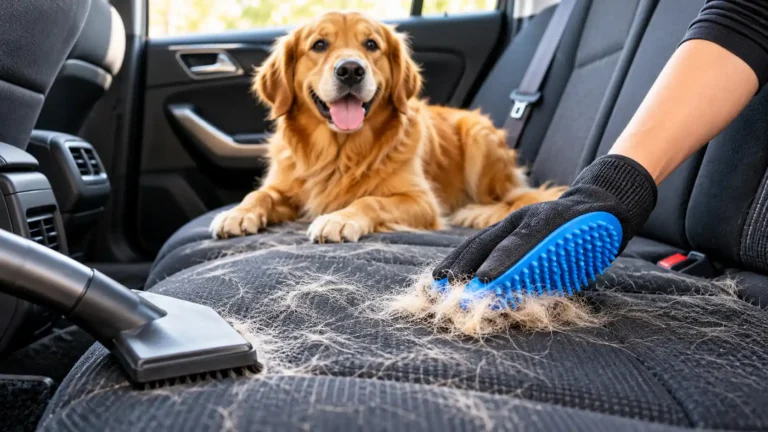
Pet hair can be one of the most frustrating problems when cleaning a car interior. Dog hair and cat hair often become trapped in fabric seats, carpet fibers, floor mats, seat seams, and the cargo area. Even after vacuuming several times, small strands may remain embedded in the upholstery.
The most effective way to get pet hair out of your car is to loosen it with a suitable rubber pet hair brush or another upholstery-safe tool, gather the loosened hair, and vacuum it away. The right approach depends on the surface you are cleaning, as fabric, carpet, leather, vinyl, and delicate upholstery require different cleaning methods.
In this guide, you will learn how to remove pet hair from car seats, carpets, floor mats, leather upholstery, and hard-to-reach areas. You will also discover which tools work best, which mistakes to avoid, and how to prevent pet hair from accumulating in your car.
What Is the Best Way to Get Pet Hair Out of Your Car?
The best way to remove pet hair from a car is to vacuum loose fur first, loosen embedded strands with a suitable rubber brush or glove, and vacuum the collected hair again. This process helps remove hair trapped between fabric and carpet fibers without requiring aggressive scrubbing.
Follow these steps for a thorough clean:
- Remove rubbish, personal belongings, and floor mats.
- Vacuum loose pet hair and debris.
- Use a compatible rubber brush to loosen embedded hair.
- Gather the hair into small clumps.
- Vacuum the loosened hair thoroughly.
- Clean accessible seat seams, carpet edges, and crevices.
- Inspect the interior and repeat gentle treatments where necessary.
Always test an unfamiliar cleaning tool on an inconspicuous area first. If the material starts to fuzz, pill, stretch, or show visible damage, stop using the tool.
Why Is Pet Hair So Difficult to Remove From Car Interiors?
Pet hair can become entangled in textile fibers rather than remaining on the surface. Repeated movement, friction, and pressure from passengers can push loose strands deeper into car seats and carpets.
Static electricity may also cause dry hair to cling to upholstery and other interior surfaces. A vacuum can remove loose strands, but tightly trapped hair may need to be loosened before it can be collected.
Several areas of a vehicle require particular attention when removing pet hair.
Fabric Car Seats
Fabric upholstery can trap short strands between its woven fibers. Textured cloth seats can be particularly challenging because embedded hair may be difficult to see until you inspect the surface closely.
Car Carpets and Floor Mats
Carpet fibers can hold large amounts of pet hair, especially around the footwells, seat bases, and rear cargo area. Repeated foot traffic can make the hair harder to release.
Seat Seams and Crevices
Hair often collects around stitching, cushion edges, and narrow gaps where a regular vacuum attachment cannot reach easily.
Leather and Synthetic Leather Seats
Leather and vinyl usually allow surface hair to be wiped away more easily than fabric. However, strands can still collect along stitching, perforations, textured areas, and seat edges.
The Trunk or Cargo Area
The cargo area can accumulate significant amounts of fur when pets travel there regularly. Carpeted trunk liners often need additional attention because hair can become embedded in their fibers.
Understanding where pet hair collects will help you choose the right cleaning tool and avoid unnecessary scrubbing.
What Tools Do You Need to Remove Pet Hair From a Car?
You do not need an expensive collection of detailing products to remove pet hair. A few suitable tools can handle most routine cleaning tasks.
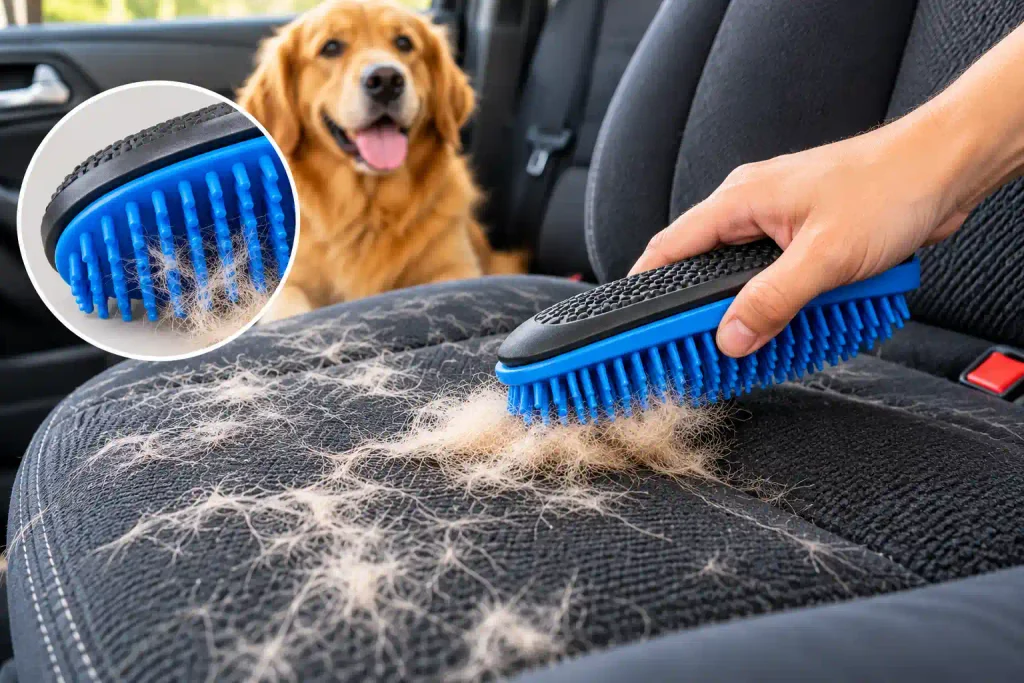
1. Rubber Pet Hair Removal Brush
A rubber pet hair removal brush helps loosen embedded hair from compatible fabric upholstery and carpet. Its rubber surface can gather strands into manageable clumps, making them easier to vacuum.
Choose a brush designed for automotive upholstery or carpet. Avoid stiff or abrasive tools that could damage delicate materials.
2. Rubber Cleaning Gloves
A clean rubber household glove can help collect pet hair through friction. It is an inexpensive alternative for suitable fabric surfaces.
Lightly dampen the glove only when the upholstery care instructions permit it. Avoid excessive moisture and aggressive rubbing.
3. Vacuum Cleaner With Attachments
A vacuum cleaner removes loose hair, dust, and debris from seats, carpets, and floor mats. An upholstery attachment is useful for larger fabric surfaces, while a narrow crevice tool helps clean accessible gaps and edges.
Use suitable suction and avoid forcing the nozzle into seat mechanisms, wiring, or electrical components.
4. Soft Detailing Brush
A soft detailing brush can help loosen hair from appropriate surface textures, seams, and corners. It is useful for areas where a larger rubber brush cannot reach.
Choose a brush with bristles suitable for the material being cleaned.
5. Rubber Squeegee
A clean rubber squeegee can gather hair from some durable carpeted areas. Work gently and test the blade on a hidden section first.
Do not use a squeegee on delicate upholstery unless the material manufacturer permits it.
6. Lint Roller
A lint roller can remove loose surface hair from compatible fabric surfaces. It is particularly useful for finishing small areas after vacuuming.
It is generally less effective at removing deeply embedded hair from thick carpet fibers.
For most car interiors, start with a vacuum cleaner, a suitable rubber pet hair brush, and a crevice attachment. Additional tools are useful when particular areas need extra attention.
How to Get Pet Hair Out of Your Car Step by Step
A systematic cleaning process makes pet hair removal easier and helps prevent loosened hair from spreading to areas you have already cleaned. Work in small sections and collect the hair as you go.
Step 1: Prepare the Car Interior
Park the vehicle in a suitable location with good lighting. Turn off the engine, remove personal belongings, and take out removable floor mats.
Clear the footwells, rear seats, and cargo area so that loose hair is not hidden beneath objects. Remove pet blankets or removable covers for separate cleaning.
Inspect the upholstery before starting. Look for loose stitching, worn fabric, damaged leather, or delicate surfaces that may not tolerate brushing.
Step 2: Vacuum Loose Pet Hair
Begin by vacuuming the seats, carpets, floor mats, and cargo area.
Use an upholstery attachment on fabric seats and other surfaces that require gentle contact. A crevice attachment can collect loose hair from accessible gaps and seat edges.
Move the vacuum slowly across each area. Pay particular attention to:
- The center and outer edges of the seats.
- The spaces around accessible seat cushions.
- The front and rear footwells.
- The carpet beside the seat rails.
- The cargo floor and carpeted side panels.
- The edges of removable floor mats.
Do not expect ordinary vacuuming to remove every strand. The purpose of this first pass is to collect loose hair and debris before dealing with embedded fur.
Step 3: Loosen Embedded Hair With a Rubber Brush
Choose a rubber pet hair brush that is suitable for the material you are cleaning.
On compatible fabric and carpet, work in short, controlled strokes using light pressure. Follow the tool manufacturer’s instructions and avoid scrubbing so hard that the fibers become distorted.
As the hair loosens, it may collect into small clumps on the surface. Gather these clumps and vacuum them away before moving to another section.
Work on a small area at a time. Alternating gentle brushing with vacuuming can be more effective than repeatedly scrubbing an area without collecting the released hair.
Step 4: Use a Rubber Glove for Stubborn Hair
A clean rubber household glove can help gather remaining pet hair from compatible fabric upholstery.
Lightly dampen the glove if the upholstery care instructions permit it. Run your hand across the surface with gentle, consistent strokes until the loose strands begin collecting into clumps.
Follow these precautions:
- Use only minimal moisture.
- Test the method on a hidden area first.
- Avoid aggressive rubbing on delicate or loosely woven fabrics.
- Do not use the method on suede-like upholstery or specialty microfiber unless the material manufacturer permits it.
- Vacuum the collected hair before continuing.
Do not spray water or cleaning solution directly onto the seat just to make hair easier to remove. Excess moisture can penetrate the padding and make drying more difficult.
Step 5: Vacuum the Loosened Hair Again
After brushing, vacuum the hair that has been released onto the surface.
Move the vacuum slowly and change direction when needed, provided the attachment is appropriate for the upholstery. Check the nozzle frequently because long strands may accumulate around its opening.
If some hair remains, repeat the gentle brushing and vacuuming process on the affected section.
This second vacuuming stage is important because loosened hair still needs to be removed from the vehicle rather than transferred to another area.
Step 6: Clean Seat Seams and Narrow Gaps
Pet hair often remains around seat stitching, cushion edges, seat rails, and the narrow spaces around the center console.
Use a narrow vacuum attachment to clean accessible gaps. A soft detailing brush can loosen hair from suitable surfaces before you vacuum it away.
Move the seats only as permitted by the vehicle manufacturer’s instructions. Take care around powered seat mechanisms, wiring, connectors, and airbag-related components.
Do not push tools deep into inaccessible spaces or pull tangled hair around electrical components. Leave areas that cannot be reached safely to a professional detailer.
Step 7: Clean the Floor Mats Separately
Remove the floor mats to access the carpet underneath and prevent loosened hair from falling onto an already cleaned surface.
For carpeted mats, vacuum loose hair first. Then use a compatible rubber brush to loosen embedded strands and vacuum again.
For rubber or all-weather mats, use a suitable cleaning method according to the manufacturer’s instructions. A brush and vacuum may be enough to remove loose hair trapped in the grooves.
Allow cleaned mats to dry completely before returning them to the vehicle.
Step 8: Inspect and Finish the Interior
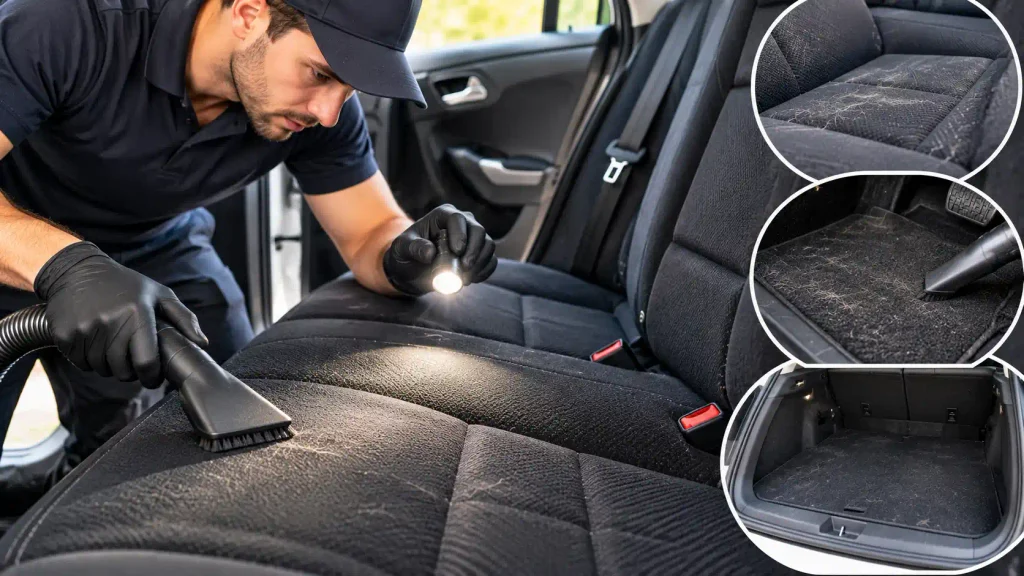
Once the visible hair has been removed, inspect the seats, carpets, floor mats, and cargo area under good lighting.
Use the vacuum to collect remaining loose strands. Treat isolated patches with a suitable tool, but stop if the upholstery begins to fuzz, pill, stretch, or show signs of damage.
Finish by checking accessible corners, seat edges, and the areas around floor mats. Empty the vacuum collection container according to its instructions.
If pet hair remains tightly embedded despite careful cleaning, a specialized removal tool or professional detailing may be necessary.
How to Remove Pet Hair From Different Car Surfaces
Different automotive materials require different pet hair removal methods. A rubber brush that works on durable carpet may be unsuitable for leather, suede-like upholstery, or other delicate surfaces.
How to Get Dog Hair Out of Cloth Car Seats
Cloth car seats can hold dog hair tightly between their fibers, especially when a dog regularly rides in the same seat.
Start by vacuuming the seat to remove loose fur and debris. Choose a rubber pet hair tool designed for automotive fabric, test it in a hidden area, and gently brush a small section at a time.
Gather the loosened hair and vacuum it away using an upholstery attachment. Use a crevice tool around accessible seat seams and cushion edges.
For stubborn hair, a lightly dampened rubber glove may help if the upholstery care instructions permit it.
Avoid metal brushes, sharp tools, and excessive moisture because these can damage the fabric or cause problems with the padding underneath.
How to Get Dog Hair Out of Car Carpet
Car carpet can be more challenging than seat fabric because strands may become trapped deep within the pile.
Vacuum the carpet to remove loose hair and debris. Then use a compatible rubber pet hair brush or rubber squeegee to bring embedded strands toward the surface.
Gather the loosened hair and vacuum it before proceeding to another section. Pay extra attention to the footwells, carpet beside the seat rails, and rear cargo area.
If the hair remains embedded, repeat the process gently rather than increasing the pressure. Avoid sharp tools and abrasive brushes that could damage the carpet fibers.
How to Remove Cat Hair From a Car
Cat hair can accumulate on seat cushions, carpets, door panels, and cargo area upholstery. Fine or short strands may be especially difficult to see on certain fabric colors.
Begin with a vacuum and upholstery attachment. If hair remains embedded, use a surface-appropriate rubber pet hair tool.
For light surface hair, a lint roller may help on compatible materials. Replace the adhesive sheet when it becomes covered with hair and loses its effectiveness.
Use a soft detailing brush or microfiber cloth on suitable hard surfaces. Avoid rubbing hair into textured plastic or pushing it into air vents.
The same general principles apply to both cat hair and dog hair. The most important consideration is the surface holding the fur.
How to Remove Pet Hair From Leather Car Seats
Leather seats usually allow surface hair to be removed more easily than fabric, but they still require careful handling.
- Vacuum loose hair using a suitable soft attachment.
- Wipe the seat gently with a clean, soft microfiber cloth.
- Carefully vacuum along the stitching and seat edges.
- Use gentle wiping to collect remaining strands.
- Apply a compatible leather cleaner only if the surface requires additional cleaning.
Do not use stiff rubber brushes, abrasive pads, pumice stones, or aggressive scraping tools on leather. Avoid adhesive products that could leave residue or affect the finish.
Perforated leather requires extra care because strands can collect in the small holes. Do not push tools or liquids into the perforations.
How to Remove Pet Hair From Alcantara and Delicate Upholstery
Alcantara and similar suede-like automotive materials require a more cautious approach than ordinary woven fabric.
Start with a suitable vacuum attachment, using gentle suction and avoiding excessive pressure. Follow the vehicle manufacturer’s and material manufacturer’s cleaning instructions before introducing additional tools.
Do not automatically assume that rubber squeegees, damp gloves, stiff brushes, or adhesive rollers are safe for these materials. Some tools can affect the surface texture or leave visible marks.
If hair is deeply embedded, use only a removal method specifically permitted for that material. When the appropriate technique is unclear, professional interior detailing is safer than aggressive DIY treatment.
How to Get Pet Hair Out of Car Seat Seams
Seat seams and stitching are easy to overlook during routine cleaning.
Start with a narrow vacuum attachment to collect loose hair from the seam and surrounding fabric. If strands remain on a compatible textile surface, use a soft brush to loosen them gently.
Keep the vacuum nearby to collect the released hair, but do not press hard against the stitching. Avoid pulling tangled strands out by force because they may be caught in the seam.
If hair is wrapped around stitching or trapped beneath seat components, do not use sharp tools to cut or pull it free.
How to Remove Pet Hair From the Trunk and Cargo Area
The trunk or cargo area can accumulate significant amounts of fur when your pet travels there regularly.
Remove removable liners and cargo mats first. Vacuum the exposed carpet, then use a suitable rubber pet hair tool to release embedded hair from compatible fibers.
Clean the edges, corners, and areas around cargo storage compartments. Inspect removable liners separately because fur may collect on both the upper and lower surfaces.
Ensure that cleaned liners are completely dry and properly positioned before reinstalling them.
Common Pet Hair Removal Mistakes to Avoid
Some cleaning methods seem convenient but can damage automotive materials or make pet hair more difficult to remove. Choosing the right approach helps protect the interior while improving cleaning results.
Relying on Vacuuming Alone
Vacuuming is important, but it may not release hair trapped tightly within fabric and carpet fibers.
Use a suitable loosening tool when necessary, then vacuum the released hair. Repeatedly running the same vacuum nozzle over embedded fur without changing the method may produce limited improvement.
Using Too Much Water
Excess moisture can soak into seat padding and carpet backing. Wet hair may also become harder to gather cleanly.
Use a barely damp rubber glove only when suitable for the material, and avoid soaking the interior. Follow the upholstery care instructions if a surface becomes wet and allow it to dry thoroughly.
Scrubbing Too Aggressively
Hard brushing can distort upholstery fibers, create fuzzing, or damage delicate finishes.
Apply light pressure, work in small sections, and stop if the surface begins to change. A more aggressive tool is not necessarily more effective.
Using Household Products Without Checking Compatibility
Not every household cleaning product is suitable for automotive upholstery.
Avoid applying fabric softener mixtures, detergents, solvents, or other chemicals simply because they are recommended for general household cleaning. They may leave residue or damage incompatible materials.
Choose a product designed for the surface and follow its instructions.
Using Sticky Tape on Every Surface
Adhesive rollers can remove loose hair from some compatible materials, but they are not suitable for every automotive surface.
Avoid aggressive adhesive products on delicate upholstery, peeling surfaces, or finishes where residue may be difficult to remove.
Forgetting Areas Beneath and Around the Seats
Removing hair from visible seating surfaces is only part of the job.
Hair can remain under accessible seat edges, around seat rails, beside the center console, and beneath removable floor mats. Inspect accessible areas without interfering with wiring or moving seat components unsafely.
How to Prevent Pet Hair From Building Up Inside Your Car
Removing embedded pet hair takes time, so prevention is an important part of maintaining a clean car interior. A few regular habits can help reduce the amount of fur that accumulates in seats, carpets, and the cargo area.
Use a Suitable Pet Seat Cover or Cargo Liner
A removable, washable pet cover or cargo liner can help catch loose fur before it reaches the underlying upholstery and carpet.
Choose a cover designed for the vehicle and intended seating position. It must not interfere with seat-mounted airbags, seat belt operation, or other safety equipment. Follow the vehicle manufacturer’s guidance about compatible covers.
Remove and clean the cover regularly so that accumulated hair does not spill back into the interior.
Groom Your Pet Before Traveling
Brushing your pet before a journey can help collect loose hair before it reaches the seats and carpet.
The amount of hair released varies according to your pet’s coat and shedding pattern. Regular grooming can reduce the amount transferred into the car, although it will not prevent all shedding.
Keep a Pet Travel Blanket Clean
A washable pet travel blanket can provide an additional barrier against hair on compatible seating or cargo surfaces.
Choose a blanket that can be positioned securely without interfering with restraints, visibility, or vehicle controls. Wash it according to its care instructions.
Vacuum the Interior Regularly
Do not wait until pet hair has accumulated heavily before removing it.
Vacuum the areas where your pet usually sits and inspect the surrounding carpet after journeys. Regular maintenance helps remove loose hair before it becomes deeply embedded.
Follow a Consistent Cleaning Routine
A simple routine makes pet hair easier to manage:
- Remove visible clumps of fur after journeys when practical.
- Vacuum seats and carpets during regular interior cleaning.
- Inspect seat seams, floor mats, and the cargo area periodically.
- Clean removable pet covers before hair accumulates heavily.
Small, consistent cleaning sessions can reduce the need for intensive pet hair removal later.
How to Deal With Pet Odor After Removing Hair
Removing pet hair does not necessarily eliminate pet odors. Persistent smells may come from saliva, urine, wet fur, or contamination that has penetrated the upholstery or seat padding.
Start by removing loose hair and debris. Identify any stained or contaminated areas, then clean them with a product compatible with the affected material.
For fabric upholstery, use an appropriate automotive upholstery cleaner according to its instructions. For leather, vinyl, and specialty materials, choose products approved for the specific surface.
Avoid saturating seats or mixing cleaning products. Allow cleaned areas to dry thoroughly and investigate recurring odors rather than repeatedly applying air freshener to cover the smell.
When Should You Hire a Professional Car Detailer?
DIY pet hair removal is suitable for many routine cleaning situations, but some interiors require specialized equipment or experience.
Consider professional interior detailing when:
- Pet hair remains deeply embedded after careful brushing and vacuuming.
- Large areas of upholstery or carpet are covered in compacted fur.
- Delicate materials require specialized handling.
- Hair is trapped in inaccessible areas around seat mechanisms or other components.
- Pet urine or other contamination has penetrated the padding and caused persistent odors.
A professional detailer can assess the surface, choose an appropriate removal tool, and determine whether additional upholstery cleaning is necessary.
Steam cleaning or wet extraction is not automatically the right solution for embedded pet hair. The appropriate method depends on the material and the type of contamination.
Frequently Asked Questions About Removing Pet Hair From a Car
What Is the Best Way to Get Pet Hair Out of a Car?
The best general method for compatible fabric and carpet is to loosen embedded hair with a rubber pet hair brush or another suitable tool, gather it into clumps, and vacuum it away. Use a gentle, surface-specific approach for leather and delicate upholstery.
How Do You Get Dog Hair Out of Car Carpet Without Damaging It?
Vacuum loose hair first, then gently brush the carpet with a compatible rubber pet hair tool. Collect the loosened hair and vacuum again. Avoid metal brushes, sharp tools, and excessive pressure that could damage the carpet fibers.
Can You Use a Rubber Glove to Remove Pet Hair From Car Seats?
Yes, a clean rubber glove can help collect pet hair from suitable fabric seats. Lightly dampen it only if the upholstery care instructions permit it and use gentle strokes. Test the method first and avoid excessive moisture or aggressive rubbing.
How Do You Remove Pet Hair From Car Seats Without a Vacuum?
A rubber pet hair brush or suitable rubber glove can collect loose hair from compatible fabric upholstery. A lint roller may help with remaining surface hair. However, a vacuum is useful for collecting fine strands and hair released from seams and crevices.
How Do You Remove Pet Hair From Leather Car Seats?
Use a soft microfiber cloth and a suitable vacuum attachment to remove loose hair. Pay attention to stitching and perforations, and use a compatible leather cleaner if needed. Avoid abrasive brushes, aggressive adhesive products, and tools that could scratch the finish.
Why Does Pet Hair Keep Coming Back After Vacuuming?
A vacuum may remove loose hair while leaving strands trapped within the fabric or carpet. Gently loosen the remaining hair with a suitable tool and vacuum the area again. Regular cleaning and a compatible pet cover can help manage future buildup.
Can a Lint Roller Remove Embedded Dog Hair From Car Seats?
A lint roller works best on loose surface hair. It may not remove deeply embedded strands from textured upholstery or carpet. Use an appropriate pet hair removal tool for deeper hair and reserve the lint roller for compatible surfaces.
How Do You Get Pet Hair Out of Car Vents?
Switch off the vehicle and use a soft detailing brush to lift accessible surface hair gently. A suitable vacuum attachment can collect loosened strands. Avoid pushing tools deep inside the vents, spraying liquid into the openings, or forcing hair farther into the ventilation system.
How Often Should You Remove Pet Hair From Your Car?
The frequency depends on how often your pet travels with you and how much it sheds. Remove visible hair after journeys when practical, and vacuum the main seating and cargo areas during regular interior cleaning. More frequent maintenance helps prevent heavy accumulation.
Does Removing Pet Hair Also Remove the Smell?
Not necessarily. Hair removal takes care of loose fur, but odors may remain if urine, saliva, dirt, or moisture has contaminated the upholstery or padding. Identify the source and use a cleaning method compatible with the affected material.
Final Thoughts
Learning how to get pet hair out of your car makes routine interior detailing easier and helps maintain clean seats, carpets, floor mats, and cargo areas.
The key is to choose the right tool for the material, loosen embedded hair gently, vacuum thoroughly, and pay attention to seams and other overlooked areas. Avoid excessive moisture and aggressive scrubbing, especially on leather and delicate upholstery.
With regular vacuuming, suitable pet covers, and consistent cleaning, you can keep your car interior cleaner and more manageable even when your dog or cat travels with you frequently.