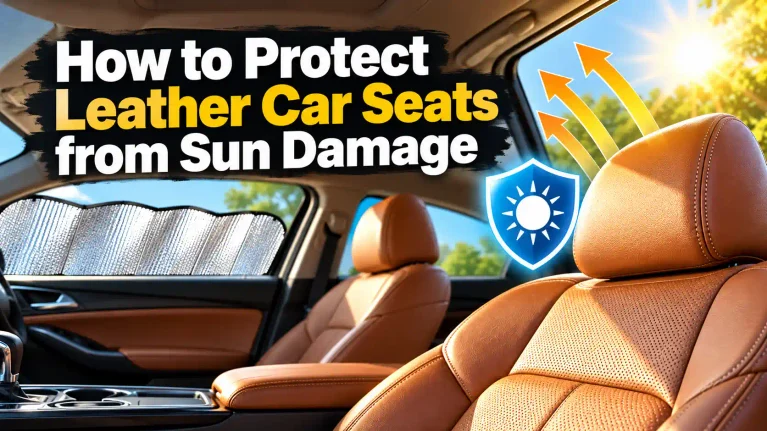
Leather car seats can fade, discolor, and dry out with prolonged exposure to sunlight and heat. The most effective protection is to reduce the sunlight reaching the seats, then clean and maintain the upholstery according to your vehicle manufacturer’s instructions.
Start with a windshield sunshade and shaded parking. If the car regularly sits outside, consider removable window shades or professionally installed window film, subject to local laws. A leather protectant may be useful, but it should supplement those physical barriers rather than replace them.
What Sun and Heat Can Do to Leather Seats
Sunlight can gradually change the appearance of leather upholstery and its finish. Depending on the material and its existing condition, you may notice faded color, uneven patches, stiffness, or cracking. High temperatures can also make the seats uncomfortable to touch and may accelerate deterioration of aging materials.
Damage often appears first on the upper seatbacks, headrests, and other areas that receive direct light through the windows. A driver’s seat can also show more wear because sunlight combines with friction from getting in and out.
Not every mark is caused by the sun. Shiny patches may come from body oils or product buildup, while cracks along a seat bolster can result from repeated abrasion. Identifying the likely cause helps you choose between prevention, cleaning, and repair.
Use a Windshield Sunshade When Parked
A windshield sunshade is one of the simplest ways to limit direct sunlight entering a parked vehicle. It is especially useful when you park in an open lot for work or leave the car outside during the day.
Choose a shade that covers as much of the windshield as practical without interfering with the rearview mirror or damaging nearby trim. Vehicle-specific shades may provide a closer fit, while a universal folding shade can be easier to find and store.
Install the shade only after parking, and remove it completely before driving. Keep it dry and reasonably clean so it does not transfer dirt to the interior.
A windshield shade will not block all the light entering through side and rear windows. If those windows expose the seatbacks for long periods, combine the windshield shade with appropriate side-window protection or a change in parking position.
Park in Shade or Change the Car’s Orientation
A garage or covered parking space provides more consistent protection than a sunshade alone. When covered parking is unavailable, look for a building, carport, or tree that will shade the vehicle during the hours it is parked.
Remember that shade moves. A spot that is shaded in the morning may be exposed by the afternoon, so choose based on when the car will spend the most time parked. Trees can also drop sap or debris, which may make them less convenient than a covered structure.
When you have a choice of spaces, changing the vehicle’s orientation can reduce direct exposure on the most vulnerable seats. For example, if the driver’s side usually faces the afternoon sun, parking in the opposite direction may help. Window direction and surrounding shade matter more than a single orientation rule.
Safety reminder: A shaded vehicle can still become dangerously hot. Never leave a child or pet unattended in a parked car, even with a sunshade or the windows partially open.
Consider Side-Window Shades or Window Film
Side windows can let sunlight reach seat bolsters and upper seatbacks even when a windshield shade is in place. The right solution depends on whether you need protection only while parked or also want to reduce exposure while driving.
Removable Window Shades
Removable shades are useful for a parked car, particularly for rear windows. Choose shades that fit without putting pressure on seals or trim, and follow the product instructions for attachment and removal.
Do not drive with a shade that obstructs your view or interferes with vehicle controls. Also avoid placing accessories where they could interfere with airbags, including curtain airbags along the roofline. Check the owner’s manual if you are unsure about placement.
Automotive Window Film
Automotive window film can provide continuous coverage without needing to be installed and removed each trip. Film performance varies, so ask the installer for documentation showing the product’s ultraviolet-light rejection and visible-light transmission. Darkness alone does not establish how much ultraviolet light a film blocks.
Window tint laws vary by state and by window. Before buying, check the rules where the vehicle is registered and discuss legal film options with a reputable installer. Restrictions can be especially important for the windshield and front side windows.
Film is a larger investment than a removable shade. If your car is usually garaged or rarely sits in direct sun, a windshield shade and thoughtful parking may be sufficient.
Clean Leather Before Applying a Protectant
Dirt and body oils can accumulate on seats and make it harder to assess their condition. Clean the upholstery periodically using a method approved by the vehicle manufacturer. You do not need to buy a full detailing kit if the owner’s manual recommends a simple cleaning method.
What You May Need
- Clean, soft microfiber cloths
- A vacuum with a soft brush attachment
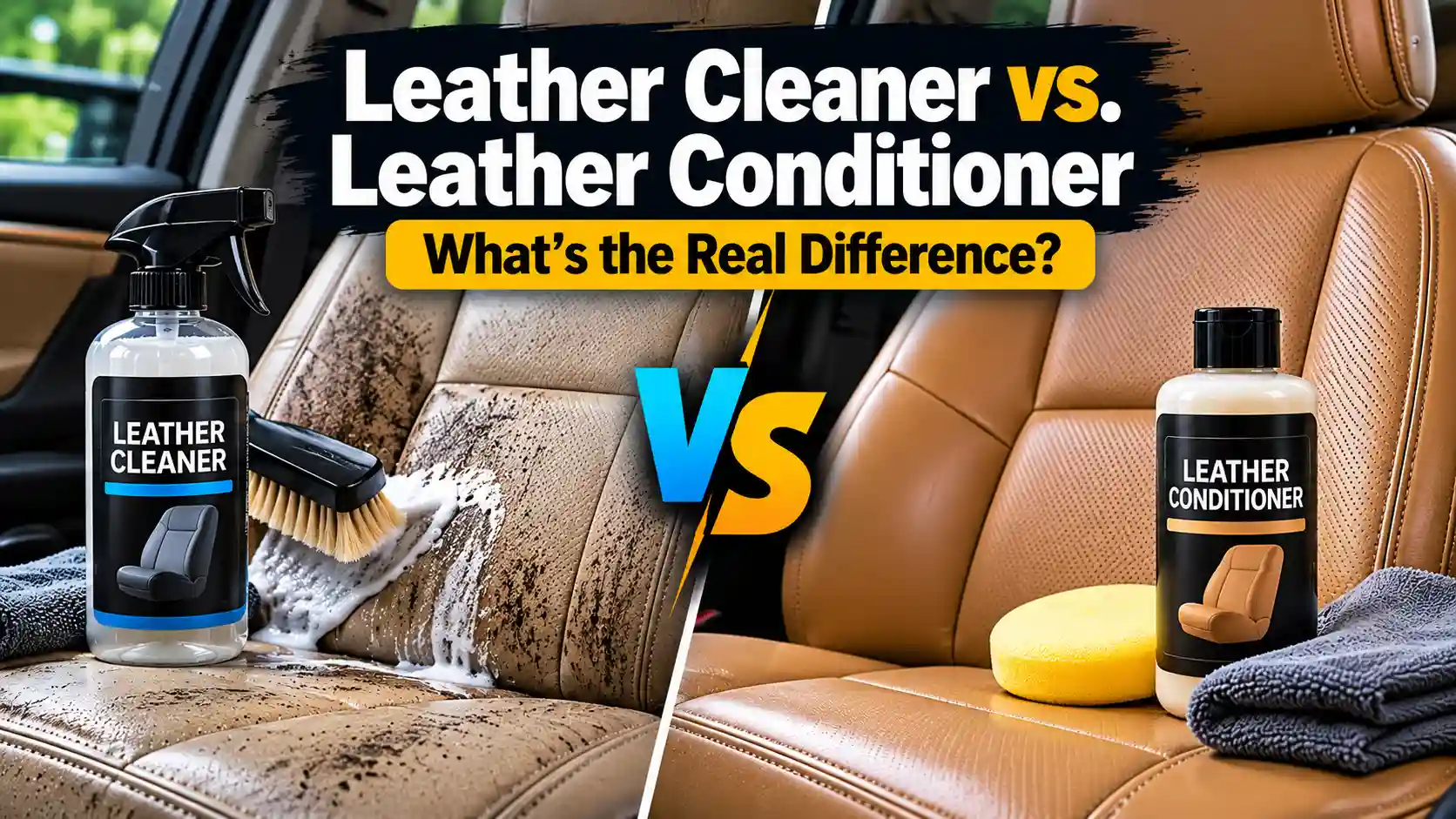
- A leather cleaner compatible with your upholstery, if recommended
- A separate leather protectant or conditioner, only if appropriate for the material
Check the owner’s manual first. Automotive upholstery may be coated leather, uncoated leather, synthetic leather, suede-like material, or a combination. A product suitable for one surface may leave residue or damage another.
How to Clean the Seats
- Work in a cool, shaded area. Let hot seats cool before applying a cleaner. This gives you more control over the product and makes it easier to inspect the surface.
- Vacuum loose debris. Use a soft attachment and work gently around seams and creases. Avoid dragging a hard vacuum nozzle across the upholstery.
- Test the cleaner. Follow the product directions and test it on a small, inconspicuous area first. Allow the area to dry and check for discoloration or an unwanted change in texture.
- Clean a small section at a time. Apply cleaner to the cloth when directed, rather than saturating the seat. Wipe gently without scrubbing aggressively.
- Remove residue. Use a separate cloth as instructed by the cleaner manufacturer. Keep moisture away from openings and avoid soaking perforations, seams, or electrical controls.
- Let the seats dry. Allow the upholstery to dry before applying another product or covering the seats.
Avoid household solvents, bleach, abrasive pads, and improvised mixtures such as vinegar and baking soda. Steam cleaning and excessive water can also be risky, particularly around perforated upholstery, seams, and seat electronics. If the vehicle manufacturer specifies a different process, follow that instead.
Choose a Leather Protectant Carefully
A protectant or conditioner may help maintain the appearance or feel of compatible upholstery, but it cannot guarantee that leather will not fade or crack. The most dependable first step is still limiting direct sun exposure.
Many automotive leather seats have a protective surface finish. Applying a heavy conditioner does not necessarily mean the leather underneath is receiving more benefit, and excess product can leave the seat slippery, glossy, or sticky. Some manufacturers recommend specific products or advise against certain treatments, so check the manual before purchasing.
If you choose a product, look for one that explicitly lists your upholstery type as compatible. Apply it sparingly to a clean seat, test an inconspicuous area first, and follow the label’s drying and removal instructions. Do not assume a leather product is suitable for suede, perforated inserts, synthetic panels, or heated and ventilated seats.
A product labeled for UV protection may be worth considering if it is compatible with the seats, but check what the manufacturer actually claims. Treat it as an additional precaution, not a substitute for a sunshade or covered parking.
Are Seat Covers a Good Option?
Seat covers can shield upholstery from direct light as well as everyday friction. They are useful when a vehicle spends long periods outside or when you want to protect seats from pets and frequent passengers.
Fit matters. A poorly fitting cover can bunch up, trap grit against the seat, or interfere with controls. If the seats contain side airbags, use only covers whose manufacturer confirms compatibility with your specific vehicle and seating position. Follow both the cover instructions and the vehicle manufacturer’s guidance.
Remove and clean covers periodically according to their instructions. Make sure the seats and covers are dry before reinstalling them, and avoid trapping damp material against the upholstery.
If sun exposure is your only concern, a windshield shade may be simpler and less expensive. Covers make more sense when you also need protection from wear.
How Often Should You Clean and Protect Leather Seats?
There is no single schedule that suits every car. Follow the vehicle and product instructions, then adjust your routine based on how often the seats are used and how quickly they become dirty.
As a practical approach, inspect the seats when you wash the car. Remove loose debris when you see it, clean spills promptly using the recommended method, and apply a compatible protectant only as directed. Frequent product application is not automatically better and can create buildup.
Pay particular attention to the driver’s seat bolster, headrests, and upper seatbacks. These areas can show wear or uneven color before the rest of the upholstery.
What to Do If Leather Seats Are Already Faded or Cracked
A cleaner can remove surface dirt, and a compatible conditioner may improve the feel of some upholstery. Neither reliably restores missing color or repairs a split. If a faded area remains after gentle cleaning, stop scrubbing rather than trying progressively stronger chemicals.
For extensive fading, exposed material, or cracking, consult an automotive upholstery or leather-repair specialist. Depending on the condition and construction of the seat, options may include refinishing, a panel repair, or replacement. Ask the specialist to inspect the seat before promising a particular result or color match.
Once repaired, continue using sun protection. A refinished surface can still be exposed to the same light and heat that affected the original upholstery.
Common Questions About Sun Protection for Leather Seats
Does leather conditioner prevent sun damage?
Leather conditioner alone should not be relied on to prevent sun damage. A compatible product may help maintain certain upholstery, but physical barriers and shaded parking reduce the amount of direct sunlight reaching the seats.
Do tinted windows eliminate the need for a sunshade?
Tinted windows do not necessarily eliminate the need for a sunshade. Film characteristics vary, and a windshield shade can cover an additional area while the vehicle is parked. Check the film’s documented properties rather than judging protection by its darkness.
Can I use the same product on every part of the seat?
Not necessarily. A seat may combine leather with synthetic material, perforated panels, or suede-like inserts. Check the owner’s manual and product label for each material, and avoid treating an uncertain surface until you have confirmed compatibility.
The Best Way to Protect Your Seats
For most car owners, the practical starting point is a well-fitting windshield shade, shaded parking when available, and gentle cleaning with products approved for the upholstery. Add side-window protection or a vehicle-compatible seat cover if those measures do not address the areas receiving the most sun.
Inspect the seats regularly and address fading or cracks early. Preventing prolonged exposure is generally a simpler way to preserve the upholstery than trying to restore its original appearance later.