Cleaning cloth car seats and carpets properly takes more than wiping the surface with a damp cloth. Dirt, crumbs, oils, spills, and odors can work their way deep into the fabric, while excess moisture can leave behind water stains or a musty smell. The key is to clean the material thoroughly without soaking the padding underneath.
Start by vacuuming loose debris, then treat visible stains according to what caused them. Apply a fabric-safe cleaner lightly, work it into the fibers with a soft upholstery brush, and extract or blot the dirty moisture instead of leaving it to dry in place. Finally, dry the cleaned areas as quickly as possible.
This guide explains each step, including how to handle grease, coffee, soda, and protein-based stains, how much cleaning solution to use, why extraction matters, and how to prevent lingering odors and mildew after cleaning.
Why Do Cloth Seats and Carpets Need a Different Cleaning Approach Than Hard Surfaces?
Cloth seats and carpets need a different cleaning approach because their woven fibers absorb dirt, oils, and moisture deep below the surface rather than leaving it sitting on top the way a hard, non-porous surface would. This means a simple wipe with a damp cloth only addresses what’s visible at the surface, leaving embedded grime, oils, and odor-causing bacteria completely untouched within the fabric itself.
Because moisture also gets absorbed deep into the padding beneath cloth upholstery, the cleaning process has to account for both getting the fabric clean and getting it dry again quickly, a two-part challenge that hard surfaces simply don’t present.
What Is the Correct Step-by-Step Process for Cleaning Cloth Seats and Carpets?
The correct way to clean cloth car seats and carpets is to follow five steps in order: vacuum loose debris, pre-treat stains, apply and agitate a fabric-safe cleaner, extract the dirty moisture, and dry the fabric thoroughly. Working in this order removes surface debris first, gives stains targeted treatment, and limits the amount of moisture left inside the upholstery.
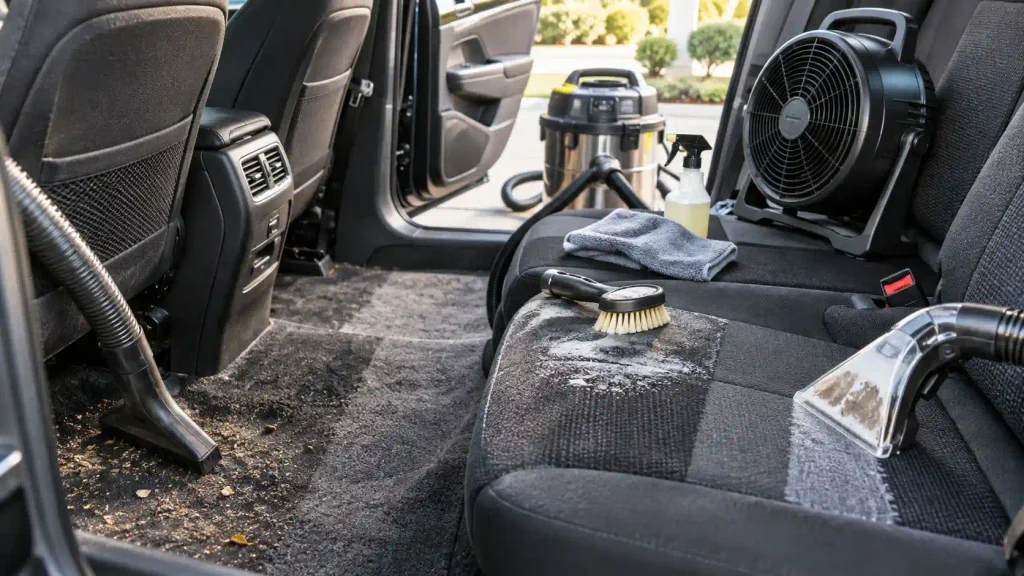
Step 1: Vacuum the Seats and Carpet Thoroughly
Start by vacuuming the entire area before applying any cleaning solution. Remove loose dirt, crumbs, pet hair, and other debris from the seats, carpet, seams, and floor edges.
Vacuuming first prevents loose debris from mixing with the cleaning solution and turning into a muddy residue. Use a narrow crevice attachment around seat seams and other areas where dirt tends to collect.
Step 2: Pre-Treat Visible Stains
Treat noticeable stains before cleaning the surrounding fabric. The right treatment depends on what caused the stain, so grease, coffee, soda, and protein-based stains may require different approaches.
Apply the appropriate stain treatment to the affected area and allow it to work for the recommended amount of time. Avoid soaking the fabric, especially around areas where moisture can reach the padding underneath.
Step 3: Apply and Agitate a Fabric-Safe Cleaner
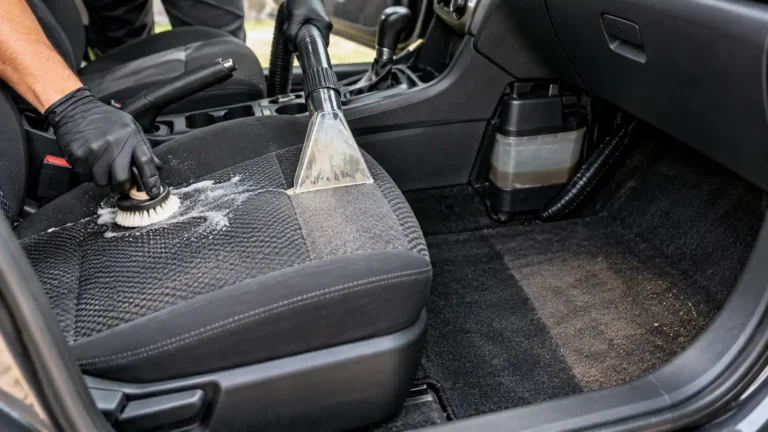
Work on one small section at a time. Lightly spray a cleaner formulated for automotive upholstery onto the fabric, then gently work it into the fibers with a soft-bristled upholstery brush.
Use controlled circular motions to loosen embedded dirt without aggressively scrubbing the fabric. Applying too much solution can push moisture deeper into the padding and make drying more difficult.
Step 4: Extract or Blot the Dirty Moisture
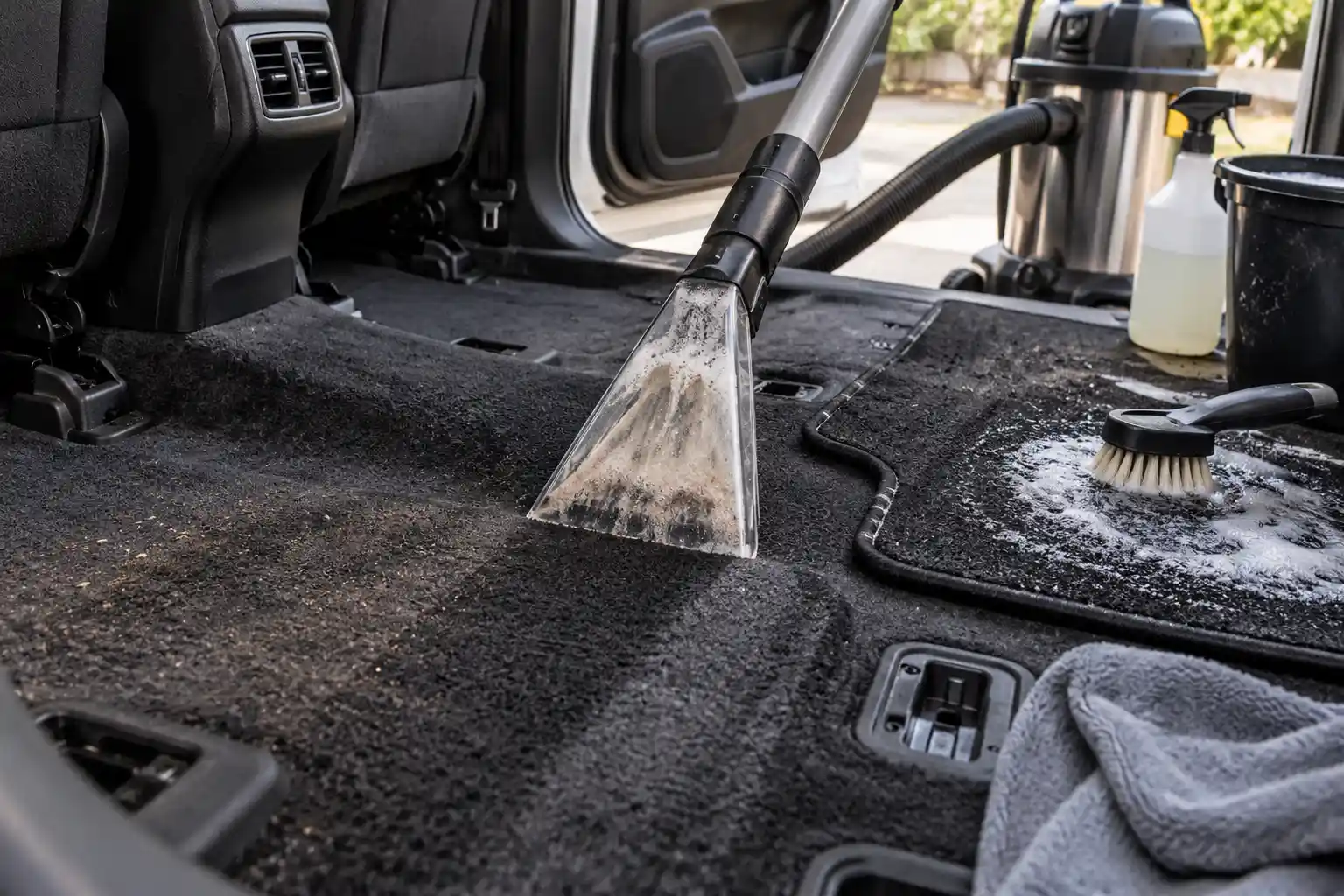
After agitating the cleaner, remove the loosened dirt and moisture instead of leaving it inside the fabric. A wet/dry vacuum or upholstery extractor is the preferred option for deeper cleaning, while a clean microfiber towel can be used for blotting.
Extraction helps remove both the dirty moisture and loosened debris from the upholstery. This is particularly useful when cleaning heavily soiled carpet or areas that have absorbed previous spills.
Step 5: Dry the Fabric as Quickly as Possible
Finish by drying the cleaned seats and carpet thoroughly. Open the vehicle’s doors or windows and use fans to increase airflow across the treated areas.
Avoid using more cleaning solution than necessary because excess moisture takes longer to evaporate. The fabric should be allowed to dry completely before the vehicle is returned to normal use.
How Much Cleaning Solution Should You Actually Use?
Less cleaning solution than you’d expect is the correct amount, since spraying too heavily and drenching the fabric is one of the most common mistakes in DIY interior cleaning. Applying a light, even mist across a small section at a time, rather than saturating the entire seat at once, gives the cleaner enough contact time to break down dirt without pushing excess moisture deep into the padding below.
Working in smaller sections also makes the extraction step far more manageable, since you’re never dealing with more wet fabric than you can dry within a reasonable window.
How Do You Remove Grease or Oil Stains From Cloth Seats?
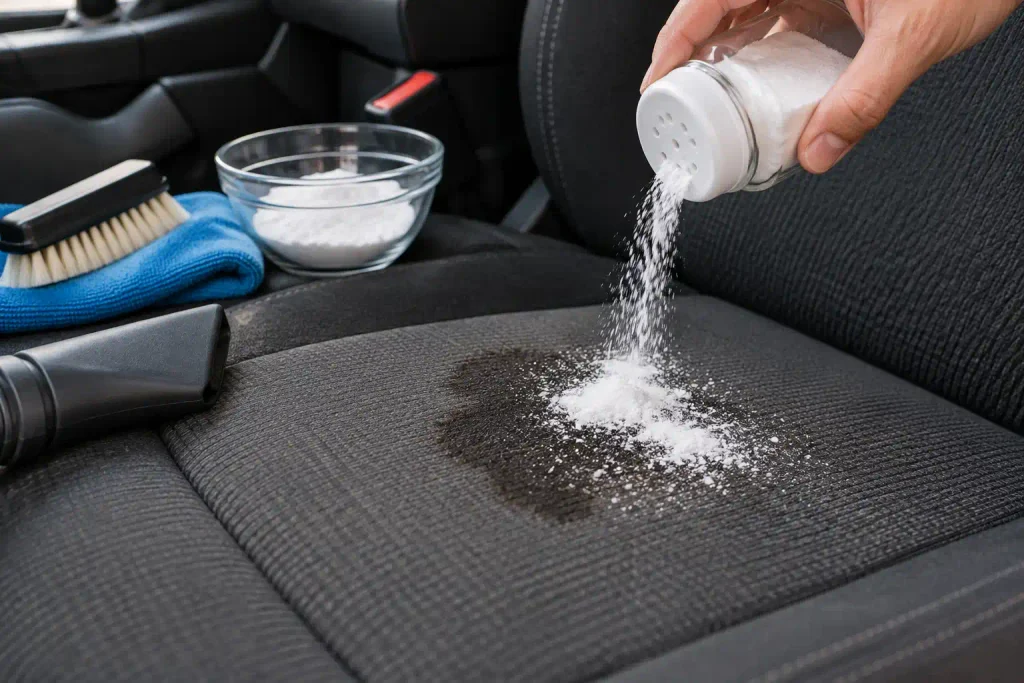
Grease and oil stains on cloth car seats are best treated with an absorption step before applying a liquid upholstery cleaner. Sprinkle baking soda directly over the affected area and let it sit for a short period so it can absorb some of the oily residue from the fabric. Once the absorption step is complete, vacuum the baking soda and loosened residue from the seat, then follow with a fabric-safe upholstery cleaner. Apply the cleaner according to its instructions and gently work it into the stained area with a soft upholstery brush before blotting or extracting the dirty moisture. Avoid immediately soaking a grease stain with liquid cleaner, because adding too much moisture before addressing the oily residue can spread the stain across a larger area instead of helping lift it from the fabric.
How Do You Treat Coffee, Soda, and Other Liquid Spills?
Fresh liquid spills like coffee or soda should be blotted immediately with a clean towel to absorb as much of the liquid as possible before it has a chance to set into the fibers. Following this immediate blotting with a spray-and-scrub pass using a fabric-safe cleaner addresses whatever residue remains once the bulk of the liquid has been absorbed.
If a spill has already dried before you had the chance to treat it, lightly rehydrating the stain with a small amount of water before applying your cleaner gives the treatment something to work with, since a fully dried stain won’t respond as well to a cleaner applied directly onto it.
How Do You Handle Protein-Based Stains Like Food, Vomit, or Blood?
Protein-based stains require an enzyme cleaner specifically designed to break down organic material, since a standard all-purpose fabric cleaner isn’t formulated to digest proteins the way an enzyme formula is. These stains often need to be re-treated more than once, since a single application may only partially break down the stain on the first pass.
Using an enzyme cleaner also plays a direct role in odor elimination for these specific stain types, since the lingering smell from a protein-based stain typically comes from bacteria feeding on the organic residue left behind, not just the visible stain itself.
Why Does Extraction Matter More Than Just Wiping the Fabric Clean?
Extraction matters because it physically pulls the dirty moisture and loosened dirt back out of the fabric, rather than leaving that dirty water to sit and reabsorb into the padding as it dries on its own. A wet/dry vacuum, or a dedicated carpet and upholstery extractor, is significantly more effective at this than blotting with a towel alone, particularly for deeper, more heavily soiled carpet sections.
A hot-water extractor takes this a step further by flushing a cleaning solution through the material and then vacuuming the dirty water back out in the same motion, pulling up embedded grime and old spills that a simple spray-and-blot approach never fully reaches.
Why Is Drying Speed So Important After Cleaning?
Drying speed is important because residual moisture left in cloth upholstery creates the exact conditions microbial growth needs, with studies showing this growth can begin within just 24 to 48 hours in damp fabric. This is the direct cause of the musty, mildew-like smell that sometimes develops after an otherwise successful cleaning session, and it’s entirely preventable by prioritizing fast drying.
Opening all the doors after cleaning, running fans directed at the treated areas, and parking in a sunny, well-ventilated spot all speed up the drying process meaningfully. Avoiding oversaturation in the first place, as covered in the amount-of-solution guidance above, also reduces how long the fabric needs to dry.
When Should You Consider Calling a Professional Instead of Cleaning at Home?
Calling a professional makes sense when odors persist despite a thorough at-home cleaning attempt, or when staining and contamination run deep enough that a consumer-grade spray bottle and brush genuinely can’t reach it. A shop-grade extractor delivers significantly more suction and cleaning solution pressure than home equipment typically can, and professional detailers also have access to specialized enzyme treatments and odor-neutralizing tools not commonly sold at retail.
A professional service is also worth considering after a serious spill involving bodily fluids or a large volume of liquid, since these situations often require deeper extraction than a home wet/dry vacuum can achieve, and getting the fabric fully dry without lingering moisture is critical to avoiding a mildew smell that becomes very difficult to remove once established.
What Tools and Supplies Should You Have on Hand Before Starting?
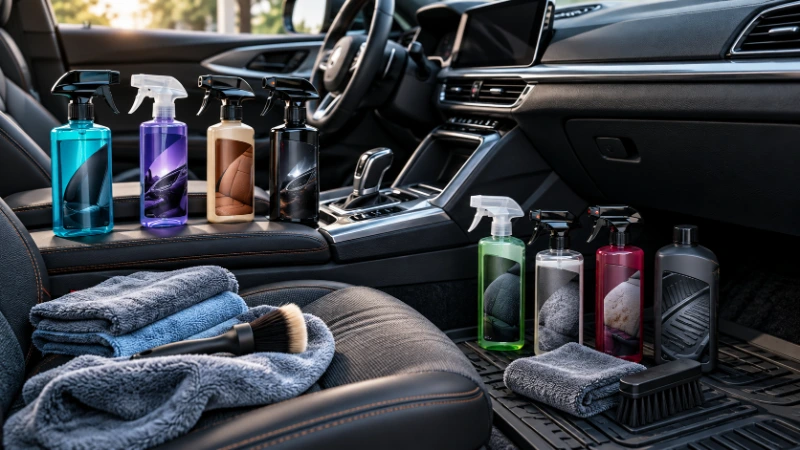
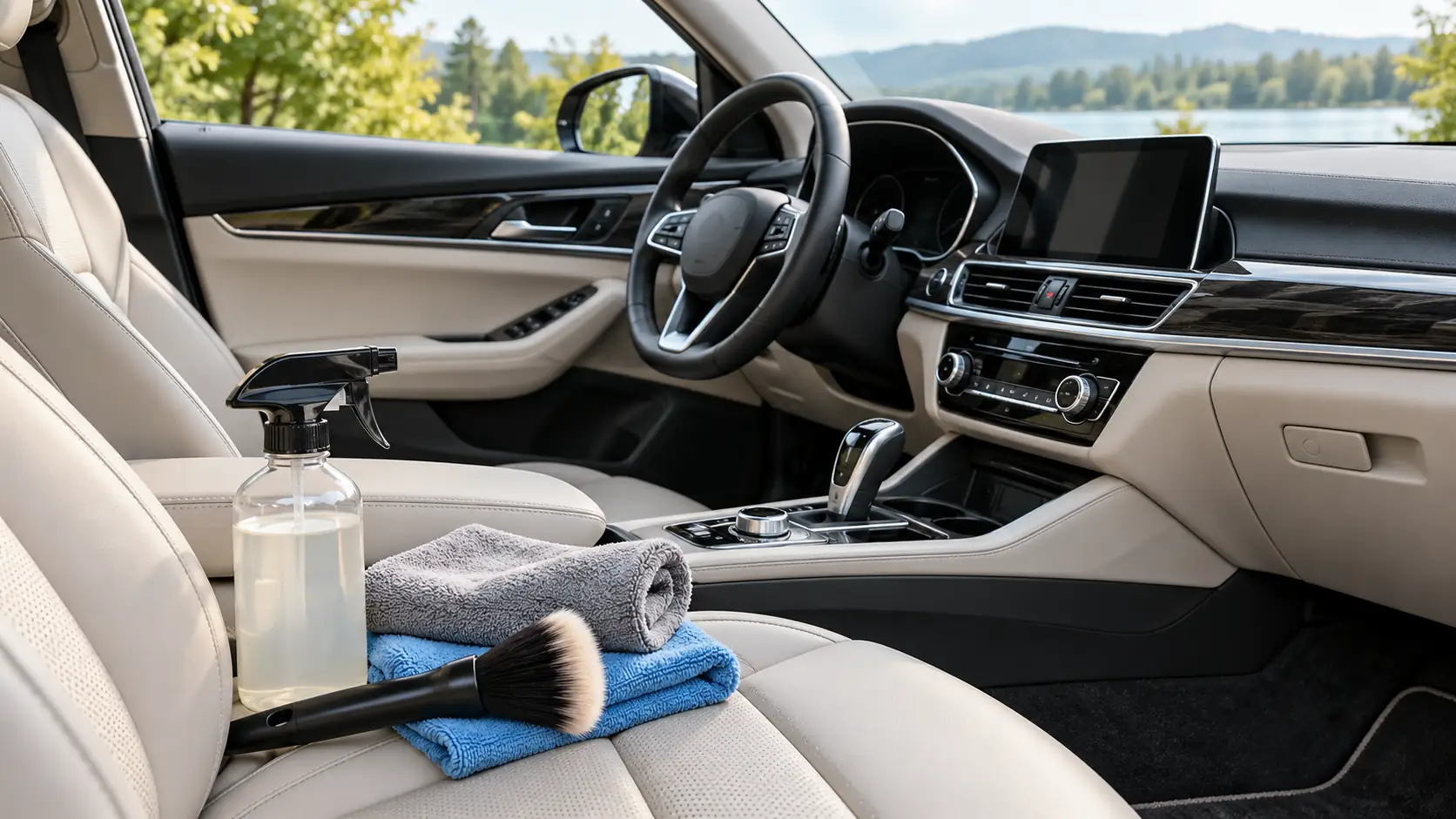
Having the right tools ready before you start makes the entire process faster and reduces the temptation to skip steps like extraction or proper drying. A soft-bristled upholstery brush, a supply of clean microfiber towels, a fabric-safe cleaner suited to your specific stain type, and either a wet/dry shop vacuum or a dedicated upholstery extractor cover the core of what’s needed for most cleaning sessions.
Keeping a small stock of baking soda on hand for grease absorption and an enzyme cleaner specifically for protein-based stains means you won’t need to pause a cleaning session partway through to run out and buy a specific product for the stain in front of you. A handheld vacuum with a narrow crevice attachment is also worth having, since it reaches into seat seams and carpet edges that a standard vacuum nozzle often misses entirely.
How Do You Prevent Stains and Odors From Building Up in the First Place?
Preventing stains and odors from accumulating starts with addressing spills and messes as close to the moment they happen as possible, since fresh stains and spills are dramatically easier to remove than ones that have had time to set and dry. Keeping a small cleaning kit in the car itself, rather than only at home, makes this immediate response realistic for families with children or anyone who regularly eats in the vehicle.
Regular vacuuming on a weekly basis, even without a visible stain to address, prevents the gradual buildup of dust, crumbs, and debris that eventually works its way deep into carpet fibers and becomes far more labor-intensive to remove. Using seat covers or floor mats in high-risk areas, such as the driver’s seat or the footwells during wet weather, also reduces how often a full deep clean becomes necessary in the first place.
conclusion
Clean cloth seats and carpets stay in better condition when you focus on regular maintenance rather than waiting for heavy staining or odors to develop. Vacuuming weekly removes loose dirt, crumbs, and debris before they become embedded in the fabric. Treating spills as soon as they happen also makes stain removal easier and reduces the chance of lingering odors.
When deep cleaning is needed, use a fabric-safe cleaner, work in small sections, extract as much dirty moisture as possible, and prioritize fast drying. Avoid saturating the upholstery, since excess moisture can reach the padding and create drying problems.
For persistent odors, deep staining, or heavy liquid contamination, professional cleaning may be more appropriate than repeated DIY attempts. A proper cleaning routine helps keep the interior cleaner while reducing the need for aggressive treatments.
Frequently Asked Questions
What household products are safe to use on cloth car seats?
A mild dish soap diluted in water can work for very light, fresh stains, though a dedicated automotive upholstery cleaner is generally safer and more effective for regular use. Avoiding harsh household chemicals like bleach or ammonia-based cleaners is important, since these can discolor or weaken cloth fibers over time.
How often should cloth car seats and carpets be deep cleaned?
Deep cleaning cloth seats and carpets every three to six months is a reasonable baseline for most vehicles, with more frequent cleaning needed for households with children, pets, or frequent food and drink consumption in the car. Vacuuming weekly between deep cleaning sessions helps prevent dirt from building up to the point where it becomes harder to remove.
Can cloth car seats be steam cleaned safely?
Yes, steam cleaning is generally safe for most cloth car seats and can be effective at killing bacteria and reaching deep into the fabric, though it’s important to avoid oversaturating the material and to prioritize fast drying afterward just as you would with a standard liquid cleaner. Checking your specific seat fabric’s care recommendations before steam cleaning is a reasonable precaution.
Why does a stain sometimes reappear after cleaning even though it looked gone?
A stain reappearing after cleaning, sometimes called wicking, happens when residual staining material deeper in the padding rises back up to the surface as the fabric dries. Blotting the area with a dry towel during the drying process, rather than letting it air dry completely undisturbed, can help catch and remove this residue before it fully resurfaces.
Is it safe to use a wet/dry shop vacuum instead of a dedicated upholstery extractor?
Yes, a wet/dry shop vacuum is a reasonable substitute for a dedicated extractor for most home cleaning needs, since its core function of pulling moisture and loosened dirt back out of the fabric works the same way. A dedicated extractor typically offers stronger suction and a built-in cleaning solution dispenser, which can improve results on more heavily soiled carpet sections specifically.