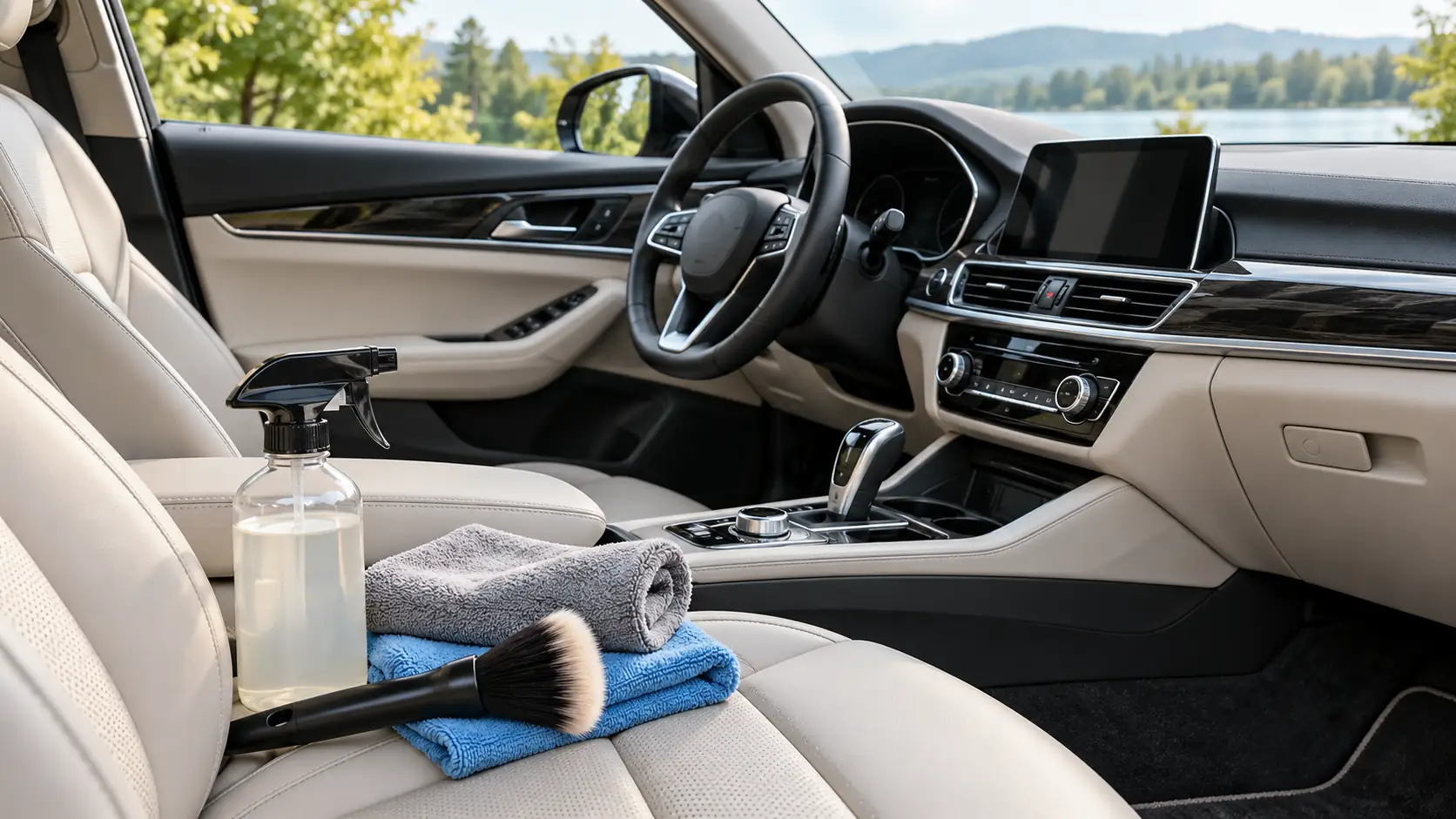
Deep cleaning car carpets and floor mats requires removing everything from the vehicle first, vacuuming thoroughly, treating visible stains individually before the broader cleaning pass, then using an extraction method to wash and pull moisture back out of the carpet fibers rather than leaving cleaning solution to dry on its own. Floor mats and carpet see more direct dirt, moisture, and wear than almost any other interior surface, tracking in everything from mud and road salt to spilled drinks and food debris over months of regular use.
A routine vacuum keeps carpet looking reasonably clean on the surface, but it doesn’t address the dirt, oils, and staining that work their way down into the carpet fibers over time, which is exactly what a proper deep clean is designed to reach. Understanding the full process, rather than just vacuuming more aggressively, is what actually restores carpet and mats to a genuinely clean state.
In this blog, we cover how to prepare the vehicle before deep cleaning, the correct vacuuming technique, how to treat stains before the main cleaning pass, the extraction cleaning process itself, and how to properly dry carpet and mats afterward to avoid new problems like mold or odor.
What Should You Do Before You Start Deep Cleaning?
Removing everything from the vehicle, including the floor mats themselves, trash, and any personal items sitting on or near the floor, gives you full, unobstructed access to the carpet and prevents dirt from simply being spread around rather than actually removed. Setting the floor mats aside for their own separate cleaning process, rather than trying to clean around them while they’re still in place, lets you treat both surfaces thoroughly without one interfering with the other.
Taking this extra step of full removal, rather than just working around what’s already in the car, is one of the more overlooked differences between a quick weekly vacuum and an actual deep clean, and it’s a meaningful part of why deep cleaning produces noticeably better results.
What’s the Correct Vacuuming Technique for a Deep Clean?
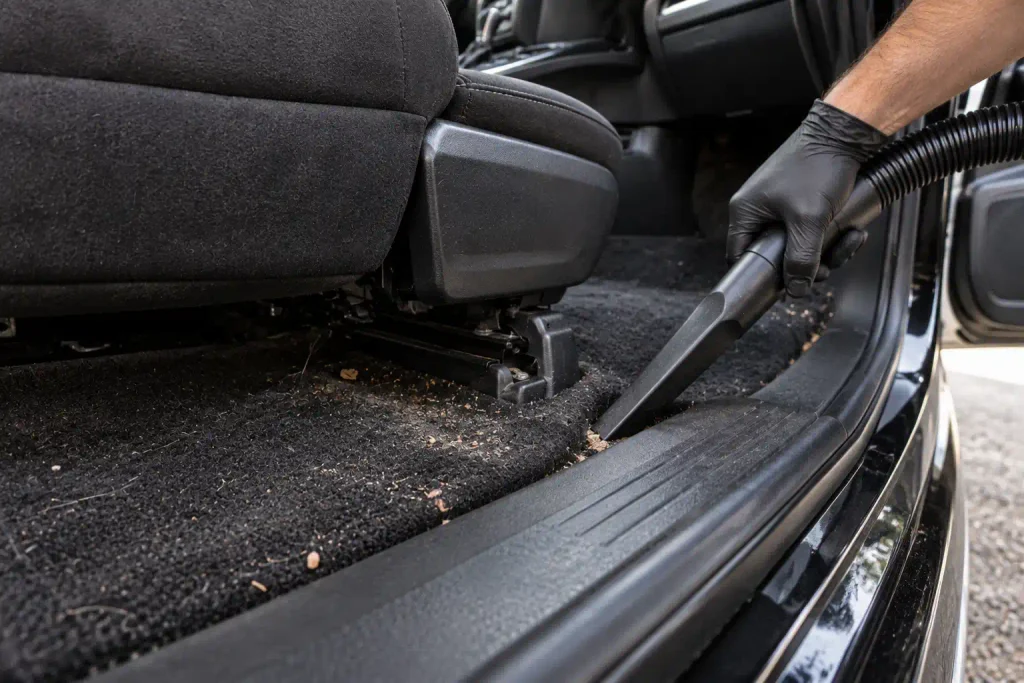
For a deep clean, vacuum slowly and methodically rather than making quick passes over the carpet. A narrow, brushless attachment gives you better access to seams, edges, and tight spaces where loose debris tends to collect.
Focus on these areas:
- Use a thin vacuum attachment to reach carpet edges and seams.
- Move the nozzle slowly across each section to give suction time to lift embedded dirt.
- Vacuum underneath the front seats where debris commonly accumulates.
- Follow the edges where the carpet meets the door sills.
- Check gaps and hard-to-reach areas that a wide nozzle may miss.
- Make additional passes over visibly dirty sections instead of relying on one quick pass.
How Do You Treat Visible Stains Before the Main Cleaning Pass?
Applying a carpet cleaner directly to any visible stains and letting it sit for several minutes before scrubbing with a brush or blotting with a microfiber towel gives the product time to actually break down the stain rather than trying to lift it immediately. A mixture of equal parts vinegar and water in a spray bottle offers a natural alternative, applied liberally to the stain and left to sit for ten to fifteen minutes before scrubbing, using vinegar’s mild acidity to help loosen ground-in dirt and residue.
Addressing stains individually before the broader extraction cleaning step matters because a single overall pass often isn’t concentrated enough to fully lift a stubborn, set-in stain, while spot-treating first gives that specific area extra attention before it’s cleaned again as part of the whole-carpet process.
How Does the Extraction Cleaning Process Work for Deep Cleaning Carpet?
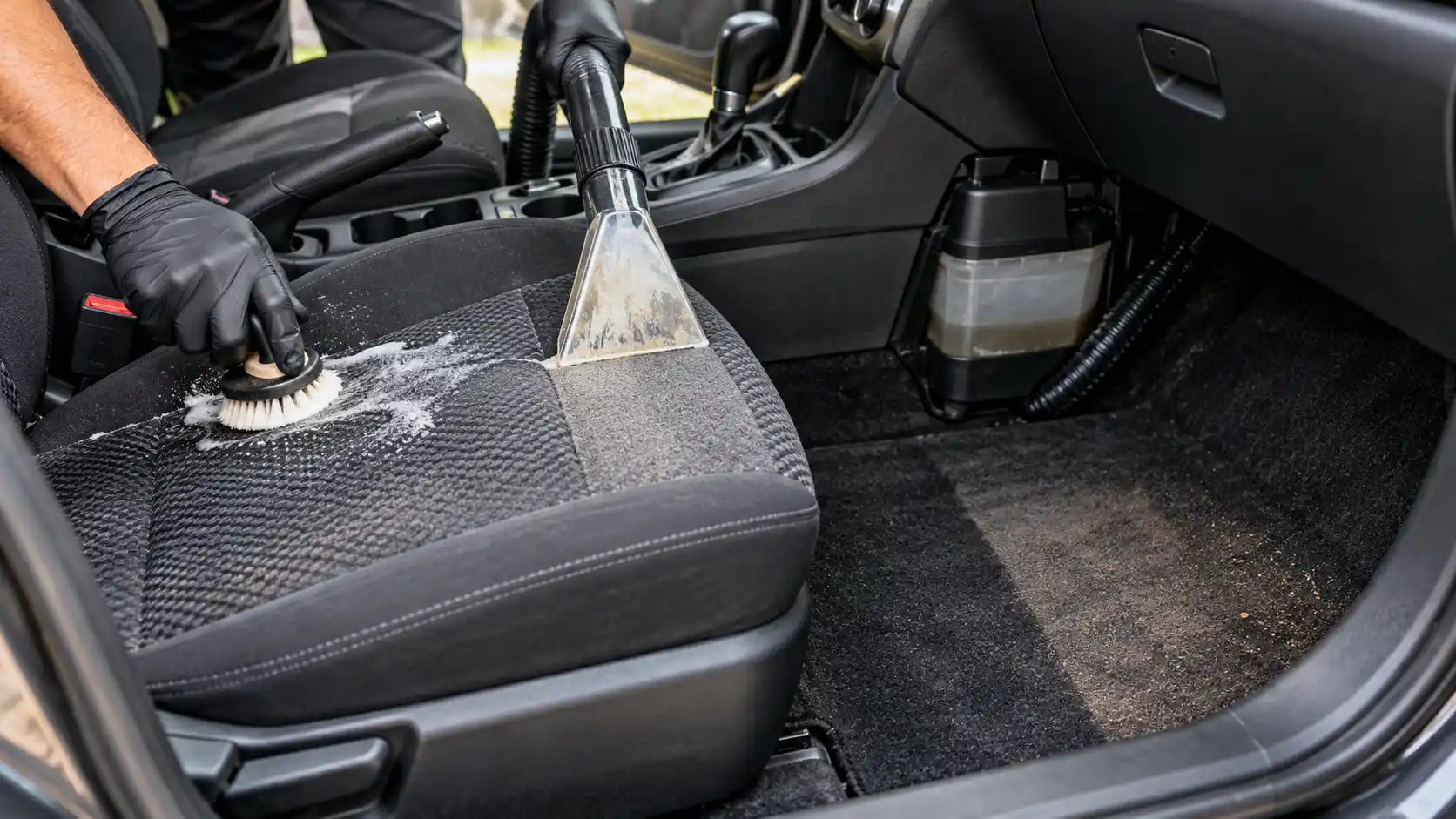
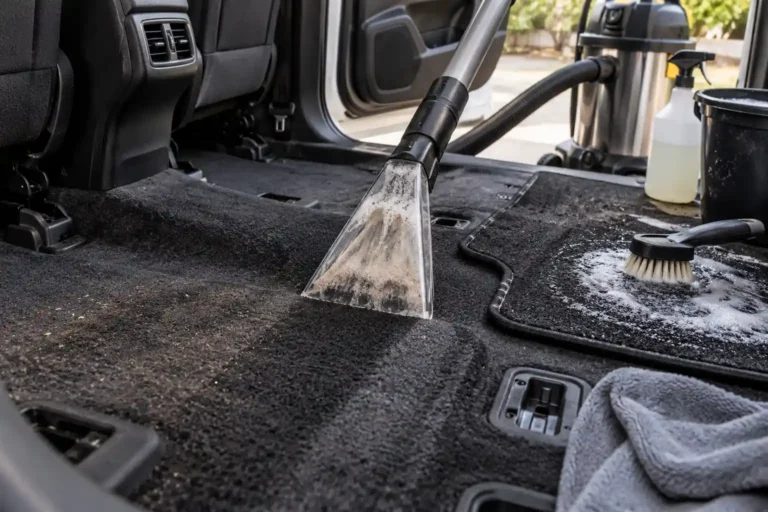
Filling a carpet extractor’s clean water tank with hot tap water and the manufacturer’s recommended amount of cleaning solution, then pressing the trigger to spray this soapy water onto the carpet while scrubbing forward and back with the machine’s brush head, works cleaning solution deep into the fibers in a way that spray-and-wipe methods can’t match. Releasing the spray trigger and instead pressing the suction nozzle firmly against the same area extracts the dirty water back out, pulling loosened dirt and cleaning solution out of the carpet rather than leaving it to dry in place.
Going back over each section multiple times with the suction function alone, even after you’ve stopped spraying new cleaning solution, pulls out significantly more residual moisture and speeds up how quickly the carpet dries afterward, which matters considerably for preventing the odor and mold issues that can develop in carpet that stays damp too long.
How Should You Clean Floor Mats Separately From the Carpet?
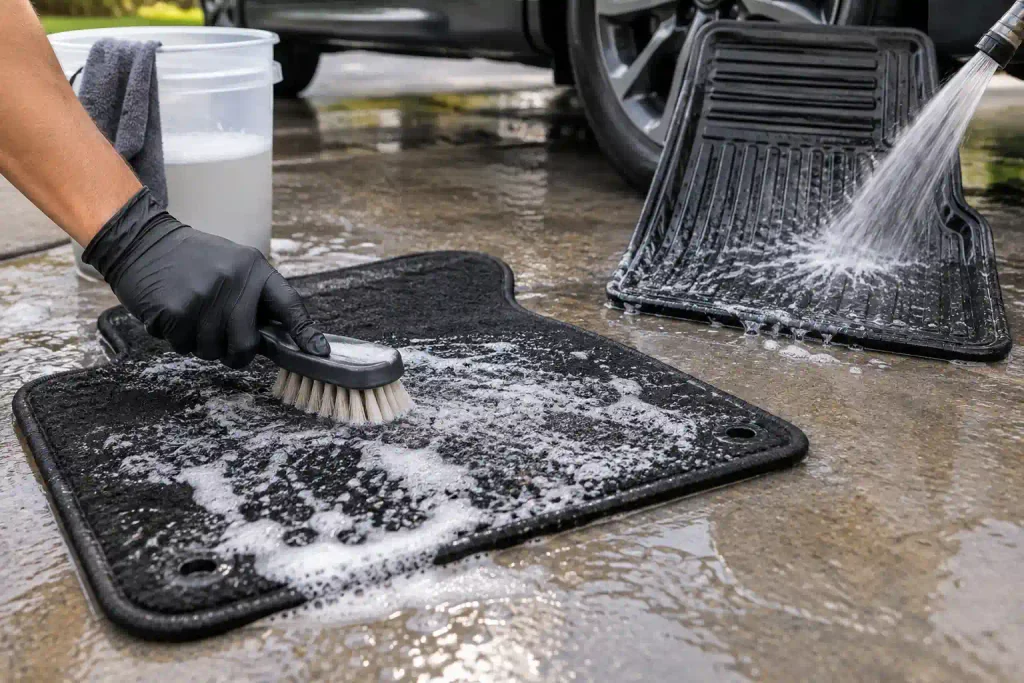
Spraying a foam or liquid cleaner generously across the mat’s surface and letting it sit for a few minutes allows the product to penetrate into the mat’s fibers or texture before you begin scrubbing, similar to the dwell-time principle used for stain treatment on the carpet itself. Using a soft or medium-bristle brush to work the cleaner in, rather than pressing too hard, cleans thoroughly while avoiding the kind of fiber damage that overly aggressive scrubbing can cause on both carpet-style and all-weather rubber mats.
Rubber and all-weather mats generally tolerate a more thorough rinse than carpeted mats, since their non-porous material sheds water easily, while carpeted mats need the same careful, low-moisture approach used on the vehicle’s actual carpet to avoid oversaturating their backing.
How Long Should Carpet and Mats Take to Dry, and Why Does It Matter?
Carpet takes considerably longer to dry than rubber, often needing at least 24 hours to fully dry out, and rushing this process or reinstalling still-damp carpet or mats creates the exact conditions that lead to musty odors and, in more serious cases, mold growth within the carpet padding. Air drying mats outside whenever possible, away from direct rain or excessive humidity, speeds up this process considerably compared to leaving them inside a closed-up vehicle where airflow is limited.
For the vehicle’s actual carpet, which can’t be removed and dried outside the same way mats can, running fans, opening the doors and windows for extended periods, or using a wet/dry shop vacuum for a final extraction pass all help pull remaining moisture out and speed up the overall drying timeline.
Conclusion
Deep cleaning car carpets and floor mats is most effective when you treat the process as more than a thorough vacuuming. Remove the mats and loose items first, vacuum slowly around seams and hard-to-reach areas, and spot-treat visible stains before applying the main cleaning method. Extraction is particularly useful because it removes loosened dirt along with much of the cleaning solution and moisture. Floor mats should be cleaned separately according to their material, with carpeted mats receiving more careful moisture control than rubber or all-weather mats. Most importantly, allow everything to dry completely before reinstalling the mats or closing up the vehicle. Regular vacuuming between deep cleans will also help prevent heavy buildup from returning.
Frequently Asked Questions
How often should carpet and floor mats be deep cleaned?
A full deep clean of the carpet and floor mats every three to six months keeps buildup from accumulating to a level that becomes noticeably harder to remove, with routine vacuuming in between handling everyday surface dirt. Vehicles used heavily in wet, muddy, or snowy conditions may benefit from a somewhat more frequent deep cleaning schedule given the added moisture and debris tracked in regularly.
Can I rent a carpet extractor instead of buying one?
Yes, many hardware stores and grocery stores offer carpet extractor rentals, and this is a practical option for most car owners who only need this level of deep cleaning a few times a year rather than owning the equipment outright. A rented unit typically handles both the floor mats and the vehicle’s built-in carpet in a single rental period.
Is it safe to use a household carpet cleaner formulated for home carpeting on car carpet?
Household carpet cleaners can generally be used on car carpet, since the material is often similar to home carpeting, though checking that the product doesn’t contain anything specifically warned against for automotive use, and always testing on a hidden area first, is a reasonable precaution. Products labeled specifically for automotive use are formulated with this application already confirmed safe.
What should I do if my carpet still smells musty after deep cleaning?
A musty smell that persists after thorough cleaning and complete drying often indicates moisture reached the padding beneath the carpet itself, sometimes requiring a longer drying period with fans or a dehumidifier, or in more severe cases, professional attention to fully resolve. Placing baking soda over the area after it’s fully dry and letting it sit for a day before vacuuming can help address any lingering odor from residual moisture that’s otherwise fully dried out.
Do all-weather rubber mats need the same deep cleaning as carpeted mats?
Rubber and all-weather mats are generally easier to deep clean than carpeted mats, since their non-porous surface can tolerate a more thorough hose rinse or even a trip through a self-serve car wash bay without the same moisture-retention concerns that carpet fibers present. This makes all-weather mats a practical choice for anyone who wants floor protection that’s simpler to maintain than the full extraction process carpet requires.