Car carpets collect far more dirt than most people realize. Dust from shoes, sand, food crumbs, spilled drinks, road salt, mud, pet hair, and moisture gradually settle deep between the carpet fibers.
A quick vacuum can improve the appearance, but it may not remove embedded dirt, stains, or odors. Professional-looking results usually come from using the right cleaning sequence: remove loose debris, treat stains, agitate the carpet, extract or blot the contamination, and dry the interior completely.
This guide explains how to clean your car’s carpet like a pro, including the tools to use, how to handle common stains, when deep extraction is useful, and how to avoid leaving the carpet wet or damaged.
What Do You Need to Clean Car Carpet?
You do not need professional detailing equipment for every carpet cleaning job. However, having the right tools makes it much easier to remove dirt instead of simply moving it around.
For a thorough cleaning, consider having:
- Vacuum cleaner: A shop vacuum or automotive vacuum with a crevice attachment helps remove loose debris from around seats, rails, and edges.
- Carpet brush: A medium-stiff nylon brush helps loosen dirt trapped between carpet fibers.
- Automotive carpet cleaner: Use a cleaner designed for vehicle carpets and fabric surfaces.
- Microfiber towels: These help absorb moisture, cleaner, and suspended dirt.
- Spray bottle: Useful when diluting concentrated cleaning products according to their instructions.
- Wet/dry vacuum or extractor: Helpful for heavily soiled carpets because it can remove dirty cleaning solution from the carpet.
- Detailing brushes: Small brushes make it easier to clean tight areas near trim, pedals, and seat mounts.
- Protective gloves: Useful when working with concentrated cleaning chemicals.
A carpet extractor can improve deep-cleaning results, but it is not essential for routine maintenance. Careful vacuuming, controlled use of cleaner, brushing, and towel extraction can work well for moderately dirty interiors.
How to Clean Your Car Carpet Step by Step
The biggest difference between basic carpet cleaning and professional-style detailing is the process. Cleaning should move from dry soil removal to targeted wet cleaning.
1. Remove the Floor Mats and Loose Items
Start by removing the floor mats, child seats when appropriate, trash, bottles, papers, and other loose objects.
Clean the floor mats separately. This gives you access to the carpet underneath them, where sand, moisture, and dirt often accumulate.
Do not immediately spray cleaner onto the carpet. Removing dry contamination first makes the later cleaning stages much more effective.
2. Vacuum the Carpet Thoroughly
Vacuuming is one of the most important steps.
If loose sand, crumbs, pet hair, and soil remain in the carpet, adding liquid cleaner can turn them into muddy contamination that becomes harder to remove.
Move the front seats forward and backward so you can reach underneath them. Vacuum around:
- Seat rails
- Pedals
- Center console edges
- Door sills
- Under the seats
- Rear footwells
- Carpet seams
- Corners
Use a crevice attachment for narrow spaces.
For embedded sand, brush the carpet while vacuuming. Agitation helps release particles trapped deeper between the fibers.
Continue until you are no longer collecting significant loose debris.
3. Inspect the Carpet for Stains and Problem Areas
Before applying cleaner across the entire carpet, identify areas that need special treatment.
Typical carpet contamination includes:
- Coffee and soda spills
- Mud
- Grease
- Food stains
- Salt residue
- Pet accidents
- Makeup
- Oil
- Sticky candy
- General traffic-area discoloration
Different stains may respond better to different cleaning methods.
It is usually better to treat concentrated stains separately rather than repeatedly soaking the entire carpet with stronger cleaner.
4. Test the Carpet Cleaner First
Before using any cleaning chemical across a large area, test it on a small, less visible part of the carpet.
Check for:
- Color fading
- Discoloration
- Fiber changes
- Sticky residue
- Unusual reactions
Follow the cleaner manufacturer’s dilution and application instructions.
Using a stronger solution than recommended does not necessarily improve cleaning. Too much chemical may leave residue behind, which can attract more dirt later.
5. Pre-Treat Visible Carpet Stains
Apply the appropriate carpet cleaner to stained areas first.
Allow the product enough dwell time to loosen contamination, but do not allow it to dry completely unless the product instructions specifically say otherwise.
Gently agitate the area with a carpet or detailing brush.
Work the product through the fibers without aggressively scrubbing one spot for too long. Excessive friction can damage or distort some carpet materials.
Then blot the area with a microfiber towel.
Blotting helps lift dissolved contamination into the towel rather than spreading it farther across the carpet.
6. Clean One Small Carpet Section at a Time
Once stains have been pre-treated, clean the rest of the carpet in manageable sections.
For example, work on:
- Driver footwell
- Front passenger footwell
- Rear driver-side carpet
- Rear passenger-side carpet
- Carpet beneath the seats
Working in sections gives you better control over moisture and prevents cleaner from drying before you can remove it.
Lightly apply the carpet cleaning solution.
You want the carpet damp enough for the cleaner to work, but not saturated.
7. Agitate the Carpet Fibers
Use a carpet brush to work the cleaner through the fibers.
Agitation helps break the bond between the dirt and the carpet.
Work systematically instead of aggressively scrubbing random areas. Light overlapping movements are usually sufficient.
Give extra attention to high-traffic areas such as the driver’s footwell, where shoes repeatedly grind dirt into the carpet.
If the cleaning solution becomes visibly dirty during agitation, that is a sign that contamination is being released.
8. Extract or Blot Out the Dirty Solution
Loosening dirt is only part of the process. You also need to remove it.
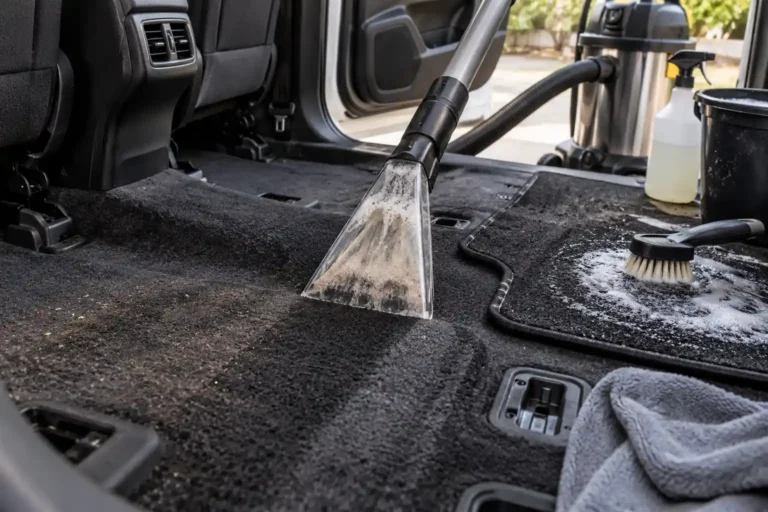
If you have a wet/dry vacuum or carpet extractor, slowly pass it over the cleaned section to pull out moisture and suspended dirt.
You may see dark water being extracted from carpets that appeared relatively clean.
Without an extractor, use clean microfiber towels.
Press the towel firmly against the carpet and blot repeatedly. Replace the towel when it becomes dirty or heavily damp.
Do not keep rubbing contaminated moisture back into the carpet.
9. Rinse Only When Necessary
Some automotive carpet cleaners are formulated to leave minimal residue and may not require rinsing.
Others may benefit from a controlled rinse.
If rinsing is appropriate for the product you used, lightly mist the carpet with clean water and extract or blot again.
Avoid pouring water directly onto the carpet.
Excess water can move below the visible carpet into the padding and floor area where it becomes much harder to dry.
10. Dry the Car Carpet Completely
Drying is just as important as cleaning.
A carpet that remains damp for too long can develop:
- Musty odors
- Mildew
- Mold growth
- Moisture trapped in carpet padding
- Foggy interior windows
- Recurring smells
After cleaning, remove as much moisture as possible with towels or extraction equipment.
When weather and security conditions allow, open the doors or windows to improve airflow. A fan can significantly speed up the process.
Do not reinstall damp floor mats over wet carpet because they restrict evaporation.
The carpet should feel dry before the vehicle is closed for an extended period.
How Do You Deep Clean Heavily Soiled Car Carpet?
A heavily contaminated carpet often requires more than one application of cleaner.
Start with extensive dry vacuuming. Embedded sand should be removed before wet cleaning begins.
Then:
- Pre-treat stained areas.
- Apply carpet cleaner in controlled amounts.
- Agitate the carpet.
- Extract the dirty solution.
- Inspect the area.
- Repeat only where necessary.
For extremely dirty carpets, a dedicated carpet extractor can be useful because it helps rinse and remove contamination from deeper in the fibers.
However, more water does not automatically produce cleaner carpet.
Professional-style extraction depends on both applying cleaning solution and recovering as much liquid as possible. Flooding the carpet while removing little moisture can create a larger problem than the original dirt.
How Do You Remove Common Stains From Car Carpet?
The cleaning method should match the type of contamination whenever possible.
Coffee and Soft Drink Stains
Blot fresh spills immediately instead of rubbing them.
For dried stains, apply an automotive fabric or carpet cleaner, allow brief dwell time, gently agitate, then blot or extract the area.
Repeat if necessary rather than heavily saturating the carpet at once.
Mud
Allow thick mud to dry before attempting extensive wet cleaning.
Dry mud can often be broken apart with a brush and vacuumed away.
Once the loose soil is removed, clean the remaining discoloration with carpet cleaner.
Adding liquid to fresh mud too early can spread the soil deeper into the surrounding carpet.
Grease and Oil
Grease requires special care because water alone will not remove oily contamination effectively.
Use an automotive-compatible cleaner capable of breaking down grease.
Apply a small amount to the affected area and work from the outside of the stain toward the center.
This helps reduce spreading.
Multiple controlled cleaning cycles are usually safer than flooding the stain.
Road Salt
Road salt can leave white or crusty residue in vehicle carpeting, particularly during winter.
Vacuum loose material first.
Then use a suitable automotive carpet cleaning solution and gently agitate the residue. Extract or blot away the dissolved contamination.
Several light treatments may be needed for heavy buildup.
Pet Accidents
Pet urine requires more than cosmetic cleaning because odor-causing contamination may penetrate below the surface.
Blot fresh liquid immediately.
An enzyme-based cleaner designed for compatible automotive fabric surfaces may help break down organic contamination. Follow the product instructions carefully, including dwell time.
If odor returns after the carpet dries, contamination may have reached the carpet padding beneath the visible fibers.
How Do You Get Bad Smells Out of Car Carpet?
Carpet odor usually has a source. Covering the smell with fragrance does not eliminate that source.
Start by checking for:
- Spilled food or drinks
- Wet carpeting
- Pet contamination
- Mud
- Mold
- Water leaks
- Damp floor mats
- Organic debris beneath seats
Vacuum and clean the affected carpet thoroughly.
If moisture keeps returning, investigate why. Possible sources can include door seals, windshield leaks, clogged drains, air-conditioning drainage problems, or water carried into the vehicle.
Recurring moisture should be corrected before relying on deodorizing products.
Once the contamination is removed and the carpet is completely dry, the odor should be reassessed.
Can You Use a Carpet Cleaning Machine in a Car?
Yes, a compact carpet extractor or wet upholstery cleaning machine can be used on many automotive carpets when used correctly.
The main concern is controlling moisture.
Avoid saturating:
- Electrical connectors
- Wiring beneath seats
- Electronic modules
- Seat controls
- Airbag-related components
- Areas underneath sensitive interior electronics
Use controlled spray passes and make several extraction passes to recover as much water as possible.
Household carpet cleaning machines may also be physically difficult to maneuver inside a vehicle, so compact upholstery tools are usually easier to control.
Can You Steam Clean Car Carpet?
Steam can help loosen certain types of contamination, but it should not be treated as a universal carpet-cleaning method.
Excess heat or moisture may affect some materials, adhesives, trim pieces, or nearby electronic components.
Steam also does not automatically remove loosened dirt. Contamination still needs to be extracted or transferred into a clean towel.
If using steam, use it carefully and avoid prolonged heat exposure in one location.
Should You Remove the Car Seats Before Cleaning the Carpet?
For normal carpet maintenance, removing the seats is usually unnecessary.
Moving the seats fully forward and backward gives access to most areas.
Seat removal may be useful during major interior restoration, water damage repair, severe contamination, or professional detailing.
However, modern seats may contain:
- Airbag wiring
- Occupancy sensors
- Heated-seat connections
- Electric motors
- Seatbelt-related components
Removing and reconnecting these systems incorrectly can create warning lights or safety problems.
Unless there is a strong reason to remove the seats and you understand the vehicle’s service procedures, cleaning around them is usually the safer option.
How Do You Clean Carpet Under Car Seats?
Slide the seat as far forward as possible and clean behind it. Then move the seat completely backward and clean the exposed front area.
Use a crevice vacuum attachment along the seat rails.
A narrow detailing brush can loosen debris in difficult corners.
For wet cleaning, spray the cleaning product onto a brush or microfiber towel when access is limited rather than spraying large amounts directly beneath the seat.
This gives you better moisture control around wiring and electrical connectors.
How Do You Clean Car Floor Mats?
Floor mats should be cleaned outside the vehicle.
Carpet Floor Mats
Start by shaking them thoroughly.
Then vacuum both sides, paying particular attention to sand trapped in the fibers.
Apply carpet cleaner, agitate the surface, and extract or blot the dirty solution.
Allow the mats to dry completely before reinstalling them.
Rubber or All-Weather Mats
Remove loose dirt and rinse the mats.
Use an appropriate cleaner and brush to remove grime from textured areas.
Rinse thoroughly and allow them to dry before returning them to the vehicle.
Avoid applying slippery dressings to areas where shoes contact the mat, especially around the driver’s pedals.
What Should You Not Use on Car Carpet?
Avoid improvising with aggressive cleaning products when a proper automotive carpet cleaner is available.
Potential problems include:
- Excessively strong detergents
- Bleach
- Harsh solvents
- Excess cleaner
- Excess water
- Products that leave greasy residue
Bleach may discolor carpet and affect surrounding materials.
Strong solvents may damage carpet backing, adhesives, trim, or color.
Household detergents can also leave excessive residue if they are difficult to rinse from the carpet.
Use the least aggressive cleaning method capable of removing the contamination.
How Do You Avoid Watermarks and Carpet Residue?
Watermarks and uneven appearance often happen when one small area is cleaned much more heavily than the surrounding carpet.
Instead of soaking only the visible spot, lightly blend the cleaning area into the surrounding section.
Residue can occur when too much cleaning product is used or insufficient solution is removed afterward.
To reduce residue:
- Follow proper dilution ratios.
- Use small amounts of cleaner.
- Extract or blot thoroughly.
- Use clean towels.
- Rinse only when required.
- Allow complete drying.
Once dry, lightly vacuum the carpet again to lift the fibers and remove any loosened particles.
How Long Does Car Carpet Take to Dry?
Drying time depends on how wet the carpet became, temperature, humidity, airflow, carpet thickness, and whether the padding underneath absorbed moisture.
A lightly cleaned carpet may dry relatively quickly with strong airflow. Heavily extracted carpet can take much longer.
Instead of relying on a fixed number of hours, check the carpet physically.
Press a clean, dry towel firmly into the carpet. If moisture transfers to the towel or the carpet feels cool and damp below the surface, continue drying it.
Good airflow is usually more important than simply leaving the vehicle closed and waiting.
How Often Should You Clean Your Car Carpet?
There is no single cleaning schedule that suits every vehicle.
Vacuuming can be done whenever visible dirt begins accumulating.
Deep cleaning is needed less often and depends on how the vehicle is used.
You may need more frequent cleaning if the car regularly carries:
- Children
- Pets
- Construction workers
- Outdoor equipment
- Food or drinks
- Muddy footwear
- Beach sand
- Snow and road salt
Address spills and stains as soon as practical rather than waiting for the next full interior detail.
Fresh contamination is usually easier to remove than material that has dried and bonded to the fibers.
How Can You Keep Car Carpet Clean Longer?
Preventive care reduces how often deep cleaning is required.
Use properly fitted floor mats in high-traffic areas and vacuum them regularly.
Avoid allowing loose sand to build up because repeated foot traffic pushes abrasive particles deeper into the carpet fibers.
Clean spills quickly and allow wet mats to dry outside the vehicle.
It is also worth checking beneath floor mats occasionally. Moisture can collect underneath them even when the upper surface looks dry.
Keeping a small microfiber towel in the vehicle can also make it easier to handle spills before they become permanent stains.
Common Car Carpet Cleaning Mistakes
Good results depend as much on avoiding mistakes as choosing the right cleaner.
Using Too Much Cleaner
More chemical does not necessarily mean more cleaning power.
Excess product can leave sticky residue that attracts dirt after the carpet dries.
Soaking the Carpet
Automotive carpet is installed over padding, insulation, wiring, and the vehicle floor.
Flooding the carpet can trap water below the visible surface.
Skipping Vacuuming
Wet cleaning loose sand and dirt creates unnecessary mud and makes extraction more difficult.
Always remove dry contamination first.
Scrubbing Too Aggressively
Hard scrubbing can damage carpet fibers or spread stains.
Controlled agitation is usually more effective.
Ignoring Drying
A carpet can look clean while still holding substantial moisture underneath.
Always treat drying as part of the cleaning process.
Trying to Hide Odors With Fragrance
Air freshener may temporarily cover an odor, but it will not remove spilled milk, pet urine, mold, or other contamination.
Find and clean the source first.
Professional Car Carpet Cleaning vs DIY Cleaning
DIY cleaning works well for routine maintenance, moderate staining, and general dirt.
Professional detailing may be worthwhile when dealing with:
- Severe staining
- Flood damage
- Mold concerns
- Persistent pet odors
- Large liquid spills
- Deep contamination
- Vehicle restoration
Professional detailers may have commercial extraction equipment, air movers, specialized cleaning chemicals, steam equipment, and experience identifying different types of contamination.
However, even professional equipment depends on the same basic principles: remove dry soil, loosen contamination, extract it, and dry the material properly.
Frequently Asked Questions About Cleaning Car Carpet
What is the best way to clean car carpet?
The most effective process is to vacuum thoroughly, pre-treat stains, apply automotive carpet cleaner, agitate the fibers, extract or blot the dirty solution, and dry the carpet completely.
The most important part is removing contamination rather than simply applying cleaner.
Can I clean car carpet without a machine?
Yes. A vacuum, carpet cleaner, carpet brush, and microfiber towels are enough for many cleaning jobs.
A wet/dry vacuum or extractor can make deep cleaning easier, but it is not required for lightly or moderately dirty carpet.
Can I use dish soap on car carpet?
It is generally better to use a dedicated automotive carpet or upholstery cleaner.
Dish soap can create excessive foam and may leave residue if it is not rinsed and extracted thoroughly.
Can I pressure wash car carpet?
Pressure washing carpet while it remains installed in the vehicle is not recommended.
Large amounts of water can reach padding, electrical components, seams, and areas that are difficult to dry.
Removable carpet components require a different approach than installed vehicle carpeting.
Does baking soda remove car carpet odors?
Baking soda may absorb some surface odors, but it does not replace proper cleaning.
Persistent smells usually indicate contamination or moisture that needs to be found and removed.
How do I make my car carpet look new again?
Vacuum deeply, remove stains, clean the entire carpet evenly, extract as much contamination as possible, and allow it to dry fully.
A final vacuum after drying can help lift the fibers and improve the finished appearance.
Why does my car carpet still smell after cleaning?
The contamination may have penetrated the carpet padding, or the carpet may still be damp.
Recurring odors can also indicate water leaks, pet contamination, mold, spoiled food, or another source that has not been removed.
Should I shampoo or extract car carpet?
Shampooing helps loosen dirt, while extraction physically removes cleaning solution, moisture, and suspended contamination.
For heavily soiled carpet, combining controlled cleaning with effective extraction generally provides a more thorough result than applying shampoo alone.
Final Thoughts
Cleaning your car’s carpet like a professional is less about using a large amount of cleaning product and more about following the correct process.
Start with thorough vacuuming. Identify stains before wet cleaning. Use the right cleaner in controlled amounts, agitate the carpet carefully, and remove as much dirty solution as possible.
Most importantly, make sure the carpet dries completely.
When cleaning is approached as soil removal, stain treatment, extraction, and drying, rather than simply spraying and scrubbing, you can remove deeper contamination, reduce odors, protect the carpet, and achieve a noticeably cleaner interior.