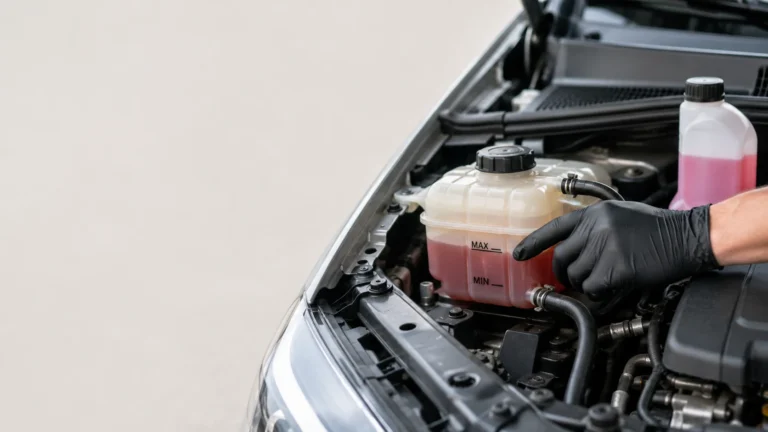
Checking engine coolant takes less than five minutes, but doing it at the wrong time can cause a serious burn. Coolant runs under pressure and can reach temperatures well above boiling, which is exactly why timing and technique matter here more than in most routine maintenance tasks.
Low coolant is also one of the more common reasons engines overheat, and catching a low level early prevents a much larger repair. This guide covers how to check your coolant safely, how to top it off correctly, and which mistakes turn a simple check into a damaged engine.
Is It Safe to Check Coolant While the Engine Is Hot?
No, checking coolant on a hot engine is not safe and should always wait until the engine has fully cooled. The cooling system stays pressurized even after the engine shuts off, and opening the cap while it’s still hot can release scalding coolant and steam without warning.
Waiting at least 30 minutes after driving gives the system enough time to depressurize and cool to a safe temperature. If the engine has actually overheated rather than just finished a normal drive, waiting even longer, closer to an hour, is the safer choice before touching any cap.
Where Is the Coolant Reservoir Located?
The coolant reservoir is a translucent plastic tank near the front of the engine bay, usually labeled with the words “coolant” or “engine coolant” molded into the plastic or printed on the cap. It sits separately from the radiator itself on most modern vehicles, connected by a hose that allows coolant to expand and contract as temperature changes.
Because the tank is translucent, the fluid level is typically visible from the outside without ever removing the cap, which is one of the safer ways to check level without any risk of pressure release.
How Do You Check the Coolant Level Correctly?
Checking the coolant level means comparing the fluid line against the min and max markings printed on the side of the reservoir. Park the vehicle on level ground first, since checking on a slope can give a misleading reading in either direction.
Look for the coolant line relative to the “MIN” and “MAX” or “LOW” and “FULL” marks etched into the plastic. A level sitting between those two marks is considered normal and doesn’t require any action. A level at or below the minimum mark means it’s time to top off before the next drive.
How Do You Top Off Engine Coolant Safely?
Topping off coolant safely means using the correct type for your vehicle and adding it only once the engine has fully cooled. Wear gloves and eye protection before opening any cap, since even a cooled system can release a small amount of residual pressure.
Remove the reservoir cap slowly, turning it in small increments rather than all at once, which allows any remaining pressure to release gradually rather than suddenly. Pour the coolant in slowly, stopping once the level reaches the maximum fill line rather than filling to the very brim. Secure the cap firmly afterward, since a loose cap can allow pressure to escape improperly and cause the system to run low again quickly.
What Type of Coolant Should You Use?
The best coolant for your vehicle is the one recommended in your owner’s manual. Different vehicles require different coolant formulations, and using the wrong type can reduce corrosion protection, damage cooling system components, and shorten engine life. Always choose a coolant that meets your manufacturer’s specifications rather than selecting one based only on its color.
There are two main types of engine coolant:
- Pre-Mixed Coolant (50/50): Ready to use and already mixed with distilled water. This is the most convenient option for topping off or refilling your cooling system.
- Concentrated Coolant: Must be mixed with distilled water before use, typically at a 50/50 ratio, unless your vehicle manufacturer recommends otherwise.
For most passenger vehicles, a 50/50 coolant-to-distilled-water mixture provides the ideal balance of freeze protection, boil-over protection, and corrosion resistance. Never pour undiluted concentrate directly into the cooling system, and avoid using tap water because its minerals can cause scale buildup and reduce cooling efficiency.
What Does It Mean If Your Coolant Level Keeps Dropping?
A coolant level that drops repeatedly between top-offs usually signals a leak somewhere in the cooling system rather than normal fluid loss. Healthy cooling systems are sealed and shouldn’t lose meaningful amounts of coolant over time under normal operation.
Common sources include a cracked hose, a loose clamp, a failing radiator, or a worn water pump seal, any of which can create a slow leak that isn’t always visible as a puddle. A level that drops without any visible external leak can also point to a more serious internal issue, such as a failing head gasket, which deserves prompt professional attention rather than repeated top-offs.
Can You Mix Coolant Colors or Types?
Mixing different coolant colors or chemical types is generally not recommended, since incompatible formulas can react and form a gel-like sludge that clogs narrow passages in the radiator and heater core. Coolant color alone isn’t a reliable indicator of chemical compatibility, since different manufacturers use different colors for similar formulas.
If you’re unsure what’s currently in your system and need an emergency top-off with no matching coolant available, a small amount of plain water is a safer short-term choice than guessing at an unfamiliar coolant type. Flushing and replacing with the correct coolant as soon as possible afterward is worth doing to restore proper protection.
What Mistakes Should You Avoid When Checking Coolant?
The most common and dangerous mistake is opening the radiator or reservoir cap while the engine is still hot, which risks serious burns from pressurized coolant and steam. Beyond that immediate safety risk, a few other errors show up regularly.
- Overfilling past the maximum line, leaving no room for the coolant to expand as it heats up
- Mixing incompatible coolant types, which can cause clogging inside the cooling system
- Ignoring a coolant level that keeps dropping, rather than investigating for a leak
- Confusing the coolant reservoir with the windshield washer fluid tank, which sit near each other on some vehicles
- Topping off with plain water long term instead of a proper coolant and water mixture
Treating a repeatedly low coolant level as a warning sign rather than routine maintenance is the difference between a simple top-off and a costly overheating repair down the road.
Conclusion
Checking and topping off your engine coolant is a simple maintenance task that can prevent one of the most expensive automotive problems engine overheating. By inspecting the coolant level regularly, using the manufacturer-recommended coolant, and never opening the cooling system while the engine is hot, you can help keep your engine operating at the proper temperature year-round.
Just as important, pay attention to a coolant level that repeatedly drops, as it may indicate a leak that requires immediate attention. Making coolant inspections part of your monthly vehicle maintenance routine takes only a few minutes but can extend the life of your engine, improve reliability, and help you avoid costly repairs in the future.
Frequently Asked Questions
How often should I check my engine coolant level?
You should check your engine coolant level at least once a month and before any long road trip. Regular inspections help you detect slow coolant leaks early, reducing the risk of engine overheating and expensive repairs. It’s also a good idea to check the coolant whenever you inspect your engine oil and windshield washer fluid.
Is it safe to open the coolant cap when the engine feels cool?
Only if the engine has completely cooled down. Even when the engine feels cool to the touch, the cooling system may still contain residual pressure. Open the coolant reservoir or radiator cap slowly to release any remaining pressure safely. Never remove the cap from a hot or warm engine.
Can low coolant cause my car to overheat?
Yes. Low coolant is one of the most common causes of engine overheating. Without enough coolant circulating through the engine, excess heat cannot be removed efficiently, increasing the risk of overheating, head gasket failure, and costly engine damage. If your coolant level is consistently low, inspect the cooling system for leaks.
What should I do if my coolant reservoir is empty?
An empty coolant reservoir usually indicates a leak rather than normal coolant loss. Refill the reservoir with the manufacturer-recommended coolant and monitor the level over the next few days. If it drops again or your engine overheats, have the cooling system inspected by a qualified mechanic as soon as possible.
Can I use water instead of coolant temporarily?
Yes, but only in an emergency. If the correct coolant isn’t available, adding a small amount of clean water can help you reach a repair shop safely. However, water does not provide the freeze protection, boil-over protection, or corrosion resistance that engine coolant offers. Replace it with the correct coolant mixture as soon as possible for proper engine protection.