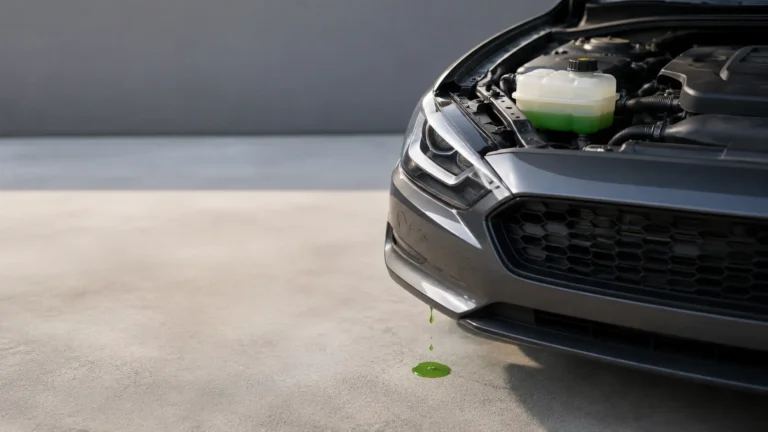
A coolant leak rarely announces itself loudly. It shows up as a faint sweet smell, a small puddle under the car, or a temperature gauge that creeps a little higher than usual.
Left unaddressed, even a small leak can eventually starve the engine of the cooling it needs, leading to overheating and far more expensive repairs. Caught early, most small leaks are manageable with basic tools and a bit of patience.
This guide covers how to find where a coolant leak is coming from, how to fix it depending on the cause, and how to tell whether it’s safe to handle yourself or worth a trip to a mechanic.
What Causes a Small Coolant Leak?
Coolant leaks typically trace back to a handful of common failure points in the cooling system.
- Loose or corroded hose clamps, which allow small amounts of coolant to seep out at the connection
- Cracked or brittle hoses, especially on older vehicles exposed to years of heat cycling
- A failing radiator, often from corrosion or a small puncture from road debris
- A worn water pump seal, which can leak slowly before failing completely
- A damaged radiator cap, which affects pressure and can push coolant out through the overflow
Identifying which of these applies to your car is the first real step toward fixing the leak correctly rather than guessing.
How Do You Know If You Have a Coolant Leak?
A few signs tend to show up together when a cooling system starts losing fluid.
A sweet smell near the front of the car, similar to maple syrup, is one of the most recognizable indicators, since coolant has a distinct scent when it heats up. A puddle of green, orange, or pink fluid under the front of the vehicle after it’s been parked is another clear sign, and the color can sometimes hint at the type of coolant your car uses. A coolant level that keeps dropping between top-offs, even when you haven’t noticed a visible puddle, also points to a slow leak somewhere in the system.
How to Find the Source of a Coolant Leak
Pinpointing the exact source saves time and prevents unnecessary part replacements.
Start with a cold engine and a visual inspection of the hoses, radiator, and water pump area, looking for dried coolant residue, which often appears as a slightly crusty or discolored buildup. A pressure tester, which attaches to the radiator cap opening and pressurizes the system without running the engine, can reveal a slow leak that isn’t obvious just from looking. Some auto parts stores loan these testers for free, which makes this step accessible even without owning specialized equipment.
If the leak still isn’t visible, a UV dye kit is another option. The dye mixes into the coolant and glows under a UV light, making even a small leak easy to spot after a short drive.
How to Fix a Small Coolant Leak: Step-by-Step Guide
If you’re wondering how to fix a small coolant leak, start by identifying the source of the leak and choosing the appropriate repair method. Minor leaks from hoses, clamps, or the radiator can often be fixed temporarily, while larger leaks usually require replacing the damaged component.
Step 1: Let the Engine Cool Completely
Never remove the radiator cap or open the cooling system while the engine is hot. The cooling system is pressurized, and hot coolant can spray out and cause severe burns. Wait at least 30–60 minutes after driving, or until the engine is completely cool, before inspecting or repairing the leak.
Step 2: Tighten Loose Hose Clamps and Fittings
Inspect all radiator and heater hoses for loose clamps or fittings. If coolant is leaking from a connection, tighten the clamp with a screwdriver or socket wrench. Tighten it just enough to stop the leak over-tightening can damage the hose or clamp.
Step 3: Apply a Coolant Leak Sealant (For Minor Leaks)
If the leak is small and located in the radiator, heater core, or a tiny hose crack, you can use a coolant system sealant. Pour the product into the radiator or coolant reservoir according to the manufacturer’s instructions. As the coolant circulates, the sealant may temporarily seal small cracks or pinhole leaks.
Step 4: Patch a Leaking Hose Temporarily
If a coolant hose has a small split or pinhole, wrap it with self-fusing silicone repair tape or use a radiator hose repair kit. This temporary repair can help you drive safely to a repair shop or until you can replace the hose.
Step 5: Replace the Damaged Component
Replace any cracked hose, worn clamp, damaged radiator, leaking thermostat housing, or faulty water pump as soon as possible. While hoses and clamps are relatively easy DIY repairs, replacing a radiator or water pump usually requires more mechanical experience and specialized tools.
External Leak or Internal Leak? Why the Difference Matters
Not every coolant leak shows up as a puddle on the ground, and that distinction changes how serious the problem is.
An external leak, from a hose, radiator, or water pump seal, is generally the easier and less urgent type to deal with, since the coolant simply exits the system and you can see or smell evidence of it. An internal leak is a different story. It often points to a failing head gasket or a cracked cylinder head, where coolant enters the engine’s combustion chambers or mixes with the oil instead of leaking outward.
Signs of an internal leak include white, sweet-smelling exhaust smoke, a milky discoloration in the engine oil, or coolant that disappears without any visible external puddle. Internal leaks are considerably more serious and typically require professional diagnosis, since continuing to drive can cause significant engine damage.
How Long Can You Safely Drive With a Small Coolant Leak?
This depends heavily on the size of the leak and how closely you’re monitoring your coolant level.
A very minor external leak, one that loses only a small amount of fluid over several days, is often safe to drive with short term as long as you’re checking the coolant level regularly and topping it off as needed. A leak that’s dropping the level noticeably within a day or causing the temperature gauge to creep upward is a different situation, and continuing to drive risks overheating the engine.
If the temperature gauge ever climbs into the red zone, the safest choice is to pull over, let the engine cool, and arrange a tow rather than risk a blown head gasket or warped engine block from continued driving.
Coolant Types: Why You Should Never Mix Different Coolants
Using the correct coolant is essential for keeping your engine at the proper operating temperature and preventing corrosion. Since different coolant types use different chemical formulas, mixing them can reduce performance and even damage the cooling system.
4 Types of Engine Coolant
1. IAT (Inorganic Additive Technology)
- Commonly used in older vehicles.
- Contains silicate and phosphate corrosion inhibitors.
- Typically needs replacement every 2–3 years or 30,000–50,000 miles.
- Usually green, although color can vary by brand.
2. OAT (Organic Acid Technology)
- Found in many modern vehicles.
- Uses organic acid inhibitors for long-lasting protection.
- Service life is typically 5 years or up to 150,000 miles (depending on the manufacturer).
- Common colors include orange, red, or pink.
3. HOAT (Hybrid Organic Acid Technology)
- Combines organic acids with silicates or other additives.
- Used by many European and American automakers.
- Offers excellent corrosion protection and a long service life.
- Common colors include yellow, blue, purple, or turquoise, depending on the manufacturer.
4. P-HOAT (Phosphated Hybrid Organic Acid Technology)
- Common in many Asian vehicles, including Toyota, Honda, Hyundai, and Kia.
- Uses phosphate-based corrosion inhibitors for enhanced aluminum protection.
- Often available in pink, blue, or red, depending on the vehicle manufacturer.
Why Mixing Different Coolants Causes Problems
Although some coolants look similar, color does not determine compatibility. Different coolant technologies contain different corrosion inhibitors, and mixing incompatible types can lead to serious cooling system issues.
Mixing the wrong coolants can:
- Reduce corrosion protection.
- Create sludge or gel-like deposits.
- Restrict coolant flow through the radiator and heater core.
- Cause engine overheating.
- Shorten the lifespan of the radiator, water pump, and other cooling system components.
Always use the coolant specification recommended in your owner’s manual, even if another coolant has the same color.
What If You Don’t Know Which Coolant Is in Your Vehicle?
If you need an emergency top-off but aren’t sure which coolant is already in the system:
- Avoid mixing different coolant types.
- Add a small amount of clean water if necessary to maintain a safe coolant level.
- Replace the water with the manufacturer-recommended coolant as soon as possible.
- If you added a significant amount of water, have the cooling system refilled with the correct coolant mixture at the earliest opportunity.
Common Mistakes People Make When Fixing a Coolant Leak
A handful of avoidable errors turn a manageable repair into a bigger problem.
- Opening the radiator cap while the engine is still hot, risking serious burns from pressurized coolant
- Mixing different types of coolant, which can cause chemical reactions that clog the system
- Relying on sealant products for a leak that’s actually from a cracked radiator or failing water pump, delaying a repair that will eventually be needed anyway
- Ignoring a slowly dropping coolant level because the car “seems fine,” which can mask a developing problem until it becomes serious
- Topping off with plain water long term instead of the correct coolant mixture, which reduces the system’s freeze and boil protection
Most of these mistakes come from treating a coolant leak as a one-time inconvenience rather than a sign that something in the system needs closer attention.
How Much Does It Cost to Fix a Coolant Leak?
Cost varies widely depending on the source of the leak and whether you handle it yourself.
A DIY fix involving a hose clamp tightening or a bottle of sealant costs very little, often just the price of the product itself. Replacing a hose or clamp yourself keeps costs modest as well, since the parts themselves are inexpensive even if you’re paying full retail price. A professional radiator or water pump replacement costs considerably more, since labor to access these components adds significantly to the bill compared to simpler fixes.
Getting a leak diagnosed early, before it damages surrounding components or leads to overheating, is one of the more reliable ways to keep the eventual repair bill lower.
How to Prevent Future Coolant Leaks
A few consistent habits reduce how often coolant leaks develop in the first place.
Inspecting hoses and clamps during routine oil changes catches early signs of cracking or corrosion before they turn into an active leak. Flushing and replacing coolant on the schedule listed in your owner’s manual, rather than leaving the original fluid in for years past its recommended life, also helps, since old coolant loses its corrosion-fighting properties over time. Keeping an eye on the coolant reservoir level as part of a monthly under-hood check means a slow leak gets caught while it’s still a simple fix rather than an expensive one.
Conclusion
A small coolant leak may seem harmless at first, but ignoring it can quickly lead to engine overheating, expensive repairs, or even complete engine failure. The good news is that many minor leaks such as those caused by loose hose clamps, worn hoses, or small radiator cracks can often be diagnosed and repaired before they become serious. By checking your coolant level regularly, using the correct coolant type, and addressing leaks as soon as they appear, you can protect your engine and avoid costly breakdowns.
If the leak is internal, the engine overheats, or you’re unsure of the source, it’s safest to have the cooling system inspected by a qualified mechanic. Taking action early is the simplest and most cost-effective way to keep your vehicle running reliably for years to come.
Frequently Asked Questions About Coolant Leaks
Can I keep adding coolant instead of fixing the leak?
No. Regularly topping off coolant only hides the problem temporarily. Even a small leak can worsen over time, causing the coolant level to drop enough to overheat the engine. While adding coolant can help you reach a repair shop, the leak should be repaired as soon as possible to prevent expensive engine damage.
Is it safe to use water instead of coolant in an emergency?
Yes, but only temporarily. If the coolant level is dangerously low and the correct coolant isn’t available, adding a small amount of clean water can help protect the engine until you reach a safe location. However, water doesn’t provide the corrosion protection, freeze protection, or boiling-point protection that engine coolant offers. Replace it with the correct coolant mixture as soon as possible.
How can I tell if a coolant leak is serious?
A coolant leak may be serious if you notice any of these warning signs:
- The engine temperature gauge rises above normal.
- Steam is coming from under the hood.
- White smoke comes from the exhaust.
- Coolant disappears without any visible leak.
- The low coolant warning light stays on.
- You must refill the coolant frequently.
If any of these symptoms occur, stop driving as soon as it’s safe and inspect the cooling system or have the vehicle professionally diagnosed.
Can a coolant leak cause engine overheating?
Yes. A coolant leak reduces the amount of coolant circulating through the engine. As coolant levels drop, the cooling system becomes less effective at removing heat, increasing the risk of engine overheating. Driving with an overheating engine can lead to severe damage, including a blown head gasket or warped cylinder head.
How often should I check my coolant level?
Check your coolant level:
- At least once a month.
- Before long road trips.
- Whenever you notice signs of a coolant leak.
- After cooling system repairs.
Regular inspections help you detect small leaks before they become major problems.
Will a coolant leak sealant clog the heater core?
Usually not when used correctly. Most reputable coolant sealants are designed to seal small leaks without blocking normal coolant passages. However, using more than the recommended amount or repeatedly adding sealant can increase the risk of clogging the radiator or heater core. Always follow the manufacturer’s instructions and treat sealants as a temporary repair rather than a permanent solution.