
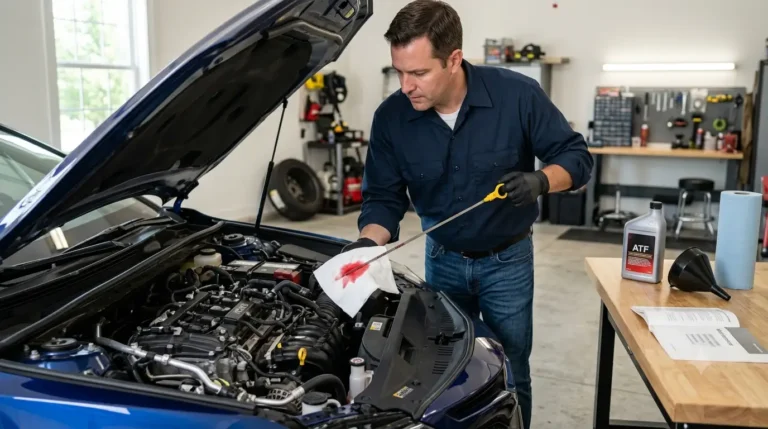
Checking your transmission fluid level involves locating the transmission dipstick or fill plug, ensuring the fluid is at the correct temperature, and comparing the level against marked indicators. Most automatic transmissions need to be checked with the engine running and warmed up, while many manual transmissions are checked with the engine off using a fill plug instead of a dipstick.
This guide covers the different check methods, what the fluid’s color and smell can tell you, and how often this simple check is worth doing.
Does Your Car Even Have a Transmission Dipstick?
Many newer vehicles no longer include a transmission dipstick at all, instead using a sealed system that’s checked through a fill plug underneath the car. This shift became common as manufacturers moved toward longer-life transmission fluids that need less frequent driver-level checking.
Checking your owner’s manual is the fastest way to confirm which type your vehicle has, since the two methods require different tools and procedures. Attempting to find a dipstick that doesn’t exist is a common point of confusion for owners of newer cars.
How Do You Check Fluid on a Vehicle With a Dipstick?
Park on level ground, and with most automatic transmissions, let the engine idle in park while you check, since the correct level is often measured with the engine running and fluid warm. Locate the transmission dipstick, typically labeled and positioned near the engine dipstick, then pull it out, wipe it clean, and reinsert it fully.
Pull it out again and read the level against the markings, which usually show both a “hot” and “cold” range depending on how warm the fluid currently is. Add fluid gradually through the dipstick tube using a funnel if the level sits below the appropriate mark for its current temperature.
How Do You Check Fluid on a Vehicle Without a Dipstick?
Vehicles without a dipstick use a fill plug located on the side of the transmission case, which needs to be removed to check the level directly. With the vehicle level and often with the engine running at operating temperature, fluid should sit right at the bottom edge of the fill plug hole when the level is correct.
This method typically requires getting underneath the vehicle and can involve fluid draining out as soon as the plug is removed if the level is already at or above the correct mark. Because of this added complexity, many owners have this specific check done at a shop rather than attempting it at home.
What Does Fluid Color Tell You About Transmission Health?
Transmission fluid changes color in a fairly predictable way as it ages, and knowing what each stage means helps you decide whether it’s time for a change:
- Bright red or pink – fresh fluid in good condition.
- Darker red or light brown – normal aging, not necessarily a problem on its own.
- Dark brown or black – overdue for a change, usually reflecting heat damage and wear particles.
- Cloudy or milky – a more serious sign, often pointing to coolant contamination from a failing transmission cooler, worth having inspected right away.
Checking the color periodically, alongside the level, gives you an early warning before a fluid problem turns into a shifting problem.
What Does a Burnt Smell From the Fluid Indicate?
A burnt smell from transmission fluid usually means it has been exposed to excessive heat, which breaks down its lubricating properties over time. This can happen from long-term wear, heavy towing, or simply fluid that’s well past its recommended change interval.
Burnt-smelling fluid paired with rough or delayed shifting is a stronger combination of warning signs than either symptom alone. Continuing to drive on severely overheated fluid can accelerate wear on internal transmission components, making an earlier fluid change cheaper than the alternative.
How Often Should You Check Transmission Fluid Level?
Checking transmission fluid level every one to two months, or anytime you notice shifting that feels different than usual, is a reasonable habit for most drivers. This is a quick check that takes only a couple of minutes once you know your vehicle’s specific method.
Manufacturer-recommended fluid change intervals vary widely, from 30,000 miles on some vehicles to essentially the life of the transmission on others marketed as sealed-for-life. Checking your owner’s manual for your specific interval, rather than assuming a universal number, gives the most accurate guidance for your car.
What Happens if Transmission Fluid Is Low?
Low transmission fluid can cause several noticeable driving symptoms, since the fluid is responsible for both lubrication and hydraulic pressure inside the transmission:
- Delayed engagement when shifting into gear – often the first symptom drivers notice.
- Slipping between gears – the engine revs without a corresponding increase in speed.
- Rougher or harder shifts than normal – less smooth transitions between gears.
- Reddish fluid spots underneath the car – a visible sign of the leak that’s likely causing the low level.
Running significantly low for an extended period can accelerate wear on internal components that are expensive to repair, so catching these symptoms early is worth acting on quickly. A low level almost always points to a leak rather than normal consumption, since transmissions don’t burn fluid the way engines gradually use oil.
Conclusion
Checking your transmission fluid level is one of the easiest preventive maintenance tasks you can perform to protect your vehicle’s transmission. Whether your car uses a traditional dipstick or a sealed transmission with a fill plug, regularly monitoring the fluid level, color, and smell helps identify problems before they become costly repairs. Low or contaminated transmission fluid can lead to rough shifting, overheating, and premature transmission wear if ignored. Following your owner’s manual for the correct inspection procedure and recommended service interval ensures accurate results and long-term reliability. By making transmission fluid checks part of your routine vehicle maintenance, you can improve shifting performance, extend transmission life, reduce repair costs, and keep your car operating safely and efficiently for years to come.
Frequently Asked Questions
How do I know if my transmission fluid is low?
Common signs of low transmission fluid include delayed gear engagement, slipping gears, rough or hard shifting, transmission overheating, and red fluid leaking underneath the vehicle. The most reliable way to confirm a low level is by checking the transmission fluid using the dipstick or fill plug according to your owner’s manual.
Can I check transmission fluid without a dipstick?
Yes. Many modern vehicles use sealed transmissions that don’t have a dipstick. Instead, the fluid level is checked through a fill plug on the transmission housing while the vehicle is level and, on many models, at normal operating temperature. Because this often requires lifting the vehicle safely, many owners prefer having the inspection performed by a professional.
What color should healthy transmission fluid be?
Healthy automatic transmission fluid is typically bright red or pink and should appear clean and transparent. Dark brown, black, cloudy, or milky fluid can indicate oxidation, overheating, contamination, or internal transmission problems that should be inspected promptly.
Is it normal for transmission fluid to smell burnt?
No. Transmission fluid should not have a burnt odor. A burnt smell usually indicates excessive heat, aging fluid, or internal transmission wear. If you notice a burnt smell along with rough or delayed shifting, it’s best to inspect the transmission before further damage occurs.
How often should I check my transmission fluid?
Most experts recommend checking your transmission fluid every one to two months or before long road trips. You should also inspect it immediately if you notice shifting issues, unusual noises, warning lights, or transmission fluid leaks.
Can I add transmission fluid myself?
Yes, if your vehicle has a transmission dipstick and you use the exact transmission fluid specified by the manufacturer. Add small amounts at a time using a funnel, then recheck the level to avoid overfilling, which can also cause transmission problems.
Does low transmission fluid always mean there’s a leak?
In most cases, yes. Unlike engine oil, transmission fluid is not normally consumed during operation. A low fluid level usually indicates a leak from a seal, cooler line, transmission pan gasket, or another component that should be repaired.
How much does a professional transmission fluid check cost?
Many repair shops and dealerships inspect transmission fluid for free during a routine maintenance visit. If a transmission fluid service is required, costs typically range from $100 to $300, depending on the vehicle, transmission type, and whether the service is a drain-and-fill or a complete fluid replacement.