Running out of washer fluid usually happens at the worst possible time, mid-commute, with a windshield suddenly covered in road grime or salt spray. It’s one of the simplest fluids to check and refill, yet it’s easy to overlook until the reservoir runs dry.
Checking the level takes less than a minute, and refilling it requires no tools beyond the bottle itself and occasionally a funnel. This guide covers how to find the reservoir, check the level accurately, refill it correctly, and avoid the handful of mistakes that can actually damage the system.
Why Does Washer Fluid Run Out So Quickly?
Washer fluid gets used more often than most drivers realize, especially during certain seasons.
Winter driving burns through fluid fast, since road salt, slush, and grime require frequent spraying just to maintain clear visibility. Spring and early summer bring pollen and bug splatter, which also drives up usage compared to drier months. Drivers who commute on highways behind trucks or through construction zones tend to go through fluid noticeably faster than those on cleaner suburban roads.
Where Is the Windshield Washer Fluid Reservoir Located?
The reservoir is almost always easy to spot once the hood is open, though its exact position varies slightly by vehicle.
Look for a white or semi-translucent plastic tank, usually marked with a windshield and spray symbol on the cap. It’s typically positioned near one of the front corners of the engine bay, away from the hottest parts of the engine. On most vehicles the tank is translucent enough to see the fluid level from the outside without needing to remove the cap at all.
If you’re having trouble locating it, your owner’s manual includes a diagram of the engine bay with each fluid reservoir labeled, which is often faster than searching visually on an unfamiliar engine layout.
How Do You Check the Washer Fluid Level?
Checking the level is straightforward and doesn’t require the engine to be off for any extended period.
Park on a level surface, since checking on an incline can give a misleading reading. Open the hood and look at the side of the reservoir, where many tanks have “FULL” and “LOW” markings printed directly on the plastic. If the fluid sits below the low mark, or if the tank looks close to empty, it’s time to refill.
Keep hands and clothing away from the engine cooling fan while checking, since some fans can activate automatically even with the engine off, particularly on vehicles that have been driven recently.
How to Refill Windshield Washer Fluid, Step by Step
Refilling windshield washer fluid takes less than five minutes and requires no special tools. The process is straightforward: locate the washer fluid reservoir, add the correct washer fluid, and test the system to ensure the spray nozzles work properly. Following these steps helps maintain clear visibility and prevents the reservoir from running dry.
Step 1: Park the Vehicle and Locate the Reservoir
Park your vehicle on level ground, switch off the engine, and engage the parking brake. Open the hood and locate the windshield washer fluid reservoir, which is typically a translucent plastic tank with a windshield spray symbol on the cap. This symbol helps distinguish it from other fluid reservoirs under the hood.
Step 2: Refill the Washer Fluid
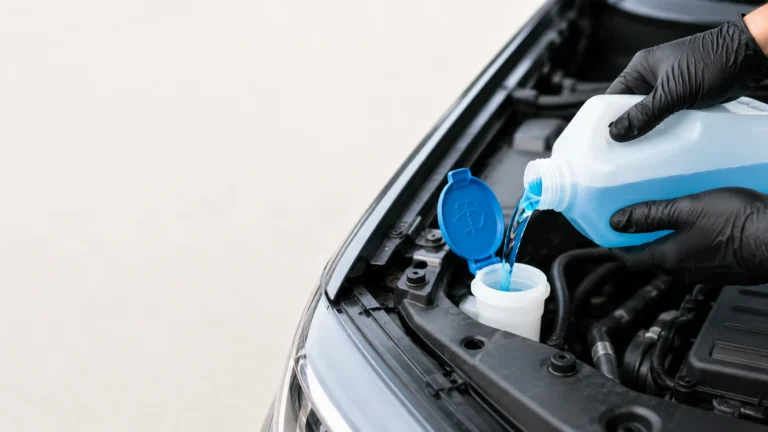
Remove the reservoir cap and slowly pour windshield washer fluid into the opening. If the filler neck is narrow, use a clean funnel to prevent spills. Fill the reservoir until the fluid level is near the top, leaving a small amount of space to allow for expansion. Avoid overfilling or using plain water except in a short-term emergency, as washer fluid is formulated to improve cleaning performance and provide freeze protection.
Step 3: Secure the Cap and Test the Washer System
Close the reservoir cap firmly and lower the hood securely. Start the vehicle and activate the windshield washer system for a few seconds to verify that fluid sprays evenly onto the windshield. If the reservoir is full but no fluid reaches the glass, inspect the washer nozzles for clogs or consider a faulty washer pump or damaged hose as the possible cause.
What Type of Fluid Should You Use?
Not all washer fluid is created equal, and picking the right type for your climate makes a real difference in performance.
Standard all-season fluid works fine for most moderate climates and handles typical bug and grime removal well. Winter-rated fluid contains a higher concentration of antifreeze-like additives, formulated to resist freezing at much lower temperatures, which prevents the reservoir, lines, and nozzles from cracking in cold weather. Bug-removal formulas include stronger solvents specifically designed to cut through baked-on insect residue more effectively than standard fluid.
Choosing a fluid rated for your actual climate, rather than whatever bottle happens to be cheapest, matters more in winter than any other season, since a frozen reservoir can crack plastic components that are far more expensive to replace than the fluid itself.
Can You Use Water Instead of Washer Fluid?
Plain water might seem like a reasonable substitute in a pinch, but it comes with real downsides worth understanding.
Water lacks the cleaning solvents that help washer fluid cut through grime, bugs, and road film effectively, so cleaning performance suffers noticeably. More importantly, water freezes at a much higher temperature than washer fluid, and a frozen reservoir or line can crack the plastic components, leading to a repair that costs far more than the fluid you were trying to save on. If you’re topping off in a genuine emergency with no washer fluid available, a small amount of water is a reasonable temporary measure, but replacing it with proper fluid as soon as possible is worth doing.
Common Mistakes People Make With Washer Fluid
A handful of avoidable errors show up repeatedly with this otherwise simple task.
- Using summer-only fluid during winter months, risking a frozen and cracked reservoir
- Overfilling the tank to the point of spilling onto engine components during the pour
- Mistaking the washer fluid reservoir for the coolant reservoir, which sit near each other on some vehicles and use different fluids entirely
- Ignoring a low fluid warning light until the reservoir runs completely dry
- Assuming a full reservoir means the spray system is working, without ever testing the nozzles directly
Confusing the washer fluid and coolant reservoirs is a more common mistake than it sounds, since both are typically plastic tanks near the front of the engine bay. Checking the cap symbol carefully before pouring prevents this mix-up.
How Often Should You Check Washer Fluid?
Checking every time you fill up with gas is a simple habit that keeps the reservoir from running dry unexpectedly.
Drivers who do a lot of highway driving, live in areas with heavy pollen season, or drive through winter road treatment zones should check more frequently, since usage climbs noticeably in these conditions. Keeping a spare bottle in the trunk means a low reservoir never turns into a multi-day inconvenience while visibility remains compromised.
Conclusion
Checking and refilling your windshield washer fluid is one of the easiest car maintenance tasks you can do, yet it plays a vital role in safe driving. A full washer reservoir helps keep your windshield clear of dirt, dust, bugs, road salt, and other debris that can reduce visibility. By checking the fluid level regularly, using the correct washer fluid for your climate, and refilling the reservoir before it runs empty, you can avoid unnecessary inconvenience and maintain a clear view of the road in all weather conditions. Make this quick inspection part of your monthly vehicle maintenance routine or perform it before long trips. Spending just a few minutes on this simple task can improve visibility, enhance driving safety, and help you stay prepared for changing road conditions.
Frequently Asked Questions
Can I mix different brands or types of windshield washer fluid?
Yes, in most cases you can mix different brands of windshield washer fluid because they use similar cleaning ingredients. However, avoid mixing summer and winter formulas, as doing so can reduce freeze protection in cold weather. For the best performance, finish the existing fluid before switching to a different type or seasonal formula.
Why is my windshield washer fluid not spraying even though the reservoir is full?
If the washer fluid reservoir is full but nothing sprays, the problem is usually not the fluid level. Common causes include:
- Clogged washer nozzles
- A disconnected or leaking washer hose
- A faulty washer pump
- A blown fuse controlling the washer system
Clean the nozzles first. If the problem persists, inspect the pump and hoses or have the system diagnosed.
Is windshield washer fluid the same as engine coolant?
No. Windshield washer fluid and engine coolant are completely different fluids and should never be used interchangeably. Washer fluid is designed to clean the windshield and improve visibility, while engine coolant regulates engine temperature and prevents overheating. Using the wrong fluid in either system can lead to expensive repairs.
How can I tell if my windshield washer fluid is winter-rated?
Check the label on the washer fluid bottle for its freeze protection temperature, such as -20°F (-29°C) or -40°F (-40°C). Winter-rated washer fluid contains antifreeze additives that prevent freezing and help remove road salt, slush, and ice. If you drive in freezing temperatures, always choose a formula rated for your local climate.
What should I do if my windshield washer fluid reservoir is cracked?
A cracked windshield washer fluid reservoir should usually be replaced rather than repaired. Cracks can cause fluid leaks, preventing the washer system from working properly. Before replacing the reservoir, inspect it for visible damage and confirm that the leak isn’t coming from a loose hose or damaged connector. Installing a new reservoir is the most reliable long-term solution.