You check engine coolant by looking at the level in the plastic reservoir when the engine is cold, and you top it off by pouring a 50/50 mix of coolant and distilled water up to the MAX line. The whole job takes about ten minutes, and the one rule you can’t skip is to wait until the engine has cooled down.
Coolant keeps your engine from overheating in summer and from freezing in winter. When the level drops, the engine runs hotter than it was built to, and that can lead to costly damage. This guide shows you how to check the level, read the color and condition of the coolant, add the right mix, and tell when a falling level means something is wrong.
Why Must the Engine Be Cold Before You Check Coolant?
The engine must be cold because the cooling system runs under pressure, and opening the cap on a hot engine can spray scalding coolant and steam. Wait at least 30 minutes after you switch the engine off, and longer if the engine overheated.
The radiator cap and reservoir cap hold that pressure in. Even with the engine off, hot coolant can stay under pressure for a while. Car makers say the same thing in their manuals: never remove the cap while the engine or radiator is hot.
Here is how to stay safe:
- Park on level ground and turn the engine off.
- Wait 30 minutes or more. Touch the hood. If it still feels warm, wait longer.
- Wrap a thick towel around the cap and turn it slowly, so any leftover pressure can escape.
- Wear gloves and safety glasses, because coolant is harmful if it splashes.
Some makers let you read the level on the sealed reservoir when the engine is warm. That is only a look at the side of the tank. Never open the cap until the engine is cold.
Where Is the Coolant Reservoir?
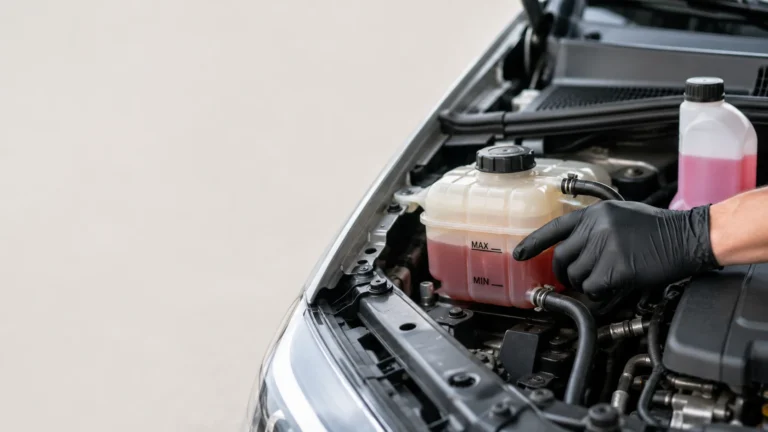
The coolant reservoir is a see-through plastic tank in the engine bay, usually near the radiator, with MIN and MAX marks on its side. The cap often has a warning symbol about hot pressure, and the tank often holds blue, green, pink, or orange liquid.
Don’t confuse it with the windshield washer tank. The washer tank cap shows a windshield-and-spray icon, and the coolant tank cap shows a warning about heat and pressure. If you can’t tell them apart, check the owner’s manual. It shows both tanks in the “Under the Hood” or maintenance section.
Some older cars also have a radiator cap on top of the radiator itself. On most newer cars you only open the reservoir cap.
How Do You Check the Coolant Level and Condition?
You check the coolant by reading the level against the MIN and MAX marks, looking at the color, and scanning the hoses for leaks. All three checks take a few minutes and tell you if the cooling system is healthy.
Read the MIN and MAX Marks
With a cold engine, the coolant level should sit between the MIN and MAX marks on the side of the reservoir. If the level is at or below MIN, the system needs a top-off.
Look at the tank from the side, at eye level, on level ground. A tilted car gives a false reading. If you can’t see the level because the plastic is dirty, wipe the tank with a clean rag or use a flashlight.
Check the Color and Condition
Healthy coolant is clean and bright, with the color of the type your car uses. Rusty, brown, murky, or oily coolant means the fluid is worn out or contaminated and needs a full flush, not just a top-off.
Look for these warning signs:
- Rust-brown or muddy color. The corrosion protection has run out.
- Oily film or a milky look. Oil or other fluids may be mixing in, which needs a mechanic.
- Floating bits or sludge. The system is dirty or something is breaking down.
Look for Leaks on Hoses and Fittings
Wet spots, dried white or colored crust, and drips under the car are signs of a coolant leak. Check the visible hoses, the clamps, and the area around the radiator and reservoir.
Squeeze each hose gently with the engine cold. A good hose feels firm. A soft, swollen, or cracked hose is about to fail.
How to Top Off Engine Coolant, Step by Step
To top off engine coolant, let the engine cool, open the reservoir cap with a towel, pour in a 50/50 mix of coolant and distilled water up to the MAX line, and close the cap tightly. Mix the coolant and water in a clean container first, unless you use pre-mixed coolant.
You will need gloves, safety glasses, a funnel, a clean rag, the right coolant, and distilled water.
- Wait for a cold engine. Give it at least 30 minutes after you turn it off.
- Find the reservoir and check the level against the MIN and MAX marks.
- Mix the coolant with distilled water at 50/50 in a clean jug, unless the bottle is already pre-mixed.
- Open the cap slowly with a thick towel over it.
- Pour through a funnel until the level reaches the MAX line. Stop there. The mix expands as it heats, so it needs room.
- Close the cap until it clicks, wipe up any spill, and start the engine. Watch the temperature gauge on your next drive, then recheck the level when the engine is cold again.
Two mistakes to avoid: never overfill past MAX, and never open the cap on a hot engine.
Which Coolant Should You Use?
Use the coolant type listed in your owner’s manual, mixed 50/50 with distilled water unless the bottle is pre-mixed. The right coolant protects the engine from freezing, boiling, and corrosion, and the wrong one can cause damage.
Coolant Types and Colors
Coolants come in different chemistry types, such as IAT, OAT, and HOAT, and each type is made for certain engines. OAT coolants are often orange, red, or pink, and older coolants are often green, but color alone is not a reliable guide.
Brands use different dyes, so two coolants with the same color can be different types. The manual lists the exact type or specification your engine needs. If the bottle says it meets that spec, it is safe to use.
The 50/50 Mix With Distilled Water
A 50/50 mix of coolant and distilled water works for most climates and is the easiest ratio to get right. Distilled water has no minerals, so it won’t leave scale inside the cooling system.
Mixing in tap water can leave mineral deposits that clog small passages over time. If you buy pre-mixed coolant, pour it straight from the bottle with no extra water. Colder climates may call for a stronger mix, so check the label or the manual.
Can You Mix Types or Use Plain Water?
Don’t mix different coolant types, and use plain water only as a short emergency fix. Different chemistries can react and form sludge, and water alone lowers the protection against corrosion, freezing, and boiling.
If you’re stuck and the reservoir is empty, a small amount of distilled water can get you to a shop. Plan to have the mix corrected soon. Car makers also warn that automotive fluids aren’t interchangeable, so coolant belongs only in the cooling system.
What Does It Mean If Your Coolant Level Keeps Dropping?
A coolant level that keeps dropping usually means there is a leak somewhere, either outside the engine or inside it. A small drop over many months can be normal, but a drop you can see after a few days is not.
Common reasons include:
- A leaking hose, clamp, or radiator. These often leave puddles or crusty stains.
- A weak radiator cap. The cap can let coolant and pressure escape.
- A failing water pump or heater core. The leak may show up inside the car as a sweet smell or foggy windows.
- An internal leak, such as a bad head gasket. There may be no puddle at all, just a level that keeps falling.
If you need to add coolant often, have the cooling system checked. Topping off covers the symptom, but it doesn’t fix the cause.
How Often Should You Check Engine Coolant?
Check engine coolant about once a month, and at the very least before summer and before winter. A quick look at the reservoir takes a minute, and it catches slow leaks before the engine overheats.
Add a check before a long road trip, after any repair that involves the cooling system, and any time the temperature gauge reads higher than usual. If you drive an older car or tow a load, check it more often.
Frequently Asked Questions
Can low coolant cause my car to overheat?
Yes, low coolant can cause overheating. With less coolant in the system, there isn’t enough liquid to carry heat away from the engine, so the temperature climbs. If the gauge rises or a warning light comes on, pull over and shut the engine off.
What should I do if my coolant reservoir is empty?
If the reservoir is empty, let the engine cool completely, then add a 50/50 coolant mix up to the MAX line. Look for the cause, since an empty tank means a leak or a larger problem. If the coolant disappears again soon, don’t keep driving, and have the car inspected.
What happens if I overfill the coolant reservoir?
Overfilling can push extra coolant out of the overflow hose onto the engine and the ground, and excess fluid can reach electrical parts. The mix expands as it heats, so the reservoir needs spare room above the MAX line. If you overfill, let the engine cool and remove the extra with a clean turkey baster or syringe.
When do I need a coolant flush instead of a top-off?
You need a flush when the coolant looks rusty, murky, or oily, or when it is past the age listed in your manual. A top-off only brings a low level back to normal, while a flush replaces the old coolant and its worn-out protection. Follow your manual’s service schedule.
Can I pour coolant into the washer fluid tank?
No, never put coolant or antifreeze into the washer fluid tank. Washer fluid and coolant do different jobs, and sprayed coolant can smear the windshield and hurt your view.
Conclusion
To check and top off engine coolant safely, wait for a cold engine, read the MIN and MAX marks, look at the color and hoses, and add a 50/50 mix of the right coolant and distilled water up to MAX. Never open the cap on a hot engine, never mix coolant types, and never overfill.
Make it a habit to check the level once a month. If it keeps dropping, don’t keep topping it off. Find the leak and fix it.