Streaky wipers rarely feel urgent until the moment a downpour hits and visibility suddenly matters. By then, replacing them is a five-minute fix that most drivers could have handled weeks earlier.
Wiper blades wear out from sun exposure, road grime, and repeated flexing across the glass, and most manufacturers recommend replacing them every 6 to 12 months depending on climate and use. This guide covers how to tell when it’s time, how to find the correct size for your specific car, and how to install new blades correctly on the first try.
How Do You Know When It’s Time to Replace Your Wiper Blades?
A few clear signs point to worn wiper blades before they become a real problem on the road.
Streaking across the glass, even after the wipers pass over the same spot multiple times, usually means the rubber edge has hardened or cracked. Squeaking or chattering as the blade drags across the windshield is another common sign, often caused by uneven wear along the blade’s length. Visible cracking, splitting, or a blade that no longer sits flush against the glass are more obvious indicators that replacement is overdue.
Climate plays a real role here too. Drivers in areas with intense summer sun or harsh winters typically see faster wear than those in milder climates, since heat and cold both accelerate rubber degradation.
How to Find the Correct Wiper Blade Size for Your Car
Getting the size right matters more than most drivers expect, since even a slightly wrong length can cause gaps or overlap that leave streaks behind.
Most vehicles use two different wiper blade lengths, a longer one for the driver’s side and a shorter one for the passenger side, so buying a single matching pair isn’t always correct. Your owner’s manual lists the exact sizes for your specific make, model, and year. Auto parts retailers also offer lookup tools where entering your vehicle’s year, make, and model returns the correct size automatically, which is often the fastest way to confirm before buying.
Rear wipers, found on many hatchbacks, SUVs, and wagons, use yet another separate size and connector type, so it’s worth checking that separately if your vehicle has one.
What Tools Do You Need to Replace Wiper Blades?
This is one of the simplest maintenance tasks a car owner can do, and it typically requires no tools at all.
Most modern wiper blades attach using a spring-loaded hook or a push-button tab that releases by hand. A soft towel is worth having nearby to lay across the windshield, protecting the glass in case a wiper arm snaps back unexpectedly during the swap. Beyond that, the correctly sized replacement blades are really the only thing you need.
How to Replace Windshield Wiper Blades (Step-by-Step Guide)
Replacing windshield wiper blades is a simple DIY maintenance task that takes about 5 to 15 minutes and usually requires no special tools. Follow these steps to install new wiper blades correctly.
Step 1: Lift the Wiper Arm
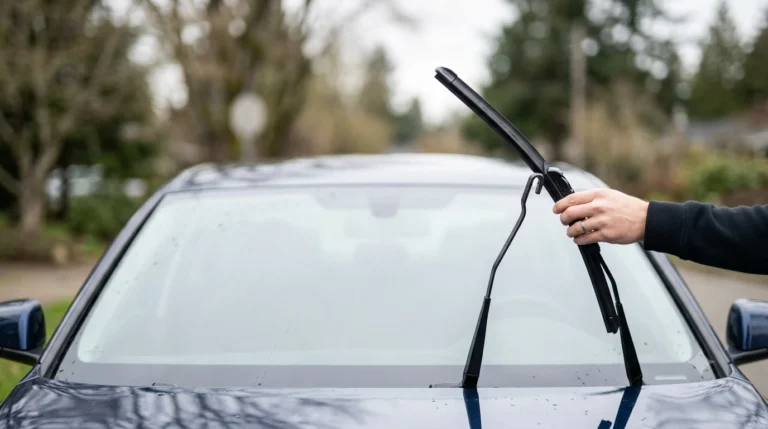
Carefully raise the wiper arm away from the windshield until it locks into its upright position. To protect the glass, place a soft towel over the windshield before starting. This helps prevent accidental damage if the spring-loaded wiper arm snaps back.
Step 2: Remove the Old Wiper Blade
Locate the small release tab, button, or latch where the blade connects to the wiper arm. Press or lift the release mechanism, then slide the old blade downward to unhook it from the arm. Set the old blade aside for disposal or recycling.
Step 3: Install the New Wiper Blade
Align the new blade with the same connector orientation as the old one. Slide it onto the wiper arm until you hear or feel a firm click, indicating the blade is securely locked into place. Gently tug on the blade to confirm it is properly attached.
Step 4: Lower the Wiper Arm and Test
Slowly lower the wiper arm back onto the windshield instead of letting it snap against the glass. Turn on the windshield washer system and run the wipers through several cycles. Check that the new blades move smoothly, clear the windshield evenly, and leave no streaks, skipping, or chattering.
Beam, Hybrid, or Conventional: Which Wiper Blade Type Is Right for You?
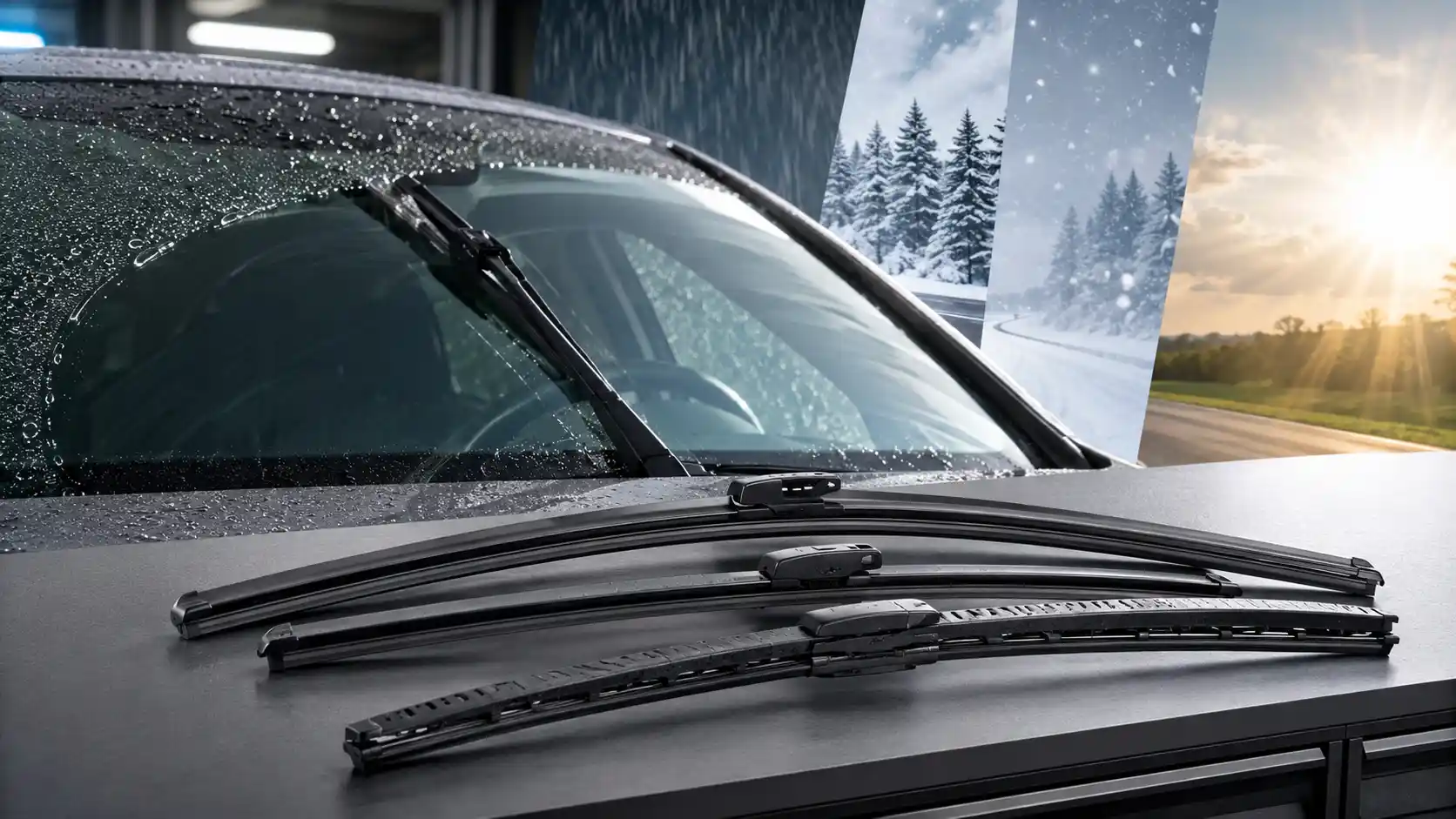
Not all wiper blades are built the same way, and the differences affect performance more than the price tag might suggest.
Conventional blades use a metal frame with multiple pressure points along the rubber edge. They’re typically the least expensive option and work fine in moderate climates, though the exposed frame can accumulate ice and snow more easily. Beam blades use a single curved strip of rubber with no external frame, which distributes pressure more evenly across the glass and tends to perform better in wind and heavy rain. Hybrid blades combine a covered frame with beam-style pressure distribution, aiming for a middle ground between the two.
Drivers in snowy climates often find beam or hybrid blades hold up better through winter, since there’s less exposed metal framework for ice to build up on.
Why Do New Wiper Blades Sometimes Streak or Chatter?
A brand new blade that immediately streaks or skips across the glass is more common than most drivers expect, and it usually isn’t a defect.
New rubber can carry a light manufacturing residue that interferes with smooth contact for the first few uses, which typically resolves after several wipe cycles. A windshield with embedded grime, road film, or old wax residue can also cause a new blade to skip, since the blade is dragging across an uneven surface rather than clean glass. Cleaning the windshield thoroughly with a dedicated glass cleaner before installing new blades often resolves streaking that seems like a bad blade but is actually a dirty surface.
If chattering continues well beyond the first few uses, double-checking that the blade size and angle match your vehicle’s specifications is worth doing before assuming the product itself is faulty.
Common Mistakes When Installing New Wiper Blades
A few avoidable errors account for most of the frustration drivers run into during this otherwise simple task.
- Letting the wiper arm snap down onto bare glass without a protective towel, which can crack the windshield on certain vehicles
- Buying a single wiper size for both sides when the vehicle actually requires two different lengths
- Forcing a blade onto the wrong connector type, which can damage the release mechanism
- Skipping a windshield cleaning before installation, leading to streaking that looks like a bad blade but is really a dirty surface
- Not testing the wipers immediately after installation, only discovering a poor fit during the next rainstorm
Taking the extra minute to confirm size and test the new blades before driving off saves a return trip to the parts store later.
How Much Do Wiper Blades Typically Cost?
Wiper blades are one of the more affordable maintenance items a car owner buys regularly, with pricing that scales mainly by blade type and length.
Conventional blades sit at the lower end of the price range and cover most budget-conscious replacements well. Beam and hybrid blades cost more per pair but often last longer and perform noticeably better in heavy rain or snow, which can make them worth the difference for drivers who deal with harsher weather regularly. Rear wiper blades, when needed, are usually inexpensive on their own, since they’re smaller and simpler than front blades.
Given how affordable this maintenance item is compared to the visibility and safety it provides, replacing worn blades promptly is one of the better value repairs a driver can make.
Do You Need to Replace the Rear Wiper Too?
Rear wipers wear out on the same general timeline as front blades, though they often go unnoticed since they’re used less frequently and are less critical to forward visibility.
If your vehicle has a rear wiper and you’re already replacing the front blades, checking the rear one at the same time is a reasonable habit, since rubber degrades from sun and weather exposure regardless of how often the blade is actually used. Rear wiper blades use a different, typically smaller connector, so confirm the correct part before purchasing rather than assuming it matches your front blades.
Should You Use Winter Wiper Blades in Cold Climates?
Winter-specific wiper blades are worth considering for drivers who regularly deal with snow and ice.
These blades typically encase the frame in a rubber boot, preventing snow and ice from building up inside the mechanism and causing uneven pressure or skipping. They tend to be slightly heavier and less aerodynamic than standard blades, which matters little at typical city speeds but can create minor wind noise at highway speeds. For drivers in regions with genuine winter weather, the tradeoff is usually worth it, while drivers in milder climates likely won’t notice much benefit switching seasonally.
Conclusion
Replacing windshield wiper blades is one of the quickest and most affordable maintenance tasks you can do to improve driving safety. Fresh wiper blades provide clearer visibility during rain, snow, and dusty conditions while helping reduce windshield wear caused by damaged rubber. By choosing the correct blade size, installing them properly, and replacing them every 6 to 12 months, you can ensure reliable performance in all weather conditions. If your current blades leave streaks, chatter across the glass, or show visible signs of wear, don’t wait until the next storm arrives. A few minutes of preventive maintenance today can make a significant difference in visibility, comfort, and confidence every time you get behind the wheel.
Frequently Asked Questions
How long does it take to replace windshield wiper blades?
Most drivers can replace both front windshield wiper blades in 5 to 15 minutes. If it’s your first time, it may take a little longer while you identify the correct release mechanism.
How often should windshield wiper blades be replaced?
Most manufacturers recommend replacing wiper blades every 6 to 12 months. However, if you live in an area with intense sunlight, heavy rain, or freezing winters, you may need to replace them more frequently.
Can I replace windshield wiper blades myself?
Yes. Replacing windshield wiper blades is one of the easiest DIY car maintenance tasks. Most modern vehicles use a hook-style or push-button connector that requires no special tools.
How do I know which wiper blade size I need?
The easiest way is to check your vehicle’s owner’s manual or use an online vehicle lookup tool by entering your car’s year, make, and model. Many vehicles use different blade lengths for the driver’s and passenger’s sides.
Why are my new wiper blades streaking?
New blades may streak because of manufacturing residue on the rubber or dirt, road film, and wax buildup on the windshield. Thoroughly cleaning the glass and using the blades for a few wipe cycles usually solves the problem.
Should I replace both windshield wiper blades at the same time?
Yes. Since both blades are exposed to the same weather conditions, they usually wear at a similar rate. Replacing them together helps maintain even wiping performance and clear visibility.
Can worn wiper blades scratch the windshield?
Yes. Cracked or hardened rubber can drag dirt and debris across the glass, increasing the risk of fine scratches over time. Replacing worn blades early helps protect your windshield.
Are beam wiper blades better than conventional blades?
Beam blades generally provide more even pressure across the windshield and perform better in heavy rain, snow, and high-speed driving. Conventional blades are usually more affordable and work well in normal weather conditions.
Do rear windshield wiper blades need to be replaced too?
Yes. Although rear wipers are used less often, the rubber still deteriorates from sunlight and weather exposure. Inspect the rear blade whenever you replace the front ones.
Can I install a different brand of wiper blades?
Absolutely. You don’t need to buy the original equipment brand. As long as the replacement blade matches your vehicle’s correct length and connector type, most reputable aftermarket brands will work properly.