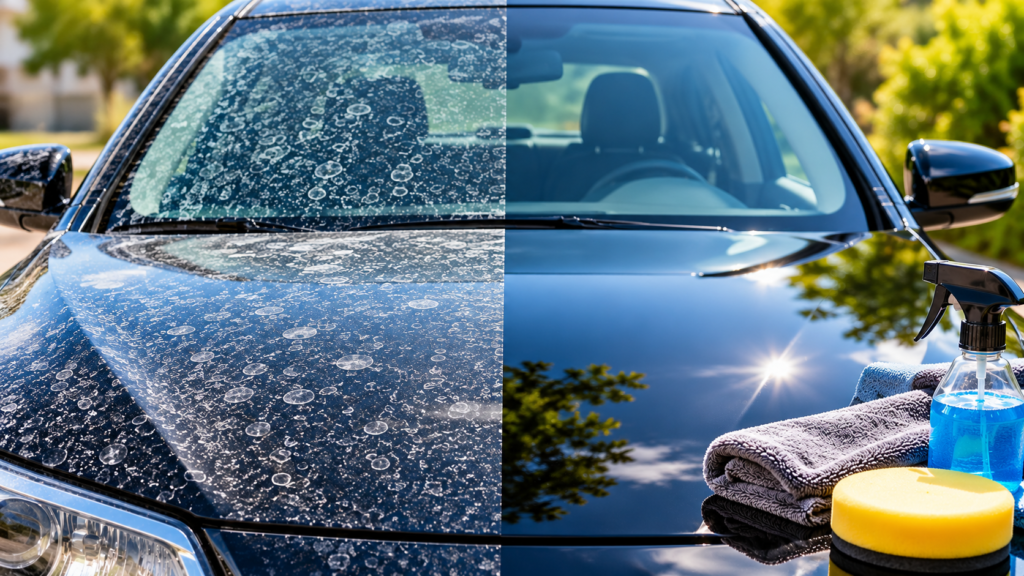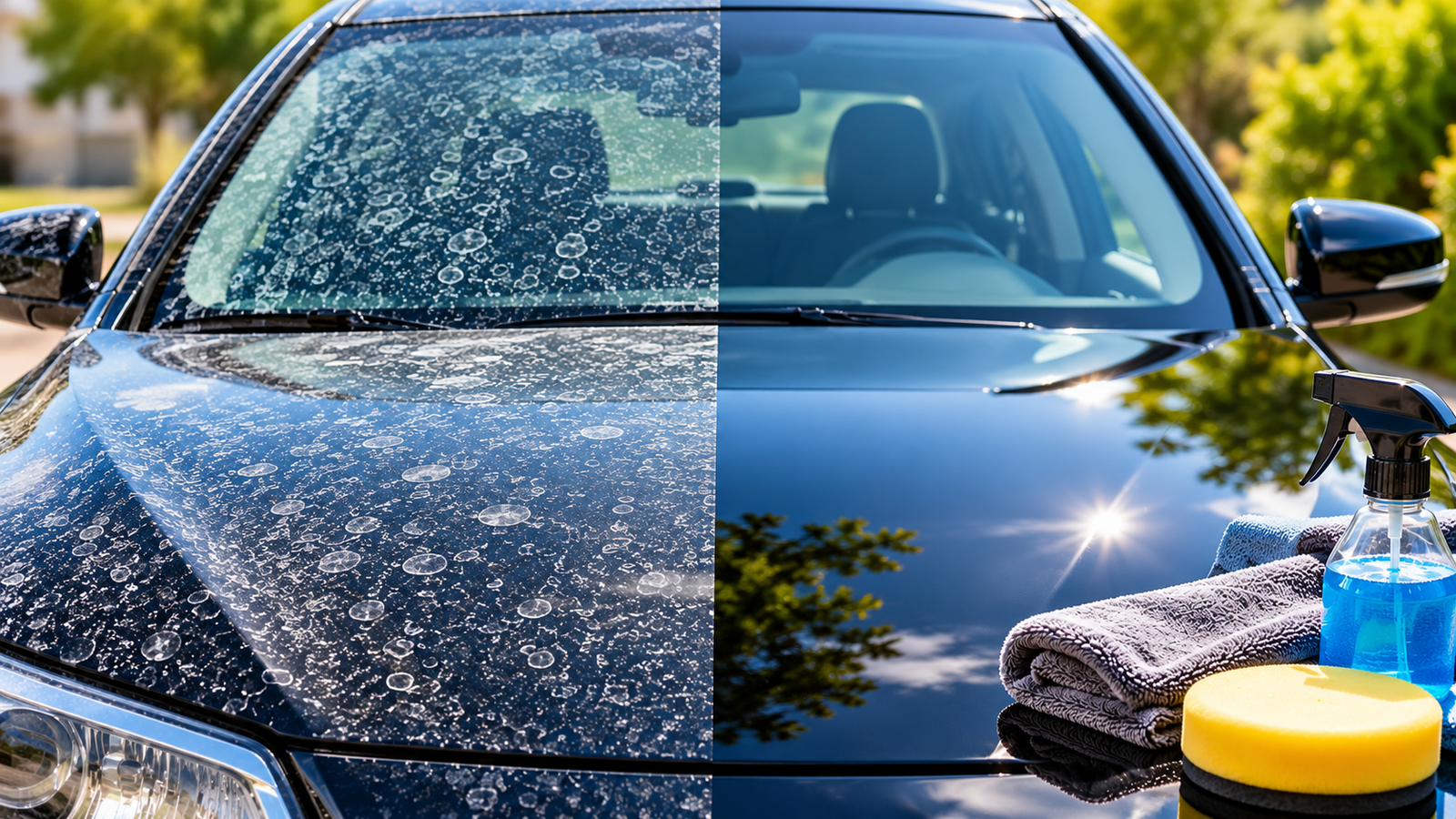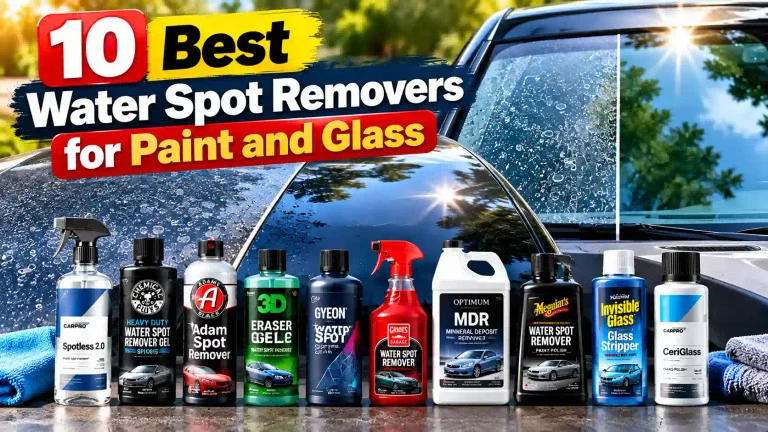
The best water spot removers for paint and glass help dissolve mineral deposits that ordinary washing leaves behind. The important buying distinction is whether you are looking at removable buildup or damage etched into the surface. A chemical cleaner can remove minerals without restoring clear coat or glass that has already been damaged.
This guide compares ten verified products, including chemical removers, thick gels, spray treatments, a paint-polishing option, and dedicated glass products. Some suit both approved paint and glass applications; others have a narrower role. Each review explains where the product fits, its preparation requirements, and when another choice makes more sense.
Best Water Spot Removers for Paint and Glass: Comparison Table
Use this water spot remover comparison to identify the treatment type that fits your job. A product’s presence in this guide does not mean it is suitable for both paint and glass in every application.
This article contains affiliate links. If you buy through them, we may earn a commission at no extra cost to you.
| Product | Best For / Category | Amazon |
|---|---|---|
| CARPRO Spotless 2.0, 1 Liter with Sprayer | Best Chemical Option for a Compatible CQUARTZ Routine | Check Price on Amazon |
| Chemical Guys Heavy Duty Water Spot Remover Gel SPI10816, 16 oz | Best Gel Format for Controlled Spot Treatment | Check Price on Amazon |
| Adam’s Water Spot Remover | Best Thickened Treatment with a Defined Short Dwell | Check Price on Amazon |
| 3D Eraser Gel Water Spot Remover, 16 oz | Best Alternative Acidic Gel for Paint and Glass | Check Price on Amazon |
| GYEON Q²M WaterSpot, 500 mL | Best Paint-Focused Option for Compatible Cured Coatings | Check Price on Amazon |
| Griot’s Garage Water Spot Remover, 22 oz, Pack of 2 | Best Spray Format for Several Treatment Areas | Check Price on Amazon |
| Optimum MDR Mineral Deposit Remover, 1 Gallon | Best Bulk Non-Abrasive Mineral Remover | Check Price on Amazon |
| Meguiar’s Water Spot Remover A3714, 16 oz | Best Water-Spot Remover with a Paint-Polishing Role | Check Price on Amazon |
| Invisible Glass Glass Stripper 91411, 4 fl oz | Best Glass Reset Before New Rain Repellent | Check Price on Amazon |
| CARPRO CeriGlass Glass Polish, 150 mL | Best Dedicated Glass-Polishing Option | Check Price on Amazon |
10 Best Water Spot Removers Reviewed for Paint and Glass Care
These water spot remover reviews identify the treatment role, supported surfaces, application requirements, and main tradeoffs. Choose by the problem and surface rather than assuming every product on the list belongs on every part of the car.
1. CARPRO Spotless 2.0, 1 Liter with Sprayer: Best Chemical Option for a Compatible CQUARTZ Routine
Best for: Owners removing mineral deposits from approved surfaces, including compatible CQUARTZ-coated paint.
CARPRO Spotless 2.0 is a chemical water-spot remover intended to break down mineral deposits before they become a correction problem. The linked variant is a one-liter bottle with a sprayer, making it relevant to buyers with several panels or repeated maintenance jobs.
The manufacturer identifies use on compatible CQUARTZ coatings and gives separate procedures for paint and glass. On paint, its instructions call for a washed surface, shade or indoor work on cool panels, controlled application, and thorough rinsing after each treated panel. Do not let the chemical dry.
Its chemical approach is worth trying before polishing when the visible defect is still a deposit. It cannot promise to rebuild an etched clear coat. If residue disappears but an outline remains, reassess the mark rather than repeatedly increasing dwell time.
Key Features
- One-liter Spotless 2.0 listing with sprayer.
- Acid-based mineral-deposit removal rather than abrasive polishing.
- Manufacturer identifies compatible CQUARTZ coating use.
- Separate surface-specific application procedures.
Pros
- A useful chemical-first option within an approved coating-maintenance system.
- Larger bottle suits several treatment areas.
- Documented paint and glass procedures help plan the job.
Cons
- Chemical must not dry on the surface.
- Coating compatibility should not be generalized to every brand or fresh installation.
- Mineral removal does not guarantee correction of etched damage.
Buying Decision
Choose Spotless 2.0 if your surface and coating guidance support it and you can complete the rinsing workflow. Buy it for deposit removal before choosing a polish. For one isolated spot, a smaller approved treatment may be easier to store and use.
2. Chemical Guys Heavy Duty Water Spot Remover Gel SPI10816, 16 oz: Best Gel Format for Controlled Spot Treatment
Best for: Owners treating compatible exterior paint and glass who prefer product placement with a gel.
Chemical Guys Heavy Duty Water Spot Remover uses a thick gel to target mineral deposits on suitable exterior surfaces. The format is useful when you want controlled placement on a localized area instead of a thin spray that immediately runs down a vertical panel.
The 16-ounce listing identifies paint, exterior glass, and certain metal applications. That range does not mean every mirror, film, coating, or trim finish is suitable. Test a small approved area, control contact with neighboring materials, and follow the bottle’s removal and cleanup directions.
Gel consistency is a handling advantage, not permission for unlimited dwell. Keep the panel cool, work manageable sections, and do not let the treatment dry. Use it to remove contamination before protection; do not expect it to replace clear-coat correction where the surface has already been etched.
Key Features
- 16-ounce SPI10816 water-spot-remover gel.
- Thick formula for localized placement.
- Listing identifies suitable paint, exterior glass, and metal surfaces.
- Intended to remove mineral marks before further protection.
Pros
- Gel can be easier to place on a selected vertical treatment area.
- One product can cover several approved exterior applications.
- Compact bottle suits a home detailing kit.
Cons
- Sensitive mirrors, coatings, and adjacent materials need specific compatibility checks.
- Thick gel still requires controlled dwell and thorough removal.
- Does not guarantee correction of etched paint or glass.
Buying Decision
Buy this Chemical Guys gel if controlled spot placement is your main preference and the intended surface is approved. Choose a spray when its application method better suits a larger area. Confirm compatibility before using it around specialty mirrors or protective films.
3. Adam’s Water Spot Remover: Best Thickened Treatment with a Defined Short Dwell
Best for: Careful DIY users who can work small areas and follow the manufacturer’s 30-second maximum.
Adam’s Water Spot Remover uses acidic actives and surfactants to dissolve minerals and salts left by hard water. Its thickened formulation is designed for targeted application on supported paintwork and glass rather than indiscriminate spraying over the whole vehicle.
The most important buying detail is the instruction to keep treatment time at no longer than 30 seconds. Adam’s specifically warns that excessive dwell on glass could etch it. Prepare your applicator and cleanup materials before applying the product so the removal step is ready.
The manufacturer identifies compatible ceramic/graphene-coated surfaces, but consult the specific coating’s care instructions as well. This is a focused deposit-removal purchase. Long-standing outlines may still need assessment after the minerals have been removed.
Key Features
- Thickened water-based treatment with acidic actives.
- Manufacturer identifies clear coat and glass applications.
- Compatibility positioning includes supported ceramic/graphene-coated surfaces.
- Current instructions set a 30-second maximum dwell.
Pros
- Targeted applicator use gives control over the worked area.
- Explicit dwell guidance makes the required pace clear.
- Suitable for deposit removal before compatible protection is restored.
Cons
- Requires close attention to the short treatment window.
- Over-dwelling on glass can cause etching, according to the manufacturer.
- Not a universal treatment for every coating or damaged finish.
Buying Decision
Choose Adam’s if you are comfortable with short, controlled applications and immediate cleanup. Have everything ready before starting. If you cannot maintain the required workflow, select another approved method rather than leaving this formula on longer.
4. 3D Eraser Gel Water Spot Remover, 16 oz: Best Alternative Acidic Gel for Paint and Glass
Best for: Buyers who want a gel-based mineral remover for approved exterior paint and glass.
3D Eraser Gel chemically dissolves mineral deposits on supported exterior surfaces. Its thick acidic gel is the main practical distinction: it stays where placed more readily than a runny cleaner, helping you focus treatment on the affected area.
The manufacturer identifies glass and paint among its applications. Work on cool, clean surfaces and use the dwell and cleanup instructions on the current container. A gel advertised for extended contact still has limits; do not copy a different brand’s timing or allow it to dry.
This is a chemical-decontamination option, not a glass polish. It makes sense when chalky deposits are the problem and you want to try an approved non-polishing treatment first. Once deposits are gone, inspect the remaining finish before deciding any correction is necessary.
Key Features
- 16-ounce acidic gel water-spot remover.
- Chemically dissolves mineral deposits.
- Manufacturer identifies supported exterior paint and glass applications.
- Thick consistency for targeted horizontal or vertical treatment.
Pros
- A useful format when controlled placement matters.
- Can serve suitable paint and glass jobs within one care kit.
- Allows a deposit-removal step before deciding whether to polish.
Cons
- Acidic treatment needs careful compatibility and handling checks.
- Gel thickness does not make excessive dwell safe.
- Chemical cleaning cannot restore material lost to etching.
Buying Decision
Choose Eraser Gel when you prefer a gel and the current directions approve your surface. Compare the workflow with Chemical Guys and Adam’s rather than choosing on “heavy duty” wording alone. Use a dedicated glass polish only when a separate correction stage is justified.
5. GYEON Q²M WaterSpot, 500 mL: Best Paint-Focused Option for Compatible Cured Coatings
Best for: Owners removing deposits from paint with a confirmed compatible, fully cured protection system.
GYEON Q²M WaterSpot is a paint-focused acidic remover designed to address deposits without automatically moving to polishing. The 500 mL listing is manageable for home maintenance, especially if you already follow GYEON’s wash and coating-care routine.
The current manufacturer guidance says coating safety depends on the specific coating. It also warns against use on fresh coatings because performance may be permanently reduced. That distinction takes priority over broad coating-safe language in a listing.
Wash and dry first, treat the affected area as directed, and complete the specified residue-removal step. Choose it here primarily for paintwork. For glass or another surface, obtain explicit approval for that application instead of assuming the paint recommendation covers everything.
Key Features
- 500 mL dedicated water-spot treatment.
- Acidic chemical removal with no automatic polishing step.
- Manufacturer guidance focuses on painted exterior surfaces.
- Coating compatibility depends on the specific coating; fresh coatings are excluded by current guidance.
Pros
- Useful when deposits can be removed without abrasive correction.
- Fits an existing GYEON paint-maintenance routine.
- Manageable bottle size for controlled home use.
Cons
- Not suitable for fresh coatings under current manufacturer guidance.
- Coating-safe language does not apply universally.
- Glass and specialty surfaces need separate confirmation.
Buying Decision
Choose Q²M WaterSpot for supported paintwork and an approved cured coating. Skip it on a fresh coating and contact the installer for the correct response. If glass is your main problem, select a product with a clearly approved glass-treatment procedure.
6. Griot’s Garage Water Spot Remover, 22 oz, Pack of 2: Best Spray Format for Several Treatment Areas
Best for: Owners who want the linked two-bottle supply for compatible exterior paint, glass, and trim maintenance.
Griot’s Garage Water Spot Remover is a spray-applied mineral treatment, with the linked listing containing two 22-ounce bottles. That package makes sense for several vehicles or recurring maintenance where you know the product fits the surfaces involved.
The listing identifies suitable exterior paint, glass, plastic trim, and chrome applications. Spray access can be useful on contours where a thick gel is harder to distribute evenly. Control overspray and confirm compatibility with each finish rather than treating every material as identical.
The application sequence includes wiping with damp microfiber, following with a dry towel, and finishing with washing or the approved cleanup method. Build that final step into the job. A convenient spray does not make residual chemical harmless if left around seams and trim.
Key Features
- Two 22-ounce bottles in this exact listing.
- Spray-applied water-spot-removal format.
- Listing identifies compatible paint, glass, trim, and chrome.
- Damp wiping, dry finishing, and final cleaning are part of the stated workflow.
Pros
- Two-bottle package suits repeated use when compatibility is established.
- Spray format can distribute treatment around suitable contours.
- Useful alternative for buyers who prefer liquid spray over gel handling.
Cons
- Pack of two may be unnecessary for a one-time spot repair.
- Overspray requires control near unapproved surfaces.
- Final washing or approved cleanup adds a separate work stage.
Buying Decision
Buy this Griot’s listing when you want a spray and will use both bottles. Choose a smaller package if the job is isolated. Have damp and dry towels plus the required cleanup supplies ready before treating intricate areas.
7. Optimum MDR Mineral Deposit Remover, 1 Gallon: Best Bulk Non-Abrasive Mineral Remover
Best for: Frequent users treating approved exterior automotive surfaces who need a gallon supply.
Optimum MDR is a non-abrasive chemical mineral-deposit remover. The linked gallon is a bulk purchase, so its best audience is a detailer or multi-vehicle owner with repeated supported work rather than someone cleaning one window once.
The manufacturer instructs applicator or towel application, a controlled working period, residue removal, and washing afterward. The formula is intended to dissolve deposits without polishing the painted surface. That is useful when removing minerals is the goal and abrasive correction is unnecessary.
Confirm the exact surface approval, particularly for glass coatings, films, and specialty finishes. A gallon lowers the frequency of buying another container but adds storage and handling requirements. Choose it only after the process makes sense for your work.
Key Features
- One-gallon MDR listing.
- Non-abrasive chemical cleaner for mineral deposits.
- Manufacturer describes towel or foam-applicator use.
- Requires residue removal and washing after treatment.
Pros
- Bulk supply suits repeat maintenance on approved surfaces.
- Provides a chemical-first alternative to polishing paint.
- Applicator use supports controlled placement.
Cons
- Gallon size is excessive for many occasional owners.
- Washing afterward is part of the job rather than an optional shortcut.
- Chemical cleaning does not repair etched clear coat.
Buying Decision
Choose Optimum MDR’s gallon when you already have enough compatible work to justify it. Include applicators, towels, and cleanup supplies in the budget. For a first small treatment, start with a manageable approved bottle instead of buying bulk without a defined plan.
8. Meguiar’s Water Spot Remover A3714, 16 oz: Best Water-Spot Remover with a Paint-Polishing Role
Best for: Owners of suitable glossy paint who want a spot-removal product that also performs gentle polishing.
Meguiar’s Water Spot Remover differs from the chemical-only options because it also has a polishing role. The current listing identifies A3714 and describes restoring clarity and gloss on suitable clear-coat and single-stage glossy paint.
That makes it relevant when you have inspected the finish and want an appropriate light correction step. It is not the default first move for matte paint, satin finishes, wraps, or a coating you intend to preserve. The manufacturer excludes flat, matte, and satin finishes.
The current product information also identifies suitable glass and other applications, but do not generalize paint-polishing steps to every window or coated mirror. Use only the surface-specific directions. On protected paint, assess whether the polishing process will require protection to be restored.
Key Features
- 16-ounce A3714 water-spot-remover and polish.
- Intended for suitable glossy clear-coat and single-stage paint.
- Hand or dual-action application identified in product guidance.
- Not for flat, matte, or satin finishes.
Pros
- Adds a polishing route when simple deposit removal is not the whole job.
- Hand application can suit a small, carefully assessed area.
- Useful when improving glossy-paint clarity is part of the intended result.
Cons
- Polishing can affect existing protection and requires judgment.
- Excluded from matte and satin finishes.
- Surface-specific instructions must be followed for glass and other materials.
Buying Decision
Buy A3714 if suitable glossy paint needs the product’s polishing role and you accept the finishing work. Choose a compatible chemical remover first when you only need to dissolve deposits. Do not use this product to troubleshoot matte or satin water spots.
9. Invisible Glass Glass Stripper 91411, 4 fl oz: Best Glass Reset Before New Rain Repellent
Best for: Owners preparing suitable automotive glass by removing deposits, road film, and old treatments.
Invisible Glass Glass Stripper is a glass-preparation product rather than an everyday window spray. Its polishing/cleaning action is intended to strip mineral deposits, oils, and old treatments so suitable glass can be prepared for a new rain repellent or coating.
The manufacturer’s workflow begins with ordinary glass cleaning, followed by applicator use, small circular working motions, thorough rinsing, and residue removal. That makes this a deliberate reset step. Do not choose it when your goal is to preserve the existing glass treatment unchanged.
The manufacturer explicitly says Glass Stripper will not remove etched-in water spots. That limit is useful: it helps distinguish removable buildup from permanent marks. Keep the product on approved glass and away from film-covered or specialty surfaces unless their instructions allow it.
Key Features
- 4-fluid-ounce Glass Stripper listing.
- Glass-specific polishing/cleaning treatment.
- Designed to remove mineral deposits, film, and old coatings.
- Requires rinsing and finishing after application.
Pros
- Useful before applying a new compatible glass-protection product.
- Combines deposit removal with old-treatment cleanup.
- A clearly defined glass-reset role avoids confusing it with routine spray cleaning.
Cons
- Strips protection that you may otherwise want to keep.
- Manufacturer says it will not remove etched-in water spots.
- Not a paint remover or an interior-tint cleaning product.
Buying Decision
Choose Glass Stripper when resetting approved glass before new protection is the goal. Use routine glass cleaner for fingerprints alone. If mineral deposits are gone but etched marks remain, seek an appropriate correction assessment instead of repeatedly applying the stripper.
10. CARPRO CeriGlass Glass Polish, 150 mL: Best Dedicated Glass-Polishing Option
Best for: Experienced users or detailers assessing suitable uncoated glass that needs an abrasive correction step.
CARPRO CeriGlass is a dedicated glass polish, not a spray-on acid treatment and not a paint polish. It belongs at the correction stage after cleaning and deposit removal have shown what defects remain on suitable glass.
The product is designed for glass polishing, with hand or machine methods depending on the defect and manufacturer directions. Its U.S. distributor excludes exterior window tint film and painted or coated glass. That makes compatibility a firm purchase filter rather than a minor footnote.
Machine glass correction requires more judgment than routine window cleaning. Control technique, heat, residue, and contact with adjacent trim under the instructions; do not promise yourself deep-scratch removal from a bottle alone. If you lack the equipment or experience, a professional assessment is the more useful next purchase.
Key Features
- 150 mL dedicated CeriGlass glass-polish listing.
- Abrasive glass-correction role rather than chemical mineral removal.
- Appropriate hand or machine application under product directions.
- Distributor excludes exterior tint film and painted or coated glass.
Pros
- A clearly defined option when suitable glass needs polishing.
- Small bottle is manageable for selected correction work.
- Can be part of a deliberate glass-restoration process after contamination is removed.
Cons
- Not for paint, exterior window tint film, or painted/coated glass.
- Correction technique and equipment add complexity.
- Deep damage and distortion concerns require assessment; complete restoration is not guaranteed.
Buying Decision
Choose CeriGlass only when the glass is approved and polishing is justified after inspection. Budget for the correct equipment and technique. Choose a chemical remover for surface minerals, and seek professional help when the defect is deep or the surface is uncertain.
Water Spot Remover Buying Guide: Paint, Glass, and Coatings
The right water spot remover matches the deposit, substrate, and protection system already on the vehicle. These criteria help you buy a treatment you can use correctly instead of creating a second problem during cleanup.
Start with surface approval rather than strength claims
Identify glossy clear coat, single-stage paint, matte paint, film, uncoated glass, or a coated surface before applying anything. Read the specific product directions for that surface. Metal trim, mirror coatings, rubber, and surrounding plastics may have separate restrictions.
Do not assume a chemical remover is harmless because it is non-abrasive. Acids can damage materials under the wrong conditions. Work on a small approved test area and keep the product away from excluded surfaces.
Choose chemical removal before polishing when deposits remain
A compatible chemical remover is a logical starting point for mineral buildup because polishing may be unnecessary. Once the contamination is removed, inspect under suitable lighting. If the remaining mark is damage, choose a correction method only after assessing the surface.
Paint polish and glass polish are separate categories. Matte and satin finishes should not receive ordinary gloss-enhancing abrasive correction. If you are unsure about the finish or defect, an assessment can save money compared with experimenting across a whole panel.
Confirm coating compatibility and curing status
Ask the coating manufacturer or installer which mineral-removal products are approved. Cured ceramic coatings and fresh applications do not necessarily have the same tolerance. GYEON’s current WaterSpot guidance specifically excludes fresh coatings and says compatibility depends on the coating.
Likewise, an approval for CQUARTZ does not prove universal approval for every protection system. Follow the relevant maintenance directions and do not use a stronger remover as a shortcut around a curing restriction. Polishing can remove protection in the corrected area.
Choose gel or spray according to access
A gel can help with targeted placement on a vertical surface. A spray can distribute treatment around suitable contours more easily. An applicator provides control near areas you need to keep untreated. Choose the method that matches access and cleanup rather than assuming one texture is strongest.
All formats need controlled contact time. A clinging gel can remain active just as a liquid can, so do not treat its consistency as permission to walk away. Keep the required wipe-off, rinse, or washing supplies within reach before starting.
Compare the complete treatment cost
Include clean towels, compatible applicators, gloves or other label-required protection, washing supplies, and any finishing products. A gallon of Optimum MDR suits repeat users; a two-pack of Griot’s suits buyers who will use the additional supply. Those packages can be unnecessary for one isolated mark.
A polishing product can require equipment, pads, and protection restoration beyond the bottle itself. Compare the full job with a professional assessment when damage is widespread or uncertain. The least expensive bottle is not always the least expensive repair path.
Chemical Water Spot Remover vs. Glass Polish: Quick Decision Guide
Chemical removers and polishing products serve different stages of paint and glass care. This decision table helps you avoid applying an abrasive correction product when all you need is mineral removal.
| What you find after washing | Sensible next step | Important limit |
|---|---|---|
| Ordinary film or fingerprints | Compatible routine cleaner | Not a substitute for mineral removal |
| Chalky deposits on approved exterior surfaces | Compatible chemical water-spot remover | Follow dwell and cleanup directions |
| Coated paint with deposits | Coating-approved treatment after cure confirmation | Fresh-coating restrictions may apply |
| Glossy paint with marks after deposits are removed | Assessment and suitable mild correction | Polishing can affect protection and clear coat |
| Glass with old repellent and deposits before recoating | Approved glass-reset product | Expect old treatment to be removed |
| Suitable uncoated glass needing correction | Dedicated glass-polishing assessment | Do not transfer the method to tint or coated glass |
| Matte, satin, wrapped, or unknown finish | Finish-maker-approved method | Avoid ordinary gloss-enhancing polishing |
How to Remove Water Spots from Car Paint and Glass
A controlled water-spot-removal process prevents chemical residue from drying on the vehicle and helps you separate deposits from damage. Use the exact product instructions for timing and cleanup; the sequence below is a preparation framework, not a replacement label.
Wash, cool, and inspect the affected surface
Remove loose dirt and let the surface cool in shade. Dry or prepare it as the product requires, then inspect the mark. Note any tint, coating, film, or sensitive trim so compatibility is resolved before application.
Test a small area with the approved method
Apply a modest amount using the stated applicator or spray procedure. Observe the specified dwell limit and keep the remover from drying. Do not mix products or extend the timing because the first pass did not remove every mark.
Complete removal, rinsing, or washing as directed
Different products use different cleanup steps. Adam’s has a short maximum dwell; CARPRO’s paint procedure includes panel rinsing; Optimum specifies washing after residue removal. Prepare the supplies for the selected sequence and complete it before moving on.
Inspect what remains before repeating or polishing
Look for a change in the deposit and the condition of the surface. Repeat only within the product’s supported instructions. If the residue is gone and an outline remains, reassess for etching instead of continuing chemical exposure without a reason.
Restore approved protection when needed
Some treatments strip old repellents or affect waxes and sealants, while polishing can remove a coating from the worked area. Reapply protection only after the surface is clean and the compatible finishing plan is clear. Protection can simplify care but does not make mineral-rich water harmless.
How to Prevent Water Spots After Washing Your Car
Preventing water spots reduces the need for repeated chemical treatment or polishing. Focus on limiting mineral-rich water drying on the vehicle and addressing the source of recurring exposure.
- Wash on cool panels in shade whenever practical.
- Rinse and dry promptly rather than leaving tap water to evaporate.
- Check mirrors, handles, badges, and seams for delayed drips.
- Avoid parking where lawn sprinklers repeatedly wet the vehicle.
- Consider an appropriately maintained deionized final-rinse system when hard water is a recurring problem.
- Maintain approved protection while continuing proper washing and drying.
If spots appear after each home wash, review the water and drying process before buying another remover. If sprinkler exposure is the cause, changing the parking position may help more than another coating. Recurring deposits need prevention as well as cleanup.
Best Water Spot Remover Buying Decision: Choose by Surface and Treatment
For approved chemical removal on paint and glass, compare CARPRO Spotless 2.0, Chemical Guys gel, Adam’s, and 3D Eraser Gel by their actual compatibility and application requirements. Choose Griot’s when you prefer the linked spray format and will use two bottles. Choose Optimum MDR’s gallon only when your workload justifies bulk supply.
For compatible cured painted surfaces, GYEON WaterSpot offers a paint-focused route, with fresh coatings excluded by current guidance. Choose Meguiar’s A3714 when suitable glossy paint needs its polishing role. Choose Invisible Glass Stripper to reset approved glass before new protection, and CARPRO CeriGlass only when an appropriate glass-correction stage is justified.
Buy the least aggressive supported treatment for the problem you can identify. Complete the cleanup, inspect the result, and stop treating a remaining defect as removable residue once the deposits are gone.
Water Spot Remover FAQs for Car Paint and Glass
These water spot remover FAQs address compatibility, etching, coatings, and prevention. The answers help narrow the purchase, while the selected product’s current directions determine the exact procedure.
What is the best water spot remover for paint and glass?
The best option depends on whether you need chemical deposit removal or correction of remaining damage. CARPRO Spotless 2.0, Chemical Guys, Adam’s, and 3D offer chemical-removal options for approved applications. A glass polish has a different role and should not be the automatic first purchase.
Can a water spot remover fix etched clear coat?
A chemical remover can dissolve deposits but does not rebuild damaged clear coat. A remaining mark may need assessment and suitable polishing. Deep or widespread damage may not be fully correctable, so do not promise a repair from stronger chemical exposure.
Are water spot removers safe on ceramic-coated cars?
Only when the remover and coating guidance support the application. Compatibility can depend on the coating and its curing status. GYEON’s current WaterSpot instructions warn against fresh coatings, even though the product can suit some cured protection systems.
Can I leave a water spot remover on longer for stubborn stains?
Do not exceed the manufacturer’s contact-time instructions. Longer exposure can damage the surface rather than improve removal. Adam’s, for example, states a maximum of 30 seconds and warns of glass etching if over-dwelled.
Can I use a glass water spot remover on paint?
Use it on paint only if the exact product approves that application. A dedicated glass polish such as CeriGlass is not a paint polish. The fact that two surfaces have water spots does not make their correction products interchangeable.
Will a water spot remover strip wax or glass repellent?
It can, depending on the product and protection system. Some treatments are explicitly designed to reset glass by removing old coatings, while others have narrower maintenance roles. Check compatibility and plan to restore protection where the process requires it.
Can I remove water spots from matte paint?
Use only a method approved for the particular matte finish. Ordinary polishing and gloss-enhancing abrasive removers can change its appearance. Verify the finish and product guidance before treating even a small visible area.
Should I use vinegar instead of automotive water spot remover?
Do not assume household vinegar is approved for your paint, trim, or coating system. Concentration, neighboring materials, and cleanup requirements affect compatibility. A surface-approved automotive product provides more specific instructions for the intended job.
Why do water spots return after removal?
They return when mineral-rich water keeps drying on the vehicle. Common causes include hard-water rinsing, sprinkler exposure, and drips from seams or mirrors. Address the exposure and drying routine along with maintaining approved protection.
Is polishing always necessary after chemical spot removal?
No, if the deposits are removed and the surface is clear, polishing may be unnecessary. Inspect first and assess any remaining defect. Choose correction only when it is justified and compatible with the surface.