Unpleasant car odors can make even a short drive uncomfortable. A musty smell from the air conditioner, lingering cigarette smoke, pet odors, spilled drinks, damp carpets, and leftover food can all make your vehicle’s interior smell unpleasant. Sometimes, the odor disappears after airing out the cabin. In other cases, it returns because the source remains trapped in the upholstery, carpet, ventilation system, or another hidden area.
Learning how to remove odors from your car starts with identifying what is causing the smell. Air fresheners can temporarily mask unpleasant odors, but lasting results usually require cleaning the affected surface, removing contaminated materials when necessary, and addressing moisture or mechanical problems.
In this complete guide, you will learn how to find the source of car odors, clean the interior step by step, remove smoke and pet smells, address musty air-conditioning odors, and prevent unpleasant smells from returning.
Why Does Your Car Smell Bad?
Before choosing an odor-removal method, identify the likely source. Different smells require different cleaning approaches, and using the wrong product can make the problem worse.
1. Food and Drink Spills
Coffee, milk, juice, sauces, and leftover food can seep into seat fabric, carpet padding, floor mats, and narrow gaps. As the residue breaks down, it can produce a sour or rotten smell.
Milk and other protein-containing spills can be particularly difficult because the liquid may penetrate below the visible surface. Wiping the top of the upholstery alone may not remove the contamination.
2. Cigarette Smoke
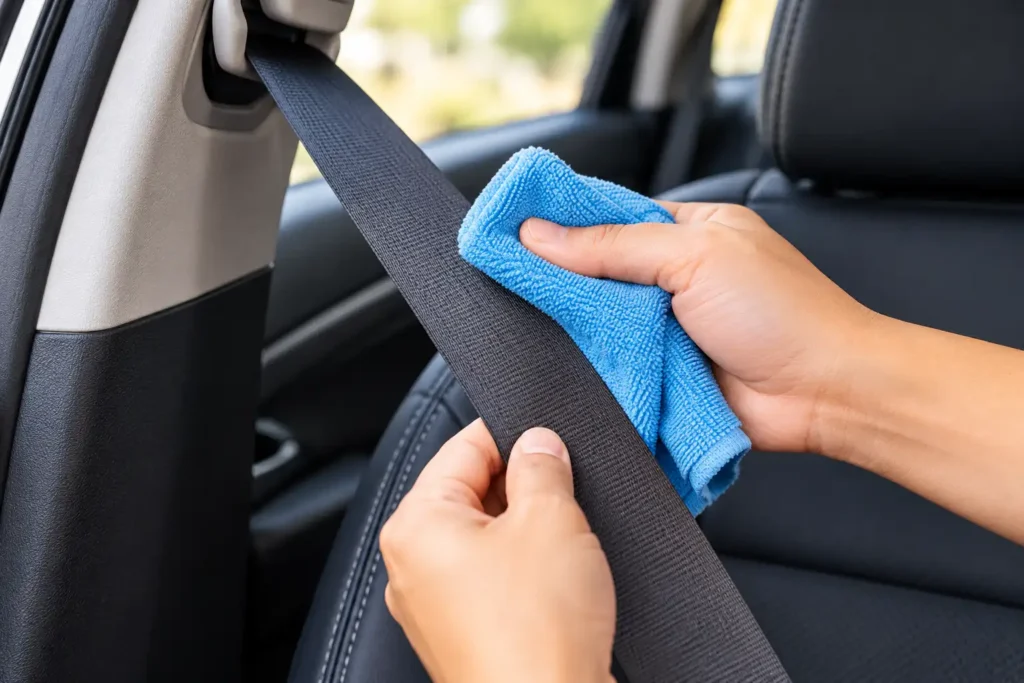
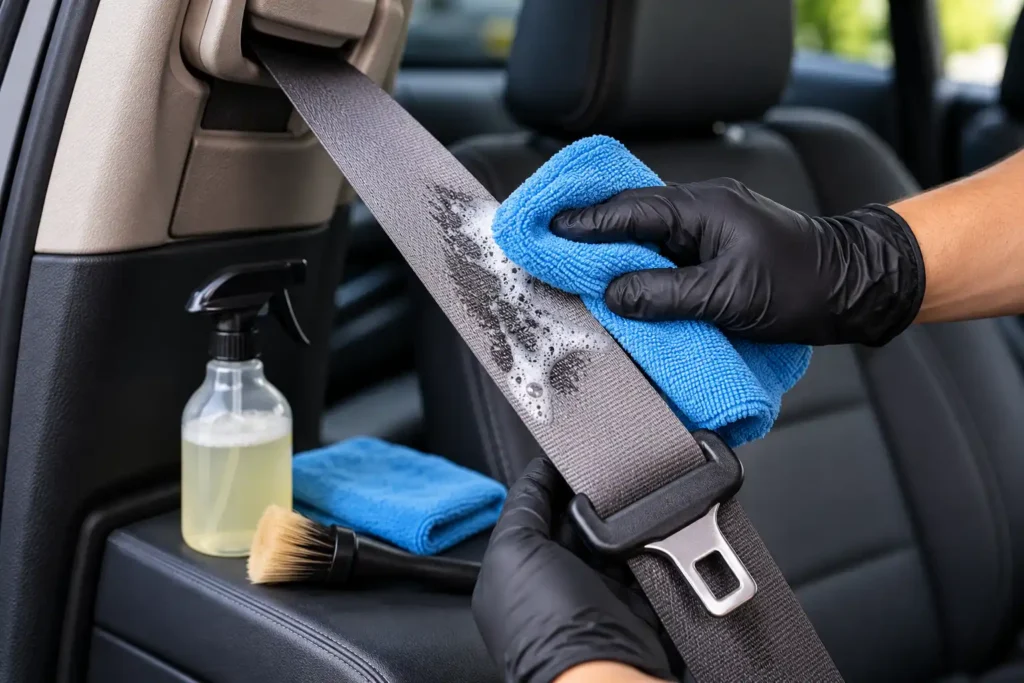
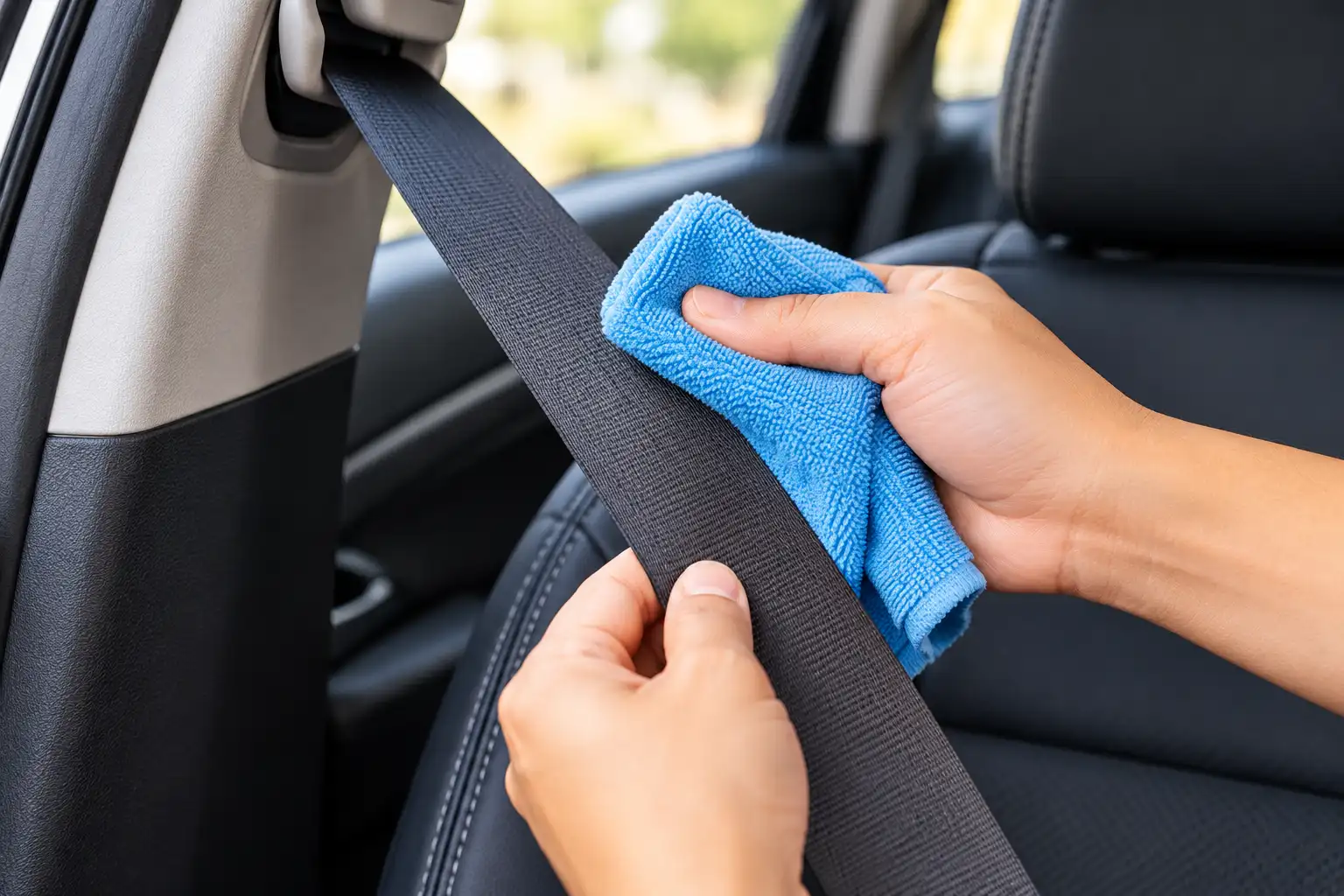
Cigarette smoke can leave an odor on fabric seats, carpets, headliners, seat belts, and other interior surfaces. Smoke residue may also accumulate on hard surfaces and inside ventilation components.
Opening the windows may improve the smell temporarily, but persistent smoke odor usually requires cleaning multiple surfaces.
3. Pet Odors
Dogs and other pets can introduce hair, dirt, saliva, and body odors into a vehicle. Accidents may also leave urine in upholstery or carpet padding.
Pet odors often return when the affected material becomes damp because the contamination has not been fully removed.
4. Damp Carpets and Moldy Smells
A musty or damp smell can develop when water remains in floor mats, carpets, upholstery, or the trunk. Leaking doors, damaged window seals, wet shoes, and clogged drainage areas may allow moisture to accumulate.
Persistent moisture can encourage mold growth. Cleaning the surface without correcting the water problem will not solve the underlying cause.
5. Air-Conditioning and Ventilation Odors
If an unpleasant smell appears mainly when you switch on the air conditioner or fan, the source may involve the cabin air filter, evaporator area, moisture in the ventilation system, or contamination in the air passages.
A musty smell from the vents should not automatically be treated with an air freshener. The underlying cause may require inspection or cleaning.
6. Sweat and Everyday Interior Buildup
Frequent use, sweaty clothing, food crumbs, dirty floor mats, and accumulated dust can gradually make a car smell stale. These odors may not have one obvious source.
A complete interior cleaning often helps because several small sources can combine to create a noticeable smell.
7. Mechanical or Chemical Odors
Not every unpleasant car smell comes from a dirty interior. Fuel odors, exhaust smells, burning odors, or a strong chemical smell may indicate a mechanical fault or fluid leak.
If you smell gasoline, exhaust fumes, or burning material, do not treat the problem as an ordinary detailing issue. Stop driving when it is safe to do so, leave the vehicle if fumes are strong or you feel unwell, and arrange a professional inspection. A persistent rotten-egg smell may also require mechanical attention.
What You Need to Remove Odors From Your Car
Gather the appropriate cleaning supplies before beginning. You may not need every item; choose products based on the surfaces and odor source involved.
Essential Cleaning Supplies
- Vacuum cleaner with suitable interior attachments
- Clean microfiber cloths
- Soft interior detailing brush
- Upholstery cleaner compatible with your seat fabric
- Carpet cleaner suitable for automotive carpets
- Appropriate leather cleaner and conditioner for leather seats
- Clean towels for absorbing moisture
- An automotive interior cleaner approved for the relevant surfaces
- An enzyme-based cleaner specifically labeled for the type of organic contamination, if needed
- Replacement cabin air filter, if inspection shows it is due for replacement
Always read product labels and follow the vehicle manufacturer’s care instructions. Test a new cleaner on a small, hidden area before applying it to a visible surface.
Avoid mixing cleaning chemicals. Never combine bleach with ammonia or acidic products, because dangerous gases may be produced.
How to Remove Odors From Your Car Step by Step
The following process works well as a starting point for many everyday interior odors. Adjust the method for the source of the smell and the materials in your vehicle.
Step 1: Identify the Source of the Odor
Begin by noticing when and where the smell occurs.
Ask yourself these questions:
- Is the odor present all the time, or only when the air conditioner is running?
- Does it become stronger after rain or washing the car?
- Is the smell concentrated around a seat, floor mat, or trunk?
- Does it resemble spoiled food, smoke, damp fabric, fuel, or burning material?
- Did a drink spill, a pet accident, or another incident happen recently?
If the smell is associated with fuel, exhaust, burning, or a possible chemical leak, prioritize safety and professional inspection rather than interior cleaning.
For ordinary interior odors, identifying the source helps you avoid cleaning the entire vehicle unnecessarily.
Step 2: Remove Trash and Loose Items
Take out food wrappers, drink containers, used tissues, damp clothing, and any other items that may contribute to the smell.
Check less obvious areas, including:
- Under the front seats
- Between the seat cushions
- Door pockets
- Center-console storage
- Cup holders
- The glove compartment
- The trunk and cargo area
- Under removable floor mats
A small piece of forgotten food or a leaking container can create a surprisingly strong odor.
Remove any personal items that could be damaged by cleaning products or moisture. If you find wet materials, take them out of the vehicle and dry them separately when appropriate.
Step 3: Remove and Clean the Floor Mats
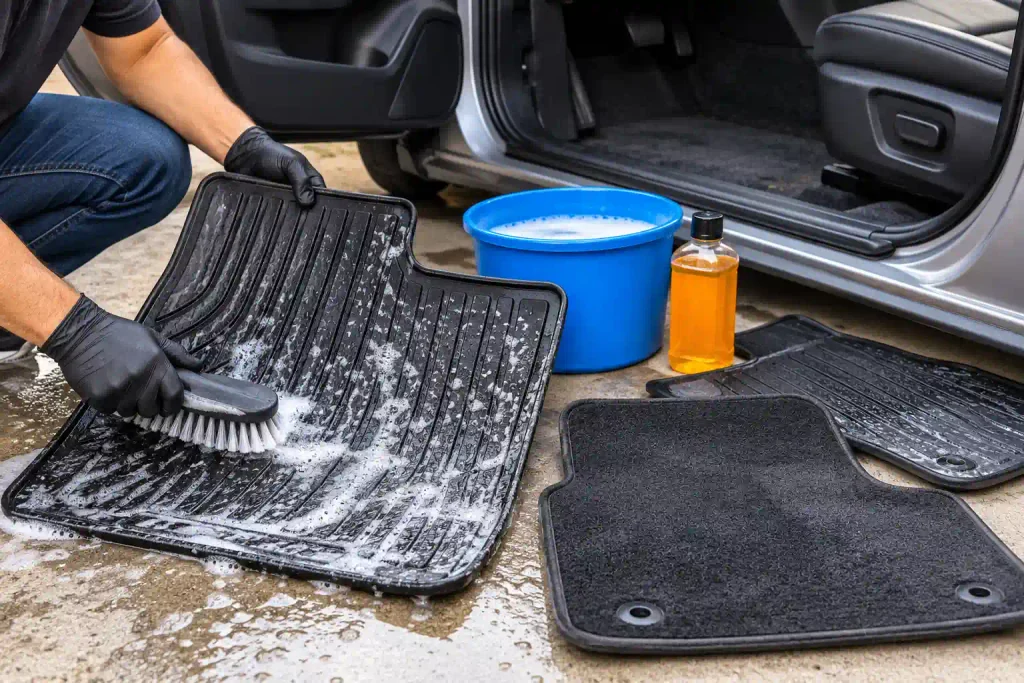
Take out the removable floor mats so you can inspect the carpet underneath.
Shake loose dirt from the mats, then vacuum them. Follow the cleaning instructions for the specific material: rubber mats, carpeted mats, and specialty liners may require different methods.
For carpeted mats, use an appropriate carpet cleaner and avoid soaking the backing. Rubber mats may be cleaned with a suitable detergent and water if their care instructions permit it.
Rinse only when the product and mat material allow it, and dry the mats completely before reinstalling them.
Do not put damp mats back into the car. Trapped moisture can cause the musty smell to return.
Step 4: Vacuum the Entire Interior
Vacuuming removes dust, crumbs, pet hair, and other debris that can trap odors.
Work slowly across:
- Front and rear carpets
- Seat surfaces and crevices
- The areas beneath the seats
- Floor-mat locations
- The trunk carpet
- Accessible fabric panels
Use an attachment suitable for the surface. Avoid scratching leather, delicate trim, or electronic controls.
If the seats contain heavy pet hair, use an appropriate pet-hair removal tool designed for automotive upholstery before vacuuming.
Vacuuming will not eliminate every odor, especially if liquid has penetrated into the padding, but it removes loose contamination before deeper cleaning.
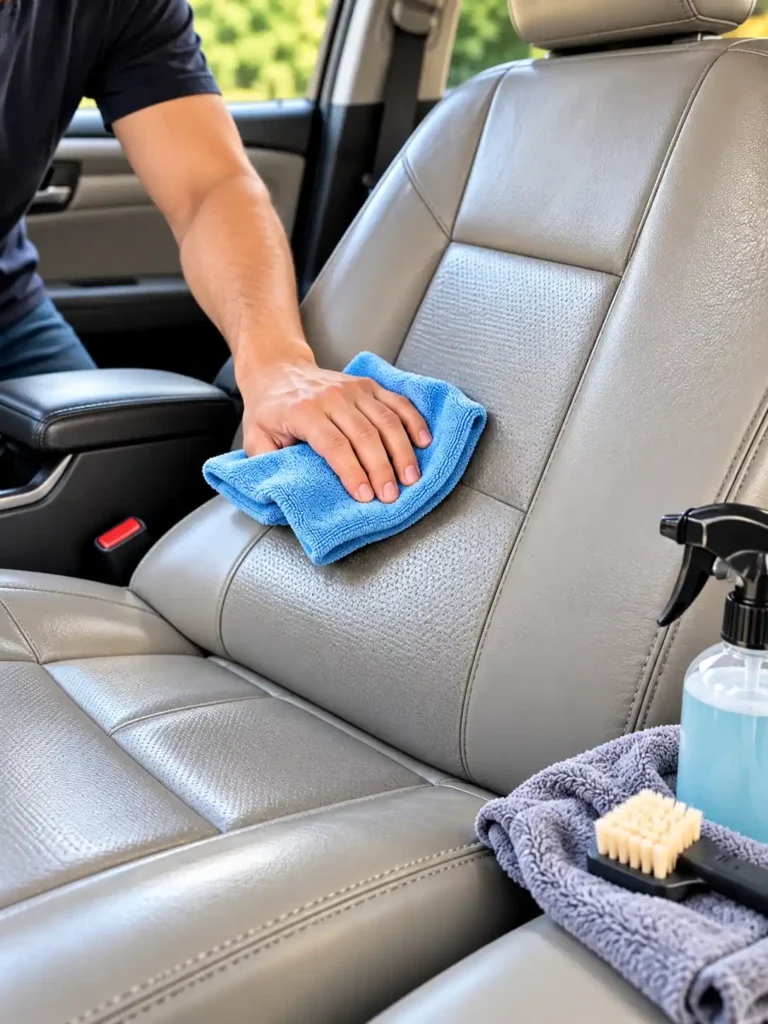
Step 5: Clean the Seats According to Their Material
Seat material matters because using the wrong cleaner can cause discoloration, stiffening, or damage.
Fabric seats
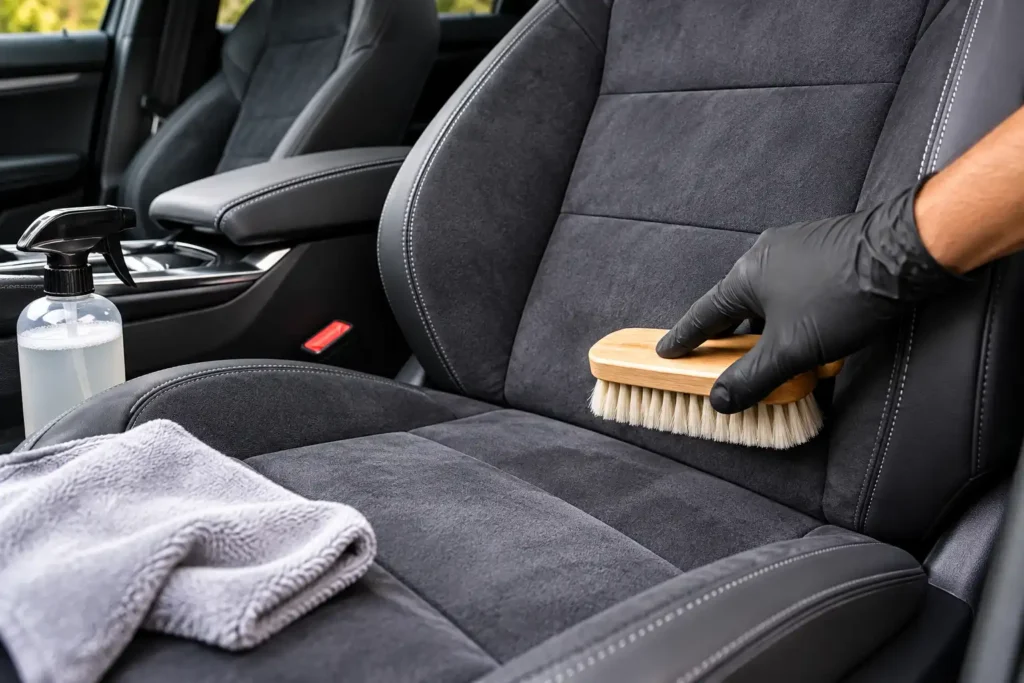
Vacuum the fabric first. Apply an automotive upholstery cleaner according to its label and work on a small section at a time.
Use a soft brush only if the product and fabric permit it. Blot loosened contamination with a clean towel rather than rubbing aggressively.
Avoid saturating the seat. Foam and padding underneath the fabric can retain moisture for a long time.
Leather seats
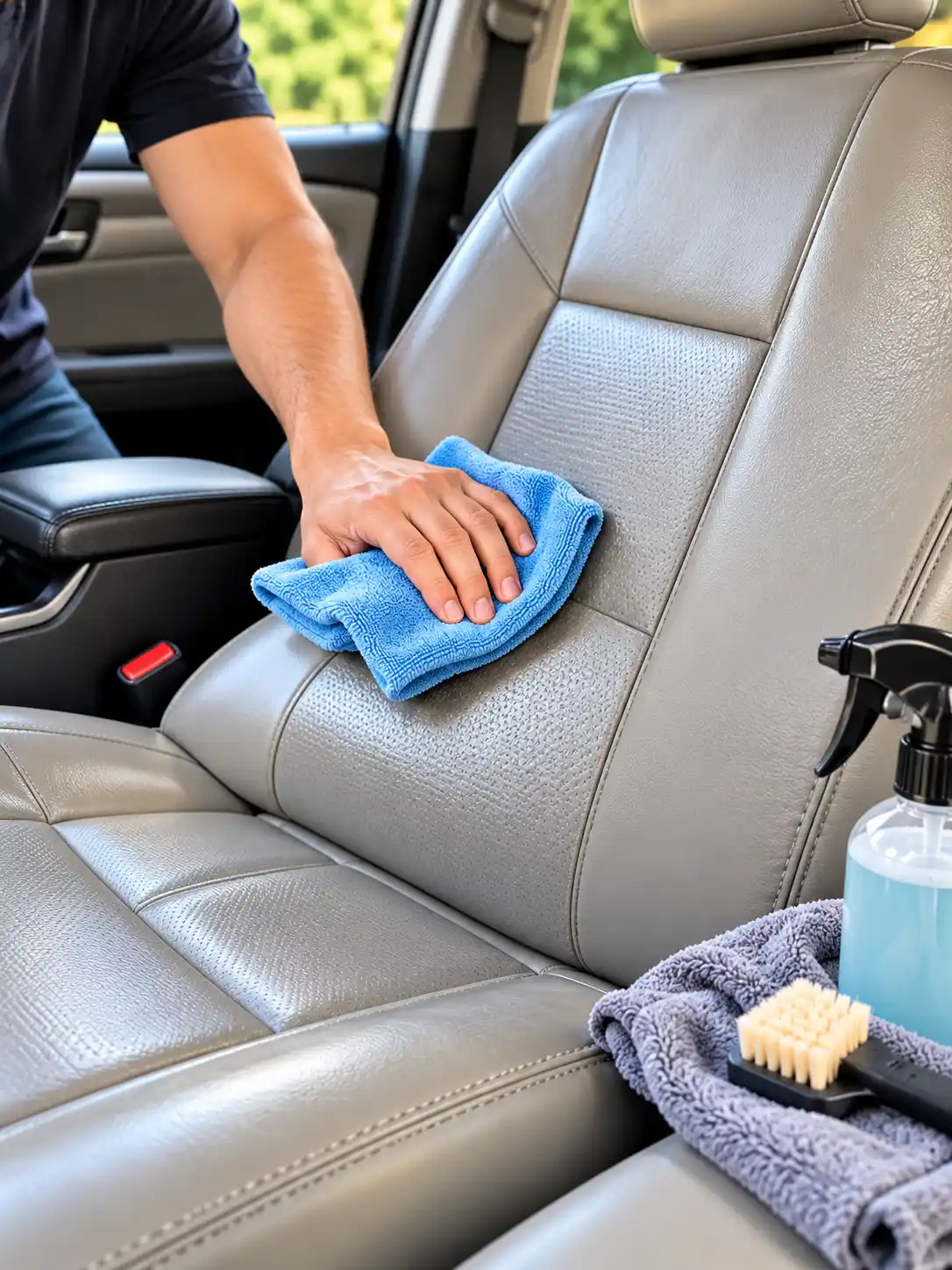
Use a cleaner specifically designed for automotive leather and follow the vehicle manufacturer’s recommendations. Apply it with a soft cloth and remove residue as directed.
Do not use strong household detergents, abrasive brushes, or unapproved solvents. Leather may absorb odors from spills, but excessive moisture or harsh chemicals can damage its finish.
Use a compatible leather conditioner if recommended for your seat type and the manufacturer’s care instructions.
Synthetic leather and vinyl
Use a cleaner compatible with the particular material. Do not assume that a product intended for natural leather is suitable for synthetic upholstery.
Wipe away residue according to the product instructions and avoid allowing liquid to enter seams.
For more interior-care advice, see the DIY Car Detailing Checklist.
Step 6: Clean the Carpets and Address Spills
Carpet and carpet padding are common sources of persistent odor because liquids can travel below the visible surface.
Start by vacuuming the carpet. If a spill is fresh, blot up as much liquid as possible using clean towels. Do not rub the spill outward or push it deeper into the fibers.
Use a compatible carpet cleaner according to the label. For a dried spill, follow the product’s instructions for loosening and removing the residue.
If a drink or other liquid has penetrated into the padding, surface cleaning may not be enough. The carpet may need professional extraction or partial removal to clean and dry the material underneath.
After cleaning, make sure the carpet and padding dry completely. A wet carpet can develop a new musty odor and may allow mold growth.
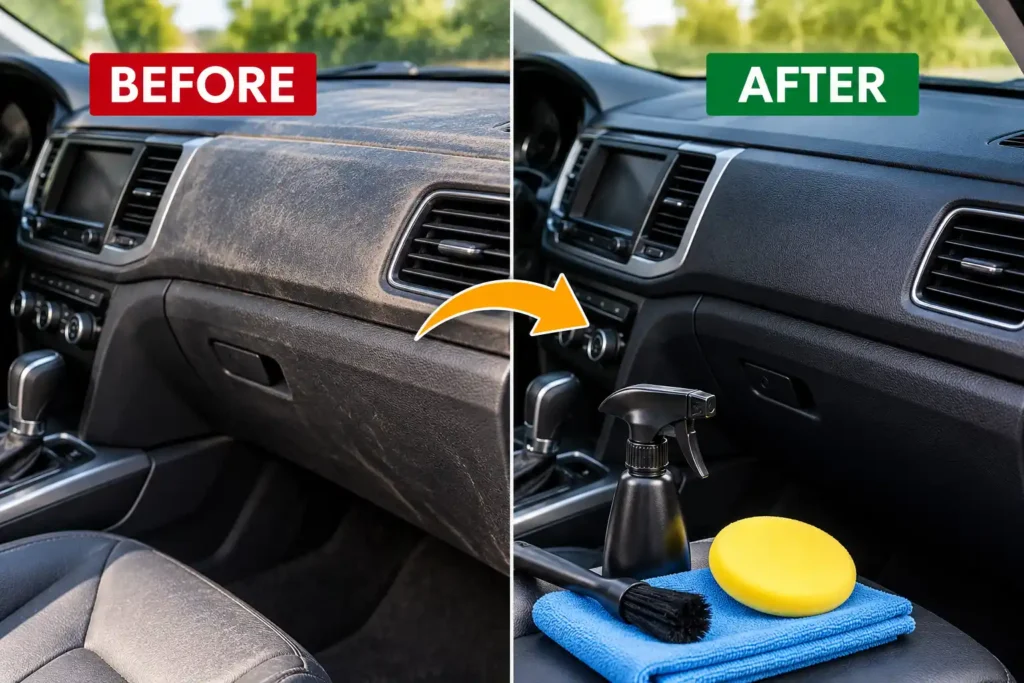
Step 7: Clean Hard Interior Surfaces
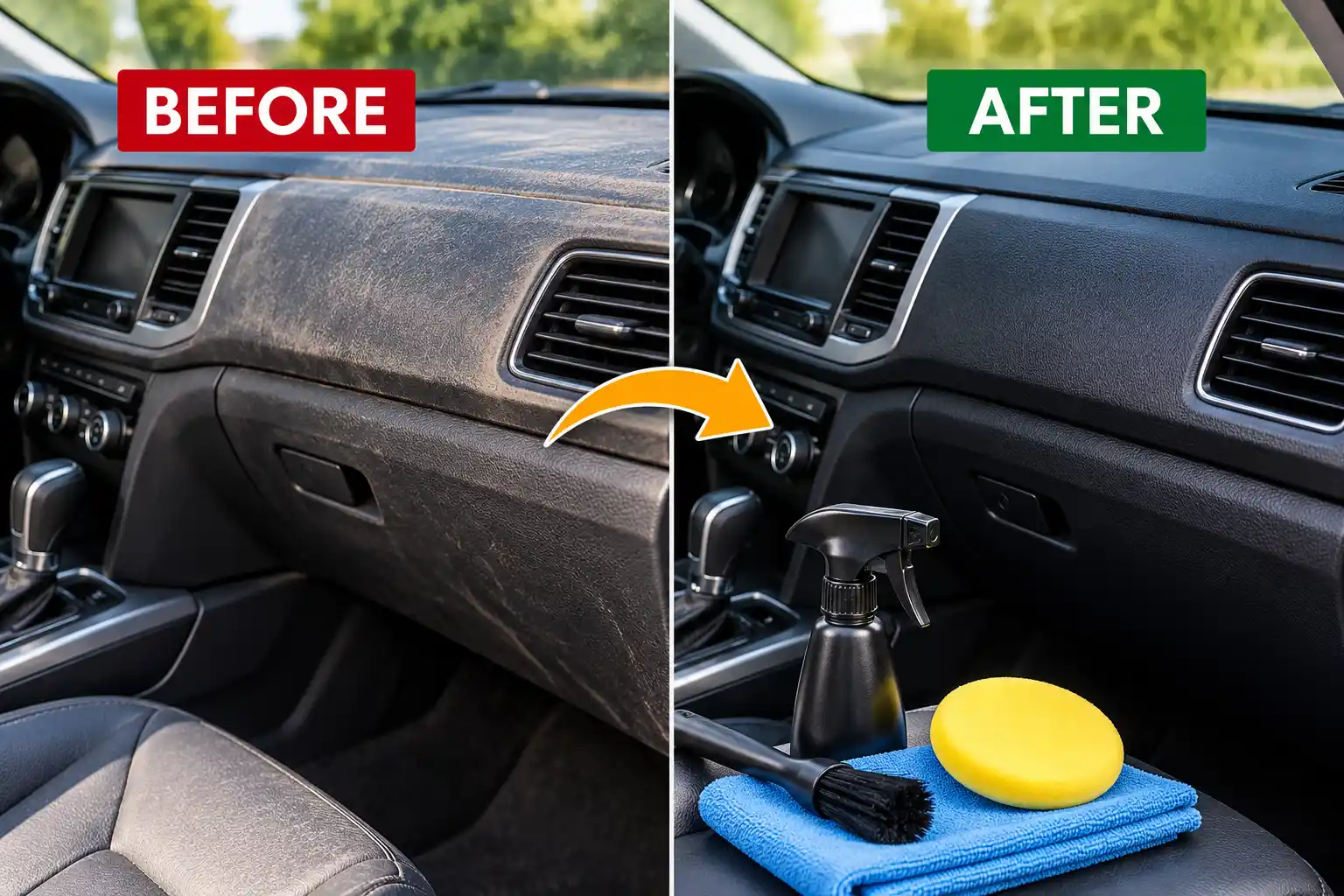
Dust, skin oils, food residue, and smoke deposits can collect on the dashboard, steering wheel, door panels, cup holders, and center console.
Use an interior cleaner compatible with each surface. Apply it to a microfiber cloth when appropriate, rather than spraying liquid near electronics, switches, or air vents.
Pay attention to cup holders and storage compartments where spilled drinks may dry and leave sticky residue.
Avoid applying glossy dashboard dressings to surfaces where they are not intended. Strong fragrances may also combine with the existing odor rather than eliminate it.
Step 8: Inspect the Trunk and Hidden Storage Areas
Odors can come from the trunk even when the passenger compartment appears clean.
Remove the cargo mat and inspect the area underneath. Look for wet carpet, spilled liquids, forgotten groceries, pet-related contamination, and signs of water entering the vehicle.
If you discover moisture, identify how it entered before cleaning. Possible causes include a damaged seal, a leak, or water carried into the car.
Clean affected materials with a suitable product and dry them completely. If water has reached insulation or padding underneath the carpet, professional inspection may be needed.
Step 9: Inspect the Cabin Air Filter
The cabin air filter helps filter incoming air and can collect dust and other airborne particles. A dirty or damp filter may contribute to unpleasant ventilation odors, depending on the source of contamination.
Consult your owner’s manual to locate the filter and check its recommended replacement interval. Replace it if it is dirty, damaged, damp, or due for replacement according to the manufacturer.
Use the correct replacement part and installation procedure. If the filter looks clean but the air conditioner continues to produce a strong musty odor, the source may be elsewhere in the ventilation system.
A new filter cannot fix a leak, contaminated evaporator, or moisture problem by itself.
Step 10: Dry the Interior and Ventilate the Vehicle
Drying is one of the most important parts of lasting odor removal.
Remove wet floor mats and dry them outside the vehicle in a suitable location. Use clean towels to absorb excess moisture from upholstery and carpet, following the cleaning product instructions.
When the weather and surroundings allow, ventilate the car in a safe, dry location. Do not leave the vehicle unsecured or exposed to rain while drying it.
For deeply damp carpet or upholstery, professional extraction and drying equipment may be necessary.
Do not reinstall wet mats or cover damp carpet with protective liners. The goal is to remove the moisture source, not trap it underneath another layer.
Step 11: Recheck the Interior Before Using an Air Freshener
Once the interior is clean and dry, check whether the smell has disappeared.
If the odor remains, return to the source investigation. Check beneath the seats, inside the trunk, around the ventilation system, and in any location where a spill or leak may have occurred.
Only consider a mild air freshener after the underlying contamination has been addressed. A fragrance should be an optional finishing touch, not the primary odor-removal method.
How to Remove Specific Types of Car Odors
Different odors call for different treatments. The following methods address common problems while minimizing the risk of damaging interior materials.
How to Remove Cigarette Smoke Smell From a Car
Cigarette smoke can linger because residue settles on multiple surfaces and becomes trapped in porous materials.
To reduce smoke odor:
- Remove rubbish, ash, and other visible residue.
- Vacuum seats, carpets, floor mats, and accessible crevices.
- Clean hard surfaces with a compatible automotive interior cleaner.
- Clean fabric upholstery and carpets using products designed for those materials.
- Clean leather or synthetic leather using the appropriate product.
- Replace the cabin air filter if necessary.
- Allow cleaned materials to dry completely.
- Reassess the odor after the interior has aired out.
The headliner deserves special care. It is often made from fabric bonded to a backing, and excessive moisture or aggressive scrubbing may loosen the adhesive or cause sagging. Use an appropriate product and a conservative cleaning method, or seek professional detailing if the smoke residue is heavy.
Severe, long-standing smoke odors may require professional cleaning of multiple surfaces and parts of the ventilation system. Avoid simply covering the smell with a strong fragrance.
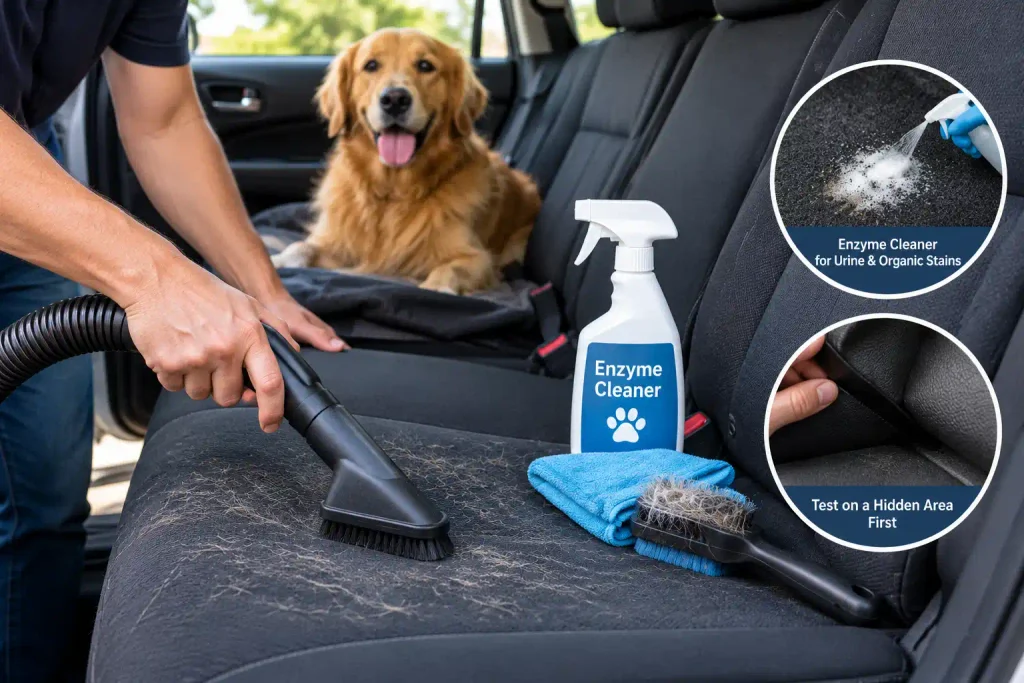
How to Remove Pet Odors From a Car
Pet hair, saliva, and accidents can leave persistent smells in seats and carpets.
Start by removing loose hair and debris. Vacuum the upholstery and clean visible dirt with a compatible product.
For urine or other organic contamination, choose an enzyme-based cleaner specifically labeled for that type of stain and the affected automotive material. Follow the product’s directions for application, contact time, and removal.
Do not assume every enzyme cleaner is suitable for leather or every type of fabric. Test the product on a hidden area first.
If the liquid has soaked into seat foam or carpet padding, surface treatment may not reach the entire affected area. Professional extraction or deeper cleaning may be required.
How to Remove Vomit Smell From a Car
Vomit can produce a strong odor because organic material may remain in upholstery, seams, or carpet padding.
Wear suitable disposable gloves when cleaning the affected area. Remove solid material carefully without spreading it, then blot up excess liquid using absorbent towels.
Clean the affected surface with a product specifically suitable for the material and type of contamination. Follow the label directions, including any required contact time.
Avoid soaking the area or combining multiple cleaners. If the material has been heavily contaminated, especially beneath the carpet or seat fabric, professional cleaning may be necessary.
Dry the area completely and check again for lingering odor once the vehicle has aired out.
How to Remove Milk and Sour Food Smells From a Car
Milk, dairy drinks, and food spills can create a sour odor when residue remains in fabric or padding.
Blot fresh spills immediately. Use a cleaner approved for the affected upholstery or carpet, following the product instructions.
Do not rely on a fragrance to hide the sour smell. If milk has penetrated deeply, the residue may remain below the visible surface.
Persistent sour odors may require extraction or removal of affected padding. Once the contamination is removed, dry the area thoroughly before putting mats or seat covers back in place.
How to Remove Musty Smells From a Car’s Air Conditioner
A musty odor that appears when the air conditioner or fan starts may indicate moisture or contamination in the ventilation system. However, the smell alone cannot confirm the exact cause.
Try these steps:
- Note whether the smell occurs only when the fan or air conditioner runs.
- Inspect the cabin air filter and replace it if required.
- Check for signs of water leaks or damp carpet inside the vehicle.
- Follow the vehicle manufacturer’s instructions for air-conditioning maintenance.
- Have the evaporator area, condensate drainage, and ventilation system inspected if the smell persists.
Some vehicles have manufacturer-recommended procedures for drying the air-conditioning system after use. Follow your vehicle’s guidance rather than relying on a universal procedure.
Do not spray household disinfectants, perfume, or unapproved cleaners into the vents. If the odor returns after replacing the filter, professional diagnosis may be needed.
How to Remove Moldy Smells From a Car Interior
A moldy or earthy smell often indicates persistent moisture, although other contamination can also cause a musty odor.
Inspect carpets, floor mats, seat areas, and the trunk for dampness or water entry. Check whether wet items have been left inside and whether seals or drainage areas may be allowing water into the vehicle.
Correct the moisture source first. Clean affected materials using products suitable for the surface and follow their directions.
Small, superficial contamination on a cleanable hard surface may be manageable with an appropriate product. However, widespread mold, recurring growth, contamination inside seat foam, or mold in the ventilation system may require professional assessment.
Do not simply spray air freshener over a moldy smell. The moisture problem must be resolved, and contaminated materials may need specialized cleaning or replacement.
How to Remove Gasoline or Exhaust Smells From a Car
Gasoline and exhaust odors should not be treated as routine interior detailing problems.
If you smell fuel, exhaust, or a strong burning odor, stop driving when it is safe to do so. If fumes are strong, leave the vehicle and keep others away. Arrange a qualified mechanical inspection.
Do not continue driving in an attempt to air out a possible fuel or exhaust leak. If you suspect exhaust fumes are entering the cabin, prioritize getting to safety and professional assistance.
Cleaning the carpet or using an odor eliminator will not fix a mechanical leak.
Do Baking Soda, Charcoal, and Air Fresheners Remove Car Odors?
Some odor-control products can help with certain smells, but none should replace cleaning the source of the odor.
Baking Soda
Baking soda is commonly used to help manage odors, but it is not a complete solution for contaminated upholstery, deep spills, mold, or mechanical problems.
If you choose to use it on a suitable, dry surface, avoid grinding it into delicate fabric and remove all residue thoroughly with a vacuum. Do not apply it to a surface if the material or manufacturer instructions prohibit it.
For a liquid spill, cleaning and drying the affected area is more important than sprinkling powder over it.
Activated Charcoal
Activated charcoal products may help reduce some odors in a confined space, depending on the product and the type of odor. Their effectiveness varies, and they cannot clean a contaminated surface or remove a hidden source of moisture.
Use a product intended for vehicle interiors, keep it secured, and follow its instructions. Do not expect it to solve a persistent smell caused by spilled liquid or a ventilation-system problem.
Car Air Fresheners
Air fresheners add fragrance and may make the cabin smell more pleasant, but they do not necessarily remove the underlying contamination.
If you use one, choose a fragrance level that is comfortable for passengers and avoid products that could spill onto interior materials.
A fragrance-free, clean interior is often preferable to a strong scent layered over an unresolved odor.
Ozone Generators
Avoid using ozone generators as a routine do-it-yourself car odor-removal method. The U.S. Environmental Protection Agency explains that ozone can irritate the lungs and that ozone generators can produce harmful concentrations under some conditions. At levels within public-health standards, ozone is generally ineffective at removing many indoor air contaminants.
If a professional proposes specialized odor treatment, ask about the method, safety precautions, and whether it is appropriate for your vehicle and the materials involved.
How to Prevent Bad Smells From Returning
After removing an odor, simple maintenance can help keep your vehicle smelling fresh.
Remove Food Waste Promptly
Do not leave food containers, drink cups, or perishable items in the cabin for long periods. Check under seats and inside storage areas during routine cleaning.
Keep Floor Mats Clean and Dry
Remove dirt and moisture from floor mats regularly. After rain or spills, lift removable mats and check the carpet underneath.
Clean Spills Immediately
Blot spills before liquid reaches the seat foam or carpet padding. Use an appropriate cleaner and allow the area to dry completely.
Inspect for Water Leaks
If carpets repeatedly become wet after rain or washing, inspect door seals, windows, the trunk, and other potential entry points. Persistent water intrusion should be diagnosed and repaired.
Replace the Cabin Air Filter as Recommended
Follow the replacement schedule in your vehicle’s owner’s manual. If odors persist despite a new filter, investigate other parts of the ventilation system.
Vacuum the Interior Regularly
Remove crumbs, pet hair, dust, and other debris before they accumulate. A regular interior maintenance routine is easier than treating a severe odor later.
For a complete cleaning schedule, see our guide on how often to deep clean your car.
When Should You Get Professional Car Odor Removal?
Professional detailing or mechanical inspection may be the better option when:
- Smoke odor remains after thorough interior cleaning.
- Milk, urine, vomit, or another liquid has soaked into deep padding.
- The car repeatedly develops a musty smell.
- You find widespread mold or recurring mold growth.
- Water has entered areas beneath the carpet or inside the dashboard.
- The air conditioner continues to produce a strong odor after basic maintenance.
- Fuel, exhaust, burning, or chemical smells suggest a mechanical problem.
A professional detailer may have extraction equipment and specialized products for upholstery and carpets. A mechanic or automotive HVAC specialist can diagnose ventilation problems, leaks, or other faults that ordinary detailing cannot fix.
Before booking a service, explain what the odor smells like, where it is strongest, and when it appears. This information can help the professional narrow down the likely source.
Frequently Asked Questions About Removing Car Odors
1. What Is the Fastest Way to Remove Bad Odors From a Car?
The fastest way to remove bad odors from a car is to remove rubbish, clean the source of the smell, and ventilate the interior when safe. Blot spills promptly, vacuum affected areas, and use a cleaner suitable for the surface. Persistent odors may require deeper cleaning.
2. How Do You Permanently Remove Cigarette Smoke Smell From a Car?
To remove cigarette smoke smell from a car, clean compatible interior surfaces, upholstery, carpets, and floor mats to remove smoke residue. Replace the cabin air filter if necessary. Severe or persistent smoke odors may require professional detailing and ventilation-system inspection.
3. Why Does My Car Still Smell Bad After Cleaning?
A car may still smell bad after cleaning because odor-causing residue remains beneath carpets, inside upholstery padding, in the trunk, or within the ventilation system. Trapped moisture can also cause recurring odors. Identify and remove the source rather than masking it with air freshener.
4. How Do You Get Rid of a Musty Smell From a Car’s Air Conditioner?
Start by checking the cabin air filter, looking for damp carpets, and checking for signs of water leaks. If the musty smell continues, have the air-conditioning drainage and ventilation system inspected. Avoid spraying household chemicals or perfume directly into the vents.
5. Does Baking Soda Remove Bad Smells From a Car?
Baking soda may help reduce some minor odors on suitable surfaces, but it cannot replace cleaning spills or removing contaminated materials. Use it only where appropriate for the surface, and remove all powder residue. If moisture or mold is causing the smell, address the underlying problem.
6. How Do You Remove Pet Urine Smell From Car Seats?
Blot fresh pet urine with a clean absorbent cloth without rubbing it deeper into the upholstery. Apply a cleaner specifically labeled for pet urine and suitable for your seat material, following the product instructions. If urine has penetrated the seat foam, professional extraction may be needed.
7. Is a Musty Smell in a Car a Sign of Mold?
A persistent musty smell can indicate trapped moisture or possible mold growth, but the smell alone cannot confirm mold. Check for damp carpets, water leaks, and recurring condensation. Fix the source of moisture and seek professional help if contamination is widespread or keeps returning.
Final Thoughts
Learning how to remove odors from your car is about more than making the cabin smell pleasant. The most reliable approach is to identify the source, remove the contamination, clean affected surfaces with compatible products, and dry the interior completely.
Food spills, cigarette smoke, pet accidents, damp carpets, and ventilation odors each require a different approach. If the smell returns, look for hidden residue, trapped moisture, or a problem that ordinary cleaning cannot fix.
Avoid relying on strong fragrances to cover persistent smells, and treat fuel, exhaust, burning, or unusual chemical odors as potential mechanical or safety problems.
With regular vacuuming, prompt spill cleanup, dry floor mats, and appropriate maintenance, you can help keep your car’s interior cleaner and more comfortable for every drive.