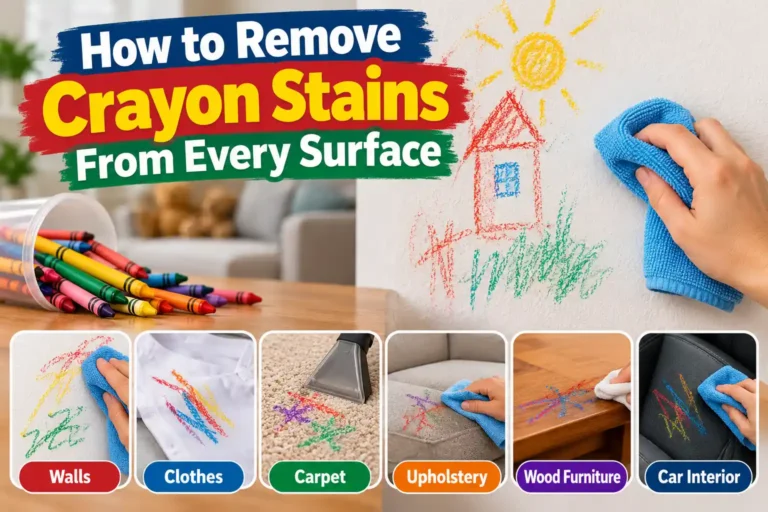
Crayon marks can turn a clean wall, carpet, sofa, or car interior into a frustrating cleaning problem. Children may accidentally draw on painted walls, leave colorful streaks on furniture, or drop crayons onto carpets and upholstery. Melted crayons can create an even bigger mess when they end up in clothing or a clothes dryer.
Learning how to remove crayon stains correctly is important because crayons contain wax and colored pigments. Removing the wax alone may leave a colored mark, while using the wrong cleaner can damage paint, fabric, wood finishes, leather, or plastic.
The safest approach is to remove excess crayon first, identify the affected material, test the cleaning method in an inconspicuous area, and work gradually with a compatible cleaner.
In this complete guide, you will learn how to remove crayon stains from painted walls, clothing, carpet, upholstery, wooden furniture, plastic, glass, tile, leather, wallpaper, and car interiors. You will also discover how to handle melted crayon stains, avoid common cleaning mistakes, and prevent permanent damage.
How to Remove Crayon Stains
To remove crayon stains, gently scrape away excess wax using a plastic scraper or another suitable dull-edged tool. For washable hard surfaces, try a soft cloth with warm water and a small amount of mild dishwashing liquid, provided the material’s care instructions allow it.
For clothing, remove excess wax and pretreat the stain with a suitable laundry stain remover or liquid dish soap before washing according to the fabric care label. For carpet and upholstery, use a cleaner approved for the specific material and blot rather than scrub.
Always test cleaning products in a hidden area first. Avoid aggressive scrubbing, excessive heat, unapproved solvents, and abrasive cleaners on delicate finishes.
Why Are Crayon Stains Difficult to Remove?
Crayon stains can be stubborn because they contain two types of residue: wax and pigment.
The waxy material adheres to a surface, while the pigment can leave a colored mark after much of the wax has been removed. This is why simply wiping a crayon mark with water may not work.
Different surfaces also respond differently to cleaning products. A washable painted wall may tolerate gentle cleaning, while unsealed wood can absorb color and delicate upholstery may be damaged by excessive moisture.
Before choosing a cleaning method, determine whether the stained material is washable, water-sensitive, porous, coated, or delicate.
What You Need to Remove Crayon Stains
Gather a few basic cleaning supplies before starting:
- A plastic scraper or plastic card with a smooth edge.
- Clean, soft microfiber cloths.
- White absorbent cloths or paper towels.
- Mild dishwashing liquid.
- A surface-compatible all-purpose cleaner.
- A suitable laundry stain remover for washable clothing.
- A carpet or upholstery cleaner approved for the affected material.
- A soft sponge and a small container of water.
You may not need every item. Choose supplies based on the surface you are cleaning.
Avoid using a metal blade, rough scouring pad, or aggressive chemical simply because the stain is difficult to remove.
How to Remove Crayon Stains Step by Step
Before treating a specific surface, follow this basic process.
Step 1: Remove Excess Crayon
If a thick layer of crayon remains, gently lift away as much as possible using a smooth plastic scraper.
Keep the scraper nearly flat against the surface and work carefully to avoid scratching or spreading the wax.
For fabric, carpet, and upholstery, lift the excess wax rather than pushing it deeper into the fibers.
Step 2: Identify the Surface
Determine whether the material is painted, finished, unfinished, washable, porous, or delicate.
A method suitable for glass may damage painted wood. A detergent that works on washable clothing may leave marks on leather.
If the item has care instructions, read them before applying any cleaning product.
Step 3: Test the Cleaner
Apply a small amount of the intended cleaner to a hidden area, following the product instructions.
Check for color transfer, discoloration, finish changes, swelling, or other damage. Allow the test area to dry when appropriate before proceeding.
Do not continue if the cleaner changes the material’s appearance.
Step 4: Treat the Stain Gently
Use the least aggressive method appropriate for the surface.
For washable hard surfaces, a soft cloth and mild soapy water may be sufficient. For fabrics, use an approved stain-treatment product and blot carefully.
Avoid soaking the surface or applying several different cleaners at once.
Step 5: Remove Residue and Allow the Surface to Dry
Where the material permits rinsing, remove cleaning residue with a clean cloth lightly dampened with water.
Dry the area using a clean cloth or allow it to air-dry according to the material’s care instructions.
Inspect the area before repeating the process. Some stains require more than one gentle treatment.
How to Remove Crayon Stains From Painted Walls
Crayon marks on painted walls are common in homes with young children. The challenge is removing the wax without damaging the paint or leaving a shiny patch.
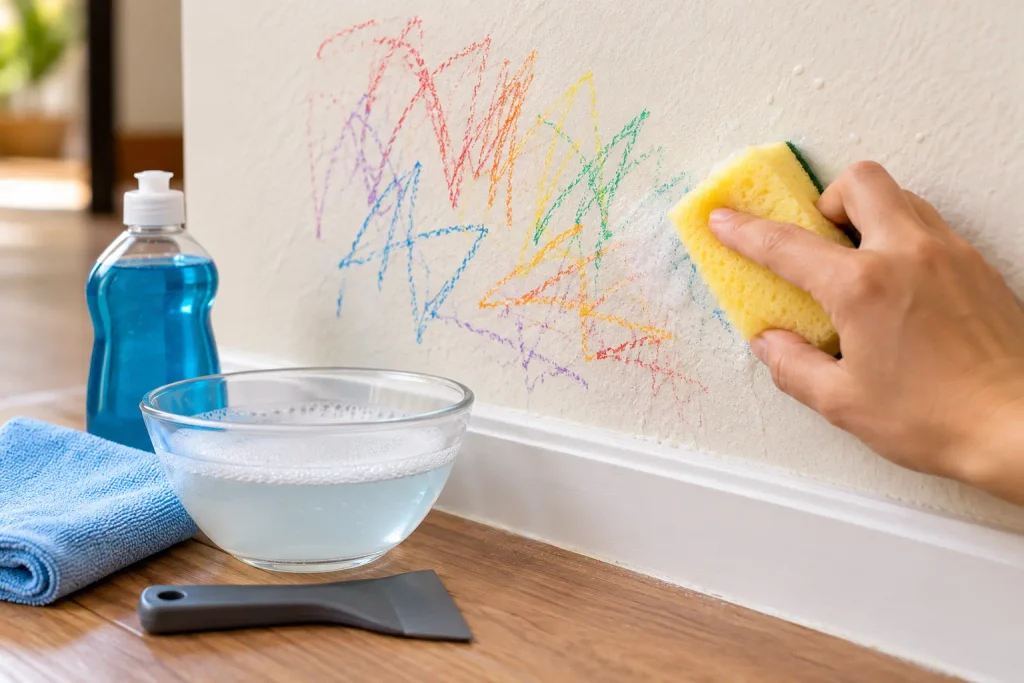
What You Need
- A soft sponge or microfiber cloth.
- Warm water.
- Mild dishwashing liquid.
- A clean, dry cloth.
Cleaning Method
- Remove any thick crayon buildup with a plastic scraper, taking care not to damage the paint.
- Mix a small amount of mild dishwashing liquid with warm water.
- Dampen a soft sponge and wring out the excess water.
- Gently clean a small section of the crayon mark.
- Wipe away the residue with a clean, lightly dampened cloth if the paint finish allows it.
- Dry the area and inspect the result.
If the mark remains, repeat the gentle cleaning process only if the paint tolerates it.
Important Tips for Painted Walls
Always test the method in an inconspicuous area. Flat or matte paint can be more difficult to clean without changing its appearance.
Avoid aggressively scrubbing the same spot. Excessive friction can remove paint or create a noticeable difference in sheen.
A cleaning sponge marketed as a stain eraser can be mildly abrasive. Use one only if it is suitable for the surface and after a hidden-area test.
If the paint becomes discolored or the stain has penetrated the finish, repainting the affected area may be more effective than using stronger chemicals.
How to Remove Crayon From Clothing
Crayon stains on clothing may become more difficult to remove when wax is melted into the fabric. The right treatment depends on the garment’s fiber and care label.
What You Need
- A dull-edged plastic scraper.
- Paper towels or a clean absorbent cloth.
- Liquid dishwashing detergent or a compatible laundry stain remover.
- Laundry detergent.
Cleaning Method
- Remove as much excess crayon as possible without pulling or damaging the fabric.
- Check the garment’s care label before applying a cleaning product.
- Apply a small amount of a suitable stain remover or liquid dish soap to the affected area.
- Gently work the product into the stain according to its instructions.
- Rinse or pretreat as directed by the product manufacturer.
- Wash the garment using the temperature and cycle permitted by the care label.
- Inspect the stained area before placing the garment in a tumble dryer.
If the stain remains, repeat an appropriate treatment before drying.
How to Remove Melted Crayon From Clothing
If crayon has melted into the fabric, allow the garment to cool and carefully remove any solid residue first.
Pretreat the remaining stain with a product suitable for the fabric. Follow the garment’s care label and the cleaner’s instructions.
Do not automatically use the hottest water setting. The permitted temperature depends on the garment’s material and care instructions.
Most importantly, do not tumble-dry the garment while a visible crayon stain remains. Additional heat may make the remaining residue more difficult to remove.
For delicate fabrics or garments labeled dry-clean only, consult a professional cleaner.
How to Remove Crayon Stains From Carpet
Crayon stains on carpet can spread when rubbed, allowing wax and pigment to move deeper into the fibers.
The key is to remove excess material first and use a carpet-compatible cleaner without overwetting the area.
What You Need
- A plastic scraper or dull-edged tool.
- White absorbent cloths.
- A carpet stain remover approved for the carpet type.
- Water, if permitted by the cleaner’s instructions.
Cleaning Method
- Gently scrape off excess crayon without pulling carpet fibers.
- Pick up loose pieces rather than grinding them into the carpet.
- Test the selected carpet cleaner in a hidden area.
- Apply the product according to its label.
- Blot the affected area with a clean, absorbent cloth.
- Repeat as directed, using fresh sections of the cloth.
- Remove residue according to the product instructions.
- Allow the carpet to dry completely.
Tips for Carpet Cleaning
Do not scrub vigorously. Scrubbing may spread the colored residue and damage carpet fibers.
Avoid applying excessive water or solvent. Too much liquid can penetrate the carpet backing and padding, causing additional cleaning problems.
If the stain remains after suitable treatment, or if the carpet is wool, silk, or another delicate material, consult a professional carpet cleaner.
How to Remove Crayon Stains From Upholstery
Crayon can stain fabric sofas, dining chairs, cushions, and upholstered furniture. Upholstery requires special care because the outer fabric may be attached to backing material or foam that does not tolerate excessive moisture.
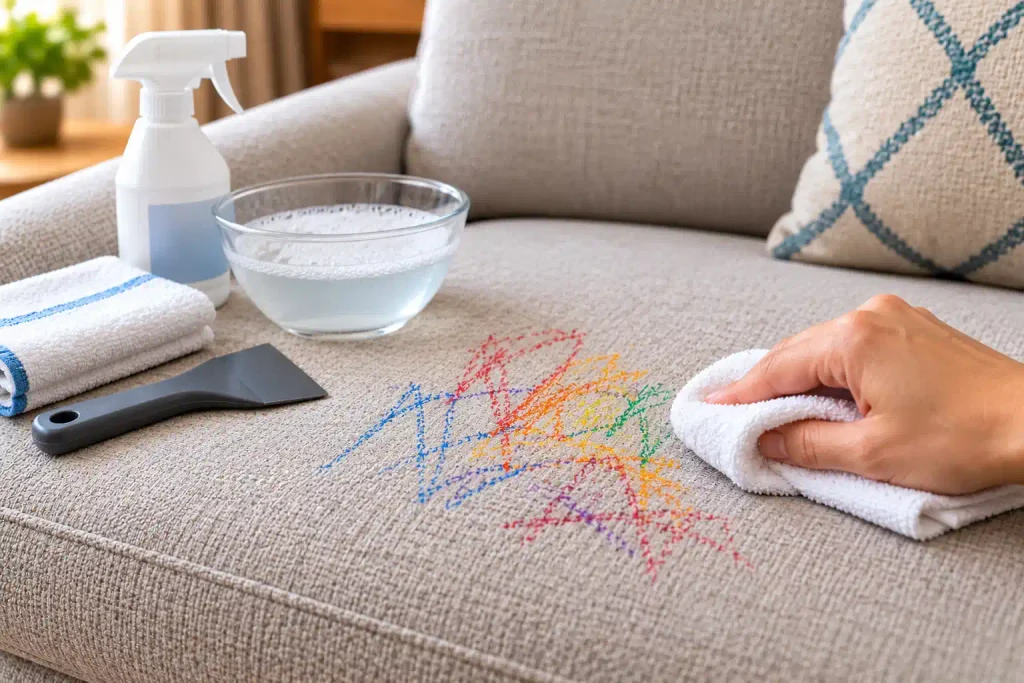
Cleaning Method
- Remove excess crayon with a smooth plastic scraper or another appropriate dull-edged tool.
- Check the upholstery manufacturer’s cleaning instructions.
- Test an approved upholstery cleaner in a hidden area.
- Apply the product as directed, using the smallest necessary amount.
- Blot gently with a clean white cloth.
- Repeat only as permitted by the cleaner’s instructions.
- Remove product residue if required and allow the upholstery to dry.
What to Avoid
Do not soak the fabric or scrub aggressively. Excessive moisture may affect backing materials and cause visible water marks.
Avoid using rubbing alcohol, paint thinner, or other solvents unless the upholstery manufacturer or a qualified cleaning professional confirms that the treatment is appropriate.
For valuable furniture, delicate fabrics, or stains that have penetrated deep into the cushion, professional cleaning is the safer option.
How to Remove Crayon From Wood Furniture
Crayon marks may appear on wooden tables, cabinets, doors, chairs, and trim. The cleaning method depends on whether the wood has a protective finish.
Finished or Sealed Wood
Finished wood has a protective surface that may tolerate gentle cleaning.
- Remove excess crayon with a plastic scraper, taking care not to scratch the finish.
- Test a wood-safe cleaner in an inconspicuous location.
- Apply the cleaner to a soft cloth rather than soaking the wood.
- Wipe the stained area gently.
- Remove residue according to the cleaner’s instructions.
- Dry the surface with a clean cloth.
Avoid abrasive pads and aggressive solvents, which may dull, soften, or remove the finish.
Unfinished or Unsealed Wood
Unfinished wood is more difficult to clean because wax and pigments may penetrate its pores.
Do not begin by applying large amounts of water or household cleaner. Moisture and chemicals can change the wood’s appearance or drive the stain deeper.
Gently remove surface wax and consult a wood-care professional if color remains embedded in the grain.
Sanding may sometimes be necessary, but it can change the surface texture and color. Do not sand valuable furniture without understanding its finish and construction.
How to Remove Crayon From Plastic and Laminate
Crayon marks may appear on plastic toys, storage containers, laminate countertops, desks, and furniture.
These surfaces often respond well to gentle cleaning, but their finishes can vary.
Cleaning Method
- Remove excess crayon with a smooth plastic scraper.
- Add a small amount of mild dishwashing liquid to warm water.
- Dampen a soft cloth or sponge.
- Gently wipe the stained surface.
- Rinse with a clean, lightly dampened cloth if appropriate.
- Dry with a soft cloth.
If the mark persists, test a compatible all-purpose cleaner according to its instructions.
Avoid abrasive powders, strong solvents, and rough scouring pads. Some plastics can become cloudy, scratched, or discolored when exposed to unsuitable products.
For glossy plastic and delicate finishes, begin with the mildest method available.
How to Remove Crayon From Glass and Ceramic
Glass panes, mirrors, ceramic surfaces, and glazed tiles are generally easier to clean than porous materials, provided the surface does not have a delicate coating.
Cleaning Method
- Gently lift off thick crayon residue with a plastic scraper.
- Use a soft cloth and warm water with a small amount of dishwashing liquid.
- Wipe the stain without applying excessive pressure.
- Rinse with a clean cloth if appropriate.
- Dry the surface to reduce streaks.
Avoid using a metal blade on coated, tinted, or specialty glass unless the manufacturer specifically permits it.
For ceramic surfaces, avoid harsh abrasive products that may scratch decorative coatings or surrounding finishes.
If crayon has collected in tile grout, use a cleaner suitable for that grout type and a soft brush. Do not assume that a product suitable for glazed tile is also safe for every grout sealer.
How to Remove Crayon From Leather
Crayon stains on leather require particular caution because leather finishes can be sensitive to cleaning chemicals, friction, and excess moisture.
This includes leather handbags, shoes, furniture, and automotive leather upholstery.
Cleaning Method
- Remove loose crayon with a soft cloth or a suitable smooth plastic tool, without scraping the leather.
- Check the manufacturer’s leather-care instructions.
- Test an approved leather cleaner on a hidden area.
- Apply the cleaner according to its directions.
- Wipe gently with a clean, soft cloth.
- Allow the surface to dry naturally.
Do not use abrasive sponges, strong degreasers, or unapproved solvents.
Avoid applying oil, wax, or conditioner to the stain before removing it, because these products may complicate cleaning.
If the crayon pigment remains, or the leather is expensive, delicate, or unusually finished, seek professional leather-cleaning advice.
How to Remove Crayon From Wallpaper
The correct method depends on whether the wallpaper is washable.
Washable or Scrubbable Wallpaper
- Remove excess crayon carefully with a plastic scraper.
- Test a small amount of mild cleaner on a hidden section.
- Use a lightly dampened sponge and a compatible cleaning solution.
- Wipe gently without saturating the wallpaper.
- Dry the area according to the wallpaper manufacturer’s instructions.
Avoid aggressive rubbing, which may damage the printed pattern or surface coating.
Nonwashable Wallpaper
Do not automatically apply water or liquid cleaner to nonwashable wallpaper. Moisture can damage the paper, loosen the adhesive, or distort the surface.
Gently lift any excess crayon without scraping the printed material. Consult the wallpaper manufacturer’s care instructions or a professional wallpaper cleaner for the remaining stain.
How to Remove Crayon From Tile Floors and Countertops
Crayon marks on ceramic tile and many other durable hard surfaces can often be removed with gentle scraping followed by a compatible cleaner.
Cleaning Method
- Lift excess wax with a plastic scraper.
- Wipe the area with a soft cloth and a nonabrasive cleaner suitable for the tile.
- Use a soft brush for residue in grout when appropriate.
- Rinse according to the cleaner’s instructions.
- Dry the surface.
Avoid abrasive powders if the tile has a polished or delicate finish.
For natural stone tile or countertops, use a cleaner specifically approved for that type of stone rather than assuming a general-purpose product is safe.
How to Remove Crayon From Marble and Natural Stone
Marble and other natural stones can be sensitive to acids, abrasive materials, and unsuitable cleaning chemicals.
Cleaning Method
- Gently remove excess crayon using a smooth plastic scraper.
- Test a pH-neutral stone cleaner in an inconspicuous area.
- Follow the manufacturer’s instructions to clean the stained section.
- Wipe away residue as directed.
- Dry the surface with a soft cloth.
Avoid vinegar, acidic cleaners, scouring powders, and aggressive scrubbing.
If pigment remains in the stone’s pores or the stain affects a polished finish, consult a stone-care specialist rather than experimenting with stronger chemicals.
How to Remove Crayon From Brick and Concrete
Crayon may leave visible marks on brick walls, concrete floors, patios, and masonry surfaces.
These materials can be porous, so pigment may remain after the surface wax is removed.
Cleaning Method
- Remove excess wax gently with a plastic scraper.
- Test a compatible, nonabrasive cleaner on an inconspicuous area.
- Apply the cleaner according to its label.
- Use a suitable soft or medium-soft nylon brush if the surface permits it.
- Rinse only as appropriate for the material and location.
- Allow the area to dry before assessing the result.
Avoid metal brushes and aggressive chemicals that may damage masonry or surrounding landscaping.
For exterior surfaces, use only a method suitable for the material and drainage conditions. Deeply absorbed stains may require professional masonry cleaning.
How to Remove Crayon Stains From Car Interiors
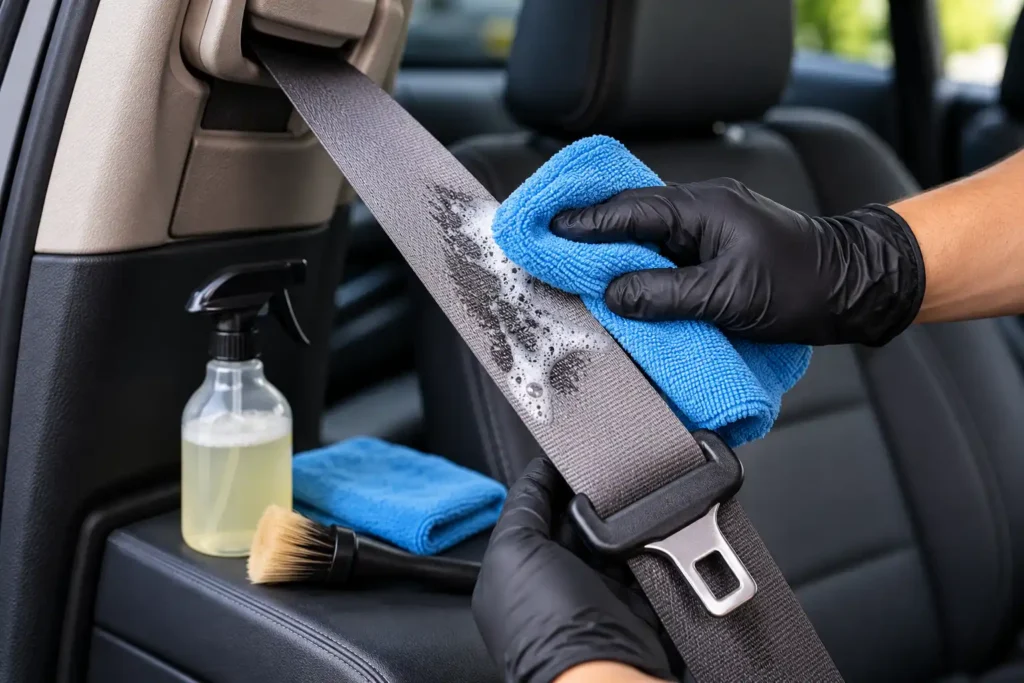
Crayon stains inside a car can appear on cloth seats, floor mats, carpets, door panels, plastic trim, and other interior surfaces.
The correct approach depends on the affected material and the vehicle manufacturer’s interior-care instructions.
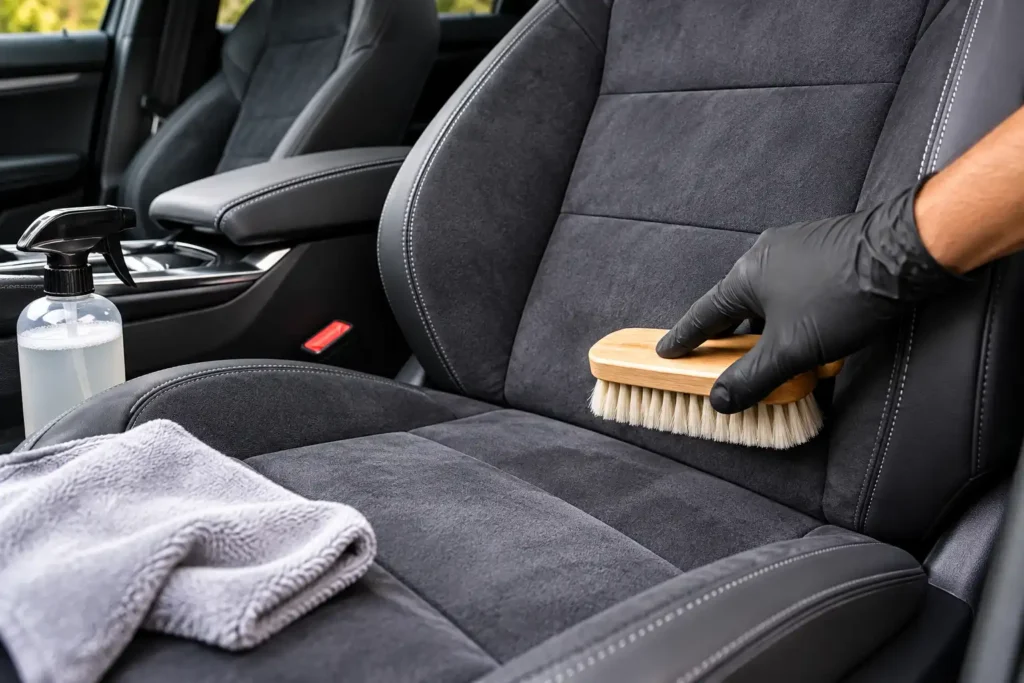
How to Remove Crayon From Cloth Car Seats
- Remove loose crayon residue with a plastic scraper.
- Check the vehicle owner’s manual for upholstery cleaning instructions.
- Test an automotive upholstery cleaner in a hidden area.
- Apply the cleaner according to its directions.
- Blot the stain gently with a clean cloth.
- Remove residue as directed and allow the seat to dry fully.
Avoid soaking the seat. Excessive moisture can enter the padding and may affect materials beneath the fabric.
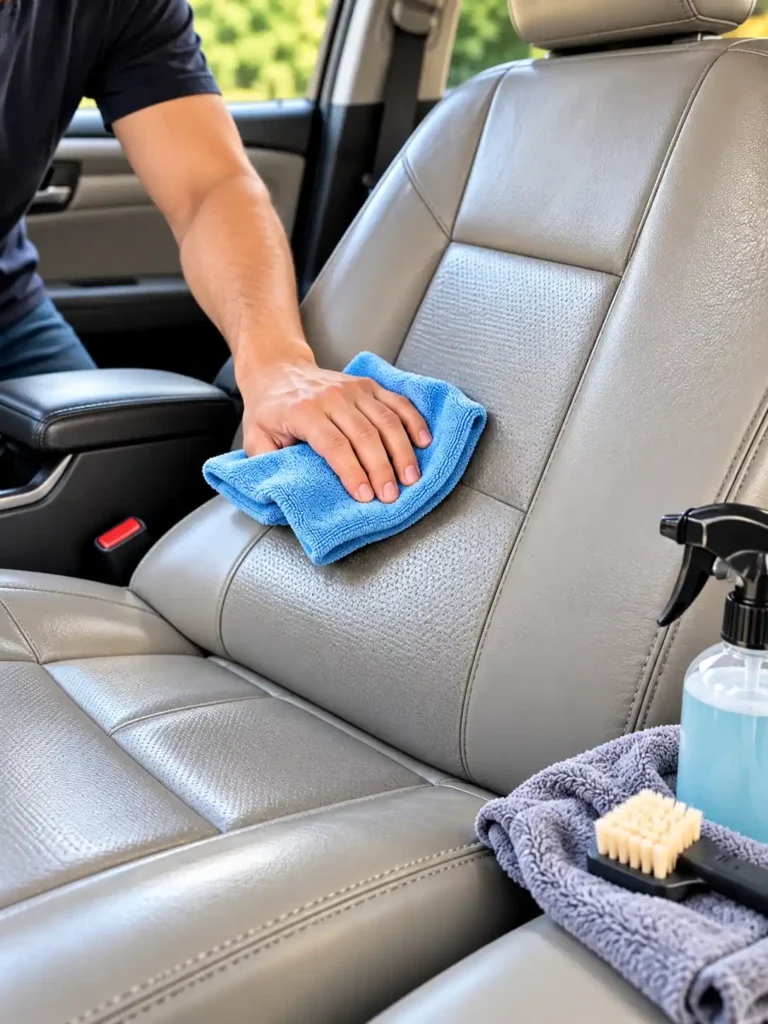
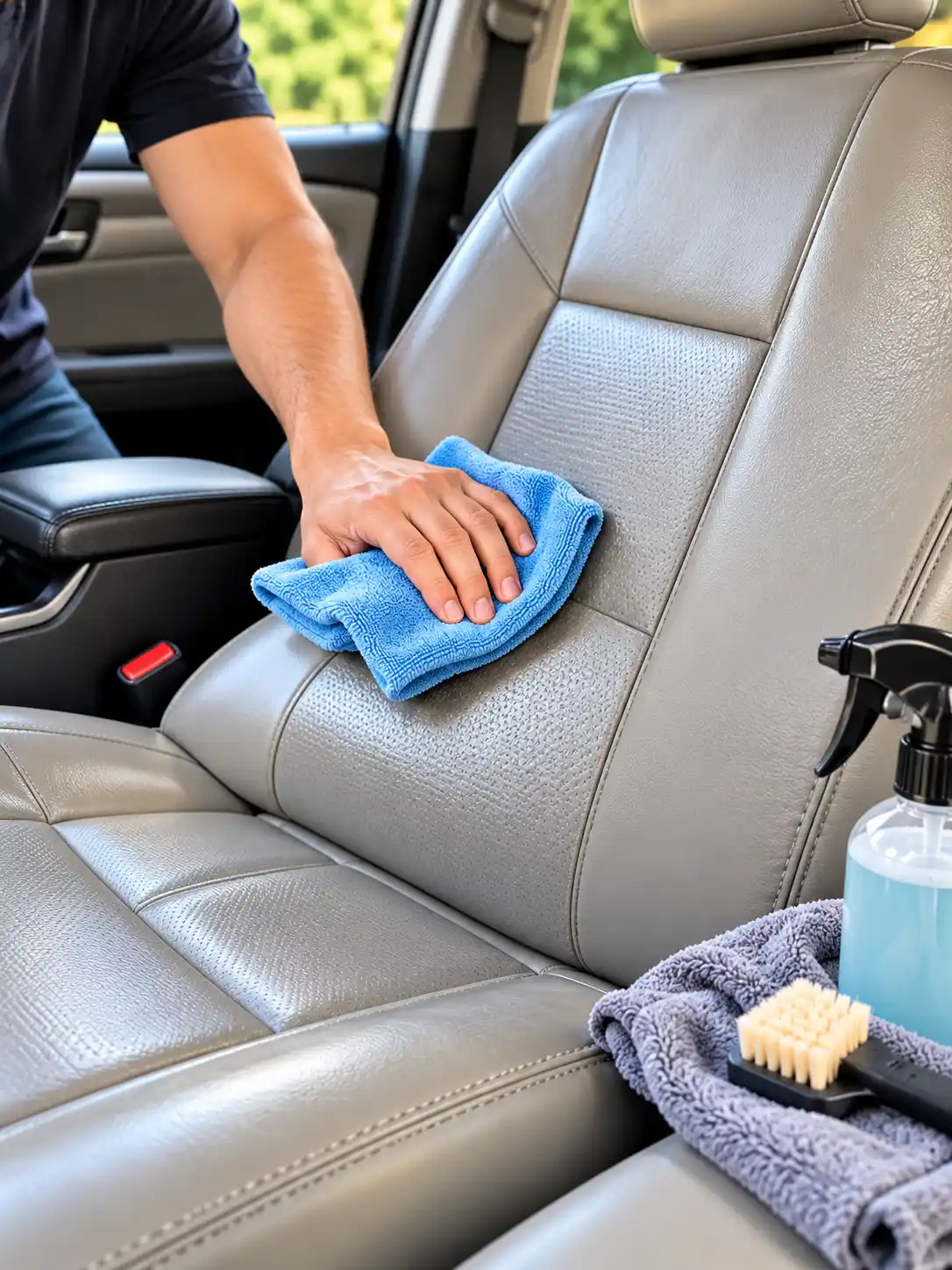
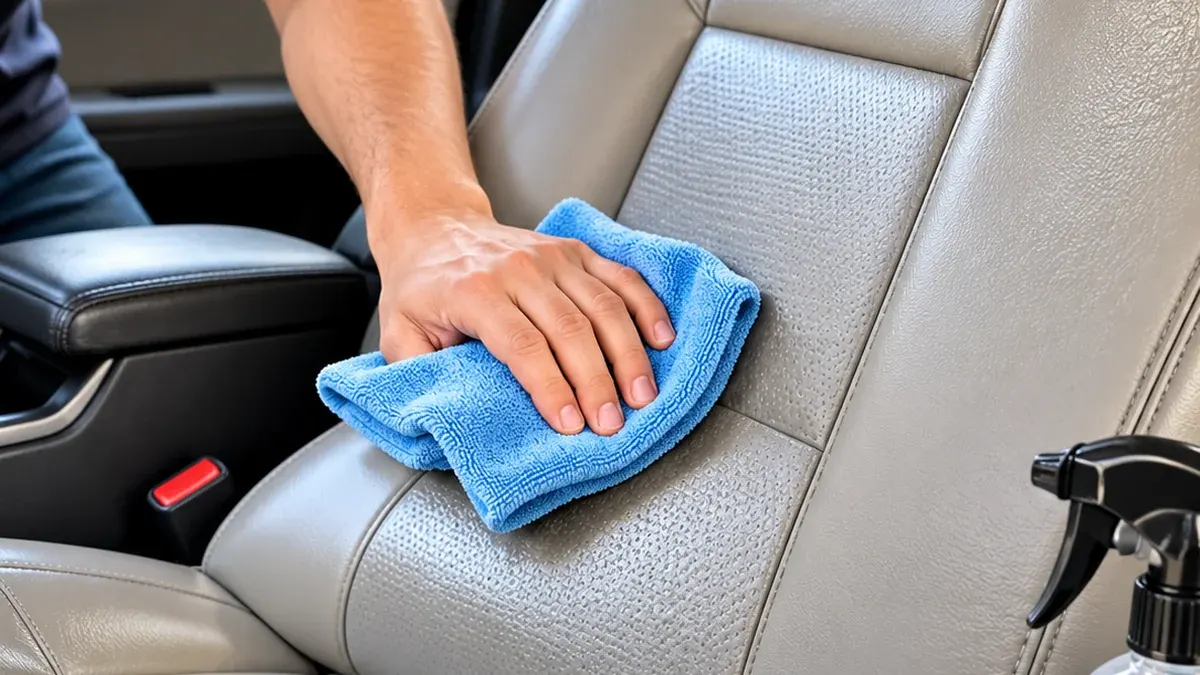
How to Remove Crayon From Leather Car Seats
Use a leather cleaner approved for your vehicle’s upholstery.
Remove loose residue gently, test the cleaner in a hidden area, and wipe without aggressive rubbing.
Do not use paint thinner, abrasive pads, or household solvents on automotive leather unless the manufacturer specifically approves the method.
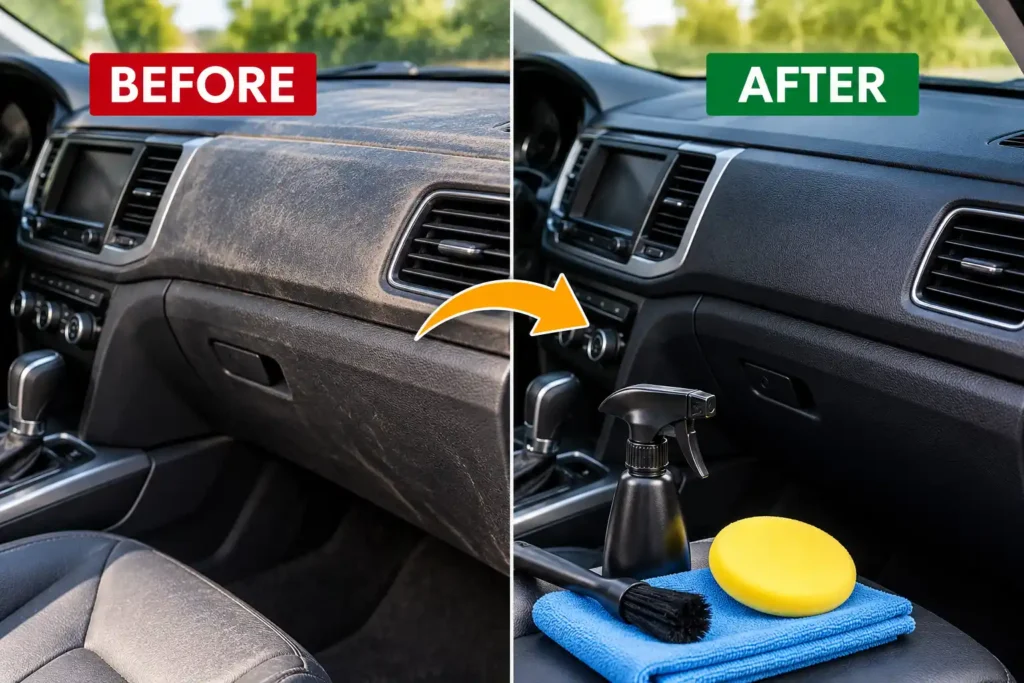
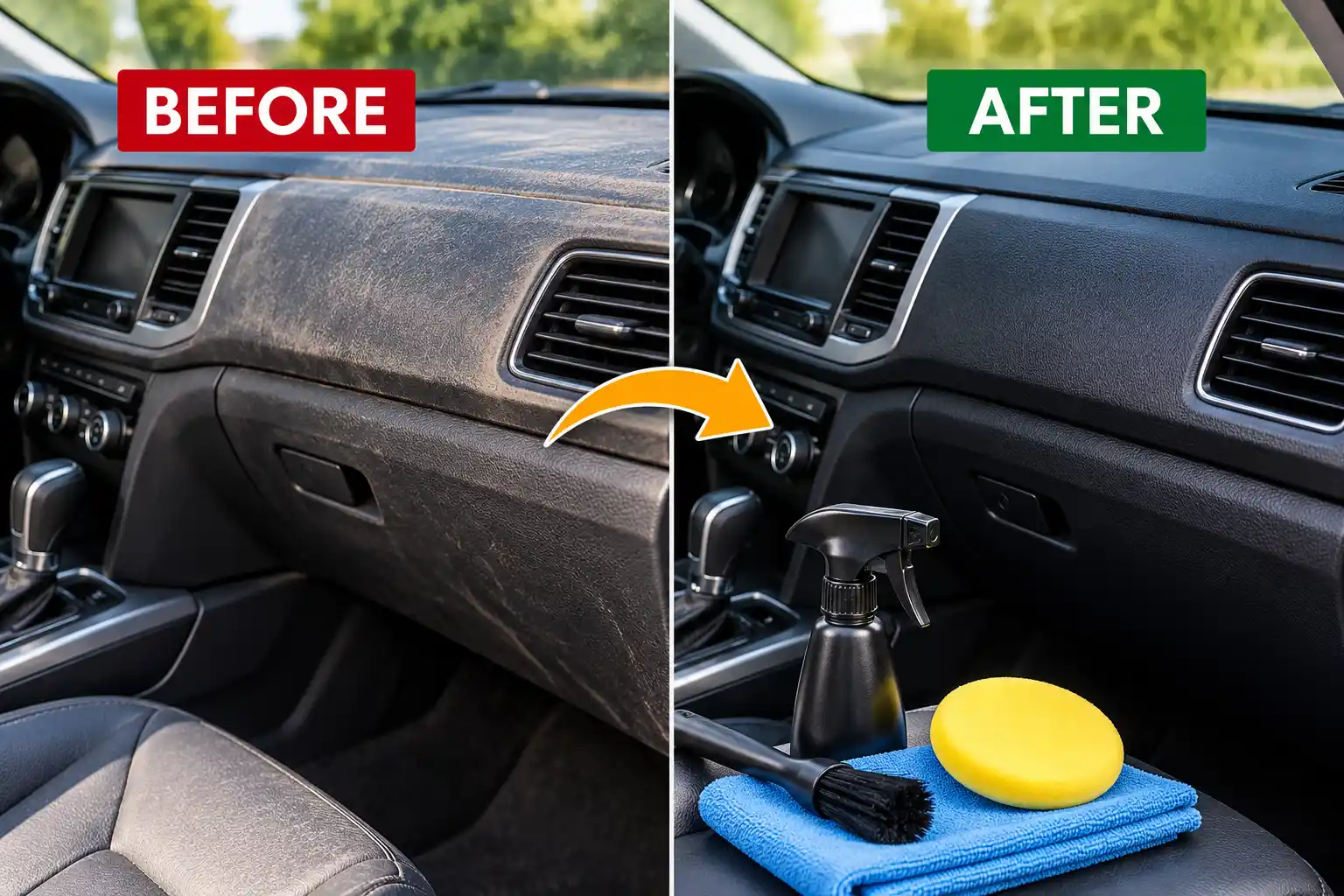
How to Remove Crayon From Plastic Dashboard Trim
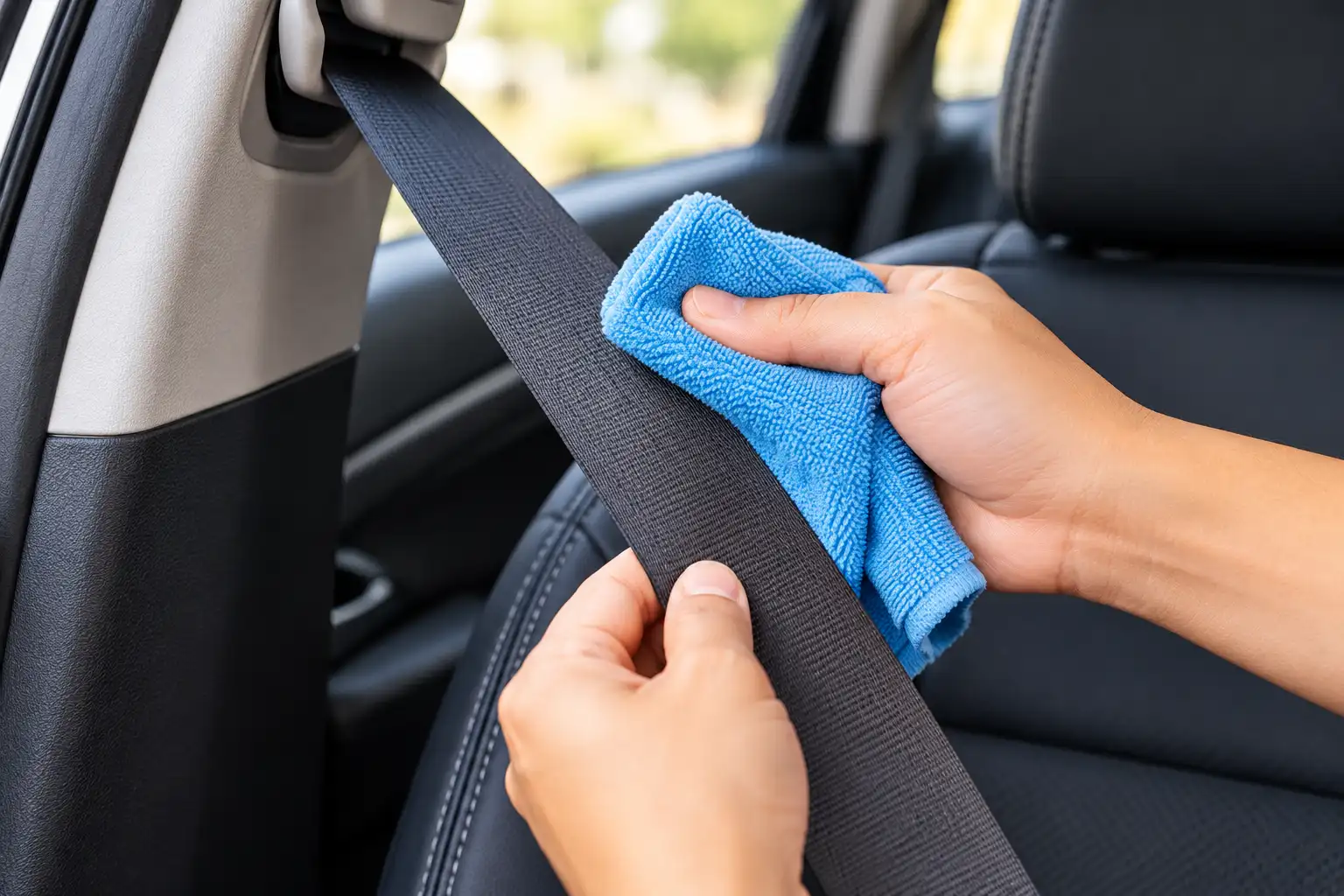
Gently lift thick wax residue using a smooth plastic tool. Follow with a soft microfiber cloth and a cleaner suitable for automotive interior plastics.
Test glossy, textured, and soft-touch surfaces before treatment, because their finishes can react differently to cleaning products.
Never use a household abrasive sponge on delicate dashboard trim without checking compatibility.
How to Remove Crayon From Car Carpet and Floor Mats
Remove solid residue carefully, then apply a compatible automotive carpet cleaner according to its instructions.
Blot the area rather than scrubbing. For removable floor mats, follow the manufacturer’s cleaning directions and allow the mats to dry completely before reinstalling them.
If the stain has reached the carpet backing or seat padding, professional interior detailing may be necessary.
How to Remove Crayon From a Clothes Dryer
A crayon accidentally left in a pocket can melt and leave waxy residue inside a dryer drum.
Before cleaning, stop using the dryer and allow it to cool. Follow the appliance manufacturer’s cleaning and safety instructions.
Cleaning Method
- Check that the dryer is switched off and cool.
- Remove accessible wax residue with a soft cloth or another method permitted by the appliance manufacturer.
- Use a compatible cleaner according to its instructions.
- Wipe away cleaner residue as directed.
- Dry the drum thoroughly.
- Before drying valuable clothing, follow the appliance manufacturer’s recommendations for checking that no residue remains.
Do not introduce flammable solvents into a dryer or use an unapproved abrasive cleaner on the drum. If crayon residue remains in hidden areas or near heating components, contact an appliance service professional.
If crayon has also stained clothing, treat those garments separately and inspect them before putting them in the dryer again.
Common Mistakes to Avoid When Removing Crayon Stains
Choosing the wrong technique can turn a small mark into a permanent blemish.
Avoid these common mistakes:
- Scrubbing aggressively before removing excess wax.
- Using a metal blade that scratches the surface.
- Applying a cleaner without testing it first.
- Using too much water on upholstery, wallpaper, or wood.
- Applying strong solvents to leather, plastic, or painted surfaces without approval.
- Using abrasive sponges on glossy finishes.
- Washing stained clothing without checking its care label.
- Putting a visibly stained garment in the dryer before the stain has been removed.
- Mixing household cleaning products.
- Continuing to clean after the material begins changing color or texture.
The best approach is to remove the wax first, match the cleaner to the surface, and stop if the finish shows signs of damage.
How to Prevent Crayon Stains in the Future
Preventing crayon stains is easier than removing them from delicate surfaces.
Store crayons in a container after use and encourage children to use them on appropriate drawing materials. Keep washable crayons available when practical, although washable products should not be assumed safe for every surface.
Check clothing pockets before washing laundry. This is especially important before placing garments in the dryer.
When traveling with children, store crayons in a suitable container and keep them away from vehicle upholstery and delicate dashboard surfaces.
Regularly check sofas, car seats, carpets, and other areas where crayons might be dropped or forgotten.
Frequently Asked Questions About Removing Crayon Stains
What Is the Easiest Way to Remove Crayon Stains?
The easiest way to remove crayon stains depends on the surface. For washable hard surfaces, gently scrape away excess wax and clean the remaining mark with mild soapy water if the material permits it. For clothing, carpet, leather, and wood, use a cleaner specifically suited to the material and test it on a hidden area first.
Does Vinegar Remove Crayon Stains?
Vinegar is not a reliable universal solution for crayon stains. It may be unsuitable for marble and other acid-sensitive natural stones. Instead, remove excess wax gently and use a surface-safe cleaner recommended for the affected material.
Can Rubbing Alcohol Remove Crayon Marks?
Rubbing alcohol may help with certain stains on compatible surfaces, but it can damage some paints, plastics, leather finishes, and fabrics. Check the manufacturer’s cleaning instructions before using alcohol, and always test an approved product in an inconspicuous area.
Will a Magic Eraser Remove Crayon From Painted Walls?
A cleaning eraser may remove crayon marks from some painted walls, but its abrasive action can dull the paint or change its sheen. Test it in a hidden area first, use minimal pressure, and stop if the paint begins to change.
How Do You Remove Melted Crayon From Fabric?
To remove melted crayon from fabric, let the material cool and carefully lift away excess wax with a dull-edged tool. Pretreat the remaining stain with a laundry product suitable for the fabric, then wash according to the care label. Check that the stain is gone before using a dryer, because additional heat may make the remaining residue harder to remove.
How Do You Remove Crayon From a Car Seat?
To remove crayon from a car seat, first determine whether the upholstery is cloth, leather, or another material. Gently lift away excess wax, test a compatible automotive upholstery or leather cleaner in a hidden area, and follow the product instructions. Avoid harsh solvents, aggressive scrubbing, and excessive moisture that could damage the upholstery.
Can Crayon Stains Become Permanent?
Yes, crayon stains can become difficult or impossible to remove completely if colored pigment penetrates a porous surface or an unsuitable cleaning product damages the finish. Promptly removing excess wax and using the correct cleaning method can improve the chances of removing the stain without damaging the material.
How Do You Remove Crayon From Plastic Car Interior Trim?
To remove crayon from plastic car interior trim, gently lift off excess wax with a smooth plastic tool. Wipe the remaining mark with a microfiber cloth and a cleaner approved for automotive interior plastics. Test the product first, especially on textured, glossy, or soft-touch trim, and avoid abrasive sponges and unapproved solvents.
How Do You Remove Crayon From Carpet Without Spreading the Stain?
To remove crayon from carpet without spreading the stain, carefully lift away excess wax instead of rubbing it into the fibers. Apply a carpet cleaner approved for the carpet type and blot with a clean cloth according to the product instructions. Avoid aggressive scrubbing and excessive moisture, particularly on delicate carpets.
Final Thoughts
Learning how to remove crayon stains from every surface starts with understanding the material you are cleaning. Wax and pigment can affect clothing, carpet, walls, furniture, and car interiors differently, so there is no single cleaning product that is safe for everything.
Remove excess crayon gently, test your chosen cleaner in a hidden area, and use a surface-appropriate cleaning method. Be especially cautious with delicate fabrics, leather, unsealed wood, natural stone, and painted finishes.
Avoid aggressive scrubbing, excessive moisture, unapproved solvents, and unnecessary heat. If the stain persists or the material begins to change, stop and consult a qualified cleaning professional.
With the right technique and a little patience, many ordinary crayon marks can be removed while keeping your home’s surfaces and car interior in good condition.