A grit guard is a rigid, perforated plastic insert that sits at the bottom of a wash bucket, trapping dirt released from your wash mitt so it can’t be picked back up on your next dip. Yes, you genuinely need one if you’re washing your car by hand, since it’s one of the cheapest and most effective upgrades available for preventing swirl marks, typically costing under $15 while meaningfully improving the safety of every wash.
This guide explains: exactly how a grit guard works, why it matters even if you’re already using the two-bucket method, and answers the practical questions about buying and using one.
How Does a Grit Guard Actually Work?
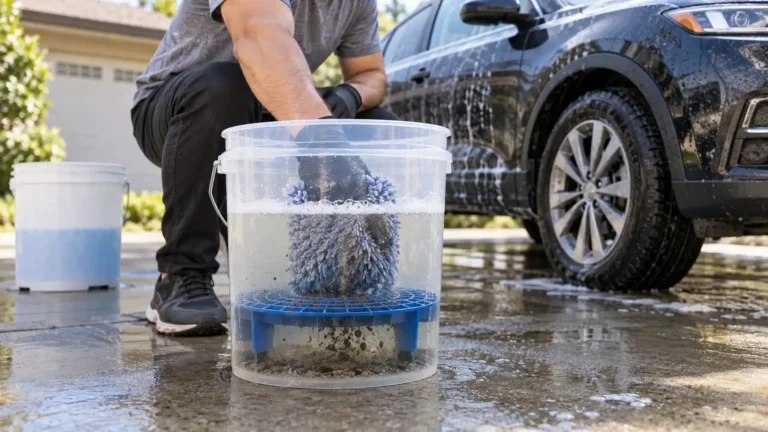
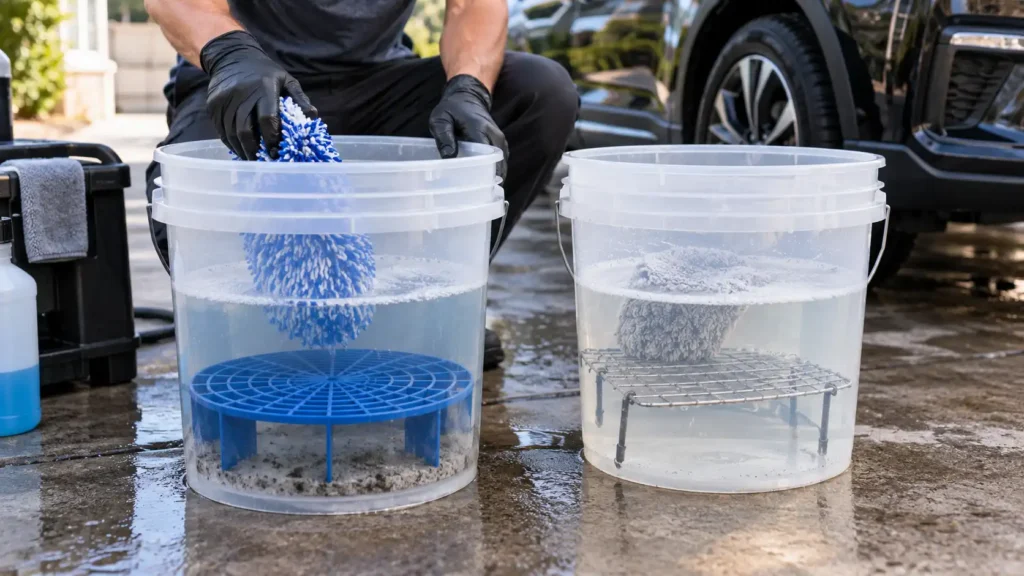
A grit guard is a raised, perforated platform that sits an inch or two above the bottom of your bucket, creating a physical barrier between the water above and the settled dirt below. When you swirl your dirty wash mitt against the ridged surface of the grit guard, dislodged dirt particles fall through the openings and settle beneath it, out of reach when you dip the mitt back in for more water.
Without this barrier, dirt released from your mitt simply resettles or stays suspended in the bucket water, where your mitt picks it right back up on the next dip. This single design element is what separates a grit guard bucket from a plain bucket in terms of actual scratch prevention during hand washing.
Do You Need a Grit Guard if You’re Already Using Two Buckets?
Yes, a grit guard significantly improves the effectiveness of the two-bucket method rather than being redundant with it. The two-bucket method separates soap water from rinse water, but without a grit guard in the rinse bucket, dirt released from your mitt still just floats or settles loosely in that bucket rather than being trapped somewhere your mitt can’t reach it again.
Combining both elements, two separate buckets and a grit guard in each, gives you the full benefit of the technique: clean rinse water that actually stays effective throughout the wash, rather than gradually becoming as contaminated as a single bucket would. Using two buckets without grit guards is better than one bucket, but adding grit guards closes most of the remaining gap in protection.
What Does a Grit Guard Actually Cost, and Is It Worth It?
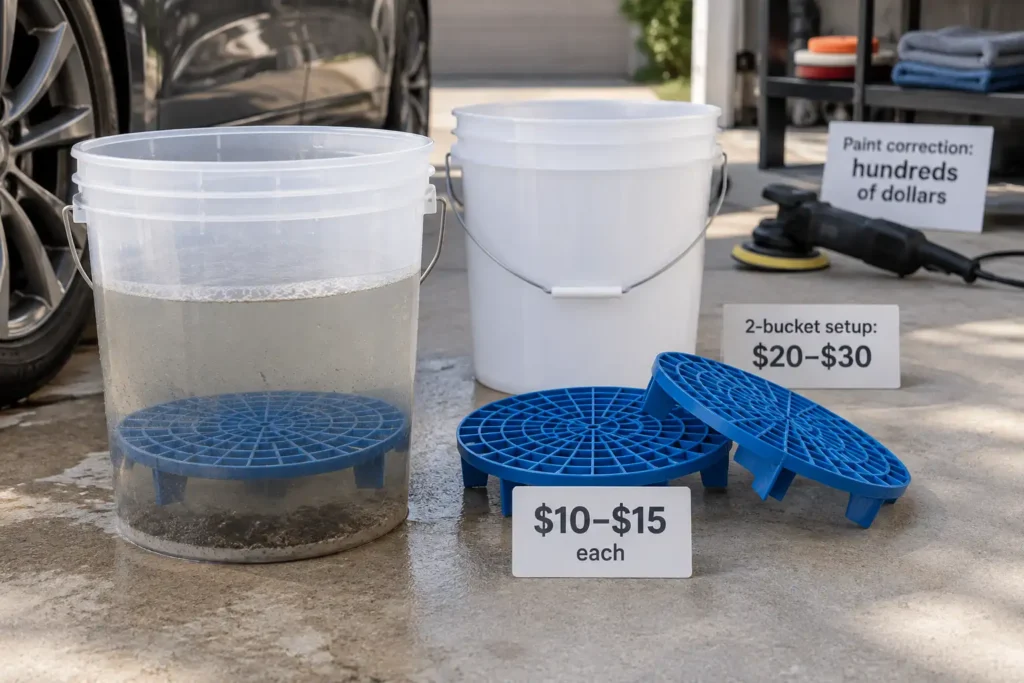
Grit guards typically cost $10 to $15 each, meaning a complete two-bucket, two-grit-guard setup runs somewhere around $20 to $30 total, a one-time purchase that lasts for years with basic care. Compared to the cost of professional paint correction to remove swirl marks, which commonly runs into the hundreds of dollars, this upfront investment is minor.
Given how directly grit guards address one of the most common and preventable causes of swirl marks, the cost-to-benefit ratio is about as favorable as any detailing product available. This is part of why grit guards show up so consistently in detailing recommendations despite being a simple, unglamorous plastic accessory.
How Do You Properly Use a Grit Guard During Washing?
Place the grit guard securely at the bottom of the rinse bucket before adding water. As you wash, regularly rinse your mitt against the guard and gently agitate it across the surface to release trapped dirt and grit. Let the debris settle below the guard before reloading the mitt with soap and returning to the vehicle. This helps keep abrasive particles away from the mitt and reduces the chance of dragging them across the paint.
Getting full value from a grit guard comes down to using it correctly during the actual washing process.
- Place the grit guard in the bottom of each bucket before adding water, ensuring it sits flat and stable.
- Fill the soap bucket and rinse bucket separately, with soap solution in one and plain water in the other.
- After washing a section of the car, dip the mitt into the rinse bucket first, working it firmly against the ridged grit guard surface to release trapped dirt.
- Return the mitt to the soap bucket for the next section, repeating this cycle throughout the wash.
- Periodically check both buckets for buildup at the bottom, emptying and refilling if the trapped dirt layer becomes substantial during a particularly dirty wash.
Can You Make a DIY Grit Guard Instead of Buying One?
Some detailers have improvised makeshift alternatives using materials like perforated plastic sheeting or a wire rack elevated inside a bucket, though these homemade solutions rarely match the fit, stability, and ridge design of a purpose-built grit guard. Purpose-made grit guards are specifically sized to fit standard five-gallon buckets snugly, which matters for keeping the guard in place during vigorous mitt agitation.
Given how inexpensive commercial grit guards already are, the time and effort involved in creating a comparably effective DIY version rarely saves meaningful money, and a poorly fitted homemade version risks shifting or tipping inside the bucket at the worst possible moment mid-wash. For most home detailers, purchasing a proper grit guard is simply the more practical choice over attempting a workaround.
Do Grit Guards Have Any Uses Beyond the Two-Bucket Wash Method?
Beyond their primary role in the two-bucket wash method, grit guards are also commonly used inside wheel-cleaning buckets, where they perform the same dirt-trapping function for the notably heavier brake dust load that wheel brushes pick up. Some detailers additionally use a small grit guard-lined tray or tub near their workspace to rinse and store brushes between uses, keeping loose debris contained rather than scattered across the work area.
A few manufacturers also produce grit guard inserts sized for smaller containers, useful for detailing brush cleaning or rinsing applicator pads during interior work, extending the same basic principle to tasks well beyond the main exterior wash. This versatility is part of why many detailers eventually own several grit guards across different buckets and containers rather than just the original two used for body washing, treating them as a general-purpose accessory for any task involving dirty tools and clean water.
What Should You Look for When Buying a Grit Guard?
Not all grit guards are made with identical quality, and a few factors are worth checking before buying. Confirming the guard is sized correctly for a standard five-gallon bucket avoids a loose or ill-fitting installation that can shift during vigorous scrubbing against the ridges. Checking the plastic’s rigidity, since a guard that flexes too much under pressure won’t hold up as well to repeated firm agitation from a wash mitt or brush.
Reputable detailing brands that specialize in wash accessories tend to produce more consistent, durable grit guards than generic, unbranded alternatives sold purely on price. Given how inexpensive even the better-known brands are, opting for a recognized product over the cheapest unbranded option available is a reasonable small investment in long-term reliability, especially since the entire point of the accessory is to be trusted every single time you wash rather than something to second-guess partway through a session.
conclusion
A grit guard is a simple addition to a wash bucket, but it can make your hand-washing routine more controlled by helping separate dirt and debris from the water above. It works especially well alongside the two-bucket method, where the rinse bucket is used to release contamination from your wash mitt before returning to the soap solution.
For most car owners, the low cost and long service life make a purpose-built grit guard a practical purchase rather than something worth improvising. Choose one that fits your bucket securely and use it consistently during washing. It will not replace careful washing technique, but it adds another useful layer of protection against dragging loosened dirt back across your vehicle’s paint.
Frequently Asked Questions
Do I need a different grit guard for wheel buckets versus body wash buckets?
No, the same grit guard design works equally well for both wheel and body wash buckets, since the function is identical: trapping dislodged dirt regardless of which part of the vehicle it came from. What does matter is using entirely separate buckets, each with its own grit guard, for wheels versus body to avoid cross-contaminating brake dust onto paint tools.
How long does a grit guard typically last?
A quality grit guard can last many years with basic care, since it’s a simple, durable plastic component with no moving parts to wear out. Rinsing it off after use and avoiding leaving it exposed to prolonged direct sunlight, which can make some plastics brittle over time, helps maximize its lifespan.
Does a grit guard fit any size bucket?
Standard grit guards are designed to fit standard five-gallon buckets, which is the most common size used for car washing. Checking the specific product’s compatible bucket size before purchasing avoids a mismatch, since some grit guards are designed for other bucket dimensions.
Is a grit guard necessary if I only wash my car a few times a year?
Yes, the benefit of a grit guard applies within a single wash session rather than accumulating value over many washes, so even an infrequent wash benefits from the same scratch-prevention mechanism as a weekly one. The low one-time cost makes it worthwhile regardless of how often you wash, since the guard itself doesn’t lose value sitting unused between infrequent sessions.
Can a grit guard wear out or become less effective over time?
A grit guard can become less effective if it develops cracks or if the ridged surface wears down significantly from repeated heavy use over many years, though this is uncommon under normal home use. Inspecting it periodically for damage and replacing it if the surface no longer effectively releases dirt from a mitt keeps it working as intended, and given the low replacement cost, there’s little reason to keep using a visibly cracked or degraded guard once you notice the issue.