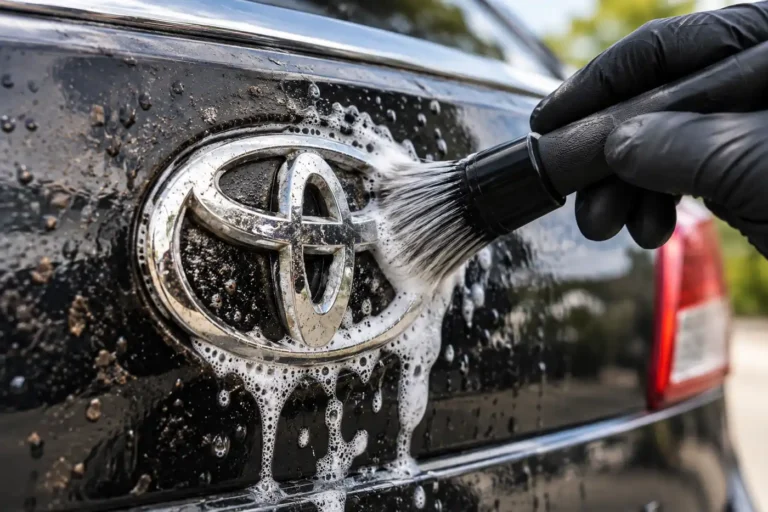
The safest way to clean car emblems and badges is to loosen the dirt first, then use a soft brush or cloth with mild automotive soap and light pressure. Chrome, painted, plastic, and blacked-out badges can have different surface finishes, so abrasive pads, stiff brushes, aggressive chemicals, and scraping tools should be avoided unless the vehicle or emblem manufacturer specifically recommends them.
Emblems are easy to overlook because a normal wash mitt may not reach the narrow spaces around raised lettering and badge edges. A small, soft detailing brush can reach those areas without requiring the heavy scrubbing that increases the chance of marring the finish.
This guide explains what you need, how to clean different badge finishes, how to deal with stubborn buildup and loose emblems, and which common cleaning methods are better left alone.
Why Do Emblems Get Dirtier Than the Surrounding Paint?
Emblems and badges have raised lettering, recessed areas, edges, and other small surfaces where road film and dirt can remain after washing. A wash mitt is designed primarily for broader surfaces, so it may not reach every narrow gap around a badge.
The problem is more noticeable on detailed lettering and textured designs because remaining grime contrasts with the clean surrounding paint. The solution is usually not more pressure. It is using a smaller tool and allowing the cleaner or wash solution to loosen the contamination first.
Lower-mounted badges can also encounter more road spray and contamination than badges positioned higher on a trunk or hood. Vehicles driven in areas with road salt or coastal exposure may need more frequent cleaning of exposed metal surfaces because salt can contribute to corrosion.
What Tools Do You Need to Clean Emblems Safely?
You do not need a large collection of specialized products. The safest setup is based on gentle cleaning and good control.
- Mild car shampoo or automotive-safe cleaner: Use a product appropriate for the emblem and vehicle finish. Ford, for example, recommends car shampoo, a soft cloth, and water for chrome exterior parts.
- Soft-bristle detailing brush: A small, soft brush can reach around lettering and badge edges that a wash mitt cannot.
- Clean microfiber towel: Use it to remove loosened residue and dry the surrounding area.
- Clean water: Rinsing removes loosened contamination and remaining cleaning solution.
- Optional microfiber swab: Useful for very narrow recesses where a towel is difficult to control.
A dedicated emblem brush is not essential. A suitably soft detailing brush can perform the same basic job as long as it is clean and does not have exposed metal or stiff, abrasive fibers.
What About Toothpicks and Detailing Picks?
A wooden or plastic pick may appear useful for hard deposits in narrow gaps, but it should not be the first choice. Pushing a rigid object against a badge or painted surface can scratch, chip, or damage the finish if grit is trapped underneath.
If contamination does not loosen with normal washing, use a cleaner appropriate for the surface and repeat the gentle cleaning process. If the material appears bonded to the emblem, identify the contamination before trying a more aggressive removal method.
Mazda specifically advises against using a knife or similar tool to remove road tar and insects from bright-metal surfaces.
How Do You Clean an Emblem Step by Step?
The basic process is simple: rinse away loose grit, loosen the remaining contamination, agitate gently, rinse, and dry.
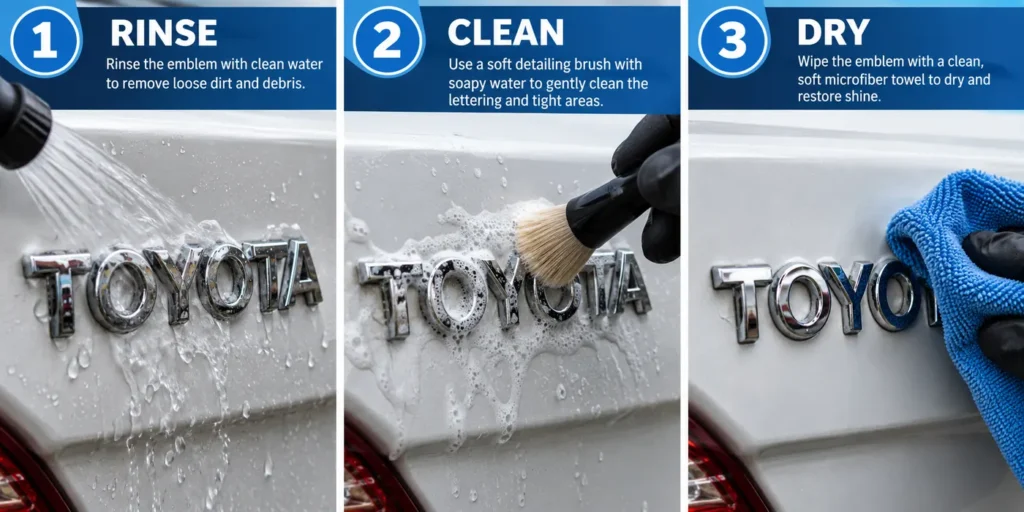
1. Rinse the emblem and surrounding paint
Start by rinsing the area with clean water. The goal is to remove loose dirt before a brush or towel touches the surface.
If you are washing the entire vehicle, clean the surrounding panel as part of the normal wash first.
2. Apply a mild automotive cleaning solution
Use car shampoo or another cleaner that the vehicle or emblem manufacturer considers suitable for the finish.
Do not assume that a stronger cleaner is better. Chrome-care guidance from Ford recommends car shampoo, water, and a soft cloth while specifically warning against abrasive materials.
For an unfamiliar badge finish, start with the least aggressive cleaning method.
3. Work the gaps with a soft brush
Use a clean, soft-bristle detailing brush with light pressure.
Work around the lettering and edges rather than repeatedly scrubbing one area. Let the cleaning solution and brush loosen the contamination instead of trying to force it out mechanically.
If the brush becomes dirty, rinse it before continuing. A contaminated brush can carry loosened grit back across the finish.
4. Rinse thoroughly
Rinse away the loosened dirt and cleaning solution.
Pay particular attention to recessed lettering and the edges of the badge because those areas can retain soap and debris.
5. Dry gently with microfiber
Use a clean microfiber towel to dry the emblem and surrounding paint.
For narrow gaps, blot or lightly touch the area rather than dragging a dirty towel repeatedly across the badge.
6. Inspect before using anything more aggressive
If a dark spot remains, determine what it is before trying a stronger chemical or tool.
A remaining deposit could be:
- Road film
- Tar
- Insect residue
- Old wax
- Water spotting
- Adhesive residue
- Corrosion or finish damage
Cleaning cannot restore plating, paint, or a coating that has already deteriorated.
What Mistakes Cause the Most Damage to Emblems?
The biggest risk is usually unnecessary abrasion or excessive force.
Using stiff or abrasive brushes
Steel wool, abrasive pads, and other aggressive materials can scratch chrome and other finished surfaces. Ford specifically warns against abrasive materials such as steel wool and plastic pads on chrome, aluminum, and stainless-steel exterior parts.
Scraping with metal tools
Knives, screwdrivers, razor blades, and other rigid metal tools are poor choices for routine emblem cleaning. They can scratch the finish or damage the surrounding paint.
If a contaminant is difficult to remove, identify the contaminant and use a suitable removal product rather than escalating immediately to mechanical scraping.
Using aggressive chemicals without checking the finish
Strong acids, caustic cleaners, solvents, and other aggressive chemicals are not appropriate for every emblem.
Mazda warns against abrasive cleaners and strong detergents containing highly alkaline or caustic agents on chrome-plated parts because they can cause discoloration or deterioration.
Always follow the cleaner’s directions and the vehicle manufacturer’s care instructions where available.
Spraying a pressure washer too close to the badge
A pressure washer can be part of a normal vehicle wash, but nozzle type, pressure, and distance matter. Kärcher recommends a flat jet and a 15 cm distance for general vehicle rinsing in its car-washing guidance.
For an emblem that is already loose or lifting, avoid directing concentrated high-pressure spray at the edge. A gentle rinse from a reasonable distance is preferable until the badge can be properly secured.
Continuing to scrub a loose emblem
If a badge is lifting, stop treating it like a firmly attached emblem. Continued brushing can catch the edge and worsen the problem.
Clean around the affected area gently and deal with the attachment separately.
Are Painted and Chrome Emblems Cleaned Differently?
The basic approach is similar, but the finish determines how cautious you should be.
| Emblem finish | Safer starting approach | Main concern |
|---|---|---|
| Chrome-plated | Mild car shampoo, water, soft cloth or soft brush | Scratches, abrasive damage, corrosion |
| Painted | Mild automotive cleaner, soft microfiber or very soft brush | Marring, finish wear, chemical damage |
| Glossy plastic | Mild automotive cleaner and soft tools | Scratching and haze |
| Blacked-out finish | Gentle wash solution and soft microfiber | Visible marring or finish deterioration |
| Textured finish | Gentle cleaning with a soft brush | Dirt remaining in the texture |
Chrome should not be treated as scratch-proof. Ford recommends soft materials and specifically warns against abrasive cleaning materials on chrome exterior parts.
For a painted or blacked-out badge, avoid polishing or abrasive products unless the manufacturer specifically says the finish can be treated that way.
If you cannot identify the finish, begin with mild soap, water, and the softest suitable tool.
How Do You Handle Stubborn Buildup on an Emblem?
Do not immediately increase brush pressure when normal washing fails.
First determine what type of contamination remains.
Road film or ordinary grime
Repeat the mild wash process and give the cleaner time to loosen the contamination according to its label directions.
Tar or sticky road contamination
Use a tar-removal product only if it is suitable for the affected surface and vehicle finish. Apply it according to the manufacturer’s instructions rather than improvising with a strong solvent.
Insect residue
Use an automotive-safe insect remover or wash solution appropriate for the surface. Mazda’s owner guidance specifically recommends tar remover for road tar and insects on bright-metal surfaces and warns against removing them with a knife or similar tool.
Old wax or polish residue
Old product residue can collect around lettering and edges. Gentle repeated cleaning is preferable to scraping it out with a hard object.
Corrosion or damaged plating
If the chrome is already pitted, peeling, or discolored, cleaning may not restore its appearance. More aggressive polishing can make the situation worse if the surface has already deteriorated.
How Do You Handle Loose or Lifting Emblems During Cleaning?
A lifting emblem should be treated as an attachment problem rather than a cleaning problem.
Avoid:
- Scrubbing underneath the loose edge
- Pulling the emblem farther away from the body
- Directing concentrated high-pressure spray at the edge
- Flooding the compromised adhesive with aggressive chemicals
Clean the accessible surfaces gently and inspect how the emblem is attached.
Many automotive emblems use pressure-sensitive adhesive systems. 3M, for example, makes automotive attachment tapes and emblem adhesives specifically for badges, nameplates, and trim. Its emblem adhesive instructions call for a clean, dry bonding surface and firm pressure during application.
If the emblem needs to be reattached, use an automotive attachment product appropriate for the emblem and substrate rather than household glue. Follow the adhesive manufacturer’s preparation and curing instructions.
If the badge is significantly detached, damaged, or positioned over an area where incorrect reattachment could affect the vehicle, professional body or trim repair may be the better option.
Should Emblems Be Waxed or Sealed Along With the Rest of the Paint?
Some exterior emblems can be protected with a suitable wax or sealant, but the product must be compatible with the emblem’s actual finish.
Do not assume that a product safe for clear-coated paint is automatically appropriate for every chrome-plated, painted, plastic, or specialty badge.
The main practical issue with wax or sealant around detailed lettering is residue. Applying too much product can leave material inside narrow recesses where it becomes difficult to remove.
If the vehicle or product manufacturer permits protection on the emblem, apply it sparingly and remove residue before it dries.
Manufacturer guidance supports protecting some chrome surfaces after cleaning. DTNA, for example, recommends polishing wax for chrome parts, while Mazda also describes wax or chrome preservative as a protective option for bright-metal surfaces.
Does Emblem Material Affect How Often Cleaning Is Needed?
Yes. The need for cleaning depends more on the vehicle’s environment, badge design, and exposure than on a universal schedule.
Textured or highly detailed badges have more recesses where contamination can remain. Lower-mounted badges can also receive more road spray than badges positioned higher on the vehicle.
More frequent cleaning can be useful when a vehicle is regularly exposed to:
- Road salt
- Coastal air
- Mud
- Heavy road spray
- Insect residue
- Frequent winter driving
Chrome-care guidance recommends more frequent cleaning in coastal or salt-exposed environments because accumulated contamination can contribute to corrosion.
For most vehicles, cleaning the emblems during the normal exterior wash is easier than waiting until heavy buildup requires more intensive treatment.
Frequently Asked Questions
Can I use a magic eraser or melamine sponge on emblems?
It is better to avoid melamine sponges on chrome, painted, or other delicate emblem finishes unless the manufacturer specifically approves their use. They are abrasive, while manufacturers such as Ford recommend avoiding abrasive materials on chrome surfaces.
A mild wash solution and a soft brush or microfiber towel are safer starting points.
How often should emblems be cleaned separately from the rest of the car?
They usually do not need a separate cleaning schedule. Clean them during the normal exterior wash and give them extra attention when dirt remains around the lettering or edges.
Vehicles exposed to road salt or coastal conditions may benefit from more frequent cleaning because salt contamination can accelerate corrosion on exposed metal surfaces.
Is it safe to use a pressure washer on emblems at all?
A pressure washer can be used as part of a normal vehicle wash, but avoid concentrated, close-range spray on damaged or loose badges. Use an appropriate spray pattern and distance for the vehicle and pressure washer.
Kärcher’s general car-washing guidance recommends a flat jet and a 15 cm distance from the vehicle surface during rinsing.
If an emblem is already lifting, use a gentler rinse and avoid spraying directly into the compromised edge.
What should I do if an emblem’s color fill has faded or chipped?
Cleaning will not restore missing paint or damaged color fill. Once the finish has faded or chipped, the appropriate repair depends on the emblem material and whether the damage is cosmetic or involves the underlying finish.
For a valuable, difficult-to-replace, or factory-finished emblem, replacing the badge or having it professionally refinished may be preferable to applying an unverified touch-up product.
Can trapped dirt in emblems actually cause any real damage over time?
Contamination and salt can contribute to corrosion on exposed chrome and other metal surfaces when they remain on the surface for extended periods. Chrome-care guidance specifically recommends keeping chrome clean and notes the importance of more frequent cleaning in coastal or salt-exposed environments.
However, not every dirty emblem will develop damage, and the risk depends on the material, finish, environment, and condition of the badge.
Conclusion
The safest emblem-cleaning method is straightforward: rinse away loose grit, use a mild automotive cleaning solution, agitate with a clean soft brush, rinse thoroughly, and dry with microfiber.
The important part is knowing when not to become more aggressive. Abrasive pads, stiff brushes, metal tools, harsh chemicals, and concentrated pressure-washer spray can create more problems than the original dirt.
If a badge is lifting, stop scrubbing and address the attachment separately. If the finish is already peeling, pitted, faded, or otherwise damaged, cleaning alone cannot restore it.
For routine maintenance, giving emblems a gentle brush during every normal wash is usually easier and safer than waiting for heavy buildup to require aggressive cleaning.