Leather seats can make a car interior look comfortable, luxurious, and well-maintained. However, keeping them in good condition requires more than simply wiping them with a damp cloth.
Over time, everyday use allows body oils, sweat, dust, food residue, and other contaminants to accumulate on leather surfaces. Without proper maintenance, the seats may develop stains, an uneven appearance, and signs of wear.
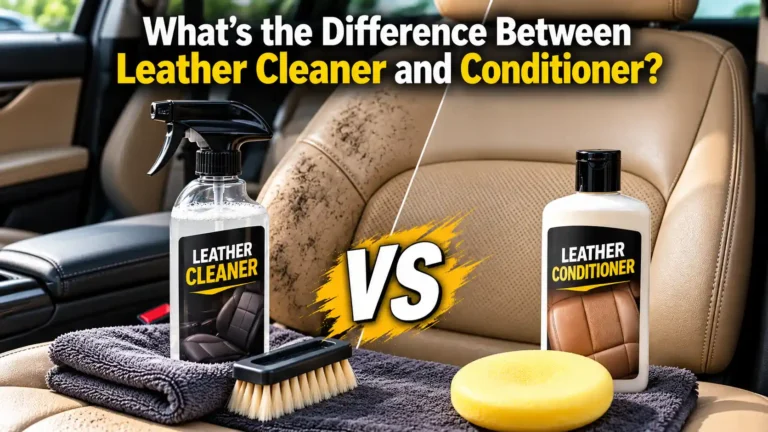
When shopping for car leather care products, two common options are leather cleaner and leather conditioner. Although they are often sold together, they perform different jobs.Understanding the difference between leather cleaner and conditioner helps you choose the right product, avoid unnecessary treatments, and maintain your car’s interior without damaging its finish.Let’s look at how each product works, when to use it, and how to build a safe leather care routine.
What Is Leather Cleaner?
Leather cleaner is a specially formulated cleaning product designed to remove dirt, surface oils, sweat, stains, and everyday contamination from leather upholstery.
Car seats come into contact with clothing, skin, dust, food particles, and other contaminants every day. These materials gradually accumulate on the surface, particularly around seat bolsters, stitching, headrests, and frequently touched areas.
A suitable automotive leather cleaner helps loosen and remove this buildup without unnecessarily damaging the leather’s finish.
What Does Leather Cleaner Do?
A dedicated leather cleaner serves several purposes:
- Removes accumulated dirt, dust, and everyday surface contamination.
- Helps lift body oils, sweat, and greasy residue.
- Reduces the appearance of certain surface stains and discoloration.
- Helps restore a clean, natural-looking leather finish.
- Prepares compatible leather surfaces for further care or protection.
The main purpose of a leather cleaner is to clean the surface, not to repair damaged leather.
For example, if your driver’s seat looks darker and shinier than the passenger seat, accumulated body oils and friction-related wear could be contributing to the difference. Cleaning may improve its appearance, although it cannot restore a worn or damaged protective coating.
When Should You Use Leather Cleaner?
Leather cleaner is appropriate when you notice:
- Visible dirt or stains on the seats.
- Sticky areas caused by sweat or spilled products.
- Dark buildup around seat edges and stitching.
- Dirt or grime accumulating in textured surfaces.
- Residue from previous leather care products.
For routine maintenance, you may only need a gentle cleaning treatment. Heavily contaminated surfaces may require additional cleaning, depending on the product instructions and leather type.
What Is Leather Conditioner?
Leather conditioner is a leather care product formulated to maintain the appearance, feel, and flexibility of compatible leather surfaces.
Unlike leather cleaner, which removes contamination, conditioner is applied after cleaning to provide a maintenance treatment.
Depending on its formulation and the leather’s finish, a conditioner may help maintain softness, reduce a dry-feeling surface, and leave a protective or lubricating layer.
However, not all automotive leather absorbs conditioner in the same way.
Many car seats have a protective pigmented or polymer-coated finish. This surface changes how conditioning products interact with the material. A traditional oil-based conditioner may not penetrate a coated surface effectively.
What Does Leather Conditioner Do?
A compatible leather conditioner may:
- Help maintain the feel of suitable leather surfaces.
- Reduce dryness and stiffness in leather that can absorb the treatment.
- Support the maintenance of compatible leather finishes.
- Leave a light protective treatment, depending on its formulation.
- Improve the feel and appearance of certain older leather surfaces.
It is important to understand that conditioner cannot repair torn leather, restore peeling coatings, or permanently reverse deep cracks.
It also does not automatically provide UV protection or stain resistance. Those benefits depend on whether the product specifically includes protective ingredients and makes those claims.
When Should You Use Leather Conditioner?
Consider a suitable leather conditioner when:
- Your vehicle manufacturer’s maintenance instructions recommend it.
- Your leather type is compatible with conditioning products.
- The surface feels noticeably dry or stiff.
- You are maintaining an appropriate uncoated or specially treated leather surface.
- A compatible leather care product recommends a conditioning treatment after cleaning.
Avoid applying conditioner simply because the seats look dull. Sometimes, dullness is caused by contamination, and the correct solution is cleaning rather than adding another product.
Leather Cleaner vs Conditioner: Key Differences
Although both products are used for leather maintenance, their functions are different.
| Comparison | Leather Cleaner | Leather Conditioner |
|---|---|---|
| Primary purpose | Removes dirt and contamination | Maintains compatible leather surfaces |
| Main function | Cleans the surface | Provides a conditioning treatment |
| Removes dirt | Yes | No |
| Helps with surface stains | Yes, when compatible | No |
| Helps maintain softness | Not its primary purpose | Yes, on compatible leather |
| Application order | First | After cleaning, when appropriate |
| Best use | Dirty or contaminated leather | Leather requiring a compatible care treatment |
| Can repair cracks? | No | No |
| Can restore peeling finish? | No | No |
The easiest way to remember the difference is that cleaner prepares the surface by removing contamination, while conditioner provides an additional maintenance treatment.
Neither product can replace the other when both stages are required.
Why Some Modern Car Leather Seats Do Not Need Traditional Conditioner
One important detail that many car owners overlook is the type of leather installed in their vehicles.
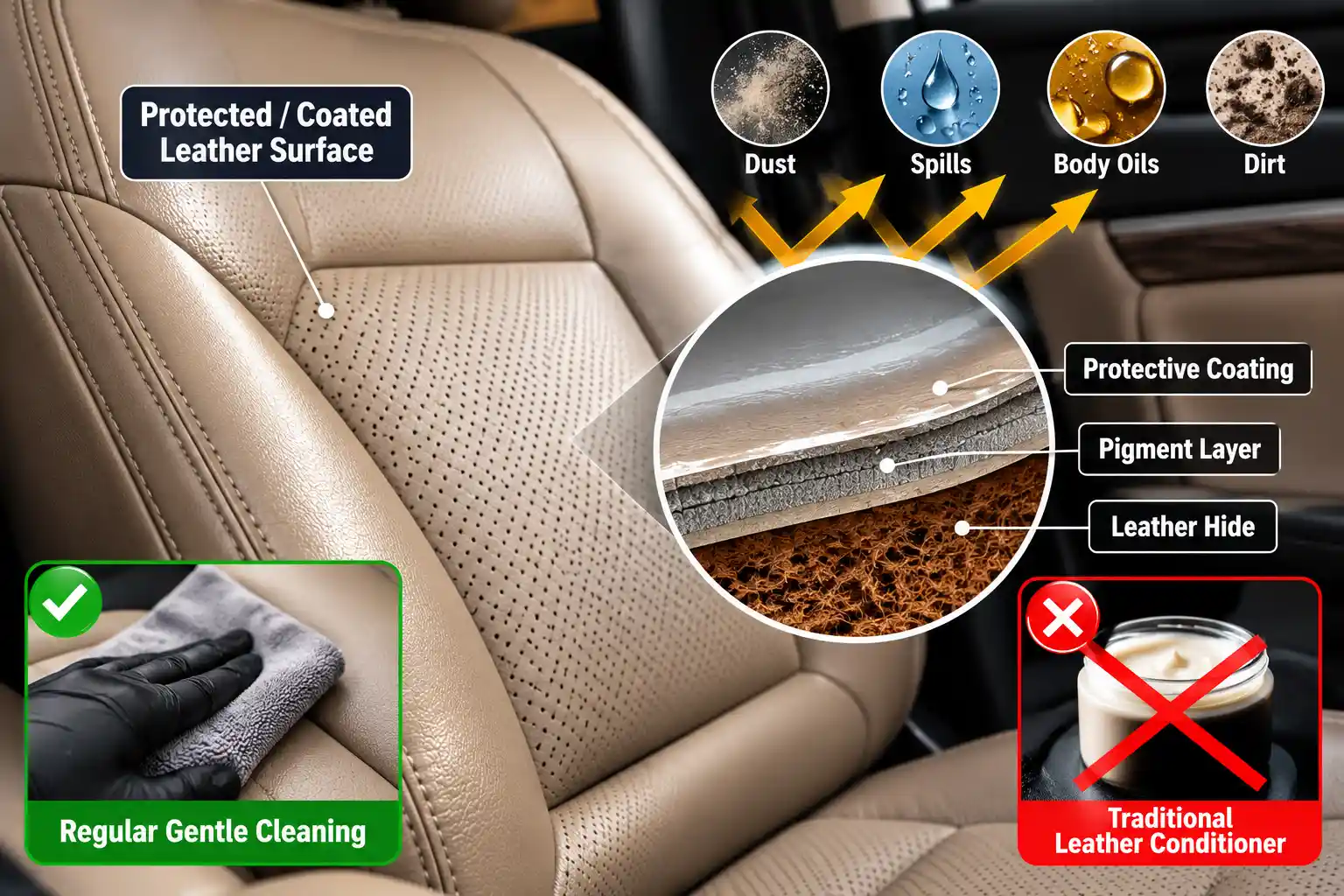
Not every leather seat has an exposed, absorbent natural leather surface. Many automotive seats use pigmented or protected leather with a surface coating.
This coating helps protect the underlying material and gives the seat its consistent appearance and finish.
1. Protected or Coated Leather
Protected leather has a surface finish that separates the underlying hide from direct contact with everyday contaminants.
Because of this protective layer, traditional leather conditioners may not penetrate the material in the same way they would on uncoated leather.
For these seats, regular gentle cleaning and an appropriate leather protectant may be more useful than repeatedly applying heavy conditioners.
Some conditioners are specifically formulated for coated automotive leather, so always check product compatibility.
2. Aniline Leather
Aniline leather has a more natural surface with little or no pigment protection.
Its appearance retains more of the hide’s natural characteristics, but the material is generally more absorbent and sensitive to spills, staining, and unsuitable cleaning products.
This type of leather requires a dedicated care approach.
A compatible cleaner and conditioner or protector may be appropriate, but products should be tested carefully because treatments can change the leather’s appearance or make it darker.
3. Semi-Aniline Leather
Semi-aniline leather combines some characteristics of natural aniline leather with additional surface protection.
Its surface generally has more protection than full aniline leather, although its care requirements can differ from fully pigmented leather.
Use products specifically approved for the particular leather finish rather than assuming that every general-purpose automotive leather product is suitable.
4. Synthetic Leather and Leatherette
Some vehicles use synthetic leather, leatherette, or other leather-like upholstery materials.
These materials are not natural animal leather, even when their texture and appearance resemble genuine leather.
A suitable cleaner can help maintain these surfaces, but conditioner should only be used when the product specifically states that it is compatible with the material.
Always check your owner’s manual before choosing a product.
Should You Use Leather Cleaner or Conditioner First?
When both products are appropriate for your vehicle’s leather, cleaning should come before conditioning.
Applying conditioner over dirt, body oils, or leftover cleaning residue can interfere with the treatment and leave an uneven surface.
Follow this order:
Step 1: Remove Loose Dirt
Vacuum the seats using a soft brush attachment. Pay attention to stitching, seams, seat gaps, and textured areas where dust and debris accumulate.
Step 2: Clean the Leather
Apply an automotive leather cleaner according to its instructions. Use a clean microfiber cloth or an approved soft applicator to gently remove contamination.
Step 3: Remove Remaining Residue
Wipe away excess product and loosened dirt using a clean cloth. Avoid soaking the upholstery.
Step 4: Allow the Surface to Dry
Let the cleaned leather dry naturally. Do not use direct heat to speed up the process.
Step 5: Apply Conditioner When Appropriate
Once the surface is clean and dry, apply a compatible conditioner if your vehicle manufacturer or leather care instructions recommend it.
Use a small amount and spread it evenly with a clean applicator.
Step 6: Remove Excess Product
Follow the manufacturer’s instructions for drying and buffing. Remove any remaining residue rather than leaving a greasy layer on the seat.
This process helps prevent unnecessary product buildup and keeps the surface looking natural.
How to Choose the Right Leather Cleaner for Your Car
Choosing a suitable cleaner is important because automotive leather can have different protective coatings and finishes.
A product that works well on one type of leather may not be appropriate for another.
Consider the following factors before purchasing.

Check Leather Compatibility
Look for a cleaner specifically designed for automotive leather.
Some products are also suitable for synthetic leather and leatherette, but compatibility should be confirmed on the label.
Avoid using a cleaner designed for household furniture unless its manufacturer confirms that it is suitable for your automotive upholstery.
Look for a Gentle Formulation
A mild, automotive-specific formula is generally preferable for routine leather maintenance.
Some manufacturers recommend pH-neutral products, while others specify different cleaning methods. Follow your vehicle manufacturer’s instructions rather than assuming that one formulation is suitable for every interior.
Consider the Application Method
Leather cleaners are available as sprays, liquids, foams, and wipes.
A spray applied to a microfiber cloth can offer good control over the amount of product used.
However, the correct application method depends on the product. Some foaming products should not be used on certain perforated seats.
Avoid Harsh Household Cleaning Products
Household disinfectants, strong detergents, abrasive cleaners, and unsuitable solvents may affect the leather’s colour or surface finish.
Choose a product intended for the material you are cleaning.
How to Choose the Right Leather Conditioner
The right conditioner depends on the type and condition of your vehicle’s upholstery.
Before buying one, consider these factors.
Choose a Compatible Formula
Check whether the conditioner is intended for protected leather, aniline leather, semi-aniline leather, or synthetic upholstery.
A product designed for absorbent leather may not perform as intended on a heavily coated automotive seat.
Avoid Excessively Oily Products
Some traditional leather conditioners contain oils or other ingredients that may not be suitable for your vehicle’s upholstery.
For example, certain Ford owner manuals specifically warn against oil-, petroleum-, and silicone-based leather conditioners.
Follow your vehicle manufacturer’s recommendations and avoid products that leave an unwanted greasy or slippery surface.
Look for a Natural Finish
A good leather care product should not necessarily make your seats look shiny.
An excessively glossy or greasy appearance can indicate that product residue has accumulated on the surface.
Choose a formula that maintains the intended appearance and feel of your upholstery.
Common Mistakes When Using Leather Cleaner and Conditioner
Even good-quality products can cause problems when they are applied incorrectly.
Here are some mistakes worth avoiding.
1. Using Conditioner on Dirty Leather
Conditioning a contaminated surface does not remove the underlying dirt.
Clean the leather first whenever a conditioning treatment is appropriate.
2. Applying Too Much Conditioner
Using more product does not automatically provide better results.
Excessive application can leave residue, create an unwanted finish, or make compatible surfaces feel greasy.
Use the recommended amount and remove excess product as directed.
3. Using the Wrong Cleaner
A general-purpose household cleaner may contain ingredients that are unsuitable for automotive leather.
Always check the label and follow the manufacturer’s care instructions.
4. Scrubbing Too Aggressively
Hard brushes, excessive pressure, and abrasive materials can damage a leather finish.
Use a soft microfiber cloth or an approved detailing brush and clean gently.
5. Ignoring Perforated Leather
Perforated seats contain small holes that allow ventilation.
Excessive liquid or unsuitable foaming products can enter these openings.
Apply products sparingly and follow the vehicle manufacturer’s instructions for perforated upholstery.
6. Applying Conditioner Too Frequently
Regular cleaning does not mean regular conditioning is necessary.
Overusing products can create buildup, particularly on protected surfaces that do not absorb traditional conditioners.
Only condition when the leather type, vehicle instructions, and product recommendations justify it.
How Often Should You Clean and Condition Car Leather?
There is no single maintenance schedule that works for every vehicle.The ideal frequency depends on how often you drive, the number of passengers, environmental conditions, leather type, and the manufacturer’s recommendations.
For routine care, remove loose dust and inspect the seats regularly. Clean visible dirt, spills, and surface contamination as needed.A deeper cleaning treatment may be appropriate when buildup becomes noticeable.
Conditioning should follow the care schedule recommended for your specific leather type. Some protected automotive leather may need regular cleaning and protection rather than traditional conditioning.
Vehicles exposed to strong sunlight, frequent use, sweat, and heavy passenger traffic may require closer attention.The most important thing is to avoid unnecessary treatments and use products that are compatible with your upholstery.
Can Leather Cleaner and Conditioner Be Used Together?
Yes. Leather cleaner and conditioner can be used as part of the same maintenance routine when both products are suitable for your vehicle’s leather.
A two-step system is especially useful when the manufacturer recommends cleaning followed by a compatible conditioning treatment.
The cleaner removes surface contamination, while the conditioner provides the additional care treatment.However, using both products is not automatically necessary for every car.
Some modern protected leather surfaces are better maintained with a dedicated cleaner and protectant rather than a traditional oil-based conditioner.Always follow the product instructions and your vehicle owner’s manual.
Frequently Asked Questions
Is leather cleaner better than leather conditioner?
Neither product is universally better because they perform different jobs. Leather cleaner removes dirt and contamination, while conditioner maintains compatible leather surfaces. For most cleaning situations, start with a suitable cleaner.
Can I use leather conditioner without cleaning first?
It is better to clean the surface before applying conditioner when both products are part of the recommended care routine. Dirt, sweat, and body oils should be removed first to avoid trapping contamination beneath product residue.
Does leather conditioner prevent car seats from cracking?
A compatible conditioner may help maintain the feel and flexibility of certain leather surfaces, but it cannot guarantee that cracking will never occur. UV exposure, wear, damaged coatings, and unsuitable cleaning products can also affect the condition of automotive upholstery.
Can I use leather cleaner on synthetic leather?
Some automotive leather cleaners are formulated for both genuine and synthetic leather. However, not every product is compatible with leatherette, vinyl, or other artificial materials. Check the product label before application.
Do modern leather car seats need conditioner?
Not necessarily. Many automotive seats have a protective surface coating that limits how much traditional conditioner can penetrate. Depending on the vehicle, regular cleaning and a compatible protectant may be more appropriate. Check your owner’s manual.
Can leather cleaner and conditioner be combined in one product?
Yes. Some products combine cleaning and conditioning functions in a single formula. They are convenient for basic maintenance, but their performance depends on the formulation and whether it is compatible with your leather.
Does leather conditioner remove stains?
No. Conditioner is not primarily designed to remove dirt or stains. Use a compatible leather cleaner for surface contamination, and seek specialist advice for stubborn stains that cannot be safely removed with routine cleaning.
Conclusion
Understanding the difference between leather cleaner and conditioner makes it easier to maintain your car’s interior without using unnecessary products. Leather cleaner removes dirt, sweat, and surface contamination, while conditioner provides an additional maintenance treatment for compatible leather surfaces.
The best approach is to identify your upholstery type, follow your vehicle manufacturer’s care instructions, and clean the seats before applying any recommended conditioning product. Remember that not every modern automotive leather surface needs traditional conditioner. Using the right product in the correct order can help maintain a clean, natural-looking interior while avoiding greasy residue and unnecessary wear.