Getting vomit out of a car interior requires more than wiping away the visible mess. The cleanup needs to remove solid and liquid residue, clean the affected material, address any contamination on nearby hard surfaces, control the odor, and dry the interior thoroughly. If the vomit has soaked into carpet padding or seat foam, surface cleaning alone may not be enough.
The safest practical approach is to work in this order: protect yourself, remove the bulk material, absorb remaining liquid, clean the affected surface, disinfect compatible surfaces when appropriate, extract or blot excess moisture, and allow everything to dry completely.
This guide covers cloth seats, carpet, leather, hard interior surfaces, seat belts, carpet padding, odor removal, drying, and situations where professional detailing makes more sense.
Quick Answer: How Do You Get Vomit Out of a Car Interior?
To get vomit out of a car interior, put on disposable gloves, remove the solid material without spreading it, blot up remaining liquid, clean the affected surface with a material-appropriate cleaner, disinfect compatible hard surfaces when needed, extract or blot away excess moisture, and dry the area completely.
For carpet or upholstery that has been heavily soaked, a wet/dry vacuum or upholstery extractor can remove more contaminated moisture than towels alone. If the odor remains after thorough cleaning and drying, inspect the padding and other hidden areas before adding more deodorizer.
What Should You Do Immediately After Vomit Gets in the Car?
Act as soon as practical. The longer vomit remains on fabric, carpet, or other porous material, the more opportunity there is for residue and odor to move into the material.
- Put on disposable gloves.
- Keep other passengers away from the contaminated area while you clean.
- Remove solid material using paper towels or another disposable tool.
- Place contaminated disposable materials in a sealed plastic bag.
- Blot remaining liquid with absorbent towels.
- Open doors or windows when practical to improve ventilation.
- Move to surface-specific cleaning as soon as the bulk contamination has been removed.
CDC guidance treats vomit as a body-fluid spill and recommends prompt cleanup, appropriate protective measures, and cleaning followed by disinfection when appropriate. If the illness causing the vomiting could be infectious, such as suspected norovirus, the need for careful disinfection becomes more important.
Do not aggressively scrub the fresh spill. The goal at this stage is containment and removal, not spreading the contamination deeper into the upholstery.
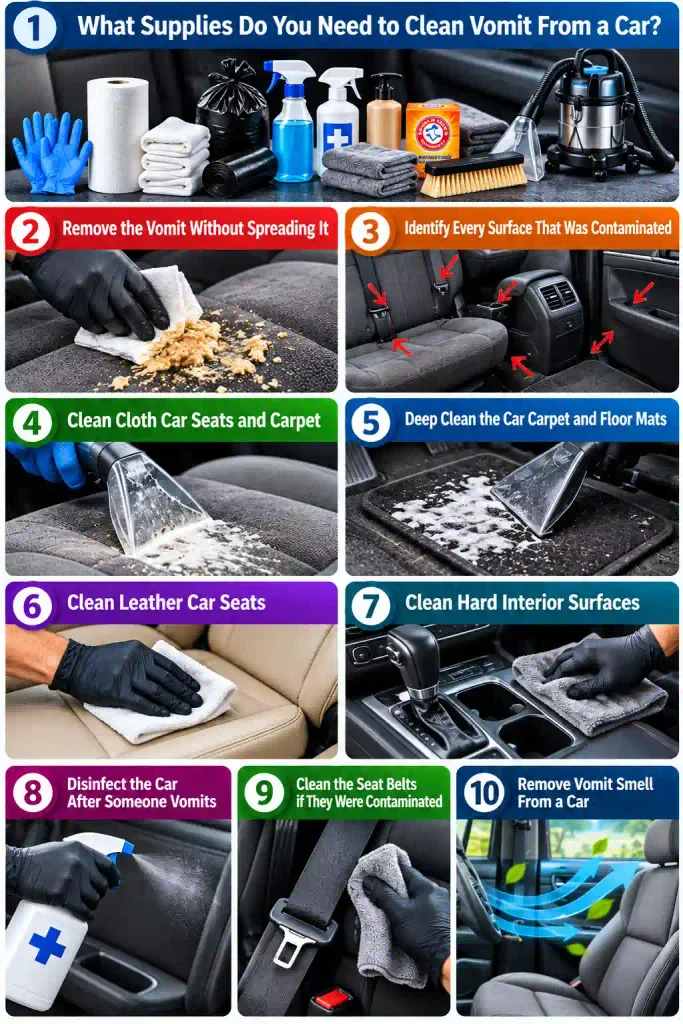
What Supplies Do You Need to Clean Vomit From a Car?
A basic cleanup kit should include:
- Disposable gloves
- Paper towels or absorbent towels
- Leak-resistant trash bags
- Automotive upholstery or carpet cleaner
- Clean microfiber towels
- Soft upholstery brush
- Wet/dry vacuum or upholstery extractor, if available
- Clean water
- Material-appropriate leather cleaner for leather seats
- An appropriate disinfectant for compatible hard surfaces when disinfection is needed
- Baking soda or another suitable odor-control product for optional finishing treatment
Do not assume one chemical is suitable for every part of a car. Fabric, leather, vinyl, plastic, coated surfaces, displays, and seat-belt webbing can have different care requirements.
Check the vehicle owner’s manual and the cleaner manufacturer’s instructions before applying a product to an unfamiliar interior material.
Step 1: Remove the Vomit Without Spreading It
Use paper towels or a disposable tool to lift solid material from the surface.
Scoop rather than wipe whenever possible. Wiping a fresh spill across a seat or carpet can spread contamination into a larger area.
For liquid residue, press absorbent towels against the area and lift them away repeatedly. Replace saturated towels rather than continuing to use the same one.
If the contamination is extensive, avoid creating splashes or unnecessary aerosolized droplets during cleanup.
Once the bulk material has been removed, seal contaminated disposable materials in a bag before continuing.
Step 2: Identify Every Surface That Was Contaminated
Do not clean only the most obvious spot.
Check around the original spill for:
- Seat seams
- Seat sides
- Carpet edges
- Carpet underneath the seat
- Floor mats
- Door panels
- Center console
- Seat belts
- Seat bases
- Plastic trim
- Nearby storage compartments
Liquid can travel farther than the visible stain suggests.
If the spill occurred while someone was sitting in the seat, inspect the area below and around the seat rather than assuming the visible mark shows the full extent of contamination.
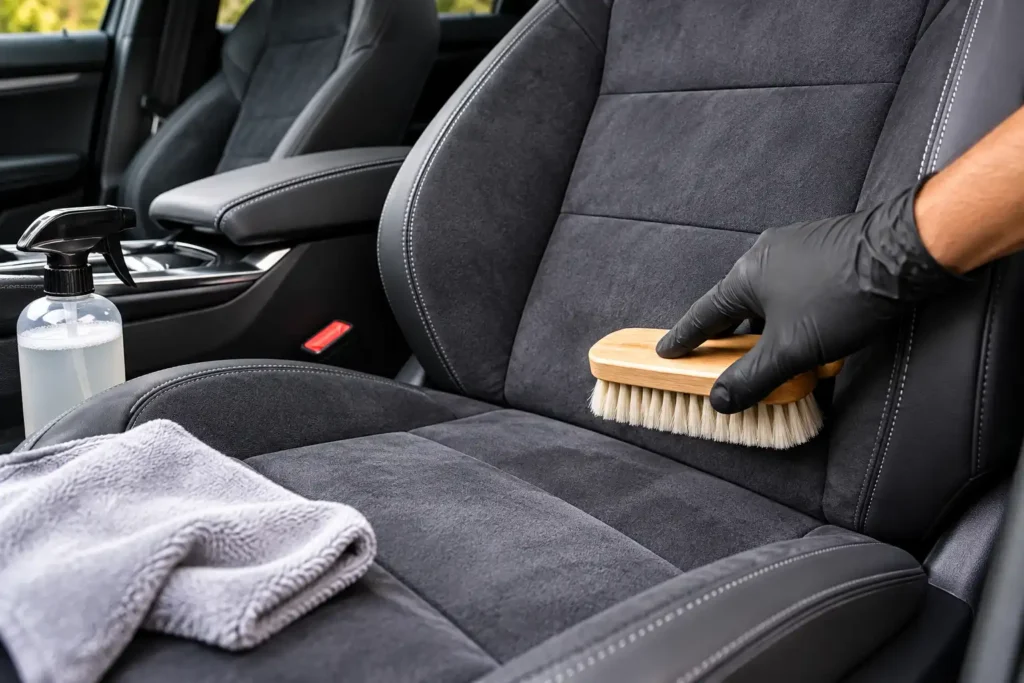
Step 3: Clean Vomit From Cloth Car Seats and Carpet
Cloth seats and carpet require controlled moisture because liquid can move into the padding underneath.
Start by removing the visible contamination. Then use a cleaner designed for automotive upholstery or carpet and follow its label directions.
Work in small sections:
- Apply the appropriate cleaner.
- Agitate gently with a soft upholstery brush or microfiber towel.
- Avoid aggressive scrubbing.
- Remove loosened residue with a clean damp towel or extractor as appropriate.
- Extract as much moisture as possible.
- Repeat only where contamination remains.
- Dry the material thoroughly.
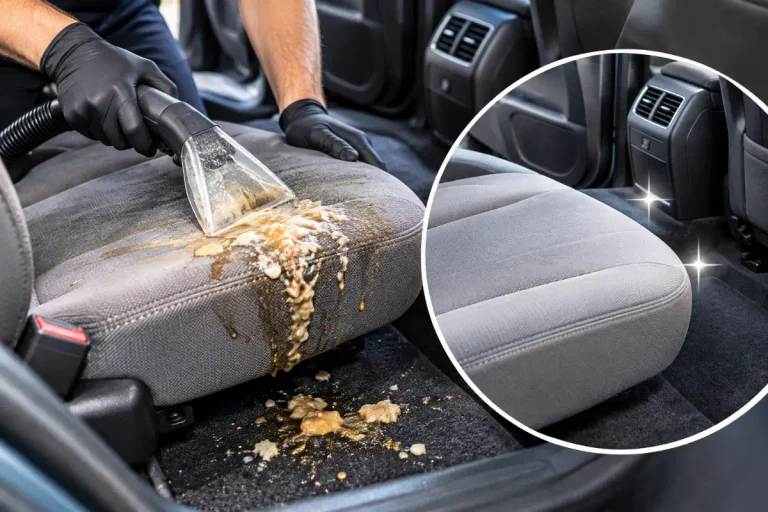
A wet/dry vacuum or upholstery extractor is especially useful when the spill has soaked into fabric or carpet. Extraction removes dirty moisture instead of leaving the loosened material inside the padding.
Step 4: Deep Clean the Car Carpet and Floor Mats
If vomit reached the floor, remove the floor mats and clean them separately.
Vacuum or remove loose debris first, then clean the mats according to their material.
For carpeted mats and vehicle carpet, avoid excessive saturation. If the spill reached the padding underneath, extraction becomes more important because surface wiping may leave contaminated moisture below the carpet.
After cleaning, extract repeatedly with the vacuum-only function if your machine allows it. Removing more moisture generally makes the drying stage easier.
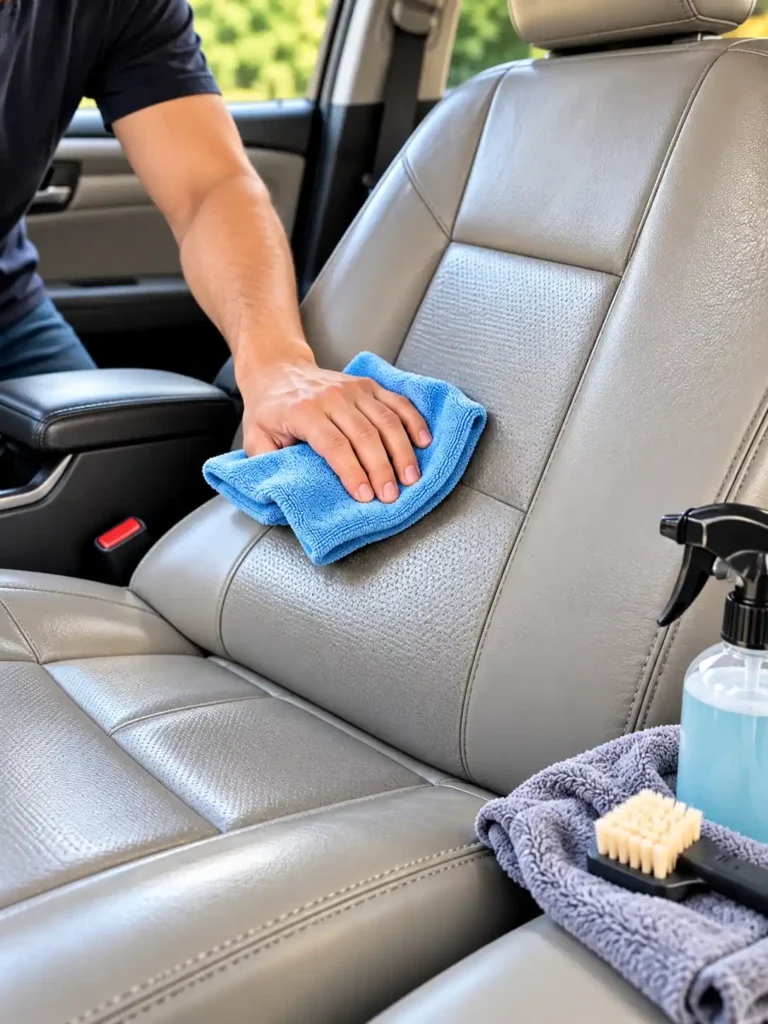
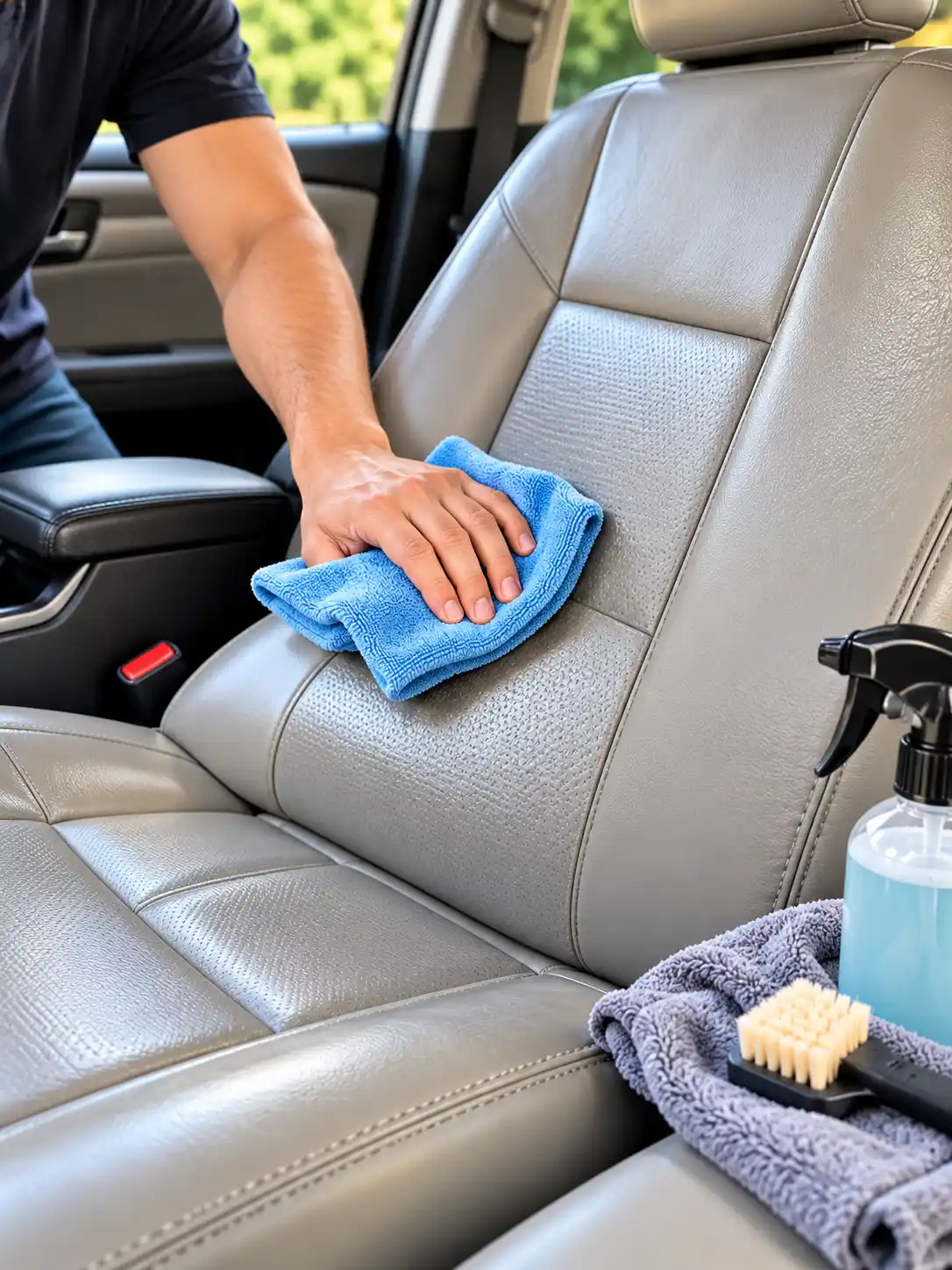
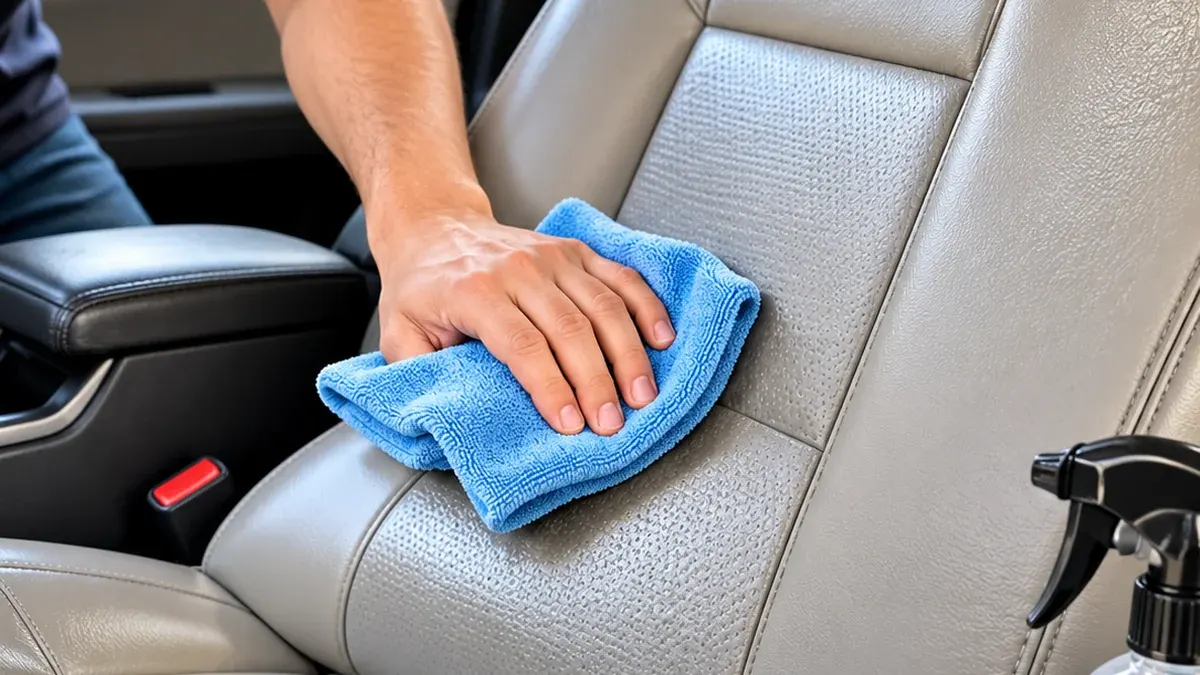
Step 5: How Do You Clean Vomit From Leather Car Seats?
Leather should be treated separately from cloth upholstery.
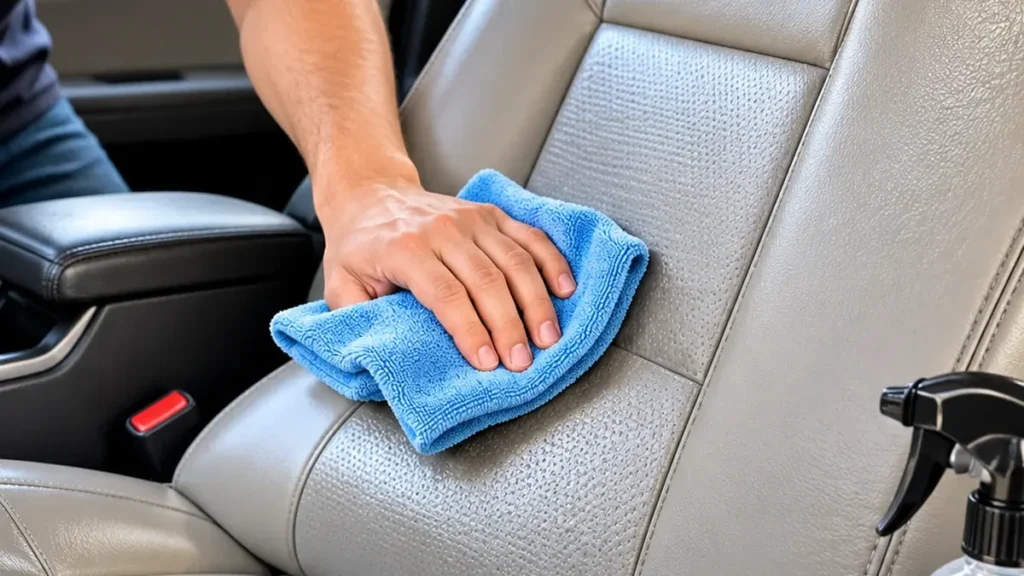
Remove the bulk contamination first, then use a leather cleaner that is suitable for the vehicle’s leather or coated leather surface.
Apply the product according to its instructions, preferably using a microfiber cloth rather than flooding the seat.
After cleaning:
- Remove remaining cleaner residue.
- Dry the area with a clean towel.
- Allow the leather to dry naturally.
- Use a compatible leather conditioner only if appropriate for that leather finish.
Do not assume a vinegar solution, bleach, or general household cleaner is safe for automotive leather. Leather finishes and coatings vary, so product compatibility matters.
If you are unsure what type of leather or coating the vehicle has, check the owner’s manual or the manufacturer’s care instructions.
Step 6: Clean Hard Interior Surfaces
Vomit can contaminate more than seats and carpet.
Clean affected hard surfaces such as:
- Door panels
- Plastic trim
- Center console
- Cup holders
- Seat bases
- Door handles
- Other nearby non-porous surfaces
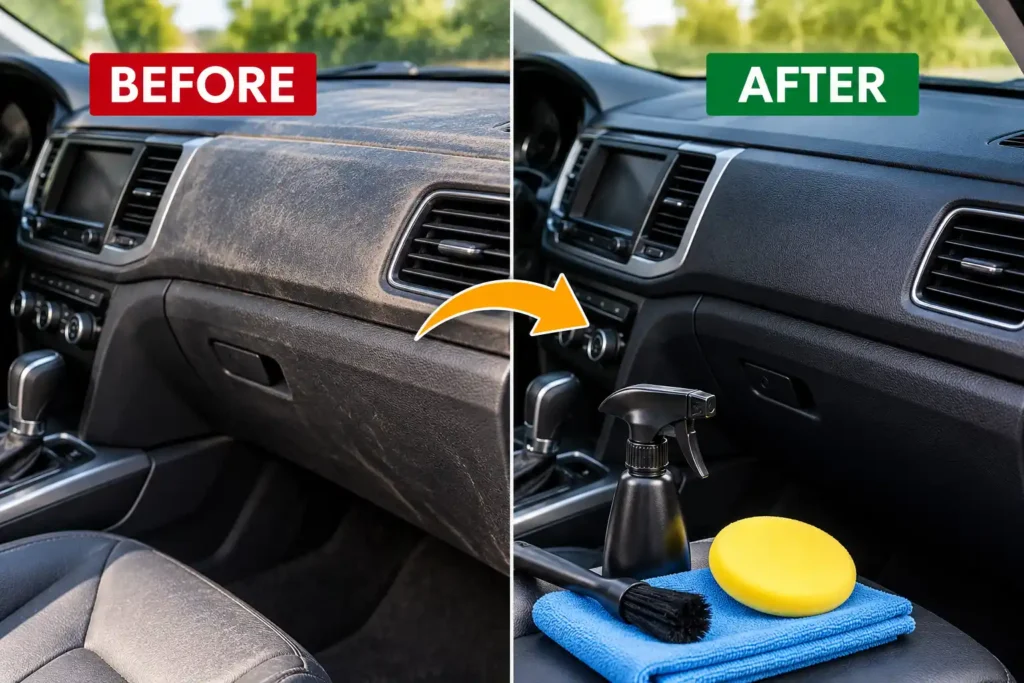
First remove visible contamination. Then clean the surface with a suitable automotive interior cleaner.
If disinfection is appropriate, use a disinfectant that is labeled for the specific surface and follow its required contact time.
CDC guidance emphasizes cleaning surfaces before disinfecting because dirt and organic material can interfere with the effectiveness of disinfectants.
Do not spray liquids directly into:
- Switches
- Electrical controls
- Speakers
- Display openings
- Air vents
- Other electronic openings
Apply product to a cloth when appropriate and use controlled amounts.
Step 7: Should You Disinfect the Car After Someone Vomits?
Cleaning and disinfection are not the same thing.
Cleaning removes dirt, organic material, and contamination from the surface. Disinfection uses a product intended to kill or inactivate germs that remain after cleaning.
If someone was sick and an infectious illness is possible, disinfection of compatible hard surfaces can be appropriate. CDC guidance specifically recommends cleaning and disinfecting areas contaminated by vomit and following the disinfectant label instructions.
For a vehicle interior, material compatibility is critical. Do not apply a strong disinfectant to leather, fabric, displays, or other sensitive materials simply because it is effective on a different surface.
If you use bleach, follow the product label and vehicle-material guidance. Never mix bleach with other cleaners or disinfectants.
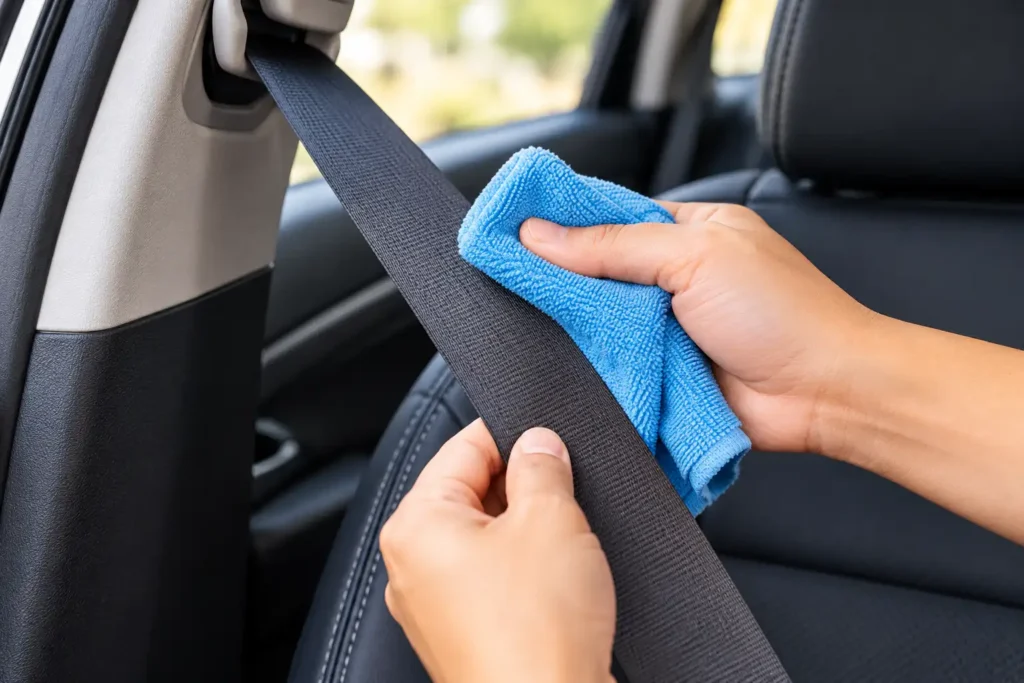
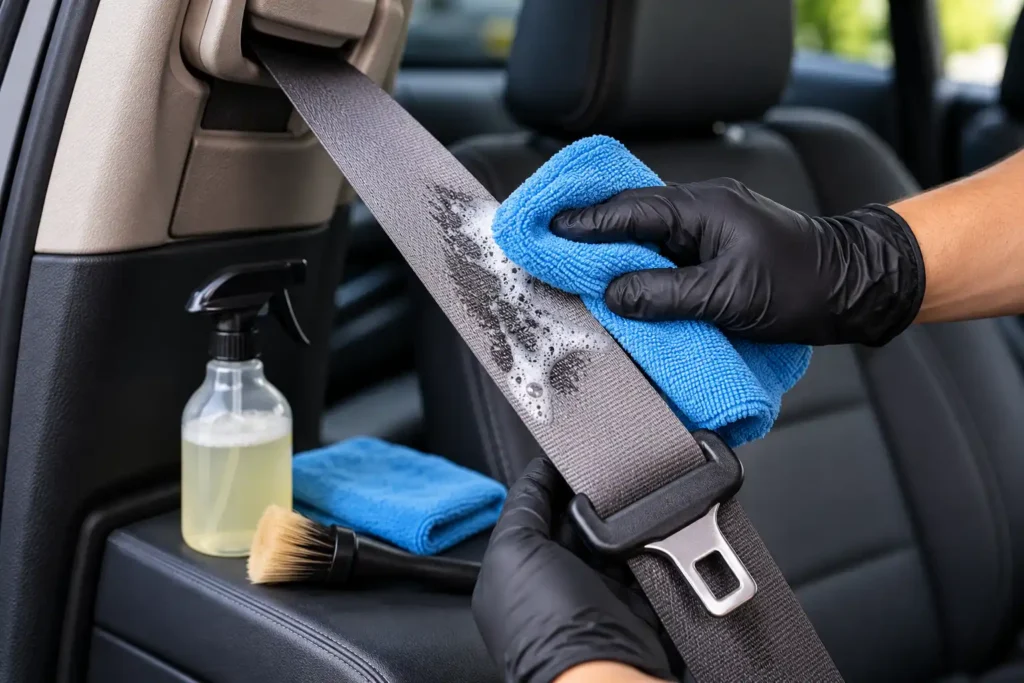
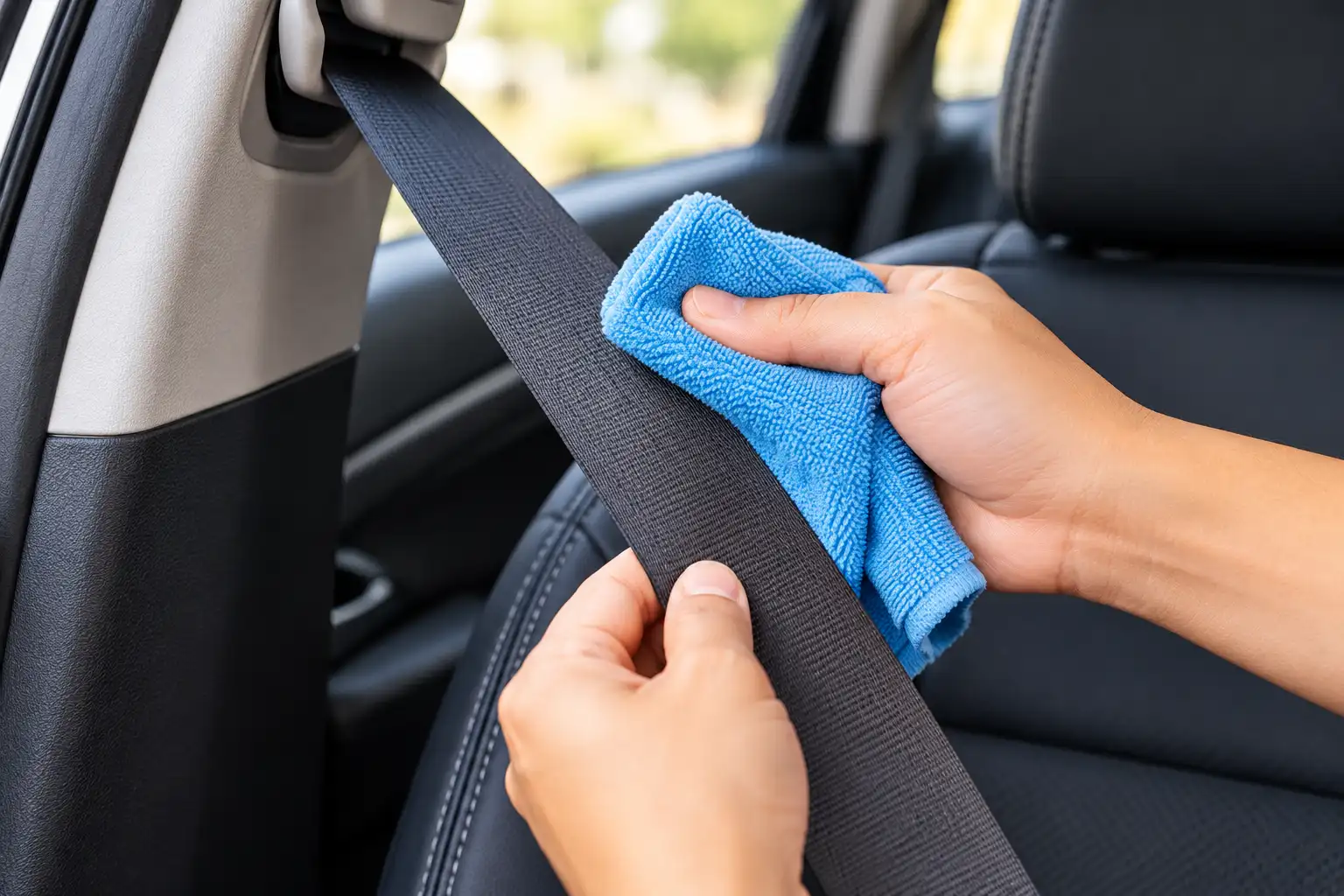
Step 8: Clean the Seat Belts if They Were Contaminated
Seat-belt webbing is often overlooked.
If vomit reached the belt:
- Extend the belt carefully.
- Identify the contaminated portion.
- Clean it using a method approved for the belt material.
- Remove excess moisture.
- Allow it to dry fully before normal use.
Avoid aggressive scrubbing or soaking the entire restraint system.
Because seat belts are safety-critical components, do not improvise with harsh chemicals. If the webbing is heavily contaminated, damaged, or you cannot determine a safe cleaning method, consult the vehicle manufacturer or a qualified service professional.
Step 9: How Do You Remove Vomit Smell From a Car?
Odor removal starts with removing the source.
If organic residue remains inside the carpet, upholstery, or padding, fragrance or an odor absorber may only mask the smell temporarily.
Once the contaminated area has been cleaned:
- Extract or blot out remaining moisture.
- Allow the material to dry.
- Use a compatible odor-control or enzyme-based product if appropriate for the material.
- Follow the product’s required dwell time.
- Remove excess product as directed.
- Dry the area again.
- Reassess the odor after the interior is fully dry.
An enzyme-based cleaner can be useful for organic odors when the product is specifically labeled for the affected material. Follow the product instructions rather than assuming every enzyme cleaner is safe for every car interior.
Can Baking Soda Remove Vomit Smell From a Car?
Baking soda can be used as an optional finishing treatment on suitable dry fabric surfaces.
It should not replace cleaning.
If the contaminated material has already been cleaned and dried, a light layer of baking soda can be left for several hours and then vacuumed thoroughly.
If the smell returns after the baking soda is removed, look for remaining contamination or moisture rather than simply adding more powder.
Step 10: Dry the Interior Completely
Drying is one of the most important parts of vomit cleanup.
After cleaning:
- Extract as much water as possible.
- Open doors or windows when weather and security conditions allow.
- Increase airflow with fans.
- Keep the vehicle ventilated while materials dry.
- Check carpet edges and padding for moisture.
- Do not close up a heavily damp vehicle and leave it unattended for an extended period.
Do not evaluate the final odor while the interior is still wet. Cleaning products and moisture can temporarily change the way the cabin smells.
Why Does the Vomit Smell Come Back After Cleaning?
A recurring smell usually means that some contamination or moisture remains.
Inspect:
- Carpet padding
- Upholstery seams
- Seat gaps
- Under-seat carpet
- Floor-mat backing
- Seat bases
- Nearby hard surfaces
- Seat belts
- Areas around the original spill
If the odor becomes stronger when the cabin warms up, recheck the deeper materials around the original contamination.
Do not immediately cover the odor with fragrance. Find the remaining source first.
How Do You Clean Vomit That Soaked Into Carpet Padding?
If the vomit reached the carpet padding, the visible carpet surface may look clean while the odor remains underneath.
The preferred approach is to:
- Remove surface contamination.
- Apply an appropriate carpet cleaner.
- Agitate gently.
- Extract contaminated liquid.
- Inspect the area again.
- Repeat only where necessary.
- Extract excess moisture.
- Dry the area completely.
If the padding remains contaminated after repeated extraction, professional detailing may be necessary.
In severe cases, removing part of the carpet or accessing the padding underneath may be more effective than repeatedly treating the surface.
Can You Get Vomit Out of a Car Without a Wet Vacuum?
Yes, small spills can often be handled with absorbent towels and an appropriate cleaner.
However, a wet/dry vacuum or upholstery extractor is useful when the spill has soaked into:
- Thick carpet
- Seat upholstery
- Seat padding
- Floor carpet
- Carpet backing
Towels remove surface liquid, but extraction can remove contaminated moisture from deeper inside the material.
If you do not own an extractor, renting one for a significant spill can be more practical than repeatedly applying cleaning solution without removing the moisture.
Should You Use Vinegar to Clean Vomit From a Car?
Vinegar is sometimes suggested as a household odor or stain treatment, but it should not be treated as a universal solution for automotive interiors.
The main concern is material compatibility. Automotive interiors can include coated leather, synthetic leather, fabric, vinyl, soft-touch plastics, screens, and other surfaces that can respond differently to acidic household cleaners.
A surface-specific automotive cleaner or an appropriately labeled enzyme-based product provides more controlled guidance.
If you use any household product, check the surface compatibility and test an inconspicuous area first.
Is Bleach Safe for Cleaning Vomit From a Car?
Bleach should not be used indiscriminately on a car interior.
CDC guidance recognizes bleach as one option for certain disinfection tasks, but the product concentration, contact time, and surface compatibility matter. Automotive materials can be discolored or damaged by inappropriate chemical use.
If disinfection is needed, use an EPA-registered disinfectant appropriate for the intended pathogen and surface where possible, and follow the label exactly.
Never mix bleach with vinegar, ammonia, or other cleaners. Mixing cleaning chemicals can produce dangerous gases.
Should You Use an Ozone Generator to Remove Vomit Smell?
Ozone should not be the first-line treatment for vomit odor.
The first priority is source removal: physically remove the contamination, clean the affected materials, extract moisture, and dry the interior.
EPA states that ozone is a lung irritant and that ozone generators should not be used in occupied spaces. EPA also reports that, at concentrations that do not exceed public-health standards, ozone has limited effectiveness against many indoor contaminants and odor-causing chemicals.
If a professional detailer recommends specialized odor treatment for a severely contaminated vehicle, ask what treatment will be used and what ventilation and re-entry procedures apply.
Never sit inside a vehicle while an ozone generator is operating.
When Should You Hire a Professional Detailer?
Professional cleaning becomes more practical when:
- Vomit soaked deeply into carpet padding.
- The spill remained undiscovered for many hours.
- A large portion of the interior was contaminated.
- The odor remains after thorough cleaning and drying.
- You cannot extract enough moisture with your available equipment.
- Carpet, seat foam, or interior trim needs to be removed.
- You are unsure how to safely clean a sensitive material.
Professional detailers can have stronger extraction equipment and can sometimes access areas that are difficult to reach with consumer equipment.
How Long Does It Take to Remove Vomit Smell From a Car?
There is no reliable single timeframe because the result depends on the amount of contamination, how long it remained, the material involved, the depth of penetration, the cleaning method, and drying conditions.
A small surface spill may be resolved after one thorough cleaning and complete drying. A heavily soaked seat or carpet may require repeated extraction or professional attention.
Do not use a fixed number of hours or days as proof that the job is complete. The better test is whether the affected material is clean, completely dry, and free of the original odor after the vehicle has returned to normal temperature.
Frequently Asked Questions
How do you get vomit out of a car interior?
Remove the solid material first, blot remaining liquid, clean the affected surface with a compatible automotive cleaner, disinfect compatible surfaces when appropriate, extract or blot excess moisture, and dry the interior completely.
How do you remove vomit smell from a car?
Remove and clean the original contamination first. Then use an appropriate odor-control or enzyme-based product if compatible with the affected material, followed by thorough drying.
Does baking soda remove vomit smell from a car?
Baking soda can absorb some residual odor from suitable dry surfaces, but it does not replace cleaning. Persistent odor usually means contamination or moisture remains.
Can you clean vomit from car carpet without an extractor?
Yes, small spills can often be cleaned with towels and an appropriate carpet cleaner. An extractor is more useful when the spill has penetrated deeply into carpet or padding.
Why does my car still smell like vomit after cleaning?
The contamination may have reached carpet padding, seat foam, seams, or another nearby surface that was not fully cleaned. Remaining moisture can also contribute to persistent odor.
Is it safe to use bleach on car seats?
Do not use bleach on automotive seats unless the material and product instructions specifically permit it. Bleach can damage or discolor many automotive materials. For disinfection, use a compatible labeled product and follow its directions.
Should I use vinegar to remove vomit smell from my car?
Vinegar is not a universal solution for automotive interiors. Because interior materials vary, a compatible automotive cleaner or labeled odor-control product is generally a more controlled choice.
Can professional detailing remove severe vomit odor?
Professional detailing can be useful when contamination has penetrated deeply into carpet, padding, or upholstery, especially when consumer extraction equipment cannot remove enough residue and moisture.
The Best Way to Get Vomit Out of a Car Interior and Remove the Smell
The most reliable approach is to remove the contamination before trying to deodorize the vehicle.
Wear gloves, remove the vomit without spreading it, blot remaining liquid, clean each affected material with a compatible product, disinfect appropriate surfaces when necessary, extract as much moisture as possible, and allow the interior to dry completely.
If the odor remains, inspect the carpet padding, upholstery seams, seat bases, floor-mat backing, and other nearby areas before applying more deodorizer. When contamination has penetrated deeply or repeated cleaning does not resolve the odor, professional extraction and interior detailing may be the more practical solution.